Carrie Aster opened the envelope with trembling hands. Heavy stock, her name in elegant script, an invitation to Mrs. William Astor’s annual ball. She did not celebrate.
She wept with relief. For six months her family had waited, hoping, checking the mail obsessively. Her father had made forty million dollars in railroads, enough to buy half of Manhattan. But money meant nothing without that invitation.
With it, Carrie would marry well. Her father’s business partners would return his calls. The family name would appear in the right newspapers and whisper through the right drawing rooms. Without it, social death.
This was not about parties. It was about power. In Gilded Age America, access to certain ballrooms determined who you could marry, which business deals closed, and whether your children had futures. One woman’s guest list could make or break industrial empires.
The invitations did not cost millions. They were worth millions. And the people who controlled access to those ballrooms ruled America more completely than any elected official. Caroline Schermerhorn Astor lived at 350 Fifth Avenue in a four-story brownstone built in 1862.
It would not have impressed anyone walking past—until you received an invitation to enter. She was a Schermerhorn by birth, old Dutch money that predated the Revolution. Her husband William was a Vanderbilt by fortune, grandson of the Commodore who had built steamship and railroad empires. The marriage joined old lineage with new wealth.
But Caroline’s true power came from a design feature most people never considered. Her ballroom could hold exactly four hundred people. Not 401. Not 399.
In 1872, Caroline held her first annual January ball and invited everyone who mattered. They all fit, barely. The number was architectural constraint. But Caroline recognized the opportunity.
Scarcity creates value. If everyone could attend, attendance meant nothing. If only four hundred could fit and New York had thousands of wealthy families desperate for recognition, the invitation itself became precious. By the 1880s, newspapers were calling New York society “the Four Hundred.
” It meant the specific families who could fit in Mrs. Astor’s ballroom. Ward McAllister, Caroline’s social secretary and enforcer, made it official in 1888 when he published the names in the New York Times. Families who assumed they belonged discovered they did not.
Others had their status confirmed in print. The backlash was immediate, but the protests proved his power. Caroline’s genius was making exclusion seem natural rather than arbitrary. She never said, “I don’t like you.
” She said, “I’m terribly sorry, but the ballroom can only hold four hundred. Architectural necessity. Nothing personal. ”
The balls followed strict protocol.
Invitations went out in early January. If yours arrived, you had two weeks to prepare. If it did not arrive by mid-January, it was not coming. Some families waited by their mailboxes, checking multiple times daily, hope fading as the deadline approached.
The event itself was exhausting theater. You arrived between ten and eleven at night, queued to be announced, approached Mrs. Astor, who might speak to you for thirty seconds or simply nod. Then you found your place in the ballroom’s invisible hierarchy.
Inner circle, middle distance, outer edges. Leaving early was insulting. Staying all night risked seeming desperate. The correct departure time required social calculation.
By 1890, Caroline’s January ball determined social standing for the entire year. Business partnerships formed between families who had stood together in the inner circle. Marriages were arranged between young people who had met under her chandelier. The cost of exclusion was measurable.
Families shut out found business partners reluctant to associate with them. Their daughters received fewer proposals. They were still wealthy, often wealthier than many included, but they were socially dead. Then Alva Vanderbilt changed the rules.
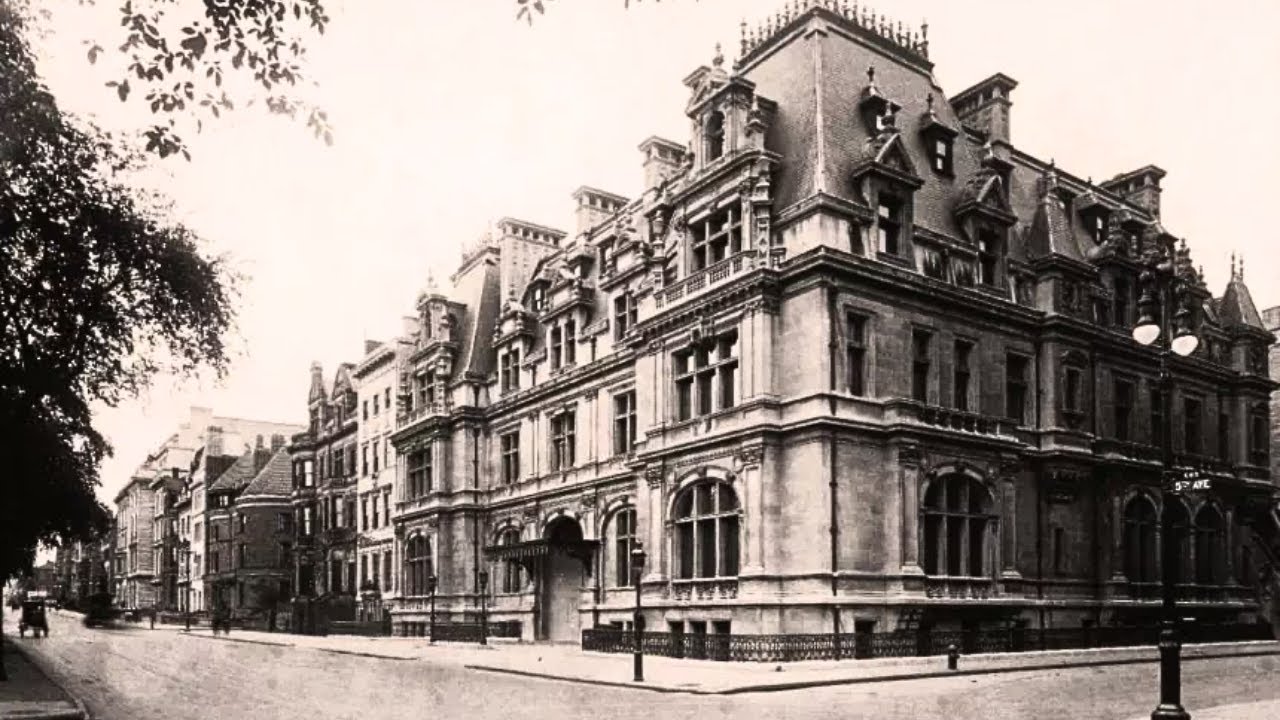
On March 26, 1883, she sent out 1,200 invitations for a costume ball at her new mansion, a French chateau in limestone at 660 Fifth Avenue. One person did not receive an invitation: Caroline Astor. This was war. Alva had married Willie K.
Vanderbilt in 1875 and spent eight years watching old money treat the Vanderbilts like embarrassing relatives. The Commodore had been a ferryboat man who cursed like a sailor and spat tobacco. Alva refused to accept second-class status. If the old guard would not invite Vanderbilts, she would throw a party so spectacular everyone would beg to attend hers.
Society went insane preparing. Families spent thousands on historically accurate costumes. Carrie Astor, Caroline’s daughter, desperately wanted to attend. All her friends had received invitations.
She had been practicing a special dance with other young society women. But no invitation arrived for the Astors. Carrie begged her mother to intervene. Caroline understood what was happening.
Alva was forcing her to acknowledge the Vanderbilts socially. In early March, Caroline called on Alva. The visit was brief, formal, and represented complete surrender. Within days, invitations arrived for Caroline and Carrie.
The ball exceeded its hype. Twelve hundred guests wore costumes that collectively cost over a million dollars. Alva appeared as a Venetian princess in a gown covered in real jewels. The house blazed with electric lights, still rare in 1883.
The Star Quadrille was performed at midnight, Carrie Astor and her friends dressed as stars. Alva had won. The Astor daughter was performing at a Vanderbilt ball, signaling to all of society that the power structure had shifted. The ball cost approximately $250,000, equivalent to over seven million today, for a single night.
But the real cost was power. Alva had proven that new money, deployed with sufficient strategy and scale, could overcome old money’s exclusivity. The ballroom also became the engine of Gilded Age business. Joseph Pulitzer stood in the corner of Mrs.
Astor’s ballroom in January 1889, watching men who refused to speak to him in daylight smile at him across champagne glasses. He had purchased the New York World in 1883 and made millions, but money alone had not gained him entry. He had donated to charities Caroline favored and supported causes McAllister mentioned. Now, standing among the Four Hundred, he could approach the men who controlled New York’s future.
And they, bound by the social contract that you must be gracious to fellow guests at Mrs. Astor’s ball, had to speak to him. Business deals were made in ballrooms because social obligation forced interactions that would never happen elsewhere. Andrew Carnegie rarely attended society events, but he attended the January ball in 1890 because three men he needed to negotiate with would be there.
The unspoken rule was that you never discussed business directly. That was vulgar. But you created conditions for business. You demonstrated that you belonged, that you understood protocol, that you could be trusted.
Then, days or weeks later, when actual negotiations began, the groundwork had been laid. The gatekeeping system McAllister formalized could not be gamed. The Philadelphia Assembly, founded in 1748, was even more rigid. Membership was not for sale at any price.
You inherited it or you married someone with it or you did not get in. Andrew Carnegie, one of the world’s richest men, could not get his daughter in. The same families who rejected Carnegie happily accepted families who had lost their fortunes. Money was temporary.
Bloodlines were permanent. Some tried to destroy the system from within. Mamie Fish, born into impeccable lineage and married to a railroad fortune, thought the whole thing was ridiculous theater. Her dinners lasted exactly fifty minutes instead of four or five hours.
In 1898, she threw a dinner where the guest of honor was an actual monkey seated at the table, served on china, wearing an evening gown. Another featured live swans swimming in a pool built into the table. Her most subversive parties inverted power structures entirely, inviting servants to attend as guests while society people served them. She could not be excluded.
Her lineage was too perfect. By 1900, she had proven you could be society’s insider and its critic simultaneously. The most dangerous display came in February 1897. Cornelia Bradley Martin hosted the most expensive party in American history at the Waldorf Hotel, themed as the court of Versailles.
Twelve hundred guests spent millions on costumes while the country suffered through a depression with twenty percent unemployment. Newspapers ran furious editorials. Ministers preached condemning sermons. Labor leaders organized protests.
The tax collectors arrived and reassessed the Martin properties upward. Society abandoned them. By May, the Martins fled to London permanently, destroyed by a single party. The Bradley Martin Ball ended the era of competitive excess.
After February 1897, parties became more discreet. The Martins were sacrificed to preserve the system. By exiling them, society signaled that it had handled the problem. But the message was clear: flaunt your wealth too openly and you would be destroyed to protect everyone else.
The mansions are gone now. The brownstone at 350 Fifth Avenue was demolished. The Breakers is a museum. But the systems created in those ballrooms survived.
The Met Gala operates on the same mechanism, with Vogue’s editor controlling the guest list personally. Manhattan co-op boards reject billionaires for insufficient character. Private school admissions replicate Gilded Age society for five-year-olds. The language has changed.
We talk about culture fit instead of bloodlines. We claim we are maintaining standards. But the function remains identical: controlling who belongs, creating scarcity, ensuring that wealth alone does not guarantee access. Caroline Astor understood something fundamental.
Control over who belongs is control over society itself. She did not need political power or a business empire. She just needed to control access to the spaces where powerful people gathered. The invitations did not cost millions.
They were worth millions. That distinction matters. If something costs millions, you can choose not to buy it. If something is worth millions, if your entire future depends on receiving it, you have no choice.
You will do whatever it takes to get it. You will subordinate yourself to arbitrary authority. You will follow rules that make no sense. The ballrooms where invitations were worth millions are demolished.
But we are still standing outside, hoping to get in, not quite realizing that the door we are waiting to open probably should not exist in the first place.






