On the morning of December 22, 1947, in the city of Krakow, the former staff of Auschwitz—the deadliest of all German Nazi concentration camps—stood to hear their sentences read aloud. After a month of gruesome testimony, the Polish Supreme National Tribunal delivered its verdicts: twenty-three of the forty-one defendants were condemned to death by hanging. Among them was Fritz Buntrock, a man prisoners had come to know by a different name. They called him “Bulldog.
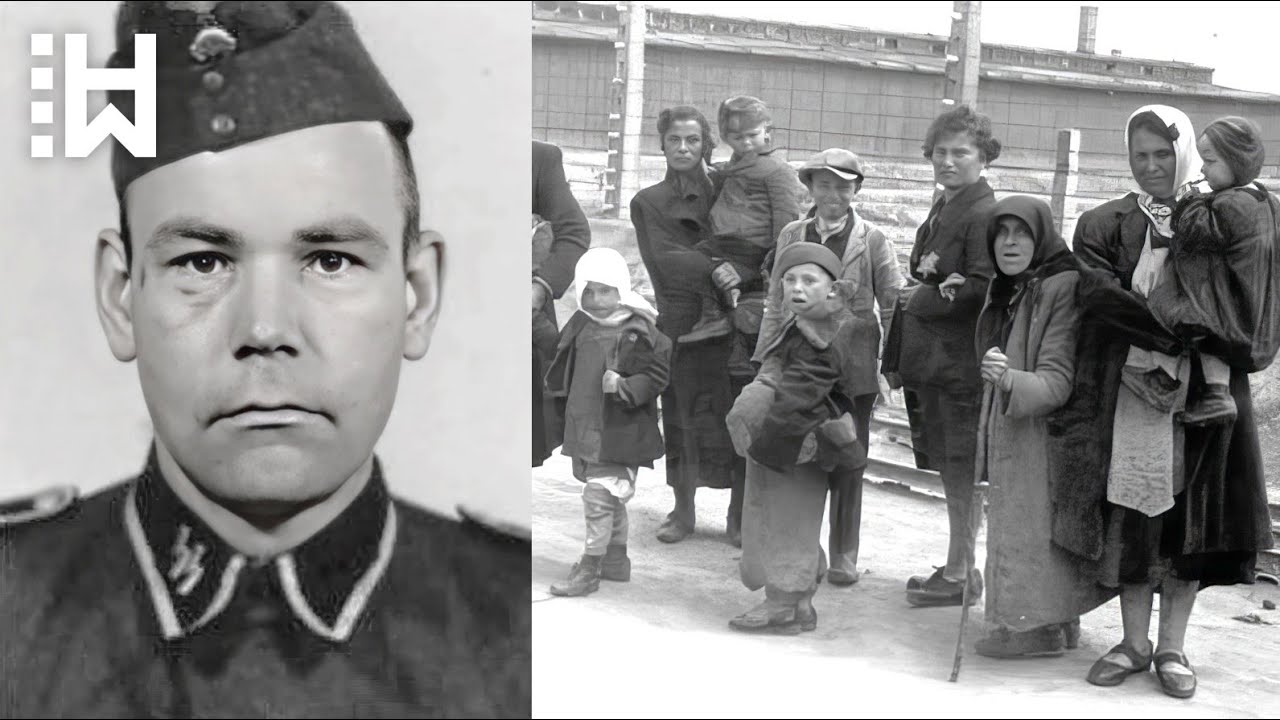
” The nickname said everything that needed to be said about him. He was sadistic, ruthless, and he took open pleasure in beating and torturing the inmates who fell under his authority. He had arrived at Auschwitz with a history that gave no warning of what he would become there. Born on March 8, 1909, in Osnabrück, then part of the German Empire, Buntrock had worked as a blacksmith and a factory worker.
In May 1935 he joined the SS, and in January 1937 he became a member of the Nazi Party. Nothing in that record set him apart from thousands of other men in the SS. What set him apart was what he did inside the camp. From December 1941 until August 1944, Buntrock belonged to the staff of Auschwitz-Birkenau.
His first assignment was as a guard supervising the working parties sent outside the camp. The working day there lasted a minimum of eleven hours, and the prisoners labored under conditions that ground them down day after day. Buntrock was frequently seen beating those inmates with his bullwhip for no reason at all. He did not wait for a provocation.
He whipped them before they marched out to labor, and he whipped them on the way back, when they were starved, exhausted, and barely able to stand. In 1943 his service was rewarded. Buntrock was promoted to block leader and reporting officer. The promotion placed him at the very center of the camp’s machinery of murder.
He took part in selections on the ramp, deciding which of the newly arrived would be sent to the gas chambers, and he escorted the condemned to their deaths. The witnesses who later testified against him described a man who did this work with enthusiasm rather than reluctance. One of the darkest chapters of his service came with the liquidation of what was known as the “Gypsy Family Camp. ” The Nazis regarded Roma and Sinti people as racially inferior, and in December 1942 Heinrich Himmler had issued an order requiring that all Roma and Sinti from the occupied territories be sent to concentration camps, including Auschwitz.
Unlike the typical practice at the camp, where families were broken apart upon arrival, the Romani families deported to the Gypsy Family Camp were kept together. That was the only mercy they received. The conditions inside the camp were appalling. One Holocaust survivor described it as hell on Earth.
The prisoners, half-crazed with hunger, were crammed into icy-cold barracks, and the only way they could keep warm was by huddling together in the freezing dark. On August 2, 1944, the remaining 2,897 men, women, and children of the Gypsy Family Camp were murdered in the gas chambers at Birkenau. Buntrock was among the SS men escorting them to their deaths. As they were driven toward the chambers, witnesses saw him kicking and punching the victims in the face, brutally and without the slightest sign of remorse.
By that time the crematorium was out of order, so the bodies of those killed were burned in open trenches. After the war, a witness testified about the final struggle that took place during the liquidation. The prisoners, knowing what awaited them, had battled the SS with improvised weapons. Their resistance did not last long.
The SS crushed it brutally, then loaded the prisoners onto trucks and killed them. When the war ended, Buntrock did not escape the consequences of what he had done. He was finally brought to justice at the Auschwitz Trial, which began in November 1947 in Krakow and lasted one month. The testimonies that emerged during those weeks painted a complete and damning portrait of the man who had been called Bulldog.
On December 22, 1947, the Polish Supreme National Tribunal sentenced him to death by hanging. He was thirty-eight years old when he was executed on January 28, 1948. There were no tears shed for Fritz Buntrock.






