Over three days in May of 1934, throngs of onlookers flocked to two Dallas funeral homes, hoping to catch a last glimpse of the outlaws Clyde Barrow and Bonnie Parker. Thousands attended the homecoming of Clyde Barrow. In this Dallas funeral home, his body lay as an ever-ending line of men, women, and children from every walk of life filed by his casket for a fleeting glimpse of the boy who had wrought so much death and destruction. Everyone wanted to see how such a bad boy looked in death in life.
My dad said there was just lines and lines of people. They were mobbing the place. They couldn’t have a decent funeral because everybody was just crowding around taking souvenirs. Clyde’s body was borne to the grave.
He died at the hands of the law. My grandpa went down to the funeral home to Clyde’s viewing. It was probably a little bit of excitement for him. He was only one of thousands.
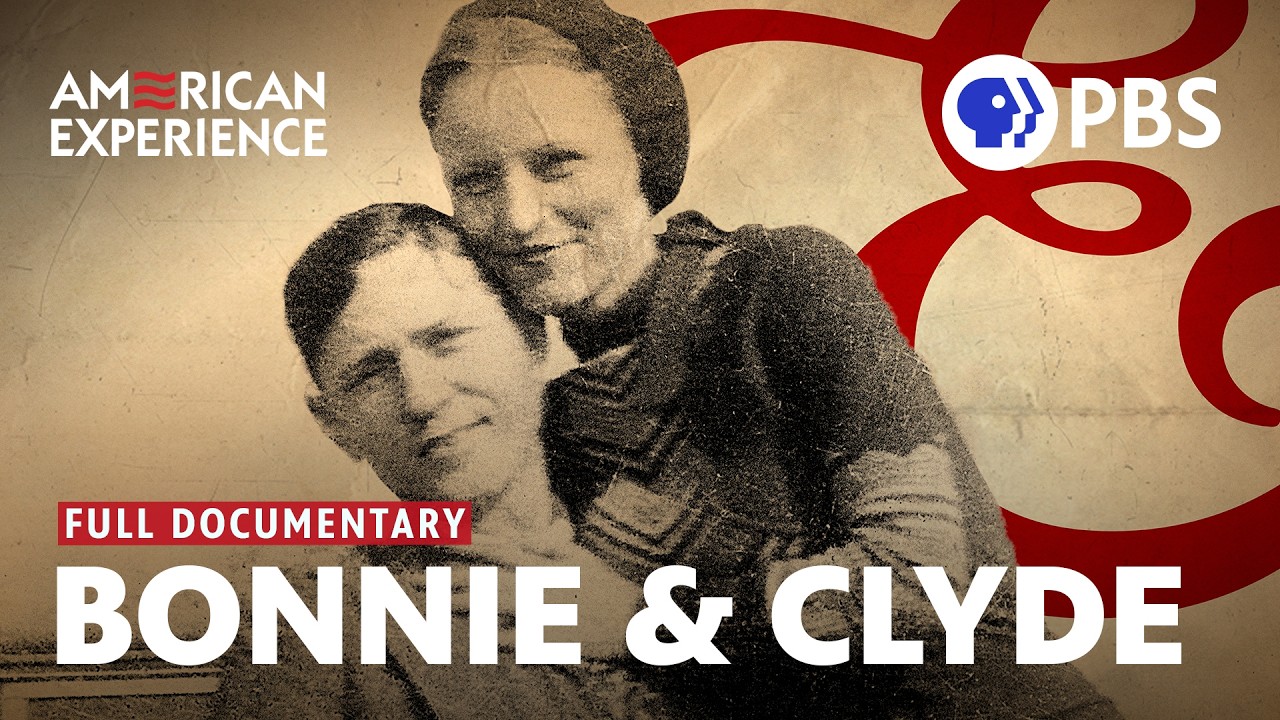
Three miles across the city from where Clyde’s body lay lay the body of Bonnie Parker. And here the crowd was even greater. Bonnie and Clyde had been on a two-year crime spree that left a trail of dead bodies in their wake. They were little more than a local curiosity until photos of the couple were discovered at a crime scene in 1933.
Overnight, the country became transfixed by the scandalous images, press accounts of improbable escapes, and their illicit romance. Bonnie and Clyde, who people are sort of making up stories about or getting sightings of, all of a sudden there are pictures, there are guns, there’s evidence. It was a non-stop soap opera. Everybody was tuned into the radios.
Everybody was reading the papers. And actually, it was almost like they were rooting for them to get away. Bonnie and Clyde would join the ranks of other celebrity gangsters like John Dillinger, Pretty Boy Floyd, and Babyface Nelson. So-called public enemies who emerged out of nowhere during the Great Depression to capture the country’s imagination.
In a world where there was very little to get excited about in summer 1933, Bonnie and Clyde were pretty big news. Everybody was talking about the criminals, the bad guys, but Clyde and Bonnie had the one thing the others didn’t. The whole true romance and the sexy scandal. Bonnie and Clyde’s notoriety would force them to take even greater risks to remain free and on the open road as law enforcement’s hunt was kicked into overdrive.
There wasn’t going to be any arrest or any trial. It was going to be an execution. Clyde Chestnut Barrow was born in the Texas cotton belt on March 24th, 1909. One of seven children of itinerant farmers Henry and Cumi Barrow.
By 1925, the whole Barrow clan had followed a wave of other farmers who were flooding cities in search of work. With all their worldly possessions packed into a horse-drawn cart, the Barrows settled on the outskirts of Dallas in an impoverished backwater known as the Devil’s Back Porch. Clyde Barrow grew up in an unincorporated slum so poverty-stricken we couldn’t imagine it today. And there’s a campground right on the west bank of the Trinity River and it’s mostly mud and there’s one well.
There’s a few outhouses and this is where the indigent lived. My grandfather and grandmother. It was just poor people trying to survive and they camped out out there in just that wagon, that little mule. And that’s where that’s how they live.
No money, no food, just poor as you could be. So from the time this kid can really think, all he knows is there’s no hope. This is it. I’m going to be poor.
I’m going to be hungry. I’m going to be put down the rest of my life. Clyde chafed at the prospect of a life of poverty. Though he was slight, 5 foot 6 inches, never more than 130 pounds, Clyde was bright, energetic, and a dreamer.
He saw what he wanted just across the river in Dallas. A prosperous city with skyscrapers, endless entertainment, and streets lined with high-end shops. Dallas exposed Clyde to a life that was far beyond his grasp. He had dreams, you know, he wanted to do something rather than be poor the rest of his life.
He hated poverty and he hated looking like poverty. With a taste for expensive suits and little interest in honest work, Clyde Barrow picked up the bad habits of his older brother, Buck, who had already settled into a life of petty crime. What started with the two brothers stealing chickens quickly grew into armed robbery. And by the time he was 17, Clyde was perfecting his signature crime.
This is the first era of car theft. The electric starter system is put in cars. You couldn’t hotwire one. And Buck was a master of it.
And he passed the skill along to little brother. Clyde Barrow didn’t see stealing so much as a crime as almost an obligation. I want to get out of here. This is the only way I can do it.
By 1929, Clyde’s crimes were regularly drawing the attention of local police. In November of that year, Clyde, Buck, and an accomplice broke into an auto shop in the town of Denton, just outside Dallas. Local law enforcement spotted the robbers trying to flee and opened fire. And they shoot Buck and they capture Buck, but Clyde runs all the way back home.
It’s a close call, but it’s worth it because as long as he’s stealing cars and getting a few dollars for him, he’s somebody. And to him, that’s worth any risk. Despite his brush with the law, Clyde’s family was happy to have him close to home. And just a few months later, he would meet a young girl from the same side of the tracks who shared his yearning for a better life.
Smack dab in the middle of Texas in the small town of Rowena, Bonnie Elizabeth Parker was born on October 1st, 1910. Four years later, after her father’s unexpected death, Bonnie’s mother, Emma, moved the family not far from the slums of West Dallas. Despite the impoverished conditions, Emma made sure to raise her three children with the knowledge that they were somehow better than their surroundings. My dad was Bonnie’s brother and Daddy was the oldest and then Bonnie and then my aunt Billie Jean.
She raised those three kids by herself. She literally was their everything. My daddy and Billie Jean, I know, were spoiled. So, I’m quite sure Bonnie was spoiled, too.
Bonnie was just a cute little Texas girl. Not quite 5 feet tall with blue eyes and strawberry blonde hair, Bonnie Parker excelled at school, was a good singer and dancer, and enjoyed writing poetry. Like Clyde, she longed to escape the ceaseless poverty she saw everywhere. As a teenager, Bonnie would lose herself in the picture houses on the other side of the river in Dallas.
Bonnie was tremendously influenced by motion pictures. What movies brought to the ordinary person was the road map to reinvention for yourself. You can be someone else. You can create a story for yourself and live it.
You don’t have to be locked into the way you were born. In 1926, 15-year-old Bonnie, against her mother’s wishes, dropped out of school to marry her boyfriend, a small-time thief named Roy Thornton. She had a little bit of the wild side to her. She had a tattoo on the inside of her thigh with Roy’s name on it.
Just imagine a woman doing that back in the 20s. You know, that was a daring thing to do. Bonnie thinks she’s going to have a storybook romance. True love just like you can see at the picture shows.
Instead, Roy starts disappearing. Won’t tell her where he’s going. When she bothers him about it, he beats her up. The third time he leaves her, he doesn’t come back.
After her break from Roy, Bonnie’s dissatisfaction with the unending boredom of poverty gushed forth in the pages of her journal. “Blue as usual. Not a darn thing to do,” she wrote. “Why don’t something happen?
”
On January 5th, 1930, Clyde Barrow walked into her life. Clyde came along just at the right time for her. This guy with a new car that’s stolen, but so what? He has a new car and he’s dressed in these fine clothes and he’s got lots of money and he’s got a good line and he’s got a great smile and it just worked.
Buster, her brother, told me, he said, “Little Ted,” he says, “When those two saw each other,” he said, “You could see the sparks fly right there. ”
Just weeks into their courtship, Clyde’s outlaw ways finally caught up to him. Dallas police showed up at Bonnie’s house with a warrant for his arrest. Clyde was sent to the county jail in Waco to await his trial and sentencing.
But Clyde Barrow had no intention of being separated from Bonnie Parker for law. He knows where there’s a gun and he gets the idea to get her to go get that gun and bring it to him. On one visit, Clyde slipped Bonnie a note detailing his escape plan. He signed it, “You are the sweetest baby in the world to me.
”
This is where Bonnie has to make a choice. This is breaking the law herself. She can go to jail for this. On the other hand, if she does break him out, that’s the kind of daring thing some of the pretty starlets do in the picture shows.
So, she says she’ll do it. Bonnie hid the gun under her dress and successfully smuggled it into the jail. She was now Clyde’s accomplice. The escape plan worked.
Clyde and two other inmates fled the Waco jail that evening. However, their freedom was short-lived. They were arrested just 7 days later. Bonnie returned to her mother in West Dallas, but Clyde was slapped with a 14-year sentence and was now on his way to one of the most notorious institutions in Texas.
A prison so violent and untamed it had earned the nickname the Bloody Ham. When Clyde Barrow goes to prison, he’s going into a state prison system that is not meant to rehabilitate prisoners. It is meant to be the worst possible hell hole. The convicts are treated like slave labor.
They work all day long under the supervision of armed guards on horseback. They’re given no break besides maybe five minutes for a cup of water and a crust of stale bread. They’re beaten for the slightest transgression. And sometimes they’re beaten for no reason at all.
Clyde was assigned to the Eastham Prison Farm, a 13,000-acre cotton plantation filled with the system’s most violent offenders. And Clyde Barrow, this skinny little kid, is put among the worst of the worst on Eastham. And what happens is inevitable. One of the inmates decides he’s going to make this kid his own.
And for months, Clyde is continually raped, and no one is going to save him. Clyde’s attacker was a convict named Ed Crowder. Over 6 feet tall and 200 pounds, Crowder was an imposing figure. On October 29th, 1931, Clyde decided to try to put an end to the abuse.
Clyde sneaks a piece of galvanized pipe into the building. And he lures Ed Crowder back to the open toilets. Clyde goes back there by himself because he knows Crowder will follow him. Mr.
Sage Crowder catches up to him. He wheels around and just rips the top of his head open with this galvanized pipe. Crowder was dead and another inmate serving a life sentence took the blame for the murder. But Clyde was still stuck in the Bloody Ham.
The inmate slave labor would go on for years and he decided there was only one way out. At a certain point, he just lost it and he gave another prisoner an axe and told him to cut off two of his toes so that he wouldn’t have to go into the fields anymore. He’s brought into the infirmary so he doesn’t have to work in the field. And just as he does this, he finds out that his mother actually got him pardoned.
Cumi Barrow had successfully petitioned the governor to release her son. Paroles were not uncommon at the time. They were used to help ease overcrowding. Clyde left prison just 6 days later on February 2nd, 1932.
He would have a limp for the rest of his life. He became a killer in prison. This fellow convict Ralph Fults put it so well. He said, “I saw Clyde Barrow change from a school boy to a rattlesnake right in front of my eyes.
”
He had his mind made up that he wasn’t going back to the pen. He told both of his parents, “I’m not going back to that hell hole. They’ll have to kill me first. ” He’s somebody.
He’s in the big town doing things in a big way. When Clyde comes out of prison in 1932, it was the beginning of the true crime era in America. The depression is still there. It’s still awful.
People are poor all over the country. People are suffering. So many Americans think of the government, the police, the banks as the villains. Those elements created the perfect audience.
Everybody was talking about the criminals, the bad guys, and not in any sense being derogatory. The gangster figure represented somebody at the bottom of the social scale, condemned to a life of nothing, who did not accept that as their fate, and who found a way to change it, which was through violence. So, it’s socially acceptable to like this gangster who does everything you can’t do and does it with so much success. That’s the appeal.
By the spring of 1932, Bonnie Parker had reunited with Clyde Barrow as he resumed his life of crime. After a botched robbery attempt, she was captured while Clyde got away. Bonnie found herself alone in a jail cell in Kaufman, Texas, awaiting a decision by a grand jury. Now, 21-year-old Bonnie was playing out a scene in her own movie.
In a poem she wrote from her jail cell, Bonnie plays the part of a jilted girlfriend determined to win her man back. “If he had returned to me sometime, though he hadn’t a penny to give, I’d forget all this hell that he caused me and love him as long as I live. But there’s no chance of his ever coming. For he and his mate have no fears, but that I will die in this prison or flatten this 50 years.
”
She picked up that language from the pulp fiction magazines, from the tabloids, and from Hollywood. It says everything in there. She’s using all the lingo, and she wants to be part of that world. Her mother reads these poems and says, “This is not the daughter I raised.
This is not the daughter I loved. ” She says, “I began to see a strange and terrifying change in the mind of my child. ” Bonnie has made a switch to investing in this persona in which what honor means is to stick to your man no matter what. In June, a Kaufman grand jury set Bonnie free, unwilling to believe that any woman would choose to accompany criminals of her own volition.
Just days after her release, Bonnie did just that. Taking their fate into their own hands, Bonnie, Clyde, and a revolving cast of ex-cons that would make up the Barrow Gang set out on the open road, burning a path through two dozen states, robbing gas stations, banks, and grocery stores. Often scoring just enough money to make it to the county line. They had to go to places where they weren’t known, where they could more easily commit crimes.
Once they committed those crimes, they would move as quickly as possible to get far away from Dallas. They would go up through Oklahoma and Missouri. Clyde loved hitting banks in Iowa. They would go as far as Indiana in one case all the way to Ohio.
They once even did a western trip out to New Mexico. He told his mom, he said, “Mom,” he says, “All the money in the world is not going to make me free. ” So all he was interested in was getting down the road and live another day. There was no incentive for him to go straight whatsoever.
Whereas he actually knew he was good at crime. He was good at stealing things. He was really good at driving. He was good at stealing cars.
Fortunately for Clyde, Ford had just introduced the V8 engine, creating the most powerful car in mass production. With 300,000 miles of newly paved highway stretching before them, and small town cops ill-equipped for a chase, Bonnie and Clyde were hard to catch. There were days when Clyde stole four cars, and he prides himself in stealing only the best, most powerful cars. And those Ford flathead V8s could flat out move.
I mean, Clyde could and did often escape because he could go 70, 80, 90 miles an hour and the law’s chugging along at 35 miles after him. My father said that you chase him and slide and it looked like that little Ford coiled up like a snake and launched. And he said every time it launched, he’d gain about 100 yards on you. And he says, “After four corners, forget it.
You’re not gonna find him. He’s gone. ”
Though Clyde would later tell his family that he always preferred to run rather than fight, he was preparing for both. He amassed an arsenal, including his gun of choice, the massive Browning automatic rifle or BAR, complete with armor-piercing bullets.
National Guard armories were all over the states. Clyde on a regular basis would break in and steal the Browning automatic rifles, the fancy pistols, the good weapons. These weapons were not made available to local law enforcement officials. So if the Barrow Gang was ever in a situation where for some reason they couldn’t outdrive pursuit, they would always be in a position to outshoot them.
What started out as a joy-riding romance on the open highways slowly took a darker turn as Clyde began to deploy his deadly force more readily. Clyde could change at the snap. If you hemmed him up or if you snapped on him first, you had a war on your hands and the little man knew how to wage war. Clyde Barrow and his gang were responsible for the deaths of four men from April 1932 through January 1933.
Eugene Moore, an under-sheriff in Stringtown, Oklahoma, was gunned down at a community dance. Doyle Johnson was shot in front of his family on Christmas Day trying to prevent Clyde from stealing his car. Clyde killed Malcolm Davis, a Fort Worth deputy, with a shotgun blast at point blank range. Killing an officer of the law meant that if caught, Clyde would surely face the electric chair.
I remember his sister asking Clyde how he felt now that he killed someone. He said, “Sis, it makes me sick to my stomach. ” He said, “They’ve got guns. I’ve got guns.
You know, they’re trying to kill me and I’m trying to just get away. ” He said, “I feel bad. And it makes me feel sick that I had to take a human life. ” He said, “But it’s it was him or me.
”
Clyde has a certain personal justification system. From Clyde’s perspective, it was simply him reacting to a situation that he couldn’t help. From his perspective, he was doing what he had to do. Remember, Clyde says he’s never going back to prison.
This means if there’s a deputy standing between him and freedom, that deputy’s going to go. By 1933, the Barrow Gang’s exploits were making news in a handful of western states. Despite the risks, Bonnie and Clyde always found a way to see their families in West Dallas. Bonnie and Clyde, they were really very close to the family.
Very close. And they kept coming back. You know, back then, families banded together. They assumed the lines would be tapped.
So Clyde would put a message in a Coke bottle and he’d drive down the road and he’d toss out the Coke bottle with a message in it. Cumi would go call all the family members. She said, “Look, I’ve got a great big pot of beans, some cornbread or some fried chicken. ” She said, “Anyway you can come over.
” Yep. We’ll be there. So that was a signal that all the family were going to meet. The Barrows and Parkers rendezvoused with Bonnie and Clyde in secluded parks outside Dallas where they’d feast on Cumi’s home cooking.
Bonnie would shower her family with gifts and cash, much needed during the depression. Her mother, Emma, pleaded with her to give herself up. And even Clyde tried to convince Bonnie to leave him. You know, Clyde tried to get her to leave.
And he says, “They’re not after you. They’re after me, and they’re after me to kill me. ” But she wouldn’t do it. And I guess he admired that in her.
The love was so strong that no matter what he tried to do, she wasn’t going to go. And her loyalty to him, it’s a love that you don’t see in today’s world. I don’t condone what they did. I resent her for the fact that she hurt the family so much.
But on the other hand, I kind of admire her, you know, having that love, you know, and being capable of loving that deeply. By the spring of 1933, Bonnie and Clyde’s criminal odyssey was into its second year. Now, two new travelers joined the ride. Clyde’s brother, Buck, who was just recently paroled from prison, and his wife, Blanche.
Both were welcomed additions to the gang. In April, the two couples and a young criminal protege named W. D. Jones were holed up in an apartment in Joplin, Missouri, taking a break from the road.
Of all the places you could have picked to go for a vacation if you were on the run from the law, Joplin was a hotbed of bootleggers. So, the cops were always on the lookout for anybody suspicious. On April 13th, the local authorities decided to investigate the Barrow Gang’s hideout. John Harryman, a farmer moonlighting as a part-time peace officer, approached the house with Joplin police.
They were armed only with pistols. Here are these Joplin cops thinking, “We’re going to bust a couple of bootleggers. ” And instead, as one of them swings a car up to block the driveway, so no one can get out, through the actual garage door, comes this blast of powerful gunfire. And of course, it’s the Barrow Gang.
If you’re in a gunfight and all you got is a little pistol and you hear that BAR go off, you know that it’s time to go home. Harryman died at the scene. His colleague, Joplin policeman Harry McGinnis, was so riddled with bullets, his arm was nearly detached. He would die before daybreak.
The gang made off in one of their stolen Ford V8s. But what they left behind would change everything. After the gunfight at Joplin, because the group had to leave so fast, they left everything, clothes, jewelry, weapons, and a couple of rolls of unprocessed film. And on this roll of film, there were some pictures of Bonnie Parker holding Clyde at gunpoint with a rifle.
And the best picture of all at a time when girls had to know their place and how to act like ladies. Here’s Bonnie Parker leaning on the stolen car. In one hand, she’s dangling a pistol and in her mouth is a cigar. She always hated that picture.
Of course, it was never intended to be published. None of those photos were. But on April 15th, the pictures were splashed across the front page of the Joplin Globe. And soon, the images of Bonnie, a gun-toting, cigar-chewing sex pot, and Clyde, her handsome leading man, were appearing in newspapers and magazines across the country.
You have local reporters who are AP or UPI runners who jump on the story and are trying to sell the story. So it becomes a reason to read the newspaper. They became a symbol that actually people could seize control of their own fates. People could defy authority and they could get away with it.
The legend of Bonnie and Clyde was born. With the photos, the duo went from two-bit Texas hoods to mythic outlaws. They came at a time when you can really literally say a lot of Americans needed them. It’s this whole Romeo and Juliet illicit romance, a little spice, a little soap opera drama at a time when the country’s desperate for entertainment.
Their cultural timing was absolutely perfect. After Joplin, Bonnie and Clyde were in near constant motion. Their fame was bringing too much attention. At first, running up and down the road was maybe kind of exciting, but after thousands and thousands of miles, I’m sure the excitement went away.
Don’t you know that they had to be the loneliest people? That had to be such a lonely life, you know, and to know that they’re just another country road when you got through with that one. A lot of people say it was glamorous. No, I don’t think living in a car and bathing in rivers and eating out of a sardine can is a way of life.
They were just trying to stay alive is all they were doing. You know, just existing. One night in early June 1933, just outside the small town of Wellington, Texas, Clyde’s legendary driving skills finally failed him. Clyde’s coming in on the new road, but it ends.
And there’s a detour to the old road to use the bridge that’s in place. Clyde’s driving so fast he doesn’t see it. The car flips over, catches fire. It’s a wonder they weren’t all killed right there.
Clyde was thrown from the car, but Bonnie was trapped in the burning wreckage. With the help of a nearby family, Clyde eventually freed her. Bonnie’s right leg had been horribly burnt. The farm family comes to try to get everyone out and they manage to save Bonnie’s leg by rubbing in baking powder and grease into it.
But after this, Bonnie Elizabeth Parker is a cripple. When police arrived to investigate, Clyde commandeered their car and kidnapped the two officers, eventually setting them free 50 miles down the road. Bonnie and Clyde headed east for a rendezvous with Clyde’s brother, Buck, in Oklahoma. Back on the road, Clyde ducked into small towns to pick up bandages and salve for Bonnie’s burns.
Can you imagine the pain that she went through and not being able to go to a hospital or anything? He could have brought her home and dumped her and gone on his way. You know, I think both of them were dedicated to each other because he took care of her. And if you ever wanted proof of that absolute complete commitment, it’s at this moment.
And of course, this is also the time when it all starts to go downhill from there. In 1933, the federal government began its national war on crime. A new crop of violent gangsters had suddenly emerged and was making headlines across the country. True crime was already popular in America and some of the big-name criminals were celebrities.
I mean, John Dillinger was movie star handsome. You had Ma Barker and her boys. You had the guy with the best nickname, Pretty Boy Floyd. They were doing some things on a large scale.
J. Edgar Hoover, head of the Justice Department’s division of investigation, warned of a criminal army that was sapping the spiritual and moral strength of America. Hoover advocated for a stronger federal police force to restore law and order for a nervous American public. From like ’34 is this pivot point in American culture where you’re coming out of the nadir of the Great Depression.
But Roosevelt has been elected. J. Edgar Hoover is getting the FBI organized. And you see the gangster figure kind of representing both our vicarious need for rebellion against the economic and the political system, but also the need we have for order and stability because we’re in a very terrifying time.
Clyde Barrow now found himself on Hoover’s list of wanted men, and federal agents in Dallas were assigned to track his movements. This desperate public enemy now rises to fame as an underworld hero. But it was the bank robber John Dillinger who was the centerpiece of Hoover’s crusade, commanding no less than 38 agents alone, to a vicious man killer. The Barrow Gang was in no way up there at the top level.
The public though perceived that they were and newspapers and true crime magazines would exaggerate their takes from different robberies would give them credit for huge heists that they had nothing to do with. Despite what the press was writing, the Barrow Gang remained very much a problem for local police who had spent a year chasing the crime duo across multiple states. If they wanted to stop Bonnie and Clyde, they’d have to match their firepower. On July 20th, 1933, police officers, this time armed with heavy weapons and armor, cornered Clyde and the gang in a motel in Platte City, Missouri.
After a bloody shootout, the gang managed to escape. But Clyde’s brother, Buck, sustained a bullet wound to the head, and his wife, Blanche, was blinded by glass from a shattering windshield. Four days later, near Dexter, Iowa, the battered Barrow Gang was again surrounded. Eager onlookers and the press, hoping to catch a glimpse of the now famous outlaws, watched as police opened fire.
Clyde is trying to have everybody run towards the brush by the side of the river. And Bonnie, of course, can’t run. She has to be carried. Halfway towards the river, Buck says he can’t make it.
And Clyde realizes he has to leave his brother. That’s the only way he can save Bonnie. Buck and Blanche are taken prisoner. And the Des Moines photographer from the newspaper runs up with his camera to take a picture of Blanche.
And Blanche can barely see and she thinks somebody’s got a gun and is just going to execute them. Blanche went to prison and Buck died a few days later. Before, death is an abstraction. Yeah, it’ll happen sometime, but aren’t we having fun?
Well, now it’s found him. After the shootout in Iowa, Clyde was taking even greater risks to stay on the road. And now, with Buck’s death, he needed a new gang. In January of 1934, Bonnie and Clyde took part in an early morning raid of Eastham Prison that freed five inmates.
It was a satisfying bit of revenge, but set off a chain of events that not even the great escape artist Clyde Barrow could elude. After Clyde staged the raid on Eastham, the head of the prison system, an extraordinarily effective bureaucrat named Lee Simmons said, “I’m going to bring these people in. ” There was no state police that were going to come in and help them. So, Simmons felt like he had to do it himself.
Simmons reached out to Frank Hamer, the most famous lawman in Texas. A former member of the notorious Texas Rangers, Hamer had spent half his life hunting criminals and had already killed 53 men during his service. Captain Frank Hamer was a legend among Texas Rangers. He was the roughest and toughest of them all.
He used to tell new Ranger recruits that the best way to enforce the law is a . 45 slug in the gut. And he meant it. Lee Simmons told Frank Hamer to put Clyde and Bonnie on the spot and shoot everyone in sight.
From the word go there wasn’t going to be any arrest or any trial. It was an execution. Hamer set out on the road in a rented Ford V8, meticulously retracing Bonnie and Clyde’s path, looking for a pattern to their travels or for anyone willing to give them up. In Louisiana, Hamer caught a break.
The family of a fugitive named Henry Methvin, whom Clyde had just busted out of Eastham Prison, wanted to cut a deal. Clemency for their son, in exchange for Bonnie and Clyde. In May of 1934, a newsreel played before feature films across the country detailing the cold-blooded killings of two Texas motorcycle officers. In it, an eyewitness claims to have seen a man and a woman step from a car to deliver the death blows.
One was standing on either side of the car. They reached down and got their gun and came up when there was about 10 feet away and says boom boom boom boom boom automatic. William Schiefer, who was a farmer who lived a ways across, he claims that he heard Bonnie shooting one of the officers on the ground and saying, “Lookie, Clyde, watch his head bounce. ” And here’s the notorious couple.
Farmer Schiefer says he saw Bandit Barrow and his girl companion Bonnie Parker. These photographs of the outlaws are being circulated by the police through the southwest to aid in their identification. The girl always carries at least two guns with Barrow. She’s accused of the murder.
They don’t tell you that there were two versions of witnesses. One was old man Schiefer who was at his house that was 3/4 of a mile across the valley right at that orchard. And then you’ve got another couple. They looked up the road in time to see a tall man and a smaller man shoot him.
The tall man was Henry Methvin. The smaller man was Clyde. Henry Methvin was traveling with Bonnie and Clyde on Easter Sunday when the trio pulled over to rest near Grapevine, Texas. When the officer pulls up on the hill, Henry Methvin finds Clyde.
He says, “Hey, look, it’s the police. ” Clyde said, “Let’s take him. ” Knowing Clyde and some of his escapades, it probably meant that he wanted to kidnap him. He wanted to take him on a ride like he had done with others.
But Henry Methvin didn’t take it that way. He thought it meant to kill him. And so he started shooting. Despite the shooting, Henry Methvin’s role in the Grapevine murders seemed to be overlooked.
This plan to pardon Henry Methvin was already in the works in the state of Texas if he helped bring him in over in Louisiana. And now he’s involved in this double murder. And there’s a clear attempt to hide the fact he was there at all and to replace Methvin with Bonnie. On May 6th, Bonnie and Clyde held another secret rendezvous with their family.
It would be their last. Their criminal exploits had taken a toll not only on themselves, but everyone around them. Buck was dead. Blanche was in prison.
And the police were keeping up a steady stream of harassment, even hauling Clyde’s mother, Cumi, down for interrogation. Henry and Cumi Barrow explained to Clyde that we haven’t bought a headstone for Buck yet because we know you’re going to die soon too and we can bury you with him. We don’t have much money and that way we can just use one headstone for both of you. And Clyde asked them to have something inscribed on it.
“Gone but not forgotten. ”
During the visit, Bonnie presented her mother with a poem she had been working on called “The End of the Line. ” Over the course of 16 stanzas, it tells the story of the couple’s life on the run. “They don’t think they’re too smart or desperate.
They know that the law always wins. They’ve been shot at before, but they do not ignore that death is the wages of sin. Someday they’ll go down together. They’ll bury them side by side.
To a few it will be grief. To the law a relief. But it’s death for Bonnie and Clyde. ”
I can imagine my grandmother just waiting for the phone call every day and knowing that it was going to come.
It’s just when. That was so thoughtless of Bonnie. There’s no doubt about it. Clyde Barrow knew exactly what he was doing.
Bonnie Parker knew exactly what she was doing and they wanted to be there all the way up to the bitter end. In mid-May, Bonnie and Clyde were in Louisiana. They had plans to meet Henry Methvin at his parents’ home on Wednesday, May 23rd at 9:00 a. m.
The trap was set. Frank Hamer had assembled a posse that included deputy sheriffs of Dallas County, Ted Hinton and Bob Alcorn, and other officers from Texas and Louisiana. Armed with automatic rifles and heavy gauge shotguns, the posse took their place hidden in the brush along Highway 154, the only road Clyde could take to the Methvin house. To make sure the couple didn’t speed right by, Henry’s father, Ivy, pretended his truck had broken down on the side of the road.
If Clyde had come down through there driving the way he normally did at 70 to 90 mph, they’d have a skeet shoot. If you’re on the bluff, you can see almost half a mile down the road to see who’s coming. But if you’re in a car coming that way, you can’t see anything ahead of you at all. Around 9:15 a.
m. , the posse could hear the high-pitched whine of a Ford V8 barreling down the road. Clyde took the bait and slowed to help out Ivy Methvin. And Deputy Oakley, the deputy from Gibsland Parish, he popped off the first two rounds and hit Clyde right in the head.
Clyde’s foot slips off the clutch and the car goes idling off up into the ditch. For a second, one thought ran through everyone’s mind. This clown’s gotten out of 11 traps before now. Is this number 12?
And with that, everybody unloaded. They unleashed an incredible volley that basically shredded that car and the people in it. The shootout lasted only seconds, but in the end, the car was riddled with more than 150 bullets. Ted Hinton says when they pulled them out of the car, they were nothing but wet rags.
So, you can understand what a steel-jacketed bullet can do to a human body. Clyde’s head was pretty well blown off and she’s blown all to pieces. My father had a 16-millimeter home movie camera. The staff photographer for the Dallas Times Herald gave it to him.
He told him, he said, “You’re going to get them eventually, and when you do, you’re going to need to document it. ” He carried that camera for 17 months. The posse sorted through Bonnie and Clyde’s possessions. Bonnie’s makeup case, several suitcases, road maps, and true crime magazines.
Hamer claimed their guns and fishing tackle as a reward. Word spread quickly and people began to crowd Highway 154. Souvenir hunters scavenged through the carnage. People started coming and clipping off pieces of clothing.
One man took a pocket knife and was trying to cut off Clyde’s trigger finger as a trophy. One person was stopped by one of the officers from trying to take Bonnie’s wedding ring off her hand. Later that evening, Bonnie and Clyde’s parents retrieved the bodies, having learned of their deaths when reporters called for comment. My grandfather said, you know, it was terrible what he saw.
It broke him down to tears, you know, having to go pick his son up and seeing what the condition they were in life. His very presence would have struck fear to their heart, but now they fear him not. Clyde’s body is borne to the grave. Again, tragedy and shame descend upon his aged father and mother.
Back in Dallas, the spectacle of Bonnie and Clyde’s demise drew tens of thousands of onlookers, all of them anxious to catch a last glimpse of the outlaw lovers they had read so much about. A large floral arrangement was sent from the Dallas newspaper vendors. In two days, they had sold almost half a million copies of extra editions. To a few it means grief.
To the law it’s relief. But it’s death to Bonnie and Clyde. The couple who had always been inseparable in life were buried in family plots in different cemeteries. My grandmother, she would not allow them to be buried side by side.
She said he had her in life. He couldn’t have her in death. By 1935, just a year after Bonnie and Clyde’s deaths, Hoover’s lawmen had eradicated all of the depression era gangsters. Bonnie and Clyde may have been the first to go down, but their story overshadowed all the rest.
Not because of their crimes or even their violent downfall, but for their enduring true romance. This type of story has been with us pretty much from the first printed word and it carries down. Whether you’re talking about the fall of Troy, Romeo and Juliet, it’s always going to end in tragedy. We’ve always got this star-crossed aspect.
Bonnie and Clyde fit that perfectly and they fit it naturally. And it’s because they fitted so naturally because that’s who they were that they continue to resonate.






