The prison infirmary smelled of carbolic acid, damp plaster, and hopelessness. On a narrow institutional cot lay a woman whose skin had taken on a gray, earthy hue. Her breathing was intermittent and heavy. She was completely blind.
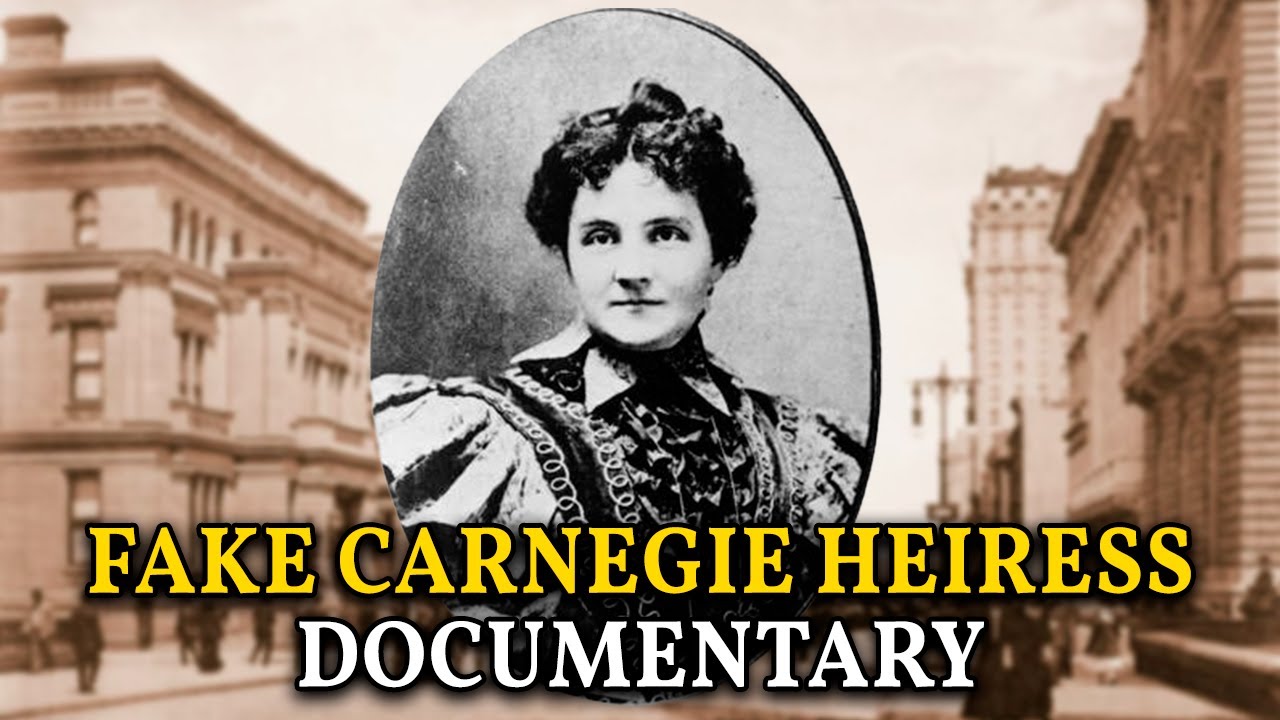
The doctors had diagnosed nervous prostration and uremia. Her kidneys had failed. Her heart barely beat. October 10, 1907.
Columbus, Ohio. The woman turned exactly fifty years old that day. No one brought a cake into the cell. No one lit candles.
No one sang. The only sound in the room was the scratch of the prison doctor’s pen filling out a death certificate for inmate number 33,298. Her name was Elizabeth Biggley. But the world remembered her by another name—the name that, just three years earlier, had opened the doors of the most impregnable safes in America.
Cassie Chadwick. To understand the scale of the tragedy, one had to roll the film back. Not to the moment of birth, but to the moment of triumphant madness. Three years earlier, on Euclid Avenue in Cleveland—the stretch known as Millionaire’s Mile—a house shone brighter than the mansions of the Rockefellers and the Hannas.
Inside, a woman in silks, laden with diamonds so heavily they seemed vulgar even for that era of excess, received guests. She had just returned from shopping. That day she had bought not one dress but twenty. She had ordered not one piano but eight, all to be sent as gifts to friends whose names she barely remembered.
She spent money as if it burned her hands. A check for $40,000 for a pearl necklace—nearly $1. 5 million in modern money—was written without blinking. Where did this money come from?
The answer was whispered from drawing room to smoking room: she was Andrew Carnegie’s daughter. Illegitimate, of course, but beloved. Carnegie, the steel king, whose fortune exceeded the budgets of many European countries. To be his daughter meant to possess the keys to the world.
But the key turned only one way. November 1904. The town of Oberlin. A cold wind drove dry leaves and scraps of newspaper down the streets, but in the main square the air was hot with fury.
A crowd stormed the doors of the Citizens National Bank. There were no aristocrats here. Farmers in muddy boots, widows in mourning, students from the local college—they shouted, cried, and pounded their fists on the closed doors. They had come for their money.
There was no money. Inside, in the office paneled in mahogany, sat President Charles Beckwith, sixty-three years old. All his life he had built a reputation as the most honest man in the city. Now he clutched his head in his hands, staring at the open safe.
It contained no gold. It held a stack of promissory notes totaling several times the bank’s capital. On each paper was the signature of Andrew Carnegie. Beckwith did not yet know he would die in a few weeks.
The doctors would write “heart attack,” but the whole city would know the truth. He died of shame. He had given the savings of widows and orphans to a woman who simply promised him access to great wealth. Cassie Chadwick was not just a swindler.
She was an architect of illusions. A hundred years before Anna Delvey deceived the elite of Manhattan by posing as a rich German heiress, Cassie did the same thing on a far grander scale. Anna used Instagram and fashionable outfits. Cassie used human greed and the fear of missing out.
Historians estimate her scam at between two and twenty million dollars of that time—up to roughly $70 million today—obtained against the collateral of a name. A name belonging to a man who did not even know she existed. How was this possible? How could the daughter of a simple railroad worker from the Canadian backwoods hypnotize jaded financiers?
Why did no one simply call Carnegie? Why did bankers, who demanded collateral for every cent, hand her suitcases of cash on her word alone? To understand how the bank in Oberlin collapsed, one had to leave the marble halls and go to a place that smelled of coal dust and manure. 1857.
Eastwood, Province of Ontario, Canada. In the family of railroad worker Daniel Biggley, a girl named Elizabeth was born. Betsy. In the future she would call herself the illegitimate daughter of a Scottish billionaire, but the truth was far harsher.
The Biggleys did not go hungry, but they counted every cent. Betsy grew up strange. She had a slight stutter and a terrifying, unblinking gaze. Modern psychologists might call her a high-functioning sociopath.
She did not play with dolls. She played with lies. The first rehearsal of the great scam came when Betsy was thirteen. She forged a letter—not a love note, but an official notice stating she had inherited a small fortune from a nonexistent uncle in England.
With that letter she went to a local merchant and opened a line of credit. She was believed, because no one could entertain the thought that a little farm girl was capable of such cynical forgery. This became her first lesson: the bolder the lie, the more willingly people believed it. People want to believe in the fairy tale of sudden wealth, even if it is someone else’s.
When Betsy grew up, Canada became too small for her. At twenty-two she traveled to the United States, an era when one could erase the past simply by moving to another state and changing one’s name. She tried her hand as a fortune teller and medium, calling herself Madame Lydia DeVoe. This was her business school.
Working as a medium, she mastered the skill she would later use against Wall Street bankers: cold reading. She learned to look a person in the eye and tell them what they most wanted to hear. She sold hope. Bankers, as it turned out, were no different from widows at séances.
Both wanted to believe the future promised gold. In 1882 she arrived in Cleveland. There she pulled off her first major scheme, posing as an heiress, pledging property that did not belong to her, and taking out loans under fictitious guarantors. But the system failed.
She was arrested. Her 1889 trial in Toledo, Ohio, became a one-woman show. The sentence: nine and a half years in prison for forgery. For any other person, this would have been the end.
Social death. For Betsy, it was a university. In prison she behaved not like an inmate but like a guest mistakenly locked in the wrong room. She charmed the guards.
She predicted the future for the warden. She wrote complaint letters to Governor William McKinley, playing the part of a repentant victim of circumstance. It worked. She was released early, after only three years.
She walked free in 1893, thirty-six years old, with a criminal record, no money, no reputation. But she had a plan. To steal millions, she needed the perfect disguise. She needed a facade.
She needed a name that would become a shield. She returned to Cleveland, changed her name to Mrs. Cassie Hoover, and began her hunt. Her target was not money directly, but status.
She found the perfect victim: Dr. Leroy Chadwick. A widower, a prominent physician, living in a mansion on prestigious Euclid Avenue. Wealthy but dull.
Lonely and vulnerable. Cassie played the part of a modest but well-off widow from a good family. She asked him to treat her for female ailments. Confidential talks, soft touches.
The doctor was enchanted. He saw a refined lady, not an ex-convict from Toledo. In 1897 they married. It was her most cynical move.
Marriage to Dr. Chadwick cleansed her biography more thoroughly than any lawyer could. From Betsy Biggley—daughter of a railroad worker, former inmate—she became Mrs. Cassie Chadwick, mistress of a mansion on the corner of Euclid Avenue and 82nd Street.
She had access to high society, servants, carriages, store accounts. It never occurred to the doctor whom he had let into his home. He did not know that the wife sitting at his dining table was already calculating how to use his good name to rob the century. A husband’s money, however, was not enough.
The doctor was wealthy, but not fabulously so. Cassie wanted the power that only absurd, unlimited money gave. She needed something more than a doctor’s salary. Then she remembered the name resounding from every newspaper headline: Andrew Carnegie, who had just sold his steel company for $480 million.
The plan ripened. She would not steal money from her husband. She would arrange it so the bankers themselves brought her money, begging her to take it. All she needed was one trip to New York and one brilliant mystification that would turn a provincial doctor’s wife into the secret princess of American capitalism.
Betsy Biggley was dead. Born was Cassie Chadwick. 1900. New York City, the air saturated with coal soot and the smell of freshly printed dollars.
Cassie Chadwick stepped from a carriage before the Holland House Hotel on Fifth Avenue, dressed in mourning—though none of her close relatives had died. This was mourning for her poverty, which she had decided to end forever. Along with her came Ira Reynolds, a respected lawyer and banker from Cleveland. Cassie had invited him as a witness, though he thought he was accompanying her on boring family matters.
For the lie to work, it needed confirmation from someone with an impeccable reputation. The carriage stopped at number 2, 91st Street. Andrew Carnegie’s mansion—a fortress of brick and limestone occupying an entire block. Cassie asked Reynolds to wait in the cab.
She adjusted her veil and climbed the steps. The doorman opened the door. Reynolds sat in the carriage, checking his watch. Ten minutes.
Fifteen. Twenty. What was happening behind those walls? What could the wife of a simple Ohio doctor have to discuss with the man who built America’s steel backbone?
In fact, a scene worthy of vaudeville was unfolding inside. Cassie did not meet Carnegie—he was not even in town. She asked for an audience with the housekeeper, introducing herself as a lady who wanted to check the references of a former Carnegie servant named Hilda. The unsuspecting housekeeper conversed politely in the hallway.
To Reynolds, watching from the street, it looked like a family visit. After half an hour, Cassie emerged, agitated. As she climbed into the carriage, she accidentally dropped her purse. A sheet of paper fell out.
Reynolds, being a gentleman, bent to pick it up—and froze. It was a promissory note for $2 million. At the bottom was a signature familiar to every American. Andrew Carnegie.
Reynolds raised his eyes to Cassie. She burst into tears. And in that jolting carriage in the middle of New York, she told him the story that became the foundation of her empire. She confessed she was Carnegie’s illegitimate daughter, that the old man was tormented by guilt, that he showered her with money to avoid scandal.
She showed Reynolds another document: a trust agreement for $7 million. In 1900, when an average worker’s salary was $500 a year, $7 million—roughly $230 million today—was enough to buy a small fleet or build a town. Reynolds was overwhelmed. He swore to keep the secret.
And of course, as soon as they returned to Cleveland, he told everyone who needed to know. A secret in the banking world is the most liquid commodity. The rumor that a secret Carnegie daughter lived on Euclid Avenue spread like wildfire. Bankers who had never glanced at her now lined up to offer their services.
They did not check the authenticity of the promissory notes. To offend a Carnegie daughter with distrust meant losing the client of the century. Cassie began to spend. Her house turned into a warehouse of antiques.
She bought not because she liked things, but to prove her reality. If she spent like a billionaire’s heir, she was a billionaire’s heir. She bought a pure gold organ for her living room for $9,000—enough to buy three good farms. She ordered a carpet woven to her designs in Belgium, costing what a small hospital might spend in a year.
Her wardrobe filled with sable and mink. Once she walked into a musical instrument store and, waving a gloved hand, said, “Send me eight Steinway pianos. I want to give them to my friends for Christmas. ” The manager nearly fainted with joy.
She hired a staff of servants ten times larger than a two-person family needed. She paid them generously but demanded absolute adoration, introducing etiquette worthy of a royal court. Guests had to wait in the drawing room while Madame deigned to come down. The most cynical part was how she treated money itself.
She created the impression that money was garbage to her. She could leave a $100 tip to a waiter who simply brought water. People thought: no one throws money around so easily if it is stolen. Only someone with bottomless pockets could afford such carelessness.
Her husband was pushed to the background. He lived in his own house as a guest, wandering past Ming Dynasty vases and cases of champagne. He probably asked questions. Cassie answered vaguely: good investments, an inheritance from a distant relative.
Or perhaps he was simply afraid to ask. It is so pleasant to live in paradise, even if you do not know who is paying the bill. The interest on her loans grew. Bankers began to get nervous, asking for at least partial payments.
To pay one loan, she took out two new ones. A classic pyramid—built not on depositors, but on the reputation of one person. In her safe there were not $7 million. There was a piece of paper from a stationery store and ink she had applied herself, practicing Andrew Carnegie’s signature at night by the light of a kerosene lamp.
She was balancing on a rope over an abyss. The crowd applauded, thinking it was a beautiful show. No one noticed the rope was fraying. Herbert Newton, a Boston investment banker, was a man of numbers.
His office smelled of expensive cigars and rustling bonds. He did not believe in fairy tales. He believed in collateral. Cassie came to him not as a supplicant, but as a queen bestowing a favor.
At stake was $190,000—over $6. 5 million in modern money. She laid out no real assets, no land, no gold. She laid out paper: promissory notes for hundreds of thousands of dollars, trust obligations with that magical signature.
Andrew Carnegie. Newton was a cynic. Had a regular businessman come to him, he would have checked every letter under a microscope. But before him stood a woman about whom all Cleveland whispered: “Illegitimate daughter.
” The phrase acted like hypnosis. Newton calculated: Carnegie will never allow a trial. He will pay any amount to keep the secret of his youthful sin. Newton agreed, but as a predator.
He demanded usurious interest and full coverage. He thought he had Cassie by the throat, not understanding he was holding dynamite with a lit fuse. Cassie signed the promissory note, knowing she could never repay it. She had sold her future for a few more months of her sweet life.
The moment the pen scratched the paper, her fate was sealed. Newton was different from the provincial Ohio bankers. He did not fear scandal so much as he feared losing his money. In Boston, he had already begun counting the days until the interest payment.
When that day came, he would not listen to excuses. He would demand his due. In Cleveland, however, Cassie still had her palace. The house on Euclid Avenue was a monument to the fear of empty space.
Every wall, every shelf, every corner was stuffed with things. The air always seemed stale, for the windows were rarely opened; Cassie did not want the dirty, noisy, real world to penetrate her sanctuary. The famous gold organ stood in the living room, gleaming. Hired musicians played while the hostess drank tea.
The music filled the air, not allowing thoughts of debts to intrude. High-backed chairs like thrones were upholstered in brocade. Tables groaned under porcelain shepherdesses, silver snuff boxes, vases of Chinese enamel. This was not a collection.
It was a warehouse of loot. The house was divided by an invisible wall between masters and servants. Servants were not allowed to speak until addressed. They had to merge with the wallpaper when Madame passed.
For Cassie, they were animated furniture. A maid named Emma later testified that an atmosphere of fear reigned. Cassie could be generous, giving away dresses and money, then fly into hysterics over a stain on a tablecloth. The servants saw how nervously she checked the mail, how her hands trembled opening envelopes from banks.
They heard her screaming at creditors behind the closed doors of her study, then coming to dinner with a mask of icy calm. There was another resident—a ghost in the flesh. Dr. Leroy Chadwick wandered the corridors of his own mansion, careful not to touch the priceless vases.
At the long dining table set for twenty, they often sat alone, separated by meters of polished wood and candelabra. The silence was deafening. Cassie could not tell her husband her empire was held together by forged signatures. The doctor likely was afraid to ask the question hanging in the air.
He preferred blindness. He hid in his library, the only room that still smelled of his old life. And there was one more secret. A young man named Emil Hoover lived in the house.
He ran errands, handled correspondence, accompanied her on trips. To guests he was a distant relative, a hanger-on, a hired clerk. But Emil Hoover was her own son, born years earlier when she was still Betsy Biggley. She could not acknowledge him without destroying the legend of her age and origin.
Emil was silent, living in his mother’s shadow, receiving crumbs from her table—a participant in his own humiliation. Cassie’s psyche began to give way. She stopped sleeping. The maids whispered that her light burned until dawn as she paced like a tiger in a cage, counting payment dates.
To muffle the fear, she turned to the medicine cabinet of the age—opiates and laudanum, prescribed as harmless sedatives. The glassy look in her later photographs may have been more than hypnotic charisma. She began to make mistakes. Once she went to Pittsburgh, supposedly to meet with “Papa.
” She returned with new promissory notes, but an experienced eye might have noticed the paper was too cheap for a billionaire’s office. No one dared to doubt. Not yet. Dr.
Chadwick had begun to suspect. Strange individuals appeared on the threshold—messengers from creditors demanding meetings. A wall of silence grew between the spouses. The doctor left early for the clinic and returned late, just to avoid the mausoleum of lies.
He started drinking. Quiet, gentlemanly alcoholism, a frequent companion to the husbands of great adventuresses. Cassie flitted between Cleveland, New York, and Boston. These were no longer triumphant tours.
They were panicked runs. She was searching for a new victim, someone stupid and greedy enough to give her another half million. In Cleveland stores where she had once been met with bows, clerks now politely asked her to wait while the manager checked her account. Whispers slithered through the city: the Chadwicks haven’t paid for the carriage repair.
Her check for charity came back for insufficient funds. This is the most terrifying moment for a swindler—when the magic dissipates. People did not yet know the truth, but they had stopped believing unconditionally. In November 1904, the rot burst through.
Herbert Newton was tired of waiting. He hired private detectives. They began to dig. What they found smelled not of Carnegie steel, but of the cheap perfume of Betsy Biggley from the Canadian backwoods.
No trust fund existed. The New York addresses she had given led nowhere. Cassie felt the noose tighten. Her hysterics became terrifying.
She screamed at the servants. Once she fainted in the living room—not theatrically, but for real, from exhaustion. Her kidneys, heart, and nerves had all been destroyed by years of adrenaline. The house on Euclid Avenue, stuffed with treasures, turned into a tomb.
The eight pianos were silent. The gold organ gathered dust. In the center of the splendor sat a woman who knew her time was up. Only days remained until Herbert Newton would file the lawsuit that blew up the Ohio banking system.
November 2, 1904, began as an ordinary gray Tuesday in Cleveland. Herbert Newton did what all other creditors had feared: he stopped believing the fairy tale. He filed suit in the Federal District Court of Cleveland, demanding immediate return of $190,000 plus interest. It was the first stone thrown at the glass house.
The news spread instantly. Cassie fled by train to New York, hoping to dissolve in the metropolis as she had once before. She took a room at the Holland House Hotel on Fifth Avenue. The habit of luxury did not leave her at the edge of the abyss.
She locked herself in, claiming illness. December 7, 1904. Someone knocked on her door. It was not room service with champagne.
It was federal agents. The scene of Cassie Chadwick’s arrest became legend. She lay in bed pretending to be dying. “I am too weak to get up,” she whispered.
The detectives were not impressed. They ordered her to dress. In the search that followed, the most cynical detail of the entire story emerged. Under her silk lingerie and corset, Cassie wore a heavy belt.
It contained no letters from Carnegie, no sentimental souvenirs. It held cash. $100,000—the equivalent of three and a half million modern dollars. While the bank in Oberlin collapsed and depositors lost their last cents, the Queen of Ohio had worn her golden parachute on her waist.
She had known the ship was sinking and put on a life jacket stuffed with bills stolen from credulous provincials. In Oberlin, a real tragedy unfolded. As news of the arrest reached the city, depositors of the Citizens National Bank rushed to the doors. Inside, President Charles Beckwith opened the safe.
Stacks of promissory notes for hundreds of thousands of dollars, signed Andrew Carnegie. Until that moment, these papers had been a sacred grail, a guarantee of prosperity. Now, in the cold light of truth, they were scrap. Beckwith had given Cassie not only the bank’s money—about $240,000—but his personal funds, over $100,000.
He had staked everything: his honor, the depositors’ money, his family’s future. The final blow came from the ghost himself. Andrew Carnegie, silent for years simply because he did not know of Cassie’s existence, finally spoke. Reporters found him in New York.
The steel magnate looked at the promissory notes and uttered the phrase that became the sentence: “I have not signed a debt note for thirty years. I do not even know this woman. ”
Everything collapsed. Charles Beckwith locked himself in his house.
He stopped eating. He sat for hours staring at a single point. A few weeks later he died—officially of heart disease. In fact, his heart broke from the realization that he had destroyed the life of an entire city for the smile of a swindler.
Cassie was transported back to Cleveland. The crowd at the station met her not with flowers but curses. People wanted to lynch the duchess. She looked at them through the window of the police carriage with her signature unblinking gaze, but the magic was gone.
In that look, they saw not aristocracy but madness. Dr. Leroy Chadwick, upon learning the truth, fled the city. He boarded a ship and sailed for Europe, leaving his house, his practice, and his disgraced surname.
Another victim—a man who had wanted domestic comfort and got a place in the criminal chronicles. In April 1905, a spectacle the press dubbed “the carnival of greed” began at the mansion on Euclid Avenue. Cassie Chadwick’s property was put up for auction. The doors of the impregnable fortress were flung open to anyone who could buy a ticket.
Thousands of people poured in—not for antiques, but for souvenirs of scandal. They wanted to touch the sheets on which the queen of swindlers had slept and laugh at her taste. The auctioneers were shocked. The house turned out to be a warehouse of expensive junk.
In the closets they found dozens of fur coats never worn, hundreds of pairs of gloves still fastened with factory tags, mountains of cheap costume jewelry mixed with real diamonds. There was a musical chair: when someone sat, a hidden mechanism played a cheerful melody. The crowd laughed at the absurdity of it standing in the most expensive living room in Ohio. The gold organ, bought for $9,000, went for a pittance.
The Steinways sold for the price of firewood. Cassie’s debts exceeded $2 million. The auction raised only a pitiful sum. The depositors of the Oberlin bank received back only cents on the dollar.
For the college students, the widows, the pensioners, this auction was not a show but the funeral of their futures. Cassie herself made her final journey by train to Columbus, to the Ohio State Prison. Even here she tried to play her role one last time. She arrived with huge trunks stuffed with dresses, hats, and carpets, seriously believing she could furnish a suite in her cell.
The warden met her coldly. The trunks went to storage. Silks and velvets were replaced by a rough striped uniform. Instead of “Mrs.
Chadwick,” she became number 33,298. In prison, she faded before their eyes. Without corsets, without makeup, without the flattery of those around her, she became what she was: an old, sick woman named Betsy Biggley. Her letters were full of despair.
She wrote to her son Emil, begging him to send delicacies or warm clothes. The letters often went unanswered. The world she had deceived for so long had simply forgotten her. October 10, 1907.
The finale came. Nervous prostration had progressed to uremic coma. Cassie Chadwick died in the prison infirmary on her fiftieth birthday. Her funeral was the final irony.
The woman who claimed to be the flesh and blood of Andrew Carnegie was buried in her native Eastwood, Canada. The tombstone read: Elizabeth Biggley. No mention of Chadwick, Carnegie, or millions. The circle closed.
She had returned to where she began, taking not a single cent with her. The mansion on Euclid Avenue suffered the same fate as her reputation. Millionaire’s Mile was ending. Taxes rose; the rich moved to the suburbs.
Cassie’s house stood empty and cursed. In the early 1920s it was demolished. Bulldozers crushed the walls that had whispered of $7 million, ground the parquet under which thousand-dollar shoes had walked. Today, at the corner of Euclid Avenue and 82nd Street, there is not even a commemorative plaque.
There are no ruins. There is only city asphalt. The bank in Oberlin never recovered. Its collapse dealt a heavy blow to the local community and to Oberlin College, whose funds also suffered.
The case went into banking textbooks as a classic example of why one should not issue loans on an honest word—even if that word is Carnegie. Banking regulations were tightened partly because of such stories. In a cemetery in Woodstock, Ontario, between graves, stands a modest gray stone, almost sunk into the ground. On it is carved: Elizabeth Biggley.
That is all that physically remains of the woman who made Wall Street tremble. Andrew Carnegie’s name, meanwhile, is carved in gold on the facade of one of the most prestigious concert halls in the world. Universities, libraries, and foundations bear his name. He built with steel and stone.
Cassie built with lies and air. Time put everything in its place. The real remained. The fake disappeared.
But Cassie herself did not entirely disappear—she merely changed face and era. In 2019, the world watched the story of Anna Sorokin, known as Anna Delvey, a girl from a simple family posing as a rich German heiress in New York hotels, deceiving banks and the elite of Manhattan. The same techniques. The same arrogance.
The same hints of trust funds. Cassie Chadwick was patient zero of a virus. Elizabeth Holmes, who deceived investors for billions while imitating the confidence of Steve Jobs, is her spiritual great-granddaughter. Simon Leviev, the Tinder Swindler, is another heir to her methods.
Technology changed. Instead of forged promissory notes, now there is Photoshop and screenshots of bank accounts. Instead of whispers in smoking rooms, Instagram posts. But human psychology remains the same.
We still want to believe in the fairy tale. We are still afraid to offend a rich person with distrust. Cassie proved that money is a collective hallucination. If everyone believes you are rich, you are rich—until someone asks for the debt to be repaid.
When the prison doctor covered her face with a sheet, he was not covering the eyes of Carnegie’s daughter. He was covering the eyes of a frightened girl from a Canadian village who simply wanted the world to notice her. She got what she wanted. Newspapers wrote about her from New York to London.
Her name became a household word. But the price of that ticket to history was too high. She died alone, blind, and disgraced, leaving behind only the ruins of other people’s lives. In the world of big money, there is a rule: capital shouts, wealth whispers.
Andrew Carnegie whispered with his libraries. Cassie Chadwick shouted with her diamonds. When the shout died down, only an echo remained. She sold her soul for gilding but forgot to check the gold’s assay.
When the layer of gilding wore off, all that was left underneath was the rusty metal of a prison bar.