On the night of May 4, 1977, a 62-year-old millionaire loan shark named Ruby Stein walked into a dive bar at 566 Tenth Avenue in Manhattan’s Hell’s Kitchen and was never seen alive again. Within hours, his nearly 300-pound body had been cut into seven separate pieces. His fingertips had been peeled off like gloves to destroy his prints, and his torso would eventually wash ashore in a canvas bag off the New Jersey coast. The men who did it were not Italian mobsters from the city’s famous crime families.
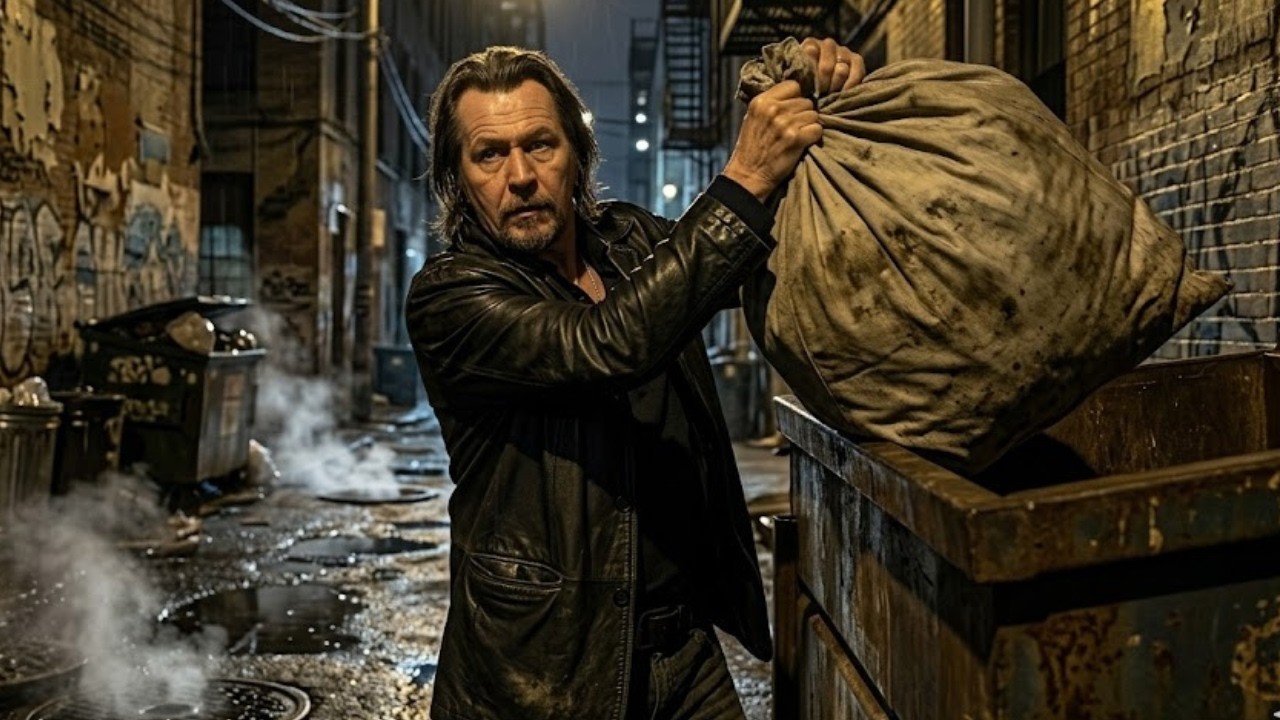
They were the Westies, an Irish-American gang whose brutality made even the Mafia uneasy, and whose leader, Jimmy Coonan, had just committed a murder that would reshape the entire structure of organized crime in New York. Hell’s Kitchen in the late 1970s was a dark industrial corridor pressed against the Hudson River, a landscape of decaying tenements, longshoreman saloons, and meatpacking warehouses. The air smelled of stale beer and river rot. It was a place where people knew when to shut their windows and look away.
The 566 Club, a run-down bar on Tenth Avenue, served as the headquarters of Coonan’s operation. From the outside it looked like an ordinary watering hole for dockworkers, but to the NYPD and federal agents watching from unmarked vans, it was the nerve center of a savage criminal enterprise. Coonan, known on the streets as Frankie Flannery, was young, calculating, and the most feared gang leader in Manhattan. Ruby Stein was a different kind of predator.
A legendary Jewish loan shark, he controlled a street portfolio of over three million dollars in high-interest loans. His clients included crooked politicians, high-ranking police officials, and members of the Italian Mafia. He carried a small black leather notebook listing the names, addresses, and debts of some of the most powerful men in the city. Stein believed his wealth and his connections to the Gambino crime family made him untouchable.
He knew Coonan owed him a massive six-figure sum, months overdue, and he had come to Hell’s Kitchen to collect in person. He saw Coonan as an ambitious but reckless kid who could be easily intimidated by the backing of the Mafia. The gruesome stories about the Westies he dismissed as street rumors. It was the last miscalculation of his life.
Stein knocked on the door of the 566 Club. The lock turned, and he stepped inside into the dim, smoky tavern. Coonan sat at a table in the back, calmly drinking whiskey. Behind him stood Mickey Featherstone, his top enforcer, a deeply unstable Vietnam War veteran with a reputation for sudden explosive violence.
Stein did not sit down. He began speaking loudly and authoritatively, demanding his money and dropping the names of powerful mafia figures to assert his dominance. He told Coonan his patience was exhausted and the debt had to be settled that night. Coonan did not scream or threaten.
His face remained an unreadable mask. He listened with eerie calm. For most criminals, a debt to a man like Ruby Stein would require negotiation, pleas for more time, or a scramble for cash. But Coonan did not operate that way.
In his mind, the debt was not a financial obligation. It was a tactical problem with a simple, permanent solution. He nodded almost imperceptibly to Featherstone and stepped back. Before Stein could react, a gunshot echoed through the bar.
The bullet struck him in the back of the head at point-blank range. The loan shark collapsed, dead before he hit the linoleum. The black notebook flew from his pocket and slid across the floor. Coonan picked it up and slipped it into his own jacket.
In one bullet, he had erased his debt and inherited Stein’s entire multi-million-dollar loan-sharking empire. But Coonan knew the killing was not the end. The Mafia would come looking for their top earner. The police and FBI would launch a massive investigation the moment a wealthy, connected man vanished.
Traditional mobsters would panic, wrap the body in chains, and sink it in concrete. Coonan and Featherstone had a more sophisticated method. They dragged Stein’s body down into the basement of the club, a space outfitted like a professional butcher shop, complete with plastic sheeting on the floors and walls and industrial tools hanging from hooks. Featherstone, drawing on the desensitizing horrors he had witnessed in Vietnam, picked up a hacksaw and a butcher’s knife.
They did not view the body as a person. They viewed it as a logistical problem to be broken down into manageable shipping units. They removed the head first and placed it in a paper grocery bag. They severed the hands and soaked them in a bucket of ice-cold water until the skin loosened, then peeled the fingertips off like tight leather gloves and flushed the prints down the toilet.
They cut the torso in half, severed the legs, and by three in the morning Ruby Stein had been transformed into seven pieces of meat. The parts were scattered across multiple jurisdictions. The head, weighted with cinder blocks, was dropped into the East River. The skinless hands were thrown into the Hudson near Pier 49.
The legs were dumped in a dumpster in Yonkers. The torso went into a heavy canvas body bag and was dropped off the side of a boat into the shipping lanes. Coonan believed that by dispersing the evidence and removing every identifying feature, he had created a forensic impossibility. The Westies had turned murder into a vanishing act.
For a brief moment, it seemed to work. Stein simply disappeared. His car was found abandoned blocks away, but there were no witnesses, no blood, no evidence. Then Coonan made his first major mistake.
Two days after the murder, the canvas bag containing Stein’s torso trapped decomposing gas and began to float. It drifted across the shipping lanes and washed up on the rocky New Jersey shore. Port Authority police found it and unzipped it, horrified by the contents. The head and hands were gone, but the medical examiner noticed distinct surgical scars on the torso from a procedure Stein had undergone months earlier.
Through medical records, the authorities made a positive identification. The police now had a name, a victim, and a trail of questions that led straight back to the loan-sharking dens of Manhattan. The murder of Ruby Stein became the catalyst that forced the FBI to officially classify the Westies as a highly organized federal target, not just a petty street gang. But Coonan did not panic.
He used the brutal reputation of the murder to pull off his masterstroke. He arranged a secret meeting with Paul Castellano, the supreme boss of the Gambino crime family. Castellano controlled labor unions, construction projects, and the meatpacking industry on the West Side. He needed people eliminated to maintain his monopolies, but he could not risk the bodies being traced back to his family’s name.
Coonan walked into the meeting and offered him a cold corporate proposition. The Westies would become the exclusive body disposal service for the Gambino family. If the Italians wanted someone dead, the Westies would do the killing, bring the target to Hell’s Kitchen, and make the person disappear completely. In exchange, Coonan demanded the Gambino blessing to rule Hell’s Kitchen, a cut of local union construction shakedowns, and protection from rival Italian families.
Castellano looked at the young Irish butcher and recognized a uniquely terrifying utility. He shook Coonan’s hand and sealed a blood pact that would define the next decade of New York crime. With the backing of the Gambinos, Coonan became extraordinarily wealthy. He abandoned the street lifestyle of Hell’s Kitchen, buying a luxury mansion in Hazlet, New Jersey.
He drove a new Lincoln Continental, wore custom-tailored Italian suits, and sent his children to elite Catholic schools. By 1980, federal estimates suggested he was pocketing over a million dollars a year from extortion, labor racketeering, and contract murders. He had transformed himself into a legitimate-looking businessman while keeping a rusted hacksaw and a bucket of cold water waiting in the basement of his Tenth Avenue saloon. But the pressure of the FBI wiretaps and multi-agency task forces began to take a toll.
Mickey Featherstone was rapidly unraveling. The trauma of Vietnam, fueled by years of heavy alcoholism, turned Coonan’s top enforcer into an unpredictable liability. He began killing strangers in public bars over minor slights, a bartender who shorted him change, a street hustler who looked at his wife the wrong way. The streets of Hell’s Kitchen were flowing with unnecessary blood, and Coonan realized his oldest friend had become a direct threat to his freedom.
In 1986, Featherstone was arrested and charged with the high-profile murder of a local man named Michael Holly. The case against him looked airtight, and he faced twenty-five years to life. But Featherstone had not committed that murder. Coonan, terrified of his enforcer’s instability, had hired another associate who resembled Featherstone to carry out the hit in broad daylight, intentionally framing his own top enforcer.
He calculated that with Featherstone locked away for life, the secret of Ruby Stein and the basement butcher shop would stay buried forever. He miscalculated. Sitting alone in a federal holding cell, Featherstone studied the evidence and realized that the man he had repeatedly chopped human beings into pieces for had betrayed him. On November 12, 1986, Featherstone flipped.
He officially became a federal cooperating witness and agreed to tell the FBI everything. During the massive 1987 federal RICO trial, he testified for eleven days, describing in clinical, monotone detail the dismemberment of Ruby Stein, the peeling of skin from fingers, the blood-soaked plastic sheeting, and his conversations with Coonan about which body parts would float and which would sink. The jurors sat in stunned silence. Two of them required professional psychological counseling after hearing the evidence.
On March 6, 1988, Jimmy Coonan was convicted on all federal counts and sentenced to seventy-five years in a maximum-security penitentiary. The mansion, the suits, and the fear he commanded on Tenth Avenue vanished in an instant. He was sent to Lewisburg, Pennsylvania, where he remains behind concrete walls to this day. Featherstone and his family were placed into the federal witness protection program, given new names, and relocated to an undisclosed state.
Today, the brutal industrial Hell’s Kitchen that birthed the Westies is unrecognizable. The building at 566 Tenth Avenue still stands, but the smoky bar and blood-stained basement are gone, gutted and gentrified. Affluent New Yorkers and young tech professionals now sit in that exact location ordering oat milk lattes, oblivious to the darkness beneath their feet. The tenements where Coonan plotted his rise have been converted into luxury condominiums.
The 1990 film State of Grace attempted to capture the neighborhood’s grit, but studio executives cut the dismemberments and the fingerprint buckets, claiming no commercial audience would sit through the reality. They replaced systematic murder with a tragic love story. The real story of the Westies remains far worse than any movie, a chilling reminder that in the pursuit of absolute power, the only sin that ever receives a permanent punishment is loyalty.






