The knock came in the early afternoon, not loud, not forceful, just firm enough to demand attention. Samuel froze midstep. Eleanor closed her eyes briefly, then opened them, her expression settling into stillness. Let them in, she said.
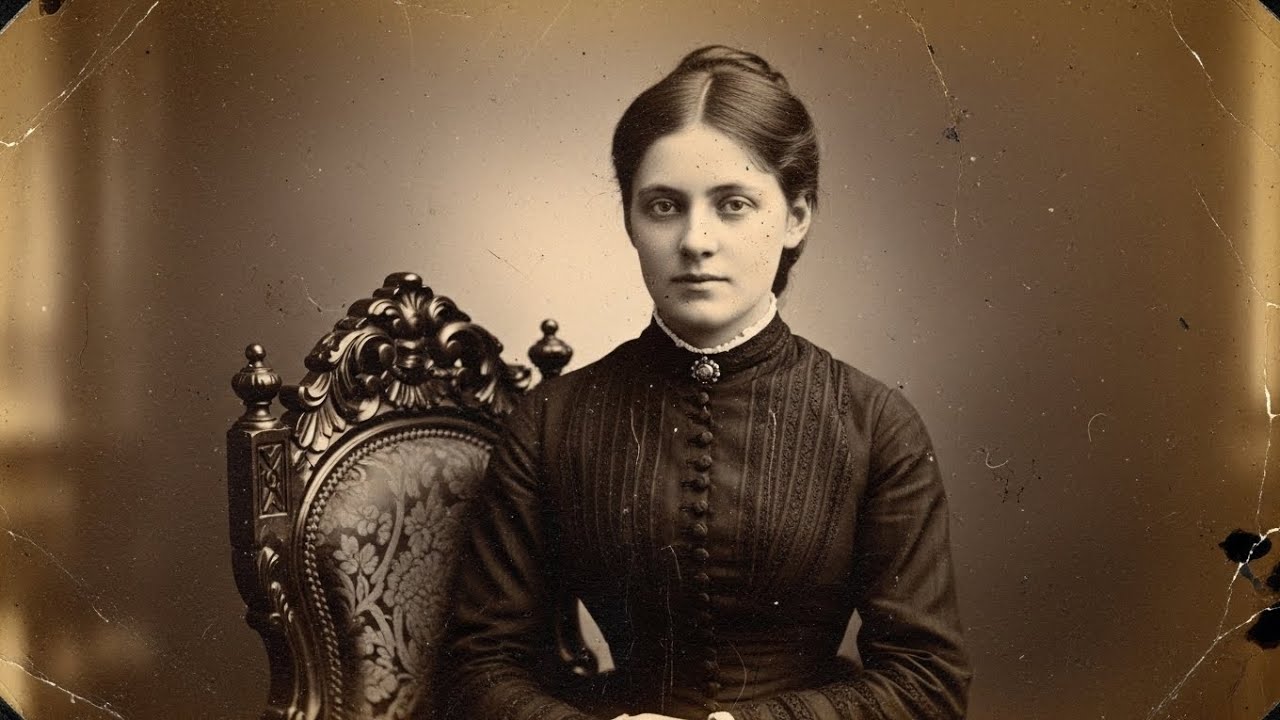
The door opened to reveal three men, dressed plainly, respectably, no uniforms, no insignia, nothing to suggest authority, and everything to confirm it. They removed their hats as they entered, a gesture of courtesy that felt rehearsed. Their eyes moved quickly, taking in the room, the furniture, the layout of the house. Mrs.
Wickham, one said. Eleanor replied. To what do I owe this visit? The man smiled faintly.
Merely a matter of clarification. Clarification. Savannah’s favorite word. They asked her to sit.
She did. Samuel remained standing near the doorway. No one acknowledged him directly, but Eleanor noticed the way their eyes flicked toward him, measuring, cataloging. The questions began gently.
How had Eleanor been managing since her husband’s death? Had she experienced any difficulties with the estate? Was there anything she wished to disclose? Eleanor answered carefully, politely, vaguely.
Each response felt like stepping through a minefield. The men listened without interrupting, then one leaned forward slightly. There have been inconsistencies, he said. Not errors, he clarified.
Merely matters that require attention. We understand grief, another added. We understand how loss can cloud judgment. Eleanor felt a flicker of anger rise within her, sharp and dangerous.
She pushed it down. My judgment is clear, she said evenly. They asked to review certain documents. She provided what she could.
They examined the papers carefully, murmuring among themselves in low tones. After what felt like hours, they gathered their things and left as quietly as they had arrived. For several long seconds, neither Eleanor nor Samuel moved. Then Eleanor exhaled, a slow, shaking breath she had been holding for far too long.
That was not the end, Samuel said. No, Eleanor replied. That was the beginning. To understand how she had come to this, one had to understand the city itself.
Savannah in the 1840s did not wake suddenly. It unfolded. Morning arrived in layers, pale light first, then the slow creek of shutters, then footsteps on brick streets still damp from the night’s breath. The city carried itself with restraint, like a woman trained never to show hunger.
Everything was measured, words, gestures, silence, especially silence. From a distance, Savannah looked orderly, almost gentle. Iron balconies curved like lace. Moss draped itself over oak branches as if even nature had learned to soften its voice.
Horse hooves struck stone at a polite pace. Church bells marked the hours not loudly but with confidence, the sound of a place certain it was righteous. But righteousness in Savannah was not loud. It was watchful.
People learned early where to look and, more importantly, where not to. The Wickham house stood on a shaded street not far from the river, close enough to smell salt when the wind shifted, far enough to keep commerce from touching the front steps. It was not the largest home in the neighborhood, nor the most ornate. That distinction belonged to families who needed to display their power.
The Wickhams had never needed to. Their strength lived in quieter places, in documents signed behind closed doors, in favors owed, in names that carried weight without being spoken twice. The house reflected that. Whitewashed walls, tall windows, a front door polished smooth by decades of restrained entrances and exits.
After Thomas Wickham died, the door closed more often. His death had not been dramatic. No blood, no scandal, just a sickness that took him slowly, leaving behind a body that shrank day by day until even breathing seemed like work. Savannah respected deaths like that.
They felt proper. God approved. The funeral passed without disturbance. Black cloth, lowered heads, polite tears, men speaking in low tones about trade routes and cotton prices even as the casket settled into the ground.
Eleanor Wickham stood still through it all. She did not faint, did not cry aloud, did not need to be held. Her face remained composed, pale but firm, as if carved from the same marble used for headstones. She wore mourning well, too well, some might have thought, if they allowed themselves such thoughts.
But Savannah was careful with thoughts. A widow, especially a wealthy one, was expected to become smaller, to fold inward, to reduce her presence until it no longer disrupted the shape of the world around her. Eleanor understood this instantly. She had been raised into it.
In the weeks after the burial, she dressed in black without deviation. The fabric rustled softly when she moved, the sound of restraint. Her hair remained pinned tightly, not a strand daring escape. When she walked, she did so slowly, eyes lowered, steps measured.
She gave Savannah exactly what it expected, which made it all the more unsettling when the house itself did not seem to shrink with her. From the outside, nothing appeared wrong. The windows opened at the usual hours. The front steps were scrubbed clean each morning.
Deliveries arrived and departed on time. The garden was tended, though no one could recall seeing Eleanor there herself. Yet something about the place felt sealed. Visitors were fewer, conversations shorter.
The door, once open to polite callers and extended relations, now closed earlier each day. At dusk, as gas lamps flickered to life along the street, the Wickham house withdrew into shadow. Inside, routines continued with almost obsessive precision. Breakfast at the same hour, supper at the same hour, candles extinguished in the same order each night.
But the air felt different. Grief does that, people said. It rearranges spaces, makes rooms echo. Still, there were things grief did not explain.
The servants noticed first. They always did. They noticed the way Eleanor lingered at thresholds as if listening for footsteps that were not supposed to be there. The way she paused before speaking, weighing every word like it might be overheard by the walls themselves.
They noticed how one man in particular no longer moved as he once had. His name was Samuel. Before Thomas Wickham’s death, he had been what the law said he was, property, useful, invisible when required. His duties were clear.
He worked the house and the yard. He slept in the quarters behind the main building. He spoke when spoken to, and then quietly. That changed.
Not all at once, Savannah did not tolerate sudden shifts. But gradually, almost imperceptibly, Samuel’s place in the household drifted. It began with small things. He was called inside more often.
Asked to handle tasks once given to others. He lingered in hallways longer than necessary, as if waiting for instruction that never came. At first, no one questioned it. Widows were allowed certain indulgences.
Grief rearranged priorities. But then Samuel stopped returning to the quarters at night. No announcement marked the change. No explanation followed.
It simply became known, in the way such things became known, that Samuel remained inside the house after dark. Some said he slept near the kitchen. Others whispered he had been given a small room close to the back stairs. No one was certain, and uncertainty in Savannah was dangerous.
Samuel himself moved carefully through the house as if aware that every step carried weight. His posture remained respectful, but there was a difference now, subtle but unmistakable. His eyes no longer dropped immediately when Eleanor entered a room. His voice, when he spoke, was still quiet, but it no longer trembled.
Eleanor watched him, not openly, never in a way that could be described, but when she thought herself alone, when the house seemed to hold its breath, her gaze followed him with an intensity that unsettled those who caught glimpses of it. It was not desire, at least not in the way Savannah understood desire. It was fear. Fear of absence, fear of loss, fear of something slipping away before it could be named.
Savannah noticed, of course. Savannah always noticed. Neighbors began to mark time by the Wickham house, when lights were extinguished, when they were lit, who entered, who did not. Eleanor felt it.
She adjusted her behavior carefully, smiled when required, attended the necessary social obligations, ensured the household ran with visible propriety. But beneath the surface, the rules she had lived by her entire life began to feel brittle. At night, she dreamed of doors that would not open, of papers written in ink that faded as she read them, of voices calling her name from rooms she could not enter. She woke each time with her heart pounding, the taste of iron in her mouth.
Samuel, too, sensed the shift. He spoke less now, moved more cautiously. When he stood near Eleanor, his hands remained visible, his posture deliberately restrained. He understood the danger of being seen, not just as present, but as important.
Importance was a luxury not afforded to men like him. Yet the house itself seemed to conspire. Corridors narrowed, shadows lengthened. Sounds carried farther than they should have.
Every footstep echoed. Savannah, with all its elegance, had a way of turning observation into judgment, and judgment, once formed, rarely softened. Eleanor began to receive visitors she had not invited. A church representative stopped by, concerned for her spiritual well-being.
A distant relative wrote letters asking about the estate, about arrangements, about the future. She responded politely, vaguely. The future was the most dangerous subject of all, because futures required decisions, and decisions left traces. One afternoon, as the heat pressed down and cicadas screamed from the trees, Eleanor stood at the front window and watched Samuel cross the yard.
Sweat darkened his collar. His movements were steady, purposeful. For a moment, just a moment, she imagined what it would be like if things were different, if names could be rearranged, if rules bent instead of breaking. The thought frightened her more than anything else.
She stepped back from the window, heart racing, as if she had nearly been caught doing something unforgivable. She felt the first sign of the city’s attention not as confrontation, but as courtesy. A letter arrived one morning, delivered by a boy who would not meet her eyes. The envelope was thick, the paper heavy, the seal unbroken.
The handwriting was elegant, deliberate, a hand accustomed to authority. Inside, the words were polite, almost kind. They spoke of concern, of duty, of ensuring that all matters left unsettled by Thomas Wickham’s passing were addressed properly, in accordance with custom and law. No accusation, no threat, just an offer to assist.
Eleanor read it twice, then folded it carefully and placed it back into the envelope. Her fingers trembled as she did so. She hated herself for that weakness. Assistance in Savannah was never free.
She burned the letter that night, watching the paper curl and blacken in the fireplace until the words were no longer legible. But even as the smoke thinned, she knew the offer would not disappear so easily. Others would follow. The second sign came in church.
Eleanor sat in her usual pew, hands folded tightly in her lap, eyes fixed on the pulpit. The sermon that Sunday lingered on obedience, on knowing one’s place within God’s design. The preacher’s gaze drifted briefly to where Eleanor sat. It was subtle, almost deniable, but Eleanor felt it like a blade drawn lightly across skin.
After the service, a woman she had known for years touched her arm, a woman whose smile was warm, but whose eyes held something calculating. How are you holding up, dear? Eleanor answered correctly. As well as can be expected.
The woman nodded, then leaned closer. We worry about you. A house like yours, it can be difficult to manage alone. Eleanor smiled, thanked her for her concern, and left without looking back.
By the time she returned home, her composure had cracked. She dismissed the servants early that afternoon, sending them away with curt instructions. The house fell into an uneasy quiet. Samuel remained.
He always did. Eleanor paced the length of the sitting room, her footsteps sharp against the floor. Cousins, church elders, business partners, all the people who believed they had a right to concern themselves with her affairs. And then there was the matter they would never speak of directly, Samuel.
His presence was no longer invisible. It was becoming conspicuous simply by existing. Eleanor stopped pacing and turned toward him. He stood near the doorway, posture respectful, eyes attentive.
For a moment, she almost spoke, almost said something reckless. Instead, she dismissed him with a gesture. That night, Eleanor did not sleep. She lay awake, staring at the ceiling, listening to the slow tick of the clock in the hall.
Each second felt heavier than the last. By dawn, she understood something she had resisted until now. Avoidance was no longer protection. If she did nothing, others would decide for her.
Late that morning, she sent word for a lawyer, not one of Thomas’s closest associates, that would have drawn too much attention. Instead, she summoned a man known for discretion, a man who understood when not to ask questions. The meeting was arranged for the following afternoon. Samuel was the one who showed the lawyer into the house.
Eleanor watched from the staircase as they exchanged greetings. The lawyer’s eyes flicked briefly toward Samuel, then away. He noticed. They always did.
The lawyer removed his hat, smoothed his coat, and followed Eleanor into the study. She closed the door behind them. For a moment, neither spoke. The room smelled faintly of old paper and polished wood.
Dust motes drifted in the light from the window. The lawyer cleared his throat. Mrs. Wickham, my condolences again on your loss.
Thank you, Eleanor replied, though the words felt distant, rehearsed. He opened his leather case, removing papers and laying them neatly on the desk. You wish to discuss the estate. Yes, Eleanor said.
He waited. She did not sit. Instead, she stood behind the chair, hands resting lightly on the backrest, grounding herself. She had practiced this moment in her mind countless times, refining each word, each pause.
Even so, her heart hammered in her chest. I wish to understand my options, she began carefully, regarding future arrangements. The lawyer nodded. Of course.
As Thomas left no direct heirs, the estate will— I know, Eleanor interrupted softly. The interruption startled him just slightly. She inhaled slowly, then continued. I am not interested in distant relations or charitable distributions.
The lawyer raised an eyebrow. Then you intend to— There is a name, Eleanor said. A single name? The lawyer paused.
Silence stretched between them, thick and suffocating. He waited for her to continue. Eleanor felt sweat bead at the base of her neck. She swallowed.
Samuel, she said. The word fell into the room like a dropped glass. The lawyer did not react immediately. He simply stared at her, expression carefully neutral.
But Eleanor saw the calculation behind his eyes, the rapid assessment of risk, reputation, consequence. After a long moment, he spoke. Mrs. Wickham, he said slowly.
Perhaps you should reconsider. I will not, Eleanor replied. Her voice was steady now. Too steady.
The lawyer exhaled quietly. He closed his case. That name cannot be written, he said. I know, Eleanor replied.
It cannot be spoken, he continued. I know. And yet, he said, you speak it now. Eleanor met his gaze.
Because it must be understood, she said. Even if it cannot be recorded. The lawyer leaned back in his chair, studying her. You are asking for something unprecedented.
I am asking for discretion, Eleanor corrected. Another pause. Finally, the lawyer nodded once. I can advise, he said.
I cannot guarantee protection. I understand, Eleanor said. They spoke for another hour, circling the subject without naming it directly. Words like arrangements, provisions, contingencies floated between them, deliberately vague.
When the meeting ended, nothing had been signed, but something had shifted. As the lawyer left, Samuel held the door. Their eyes met briefly. The lawyer looked away first.
That evening, Eleanor felt the weight of her decision settle fully onto her shoulders. She had crossed a line, not by action, but by intent. Intent was enough. From that moment on, every sound outside the house carried new meaning.
Footsteps on the street, voices passing by, the clatter of a carriage slowing near the gate. Eleanor began to see patterns where none existed, or perhaps where they always had. Samuel, too, felt the change. He sensed the tension in Eleanor’s movements, the way she lingered at windows, the way her gaze sharpened when unfamiliar sounds reached the house.
They spoke little, but when they did, their words carried more weight than before. One evening, as Eleanor sat alone in the study, Samuel knocked softly. Yes, she said. He entered, stopping a respectful distance away.
You sent for me? She nodded. For a moment, she simply watched him. The candlelight cast shadows across his face, deepening the lines of his expression.
He looked older somehow, more aware. There may be changes, Eleanor said carefully. Samuel did not respond. She continued.
I do not yet know what form they will take. He inclined his head slightly. Yes, ma’am. The simplicity of his response unsettled her.
She wanted him to ask questions, to show fear, to react. Instead, he waited. Eleanor dismissed him with a gesture. After he left, she pressed her fingers to her temples, fighting the surge of emotion rising within her.
She had set something in motion, and now it would not stop. Days passed, then weeks. The lawyer did not return. But Eleanor sensed his presence nonetheless, in the delays, in the subtle shifts in how people addressed her.
Merchants hesitated. Church elders grew distant. Invitations stopped arriving. The house became increasingly isolated.
One afternoon, Eleanor overheard raised voices outside the gate. She moved quietly to the window, peering through the curtain. Two men stood in the street, speaking in low tones. One gestured toward the house, then shook his head.
Eleanor stepped back, heart pounding. That night, she dreamed of being weighed down by invisible hands, pulled deeper and deeper into darkness. She woke before dawn, breathless. The realization came then, fully formed and impossible to ignore.
If she hesitated now, she would lose control entirely. The forbidden choice was no longer theoretical. It was necessary. She summoned Samuel again the following evening.
This time, she did not pace. She sat. When he entered, she gestured for him to stand closer. He obeyed, though every instinct told him this was dangerous.
The silence stretched. Eleanor searched his face, looking for something, reassurance perhaps, or absolution. She found neither. Instead, she found understanding.
You must listen carefully, she said. Samuel nodded. What I am doing, she continued, cannot be spoken of. Not here, not ever.
I understand, Samuel said quietly. The ease with which he accepted this frightened her. She leaned forward slightly, lowering her voice. Once this path is taken, there is no return.
I know, he replied. The candle flickered. Outside, Savannah breathed. Eleanor felt a strange calm settle over her, the calm that came with surrendering to inevitability.
She dismissed Samuel again, unable to say more. Alone, she stared into the dying flame, watching it waver. The house creaked softly, as if acknowledging what had just been decided. The first consequence was not violence.
It was attention. Savannah did not confront what unsettled it. It studied it. Carriages slowed as they passed the Wickham gate, not enough to be obvious, just enough to allow glances to linger.
Drivers adjusted reins and tilted their heads, eyes flicking toward the windows as if expecting movement. Eleanor noticed. She noticed because she had learned how to notice long ago, as a girl, watching her mother navigate rooms filled with people who smiled too easily. Savannah had taught her that observation was survival.
Now survival demanded more than observation. The second consequence arrived wrapped in politeness. A note appeared one morning, slipped beneath the front door. No seal, no signature, just a brief message written in careful script.
We have noticed your withdrawal. Concern grows when a household becomes closed. Eleanor read it twice, then folded it and placed it in a drawer she kept locked. Concern in Savannah was a warning.
She responded by opening the house, just enough. She hosted a small afternoon gathering, inviting a few familiar faces, nothing extravagant, tea, biscuits, safe conversation. She dressed impeccably, spoke graciously, smiled when expected. Samuel did not appear.
That absence, Eleanor realized too late, was noticed as keenly as his presence would have been. After the guests left, she stood alone in the parlor, staring at the empty cups and cooling tea. Her performance had been flawless, and yet the air felt heavier than before. Because Savannah did not want reassurance.
It wanted confirmation. The third consequence was isolation. Merchants delayed deliveries. The butcher sent smaller cuts.
The tailor postponed fittings. Each slight was minor, each easily dismissed. Together, they formed a pattern. Eleanor felt it tightening around her like a noose pulled slowly, deliberately.
She wrote letters, polite inquiries, requests framed as understanding. Responses, when they came, were brief, distant. She was being moved to the edges of respectability, not expelled, but repositioned. Samuel watched as Eleanor grew thinner, her face more drawn.
He noticed how she stood at windows longer, scanning the street with increasing urgency. One evening, as thunder rolled in the distance and the sky darkened earlier than expected, Samuel spoke without being prompted. They are watching, he said quietly. Eleanor did not reprimand him.
She did not deny it. I know, she replied. For a moment they stood in silence, the house creaking around them. This will not end quietly, Samuel added.
Eleanor closed her eyes. No, she agreed. It will not. The fourth consequence came in the form of rumor, not accusation.
Not yet. Just stories, delivered secondhand by servants who tried to sound unconcerned. They said the widow was unstable, that grief had unsettled her, that her household no longer followed proper order. They said the Wickham name had lost its footing.
Eleanor knew how these stories worked. They did not need proof. They only needed repetition. Once spoken often enough, they became truth.
She attempted to counter them with silence, believing that dignity would protect her. She was wrong. Silence in Savannah was interpreted as defiance. The fifth consequence was direct.
One afternoon, as Eleanor returned from church, she found a man waiting in the sitting room. He had not been announced. He stood near the fireplace, hat in hand, his posture respectful but firm. Eleanor recognized him immediately.
A man whose role in the city was not official, but whose influence was undeniable. You should not be here, Eleanor said. He smiled thinly. On the contrary, Mrs.
Wickham, I believe this conversation is overdue. Samuel stood near the doorway, motionless. The man’s eyes flicked toward him, then back to Eleanor. Your household has attracted attention, he said.
Eleanor said nothing. Certain irregularities have been observed, he continued. Nothing specific yet. The emphasis lingered.
I am a widow, Eleanor replied evenly. Irregularity is to be expected. The man chuckled softly. Not of this kind.
He stepped closer, lowering his voice. Savannah tolerates grief. It does not tolerate disruption. And what precisely do you consider disruptive?
Eleanor asked. The man studied her for a long moment. That depends, he said, on whether you intend to correct it. He left shortly after, his message delivered without threat or promise.
Eleanor sank into a chair once the door closed, her hands shaking. Samuel approached cautiously. They will not stop, he said. No, Eleanor replied.
They will not. From that day forward, the house felt compromised. Eleanor began to notice small changes she could not explain. A drawer left slightly open.
A paper moved from where she had placed it. A door that seemed to stick when it hadn’t before. She wondered how much of it was imagination. She wondered how much was not.
Samuel took to watching the entrances more closely. He listened for unfamiliar footsteps, for voices that lingered too long. Outside the gate one night, he heard someone moving near the back of the property. He did not investigate.
He did not need to. The message was clear. Letters arrived more frequently now. Some from relatives she barely remembered, others from institutions expressing concern.
Each carried the same undertone. Order must be restored. Eleanor burned most of them. The smell of burning paper became familiar, comforting.
But even as she destroyed evidence, she knew it did nothing to erase what others already believed. Savannah did not require proof. It required compliance. One morning, Eleanor awoke to find Samuel standing at the foot of her bed.
He had never done this before. His face was pale, his expression tense. They were here, he said. Eleanor sat up abruptly.
Who? Men, he replied. Before dawn. They walked the perimeter.
Looked through the windows. Her heart pounded. They did not enter, he added. Not yet.
Eleanor pressed her hand to her mouth, fighting the wave of panic rising within her. They are testing us, she whispered. Samuel nodded. Yes.
That day, Eleanor dismissed more servants, closed off additional rooms. The house became quieter, darker, more defensible. A notice was posted publicly near the church. It announced a review of estate holdings, a routine measure framed as administrative.
But Eleanor knew better. They were circling. She attended the review, dressed impeccably, her demeanor composed. The men present asked polite questions, smiled reassuringly, but their eyes lingered on documents longer than necessary.
They asked about succession. Eleanor answered carefully. Each word felt like walking a tightrope. When the meeting ended, she returned home drained, her composure barely intact.
Samuel met her at the door. They will return, he said. Yes, Eleanor replied. They will.
The next change came quietly. A letter arrived bearing an official seal. Eleanor did not open it immediately. She placed it on the table and stared at it for a long time, tracing the outline of the seal with her eyes.
When she finally broke it, her hands were steady. The letter was brief. It spoke of adjustments, of reassignments, of ensuring proper oversight. It did not accuse.
It did not explain. It simply stated that certain matters would be handled. Eleanor folded the letter and placed it beside the others she had kept. Samuel watched her carefully.
What does it mean? It means, Eleanor said slowly, that the city has decided how this will end. And thus? he asked.
Eleanor did not answer immediately. I do not know, she said finally. That night, Savannah felt closer than ever. Sounds from the street carried into the house.
Laughter, footsteps, the distant music of a gathering somewhere nearby. Life continued. It always did. Eleanor lay awake, staring into darkness.
She thought of Thomas again, not with resentment, but with a strange clarity. He had understood this city, had navigated its rules with precision. She wondered what he would have done in her place. The thought offered no comfort.
Days passed, then weeks. The city acted slowly, deliberately, as if savoring the process. Samuel noticed changes first. A man appeared near the gate one afternoon, pretending to admire the ironwork.
He returned the next day, and the day after that. At night, footsteps passed by the house more frequently. Sometimes voices lingered just long enough to be heard. Once Samuel found a mark on the back door, faint, almost invisible.
A sign meant for others, not for him. He erased it before Eleanor saw. Another letter arrived, then another, each more specific than the last. Eleanor’s movements became constrained.
Certain areas of the city felt suddenly inaccessible. Doors closed where they once opened. Savannah was narrowing her world. One evening, as a storm gathered beyond the windows, Eleanor summoned Samuel to the study.
The room was lit by a single lamp, its glow soft and wavering. We need to speak, she said. Samuel nodded. There may come a moment, she continued, when you must decide what to do.
With what? he asked. With yourself, she replied. The words hung between them.
If they come for you, Eleanor said quietly, you must not resist. Samuel’s jaw tightened. And you? Eleanor looked away.
I will do what I must. He took a step closer. You cannot protect me from this. I know, she said.
Silence stretched. Outside, thunder rolled. The storm broke later that night, rain pounding the roof with relentless force. The house groaned under its weight as if straining against something unseen.
Eleanor woke just before dawn to a sound she recognized immediately. Voices, low, controlled. She rose from bed, pulling on her robe, heart racing. Samuel was already awake.
They’re here, he said. She nodded. This time there were more of them. They did not knock.
They entered as if they belonged there. Eleanor descended the stairs slowly, her movements deliberate, dignified. The men waited in the sitting room, their expressions neutral. One stepped forward.
Mrs. Wickham, he said. We need you to answer some questions. Of course, she replied.
Samuel moved instinctively toward her. A hand shot out, blocking his path. This does not concern you, the man said. Eleanor placed a hand on Samuel’s arm.
Stay, she said softly. He hesitated, then stepped back. The questioning was different this time, sharper, more direct. They asked about arrangements, about intentions, about promises that had never been written down.
Eleanor answered carefully, aware that each word might be her last defense. At some point, one of the men turned toward Samuel. Leave us, he said. Samuel looked to Eleanor.
She nodded once, reluctantly. He obeyed. The door closed behind him. The silence that followed was suffocating.
Eleanor stood alone before them now, her composure fraying at the edges. We have been patient, one man said. That night, footsteps sounded on the stairs. He did not rise.
He did not follow. He understood then what the city had decided. The days that followed blurred together. Records changed.
Names disappeared from certain documents. The Wickham estate adjusted itself smoothly, efficiently, too efficiently. Eleanor withdrew completely from public life. Some said she was ill.
Others said she was leaving. No one knew for certain. And Samuel, some claimed he was reassigned. Others whispered he vanished.
The truth, whatever it was, never surfaced. Savannah returned to its routines. The Wickham house stood quietly on its shaded street, windows closed, its secrets sealed behind whitewashed walls. Years later, people would pass by and feel something they could not explain.
A chill, perhaps, or a sense of unease. They would not know why. They would not ask.
Because Savannah remembered, and Savannah kept its secrets.






