In September 1940, a beautiful young woman stepped off a seaplane onto Scottish soil, flanked by two male companions. She had come from Germany, dispatched to penetrate the British defenses that had held firm against the Luftwaffe throughout the summer. Vera Erikson, described by her own German controller as the most beautiful spy he had ever seen, arrived for another episode in the German attempt to infiltrate spies into the country—and within hours, everything would begin to unravel. Among all the female spies of the Second World War, Vera was perhaps the most mysterious.
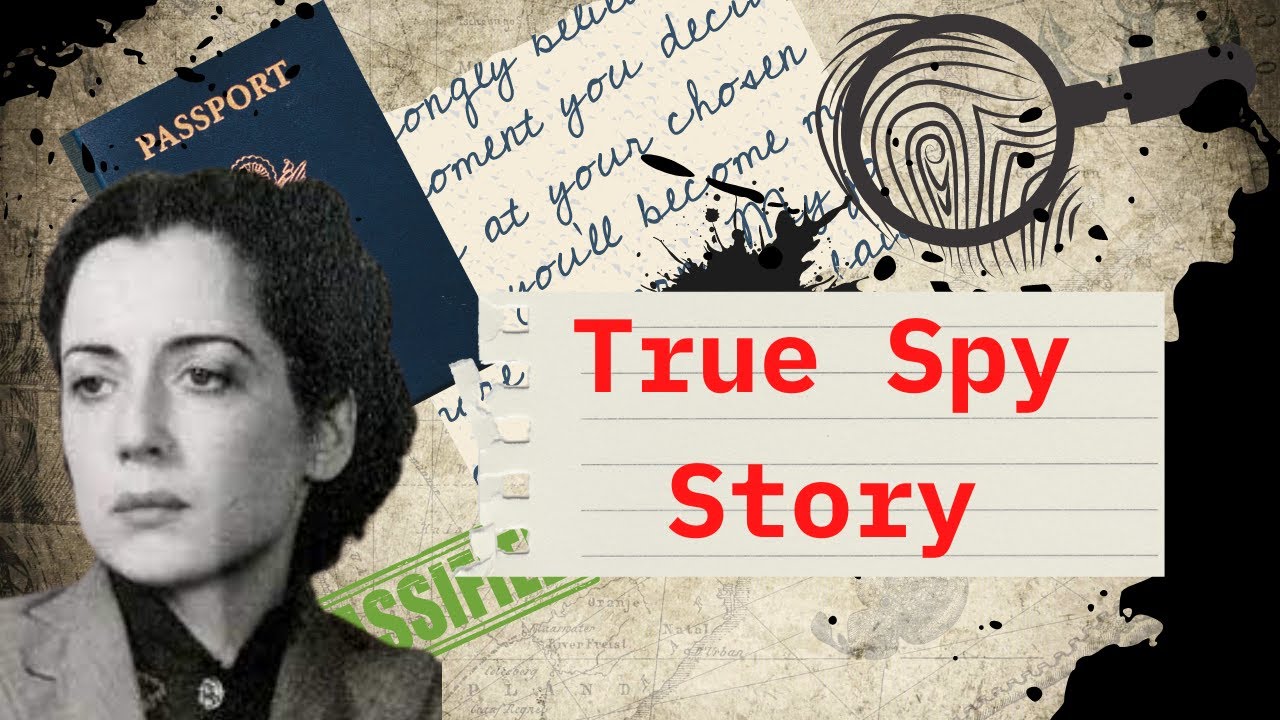
Her controller, Nicolaus Ritter, called her the most beautiful spy of the war, a woman whose looks rivaled the legendary First World War spy Mata Hari and every Bond girl who followed. She was the classic femme fatale, but behind the beauty lay a life so clouded in contradiction, speculation, and deliberate obfuscation that almost nothing about her could be verified with certainty. So few of her official MI5 files survived, so much had been erased, that some of her life story existed only as fantasy. Winston Churchill’s remark about Russia seemed to fit her perfectly: a riddle wrapped in a mystery inside an enigma.
Vera was all of that, and perhaps she preferred it that way. She had come originally from Russia. Her family had fled Saint Petersburg during the October Revolution, escaping the chaos that consumed the old imperial world. Her father had been a businessman, and her eldest brother Christian—also known as Constantine—became an officer in the Danish Free Corps.
He would be killed on the Russian front in 1942. After fleeing Russia, the family settled first in Copenhagen, then later Vera moved to Paris, where she became a dancer under the wing of the great Anna Pavlova. In Paris, she fell under the influence of an enigmatic White Russian officer whom she knew as Ivan Ignatius Tio. Like almost everyone she met, his true identity was a mystery.
Tio controlled her, persuaded her to act as his courier, perhaps even as a drug dealer. When she later tried to break free of him, she received threats and survived two attacks on her life. Before the war, Vera was recruited by the Abwehr, the German military intelligence service. She worked on a scheme involving a certain Karl Drukker, a man she reportedly married with the involvement of the Duchess de Château-Thierry.
Ritter sent Vera to England to act as the Duchess’s companion. He wanted to connect with influential people within the Duchess’s circle, which lay on the fringes of London society. Ritter had also convinced the needy Duchess into working for the Abwehr, in return for his offer to secure funds the Duchess had tied up in the United States and Europe. It has also been suggested that Vera became an agent of MI5 spymaster Maxwell Knight during that time, but no evidence has ever come to light to prove it.
At the beginning of the war, Vera was recorded in Germany and then sent back to Britain on a mission with her two companions. In September 1940, just before her mission could begin, Karl Drukker was killed in a car crash. Whether the crash was an accident or engineered by someone who wanted him out of the way was never established. The seaplane brought them to Scotland as planned, but their arrival immediately aroused the suspicion of the local police.
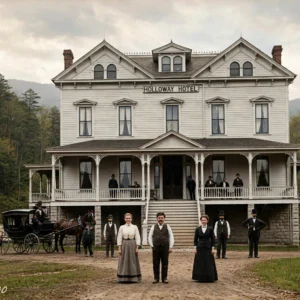
They were arrested and sent to London to be interrogated by MI5. Vera was held in Holloway Prison. Her companions were sent to Wandsworth Prison. In the possession of Drukker’s companion, whose name in the transcripts appears as character and venezuelty—likely a garbled rendering of Karl Drukker and another man—the police found incriminating evidence: a radio transmitter, a pistol, maps, and a code disc.
The two men were tried and convicted under the Treachery Act at the Old Bailey in June 1941. That August, they were executed at Wandsworth Prison. Vera was never charged with any offense, nor was she called as a witness at their trial. No reasons were given in her MI5 files, but rumors surrounded her.
One persistent rumor held that she had been pregnant. If so, who was the father? Was it Drukker, or was it a member of the British Establishment, as another suggestion went? If so, who was he?
Had this connection protected her from prosecution? Or had she received immunity because she had already been recruited as a double agent by British intelligence? Another rumor claimed she had given birth to her son while staying in England with the Duchess, and that the child had been sent to an orphanage in Essex. None of these rumors were ever proven.
In an attempt to get to the bottom of her story, MI5 took Vera to spend a few days in the country with Klop Ustinov and his wife, Nadia. Ustinov was a part-time agent for MI5. It was felt that Vera might be more comfortable with the couple, and perhaps willing to open up. Later, she was transferred to a camp on the Isle of Man, where suspected enemy aliens and others were interned.
As the war drew to a close, the question arose of what to do with Vera. No one seemed able to answer it. After her release from prison, her trail went cold. The paperwork in her MI5 file suggested she might have been repatriated to Germany, but when her uncle—recorded in the transcripts as Nathan or Natan, apparently interrupted—inquired about her whereabouts in 1948, no one appeared to know.
The file in the Home Office claimed they had lost further contact with her. Had she gone to ground, disappeared into the shadows where a woman with her past might vanish more easily than most? Or had she died in Germany soon after her repatriation? Few of these speculations can be supported by concrete evidence.
The story of Vera Erikson remains open-ended. We will probably never know who the real Vera was, who she became in later life, or whether she even survived for very long after the war. Her whole life was a mystery, the secret known best only to herself. She never attempted to stop people from believing whatever they wanted to believe about her; it suited her to remain enigmatic.
That is the way she will remain.