On the night of June 4, 1968, Jackie Kennedy was in New York when the news came from Los Angeles. Robert Kennedy had been shot in the kitchen of the Ambassador Hotel, moments after winning the California Democratic primary. She boarded a plane for Los Angeles within hours. She had done this before.
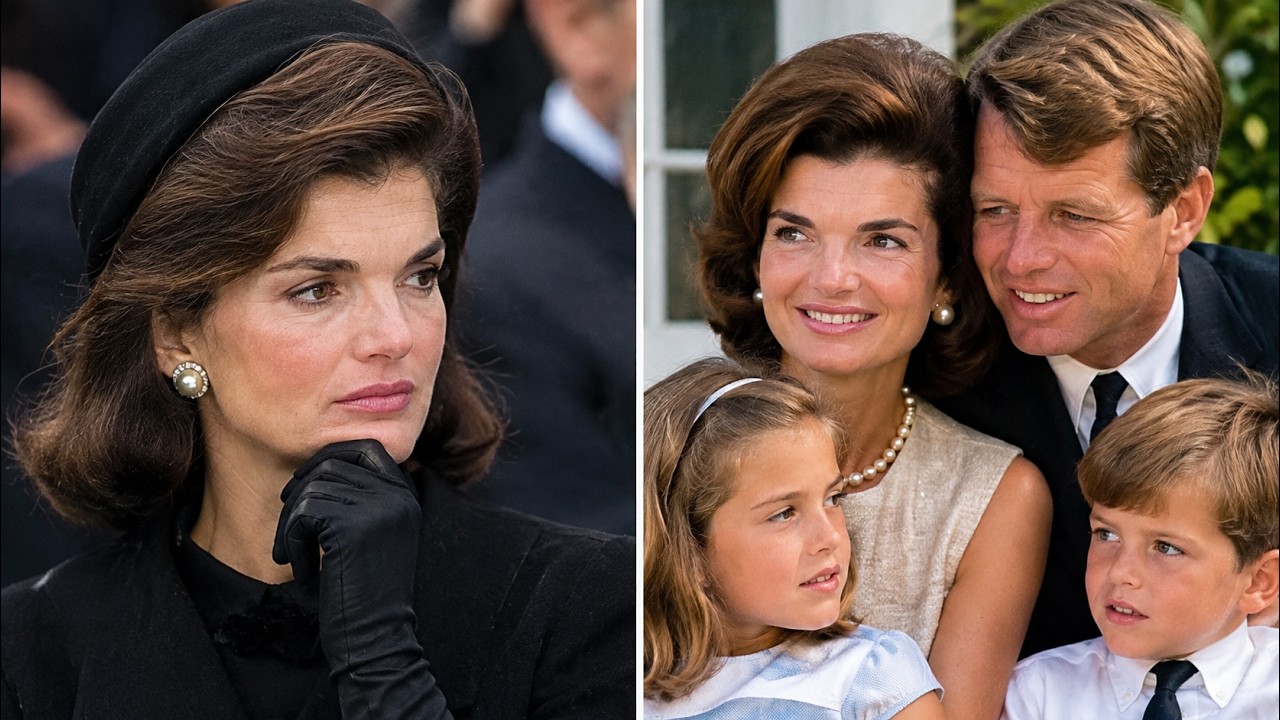
She had lived the specific, complete experience of violent loss of the person she loved most: she had been in the car in Dallas, at Parkland Hospital, on Air Force One on the return flight to Washington with the casket. She knew what this was. She had learned, in November 1963, what this particular shape of destruction looked like from the inside. What she did not know in November 1963 was that she would have to learn it again—that the same country, within the same decade, would twice demonstrate what it could produce on an ordinary afternoon and an ordinary evening in ordinary American public spaces.
Bobby was the one who called every day in the months after Dallas. He was the one who read the Greek authors alongside her. He had been the most consistently present and most genuinely supportive figure through the five years of reconstruction since Dallas. Now he was gone too.
Shot, too. In America, too. What kept her going afterward was a story no one had fully told. Here are fifteen facts about how Jacqueline Kennedy survived the second unsurvivable loss of her life.
The children were the first and most important answer. In the hours and days immediately following Bobby Kennedy’s death in June 1968, the most immediate and practical truth anchoring Jackie Kennedy’s life was the existence of her children. Caroline was ten years old. John was seven.
They were in New York with the family, waiting for the mother who had flown to Los Angeles when the news arrived. She came back. Not because it was easy—it was a specific and exhausting return to ordinary life after the second acute destruction in five years—but because the children were there. Because the children required her return.
Because the children had always been the most essential truth of the life she was building from what Dallas had left behind. She had told close friends over the years that the children were the main reason she continued after Dallas. They had been ten days old and three years old when their father was killed. They had needed her completely.
After Bobby, the children were older—ten and seven instead of an infant and a toddler. They understood more than they had in 1963. They were also the children who had just lost the most important male figure in their lives for the second time in five years: that uncle who had been the most consistent and genuinely present male presence in their lives since their father’s murder. She came back for them.
She continued for them. The fear that Bobby’s death generated became the motive for the Onassis decision, and the decision was a form of survival. Bobby Kennedy was shot on June 5, 1968. Jackie Kennedy announced her engagement to Aristotle Onassis on October 20, 1968.
The four months between those events were the months in which the specific, rational fear that Bobby’s death had created within her crystallized into the most controversial decision of her adult life. She had been afraid since Dallas. It was the specific, rational fear of a woman who had been in the car, who had direct, physical knowledge of what the American public space could produce on an ordinary afternoon. She had handled that fear through the five years between Dallas and Bobby’s death with the calm she had always brought to difficult things.
Bobby’s death broke that composure. Two Kennedy brothers shot in American public places within five years. Her children growing up in a country that had twice demonstrated its specific and deadly relationship with the Kennedy family. The Onassis decision was the most practical expression of that fear: the deliberate, specific removal of herself and her children from the geography of danger.
The island of Skorpios was not America. The yacht Christina was not an American public space. Greece was not the country that had killed two people she loved. She survived Bobby’s death partly by doing something about the fear that made his death unbearable.
That something was marrying Onassis. The marriage was a form of survival—a response to destruction rather than passive endurance of it. She had always survived through action. After Bobby, that action was the most dramatic and publicly controversial act of her adult life.
It was also the act that kept her going. She returned to the Greeks, the same resource she had shared with Bobby after Dallas. In the weeks and months after Bobby Kennedy’s death, Jackie Kennedy returned to the readings she had shared with Bobby that winter. After Dallas, she had returned to Aeschylus and Sophocles, to the ancient Greek understanding of catastrophic and undeserved loss—the framework she had found with Bobby when Dallas required a frame larger than anything the modern world offered.
She read the Greeks again, but not with Bobby this time. Bobby was gone, and the reading that had been shared was now solitary. The frame itself held. The understanding the Greeks organized around the specific, terrible truth of catastrophic loss—the wisdom that comes through suffering, the knowledge that arrives through pain—was available to her in June 1968 as it had been in December 1963.
She carried that frame from the first winter after Dallas. She had shared it with Bobby that first winter. She applied it to the second loss without the person who had helped her find it. Returning to the Greeks was the most private and intellectually serious thing that helped her continue.
She immersed herself in organizing Bobby’s funeral in the same way she had organized John F. Kennedy’s. In the days between Bobby Kennedy’s death on June 6, 1968, and his burial at Arlington National Cemetery on June 8, Jackie Kennedy did what she had done after Dallas: she took charge. The practical, specific engagement with funeral logistics, arrangements, decisions, and the management of the vast institutional and personal machinery that a major public funeral requires—this was the activity that prevented acute destruction in the aftermath from becoming simple passive endurance of the unbearable.
She helped Ethel. She was present in the planning. She contributed the specific knowledge of a person who had organized the most important state funeral in modern American history, who knew from the inside what organization required and what it produced in the person doing it. This activity was her survival mechanism.
It was the same mechanism it had been after Dallas. She organized JFK’s funeral from the heart of destruction and found in that organizing a specific form of moving forward that made the four days bearable. She helped organize Bobby’s funeral from the heart of the second destruction and found the same thing. The activity was not a way to avoid grief.
It was the form through which grief was expressed in the most productive way, directing loss toward specific, practical work to honor the person lost. She wrote letters to Ethel, to the children, and to the people who had loved Bobby. Among the specific, practical things Jackie Kennedy did in the weeks after Bobby’s death was write letters—personal, specific letters to people whose grief she understood directly, deciding they needed personal acknowledgment from someone who understood what they carried. She wrote to Ethel.
The letter to Bobby’s widow—the woman who had been in the kitchen of the Ambassador Hotel, pregnant with their eleventh child at the time of the shooting, who had lost the person who was the center of her entire life—was among the most personally significant letters Jackie Kennedy wrote in her adult life. She wrote to the children, Bobby’s and Ethel’s children, Caroline and John’s cousins, who had just lost their father at ages ranging from infancy to seventeen. She wrote in the direct, specific manner of someone who understood, from her own children’s experience, what it meant for children to lose a father to assassination. The writing itself was a form of survival—active, specific engagement with the grief of people she loved, which gave the weeks after Bobby’s death a forward momentum that passive endurance of grief alone could not have achieved.
She had always survived through engagement rather than withdrawal. The letters were that engagement. The plan to marry Onassis gave her something to move toward. Among the specific, practical qualities of Jackie Kennedy’s psychological survival in the months after Bobby’s death was the concrete, tangible nature of the decision she had made about marrying Onassis.
The existence of a plan, a direction forward, a specific and organized next step in a life that destruction threatened to reduce to mere endurance. She had been moving toward the Onassis decision since the weeks after Bobby’s death. The conversations with Onassis, the negotiations over terms, the practical organization of what she had decided to do—all of this gave the weeks and months after June 1968 a direction forward that grief alone could not provide. She had always survived by moving forward.
After Dallas, moving forward meant organizing the state funeral, creating the Camelot narrative, the oral history, and eventually the move to New York. After Bobby, moving forward meant the decision to marry Onassis and organizing the transition to Greece. Moving forward was not an attempt to avoid grief. It was the specific, characteristic form of her engagement with grief—the decision that grief would not be the engine of her existence, that existence required moving forward no matter what grief produced in the hours when moving forward was hardest.
She had always moved forward. Bobby’s death was the second time it was both hardest and most necessary. She drew specific strength from having already survived the unsurvivable. Among the specific and unusual resources available to Jackie Kennedy in the weeks and months after Bobby’s death was one that almost no one else who had been through what she went through in June 1968 possessed: the direct, personal knowledge that she had survived something like this before.
She had been through Dallas. She had been through the complete, specific experience of the violent, sudden loss of someone she loved. She had been through the four days, the state funeral, the months of immediate aftermath, the five years of reconstruction. She had survived it all.
That survival had produced in her a specific, practical knowledge that what is unsurvivable is in fact survivable—not as abstract reassurance from someone who had never experienced it, but as direct, concrete knowledge from someone who had survived it and knew from the inside that survival was possible because she had already done it. She drew on that knowledge after Bobby’s death. She told close friends in the weeks after Bobby’s death that she knew she would get through it because she had gotten through Dallas. That knowledge was the resource.
It was real. The sea gave her what it had always given her. Among the specific, private resources Jackie Kennedy drew on in the months after Bobby’s death was the one she had always turned to in the hardest periods of her life: the sea. She spent time at sea in the weeks after Bobby’s death in ways the public accounts of that period did not fully document.
The specific, restorative nature of the sea, the physical movement, the quality of light on water, the removal from the geography of grief that the ocean always provided—these were the most private resources she had gathered throughout her adult life for the moments when such resources were most needed. She had loved the sea since childhood. The summers at Hyannis Port, the sailing, the distinctive quality of water as an environment in which she expressed herself freely and fully—this was the private resource she returned to in every difficult period of her adult life. After Bobby’s death, she went to the sea.
It was not an organized, announced public withdrawal; she was not making a statement about her grief. She was doing the specific, private thing that had always given her what the land could not give her in her worst moments. The sea gave her that. It always had.
It did after Bobby’s death. She contained Ethel’s and the children’s grief, and that containment gave her own grief direction. Among the specific and underappreciated things that kept Jackie Kennedy going in the months after Bobby’s death was the specific, supportive quality of the grief she carried for others—for Ethel, for the children, for the Kennedy family members whose losses required her presence and her specific, learned knowledge of how to be present in unsurvivable times. She had been through this before.
She knew what the first hours looked like, the first days, the first months. She knew what Ethel would need and when she would need it. She knew what the children would face and what facing it would feel like. Carrying others’ grief gave her own grief direction—the specific, forward motion of a person using her knowledge of survived loss to help someone else survive theirs.
Helping required moving forward. Moving forward was her form of survival. She had always found the most effective way through her own grief was to be useful to those around her who were also grieving. After Dallas, she organized the funeral and created Camelot.
After Bobby, she was present for Ethel and the children. Her presence for others kept her present for herself. The decision to leave America was liberating for her. The announcement of Jackie Kennedy’s engagement to Aristotle Onassis in October 1968 was met with shock and bewilderment, as a shocking departure from the life of the dignified widow that the world had decided was the appropriate form of her existence.
For Jackie, the experience of the decision was entirely different. She experienced it as liberation—a specific, practical expression of the decision to leave the geography of fear and grief, the American landscape of losses, to build something new in a different part of the world. That liberation did not mean the absence of grief for Bobby. The grief was real and ongoing, not ended by the announcement of her marriage to Onassis.
But the decision to do something specific and concrete in response to the fear Bobby’s death had left behind—to leave, to go somewhere else, to build something new in a new place—gave the months after June 1968 a direction forward that grief alone could not provide. When she made the Onassis decision, she felt that distinctive, particular feeling of a person who had decided to act rather than endure, who had taken the available situation and arranged it around what she needed, not around what the world expected of her. It was her decision. Taking responsibility for it was a form of survival.
She carried Bobby’s memory the way she had carried John Kennedy’s: privately and permanently. In the months and years after Bobby’s death, Jackie Kennedy carried his memory in the private, secret way she had carried the memory of every important person she had lost. Not as a historical legacy managed through public narratives, but as a continuous, private presence of a person whose distinctive qualities had organized a large part of her private life. She kept things associated with him.
She spoke of him in private conversations with people she trusted. She maintained a relationship with his children—Caroline and John Kennedy’s cousins—with the special warmth of someone who understood that her relationship with Bobby made those children important to her in a way ordinary family ties did not fully explain. The carrying was a form of survival—a private, subjective connection to the memory of the person who had been most present in the reconstruction since Dallas—and she maintained it in the ongoing frame of her private life rather than as an official, public memorial. She did not build a memorial to Bobby as she had built one to JFK.
She carried him differently—more privately, more subjectively—in the specific, quiet way the relationship itself had always been carried. That carrying was itself a form of continuing. The person carried does not require the carrier to stop. The oral history she recorded in 1964 gave her a private resource to return to.
Among the private, subjective resources available to Jackie Kennedy in the months after Bobby’s death was one she had built in the spring of 1964: the oral history recorded with Arthur Schlesinger, which remained sealed for fifty years, the most complete and honest account of the Kennedy marriage and Kennedy presidency in any form. She had recorded it in the immediate aftermath of Dallas, when grief was at its most acute and the need to preserve a specific human account of the life she had shared with JFK was urgently felt. She told the truth about the marriage—the hard years, the happy years, the White House years, the specific nature of what the thousand days actually were from the inside. Preparing the oral history was, among other things, a private act of memory preservation: creating a complete, honest record that gave the memory of the marriage a permanent, protected form that no outside force could access or alter.
After Bobby, the oral history was proof that preserving what was essential was possible—that the specific human record of a life and a love could be protected from the claims of the world and made available to the future at a time she determined. The knowledge that this preservation was possible was a resource to her. She used that same knowledge after Bobby to continue preserving. She found in Greece a specific, different quality of light that gave her a different perspective.
Among the private, personal dimensions of what the Onassis years provided Jackie Kennedy in the period after Bobby’s death was the specific quality of the physical environment in Greece: the light, the water, the ancient nature of the landscape, as far from the American political world of the 1960s as any available geography could be. In the Greek landscape and its light, she found that specific, physical separation from the context of losses that American geography could not provide. America was the country where the losses had happened. It was the country where the fear lived.
It was the country whose political landscape she had been navigating since 1961, which had twice in five years produced that violent, specific form of loss she was carrying. Greece was different. The island of Skorpios was entirely different—its own private, isolated island life, water on all sides, the ancient landscape of the Ionian Sea that had provided the human context for human grief since before the Greeks wrote the tragedies she was reading. She did not find happiness in Greece in any simple, uncomplicated sense.
The marriage to Onassis had its own difficulties. But she found in the physical environment of the Greek world a different quality of the present moment—the immediate, specific character of water and light and landscape—which gave the months after Bobby’s death something outside the American geography of grief to inhabit. That different light did not heal anything. But it gave her a different place to be while she continued carrying her burdens.
She understood that survival itself was the most powerful act available to her. Among the private, personal understandings that organized Jackie Kennedy’s approach to the months and years after Bobby’s death was a realization she had developed over the five years between Dallas and Bobby’s death: that survival was the most powerful act available to her. She was the witness. She was the primary living witness to the Kennedy presidency, to both Kennedy assassinations, to the specific, extraordinary quality of what that decade had contained.
Her survival was the survival of the witness—the person who had been present and remained present to carry the record of what had been present within her. She understood this after Dallas: that the specific, extraordinary quality of what she had experienced and survived was itself a form of historical record. The person who had survived Dallas and carried what Dallas contained was the most important available source for an honest account of what Dallas was. After Bobby, the understanding deepened.
She was the person who had now survived two Kennedy assassinations, who had been present at two of the decade’s most violent and fate-defining events and remained present to carry what that presence had contained. Survival itself was testimony. Continuing to survive was continuing that testimony. She survived because survival was what the situation required, and because she was the person the situation required it of.
She eventually discovered that survival had produced something she had not expected. The strangest and most important fact about what kept Jackie Kennedy standing after Bobby’s murder is that the standing—the continuous daily motion through grief and fear and a second unbearable loss—eventually produced something she had not expected when survival was at its hardest. It produced a life. Not the life she had lived before Dallas.
That life was gone and would never return. Not the life she might have imagined living had November 22 and June 5 never happened. That life was never available and never would be. The life that survival produced was the life she built from what remained: her work at Doubleday, the house at the Vineyard, the morning walks in Central Park, her eventual relationship with Templeton, and her children, who became genuinely extraordinary people.
She did not know, in the weeks after Bobby’s death when standing was at its hardest, that this standing would lead to that. She did not know that moving forward through a second unbearable loss would eventually bring her to something truly worth reaching. She kept moving forward anyway because the children were there. Because the fear required a response.
Because the Greeks had told her survival was possible. Because the sea had always given her what the land could not. Because she was the kind of person who kept moving, who had kept moving through everything impossible that life had produced, with the specific, continuous determination of a person who had decided very early and very deeply that standing was what the situation required. Life was worth continuing for.
She discovered that by continuing. That was the answer. It had always been the answer.






