The verdict arrived on a November evening in 1995, delivered not by a court, but by the most famous woman in the world, speaking to twenty-three million people from a television studio. For James Hewitt, the question came almost as an afterthought, near the end of Diana, Princess of Wales’s interview with Panorama. Had her relationship with him, the interviewer asked, gone beyond friendship? The princess paused, looked into the camera, and spoke fifteen words that would seal his fate forever.
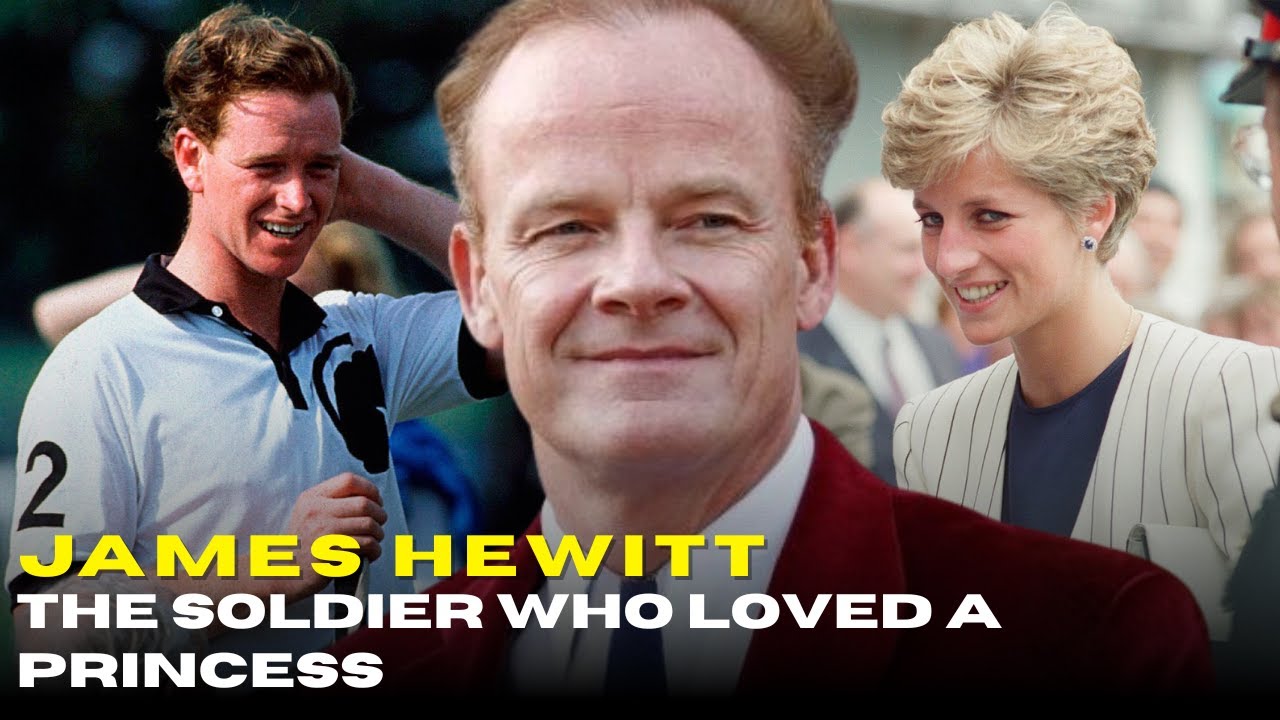
Yes, she said, she had admired him. Yes, she had been in love with him. But she had been very let down. Those four final words were the poison.
They confirmed his story only to destroy him with it, painting him as the man who had betrayed her trust in cold blood. The interview was a catastrophe for the monarchy, but for James Hewitt it was the end of the world. He had been a decorated tank commander, a product of a world built on duty, honor, and an absolute code of silence. Now he was a traitor, a national hate figure, a permanent footnote in someone else’s tragedy.
To understand the catastrophic choices he made, it is necessary first to understand the man the army built and the scandal destroyed. He was born in 1958, a son of the Elizabethan age, into a nation still living in the shadow of the Second World War. This was a society where military service was not merely a profession but a calling, embedded in the fabric of national identity. Men who served their country were held in the highest esteem, the living embodiment of the resilience and sacrifice that defined their generation.
The motto of that time was not “follow your passion” but “do your duty,” and duty was a concept understood with absolute clarity. His father, John Alfred Hewitt, was a perfect product of this ethos. He served as an officer in the Royal Marines, a corps renowned for its toughness and versatility, seeing action in the brutal jungles of the Malay Peninsula during the Malayan Emergency, a thirteen-year covert conflict against communist guerrillas. This was no ceremonial posting.
It was a fierce, dangerous counterinsurgency war demanding immense courage, physical endurance, and psychological toughness. Men who fought there learned to operate in appalling conditions, to rely on themselves, and to bear the pressures of combat. The experience instilled in John Hewitt a profound sense of discipline and a quiet, reserved steadiness. He was, by all accounts, a taciturn man, a pillar of quiet strength, a man of his generation for whom emotions were a private matter, duty a public one, and a man’s worth measured by his integrity and service.
After leaving the military, he retrained as a dental surgeon, a profession that reflected the values of his past: precision, care, and meticulous attention to detail. His mother, Shirley, came from a medical family, further cementing the Hewitts’ place in a world of civic-minded professionals. Theirs was a world of stability, predictability, and quiet contentment. They settled first in Limestone, Devon, before moving to the picturesque countryside of Kent, preparing for their children a comfortable, if ordinary, stable life.
The Britain of James Hewitt’s childhood in the 1960s was a nation of contradictions. While London, a short train ride away, pulsed with the rebellious energy of the Swinging Sixties, a cultural revolution in music, fashion, and social change that defied all norms, life in Shires, Kent, remained largely insulated from this new world. Here, old hierarchies and traditions remained firmly in place. It was a world of country houses and village fates, riding clubs and Sunday church services, deep respect for elders, and unwavering loyalty to the Queen and the institutions she represented.
This was the environment that shaped young James’s character. A world that taught him the importance of good manners, sportsmanship, and knowing one’s place. He was not a rebellious child, nor was he an academic standout. He was handsome, athletic, and possessed a natural, captivating charm that made him popular with peers and adults alike.
From a young age, he was instinctively drawn to the outdoors, especially to horses. The world of equestrianism, with its unique blend of physical courage, strict discipline, and the silent, almost telepathic communication between rider and animal, spoke to him deeply. It was a logical world, governed by clear rules, tangible rewards for practice and dedication, and an element of risk requiring composure. This passion was not just a hobby but an early indicator of a predestined path, one taken by generations of young men of his class and temperament: joining the British Army.
His education was designed to steer him steadily toward that path. He was sent to Millfield School in Somerset, a bastion of the British public school system. But Millfield was, and remains, a world removed from the austere academic institutions like Eton or Harrow. Founded in 1935 by R.
J. O. Mayer, an eccentric, visionary educator, it was known for its distinctiveness. Mayer’s philosophy, revolutionary for its time, was not focused on producing classical scholars and future prime ministers, but on discovering and nurturing individual talent wherever it was found.
It was a haven for boys, and later girls, who might not thrive in a rigid academic environment but possessed other, often exceptional, abilities. Millfield quickly became, and remains, a prestigious British sporting hub, producing a staggering number of Olympic athletes and international sports stars. For a boy like James Hewitt, more comfortable on horseback or on the sports field than in the library, the school was an ideal choice. The school’s culture reinforced the values he had learned at home but amplified them in a competitive, all-male environment.
It emphasized teamwork, physical courage, resilience in the face of adversity, and the importance of sportsmanship in both victory and defeat. Boarding school life in the 1970s was an immersive, twenty-four-hour experience, a self-contained world with its own ancient traditions, strict hierarchy, and unspoken rules of conduct. Here, he would learn to navigate complex social structures, project an aura of unflappable confidence, and conceal deep vulnerabilities behind a mask of charm and appeal. The public school system was a production line for a specific type of English male: polite, charming, outwardly confident, but often emotionally reserved, conditioned to believe that overt displays of strong feeling were a sign of weakness or bad form.
Hewitt thrived in this environment. He was not a troublemaker or a brilliant intellectual, but he was a leader on the sports field and a liked, popular member of the school community. He was learning to be a leader before he even knew the word itself, absorbing the lessons of leadership not from textbooks but from captaining a sports team, the camaraderie of the dormitory, and the shared hardships of a demanding physical curriculum. The path ahead seemed clear, straight, and honorable.
From the manicured fields of Millfield, the next logical, almost inevitable step was the hallowed grounds of the Royal Military Academy at Sandhurst. It was the institution that would take the raw material of his upbringing, the charm, the physical fitness, the ingrained sense of duty, and forge it under immense pressure into an officer in Her Majesty’s Army. He was not merely walking toward a career but toward an entire identity, one that would give him purpose, status, and a clear place in the world. What he did not know, of course, was that this very identity, built on the solid foundations of loyalty and discretion, would one day be destroyed, spectacularly and publicly, by his own hand.
The gates of Sandhurst were a portal to another world, a hallowed institution that had been the crucible of British Army officers for over two hundred years. Admission in the late 1970s was a voluntary submission to a process of almost monastic dedication, rituals designed to strip away the vanity and individualism of civilian life and rebuild a man in the unique image of the British officer: disciplined, resilient, resourceful, and committed to an unbreakable code of honor. The training was, and remains, brutally demanding, a systematic, relentless process of testing the limits of physical and psychological endurance, a scientific process designed to find a man’s breaking point and then teach him how to push past it. The first few weeks were a shock to the system, a period of deliberate disorientation.
Days began before dawn with a sharp whistle, followed by a frantic rush to shave, shower, and prepare for the first parade. Every aspect of a cadet’s life was subject to inspection and increasingly high standards. Boots had to be polished to a mirror shine, a process of hours of patient, repetitive work. Uniforms had to be pressed with razor-sharp creases.
Beds had to be made with geometric precision. These seemingly trivial tasks were a crucial part of the psychological preparation, teaching meticulous attention to detail and unquestioning obedience under pressure. Failure to meet these exacting standards was met with severe, controlled reprimands from the Colour Sergeants, long-serving non-commissioned officers who were masters of controlled aggression and psychological warfare. They broke down cadets’ egos with precision, replacing arrogance with humility and a deep respect for the chain of command.
The physical challenges were even more punishing. Cadets were subjected to the “Yumps,” military slang for long forced marches across the rugged, windswept terrain of the Brecon Beacons in Wales. They traversed treacherous bogs for days on end, carrying heavy packs in appalling weather conditions, where freezing rain could turn to thick fog in minutes. They learned map reading, compass navigation, and how to work as a team when every muscle screamed in protest and surrender beckoned.
They were pushed through grueling obstacle courses, forced to endure prolonged sleep deprivation, and thrown into simulated combat exercises where they had to make fateful decisions while their minds and bodies teetered on the brink of collapse. The goal was not merely to build physical strength but to build unwavering mental toughness. Sandhurst taught its cadets to lead in the cold, hungry, and exhausted, to remain calm and logical amidst the chaos of simulated battle, and to earn the trust of the men they would one day lead, not through privilege but through shared hardship and proven competence. For many, this was an ordeal.
For James Hewitt, it was an environment that confirmed his abilities. The clear hierarchy, the strong camaraderie forged from shared adversity, the noble sense of purpose, all spoke to the core of his being. He thrived in a world of order and action. Unlike many who struggled with the intense psychological pressure, Hewitt took to it with natural ease.
His private school background had prepared him well for the rigors of Sandhurst’s academic side, and his lifelong physical fitness allowed him to endure, and indeed excel at, the grueling physical demands. He was popular with his fellow cadets. His natural charm and quiet confidence served him well in an environment where arrogance was swiftly punished, but true leadership was highly praised. Finally, after a year of relentless pressure, the training culminated in the majestic Sovereign’s Parade, one of the most impressive displays of British pageantry.
The cadets, now officer cadets, marched onto the parade square in their finest uniforms, movements perfectly synchronized, a testament to the discipline and teamwork drilled into them. The monarch or their representative inspected the parade. For every young man on that square, it was a moment of immense pride and achievement. They had undergone terrible trials and had not been found wanting.
They were no longer boys but officers. Standing on that parade square in 1978, the newly commissioned Second Lieutenant James Hewitt embodied the image of the ideal British officer. He was handsome, confident, and steeped in the traditions of service and honor. He was at the peak of his youth, a man with a clear purpose and a bright future in an institution he held in the highest regard.
His first major decision as an officer was the choice of regiment, and for a man of his particular talents, an exceptional horseman and athlete with a natural social grace, the choice was almost predetermined. He applied and was accepted into the Life Guards. This was not merely joining a military unit but entering an elite. The Life Guards, along with their sister regiment the Blues and Royals, formed the Household Cavalry, the elite cavalry of the British Army and one of its oldest regiments, with a history dating back to the restoration of the monarchy in 1660.
Their role was twofold: they were the personal bodyguard of the Sovereign and a formidable armored fighting force. Joining their ranks meant entering the inner circle of the British establishment. For a young officer in the late 1970s and early 1980s, this meant a life of profound duality, a weekly, sometimes daily, transformation between two completely different realities. One world centered on the historic Hyde Park Barracks in Knightsbridge, a modern tower overlooking the tranquil green of the park.
The daily routine was governed by traditions stretching back centuries. The day began before dawn in the stables, a world unto itself, smelling of hay and leather, filled with the gentle sounds of care. The horses, known as “Black Horses,” were majestic animals, and the bond between soldier and horse was an essential part of the regiment’s soul. Hours were spent on their care and the meticulous maintenance of their ceremonial tack.
Saddles, bridles, and sheepskins were all polished to perfection. The rest of the day was a study in precision. There were riding drills in the indoor school and endless exercises on the parade square to simulate the slow, intricate movements required for major state occasions like Trooping the Colour or the State Opening of Parliament. To the public, these men were tin soldiers, mere ceremonial statues, a living tourist attraction.
To the men themselves, it was deadly serious, a performance demanding perfection where the slightest error could bring shame upon the regiment. With the ceremonial duties came entry into a rarefied social world. The handsome young officer of the Household Cavalry was one of the most sought-after figures in London society. The late 1970s and early 1980s were the end of a more formal era.
Invitations flowed for debutante balls at grand Mayfair hotels, weekend hunting parties at sprawling country estates, horse racing at Ascot, and polo matches at Smith’s Lawn in Windsor Great Park. With his natural charm and private school confidence, Hewitt navigated this world with ease. He was a talented polo player, a sport requiring immense skill and courage that further cemented his status. He was living a life most people could only dream of, a whirlwind of privilege, tradition, and excitement.
He was part of a fraternity, an exclusive club of men who understood its unspoken rules, its unique pressures, and its immense rewards. But this was only half the story. The other half of his life was lived three hundred meters away, in the cold, muddy fields of West Germany. While part of the Household Cavalry performed its ceremonial duties in London, the other part served as an armored reconnaissance regiment on the front line, a key component of the British Army of the Rhine.
This was the world of mud and steel. Here, Lieutenant, then Captain, Hewitt was not a social figure on a handsome horse. He was the commander of a troop of Chieftain main battle tanks, each a 56-ton behemoth of British engineering. This was the Cold War face-to-face.
Throughout the early 1980s, tension between NATO and the Warsaw Pact was palpable. On the other side of the border, just hours away by car, were massive divisions of Soviet tanks, poised for a potential invasion of Western Europe. The soldiers were not there for show; they were there to fight, and if necessary, to die in the first hours of what would have been World War Three. Life at a British Army base in places like Paderborn or Münster was a world away from the glamour of Knightsbridge.
It was a life of utilitarian barracks, Nissen huts, and vast, muddy training areas. The enemy here was not a misstep on a ceremonial parade but the harsh northern weather and the constant pressure of combat readiness. Hewitt’s task was to command his troop of tanks and their crews, to master the complex art of armored warfare, from tactics and gunnery to maintenance and communications. Inside a Chieftain tank was a claustrophobic, intimidating environment: a cramped steel box filled with fumes, alive with the roar of the engine, the whine of the turret hydraulics, and the crackle of orders over the radio headset.
As a troop leader, Hewitt was responsible for this machine worth millions of pounds and, far more importantly, for the lives of the men who crewed it: the driver navigating rough terrain, the gunner sighting the massive 120mm gun, and the loader wrestling heavy shells in the tight confines of the turret. His leadership here was of a different kind. His captivating charm, so effective in London’s drawing rooms, was of little use on a freezing training ground at three in the morning. Here, he had to earn the respect of his soldiers, mostly working-class men from tough industrial cities, through his professional competence, his technical expertise, his calmness under pressure, and his willingness to share their hardships.
He spent countless hours on grueling exercises, practicing hiding his tanks in forests, setting ambushes, and simulating battles against an ever-present, numerically superior enemy. The camaraderie was different too, a fierce, almost profane loyalty to men who depended on each other for survival. The officers’ mess in the German base was a refuge for relaxation, a world of heavy drinking, black humor, and strict adherence to the army’s unwritten rules. What happens on the field stays on the field.
Personal problems are buried deep. You do your duty. You look after your men, and you never let them down. By the mid-1980s, the newly promoted Captain James Hewitt was a man who could navigate both these worlds with complete competence.
He could spend a week commanding a troop of tanks on the bleak Soltau-Lüneburg training area and the next week, resplendent in his scarlet uniform, riding in a procession with the Queen. He was the embodiment of the modern Household Cavalry officer, warrior and guardsman, a practical man and a social man. These ten years of service had cemented the identity first forged at Millfield and Sandhurst. He was a man entirely defined by his uniform and the rules it represented.
His moral compass was the honor of the regiment. His life had a clear structure, a clear purpose, and a clear set of rules. Discretion was not just a virtue but a professional necessity. Loyalty was not an abstract concept but the foundation of his entire existence.
While Captain Hewitt lived this life of ordered, masculine purpose, the woman he was destined to meet lived in a world that was its polar opposite. By 1986, the life of Diana, Princess of Wales, had become a prison of emotional chaos. Her fairytale marriage of 1981, watched by 750 million people, had collapsed behind palace walls into a bitter, painful tragedy. She felt, with some justification, utterly alone.
Her husband, Prince Charles, had withdrawn from her emotionally and physically long ago, rekindling his long-standing affair with Camilla Parker Bowles. For Diana, this was not just a betrayal but a profound denial of her self-worth. She was consumed by a devastating battle with bulimia nervosa, a disease born of secrecy and self-loathing. She suffered from paranoia, constantly worried about who was watching her, who was reporting on her.
She later confessed to being profoundly unhappy, even contemplating suicide. She was the most famous woman on Earth, her image on every magazine cover, her every move scrutinized by a voracious press. Yet this global adoration only deepened her isolation. She craved something simple, something her extraordinary life had made impossible: normality, privacy, and sincere, uncomplicated affection.
She longed for someone to trust, someone outside the suffocating royal system, someone who could see past the crown to the wounded young woman hiding beneath it. Their first real meeting took place in the summer of 1986, at a cocktail party hosted by one of Diana’s former ladies-in-waiting, Hazel West. For Captain James Hewitt, recently returned to London after a tour in Germany, it was a familiar obligation, a social duty integral to his life as a Household Cavalry officer. For Diana, it was just another night of duty, another room full of people who saw the title before the woman.
Hewitt was introduced to the Princess by their mutual friend, Hazel West. Their connection was not a sudden thunderbolt but something quieter and more subtle. In a room full of calculated compliments and hidden power plays, Hewitt’s charm was different. He was straightforward, unpolitical, with the plain, unassuming confidence of a soldier.
Crucially, he did not seem fazed by her, and above all, he did not seem to want anything from her. He looked her in the eye. He smiled a genuine smile. He listened.
Their conversation was light at first, but Diana, who had a remarkable ability to sense a person’s character, felt something she rarely encountered: safety. During their talk, she confessed to a lifelong fear of horses. For a woman from a horse-loving aristocratic family, married into a family for whom equestrianism was practically a religion, this was a significant admission of vulnerability. Most men in that room would have offered a polite, forgettable platitude.
But Hewitt was not like other men. He was an accomplished horseman. His response was simple, direct, and practical. He did not offer sympathy but a solution.
“That’s a pity,” he is said to have told her. “I can help you with that. ” It was the perfect pretext, a legitimate, almost therapeutic reason for the Princess of Wales to meet a Captain of the Household Cavalry. The riding lessons began at the Hyde Park Barracks, a world Hewitt commanded.
For Diana, entering the riding school was like entering another country, a place where her status was secondary to her ability to master a new and terrifying skill. Hewitt was in his natural environment. He was no longer just a charming man at a party, but the expert, the calm, patient instructor. He understood the psychology of fear in both the nervous horse and the nervous rider.
He chose her a gentle, trustworthy horse and started with the basics, in a quiet, reassuring voice. He taught her how to approach the animal, how to groom it, how to build a bond of trust before she even sat in the saddle. Under his patient guidance, something remarkable happened. Diana, the woman who felt she was failing in her primary role as a wife and future Queen, began to succeed.
She conquered her fear. With every successful lap of the riding school, she was not just learning how to handle a 1,000-pound animal; she was reclaiming a small, vital piece of her agency and self-confidence. The formality between the Captain and the Princess soon dissolved. After the lessons, they would retreat to the officers’ mess, a place of some privacy, for tea and long conversations.
For the first time in years, Diana found someone she could talk to, a man who was not a part of the royal family, not on the palace payroll, and who seemed to have no agenda other than to listen. She began to open up. She spoke of the crushing loneliness that weighed on her, the misery of her marriage, her fears for her two young sons, William and Harry, and her profound sense of worthlessness. Hewitt listened.
He did not judge her or dismiss her as hysterical or over-sensitive, as others had done. He simply listened. And by doing so, he made her feel heard and understood. For Hewitt, this was a role he understood instinctively.
As an officer, he was a protector. Now he had been assigned, informally, the role of confidant and protector to the most vulnerable and famous woman in the kingdom. Inevitably, thrillingly for them both, their friendship turned into a passionate love affair. It was not a calculated arrangement but a relationship born of deep mutual need.
She gave him tenderness and laughter, connecting him to a world of normality he barely remembered. She treated him not as a symbol but as a man. In turn, he gave her entry into a world of glamour and allure, a heady, addictive feeling of being chosen, of being the keeper of a global superstar’s secrets. Their time together was marked by a deliberate, almost rebellious simplicity.
He would cook her simple meals, like pasta, in his small, modest flat, a world away from the grandeur of royal banquets. They would watch television curled up on the sofa. They would wash the dishes together at the sink. For Diana, these mundane domestic acts were not ordinary at all.
They were a lifeline, a dream of the normality she craved so desperately. With him, she could laugh a real, spontaneous laugh. Their ultimate sanctuary was his mother Shirley’s small cottage in Devon. There, away from the prying eyes of London, the press, and the palace, Diana could shed her royal persona entirely.
Getting there required elaborate, almost farcical planning. Sometimes she would lie in the boot of a car to be driven out of the palace gates, a desperate measure for a desperate woman seeking a few hours of freedom. In Devon, she was not the Princess of Wales but simply James’s girlfriend. She would help with the housework and walk on the beach wearing a scarf and sunglasses, hoping not to be recognized.
Shirley Hewitt, a dignified, proper woman, welcomed the Princess into her home and offered her unconditional maternal warmth. This secrecy, of course, added a dimension of excitement and thrill to the relationship. They were constantly playing a game of cat and mouse with her royal protection officers, some of whom were aware of what was going on but turned a blind eye out of sympathy for the Princess. Each secret meeting was a small victory, a successful rebellion against the system that constrained her.
For years, from 1986 until the end of the decade, they maintained their secret world. He was her anchor, the one fixed point in her turbulent life. His presence gave her the emotional strength to continue her public duties, to raise her sons, and to endure the emptiness of her marriage. But the bubble was fragile, and the real world, with its wars, duties, and consequences, was about to break in with devastating force.
The very thing that had brought them together, his role as an army officer, would be what ultimately tore them apart and set them on a path to public ruin. In August of 1990, the real world crashed in with geopolitical force. Saddam Hussein’s Iraqi army invaded the small, oil-rich nation of Kuwait, and the international community, led by the United States and the United Kingdom, began to prepare for war. For Captain James Hewitt of the Life Guards, it was a direct and personal call to duty.
His regiment, as part of its front-line role in the British Army, was placed on high alert for deployment to the Gulf. The life of secret meetings in Devon cottages and quiet teas in the officers’ mess was over. The soldier, the tank commander, the man trained for combat, was now being summoned to do the job his entire career had been building towards. The order to deploy was a cruel severance.
Their farewell was not a grand ceremonial occasion but a stolen, tearful moment, heavy with the suppressed fear that it might be their last. For Diana, the prospect of his deployment was terrifying. She was not only losing her lover and confidant but sending a man she loved into a war zone. Her position left her powerless to express this anxiety publicly.
She had to maintain the composed facade of a senior member of the royal family, visiting troops and offering words of encouragement, while secretly consumed by fear for one soldier among thousands. For Hewitt, the transition was shocking and decisive. He left behind a world of emotional complexity and returned to a world of brutal simplicity. In the deserts of Saudi Arabia, under Operation Desert Shield and later Desert Storm, his goal was singular: to prepare his squadron of fourteen Challenger tanks and their crews for battle.
The deserts of Saudi Arabia in late 1990 and early 1991 were another world, a relentless, monotonous landscape of sand and sky. The waiting was interminable, a long period of training and acclimatization under a blazing sun. Everyone lived under the constant threat of Iraqi Scud missile attacks and the possibility of chemical warfare. In this harsh environment, Captain Hewitt excelled.
He was, by all accounts, an excellent commander, calm under pressure, technically proficient, and respected by his men. His life was reduced to its simplest elements. The complexities of his relationship were a faint echo, heard only through the precious blue airmail letters, or “blueys” as the soldiers called them, that arrived from England. Their correspondence during this period was a lifeline for both of them.
For Diana, writing to him was her only outlet, a way to express her fears and feelings. She signed her letters “Julia,” a code name they used. For Hewitt, her letters were a precious, tangible link to the world he had left behind. He replied, reassuring her, sharing as much of his experience as he could without breaching operational security.
They did not realize then that these intimate, honest documents would one day transform from declarations of love into public scandal. When the ground war erupted in February 1991, Hewitt led his squadron into battle, part of the famous flanking attack that shattered the Iraqi forces. He performed his duties with courage and competence. He returned to Britain a war hero, decorated for his service.
But the reunion he had longed for in the desert heat never truly materialized. Something had changed, fundamentally and irrevocably. The intensely secret bubble they had so carefully constructed could not withstand the pressure of war and the profound changes it wrought in them both. While Hewitt was occupied with military objectives in a foreign desert, Diana was waging her own strategic campaign on the home front.
Years of silent suffering were drawing to a close. A bolder, more determined, more media-savvy Princess was emerging. The separation had forced a kind of emotional self-reliance upon her. Most importantly, during the time Hewitt was in the Gulf, Diana had made a fateful decision to cooperate secretly with journalist Andrew Morton.
Starting in the summer of 1991, through a trusted intermediary, she began recording her story on cassette tapes, revealing the misery of her marriage, her battle with bulimia, and her feeling of betrayal by the royal family. This was an act of astonishing defiance, a declaration of war on the palace establishment. She was no longer prepared to suffer in silence. When Hewitt returned, he found a different woman.
The dependent, frightened, desperately lonely princess who had first sought him out had been replaced by a woman in control of her destiny. Her need for him as a secret refuge had diminished because she was meticulously planning a public escape. The power dynamic between them had shifted dramatically. He was no longer the seasoned protector, and she was no longer the vulnerable victim.
The relationship did not end with a single, sharp confrontation. There was no moment of betrayal, no final, bitter argument. It simply faded, slowly, painfully, and almost embarrassingly, over the course of the following year. Phone calls became less frequent.
Meetings became harder to arrange, more fraught with the risk of scandal at a time when Diana herself was becoming a controversial figure. The final separation in 1992 was a quiet, heartbreaking acknowledgment that their story was over. For Hewitt, it was a devastating and confusing blow. He had lost his anchor.
He had lost not only the woman he loved but also the secret purpose and captivating significance that had defined his life for five years. His world, once so clearly delineated, was suddenly empty. But the worst was yet to come. In the years following the Gulf War, Hewitt found his military career stalling.
In the fiercely competitive, hierarchical world of the army, the path to promotion is narrow. For an officer in the Household Cavalry, reaching the rank of Major is a crucial step toward higher command. In 1994, Hewitt was not promoted. In the unforgiving “up or out” system of the British Army, this was a clear, unambiguous signal that his career was effectively over.
The role his relationship with Diana played in this decision remains a matter of speculation. Whatever the cause, it was the final straw for Hewitt. He had lost his two great passions, the army and the Princess, both of them. And so, in 1994, after seventeen years of service, Captain James Hewitt made the decision to resign his commission.
At the age of thirty-six, he became a civilian for the first time in his life. Stripped of his uniform, his rank, the military club, the institutional belonging, and the sense of purpose that had shaped his entire identity since his teens, he was lost in a world he barely understood, suffering from financial insecurity and a broken heart. A man who had lost his story. It was in this state of extreme vulnerability that he made the most dangerous mistake of his life.
The story of his affair with the most famous woman in the world was a secret known to only a few. But whispers and rumors were beginning to circulate in the press. He felt, perhaps with a touch of paranoia, that the story would come out anyway. He decided to get there first.
He made the fateful decision to cooperate with a young writer named Anna Pasternak on a book telling their love story. The book would be titled A Princess in Love. The motive for this act has been debated ever since. Was it for the money?
The reported sum of £300,000 was a life-changing amount for a man who was unemployed and out of his depth. Was it petty revenge from a jilted lover, a way to regain a sense of control over a situation in which he was powerless? Or was it, perhaps most likely, a desperate, misguided, and staggeringly naive act from a man who felt the narrative slipping away from him and wanted, in his own foolish way, to shape it, to tell the world that their love had been real, and that he was more than just a lover, that he was of value? Whatever the reason, the consequences were immediate and decisive.
The book, published in the autumn of 1994, ignited a media firestorm. A tsunami of public condemnation poured down on him. Overnight, James Hewitt was transformed from a respected, if obscure, war hero into a national hate figure. The press, which had previously praised his military service, now branded him with the label that would stick for the rest of his life, a two-word character assassination of brutal efficiency: the cad.
The irony was cruel and devastating. A man refined by the institutions of Millfield, Sandhurst, and the Household Cavalry, all built on a strict, almost sacred code of honor and loyalty, and above all, discretion, had committed the most heinous, egregious act of indiscretion imaginable. He had not only betrayed a private trust but violated the sacred, unspoken code of his entire class, his profession, and his upbringing. In the eyes of his former comrades in the officers’ mess, his sin was unforgivable.
He had brought shame upon the regiment. The private matter was now public property. The man in uniform vanished forever, replaced by a tawdry stereotype. He had sought to tell his story, but in doing so, he had lost all control of it.
The final confirmation, the last nail in the coffin of his reputation, was yet to come, spoken by the Princess herself in a television interview that would be watched by hundreds of millions around the world. On the evening of November 20, 1995, an estimated 23 million people in the United Kingdom alone, nearly half of the adult population, sat in their homes to watch what was considered the television event of the decade. It was an interview conducted secretly by a then-obscure journalist named Martin Bashir. What followed was an hour of television that shook the British monarchy.
In a stunningly candid performance, Diana dismantled the carefully constructed facade of royal harmony. She spoke of her postpartum depression, her struggle with bulimia, the lack of support she received, and, most importantly, the presence of a third party in her marriage. At the end of the interview, the conversation turned to James Hewitt. Diana paused for a moment, looked directly into the camera, and spoke the fifteen words that would decide his fate in the eyes of the public forever.
She confirmed the essence of Hewitt’s story. The relationship had been real, deep, and of immense emotional significance. But then came the poison: “But I was very let down. ” It was not an angry denunciation but a quiet expression of pain, and in that, it was far more powerful.
It was a public shaming issued by the most famous woman in the world. She had confirmed his story only to use it against him, casting herself as the loving woman who had trusted him, and him as the man who had betrayed that trust in cold blood for money. She had issued her verdict. Now the court of public opinion issued its own, on the testimony of the principal victim herself.
James Hewitt was guilty. His book had made him an outcast. Diana’s confirmation made him a pariah. There was no way back.
He had been publicly judged and condemned by the woman he had once loved and protected. If the Panorama interview had sealed his fate in life, the tragic death of Diana less than two years later cemented it forever. Her violent and horrific end in a Paris underpass on August 31, 1997, plunged the world into an unprecedented wave of grief and anger. In death, Diana’s complex, often controversial character was instantly simplified.
She was elevated from a beloved global icon to a secular saint, a martyr to media intrusion and establishment cruelty. This deification of Diana had grave and dire consequences for James Hewitt. A saint’s story requires a sinner; a martyr’s narrative needs a Judas. In the profound grief of that period, the public had no appetite for complexity or shades of grey.
Hewitt’s role in the story was now fixed irrevocably. He was no longer just the man who had let her down; he was the man who had betrayed Saint Diana. Any memory of the comfort he had offered her, any understanding of his former role as her protector during her time of intense isolation, was completely erased. His sin was now seen not merely as an offense against a woman, but against a cherished and tragic memory.
His life entered a new, desperate phase. Now a celebrity of ill repute, famous only for his infamy, he embarked on a long, often humiliating journey in search of a livelihood and a place in the world of low-rent fame. He was a man without a profession, his only capital his tarnished reputation. He first tried to escape, moving to Spain, to the sunny island of Marbella, a refuge for expatriates, and tried to reinvent himself as a businessman.
He opened a chic bar called the Polo House. For a time, the bar was a success, attracting tourists and a certain type of celebrity. But it was a project built on the shaky foundations of his notoriety, and it ultimately failed. He returned to Britain and drifted into the strange, emerging world of reality television.
He appeared on a series of shows, including game shows where he competed in Olympic-style events, and even a celebrity special of The X Factor. Each appearance was a self-inflicted public humiliation for money. He was no longer a man but a character, a figure of fun to be used for public entertainment. The confident, dignified officer had vanished, replaced by a slightly embarrassed middle-aged man trying to be a good sport while the audience sniggered, remembering who he was and what he had done.
His moment of nadir, which horrified even those who might have retained a shred of sympathy for him, came in 2003. He announced his intention to sell a collection of 64 highly personal letters written to him by Diana during his service in the Gulf War. He asked for £10 million. The public reaction was one of universal disgust.
This was seen as an unforgivable act of betrayal, the act of a grave robber seeking to sell the deepest, truest feelings of a dead woman for vast profit. The letters contained her fears for his safety and declarations of love. The sale never went through, as no reputable buyer would touch such “poisoned goods,” but the damage was immense. He had confirmed his harshest critics in the most appalling way possible.
Throughout this period, a cruel and persistent rumor haunted him, a lie that spread like wildfire, that he, and not Prince Charles, was the biological father of Prince Harry. This rumor, fueled only by a passing physical resemblance, red hair, was biologically and chronologically impossible. Harry was born in September 1984, almost two years before Diana and Hewitt’s affair began. But the truth was no match for the malicious rumor.
The lie persisted for decades, a nagging noise accompanying his life, repeatedly forcing him into the degrading position of publicly denying paternity of his former lover’s son. In later years, James Hewitt largely withdrew from the spotlight. The man who was once at the heart of London society now lives a quiet, reclusive life in Devon, sharing his home with his elderly mother, Shirley. In 2017, his mortality asserted itself forcefully.
He suffered a severe heart attack, followed by a stroke, leaving him fighting for his life. He survived, but the ordeal left him frail, a shadow of the strong, athletic man he once was. The handsome cavalry officer, the confident polo player, was gone forever, replaced by a quiet, elderly, sick man living with the ghosts of his past. What, in the end, is the legacy of James Lifford Hewitt?
He was, without question, the author of his own misfortune. His decision to sell his story was a catastrophic betrayal of trust, a foolish, greedy, and staggeringly naive act that violated the very values of honor he had been raised with. He broke the silence and paid an immense price for it. He was condemned to a life of permanent public contempt, with no possibility of parole.
But his story is also a cautionary tale, a stark embodiment of what can happen to an ordinary man who stumbles into the perilous world of royalty. He was a man of traditional qualities, courage, charm, and discipline, who found himself at the heart of an emotional and familial crisis that was beyond his understanding. He offered temporary sanctuary to a woman drowning in loneliness, only to be swept away by the same currents that would eventually consume her. His life stands as a long and lonely testament to the overwhelming, unending power of public shame in the age of modern media, and to the near impossibility of redemption once the public has passed judgment.
He is a man whose identity was forever defined not by the seventeen years he served his country with honor, but by a five-year chapter in his life that intersected with the royal family, and by the catastrophic decision he made in its aftermath. In the end, the saga of James Hewitt is a story of lost identity, a man who tried to escape a ghost, only to discover that the ghost was merely the reflection of his former self. The handsome young man in uniform, a man of honor and purpose, frozen in time forever beside the most famous woman in the world.






