Minneapolis in December 1894 was a city convinced of its own momentum. The flour mills along the Mississippi had made it one of the great grain-processing centers of the continent, lumber profits flowed through its banks, and Hennepin Avenue was rising with theaters, hotels, and apartment buildings. People arrived from the East and from Europe, drawn by the promise of opportunity. At the corner of Hennepin Avenue and 13th Street stood the Ozark Flats, a respectable building owned by William Haywood, a prosperous and established family man.
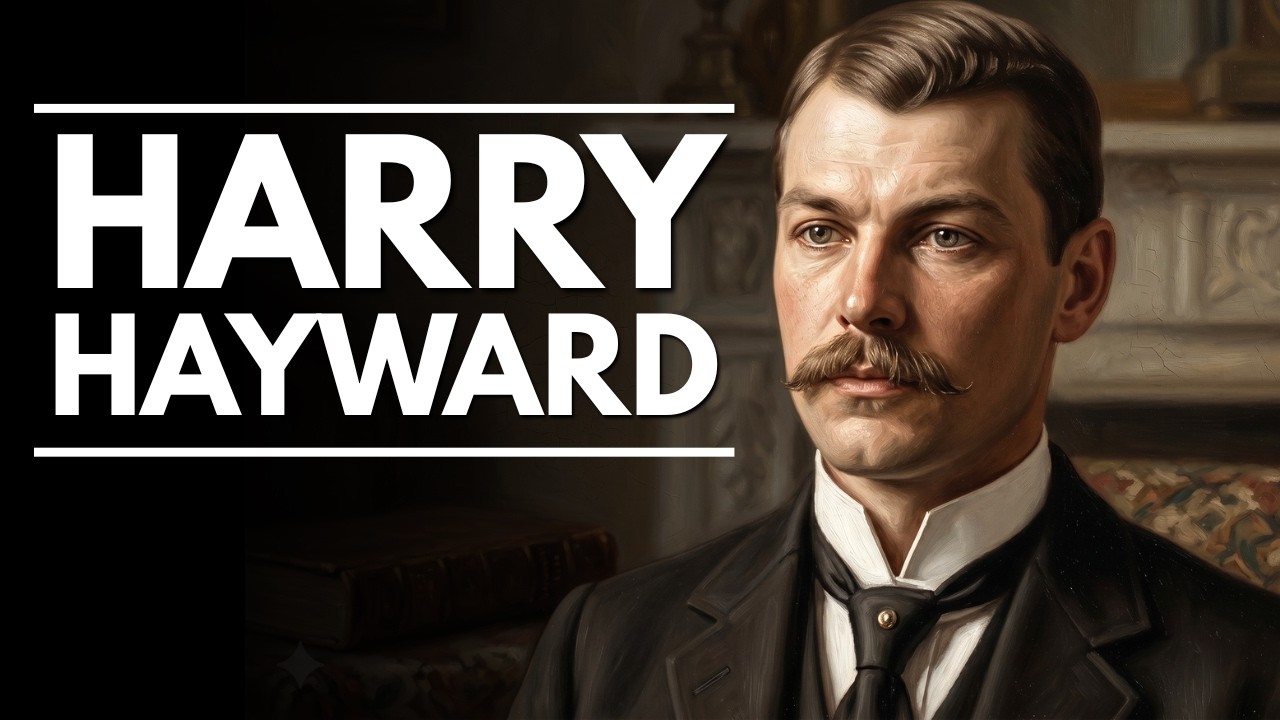
On the first floor, his son Harry kept an apartment. On the fifth floor lived a young dressmaker named Katherine Ging, known to everyone as Kitty. In the basement, tending the furnace, lived Claus Blixt, a Swedish immigrant. Three people shared one building, and only one of them had fully planned what would happen inside it.
Harry Hayward had returned to Minneapolis in January 1894 after years away. By his own later admission, those years had included three murders and numerous arsons across America and Mexico, crimes never solved and never tried. Back home, he was the picture of a respectable young man: handsome, charming, well-dressed, from a good family. He claimed to be in business, which in practice meant gambling, but his father’s properties gave him cover, and no one pressed too hard.
Beneath the surface was something else entirely. He had tortured animals as a child. He had built a personal philosophy on atheism and self-interest, one in which other people were instruments. He had been running criminal operations since his early twenties: counterfeiting, arson for hire, insurance fraud.
Within weeks of coming home, he found Kitty Ging. She was independent, ambitious, financially solvent, and susceptible to the combination of charm and financial imagination Harry deployed so well. She wanted more than a dressmaker’s income could deliver. Harry had plans that required capital, plans that could make them both wealthy.
She fronted him money for gambling. When he lost it and she demanded repayment, he paid her in counterfeit currency. When she pushed again, he offered a solution: he would arrange a loan to expand her dressmaking business. All she had to do was take out a life insurance policy as collateral, naming him as beneficiary.
A formality, he said. A standard business arrangement. The policy was for ten thousand dollars. The moment it was signed, Kitty Ging’s death became a financial event.
Harry’s first choice to do the killing was his own brother. He asked Adry Haywood, his older brother, who also lived at the Ozark Flats, to murder Kitty Ging. Adry refused, and four days before the murder, on November 30, 1894, he walked to the family lawyer, Levi Stewart, and told him everything. Stewart did nothing.
He did not go to the police. He filed the information away and stayed silent. The plan moved to the basement. For weeks, Harry had been visiting Claus Blixt nearly every day, drawing him into small criminal errands.
Blixt had already burned down a barn for him. Now Harry needed something larger. He told Blixt it had to be done. Blixt said he could not.
Harry looked at him, and in Blixt’s own account, that was that. He fixed me with his eyes, Blixt said. I couldn’t say no when he looked at me that way. Nobody could.
Harry himself confirmed the technique the night before his execution. No, merely look in his eyes. No pendant, no ritual, no dramatics. A gaze that did something to certain people.
Whether it was genuine hypnotic power, the force of a man without a conscience meeting a man with one, or the accumulated weight of months of threats, Blixt could not separate them. He did what Harry wanted. The plan was elegant in the way plans built by people with no moral resistance tend to be. Harry told Kitty he had arranged a deal to purchase counterfeit currency from suppliers on the outskirts of town.
He needed her to come along, bring some money, meet his contact. He would be there, as he had been in earlier schemes. She agreed. On the evening of December 3, 1894, Harry gave Blixt a .
38 caliber Colt revolver and a quart of whiskey, and told him to drink it all before he got in the buggy. That afternoon, Harry made sure he was seen. He met his friend Thomas Waterman in public. Earlier in the day, he had been at a restaurant with Kitty, loaning her money in front of the waitress and patrons, making a show of a large roll of bills, establishing for anyone paying attention that Kitty Ging had been seen with significant cash.
At 7:08 that evening, Kitty left the West Hotel in a horse and buggy. She held the reins of a gentle buckskin mare named Lucy, a horse she had requested specifically from the Goosman Livery Stable, one she had driven before and trusted. She believed she was heading to meet Harry and his counterfeit currency contacts on the edge of the city. Beside her sat Claus Blixt.
At that same moment, Harry Hayward took his seat in a theater box at the Minneapolis Grand Opera House. His companion was a woman named Mabel Bartleson. The show was a musical comedy called A Trip to Chinatown. He was seen, public, and by every account in high spirits.
Blixt drove Kitty along Excelsior Boulevard toward Lake Calhoun. The lake was frozen, and across its surface the sound of ice skaters drifted in the cold air. At some point along the lake’s northwestern shore, Blixt raised the revolver and shot Kitty through the back of the head. The bullet entered behind her left ear and exited through her right eye.
He described it afterward in three sentences. After I shot her, her head dropped back against the side of the buggy. She made no sound and was dead. He drove a short distance further and pushed her body from the buggy onto the road near the intersection of Excelsior Boulevard and 31st Avenue.
He abandoned the rig and slipped into a nearby saloon. Lucy the mare made her own way back to the livery stable, arriving at 9:10 p. m. pulling an empty buggy.
Around the same time, a baggage handler for the Soo Line Railroad named William Erhardt found a woman’s body on Excelsior Boulevard. She was assumed at first to have died in a runaway accident. The body lay in the morgue for over an hour before a doctor noticed a bullet lodged behind her left eye. While police were still at the Ozark Flats questioning residents before the body had been formally identified, Harry Hayward arrived from the opera.
My two thousand dollars is gone to hell, he said. It’s nobody but Miss King. She has not been hurt in any runaway accident. She has been done up for her money.
He was correct on every count. He was also the man who had arranged the entire thing. The police first suspected people with visible connections to Kitty. Frederick Reed, her ex-fiancé, was questioned for hours before his alibi cleared him.
A woman named Lillian Allen, who had once been Reed’s rival for Kitty’s affections, had left Minneapolis abruptly and was briefly suspected. Harvey Axford, a traveling salesman who had known Kitty seven years and could not marry her because he already had a wife, was investigated. Each one was cleared. Meanwhile Harry was actively helpful, supplying information, offering analysis, staying close to the investigation with the confidence of a man who knows exactly where the evidence is not.
Harry was arrested on December 6, three days after the murder. Adry was arrested the same day. Blixt the day after. Under intense questioning, Adry broke down and told police what he had told Levi Stewart a week earlier.
This time, someone acted. Blixt, questioned separately, confessed. He told police that Harry had controlled him entirely, that the eyes had done it. The lawyer Stewart came forward with his story of Adry’s warning.
The insurance policy was produced, with the ten-thousand-dollar beneficiary clause in Harry Hayward’s name. The architecture of the plan became visible all at once. Harry’s trial for first-degree murder opened on January 21, 1895, before Judge Seagrave Smith at the Labor Temple in Minneapolis. It lasted forty-six days.
Up to five thousand spectators gathered outside. One hundred thirty-six witnesses were called. The prosecution was led by Hennepin County Attorney Frank Nye. Harry’s defense was conducted by W.
W. Irwin, described as the most distinguished advocate in the Northwest, who spent ten of the forty-six days examining more than two hundred prospective jurors before a panel was seated. Irwin tried to have Adry’s testimony ruled inadmissible on grounds of insanity. The judge rejected the argument.
Adry testified against his own brother in open court. Blixt testified about the eyes, telling the court that he had been unable to refuse Harry Hayward because of the way Harry looked at him. The press had a name ready, borrowed from the most popular novel in America that year, George du Maurier’s Svengali, the hypnotist who dominated and destroyed an innocent woman through the power of his gaze. The Minneapolis press applied it to Harry immediately.
He became the Minneapolis Svengali before the trial was finished. Harry testified in his own defense. He denied everything, blamed his brother and Blixt, claimed the whole thing had been their scheme, that he had been manipulated and used. He was polished on the stand, confident, controlled, exactly what he had always been: a man who could make a room believe anything.
The jury retired at 11:30 in the morning. They deliberated, had lunch, and returned at 2:15 in the afternoon with a verdict of guilty of first-degree murder. Harry Hayward was sentenced to hang on December 11, 1895, exactly one year and eight days after Kitty Ging drove away from the West Hotel and did not come back. He spent the intervening year on death row in a state the press found fascinating and unsettling.
He joked with reporters about his own execution. He attempted an escape that ended his privileges and earned him isolation. He showed no remorse, no reflection, no sign that the verdict had produced in him anything resembling the emotion it produced in everyone else. The evening before the hanging, he agreed to give a full confession to his cousin Edward Goodsall and a court reporter.
It was long and detailed. He admitted to arsons across several states, to insurance frauds, and to three murders committed during his years of travel, including a man in a New York gambling house on Mulberry Street whose skull he crushed with a chair leg, describing the victim with a chuckle as having been kind of thin. He saved the Kitty Ging murder for the end of the confession, on the off chance that a governor’s reprieve arrived before he got to it. No reprieve came.
He confessed to Kitty’s murder, took back his accusations against Adry, and expressed no remorse for any of it. Not for Kitty, not for the others, not for Blixt, who spent thirty years in prison for the act Harry had engineered. On December 11, 1895, at midnight, Harry Hayward was visited by a minister who extracted from him a promise to proclaim his faith in Jesus Christ from the scaffold. Moments later, he was clothed in a black robe and led toward the gallows at Hennepin County Jail.
He was neatly dressed beneath the robe, a cutaway coat and pinstripe trousers. He walked to the scaffold, looked out at the assembled witnesses, and said, Good evening. He requested three cheers for himself. The sheriff told him to die like a man.
His last words were, Pull her tight. I’ll stand pat. The trap was sprung at 2:12 in the morning. The fall did not break his neck.
He strangled slowly and was pronounced dead at 2:25. Claus Blixt lived until 1925, having served thirty years for pulling the trigger. Adry Hayward lived with what he had tried to stop and failed to stop, with what it had cost him to testify against his brother, and with what the lawyer had done with his warning when it might still have mattered. The Ozark Flats on Hennepin Avenue still stands, called the Bellevue now.
On its first floor, its fifth floor, and in its basement, three people once lived within yards of each other in arrangements that only one of them had fully understood.






