In the spring of 1889, Mary Tobin boarded a ferry with plans to visit a friend in Jersey City, and then disappeared. For twenty-seven days, nobody knew her whereabouts. Then, on the morning of Sunday, May 12, a boatkeeper named Thomas Armor spotted a bundle floating in the water near the shore of Clifton Boat Club on Staten Island. Upon closer inspection, he realized it was the body of a woman.
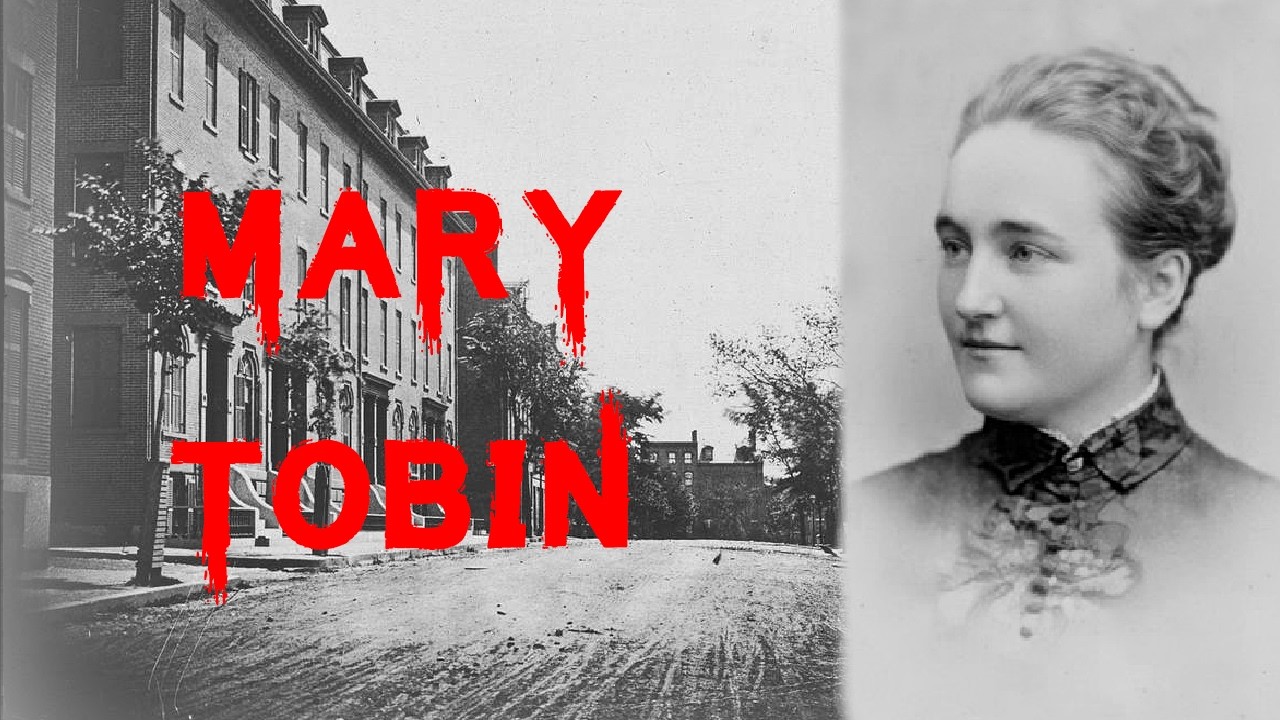
He dragged her to shore and alerted the authorities. Mary Tobin had arrived in West New Brighton under respectable circumstances. Born in Canada to a businessman who had lost much of his fortune, she had moved with her family to Franklin, Pennsylvania, where she was educated and worked as a schoolteacher. She was intelligent, competent, and well thought of.
In 1885, she came to New York to nurse and teach a sick child, and while staying in Dr. Robinson’s home, she made such a favorable impression on his mother that the older woman suggested the young woman might make an excellent office assistant. When the position opened up in April 1887, Dr. Robinson wrote to friends in Franklin to check her background.
The replies were favorable, and he hired her. Her responsibilities included bookkeeping, sending bills, and managing the practice. Dr. Robinson quickly discovered that her office skills were not as strong as he had hoped, but Mary was kind to his elderly father, and for that reason he kept her employed.
She attended the Methodist Church as she had in Franklin, but in late 1887 she gave up religion entirely, only to return to it months later and declare she wanted to become a nun. That ambition faded. In 1889, she announced she was going to be married, but would not say to whom. On Monday, April 15, 1889, Mary resigned her position.
She said farewell to everyone, seemed in good spirits, and explained her plans: she would visit a friend in Jersey City, then travel to her family home in Franklin to prepare for the wedding. She sent two trunks ahead, one to Jersey City and one to Franklin. Then she left. She never arrived.
Days passed without word, and her friend in Jersey City, Mrs. McKenna, went to Dr. Robinson to ask if he had heard anything. He had not.
Inquiries among friends and relatives yielded nothing. No one knew where Mary Tobin had gone. When her body was identified the day after it was found, the coroner and police confronted a puzzling scene. She was fully dressed, wearing white undergarments, a blue and white striped petticoat, a dark cloth dress and jacket, black stockings, and buttoned gaiters.
On her left hand was a gold ring set with a cat’s eye stone, and on her wrist were two black beaded bracelets. In her pockets was only a prayer book. There were no signs of violence on her body. Decomposition indicated she had been in the water for some time.
The initial theory was suicide. The suggestion was made that her marriage had fallen apart, leaving her so distressed that she threw herself into the water. Those who knew her rejected it. Reverend Mortimer of St.
Mary’s Church insisted she was level-headed and not given to impulsive acts. An autopsy was performed by Dr. John Feeney under the direction of Coroner Hughes, but the results were withheld until the inquest, scheduled for Friday, May 17. When the day arrived, the coroner’s office on New York Avenue in Clifton was packed.
The proceedings were chaotic. No stenographer recorded the testimony, and questions from the jury were silenced. No representative from the district attorney’s office was present. Newspapers would soon describe the inquest as a farce.
Thomas Armor testified first, describing how he found the body. Then Dr. Bryan took the stand. He had formerly worked for Dr.
Robinson but had left after a disagreement. His first statement changed the atmosphere in the room: he announced he had been engaged to Miss Tobin. He explained that on April 15 she had been at his house preparing to leave for Pennsylvania. He walked her toward the station, but was called away urgently to see a patient.
When he returned, he found she had left behind a package addressed to Dr. Robinson. Not knowing what it was, he locked it in his office and later sent it by messenger. There was no cross-examination of Dr.
Bryan. The police witnesses who followed were evasive. Dr. Feeney stated the cause of death was drowning, and Dr.
Loomis, a pathologist from the University of New York, confirmed that Miss Tobin had not been in a delicate physical condition. Both believed the body had been in the water no more than nine days. That detail was difficult to reconcile with the timeline. Mary had been missing for twenty-seven days.
If she had died when she disappeared, she would have been in the water far longer. Another physician, Dr. Walter Woods, believed she was already dead when her body entered the water, as there was no water in her lungs, but he was not called to testify. The inquest reopened the next day, and proved no more satisfactory.
A second autopsy was ordered, attended by Coroner Hughes, Dr. Feeney, Dr. Robinson, and Dr. Woods, but its results were not made public due to disagreements over how to interpret the findings.
One juror remarked that nothing useful had been accomplished. The case remained unresolved, marked by contradictory evidence. Suspicion settled on Dr. Bryan.
Word spread that he had become involved with a young nurse named Fanny Warburton, and that on April 15 he had ended his engagement to Mary, leaving her deeply distressed. It was noted that his medical call that day had taken unusually long, leaving a span of about forty-five minutes that could not be accounted for. Many believed he had killed her and hidden her body before putting her into the water. These allegations had their counters.
Miss Warburton said her association with Dr. Bryan was strictly professional, and Dr. Bryan attributed the delay to poor road conditions and two stops made along the way. Mary’s own movements added to the mystery.
She had not gone straight to the station on April 15, but had spent time at Dr. Bryan’s house before leaving. When she left, she was carrying a small purse on a ribbon beneath her dress, which contained a substantial amount of money, including forty-five dollars sent by her brother and a card with her name and address. The purse was missing when her body was found.
Because her clothing was tightly fastened and had to be cut away, it could not have been removed after her death. Its absence suggested robbery. There was also the matter of Dr. Robinson’s index book, which Mary had offered to take and update.
It was returned by a messenger boy, still wrapped in brown paper, never opened. Dr. Robinson said this caused him unease, as he knew it would not have been updated. He also declined to answer whether Mary had intended to be married.
Mrs. McKenna proved more willing to talk. She informed reporters that Mary had freely discussed her engagement to Dr. Bryan, had been out buying things for the wedding, and had seemed in the best of spirits the last time they met.
She added that after Mary disappeared, when she questioned Dr. Bryan, he showed surprise yet hardly seemed much troubled, hinting that Mary had likely returned home to Pennsylvania. Mrs. McKenna found that hard to accept.
The affair became ever more puzzling. Mary’s father, a merchant tailor in Franklin, was killed in his shop on March 22, 1891, and the premises were purposely set ablaze. Over the months that followed, fresh allegations surfaced, reviving demands that Mary’s case be reopened. Mrs.
Glassford, once Dr. Bryan’s housekeeper, stated that he had instructed her to keep in mind that he had left Mary at 8:00 outside West New Brighton Station, though she maintained the hour had been 9:00. She likewise remembered Mary weeping as she departed the doctor’s house. Dr.
Robinson, who had mostly kept silent, now declared that he had been certain Mary was murdered but that the case had been removed from his control. He asserted that the postmortem had shown signs the woman had been assaulted, yet no physician was summoned to testify to it. He further insisted the body could not have lain in the water beyond a week, and that it must have been hidden somewhere on Staten Island before being discarded. The authorities did nothing more.
On September 28, 1891, the shop in which Mary’s brother, David Tobin, was a partner was purposely torched and gutted. That crime, too, went unsolved. Most people came to feel that Mary Tobin’s death had been bungled, and that she, like her father, had been murdered, perhaps by the same hand that would later burn her brother’s shop. Still, the investigation was never reopened.
The death of Mary Tobin, the killing of her father, and the ruin of her brother’s business all remain unexplained.
