In 1928, a nineteen-year-old Bumpy Johnson was cornered in a Harlem alley by three men, one of them already holding a knife. Death seemed certain until a side door opened and an old printer named Cyrus Dubois stepped out with a revolver. He fired a warning shot, and the men fled, but one slashed Cyrus’s arm open to the bone before running. Bleeding heavily, Cyrus took the young man inside his shop, sat him down with a needle and thread, and made him sew the wound closed.
When Bumpy asked why a stranger would risk his life and bleed for someone he didn’t know, Cyrus answered simply: “Because somebody has to, and tonight it was standing closest. ”
Weeks later, Bumpy returned with money, but Cyrus refused it. Instead, he asked for a promise. He had daughters, he said, and maybe grandchildren he wouldn’t live to meet.
Whatever Bumpy became in this city, good or bad, Cyrus’s family was to stay out of it. Not touched, not used, not owed anything, and never owing anything in return. Bumpy swore it on an overturned crate in the back of the print shop, and for thirty years, he kept it. He watched Cyrus’s daughter marry a man he could have ruined with a single phone call and stayed silent.
He walked past the print shop knowing the quiet business that moved through its back room after dark and never once taxed it. A debt paid in blood outlives the men who signed it. Cyrus died at eighty-one, and at the funeral in Harlem, Bumpy stood outside the Ebenezer Funeral Home in a black overcoat, hat in hand. Inside, a young man in his mid-twenties stood closest to the casket, a sharp suit and sharper eyes.
He introduced himself as Eli Dubois, Cyrus’s grandson. Eli noted that he had never once heard Bumpy’s name in his grandfather’s house, and Bumpy understood that the peace he had maintained for three decades was about to be tested. Three weeks later, the first hit came. Eli quietly redirected the liquor supply for the Palm Room, a bar Bumpy had owned outright for six years.
When Theo Marsh brought the news, Bumpy said simply: let it go. Wesley Cade, who ran security with the discipline of a church elder, demanded an explanation and received none. Bumpy told him that not everything that looks like weakness is weakness, and that some of it is just patience wearing weakness as a coat. The second hit was louder.
Nathaniel Cross, one of Bumpy’s collectors, a soft-spoken man with six kids and a bad knee, was forced to kneel on the sidewalk in front of a barber shop full of witnesses. Three of Eli’s men told him to deliver a message: the streets were changing hands one block at a time. Nate came back shaking, more from humiliation than fear. Bumpy asked to see him personally and told him that being alive was not nothing.
But he still gave no order to respond. The third hit landed on a license. The Silver Suds Laundromat on Lennox, a legitimate business Bumpy had run clean for a decade, lost its water permit overnight to a bureaucratic technicality nobody had enforced in years. Somebody had made a call and greased a palm.
Theo brought the paperwork and laid it on the desk without a word. Bumpy drove out to look at the padlocked door himself. A woman who worked the counter came out and asked if it was temporary. He said yes and meant to make it true.
By then, whispers were moving through Harlem that the old lion was already dead and just hadn’t noticed yet. Wesley called a meeting Bumpy hadn’t authorized, and six loyal men sat in a back room above a barber shop, convinced their loyalty was being wasted. Isaac Bell, the youngest man there, asked whether Bumpy might have a reason they didn’t know about. Wesley answered that until Bumpy gave them a reason, all they had was what they could see: their people kneeling on sidewalks while he signed funeral books for men who never mattered.
Bumpy called Wesley in alone and asked what he wanted to say. Wesley told him that his people were losing faith, not because he was weak, but because he wouldn’t tell them why he wasn’t. Bumpy gave his word there was a reason and asked for time until it mattered. Wesley agreed to carry the weight a little further.
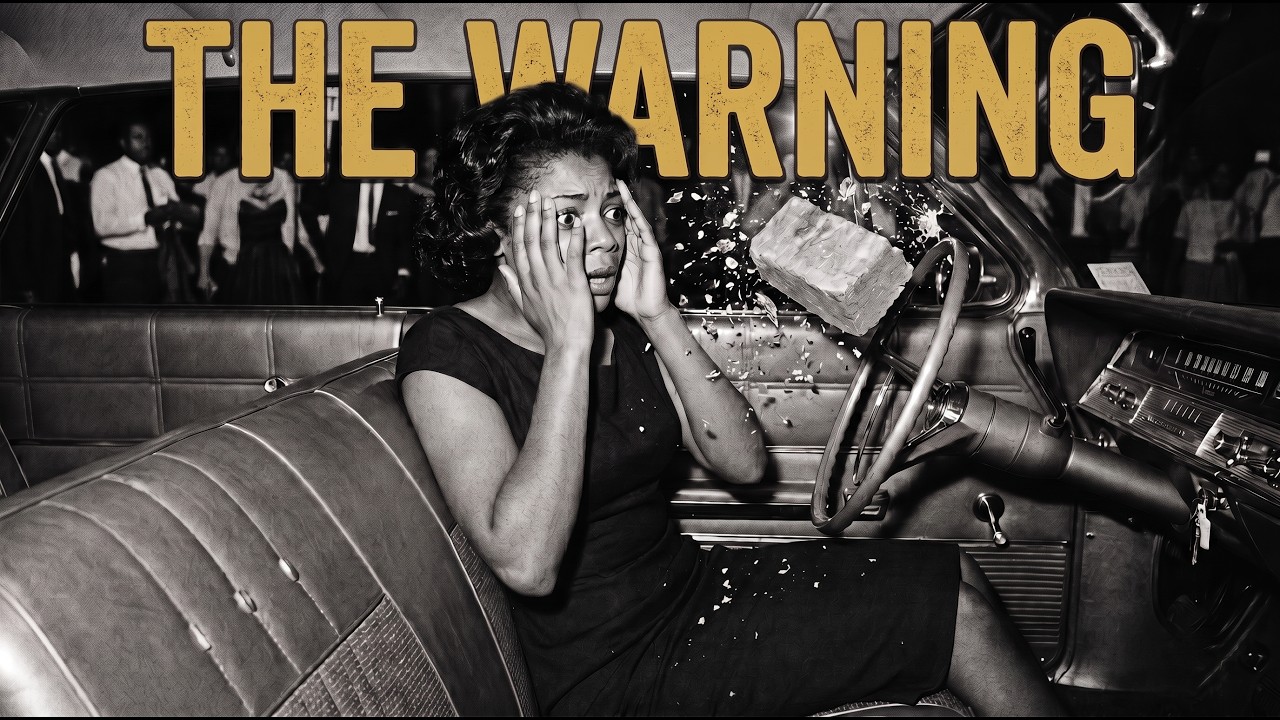
Two days later, the fourth hit came, and it changed everything. Adele Johnson, nineteen years old, Bumpy’s daughter, was driving home from her evening class on 145th Street when a brick came through her passenger window. Glass exploded into her hair and her lap. She was not hurt, but she was screaming.
Odessa called Bumpy at exactly 15:41, and he would remember that number for the rest of his life, the way a man remembers the second a floor gives way beneath him. A promise about a family did not survive the moment somebody threatened his own. Wesley arrived within the hour, and this time Bumpy did not send him away. A witness described a heavy-set man with a gold fist pin on his jacket, and Bumpy’s people worked the corner until a kid identified him as Marcus Webb, a man who ran with Eli’s inner circle.
Bumpy gave the order: find the men who threw it, not Eli, and do not kill them. Bring them somewhere quiet. He intended to have a conversation he should have started six weeks ago. They found Webb in a barber shop on Eighth Avenue and took him to an alley behind a shuttered dye factory.
Webb broke almost immediately. He swore he didn’t know whose car it was. The order had come from Ezra Pratt, Eli’s right hand, not from Eli himself. Pratt had decided Eli was moving too slow, that the old man wasn’t answering fast enough to prove the street had changed hands.
He had told Webb to scare somebody close to Bumpy, and Webb had driven and thrown. Bumpy let Webb go and went home to his daughter. He knelt in front of her chair, checked her hands for cuts, and asked her to tell him exactly what she saw. Then he called Wesley before midnight.
When they found the men responsible, they would not kill them. They would bring them somewhere quiet, and he would have a conversation with them that Eli Dubois would hear about before the sun came up. Instead of a war against Eli, Bumpy chose accounting. Theo pulled old contacts among liquor suppliers and quietly redirected the terms Eli’s crew had used to undercut the Palm Room.
Wesley worked channels inside the same bureaucracy that had pulled the laundromat’s permit. Isaac mapped the corners and deliveries, building a picture of where Eli’s operation actually held its money. Within a week, suppliers began wavering, permits came under review, and a rumor moved through the street that the boy building an empire on borrowed muscle hadn’t actually earned any of it. Eli grew visibly tighter.
He confronted Ezra about the brick, and Ezra admitted he had ordered it without permission, to move things forward. Eli’s rage was raw and immediate. He told Ezra to get out of the office. Ezra, watching everything he had built come apart, began drinking and asking questions about Bumpy Johnson himself.
An old bartender told him that Johnson once owed old Cyrus Dubois something, some kind of promise, the old kind, the kind men used to actually keep. That same week, a message arrived at Bumpy’s office from an unexpected third party: Ruth Alden, the old woman from the funeral who had remembered Cyrus’s half-finished sentence about a young man who might become something to thank or curse. She had something that had belonged to Cyrus, held for years. Inside a worn leather folder was a single sheet of paper in Cyrus’s careful hand, dated three years before his death.
The letter said that if Bumpy was reading it, the promise still held. It said he never doubted it, not once in thirty years. And it said that if it ever came to a place between Bumpy and Eli, he should tell Eli about the alley. “He deserves the truth more than he deserves my silence.
”
Ezra, meanwhile, sent Eli an anonymous message pointing toward the old debt, hoping it would give him leverage. Instead, it made Eli dig out the unfinished letter he had found among his grandfather’s effects, read it in full, and understand that he had spent two months fighting a man who could have ended him in a single night and had chosen not to, out of a promise kept to a grandfather Eli had barely known. It had not been weakness. It had been the most expensive kind of mercy.
The next morning, a boy on a bicycle delivered a note to Bumpy’s office. Eli asked to meet alone, no crew, no witnesses. Bumpy chose the location: the old print shop on 131st Street, the room where the original debt had been made. Before that meeting, Ezra made one final move.
He sent four men to ambush Theo Marsh on his morning route near the rail yards. But Isaac had already mapped the pool hall where Ezra’s loyalists gathered, and Wesley had put a man on the door. When the four cars turned toward the rail yards, Bumpy rerouted Theo and boxed the men in at both ends of the corridor. They knelt in the road with their hands visible.
Bumpy told them to go back to Ezra and deliver a message: the man he was trying to provoke into a war was not fighting a war against Eli Dubois. It had never been about that. Ezra went to Eli himself, hoping to finish on his own terms. Eli told him that the promise was the reason his family had survived thirty years in a city that eats families like theirs for breakfast, and that Ezra had not found leverage, he had found the one thing standing between them and a war they would have lost.
Ezra left the office, and the city, within the month. At sundown, Bumpy arrived alone at the old print shop and let himself in through the side door, the same door Cyrus had opened onto an alley thirty years earlier. Eli arrived precisely on time. Bumpy told him the whole story, without the version in the letter: the three men, the knife, the warning shot, the blade that had opened Cyrus’s arm because an old man chose to stand between a stranger and death, the needle and thread through shaking hands, and the promise sworn on an overturned crate in that exact room.
Eli listened without interrupting. He said he had never known any of it, that he had grown up thinking his grandfather was just a quiet old printer. Then he asked how long Bumpy would have let him keep testing before the promise stopped mattering. Bumpy admitted he didn’t know, that he hadn’t found the line before the brick came through his daughter’s window.
That was the truth, whether it was the answer Eli wanted or not. When Eli asked what happened now, Bumpy told him he had a better chance than he had two months ago. A man who had just learned the truth about where his own restraint should have come from does not unlearn that easily, but whether Eli actually became it was still his choice to make. They stood together in the small back room, and Eli asked Bumpy to teach him the other thing, the thing that let a man run this city’s underside for thirty years and still have people honoring a promise made decades after the man who collected it was gone.
Bumpy said it was not a lesson he could teach in one evening, but it was one he was willing to start teaching. At home, Odessa and Adele were waiting. Adele hugged him the way she hadn’t since she was much younger, and Bumpy told them it was really over. Later, alone in his study, he opened the tin box one final time, the old thread still coiled inside it, brittle and useless for anything but memory.
He set Cyrus’s letter beside it, the two objects telling a fuller story together than either could have told alone: a debt made with a needle in an alley, and a debt finally honored with words in the same room decades later. He closed the box, set it back in the drawer, and turned off the lamp. Outside, Harlem carried on the way it always carried on, indifferent to the quiet ending of a war most of its residents had never fully understood was being fought at all.
A promise kept, a debt honored, and two men, old and young, finally standing on the same side of a line thirty years in the speaking.






