The night call came after years of silence. For nearly thirty years, the families of Timothy Hack and Kelly Drew had waited for someone to answer for the murders of their children. On the other end of the line was a woman who believed she knew the truth. Her voice trembled as she told the detective she might be crazy, but she had information.
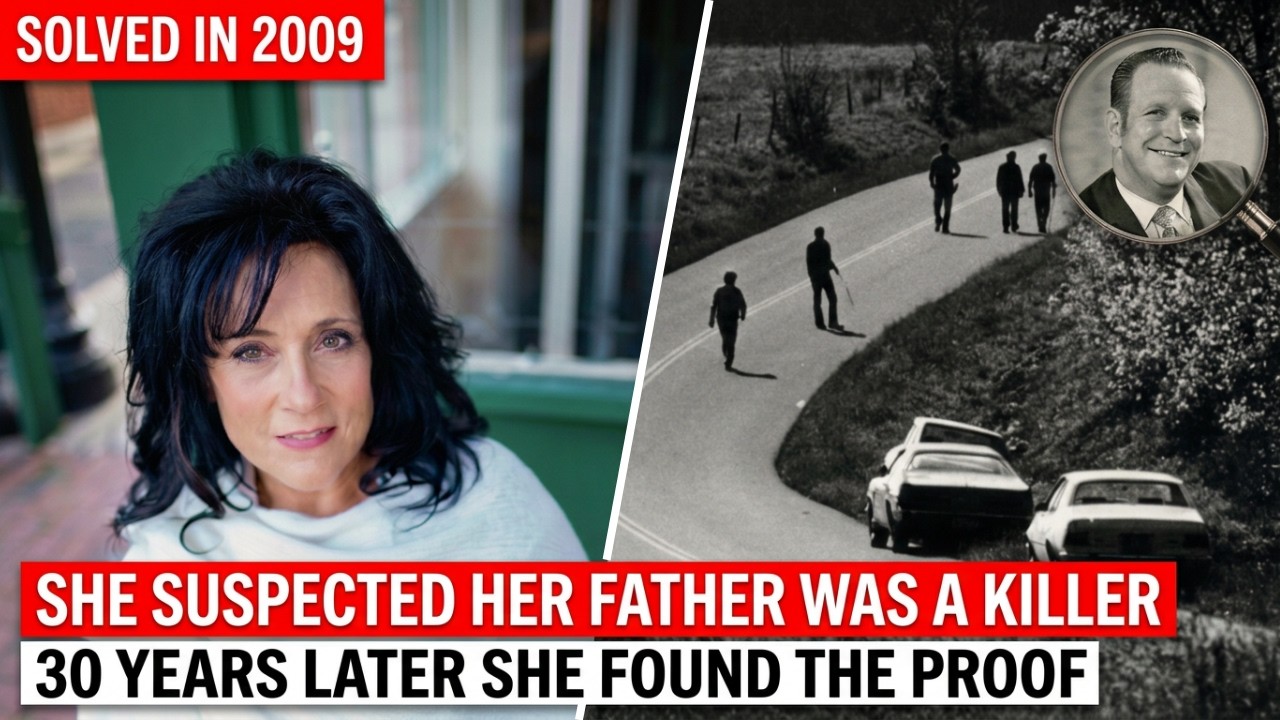
She thought her father might be a serial killer. To the outside world, Edward Wayne Edwards was a husband and father. To his neighbors, he was Ed, a friendly handyman who seemed to move around a lot for work. But to his daughter, April Balascio, life was a blur of sudden goodbyes.
The family moved constantly, often in the middle of the night without warning. Children were pulled from their beds, their lives shoved into boxes, and they were on the road before sunrise. The official reason was always work. But even as a child, April felt there was a deeper reason.
It felt less like they were moving toward something and more like they were running away. Her father was a man of contradictions. He could be charming and playful, creating magical holiday celebrations and entertaining the neighborhood children. But there was another side.
A violent side. April watched him hit her mother while she was pregnant. She saw him break her mother’s jaw. He once threw April across the room.
Fear was a constant presence in their home. Along with the fear, another strange habit began to stand out. Wherever they moved, a tragedy seemed to follow. And her father was obsessed with it.
He collected stacks of newspaper clippings about local murders and talked about the cases constantly. If a big case like the Zodiac Killer was on television, he would make the whole family watch. He would scoff at the reports and say that was not right, that was not how it happened. Then he would spin his own theories about who the killer could be.
For a little girl, it was confusing and creepy. Years passed. April grew up, moved out, and started a family of her own. She built the stable life she always wanted.
But the past caught up with her. The unanswered questions never went away. As an adult with time and distance, she began to look at her childhood not as a series of random events but as a deliberate pattern. She thought about all the places they had lived and the timing of their sudden moves.
Wherever the Edwards family went, young people went missing or turned up dead. Young couples, always young couples. Her father’s obsession with these cases no longer seemed like morbid curiosity. It felt proprietary.
The turning point came around 1996. By then, April knew deep in her gut that her father was a murderer. She had no proof, but the feeling was overwhelming. It was a horrifying truth to carry alone.
How do you tell someone you think your own dad is a killer? Who would believe you? And what if you were wrong? The man she was thinking about was not a monster on a television show.
He was her father, the grandfather to her children. But the need for the truth was stronger than the fear. In 2009, with her children older, April Balascio began her secret hunt. For eighteen months, she became a nighttime detective.
After her family went to sleep, she would open her laptop and dive into cold cases. Her method was painstaking. She started with the broken timeline of her own life, listing every town and state she could remember living in. Then she paired those names with phrases like cold case, unsolved murder, and missing person.
Most searches were dead ends. With every search, she felt guilt and dread. She was trying to connect her own father to the worst moments in other people’s lives. Then the connections surfaced.
A town in Ohio matched a local tragedy. A rental house in Pennsylvania lined up with another dark event. The patterns held. Her father was often a handyman.
The victims were often young couples. The murders were often brutal and happened in secluded places. The details from the case files matched the disturbing echoes in her memory. She remembered her father coming home late and the urgency in his voice when he announced it was time to leave.
In May 2009, her search led to Watertown, Wisconsin. She remembered living there for a few months in 1980. She typed the words into the search bar. The first result was a case known as the sweetheart murders.
The victims were Timothy Hack and Kelly Drew, both nineteen. They were high school sweethearts who disappeared after a wedding reception at a venue called the Concord House on August 9, 1980. As April read the details, her blood ran cold. She remembered the Concord House.
Her family had been there that summer. Then came the detail that stopped her world. Her father, Edward Wayne Edwards, had worked at the Concord House as a handyman during that exact time. The article went on.
Weeks after they vanished, the couple’s bodies were found in a wooded area. Tim Hack had been stabbed. Kelly Drew had been assaulted and strangled. Investigators had questioned the handyman, Ed Edwards.
They noticed he had a bloody nose that weekend, but he brushed it off as a hunting accident. With nothing to hold him on, they let him go. Shortly after, the Edwards family packed up and left Wisconsin. Every piece clicked into place.
The place, the time, the job, the sudden move. Her father was not just near a tragedy. He was at the very heart of it. The lifelong suspicion became a horrifying fact.
The monster had a name, and it was Edward Wayne Edwards. At the bottom of the article was a phone number for a detective named Chad Garcia of the Jefferson County Sheriff’s Office. For a long moment, April sat frozen. Making that call meant betraying her own father and destroying what was left of her family.
Her mother was still married to the man. But looking at the faces of Tim Hack and Kelly Drew, she knew she had no other choice. With a shaking hand, she dialed the number. She stammered that she had information, that she thought her dad might be a serial killer.
Detective Garcia listened. Cops get tips like this all the time, and most go nowhere. But something about April’s story was different. The detail.
The conviction. Her call was the key that unlocked a twenty-nine-year-old cold case. Investigators pulled the old files and confirmed that Edwards had been questioned in 1980. They traveled to Louisville, Kentucky, where the seventy-six-year-old Edwards was now living in a wheelchair, and obtained a DNA sample.
It was compared against evidence preserved from the crime scene. The results came back a match. DNA confirmed that Edward Wayne Edwards was responsible for the murders of Kelly Drew and Tim Hack. When April heard the news, it did not bring relief.
It brought devastation. She reportedly asked an official what she had just done. On July 30, 2009, the mask was ripped off. The seventy-six-year-old man his neighbors called pleasant was arrested for the 1980 sweetheart murders.
Faced with undeniable evidence, Edwards pleaded guilty. But he did not stop there. Knowing Wisconsin had no death penalty, he used his other crimes as a bargaining chip. He wanted to be executed rather than die in prison.
He confessed to a 1977 double homicide in Norton, Ohio, where he murdered twenty-one-year-old Billy Lovaco and eighteen-year-old Judy Straub with a shotgun. Then came the most chilling confession. Edwards admitted to murdering his own adopted foster son, a twenty-five-year-old he called Danny Boy Gluckner. In 1996, he lured the young man into the woods in Burton, Ohio, and shot him twice in the face.
The motive was greed. He wanted a two hundred fifty thousand dollar life insurance policy. The charming handyman was now a confirmed serial killer convicted of five brutal murders. He was the same man who, in 1972, had appeared on a national game show, presenting himself as a reformed criminal who had turned his life around after landing on the FBIs most wanted list in the 1960s.
He even wrote an autobiography called The Metamorphosis of a Criminal. It was the ultimate con. For his Ohio crimes, Edwards was sentenced to death, but he never reached the execution chamber. On April 7, 2011, just a month after sentencing, he died of natural causes in prison at age seventy-seven.
With his death, some questions were answered, but many more opened up. Given his nomadic life and decades of violence, investigators are almost certain his confirmed body count of five is just the start. Detective Chad Garcia said he was confident Edwards committed at least five to seven additional murders. That uncertainty has fueled speculation.
Online sleuths and some authors have tried to link him to famous unsolved cases, including the Zodiac Killer and the murder of JonBenét Ramsey. One former detective published a book claiming Edwards was behind these crimes. Law enforcement has met those claims with disdain. There is no DNA or hard evidence officially connecting Edwards to those cases.
The theories remain pure speculation. The true number of his victims is a secret Edward Wayne Edwards took to his grave. The story of Edward Wayne Edwards is a tale of deception and violence. But at its core, it is the story of his daughter, April Balascio.
She carried a terrible feeling her whole life, found the courage to search for the truth, and made an impossible choice. She chose the victims over the man she called dad. Her actions brought long overdue answers to grieving families and closed a cold case that haunted a community for a generation.
She dragged the darkness kicking and screaming into the light.






