Daylight had not yet come to Stinking Springs when Charlie Bowdre emerged from the stone building to look after the horses. He had no cause to believe this morning would turn out any differently from the others since he and Billy the Kid had taken to the run. But Pat Garrett’s posse had encircled the hideout under cover of darkness, and when the first shots cracked out, Bowdre stood exposed in the open, hit several times before he could even reach for his revolver. He staggered back toward the doorway, badly wounded, hardly able to stay on his feet.
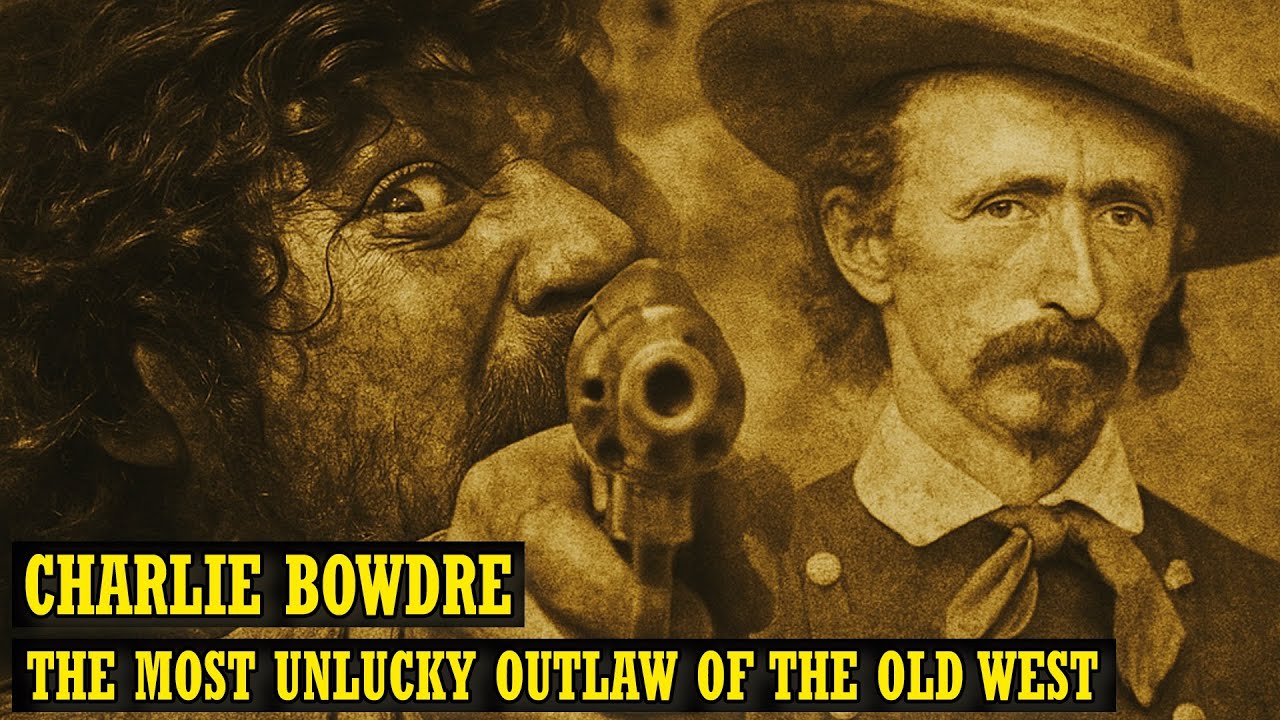
From within, Billy the Kid called on him to make one final attempt, to go down fighting. Bowdre lurched forward, unable to pull his weapon. By the accounts of those who afterward repeated the tale, his last words were scarcely more than a whisper: “I wish. I wish.
” Then he fell. He was laid to rest in the cemetery at Fort Sumner, New Mexico, beside his friend Tom O’Folliard. In less than a year, Billy the Kid himself would be buried in that same ground. Charlie Bowdre had ridden with the most celebrated outlaw of the American frontier, had come through the bloodiest conflict the territory had ever known, and had been only months away from leaving it all behind.
Instead, poor timing and loyalty to a friend brought him to that desolate death at Stinking Springs. Born in 1848 in Wilkes County, Georgia, Charles Bowdre was the first child of Albert and Lucy Bowdre. When he was about three, the family packed up and headed west to Dottot County, Mississippi. There Charlie grew up with six younger siblings—Epie, Sally, Vuly, Benjamin, William, and Lucy Lee—born between 1854 and 1863.
By the mid-1850s, young Charlie was already pitching in with chores on his father’s farm. In time, he became a capable and reliable farmer, a role that shaped much of his early years. What became of Bowdre between the birth of his youngest sister in 1863 and his reappearance in the historical record around 1874 is largely a mystery. Records are sparse, leaving a gap in what we know of his doings before he turned up on the western frontier.
Historians suspect that at some point Charlie left the family farm in pursuit of a more adventurous life, probably setting out around 1870. By 1874, documents place him in Lincoln County, New Mexico. There, Bowdre struck up a close friendship with Doc Skurlock, another well-known figure of the era. The two even went into an unusual frontier business together: a small cheesemaking operation along the Gila River.
While establishing that enterprise, Bowdre also got drawn into local law enforcement work. Now and then he rode with posses formed to recover stolen livestock, a persistent problem in the area. Such efforts sometimes concluded without any legal charges, a reflection of the informal and frequently disorderly character of frontier justice. One of the best-documented incidents took place on July 18, 1876.
Bowdre, together with Skurlock, Frank Coe, George Coe, and A. B. Saunders, stepped in at the Lincoln jail to take a captured cattle thief, Jesus Largo, out of custody. The group handled matters themselves outside of town, a choice that brought no punishment from formal authorities.
Later, on August 5, 1877, Bowdre and a companion were arrested following an incident in Lincoln in which both men, said to have been drinking, fired their guns recklessly. The conflict that would consume Bowdre’s life can be traced to a financial quarrel over an insurance policy belonging to Emil Fritz, a business partner of L. G. Murphy.
When Fritz died in 1874, the executors of his estate engaged attorney Alexander McSween to collect the policy payout. After successfully obtaining the funds, McSween declined to turn the money over to the executors. His reasoning was linked to suspicions about the House, the powerful mercantile firm headed by Murphy and James Dolan. The House maintained that the money should come to them to settle an outstanding debt, but McSween believed the executors meant to pass the funds to that faction.
McSween was also fully aware of the House’s precarious finances and likely wanted to keep them from gaining any edge, particularly since they were his business rivals. In February 1878, legal action was launched, but the case was eventually thrown out. Before that, however, the House succeeded in obtaining a court order to seize McSween’s assets. In doing so, they mistakenly included property belonging to John Tunstall, McSween’s ally and business partner.
After this, Sheriff William Brady put together a posse to confiscate Tunstall’s remaining goods at his ranch, roughly seventy miles from Lincoln. In the meantime, Dolan brought in reinforcements by joining forces with the John Kinney gang, the Seven Rivers Warriors, and the Jesse Evans gang. Their main job was to intimidate opponents and disrupt operations by running off livestock from ranches belonging to Tunstall and John Chisum. These groups essentially served as hired muscle for the House, heightening tensions that would soon explode into open warfare.
On February 18, 1878, a posse acting under Sheriff Brady’s authority came upon John Tunstall and several of his ranch hands as they were driving his remaining nine horses toward Lincoln. Among the men riding with Tunstall were Richard “Dick” Brewer, Billy the Kid, John Middleton, Henry Newton Brown, Robert A. Widenmann, and Fred Waite. Later investigations, including conclusions by Frank Warner Angel, a special agent for the U.
S. Department of the Interior, determined that Tunstall was deliberately killed by Jesse Evans, William Morton, and Tom Hill. Several of Tunstall’s cowhands, Brewer and Billy the Kid among them, watched the event from a distance but could do little to stop it. Tunstall’s death marked the start of what came to be known as the Lincoln County War.
Outraged by the killing and distrustful of a territorial justice system largely controlled by Murphy and Dolan, Tunstall’s men and other supporters formed a group that became known as the Regulators. Although the Regulators’ numbers rose and fell, the core members—often called the Ironclad—included Billy the Kid, Henry McCarty, Dick Brewer, Frank McNab, Doc Skurlock, Jim French, John Middleton, George and Frank Coe, Jose Chavez y Chavez, Charlie Bowdre, Tom O’Folliard, Fred Waite, and Henry Newton Brown. At first, the Regulators aimed to bring those responsible for Tunstall’s death to justice through legal channels. They secured warrants from the Lincoln County justice of the peace and acted under the authority of Constable Saturnino Martinez.
Sheriff Brady, however, defied this effort by arresting Martinez and several Regulators, jailing them in spite of their legal authority. Once released, the Regulators took up their search again for the men implicated in Tunstall’s killing. They soon found Buck Morton, Frank Baker, and Dick Lloyd near the Rio Peñasco. After a long chase covering several miles, Morton agreed to surrender on the condition that he and Baker—who had not taken part in Tunstall’s death but was riding with the group—would be escorted safely back to Lincoln.
Dick Brewer, who was leading the Regulators at that point, gave his word that the captives would be brought back unharmed. Yet friction was building inside the group, and the men could not agree on what should be done with the prisoners. William McCloskey, a Regulator and a friend of Morton, argued forcefully that no harm should come to them and demanded the group keep its promise. On March 9, 1878, as the Regulators entered the third day of their ride back toward Lincoln with the captured men, tragedy struck in the Capitan foothills close to Blackwater Creek.
Morton, Baker, and McCloskey were all killed in circumstances that are still argued over today. The Regulators’ official version held that Morton shot McCloskey and then tried to run off with Baker, leaving the group no choice but to defend itself. Almost at once, though, that account drew skepticism. To many it seemed implausible that Morton would have turned on McCloskey, understood to be the only man in the Regulators on his side.
The physical evidence only deepened the doubts: both Morton and Baker were found riddled with bullets. By some reports Morton was hit as many as ten times and Baker five. Historian Robert Utley points out that early accounts suggested every Regulator may have gotten off at least one shot, which casts grave doubt on the escape story. It was also widely assumed that McCloskey died because he had objected to killing the prisoners.
By coincidence, on that very day, two of the men tied to Tunstall’s murder—Tom Hill and Jesse Evans—were confronted near Tularosa while trying to steal from a sheepherder. Hill was killed in the encounter, and Evans was badly hurt. Evans was afterward taken to Fort Stanton for treatment, where he was arrested on an outstanding federal warrant for stealing livestock from an Indian reservation. Sheriff William Brady, ever more alarmed by the lawlessness in Lincoln County, turned to the territorial attorney general, Thomas Benton Catron, for assistance.
Catron passed the matter to Governor Samuel B. Axtell, who before long handed down rulings that changed everything. Governor Axtell ruled that John Wilson, the local justice of the peace who had deputized the Regulators and issued warrants for Tunstall’s killers, had been appointed illegally by the county commissioners. That decision stripped the Regulators of their earlier authority, turning actions once regarded as lawful into acts now deemed illegal.
Beyond that, Axtell withdrew Robert A. Widenmann’s commission as a deputy U. S. marshal.
As a result, Sheriff Brady and his deputies stood as the only legally recognized officers in Lincoln County. On April 1, 1878, the strain finally snapped. That morning, a number of Regulators—among them Billy the Kid, Henry McCarty, Jim French, Frank McNab, John Middleton, Fred Waite, and Henry Brown—lay waiting in the corral behind Tunstall’s store. They were lying in wait for Sheriff Brady and his deputies as the lawmen came along Lincoln’s main street.
When the firing broke out, Brady was hit several times and died on the spot. Deputy George W. Hindman was also fatally wounded. Once the first volley ended, Billy the Kid and Jim French dashed out from cover toward Brady’s body.
Historians disagree about what they were after. Some think they meant to seize an arrest warrant for Alexander McSween, while others argue they were trying to recover Billy’s rifle, which Brady had taken during an earlier arrest. As they made the attempt, both men were struck by the same bullet, fired by Deputy Billy Matthews, who somehow managed to shoot back amid the confusion. French was hurt so badly that he had to hide for a time in a small crawl space at Sam Corbett’s house to recover.
Widenmann was at the corral when the shooting happened, but whether he took an active part is still uncertain. He later insisted he had only been there to feed Tunstall’s dog when the attack began. Three days after the deaths of Sheriff Brady and Deputy Hindman, the Regulators departed from the area around Lincoln and headed southwest. Their path brought them to Blazer’s Mill, a sawmill and trading post that also supplied beef to the nearby Mescalero Apache community.
At Blazer’s Mill the Regulators came upon Buckshot Roberts without warning, a rancher whose name was on their list of men sought in connection with the Tunstall case. What followed was a violent clash that became one of the most storied episodes of the Lincoln County War. In the exchange of fire, Roberts was fatally wounded, but only after he had dealt the Regulators heavy losses. Richard “Dick” Brewer, their leader at the time, was killed in the fight.
Several others—John Middleton, Doc Skurlock, George Coe, and Billy the Kid—were wounded as well, in varying degrees. The affair deepened the conflict further and showed how unpredictable and deadly the war had become, where even one determined man could sharply change the course of events. After Dick Brewer fell at Blazer’s Mill, the Regulators named Frank McNab as their new captain. By late April, tensions across Lincoln County kept mounting.
On April 29, 1878, Sheriff George Peppin led a posse that included men from the Jesse Evans gang and the Seven Rivers Warriors. This force came upon a small group of Regulators—McNab, A. B. Saunders, and Frank Coe—at Fritz Ranch.
In the gunfire that followed, McNab was killed, Saunders was badly wounded, and Frank Coe was captured. The next day, four men of the Seven Rivers faction—Tom Green, Charles Marshall, Jim Patterson, and John Galvin—were killed in Lincoln. The Regulators were widely suspected of the attack, but no solid evidence was ever presented. Frank Coe ultimately got away from custody under circumstances that were never explained.
Some accounts say Deputy Sheriff Wallace Olinger may have helped him, even slipping him a pistol to aid his escape. The day after McNab’s death, the core Regulators moved into Lincoln and dug into defensive positions. They traded shots with Dolan’s men and, by some accounts, with members of the U. S.
Army cavalry as well. During this standoff, George Coe badly wounded the Dolan supporter Dutch Charlie Krling. By allegedly trading fire with federal troops, the Regulators unintentionally added yet another powerful enemy to their lengthening list of foes. On May 15, the Regulators captured Manuel Segovia, a member of the Jesse Evans gang suspected of killing McNab.
Segovia was fatally shot in what was reported as an attempt to escape. Around this same time, the Regulators gained a new member, a young Texas cowboy named Tom O’Folliard, who soon became one of Billy the Kid’s closest companions. The largest and most decisive battle of the Lincoln County War opened on July 15, 1878, in the town of Lincoln. The Regulators were split between two main positions.
Some sheltered in the McSween home while others held the Ellis store. Ringing them were forces loyal to the Murphy-Dolan faction, among them members of the Seven Rivers group. Inside the Ellis store were Doc Skurlock, Charlie Bowdre, John Middleton, Frank Coe, and several others. In addition, roughly twenty Mexican Regulators commanded by Jose Chavez y Chavez were placed strategically at various points around the town.
On the other side, the McSween residence held Alexander McSween, his wife Susan, Billy the Kid, Henry Brown, Jim French, Tom O’Folliard, Jose Chavez y Chavez, George Coe, and several Mexican vaqueros. For three days, the two sides traded bullets and heated verbal taunts. Amid this standoff, Tom Cullins, a supporter inside the McSween house, was struck and killed by a stray bullet. At roughly the same time, Henry Brown, George Coe, and Joe Smith departed the McSween home for the Tunstall store, where they pinned two Dolan men in an outhouse with rifle fire, forcing them to cower in desperation.
The stalemate held until U. S. Army troops commanded by Colonel Nathan Dudley arrived. The soldiers arrived with heavy weaponry, including cannons, which they trained on the Ellis store and other strongholds.
Confronted with overwhelming force, Billy the Kid, Doc Skurlock, and their men gave up their positions, as did Jose Chavez y Chavez and his fighters, leaving those inside the McSween home ever more isolated. On the afternoon of July 19, the Murphy-Dolan faction set the McSween house on fire. As the flames spread and dusk fell, Susan McSween, another woman, and five children were permitted to leave safely. The remaining men stayed behind, trying to fight the flames and prepare for a possible escape.
By 9:00 p. m. , the situation had become desperate. Billy the Kid and Jim French devised a plan to break out using covering fire.
French went first, followed by Billy, Tom O’Folliard, and Jose Chavez y Chavez. As they ran, Dolan’s men opened fire, killing Harvey Morris, McSween’s legal associate. In the backyard, chaos erupted when soldiers moved in to capture those still inside. In the confusion, Alexander McSween and Bob Beckwith of the Seven Rivers faction were both killed.
Amid the turmoil, three Mexican Regulators managed to slip away and regroup with the remaining members of the Ironclad nearby. The Lincoln County War ultimately resolved little. Instead of restoring order, it left behind deep mistrust and lingering hostility throughout the region. The surviving Regulators, most famously Billy the Kid, remained fugitives, continuing to live outside the law.
Over time, the group began to fragment. Billy stayed active with a small circle that included Charlie Bowdre, Tom O’Folliard, Dave Rudabaugh, and a few others. Together, they engaged in cattle rustling and other outlaw activities across New Mexico. On the legal side, changes in federal law had an impact on how the war played out.
The Posse Comitatus Act, signed on June 18, 1878, restricted the use of federal troops in civilian law enforcement. However, President Rutherford B. Hayes invoked the Insurrection Act of 1807 later that year, on October 7, allowing soldiers to intervene in Lincoln County. Several key figures also met very different fates.
L. G. Murphy, whose influence had loomed large during the war, died of cancer on October 20, 1878, at about age forty-seven. Susan McSween, widowed after her husband’s death, hired attorney Houston Chapman to press charges against James Dolan and others while also seeking amnesty for the remaining Regulators.
Tragically, Chapman was killed on February 18, 1879—exactly one year after John Tunstall’s death—by Jesse Evans and Billy Campbell, both of whom fled the territory. The crime was widely attributed to Dolan’s faction, though no definitive proof emerged. Dolan himself was indicted for Tunstall’s murder but later acquitted. He managed to acquire all of Tunstall’s former holdings before passing away on his ranch in 1898 at age forty-nine.
Susan McSween, by contrast, built a new life. She established a large cattle ranch at Three Rivers, New Mexico, which became one of the most successful in the region during the 1890s. At its peak, her ranch supported between three thousand and five thousand head of cattle. When she died on January 3, 1931, at age eighty-five, she was regarded as one of the wealthiest and most influential women in New Mexico after the Lincoln County War.
As the war continued, Charlie Bowdre divided his time between working as a cowboy on the ranches of Thomas Yerby and Pete Maxwell and remaining loosely connected to the conflict. Sometime before his death, Bowdre married a young Mexican woman named Manuela Herrera, born Maria Manuela Herrera on April 20, 1866. She was the daughter of Jose Fernando Herrera, a friend and associate of Bowdre, and Maria Juliana Martin. Interestingly, Manuela was also the sister of Maria Antonia Miguela Herrera, known as Antonia, who was married to Doc Skurlock, one of Bowdre’s closest companions.
The timing of this marriage—occurring only months before his death—has led some historians to suggest that Bowdre may have been preparing to settle down and distance himself from Billy the Kid’s activities. However, circumstances pulled him back into the outlaw life. By December 1880, Bowdre was reportedly ready to surrender and leave the gang, even considering turning himself in for his role in the killing of Buckshot Roberts. Despite these intentions, he agreed to ride with Billy the Kid on what would become one of their final missions: an attempt to ambush Sheriff Pat Garrett near Fort Sumner.
The plan failed, resulting in a skirmish, but Bowdre and most of the group managed to escape unharmed. Their reprieve was short-lived. On December 23, 1880, Garrett’s posse tracked the gang to an isolated stone building at Stinking Springs, New Mexico. During the night, the lawmen surrounded the hideout.
At dawn, Bowdre stepped outside to tend to the horses, unaware of the danger. Shots rang out, and he was struck multiple times before collapsing back toward the doorway. Accounts suggest that Billy the Kid urged him to make one last effort, but Bowdre, gravely wounded, could barely stand. He stumbled forward, unable to draw his revolver, and reportedly muttered his final words—”I wish.
I wish. “—before falling. His body was later returned to Manuela, and he was buried in the cemetery at Fort Sumner alongside his friend Tom O’Folliard. Less than a year later, Billy the Kid himself would join them after his death in July 1881 at the hands of Pat Garrett.
Charlie Bowdre was never the fastest gun in the West, nor the most feared. But his loyalty to Billy the Kid carried him through the bloodiest conflict of the frontier and, in the end, to an unmarked grave in the same ground where the most famous outlaw of them all would come to rest.
