The sun had just reached its peak over the Montana plains on June 25th, 1876. On the banks of the Little Bighorn River, the grass-scented wind carried the fate of thousands of people, though no one knew it yet. George Armstrong Custer advanced at the head of the 7th Cavalry Regiment with that familiar reckless gleam in his eyes, his blond hair falling to his shoulders. With every step, he dreamed of yet another victory.
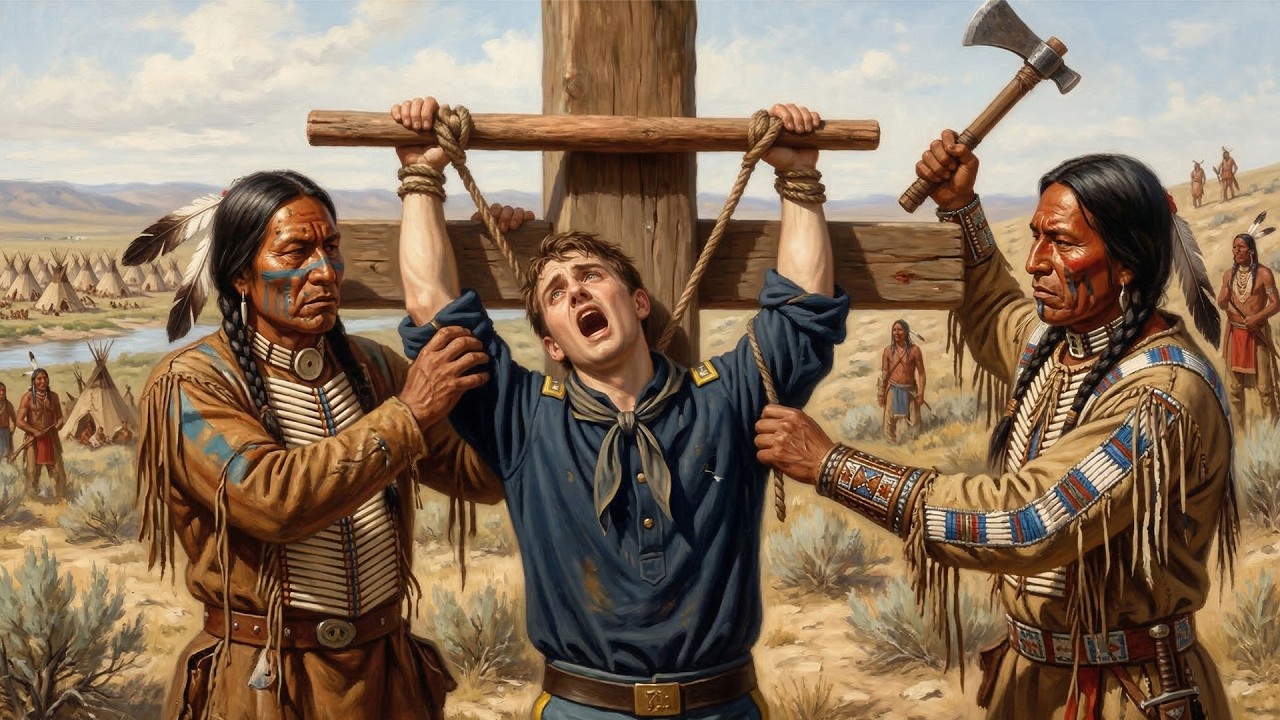
Had he known what awaited him that morning, perhaps he would never have mounted his horse. The Lakota Sioux and Northern Cheyenne had taken refuge in that valley near Crow Agency, on the sacred land they knew as the Greasy Grass. Thousands of tipis stood there. Estimates pointed to more than 5,000 people, with warriors numbering between 2,000 and 3,000.
This was far beyond anything Custer had anticipated. He had never much liked anticipating anyway, nor listening. The army was moving within the framework of General Terry’s overall plan. The natives were to be squeezed from three sides, leaving no route of escape.
Custer’s task was to follow a specific route and adhere to the timing. But Custer had not set out to adhere to the timing. He had set out to write it. Political calculations, personal ambition, a desire for a glorious victory—all of these boiled together in his decision-making that morning.
Scout reports came in. The camp was big. Very big. Some officers were cautious.
More information was needed. Perhaps reinforcements should be awaited. Custer ignored them. He decided to divide his regiment.
Small groups would attack simultaneously from different directions. A classic pincer movement. It was perfect on paper, but paper is not bulletproof. Reno crossed the river with the vanguard force and attacked the southern end of the camp.
There was confusion in the first moments, but that confusion lasted only a few minutes. Then, as if springing from the ground, warriors poured out from all sides. Reno’s men were forced to retreat—not an orderly retreat, but a panicked flight that left the dead behind. While crossing the river, men piled up in the water.
Custer, meanwhile, had reached the ridge. From above Medicine Tail Coulee, he looked down at the camp below. Later accounts never fully captured his momentary thoughts, but at that moment, he probably finally realized its immense size. Perhaps true fear passed through him for the first time.
But it was already too late. Warriors poured northward as well and began to encircle Custer’s forces. The battle did not span several hours. The Custer front, as historians later estimated, collapsed within 45 minutes to an hour.
In such a short time, 215 soldiers lost their lives. In the final stand, Custer was on a hill with his fallen men around him, in the middle of a defeat that had turned into a legend. But the battle ended and everything was not over. Down in the valley, inside the camps, there were women and the elderly.
They had walked for days, frozen in the cold, fought starvation, fleeing the expanding borders of America. Now their men had protected them. Perhaps such a victory had not been experienced for a long while. And this victory was to be completed in its own unique ways, within their own traditions.
They descended to the battlefield. This was not a momentary outburst of violence. It was systematic, ritualistic, and the embodiment of a belief system. In Lakota and Cheyenne culture, the enemy was not only defeated in this world—they could also be held accountable in the next.
The soul of a fallen warrior was directly related to the integrity of his body. If the body was unharmed, the soul would pass to the other side strong and intact. And on the other side, it could fight again. It could find you again.
This belief formed the basis of post-battle practices. The mutilations inflicted on the bodies of enemy soldiers were not merely a blind expression of anger. They carried a meaning far beyond that. You cut off a soldier’s arm so he could not hold a weapon in the next world.
You cut off his leg so he could not chase you. You gouged out his eyes so he could not see where he was going. This was not revenge, at least not purely revenge. It was an act of eliminating a future threat.
An effort to neutralize the enemy in the next world as much as in this one. But there were other layers behind these practices. A conflict spanning years, displacements, years of silence in the face of massacres, treaties broken one by one—all these were carriers of an anger accumulated in that valley that day. Those who remembered the Sand Creek Massacre were still alive.
Their own children, spouses, and mothers had been deliberately slaughtered that day while sleeping, none of them warriors. And similar mutilations had occurred in those massacres, but by American soldiers upon the bodies of Native Americans. Within this cycle, the battlefield of Little Bighorn was both an arena of victory and the final page of ten years of agony. Custer’s body, interestingly, was found relatively well preserved.
Soldiers arriving in the area in the following days noted this. Some researchers attributed it to Custer not being recognized. He did not have his uniform, his long hair, or his distinct appearance. Others proposed different interpretations.
Perhaps it was a deliberate choice. The same could not be said for the men around him. The bodies were found by soldiers arriving the next day, most of them unrecognizable. Their names were only guessed from small belongings they carried, pieces of uniforms, or physical traits.
Survivors’ accounts revealed that they struggled to put that scene into words. Some never spoke. Some said years later, in their beds, when they closed their eyes, they still saw those hills. Benito Martinez was one of the rare witnesses whose name went down in the records.
He had reached the area with Custer’s forces two days later and tried to convey what he saw to his family in a letter. The letter was found in an archive years later. A large part of what he wrote had been censored or erased, but the remaining lines were enough to tell what he encountered in that valley. He spoke of the smell first.
In the June heat, the smell of corpses left in the open for two days could be felt miles away. Then he spoke of the silence. Normally, in such terrain, there would be birds, insects, animal sounds. That day, there were none.
There was only the wind and the sound of footsteps. The scope of the mutilations on the battlefield gradually emerged during investigations conducted in the following weeks and months. Every body was different, but certain patterns repeated. Dismemberment was common.
The tearing off or deep cutting of hands, arms, and legs was seen in many parts of the battlefield. This was not the product of random rage. Both the precision of the cutting tools used and the consistency of the interventions indicated that this was a known and practiced ritual. In Lakota tradition, the importance given to bodily integrity was not limited to enemy corpses.
They prepared their own dead with great care as well—washed them, wrapped them. The soul needed to recognize the body. For the soul to find peace, it was imperative that the body be laid to rest with respect. The mirror of this belief system was seen in reverse in the interventions made on the enemy’s body.
A body in which the soul would be comfortable for their own dead. And for the enemy dead, a body where the soul could never hold a weapon, walk, or see again. Interventions to the eyes were particularly striking. Gouging out the eyes was reported in the examination of multiple bodies.
The belief behind this was based on quite concrete logic. A warrior who is blind in the next world cannot find his enemy. He cannot track him. He cannot threaten him.
This was to permanently neutralize his soul, not only in this life, but in all existence. In American military reports, this practice was presented as evidence of savagery. But none of those same reports attempted to explain how deeply this practice was connected to a deep-rooted belief system. Similar practices existed in Cheyenne tradition.
Northern Cheyenne warriors fought alongside their Lakota allies at Little Bighorn, and both communities performed post-battle rituals with a shared understanding. Ear cutting was also recorded. In some communities, this meant the enemy would not hear in the next world, would not receive the orders whispered in his ear. Every intervention carried a meaning.
There was nothing meaningless on that battlefield, at least for those who practiced it. But within these rituals, one must not underestimate the role of anger. It is one of the deepest contradictions of human history. Belief and anger, ritual and grudge are often inextricably intertwined within the same action.
The Lakota and Cheyenne communities had not merely won a battle in that valley. They had achieved perhaps the greatest military victory of a people bearing the weight of decades of oppression, displacement, and massacres. And that victory had simultaneously unleashed the most complex emotions within the human spirit. One must consider what happened at Sand Creek in 1864 at this point.
The Colorado militia under Chivington’s command had raided a peaceful Cheyenne camp. People who thought they were safe under the flag were massacred. Women, children, the elderly. And some of the American soldiers in that massacre had mutilated the dead as war trophies, displaying body parts taken from Cheyenne corpses in Denver.
This reality was mostly blurred or entirely absent from the majority of history books. But among those fighting at Little Bighorn, there were those who remembered that massacre. There were those who carried its pain. History is mostly written by the victors.
Immediately after Little Bighorn, the American press presented the event as a tragedy—the massacre of heroic soldiers by barbaric natives. Custer was instantly turned into a martyr. Paintings were made, poems written, plays staged. This narrative also determined the context within which the realities on the battlefield would be evaluated.
The mutilations of the corpses were presented not as part of a belief system, but as proof of uncivilization. And this presentation remained unquestioned for decades. Yet the Sioux and Cheyenne communities also gathered their own dead. Those who lost their lives in the battle were mourned.
Ceremonies were held. Mourning was experienced simultaneously with victory. This was not a contradiction for them. It was the ordinary reality of life and war.
You win, and yet you cry. Because every victory comes with someone’s absence. Immediately after the war, the communities led by Sitting Bull and Crazy Horse perhaps sensed what this victory would cost them in the long run. A battle had been won, but the war itself was part of a much larger machine.
The United States Army would not delay. And indeed, it did not delay. But at that moment, in that valley, on that June evening, these had not yet come to pass. That moment was the time when a millennia-old way of life, a mute resistance, the will of a people to exist made itself felt.
And to understand this will, one must read every action, every severed limb, every gouged eye on that battlefield not merely as a scene of brutality, but as an expression of humanity with its own internal consistency, its own history, and its own pain. Years passed. The battlefield fell silent. The scorching earth of Montana gradually filled with white marble stones, each stone bearing the name of an American soldier.
For decades, this place remained a site dedicated solely to their memory. There was no stone for the Lakota and Cheyenne dead. Their names were not there. It was as if only one side had died in that valley, as if the war was a one-sided disaster.
This silence was not a historical accident. It was the product of a conscious construction. The Little Bighorn Battlefield National Monument was for many years officially known as the Custer Battlefield National Monument. Even the name contained a judgment.
Who was important here? Who was worth remembering? Whose death deserved to be mourned? In 1991, Congress changed this name.
It was decided to erect a separate monument for the Lakota and Cheyenne warriors, but this decision remained a subject of debate for decades. Some welcomed it not as a rewriting of history, but as history being written correctly for the first time. The long-term historical legacy of the mutilations of the corpses on the battlefield carries a completely different dimension. These events were directly used to legitimize the policies directed at Native American communities in American public opinion of the time.
Newspapers relayed the ritual practices in detail, but offered no context. The reader did not know why these people were there, why they fought, what they had lost. The only thing they knew was the severed limbs. And this was enough to shape public opinion.
General Philip Sheridan went down in history with the words he uttered during that period. The famous sentence attributed to him implied that a good Indian was a dead Indian. It was no coincidence that this rhetoric strengthened immediately after Little Bighorn. The defeat fueled the anger.
The anger hardened the policy. And those who paid the price for this hardening were not those who fought on the battlefield, but their children, their grandchildren, the unborn generations. Crazy Horse was forced to surrender in 1877, about a year after Little Bighorn. A few months after surrendering, he was killed at Fort Robinson under controversial circumstances.
Sitting Bull continued his resistance for years. He took refuge in Canada for a while. Eventually, he too returned and surrendered. In 1890, a few weeks before the Wounded Knee Massacre, he was killed due to an informant from among his own people.
This journey from victory to defeat was completed in fourteen years. Wounded Knee. This name carries the exact opposite meaning of Little Bighorn. On December 29th, 1890, in South Dakota, troops of the 7th Cavalry Regiment opened fire on a camp of unarmed Lakota Sioux.
The number of those killed is debated, but even the most conservative estimates speak of over 200 civilian deaths—women, children, and the elderly—in a snowy field trying to run away. Some historians define this as a massacre, while some official documents still classify it as a battle. This difference in classification shows how heavy a burden words can carry. And 24 of the 7th Cavalry soldiers in that massacre were awarded the Medal of Honor.
From the regiment of the men who died at Little Bighorn. For decades, the Lakota communities repeatedly demanded the return of these medals. The demand was repeatedly denied. When trying to understand the ritual practices experienced at Little Bighorn, it is imperative to look at this entire picture.
What is presented as an isolated scene of savagery is actually just a cross-section of a much longer and much darker history. And in that cross-section, there is the historical reality of both the perpetrator and the victim. To consider the weight of centuries of displacement, decades of silence over massacres, every broken treaty, and every stolen child independent of that battlefield would be an act of dishonesty against history. Today, those who visit the Little Bighorn battlefield see the white stones standing in the middle of the valley.
Each marks the spot where a soldier fell. The red granite stones added years later bear the names of the Lakota and Cheyenne warriors. Two different stones, two different colors, the same soil. This soil carries them all at once—the anger, the pain, the belief, and the weight of history.
There are always two kinds of silence on battlefields. One is the silence that follows the yet unfinished noise. That initial silence where the ears continue to ring, where the brain still cannot accept it. The other is the silence that comes years, decades, perhaps centuries later.
That deep silence where the earth swallows everything, where names are forgotten, where narratives are shaped. At Little Bighorn, both exist, and both still speak to those who can listen. The 215 American soldiers who died in that valley were cogs in the advance of an empire. The policy that sent them there, the arrogance that dragged them to that defeat, the system that used their deaths as an excuse for the next attack—none of these were perhaps the personal responsibility of those soldiers, but it was also a fact that they were inside that system.
And the people opposite them were fighting on their own land for their own children. Ritual is the most concentrated expression of a people’s worldview. How a community treats its dead, how it approaches enemy corpses, when it mourns and when it celebrates victory, reveals its own existence, its own value system, its own cosmology. What the Lakota and Cheyenne warriors practiced at Little Bighorn may seem meaningless or savage when viewed from the outside, but when viewed from the inside, from the depth of that belief, it is part of a consistent and deep-rooted world.
Neutralizing the threats of the other world, winning the battle of souls, closing the eyes of the enemy—these are the reflections of the millennia-old wisdom of that people on the battlefield. And this reflection is still debated today. In American history, Little Bighorn has mostly been positioned as a symbol of pain, not shame. But whose pain?
Pain for whom? Passing over these questions without asking them is not looking at history. It is running away from history. In that valley, on that June afternoon, when the sun set, two worlds had collided.
One was a world advancing across the four corners of the continent, either subjugating or destroying everything that stood before it. The other was a world that had lived on those lands for thousands of years, talking to its dead, knowing the wind as a god, considering its horse a brother. Those two worlds spoke with weapons that day. But in fact, both were silent more than they were speaking.
Existing in languages too different to understand, without truly hearing each other. The battlefield of Little Bighorn is a protected area today. Tourists come, take photos, listen to what the guides tell them. Some touch the stones as if they could feel something with that touch.
Perhaps they do feel it. Because the earth does not forget. The earth continues to carry every drop of blood spilled on it, every bone it has buried inside, every scream it has witnessed, silently. But it carries them.
And within that act of carrying, there is both Custer’s blonde hair and Crazy Horse’s war paint. Both the severed limbs and the shed tears. Both the arrogance of an empire and the last stronghold of a people. All in the same soil, in the same valley, under the same June sun.
As long as history does not learn to carry both these realities at once, Little Bighorn will remain merely a battlefield. But when we can see both these realities at once, perhaps then we will truly be able to understand that valley. And maybe then, what it means for those white stones and red granites to stand on the same soil.






