In October 1967, a researcher examining land disputes in southeastern Missouri opened a box of miscellaneous documents in the basement of the Butler County Courthouse. At the bottom, beneath routine correspondence and minor legal filings from the 1910s, lay a handwritten letter dated October 1912. It had never been sent. It was written by the court-appointed administrator who had conducted the initial estate inventory of a farm owned by a man named Huxley Masserve, and it explained why the property had been left in legal limbo for over half a century.
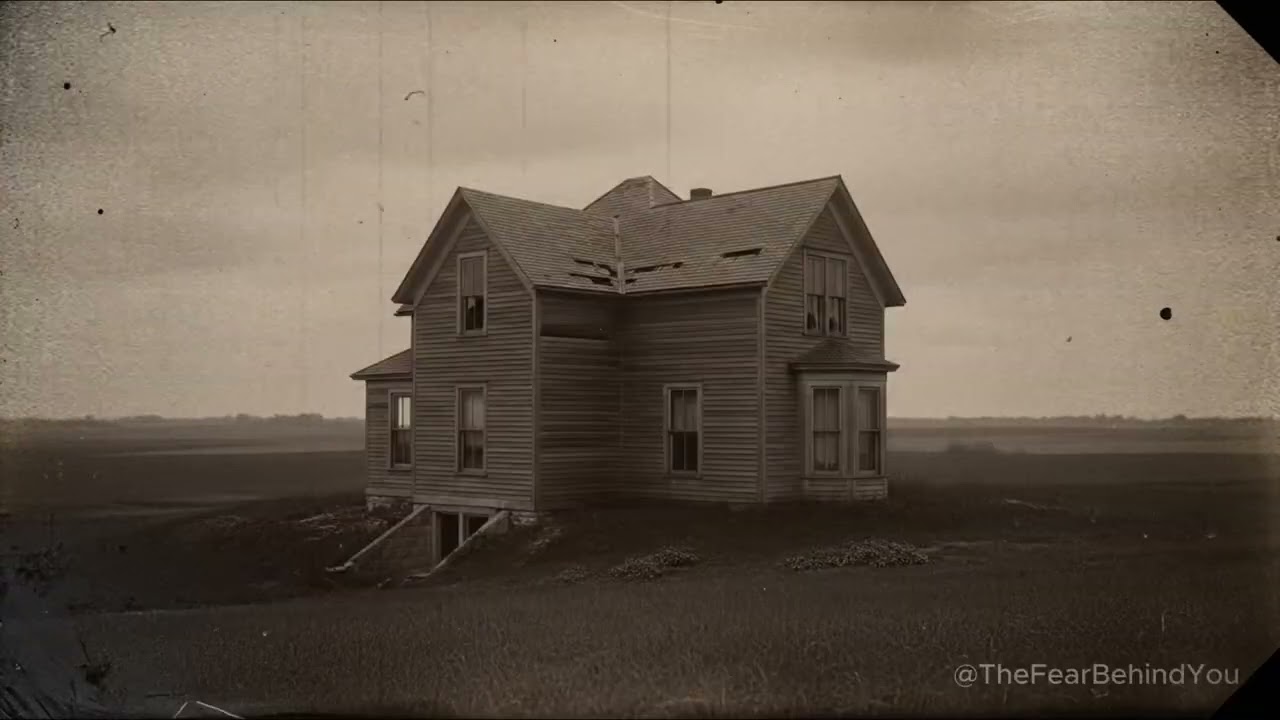
The farm sat approximately seven miles southwest of Poplar Bluff, on a slight elevation overlooking roughly 80 acres of what should have been valuable cropland. County records from 1911 listed Huxley Masserve as the original owner. He had arrived from Pennsylvania in 1903 with his wife, Oswalda, and considerable financial resources. He paid cash for the property and immediately began expanding the modest existing structure.
The couple maintained polite but distant relations with the surrounding community, participating minimally in local social functions and never causing concern. The construction Huxley commissioned was substantial for the region. He hired workers from Poplar Bluff and as far as Cape Girardeau to build a two-story frame house with a full basement, unusual in an area where flooding was a periodic concern. Workers noted that Huxley had very specific requirements for the basement, insisting on double-thick foundation walls and a separate entrance accessible from outside the main house.
One carpenter wrote to his cousin that Masserve seemed overly focused on the structural integrity of the underground portion, as though he expected to store something of considerable weight. The house was completed by October 1903. For the next several years, the Masserves lived unremarkable lives. Huxley managed the property with hired help, growing corn and raising hogs.
Oswalda kept the household and occasionally appeared in town for supplies. Account ledgers from the Poplar Bluff general store showed regular purchases of household goods and farming supplies, along with notably significant quantities of lamp oil and candles, far exceeding what a household of two would typically consume. The first indication that something might be unusual came in the spring of 1908. A hired hand named Mortimer Gaines, who worked the property during planting season, later testified in an unrelated civil matter that Huxley insisted workers leave the property before sundown without exception, paying slightly above standard rates for the shortened workday.
Gaines also mentioned that on two occasions when he had forgotten tools and returned after dark to retrieve them, he found the house completely dark despite having seen lamplight through the windows just an hour earlier. In late September 1911, Oswalda Masserve appeared in Poplar Bluff and checked into the Commercial Hotel. She remained there for three nights, speaking to virtually no one beyond ordering meals. On the morning of the fourth day, she paid her bill and departed.
She was never seen again. The hotel proprietor’s records indicated she had arrived with a single traveling case, but left without it. The case was found in her room containing a few items of clothing and a leather-bound notebook with only household records and recipe notes. Huxley reported her absence to authorities approximately ten days later, stating only that she had left following a disagreement and he had expected her return.
The sheriff’s investigation found no evidence of foul play. What happened next was notable. Huxley dismissed all hired help and ceased attending any social functions. Neighbors reported seeing him only occasionally, and one merchant noted that his appearance changed markedly over the following months.
He became withdrawn, his clothes became unkempt, and he developed a tendency to pause mid-conversation, as though listening for something only he could hear. In March 1912, a neighboring farmer who visited regarding a fence line dispute found Huxley in what he termed a distracted state. More significantly, he noted that the house appeared to be in serious disrepair despite being less than a decade old, with broken windows, rotting porch, and an overgrown yard. He also mentioned hearing a rhythmic sound coming from somewhere on the property, like machinery operating, though he saw no equipment in use.
Huxley Masserve was found deceased in August 1912. His body was discovered by the local postmaster, who had grown concerned after mail accumulated uncollected for several weeks. The county physician suggested heart failure, though no formal autopsy was performed. Huxley was approximately 57 years old.
With Oswalda’s whereabouts unknown and no other direct heirs identifiable, the property should have gone through probate and eventually been sold. But something in the initial estate inventory gave the court-appointed administrator pause. In his report to the probate court, he noted irregularities in the property’s condition that warranted further investigation. The probate judge instructed the administrator to secure the property and await further guidance.
That guidance never came. The file simply went cold. Fragments from various sources pieced together what happened during that inventory. The administrator hired two local men to assist with cataloging the property’s contents.
One of them later mentioned that the basement had been sealed up, and the administrator decided against forcing entry after discovering the door had been secured from the inside, which made no structural sense. The external entrance, which workers had mentioned during construction, had been bricked over. The upper floors showed signs of hasty abandonment. Personal belongings were scattered, furniture overturned, and there were deep scratches on the walls that started high up and went down to the floor, as though someone had been dragging something rigid down the surface repeatedly.
The administrator took minimal inventory and left. The administrator’s unsent letter, discovered in 1967, described what he found when he eventually forced entry through a basement window. The space was a single large room with concrete walls and floor, completely empty except for marks on the floor described as concentric grooves worn into the concrete, as though something heavy had been moved in circles repeatedly over a long period. Along one wall were scratches, hundreds of them, made with what appeared to be a metal implement.
They formed no words or recognizable patterns, just parallel lines covering approximately six feet of wall space from floor to shoulder height. The administrator wrote that the marks appeared fresh, the concrete dust below them not yet settled, yet the house had been empty for a month since Masserve’s passing. He could not account for it, nor for the complete absence of any tools that might have created such marks. The letter concluded with a statement explaining why he was not filing a complete report.
He wrote that he had consulted with several individuals whose judgment he trusted, and they were in agreement that nothing beneficial would come from detailed documentation of the property’s condition. He recommended suspending all proceedings and trusting that time would resolve what the law could not. That decision was respected for over half a century. The property taxes went unpaid, but the county made no move to seize the land.
During a 1916 discussion of delinquent properties, one commissioner asked about the Masserve farm. The recorded response was simply, let that one be for now. In 1920, a farming consortium from Cape Girardeau interested in acquiring the land through tax foreclosure abandoned the deal. The consortium’s attorney wrote only that after reviewing all available information, he must recommend they pursue other opportunities.
During the 1920s and 1930s, the property acquired a reputation among locals not as haunted exactly, but as problematic. Hunting dogs would refuse to track game onto the land. Cattle from neighboring farms that wandered through broken fences would become unsettled and had to be herded back forcibly. One farmer noted that a horse that had spent several hours on the property refused to be stabled for days afterward.
In 1933, a petition signed by 18 neighboring property owners requested that the county resolve the property’s status and render it suitable for productive use. The petition went nowhere. The commissioners acknowledged receipt but took no action. In 1941, surveyors working for the Army Corps of Engineers encountered difficulty completing their work on the property.
The lead surveyor’s private notes recorded persistent sounds with no identifiable source, a low rhythmic noise that seemed to emanate from underground. He attributed it possibly to subsurface water movement, though he noted the sound’s regularity was unusual. The crew completed their measurements from adjacent properties where possible. The Corps of Engineers’ final flood control plans implemented in the late 1940s included provisions for nearly every property in the region except the Masserve farm.
The land was simply excluded from the planning maps, left as blank space. By the 1950s, the house had collapsed entirely. What remained were portions of the foundation walls and the inexplicably intact basement structure. A civil engineer consulted in 1956 noted that the basement walls showed no significant deterioration despite being exposed to the elements for decades, which he found highly unusual given the construction methods of that period.
Aerial photographs taken in 1958 showed that while surrounding farmland had normal plant growth, the Masserve property displayed irregular density distribution inconsistent with natural succession. In 1962, a real estate developer from St. Louis hired attorneys to unravel the property’s legal status for a planned residential subdivision. They abandoned the project within three months.
A junior attorney involved in the title search later mentioned that some original probate files contained photographs taken during the 1912 estate inventory showing basement features that didn’t align with residential construction of any kind he’d encountered in 20 years of property law. Those photographs have since disappeared. When the researcher visited the site himself in October 1967, he found the basement walls largely intact, filled with debris and vegetation. The concrete showed no significant cracking or erosion despite being nearly 60 years old.
He noticed a slight depression in the land surrounding the foundation, forming a rough circle extending about 50 feet in all directions, as though the land had been excavated in a wide, shallow bowl at some point. No construction records mentioned any such landscaping. Attempts to trace the Masserves’ origins proved futile. Huxley appeared to have been estranged from his family in Pennsylvania, and records of his early life were sparse.
Oswalda’s background was even more obscure. The name Oswalda Masserve appears in Butler County only after her arrival with Huxley. No marriage record, no previous residence, no family of origin could be located. In December 1967, three months after the researcher’s visit, the Butler County Clerk, who had held his position for over 20 years, responded to the research requests with a handwritten note.
He wrote that the property had remained stable in its current condition for many years, and that stability might be considered valuable in itself. Sometimes the best way to manage a problem, he observed, is to ensure it stays managed, even if not solved. As of 1967, the property remained in legal limbo. County records still listed it under Huxley Masserve’s name with 55 years of unpaid taxes accumulated.
No one had initiated foreclosure. The land sat unused. The basement structure was slowly being reclaimed by vegetation. The institutional understanding that it should be left alone passed from one generation of officials to the next without anyone quite remembering why.
The last document related to the property was an assessor’s notation from 1965. After decades of routine entries recording the same unpaid tax amount, someone had added a handwritten margin note recommending continuation of the current status indefinitely.






