In December 1565, Joanna of Austria, an 18-year-old Habsburg archduchess, arrived in Florence to marry Francesco de’ Medici, the 24-year-old heir to the Duchy of Florence. The wedding was one of the most spectacular events of the century, a carefully staged display of political alliance and dynastic ambition. Yet behind the triumphal arches and glittering festivities lay the beginning of a cold, miserable marriage, one marked by public humiliation, private suffering, and a string of deaths that would haunt the Medici court for years. Joanna was born on January 24, 1547, in Prague, then part of the Kingdom of Bohemia.
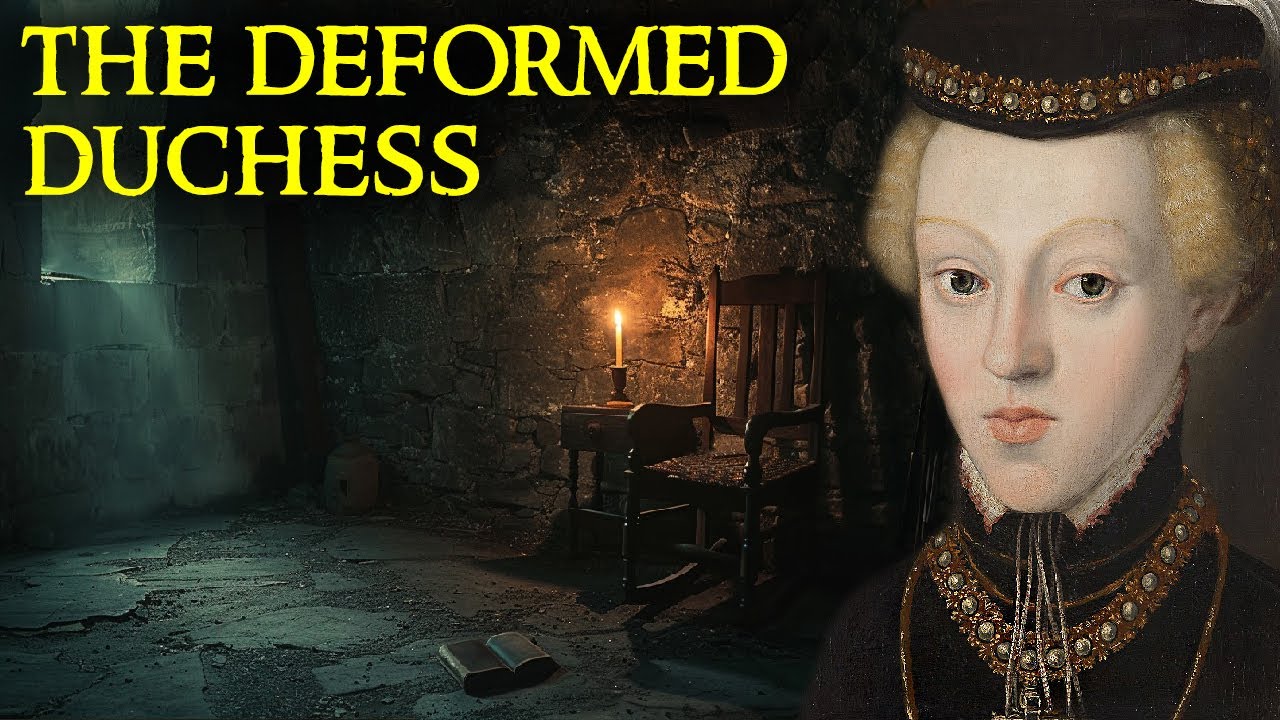
She came from one of the most powerful families in Europe. Her father was Ferdinand I, who would later become Holy Roman Emperor. Her mother was Anna of Bohemia and Hungary, whose brother’s death at the Battle of Mohács in 1526 had paved the way for Habsburg rule over Hungary, Bohemia, and Croatia. Her uncle was Charles V, ruler of the Spanish Empire.
Joanna was born into a dynasty that controlled much of the continent. Her birth came at a heavy cost. Her mother, already 43 and frail from years of childbirth, died three days later from complications. Joanna’s father, consumed by the religious wars tearing through Germany, had little time for his children.
He placed Joanna and several of her siblings in the care of nuns in Innsbruck, where she was raised in an atmosphere of piety and scholarship. From an early age, her future was already decided: she was being groomed for marriage, not for independence. The match with Francesco de’ Medici grew out of the shifting politics of mid-16th-century Italy. Cosimo I de’ Medici, the Duke of Florence, had ruled for nearly four decades and would later claim the title of Grand Duke of Tuscany in 1569.
As the long Italian Wars ended with the Treaty of Cateau-Cambrésis in 1559, Cosimo sought new alliances to secure his family’s future. Negotiations for the marriage dragged on for years. The union gained fresh momentum after Joanna’s brother, Maximilian II, became Holy Roman Emperor in 1564. Unlike his father, Maximilian did not share a close rapport with his Spanish cousin Philip II, and he looked to Italy for new allies.
The marriage of Joanna and Francesco became one of the most politically significant unions of the era. The wedding itself was a grand spectacle. Joanna traveled into Italy with her sister Barbara, who was to marry Duke Alfonso II of Ferrara at roughly the same time. Florentine citizens lined the streets, dressed in their finest clothing.
Artwork by Giorgio Vasari and other prominent artists was displayed along the route for hundreds of meters. Joanna passed beneath twelve towering arches, each celebrating victory and divine favor, before reaching the Basilica di San Lorenzo, home to the Medici Chapel. There, on December 18, 1565, she met Francesco in dazzling splendor. Europe’s aristocrats and ambassadors crowded into the city to witness the ceremony.
But the harmony of the wedding was deceptive. From the very start, the marriage was filled with conflict. Francesco found Joanna unattractive and made little effort to hide his contempt. He openly sneered at what he considered her deformities.
Joanna suffered from severe scoliosis, a spinal deformity that had afflicted her since childhood and worsened over time. Her posture grew worse, her walk became labored, and her gait uneven. Courtiers whispered cruelly about her hunchback. Her condition had been discussed during the marriage negotiations themselves, raising doubts about her ability to bear children, which was everything in the high politics of dynastic unions.
Joanna’s health was further ravaged by childbirth. She endured one pregnancy after another, each more punishing than the last. Her hips and pelvis were deformed by repeated, grueling labor, the result of a congenital hip disorder and other severe conditions that made childbirth extremely dangerous. She gave birth to eight children in total, but tragedy followed one after another.
Her eldest daughter, Eleonora, born in February 1567, survived and would later marry Vincenzo Gonzaga, one of the last Gonzaga Dukes of Mantua. A son, Don Romolo, born in November 1568, died two weeks later. Another daughter, Anna, born on New Year’s Eve 1569, lived into her teenage years but died in 1584. Isabella and Lucrezia, born in 1571 and 1572, both died in infancy.
Her final children also died in childhood or before birth. The one exception was Marie de’ Medici, born on April 26, 1575. Twenty-five years later, she married King Henry IV of France as his second wife. She became the mother of King Louis XIII, and through her, Joanna became the ancestor of every king of France down to the French Revolution.
Though Joanna herself was an ill and suffering woman, her descendants would rule for centuries across Europe. Her marriage, meanwhile, only grew worse. Francesco was notoriously unfaithful and made little effort to conceal it. His most prominent mistress was Bianca Cappello, an Italian noblewoman from Venice and a noted beauty.
She had married a Florentine clerk named Pietro Bonaventuri in 1563 and was present at the Florentine court from that time. She and Francesco began their relationship in the late 1560s. In 1572, Bianca’s husband was killed on the streets of Florence, an incident possibly orchestrated by Bianca and Francesco. In April 1574, Cosimo I died at age 54.
Francesco became Grand Duke of Tuscany, and Joanna became Grand Duchess. But the new position only made things worse. Francesco used his power to humiliate his wife. He installed Bianca in her own lavish apartments within a palace just steps away from the ducal household.
While it was common for princes of the age to keep mistresses, they usually observed at least the courtesies of discretion. Francesco made no such effort. He and Bianca paraded their affection openly, flaunting their liaison before Florence and before Joanna herself. For the proud Grand Duchess, it was a public disgrace, a daily reminder of betrayal played out under the eyes of the entire court.
Francesco still had no legitimate male heir, a fact that haunted him. In 1576, Bianca bore him a son, Don Antonio de’ Medici. But Francesco refused to recognize the boy. Antonio was his blood, but not his heir.
Then, against all odds, in 1577 Joanna gave birth to a long-awaited son, Grand Prince Philip de’ Medici. For a brief moment, the future of the duchy and Joanna’s own fragile standing seemed secure. Bianca’s ambitions appeared crushed. But fate was not finished with Joanna.
On the morning of April 10, 1578, tragedy struck the Palazzo Vecchio. Joanna, pregnant for the eighth time, fell down a stone staircase within the Medici residence. The fall was brutal. It brought on premature labor, and the infant did not survive.
Joanna lingered in agony through the long hours that followed. By the next day, the Grand Duchess was dead, her body broken by a ruptured womb. She was 31 years old. Whispers of foul play followed immediately.
With Francesco’s notorious infidelity and his open devotion to Bianca, few could believe the fall was an accident. Rumors swept through Florence that Joanna had been pushed, or that poison had played a part. But the truth may have been more tragic than sinister. Joanna had long suffered from worsening scoliosis that twisted her spine and weakened her balance, a cruel affliction that may well have caused the fatal fall that ended her life.
Public outrage grew when, only months after Joanna’s death, Francesco secretly married Bianca Cappello. In 1579, he brazenly proclaimed her the new Grand Duchess of Tuscany. To many, the sequence of events was far too convenient: Bianca’s husband dead, Joanna gone, and now the mistress enthroned. Their triumph was short-lived.
In March 1582, Joanna’s only surviving son, young Prince Philip, died suddenly at age four, extinguishing Francesco’s line of legitimate heirs. Then, in 1587, tragedy struck again. Francesco fell violently ill and died on October 19. Bianca followed him to the grave the very next day.
The double death stunned Europe and has been shrouded in mystery ever since. Were they poisoned? Victims of courtly vengeance, possibly at the hands of Francesco’s brother Ferdinando, who succeeded as the new Grand Duke? Or did disease, perhaps malaria, claim them both?
No one could say for certain. Their passing marked a grim close to a haunting cycle of misfortune, a chain of deaths that had shadowed Joanna, her children, her husband, and his lover for over two decades.






