On the evening of July 18, 1969, Ted Kennedy departed a gathering on Chappaquiddick Island accompanied by a twenty-eight-year-old woman, Mary Jo Kopechne, who had been among the young campaign staffers serving his brother Robert’s presidential run the previous year. At some point near midnight, his Oldsmobile sedan veered off a small wooden bridge and flipped into the black, churning water of a tidal pond. Kennedy made it out of the sinking vehicle. Kopechne did not.
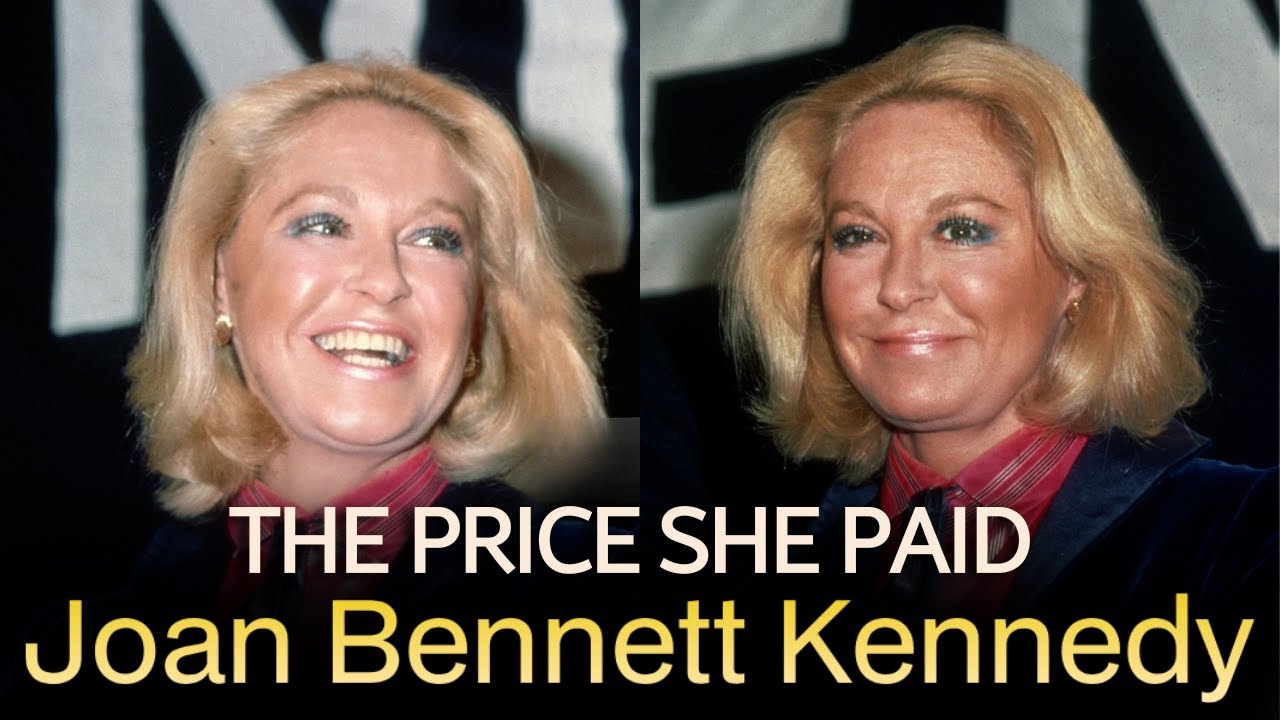
For close to ten hours, he did not report what had happened. Meanwhile in Virginia, Joan Kennedy — pregnant for the fifth time following three earlier miscarriages — was confined to bed rest on her doctor’s orders. She heard about the incident not from her husband but through a news broadcast. That was the moment destined to shatter her marriage, her spirit, and the meticulously maintained public image she had sustained for more than a decade.
Yet the public would not know any of this for years. To grasp how Joan Bennett Kennedy reached that breaking point, and how she fought her way back from it, one must go much further back — to late-1950s America, when a composed young pianist from Bronxville married into the country’s most powerful political dynasty. Born in 1936 and brought up in the prosperous New York suburb of Bronxville, Joan Bennett inhabited a world of culture and polish. Her father, an advertising executive, gave her a life of ease and privilege.
She attended Manhattanville College, the prestigious Catholic school that had also shaped her intimidating future mother-in-law, Rose Kennedy. Yet where Rose had been prepared for a life in the public arena, Joan’s interests were personal and creative. She was an accomplished classical pianist, able to perform demanding works by Chopin and Debussy. Music was far more than a pastime.
It was the language of her inner life, a wellspring of profound private comfort. She was also a sought-after model, her classic blonde looks appearing in magazines and television advertisements for brands such as Revlon and Coca-Cola. In the fall of 1957, Ted Kennedy, then studying law at the University of Virginia, came to Manhattanville to deliver a speech. He was introduced to Joan.
Her beauty and poise captivated him at once. She, in turn, was drawn to his outsize personality and the famous Kennedy magnetism. A rapid courtship followed, filled with glittering parties and football games. Yet even amid the excitement of the romance, Joan carried serious doubts.
Ted’s universe of politics and relentless public display struck her as foreign territory. She feared she hardly knew the man concealed behind the celebrated surname. When he proposed, her initial reaction was to refuse, to request more time. But time was a luxury the Kennedy operation would not grant.
Joseph P. Kennedy Sr., the patriarch who had redirected his own thwarted presidential hopes onto his sons, had met Joan and given his blessing. Visually, she was the ideal partner for his youngest son’s rising political trajectory.
He urged Ted to settle the engagement without delay. The momentum became impossible to resist. On November 29, 1958, at St. Joseph’s Church in Bronxville, Virginia Joan Bennett walked down the aisle and became Mrs.
Edward M. Kennedy. The wedding ranked as a major society occasion, and the press covered it with breathless enthusiasm. In the photographs, she appears as the very picture of a glowing bride.
But she was also a woman taking her first steps into a life that would require her to surrender the very qualities that defined her. The assimilation happened at once and completely. Her existence as Joan Bennett was finished. Her new role as a Kennedy wife had begun.
The message was unmistakable: her husband’s career would always come first. She relocated to Virginia while Ted completed law school, and her horizons rapidly contracted to the home. She became pregnant with their first child, Kara, born in February 1960. Only weeks afterward, still recovering from the birth, she was expected to hit the campaign trail on behalf of her brother-in-law John F.
Kennedy in his landmark presidential race. She picked up the role fast. In 1961, their son Edward Jr., known as Teddy, arrived.
The next year brought Ted’s own turn. He sought the Senate seat JFK had left vacant. Joan proved a revelation on the campaign circuit. With her luminous smile, flawless style, and easy warmth, she won over voters, appeared at countless coffees and rallies, and stood gracefully at her husband’s side.
She helped carry him to victory, and at only twenty-six she became the wife of the youngest man in the US Senate. By every measure, she carried out her responsibilities flawlessly. But the personal price was enormous. The boisterous, fiercely competitive mood of Kennedy family gatherings overwhelmed her.
While the rest debated politics or sailed with fierce intensity, Joan frequently felt like an outsider watching from the edges. She would often steal away in search of a piano, immersing herself in the familiar chords of a Chopin nocturne. As one biographer observed, it was her refuge, her means of reconnecting with a part of herself that was slipping away in the commotion. Then arrived the first of the devastating shocks.
In November 1963, President John F. Kennedy was assassinated in Dallas. The dream of Camelot was soaked in blood. For the Kennedys, it was an intimate, soul-annihilating loss.
For Joan, it meant sustaining a husband and a family swallowed by unfathomable grief, all the while keeping a stoic face before the world. Barely eight months later, in June 1964, came another crisis. The small plane carrying Ted to the Democratic State Convention in Massachusetts went down, killing the pilot and one of Ted’s aides. Ted was dragged from the wreckage with a broken back, a punctured lung, and internal bleeding.
He would spend the following six months in a hospital bed, immobilized in a plaster cast. With his reelection campaign already in motion, the family confronted a dilemma. It was Joan who filled the gap. In a striking show of determination, she took charge of the campaign.
She traveled the state relentlessly, delivering speeches, pressing flesh, and reminding voters of her husband’s dedication to them. It was grueling, solitary work, and she executed it brilliantly. Ted won in a landslide from his hospital bed, a victory attributed in no small part to his wife’s labor. She had demonstrated both her loyalty and her resilience.
But the burden of these successive traumas was quietly exacting a hidden cost. The years that followed brought a fragile calm. Then came 1968. In June, Robert F.
Kennedy, the brother-in-law to whom she felt a close bond, was assassinated in Los Angeles, only moments after winning the California presidential primary. For many in the family, this second assassination struck harder than the first. It snuffed out the hope that had been rekindled after JFK’s death. The grief was unbearable.
Joan was so shattered that she could not bring herself to attend the funeral. It was in the long, dark shadow of that loss that Chappaquiddick happened. The shock was seismic, but her own horror was instantly swallowed by the political emergency. The Kennedy damage-control apparatus, refined over decades, sprang into action.
All eyes were fixed not on the woman who had died, nor on what really happened, but on rescuing Ted Kennedy’s political future. Once more, Joan was expected to play her part. She traveled to Hyannis Port looking like shock and sorrow personified. Bare days later, she was compelled to sit through her husband’s televised speech to the country, in which he delivered a self-pitying address about his tangled feelings and begged the nation for its prayers.
The most agonizing spectacle still lay ahead. In the Edgartown courthouse she had to stand at his side—fragile, expecting, and silent, a mere prop—while he entered a guilty plea to leaving the scene of an accident. Her face was a strained, expressionless mask. The strain on her heart and body was simply too much to bear.
Not long after that public trial, she lost her third pregnancy. The cause, she would say afterward, was the emotional shock—an understatement of remarkable restraint. Chappaquiddick was the last, fatal stroke against the marriage. It was not merely the accident, nor the shadow of suspicion that would follow her husband for the rest of his days.
It was the fact that the betrayal had played out in public. The murmurs and front-page stories about Ted and another woman cut her to the quick and humiliated her deeply. The man she was made to stand beside was someone she could no longer believe in, a man whose choices had cost a young woman her life and robbed Joan of her own child. The isolation she had carried for years now opened into a vast and terrifying void.
And it was inside that void that she started looking for a way out. She found one in a bottle. Her slide into alcoholism was not a sudden plunge but a gradual, insidious surrender. At first it was simply a means of coping, a way of dulling the pain that had become her constant companion.
In a strikingly candid 1978 interview with McCall’s magazine, she laid out the deceitful logic of her dependence. “I found out that alcohol could sedate me,” she confessed. “So, I didn’t care as much, and things didn’t hurt so much. “
Drink was the salve for a whole host of wounds.
It eased the grief from the assassinations that would not fade. It calmed the fear that surrounded her fragile pregnancies. Above all, it deadened the burning shame of her husband’s notorious affairs. Ted’s philandering was an open secret in Washington, an endless source of gossip that she was expected to overlook with dignified composure.
“Of course, the newspaper stories about Ted and other women hurt,” she acknowledged. “They went to the core of my self-esteem. It was easy to think that maybe I wasn’t attractive enough or good enough. And if that was the case, I might as well have a drink.
“
Within the Kennedy world, appearances counted above all else. Her drinking—a direct consequence of the crushing pressures of her existence—was met not with sympathy but as yet another shameful secret to be handled and hidden away. She attempted to speak of it, but the family’s wall of silence could not be breached. “I was embarrassed, and Ted was embarrassed,” she remembered.
“Everybody was embarrassed, but nobody would really talk about it. “
She was left to fight her demons by herself inside the gilded prison of their mansion in McLean, Virginia. Then, in 1973, life struck another brutal blow. Her treasured twelve-year-old son, Teddy Jr.
, received a diagnosis of chondrosarcoma, an uncommon bone cancer. The sole option was to amputate his right leg above the knee. In the face of this crisis, Joan’s maternal instinct rose to the fore. She became a source of strength for her boy.
Through his time in the hospital and the punishing chemotherapy, she never touched a drop. She stayed at his bedside, sober and unwavering. Yet the strain of being “so damn brave all the time,” as she described it, was draining everything she had left. The instant Teddy began to recover, she fell apart.
The relief she so badly needed, she went looking for once more at the bottom of a glass. She turned into a ghost within her own house. Her youngest son, Patrick, later wrote with great feeling in his memoir A Common Struggle about the bewilderment and anguish of growing up with a mother who was present yet absent. He recalled a lovely, devoted woman who would vanish into an alcoholic haze, leaving her children feeling lost and utterly alone.
By the middle of the 1970s, Joan understood she could not go on this way. The act had grown impossible to sustain. In 1977, in an act of deep self-preservation, she made her choice. She walked out of the luxurious prison of her Virginia home and into an apartment of her own in Boston’s Back Bay.
It amounted to a proclamation of independence. She started seeing a therapist, began going to Alcoholics Anonymous meetings, and—taking a vital step toward recovering the self she had lost—enrolled in a master’s program in education at Lesley College. She was battling her way back to the woman she had been before the Kennedys: Joan Bennett, the musician, the student, the individual. Yet the ghost of her marriage would not be banished so easily.
In 1979, Ted Kennedy chose to take on President Jimmy Carter for the 1980 Democratic presidential nomination. As was inevitable, the campaign came calling for Joan. They required the illusion of a joyful, unified family to push back against the Chappaquiddick story. And so, one more time, she was drawn back into the performance.
She consented to campaign at his side, appearing with him at rallies, going through the painful public sham of a marriage that had already ended in private. The discomfort of the arrangement was exposed to the whole country in a now-infamous television interview with Roger Mudd. When Mudd put a simple question to Ted about the condition of his marriage, the senator fumbled through a rambling, incoherent reply that revealed everything. It was a moment of utter public degradation for Joan, a blunt confirmation of the lie she was being made to live.
Ted’s run for the presidency collapsed, and with it the final remnants of their marriage. They formally separated, and the divorce was completed in 1983, after twenty-five years together. Yet freedom proved no miracle remedy. The years that came after were a painful public display of recovery and relapse.
The paparazzi showed no mercy, recording every misstep. There were arrests for driving while intoxicated, mortifying public episodes, and court-mandated stays in treatment centers. Every relapse became material for a fresh tragic headline about the fallen Kennedy wife. What that cruel story ignored was the remarkable resilience she needed to keep on fighting.
Every time she stumbled, she rose again. During her long stretches of sobriety, she patiently rebuilt her life on her own terms. She finished her master’s degree. She worked with children who had learning disabilities.
And above all, she went back to her first love, her refuge: music. She started performing on the piano in public once more, playing with orchestras such as the Boston Pops. She co-wrote a book, The Joy of Classical Music, to pass her enthusiasm on to children. “It’s such a relief now to be free,” she said in an interview.
“So much of my married life was about keeping secrets. Once you sober up, the whole idea is to become honest with yourself. “
Her public ordeal, agonizing though it was, helped strip away the mystery surrounding alcoholism. If a Kennedy could fall prey to it, then no one was immune.
Her children, who had watched her fight up close, grew into formidable advocates in their own right. Patrick Kennedy especially gave his political career and life’s work to the cause of mental health parity and addiction treatment—a direct, potent legacy of his mother’s pain and of the family code of silence he was set on shattering. Her sister Candy once said that had Joan not left Ted, she would be dead. Dead from drinking in the sadness.
But she did not die. She lived. She outlasted the scandal, the whispers, and the larger-than-life man in whose shadow she was meant to vanish. In her later years, Joan lived quietly in Hyannis Port, the same Cape Cod enclave where so many of her most painful and public memories had once unfolded.
The grand Kennedy compound, which had once rung with political argument and touch football, grew quieter, a place where she could listen to music, watch the sea, and exist beyond the harsh glare of public attention. Her health, though, began to fail. Decades of emotional trauma, alcoholism, and solitude had taken their toll—not only on her body but on her memory, her sense of time, her very grip on the world around her. In the 2000s, she was diagnosed with cognitive impairment, and eventually with dementia.
Her children made the hard choice to place her under legal guardianship, citing worries about her safety. Once a woman who had fought so hard to reclaim her name and her voice, Joan gradually slipped into a quieter place, one where music still played, but the memories started to slip away. On August 9th, 2020, Joan Bennett Kennedy died at the age of eighty-four. Her passing was not marked by the fanfare that so often trailed a Kennedy’s death.
There were no grand funeral processions, no sweeping television retrospectives. Yet in homes across America, especially among those who had lived through the Camelot years, who had seen her carry herself with dignity through humiliation and who had followed her long road toward healing, there was a quiet moment of reflection, a recognition, a nod of deep respect. She was not merely the former wife of a senator. She was not merely a mother of political heirs.
She was a survivor of one of the most merciless machines in American public life. She was a musician, a mother, a woman of grace who fell and rose again more times than most could bear. She did not die broken.
She died free.
