The Oregon Territory, 1853. Peter Leininger was eleven years old, a farmer’s son who spent his days helping his father work their small claims. The family had come west from Ohio, drawn by the promise of land and a fresh start, and they had carved out a life of brutal, honest labor on the frontier. But the frontier had other plans for them.
The Rogue River War had been simmering for years, a desperate conflict between the white settlers flooding into the valley and the native tribes who had called it home for centuries. That morning, the war came to the Leininger farm. Peter watched from the edge of the field as his father saw them first, a band of Rogue River warriors emerging from the treeline. His father shouted for his mother, his voice cracking with a fear Peter had never heard before.
He told Peter to run, to hide, to not come back until it was over, and Peter, too terrified to disobey, turned and fled. He ran until his lungs burned, until the sound of his own heartbeat drowned out the screams from the farm. He found a hollow log in the forest and crawled inside, curling into a ball as small as he could make himself. He stayed there for what felt like hours, listening to the silence that had replaced the chaos, and when he finally crept out, he knew without being told that his family was gone.
He found his father’s body in the yard, his mother and siblings inside the cabin, and he understood that he was now completely and utterly alone in the world. For days, Peter drifted through the wilderness, a boy of eleven with no food, no weapon, and no idea where to go. He survived on berries and roots, on scraps he scavenged from abandoned camps, on sheer animal instinct. Then, one afternoon, he stumbled upon a group of Takelma Indians who were gathering acorns along a stream.
He was too exhausted to run, too weak to fight, and he simply stood there, waiting for whatever came next. The Takelma took him in, not as a prisoner, but as a foundling, a boy who had been claimed by the land. They fed him, clothed him, and gave him a place in their village. He learned their language, their customs, their ways of hunting and tracking, and he slowly began to forget, as best he could, the life he had left behind.
He was given a name, a new identity, and for three years, he lived as one of them, a white boy who had been remade into a Takelma warrior. But the war did not end when Peter’s family died. It raged on, growing bloodier and more desperate with each passing season. The settlers pushed harder, the army arrived with more men and more guns, and the tribes were slowly driven back, cornered, and crushed.
By 1856, the remnants of the Rogue River tribes were being rounded up and marched north to reservations, a brutal exodus that became known as the Rogue River War’s final chapter. Peter was with the Takelma when they were captured, and he was marched alongside them, a white boy in native dress, part of a people being forcibly removed from their homeland. It was on that march that Peter was recognized. A settler named John Leininger, who had known Peter’s father back in Ohio, spotted him among the prisoners.
He pulled him from the line, demanded to know what a white boy was doing with the savages, and when Peter told him his story, when he spoke the name of his father, the settler’s face went pale. The army officers were summoned. They took Peter aside and questioned him at length, trying to understand how a white child had come to be living among the Takelma. When they finally grasped the truth, they made a decision that would shape the rest of Peter’s life.
They informed him that he was to be returned to civilization, that he was to become a white man again, and that he would be sent to school to learn the ways of his own people. Peter did not want to go. He had become Takelma. He knew no other life.
The tribe was his family now, the only people who had shown him kindness since his parents were murdered. He begged to stay, but his protests were ignored. The army was not interested in the wishes of an eleven-year-old boy, and they had no intention of leaving a white child to be raised as an Indian. They took him from the only home he remembered and handed him over to the care of a Presbyterian missionary, a man who was tasked with cleansing the savage from his soul and teaching him to be a proper Christian citizen.
The missionary’s name was Dr. Thomas Smith, and he was a man of rigid beliefs and harsh methods. He believed that the only way to save Peter was to strip away every trace of his Indian life, to beat the wilderness out of him and replace it with discipline and scripture. He cut Peter’s hair, dressed him in wool trousers and a stiff white collar, and set him to work learning the alphabet and the multiplication tables.
He forbade him from speaking any of the Indian languages he had learned, and he punished him severely whenever he slipped back into the old ways. Peter, who had survived starvation, massacre, and three years in the wilderness, found himself fighting a new battle, a battle to keep his very identity intact. The strange thing was that, as the months passed, Peter began to find that he was not fighting quite as hard as he should have been. He was a quick learner, and the more he learned, the more he realized that the world the missionary was teaching him about was a world he could belong to.
He could read, he could write, he could do sums. He discovered that his new intelligence, his facility with numbers and words, pleased Dr. Smith, and that pleasing Dr. Smith meant being left alone, meant fewer beatings, meant easier days.
So he threw himself into his studies with the same grim determination he had once used to track deer through the forest. He became the missionary’s prize pupil, a shining example of what could be done with the savages if they were caught young enough and beaten hard enough. But Dr. Smith did not know everything about Peter.
He did not know that Peter still dreamed in Takelma, that he still woke in the night with the sounds of the village in his ears, the smell of wood smoke and roasting meat, the laughter of his adopted brothers and sisters. He did not know that Peter kept a small pouch hidden in his mattress, a pouch containing a few precious items he had managed to keep from his time with the tribe, a bird bone he had carved into a flute, a piece of obsidian, a strand of beads. He did not know that Peter had not simply been learning the white man’s ways; he had been studying Dr. Smith himself, watching the missionary’s habits, his routines, his weaknesses, with the same patient intensity he had once used to learn the patterns of the animals in the forest.
And he did not know that Peter had discovered something that made him feel, for the first time, a strange and unsettling hope. He had seen the newspapers. He had learned to read, and in the newspapers, he had found stories of the peace negotiations, of the treaties being signed, of the reservations being established. He had also found stories of a different kind, stories of Indians who had escaped the reservations, who had fled into the wilderness and fought back against the soldiers sent to retrieve them.
He read these stories over and over, memorizing every detail, filing away every piece of information. He was learning, always learning, storing up knowledge against the day when he might need it. By the time he was fourteen, Peter had become a strange hybrid, a boy who could split wood and chop kindling, who could read the Bible aloud in flawless English, who could recite the capitals of all the states and the dates of the great battles of the Revolution. He was an academic success, a testament to the power of civilization to tame even the wildest soul.
But beneath the surface, something else was growing. He was becoming two people, the white boy Dr. Smith had created and the Takelma boy he had been. And the Takelma boy was watching, waiting, learning the white man’s ways not to become him, but to understand him, to find his weaknesses, to discover how to survive in his world without losing himself completely.
In the summer of 1856, Peter saw his chance. A delegation of Takelma chiefs was being brought to the missionary’s settlement to discuss the terms of the new reservation, and Peter recognized one of them, an old man he had known in the village, a man who had taught him to fish the rapids, a man who had called him son. Peter managed to speak to him alone, to ask about the people he had left behind, to ask if they remembered him. The old man looked at him sadly, shook his head, and told him that the boy he had known was gone, that the white man’s child who stood before him was a stranger, a ghost wearing the skin of a Takelma warrior.
And then the old man turned and walked away, leaving Peter standing in the dusty yard, alone in a way he had not been since the day he crawled out of that hollow log. The Rogue River War had taken everything from Peter Leininger. It had taken his family, his home, his people. It had taken his name, his language, his very sense of himself.
He had been reborn twice, first as a Takelma boy, then as a white man’s student, and he was no longer sure which of those rebirths was real. He stood in the missionary’s yard, watching the old man disappear into the trees, and he felt something inside him break. He understood, in that moment, that he would never truly be one or the other, that he would be forever caught between the two worlds that had shaped him, belonging fully to neither. He turned and walked back toward the mission house.
He had studies to attend to, lessons to learn. Dr. Smith had promised him that if he continued to apply himself, he could go to college back East, that he could become a lawyer or a doctor or a teacher, that he could make something of himself. Peter nodded, as he always did, and said that yes, he would work hard, he would make his teacher proud.
But as he walked through the door, he looked back over his shoulder at the treeline, at the wilderness beyond, and he smiled a small, private smile. He knew something Dr. Smith would never understand. He had learned to live in the white man’s world, but he had not forgotten how to live in his own.
And he knew that when the time came, when he had learned all he needed to learn, he would walk into those trees and never come back. The old man had told him that the boy he had known was gone. But Peter knew better. The boy was not gone.
He was simply waiting. And in the meantime, he was learning. He was always learning. The world of the settlers was a world of books and laws and numbers, but it was also a world of maps and surveys, of territorial boundaries and army forts, of wagon roads and river crossings.
Peter absorbed it all, adding his new knowledge to his old, building a store of information that would serve him in the days to come. He studied his own people, too, the Takelma and the other tribes who were being pushed onto reservations, and he learned that the white man’s promises were often broken, that the treaties were often ignored, that the reservations were often nothing more than prisons. He learned that the war was not over, that it would never truly be over, that even as the army declared victory and the settlers spoke of peace, the struggle for the land would continue for generations, fought not with guns and arrows, but with the quiet, stubborn persistence of people who refuse to be erased. By the time he was seventeen, Peter Leininger was a young man who could walk in either world.
He had mastered the white man’s education, and he had never forgotten the Takelma’s knowledge. He spoke three languages, read Latin and Greek, knew the constellations of both the northern and southern skies, could track a deer through the forest and plot a course across the prairie. He was a perfect observer, a perfect mimic, a perfect student of human nature, and he was preparing, always preparing, for the day when he would leave the missionary’s house behind. That day came in the spring of 1859, when Dr.
Smith informed Peter that he had arranged for him to go East, to attend a prestigious academy in Massachusetts. He was to leave the following week. Peter listened politely, expressed his gratitude, and went to his room to pack his few belongings. He hesitated over the pouch in his mattress, the little pouch of Takelma treasures, and then he slipped it into his pocket.
He did not know where he was going, not exactly, but he knew where he was not going. He was not going to Massachusetts. That night, while the missionary slept, Peter slipped out of his window and disappeared into the forest. He traveled light, moving fast, reading the land as easily as he read books.
He stayed away from the roads and the settlements, following the rivers and the mountain passes, making his way south, back toward the territory where he had been born, back toward the graves of his parents, back toward the land of his people. It took him months, but he was a careful traveler and he was patient. He knew that the frontier was changing, that the wilderness was being pushed back, that the old ways were dying. But he also knew that there were still places where a man could vanish, where a man could live on his own terms, away from the armies and the missionaries and the settlers.
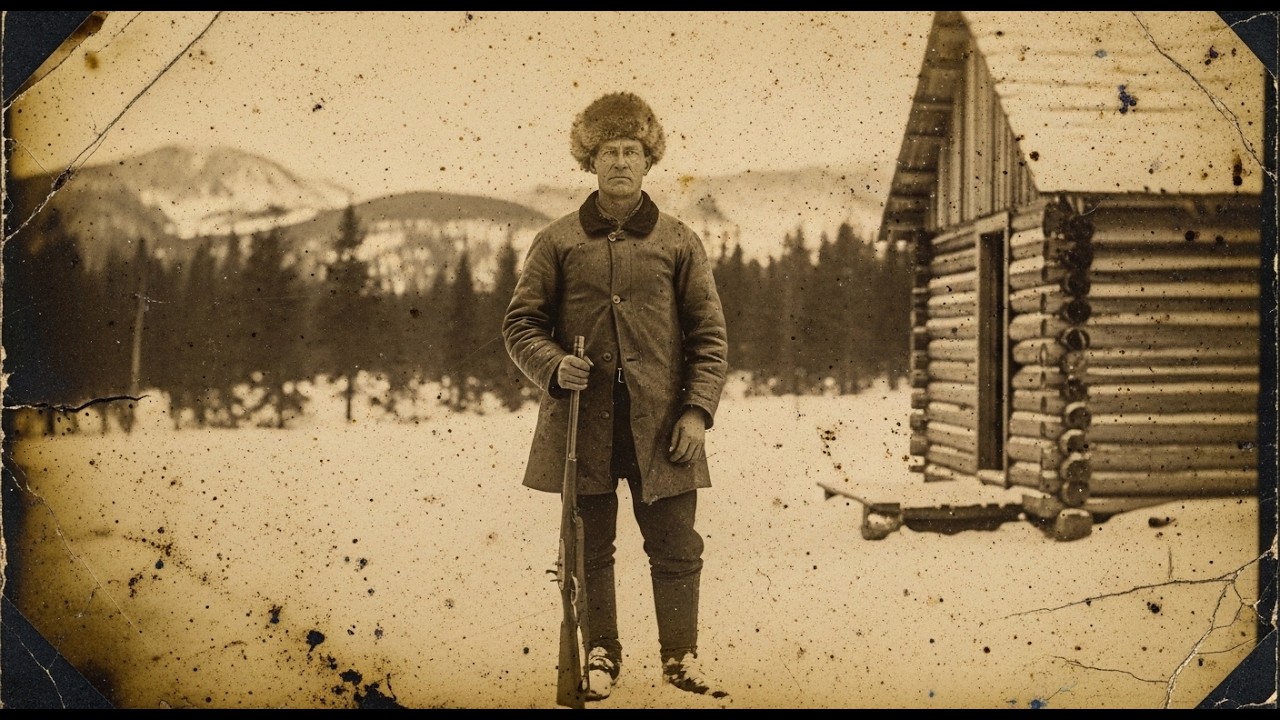
He found one of those places in the high country, in the mountains that bordered the old Rogue River territory, and he settled there, as far from civilization as he could get. He built himself a cabin in a valley so remote that the maps didn’t even have a name for it. He trapped, fished, and hunted, living off the land with a skill that had been honed first by the Takelma and then by his own years of study. He was alone now, completely alone, and he was content with that.
He had no desire for companionship, no desire for the world of men. He had been torn apart by that world, had been forced to become something he was not, and he had finally found a place where he could simply be what he was, a man who had been raised by both the land and the book, a man who belonged to neither culture but understood them both. Years passed. The Civil War came and went, and the frontier pushed further and further west, but Peter stayed in his valley, hidden from history.
He grew older, as men do, and his hair went gray and his step grew slower, but he kept his knowledge sharp, kept his traps set and his garden tended. He did not mind the solitude. He had been alone since he was eleven years old, at least in the ways that mattered, and he had long since made his peace with it. And then, in the autumn of 1891, a new man came to the mountains.
Peter was nearly fifty years old that fall, and he had been living in the valley for over three decades. He knew that country better than anyone alive, better than the animals themselves, perhaps. He had mapped it in his mind, every stream and ridge and game trail, and he had learned to read the comings and goings of everyone and everything that entered it. He did not see many people, not anymore, but sometimes they came through, prospectors, trappers, hunters, men who were drawn to the high country by the promise of gold or furs or just the desire to be left alone.
Peter usually kept his distance, observing them from afar, learning their patterns, their habits, their routines. He watched them come and go, and he remembered, in the back of his mind, the lessons of his youth. So when a trapper named Virgil Cormack built his cabin at the headwaters of a nameless creek, not ten miles from Peter’s own valley, Peter noticed. He noticed the smoke from the chimney, the sound of the axe, the tracks in the snow, and he began to study the newcomer with the same patient attention he had once given to tracking deer.
He learned Cormack’s routine, the days he checked his trap lines, the times he left and returned, the path he took when he went down to the lumber camp to the south. He learned the man’s patterns, as he had learned the patterns of all those who wandered into his country, and he thought about him, about this solitary trapper who made his life in the mountains, a man like himself, and he wondered what to do. Cormack, of course, knew nothing of the man watching him. He knew only that the forest had gone quiet that September, that the birds had fallen silent and the deer had vanished, and he had felt a chill run down his spine as he looked over his shoulder at the empty woods.
He had gone down to the lumber camp at Ashford Station, and he had told the foreman, a Swede named Gustaf Lindgren, about the tracks he had found, boot prints that were not his own, prints that appeared and disappeared in the high country, circling and testing and leaving him unnerved. He had lingered at the camp for three days, asking questions that had no answers, trying to make sense of something that made no sense. And he had met the old Salish man named Many Wounds, who had told him a story about a man who lived in those mountains, a man who had been there as long as anyone could remember, a man who was not Salish, not Blackfeet, not any tribe anyone knew, but who had come alone to the high country in the early days of the fur trade and had found a way to persist, a way to survive that required taking from others. Many Wounds had told him about the disappearances, about the hunters and prospectors who had gone into the mountains and never come back, and he had warned him, in his way, that it might be time to find a new trap line, a new valley, a new home.
Peter knew none of this, of course. He did not know that many wounds had spoken his story, that the old Salish man had told his secret, that the trapper had listened. He only knew that the trapper was still there, still living in his cabin, still running his lines, and that he had made his choice. The cold had come down from the peaks, the snow had closed the passes, and the trapper had stayed, alone in his valley, with only his supplies and his traps and his patient, watchful presence.
Peter thought about him through that winter, watching the cabin from his own hidden vantage points, observing the trapper’s movements in the snow. He thought about the long years of his own life, about the war that had taken his family, the missionary who had tried to remake him, the Takelma who had taken him in and then been taken from him. He thought about the old man in the village who had told him he was no longer one of them, and he thought about the lesson he had learned that day, alone in the missionary’s yard. He was not one and he was not the other.
He was something in between, something that had been shaped by both worlds and belonged to neither. Perhaps that was what made him different. Perhaps that was why, when the trapper’s tracks led him into a part of the mountain he did not know, Peter followed. He followed to see what would happen, to see if the man would survive the winter, to see if he would learn the truth about the country he had chosen to make his home.
And he continued to watch, to study, to learn, as he had watched and studied and learned all the days of his life, a man with no name that anyone remembered, a man who had been born as one thing and made into another and had become, in the end, something entirely his own. The mountains kept their secrets, as they always do. The winter deepened, the snow fell, and the world of men continued to change beyond the valleys and the passes. Emily Leininger, the last of the family, died in a small town in Ohio, and no one marked her grave.
The Rogue River War was officially declared over, and the treaties were signed, and the tribes were settled on their reservations, and the settlers built their towns and their farms and their roads, and the frontier moved on, leaving the high country behind. But in that high country, in a valley that did not exist on any map, two men made their winter homes, unknowingly bound by the threads of a shared history. Both had been made over by strangers, raised by the wilderness, formed and deformed by the hand of another. And both knew that they were not quite like other men, that they were something other, something that had been broken and remade and could never be whole again in any world.
One of them, the trapper named Virgil Cormack, would simply disappear from history. His name would be filed away as missing, presumed deceased, cause unknown. The other, the man who watched him, had never had a name worth recording, having shed the name of his birth and never fully adopted the name his new people had given him. He had been a man of two worlds, and he had become the keeper of one of them, a guardian of the wilderness and its secrets, watching the men who entered it with eyes that had seen too much, and learning, as he had always learned, from each one who came and went.
The old stories said that the mountains were haunted by a thing that watched and waited, and that those who went into the high country alone sometimes never came back. The stories said that the thing had been collecting trophies for decades, that it wore the clothes of its victims and learned their ways, that it was a man who had become something else, a hunger that had learned to walk. And the stories were not wrong. They were just partial, told by people who did not have the whole truth, who did not know that at the center of the story sat a boy from the Oregon frontier, a boy who had been made and remade by the wilderness and the world, a boy who had lost everything and in doing so had found the only home he would ever have.
As the years went on, the high country settled into its long indifference. The cabin at the headwaters of the nameless creek fell into ruin, its roof collapsing under the weight of the snows, its walls rotting back into the forest. The trap lines the trapper had maintained grew over and vanished, and the game returned, the birds and the deer and the elk filling the valleys once more. The land had swallowed one man’s life, and it had made room for another’s.
The wilderness endured, patient and eternal, and in its folds lived a man who had become a part of it, an observer who had learned to wait, knowing that every so often, someone would wander into his territory and provide a fresh opportunity for study. He was not waiting to kill. He was not waiting to collect trophies. He was waiting, simply, to see who would come next, and he was preparing himself for the long work of learning, the careful, patient work of watching and understanding the people who passed through his country.
He had learned to dress like them, to walk like them, to move through the world the way they did. He had learned to be invisible when he wanted to be invisible, seen when he wanted to be seen. He was something the mountains had created, the product of the wilderness and the world, and he would persist for as long as there were mountains to hide in and people foolish enough or desperate enough to enter them alone. Every few years, in the settlements that had grown up along the edge of the wild country, old-timers would tell stories about the thing in the high places, about the trapper who never died, about the presence that watched from the peaks.
But by then, the trapper in those stories did not refer to the man who had once lived in the cabin at the headwaters of the creek. It referred to the creature that had become the stories, the shape in the shadows, the echo of a life that had been wholly taken over by the land itself. The wilderness had not killed the boy; it had completed him.
And somewhere in the highest reaches of the mountains, watching the seasons turn and the people pass through, he stood alone and knew that he would never be anything else again.






