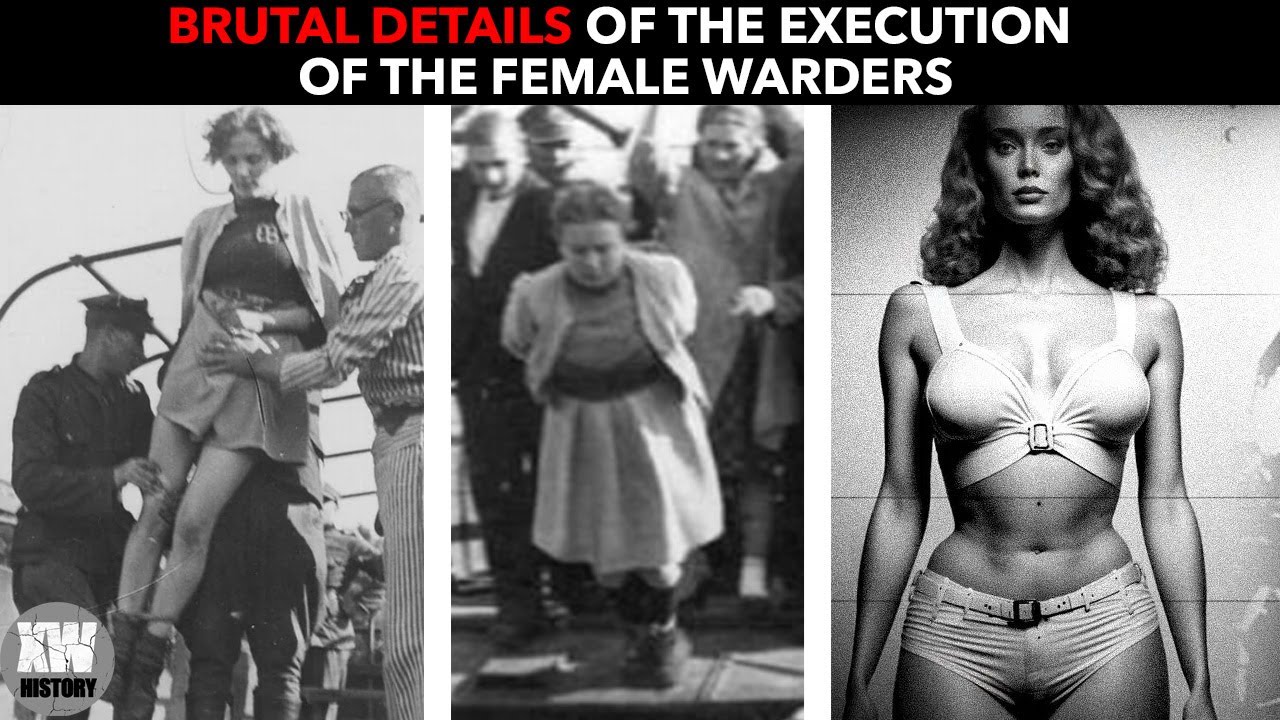
On the fourth of July, 1946, near the town of Gdańsk, eleven men and women were hanged for what they had done at Stutthof. They died on ropes at the end of trucks that drove away from under their feet, and when the trucks stalled, the crowd surged forward. One of the condemned, a woman the prisoners had called the Beautiful Spectre, was pushed from her truck by former prisoners who broke through the guards. Then the crowd threw stones at the hanging bodies until the security forces struggled to hold them back.
The corpses were left to swing for a time, then burned, and their ashes scattered in an unknown place. The road to that gallows began in the autumn of 1939, about thirty-five kilometers southeast of the Polish city of Gdańsk, in a picturesque area of coniferous forest. It was there that the Germans founded an internment camp, as they called it then. Representatives of the Polish intelligentsia, prisoners of war, Communists, and Jews were brought there first.
The camp grew rapidly, and more victims arrived, men and women alike. Production workshops were organized, and by 1941 the institution was classified as a labor education camp. By January 1942, it had become a regular concentration camp, with all the horrors that designation carried. Prisoners were tortured and subjected to medical experiments.
They were burned in crematoria and gassed. Human bodies were used as raw materials for the production of soap, manufactured according to the method of Dr. Rudolf Spanner. Years later the Institute of National Remembrance in 2006 tried to refute what it called this fairy tale, but researchers analyzing bars of soap that had served as evidence at the Nuremberg trials found the presence of human fat tissue in them.
The bodies were used for soap; human skins were used for decorative crafts. Every part of the victims was put to use. Among the camp’s servants were the female overseers, the Aufseherinnen, who became notorious for their cruelty. The first of them, Gerda Steinhoff, began working in Stutthof in January 1944.
She was nicknamed the Beautiful Spectre because of her deceptively gentle appearance. Within just over a year she earned such a terrible reputation that many prisoners called her the terrible ghost. Her favorite pastime was the merciless beating of female prisoners. Jenny-Wanda Barkmann came to Stutthof from Ravensbrück in 1942.
The prisoners nicknamed her the Stutthof Sadist. Lacking physical beauty herself, she deliberately targeted attractive prisoners for her abuse. Eva Paradies, of German-Polish origin, began her service in early 1944. She established herself as an inveterate sadist and torturer.
In the cold winter, she ordered female prisoners who did not like her to strip naked, poured water on them, and forbade them to move. If they violated the prohibition, severe beatings followed. Elisabeth Becker, like Eva, began serving in the concentration camp in early 1944. She was involved in the selection of women and children to be sent to the gas chambers.
The principle of her selection was known only to her, and apparently depended on her mood. She would often walk past a potential victim in the line several times, pretending not to notice them, then abruptly return and declare “you,” sealing their fate with a single word. Gerda Steinhoff’s date of arrival differs depending on the source; most likely it was the end of 1943. Like Becker, she was involved in the selection of prisoners for gas chambers and medical experiments, and she was very proud of her work.
She showed cold cruelty to women and children. Her superiors noted her diligence and efficiency, and she was even awarded a medal for devoted service. Wanda Klaff was one of the few married guards. She began her service in the Praust concentration camp, where she showed herself to be a ruthless sadist.
In 1944 she was transferred to Stutthof. By her own admission, she beat at least two prisoners every day. For her, it was something like physical exercise. These were not all the wardens of Stutthof; there were others.
But these were the first to appear before the court in 1946, in one of the first trials of concentration camp guards. In total, during the existence of the camp, some 295 so-called Aufseherinnen, or overseers, served there. When the troops of the Red Army began to approach Gdańsk and Stutthof, the camp’s servants began to scatter like rats from a sinking ship. But not everyone managed to hide.
The first commandant of Stutthof, SS-Standartenführer Max Pauly, who later became commandant of the Neuengamme concentration camp, was detained in the fall of 1945, convicted in May 1946 by an English court in Hamburg, and hanged in October of the same year. The women who tried to disguise themselves as innocent victims were also detained soon after. Their immediate superior, SS-Oberscharführer Johann Pauls, was caught as well. The trial of the Nazi criminals took place in the city of Gdańsk on April 26, 1946.
There were sixteen defendants in the case, all employees of the concentration camp, including the women already mentioned. At the trial, the former guards behaved as if they did not fully believe they could be seriously punished. They joked, laughed, and flirted with each other. They showed no signs of troubled conscience, and there was not even a shadow of remorse on their faces.
At a time when many witnesses could not hold back their sobs and even lost consciousness, their former tormentors were smiling. On May 31, 1946, the sentences were read out to the sixteen defendants. Eleven of them were sentenced to death: Becker, Steinhoff, and Barkmann, along with Eva Paradies, Wanda Klaff, and the others already known to us. In addition to them, the so-called kapos were condemned, prisoner functionaries: Józef Reiter, Wacław Kozłowski, Franciszek Szopiński, Jan Breit, and Tadeusz Kopciński.
On July 4, 1946, the death sentence was carried out. All eleven criminals were hanged near Gdańsk, at Biskupia Górka. The convicts were transported to the place of execution in trucks. Ropes were put around their necks, after which the trucks drove off, and the criminals hung from their ropes.
During the execution there were incidents. The truck on which Jenny-Wanda Barkmann was standing stalled. One of the former male prisoners, and according to other information possibly female prisoners, broke through the guards, jumped into the back, and pushed the Beautiful Spectre from the truck into the emptiness. But it did not end there.
A crowd of people began throwing stones and sticks at the hanging corpses, and the security forces had to struggle to restrain the angry people. There is a legend that Barkmann’s ashes were flushed down the toilet of her apartment. But that is only a legend. This is how the sadistic guards of the Stutthof concentration camp, its terrible ghosts, ended their lives.
A well-deserved result for those who had violated all human norms. After this trial, several more trials took place against the guards and supervisors of Stutthof. In January 1947, and in November of the same year, there were two more proceedings, one at the beginning of November and one at the end. Some were sentenced to death; others received ten or fifteen years in prison.
Some received three to five years, and some escaped punishment entirely. The secretary of the commandant of the concentration camp, Irmgard Furchner, was acquitted in court; the court considered that she was only doing paperwork and had nothing to do with executions and torture. However, seventy-five years later, a criminal case was opened against Furchner. Researchers found that she was aware of everything that was happening in the concentration camp, and that she provided various services to the executioners, which meant she helped them, albeit indirectly.
She was given a two-year suspended sentence, a lenient punishment apparently related to her age. Now there is a museum on the site of the concentration camp. During its entire existence, approximately one hundred ten to one hundred twenty thousand prisoners passed through it, and from sixty-five to eighty-five thousand of them found their deaths in Stutthof.






