On April 2nd, 1882, a man registered at room 80 of the Glenham Hotel on Fifth Avenue. He lowered himself onto the edge of the bed, pressed a Smith & Wesson revolver against his left temple, and squeezed the trigger. He was fifty-one years old. He was also the son of the wealthiest man in American history.
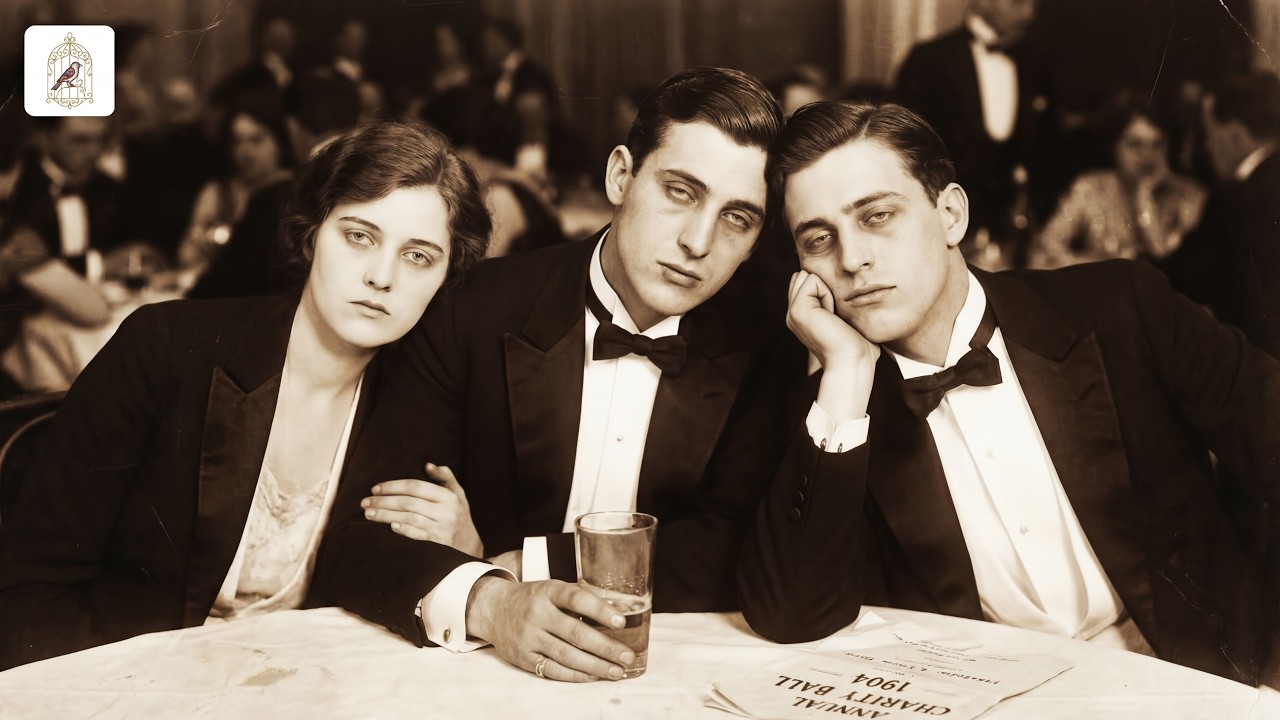
His name was Cornelius Jeremiah Vanderbilt, and by the time he died, his family had devoted three decades to erasing him. He was not alone in this. Throughout the Gilded Age, America’s most powerful dynasties produced children they were bent on making vanish. Some were confined behind the walls of asylums.
Some were interred under assumed names. One was silenced by an ice pick driven into the brain. This is what old money did to the children who endangered the brand. In 1877, one hundred million dollars passed between members of a single family, and anyone who did not receive a share became a target.
The Commodore was dying. Cornelius Vanderbilt, the man who had fought his way from a $16 ferry loan on Staten Island to the greatest personal fortune in the Western Hemisphere, lay in his bed at 10 Washington Place in Manhattan, and the vultures were already gathering. Doctors came and went. Lawyers shuffled papers in the adjoining room.
Out on the street, newspaper reporters waited for the announcement that would launch the greatest inheritance battle of the century. When Vanderbilt finally died on January 4th, 1877, his estate was valued at approximately 100 million dollars. To grasp that figure, you must set aside modern notions of wealth. One hundred million dollars in 1877 amounted to between one and a half and two percent of the entire gross national product of the United States.
In today’s money, that would be somewhere above 300 billion dollars. No American had ever held that much. Andrew Carnegie had not yet constructed his steel empire. John D.
Rockefeller’s Standard Oil monopoly was still being consolidated. The Commodore stood alone at the peak. And Cornelius Vanderbilt left nearly all of it to a single son. William Henry Vanderbilt received 95 million dollars.
His brother, Cornelius Jeremiah, received the income from a $200,000 trust. Not the principal—the income, managed by a trustee William controlled. The Commodore’s eight daughters received between 250,000 and 500,000 apiece. The will was not a distribution.
It was a weapon. It was the old man’s final act of command, a pronouncement from beyond the grave that declared, “I have judged you all, and most of you have been found wanting.”
But to understand why, you have to understand what these families had turned into by the 1870s. The Vanderbilts were not a family in any sense that the word carries warmth.
They were a business. Their fortune demanded discipline, public performance, strategic marriage, and above all, command of the narrative. Every Vanderbilt child was an employee of the brand, whether they realized it or not. Their conduct reflected on the stock.
Their marriages were mergers. Their scandals were quarterly losses. The same reasoning governed every great dynasty of the era. The Astors, whose real estate empire sprawled across Manhattan in a grid of tenement houses and grand hotels, ran their family like a holding company.
The eldest capable son inherited. Everyone else got an allowance and a set of expectations, and God help the child who failed to meet them. The Rockefellers, whose Standard Oil monopoly generated wealth so immense it had to be concealed inside a labyrinth of trusts and shell companies just to escape the full scrutiny of Congress, cultivated a family culture of secrecy so deep that basic biographical facts were treated as classified information. The Goulds, the Huntingtons, the Kennedys—every one of them applied the same calculus.
The family is the corporation. The children are the assets. And assets that lose value are written off. The Gilded Age produced staggering figures that exposed the scale of this world.
By 1890, the top one percent of American families held 51 percent of the nation’s wealth. The 400 families considered worthy of Mrs. Astor’s ballroom controlled more capital than the bottom 11 million households combined. A single dinner party at Delmonico’s could cost $5,000, the equivalent of a factory worker’s entire annual salary.
A Newport cottage, as it was called, might contain 70 rooms, 45,000 square feet of marble floors and gilded ceilings, and a staff of 30 servants who lived in quarters designed to be invisible from the main house. The architect Stanford White charged fees that could have funded a public school for a decade. The champagne flowed at a rate of 500 bottles per party. The excess was not incidental.
It was the point. Wealth existed to be displayed, and display demanded perfection. This was the world that demanded perfection from its children, a world where your bloodline was your brand, your behavior was your balance sheet, and your usefulness to the family was the only measure that counted. The question was brutally simple.
Could you perform the role assigned to you? Could you marry the right person, manage the trust, avoid scandal, smile for the photographers, and keep the machine running? And if you could not, then the machine had tools for dealing with you. Asylum commitments that required nothing more than a father’s signature and a compliant physician.
Trust instruments that could shrink a hundred million dollar inheritance to a controlled pittance. Social ostracism that could make a person disappear from every guest list, every club roster, every conversation in polite society. And if all else failed, there were walls. Real, physical walls.
Attended by nurses who answered not to the patient, but to the family that paid their salaries. On the same Fifth Avenue where the Astors hosted a thousand guests for dinner, a firstborn son sat behind high walls and was never invited to anything. Consider two images from the same city, in the same decade, in homes barely a mile apart. The first, March 26th, 1883.
Alva Vanderbilt opens the doors of her new chateau at 660 West 57th Street for the most lavish costume ball New York has ever seen. 1,200 guests stream through the entrance. Alva herself is dressed as a Venetian princess. Her sister-in-law appears as electric light, draped in a gown that literally glows, powered by concealed batteries.
The ballroom overflows with orchids shipped from greenhouses across three states. A quarter of a million dollars has been spent on flowers, costumes, and catering alone. That is roughly 7 and a half million in today’s money, spent on a single party. The purpose of this party is not pleasure.
It is conquest. The Vanderbilts are demanding admission to the old money world of the Astors, and this ball is the battering ram. Every newspaper in the city covers it. The 400 are officially on notice.
New money has arrived, and it has brought more champagne than old money can drink. The second image, a brownstone on 14th Street, quiet, curtains drawn. Inside, a man sits in a room he has occupied for years and will occupy for decades more. He is attended by nurses.
He gets his meals on a set schedule. He never leaves the house. Apart from the lawyers who oversee his allowance and the servants who see to his needs, nobody visits. His name is John Jacob Astor Jr.
He is the eldest son of John Jacob Astor III, one of the richest men in the nation. And since roughly his twenties, he has been locked away in this house in all but name. No costume balls for him. No shimmering gowns.
No orchids. Taken together, these two images capture the Gilded Age in a single frame. On one side, the show. On the other, the bolted door.
And the families behind both knew perfectly well that the show depended on the bolted door. You could not present an image of dynastic perfection if the imperfect were allowed to be seen. The ballroom and the brownstone were not opposites. They were two halves of one machine.
Cornelius Jeremiah Vanderbilt was the Commodore’s second son, and the moment it grew clear that he suffered from epilepsy, his father started the process of elimination. Not murder, nothing that tidy. The Commodore simply concluded that Corneil, as the family called him, was damaged goods. The seizures were not read as a medical condition but as a moral defect.
In the 19th century, epilepsy carried a stigma closer to demonic possession than to neurology. A man who collapsed in convulsions was not ill. He was weak. He was tainted.
He was unfit. And by the dynasty’s logic, an unfit son was worse than no son at all. He was a walking advertisement for bad blood. The Commodore had Corneil committed to the Bloomingdale Asylum for the first time in the early 1860s.
The commitment process demanded nothing more than a physician’s certificate and a judge’s order. In practice, both were formalities when the petitioner was the richest man in America. Corneil was locked away. Not because he was dangerous.
Not because he was delusional. Because he was embarrassing. Meanwhile, John Jacob Astor Jr. lived out an even quieter form of destruction.
The Astor family’s approach differed from the Vanderbilts in method but matched them in logic. Where the Commodore used asylums and punitive trusts, the Astors used architecture. They simply built a life of permanent, comfortable confinement. Astor Jr.
was given a house, attendants, and an allowance. He was also given a total absence of freedom, agency, or identity. He would live to be 78 years old. He would never marry.
Never hold a position. Never appear in the social columns. His whole adult existence was spent inside the perimeter his family drew for him, blocks from where his relatives did business, hosted parties, and built hotels that bore the Astor name. What did these families fear more than cruelty?
The answer is exposure. They feared the wrong child saying the wrong thing at the wrong dinner party. They feared a seizure in a ballroom. They feared the newspapers, those great equalizers of the Gilded Age, which could lift a family to glory in one edition and ruin it in the next.
They feared above all that the public image of dynastic competence and genetic superiority would be exposed for what it was, a performance, a fiction kept up at enormous cost. That cost was paid by the children who could not perform. A father needed no permission to lock away his son, and no one with power had any reason to ask why. The system that made dynastic erasure possible rested on three institutional pillars.
Each was legal. Each was respectable. Each worked, when run by wealth, as a machine for making human beings disappear. The first pillar was the law itself.
In the 19th century, the doctrine of coverture and its extensions gave the male head of household almost absolute authority over the persons and property of his dependents. A wife could not own property in most states until the Married Women’s Property Acts began to pass slowly and unevenly after 1848. Children were, in the eyes of the law, essentially possessions. A father’s decision to institutionalize a child was a private family matter, and the courts deferred to patriarchal authority with remarkable consistency.
This meant that when Cornelius Vanderbilt decided his son Corneil was insane, the legal system did not challenge him. It helped him. Civil commitment required a petition, usually from a family member, a certificate from one or two physicians, and a hearing before a judge. In practice, the hearing was a rubber stamp.
Wealthy families kept physicians who understood what was expected of them. A doctor who contradicted the Commodore’s wishes was a doctor who lost the Commodore’s patronage, and along with it the patronage of every family in the Commodore’s circle. Judges who depended on the goodwill of the elite were not inclined to rule against them. And the patient, the person whose freedom hung in the balance, had no guaranteed right to counsel, no right to an independent medical examination, and no meaningful right of appeal.
The second pillar was the asylum system itself. By the mid-19th century, America had built a network of private and public institutions that could absorb inconvenient people with quiet efficiency. The Bloomingdale Asylum, where Corneil was sent, sat on a campus in Upper Manhattan that would later become the site of Columbia University. It was considered progressive.
It had gardens. It had airing courts. It also had locked wards. The asylum’s population included the genuinely mentally ill.
It also included the merely inconvenient. Wives whose husbands wanted freedom. Sons whose fathers wanted silence. Relatives whose existence threatened an inheritance or a reputation.
The institution ran on a simple economic model. Wealthy families paid premium rates for private patients, and the asylum had every financial incentive to keep those patients confined for exactly as long as the family wished. There was no external review board. No required timeline for reassessment.
No independent advocate. The door locked from the outside, and the key belonged to whoever was paying the bill. Between 1850 and 1900, American asylum populations grew from roughly 15,000 to over 150,000 patients. The rate of confinement increased faster than the population, a fact that reformers like Dorothea Dix had warned about for decades.
The system was not built to heal. It was built to contain. And for families with the resources to pay premium rates, it was built to conceal. The third pillar was the trust.
In the hands of a skilled lawyer, the trust was not merely a financial instrument. It was a weapon. By placing assets in trust, a patriarch could control the behavior of his heirs across generations. He could set conditions for distributions.
Marry the right person or forfeit your share. Maintain the family residence or lose your income. Behave in a manner consistent with the family’s reputation or watch the money stop. He could appoint trustees loyal to himself, men who would enforce his wishes decades after his death.
And he could shrink a child’s allotment to a mere drip, sufficient to keep that child from starving but never enough to allow independence, defiance, or flight. The Commodore’s handling of Corneil brought all three pillars into play at once. The law handed him the power to act. The asylum handed him the means.
The trust handed him the machinery to guarantee that even after his own death, Corneil would stay financially dependent and socially powerless. When the will was read, Corneil’s portion was crafted not to support him but to shame him. The income from $200,000 in a world where his brother controlled 95 million. The ratio was a verdict.
It declared, “You are nothing.”
The asylum director looked at Cornelius Jeremiah Vanderbilt and told him outright that he was no more insane than the doctor himself. This is the detail that brings the whole fabrication down. When Corneil was examined at Bloomingdale, at least one physician studied the man before him and concluded, on the record, that this patient had no place in an asylum.
The epilepsy was genuine. The seizures were documented. But insanity? No.
Corneil was clear-headed, articulate, self-aware, and acutely conscious of what was being done to him. His confinement was not medical. It was calculated. The asylum was being used not as a hospital but as a warehouse.
The item being stored was a human being the family found inconvenient. The full account of Cornelius Jeremiah Vanderbilt’s destruction is not one act. It is a campaign, decades long, methodical, relentless. Every turn of the wheel peeled away another layer of the man underneath.
Corneil was born in 1831, the second son of the Commodore and his first wife, Sophia Johnson. From the start, he held an impossible position. His older brother, William Henry, was the heir, trained from boyhood to run the railroad empire. William was cautious, competent, obedient, everything the Commodore prized.
Corneil was the spare, and spares in dynastic families are tolerated only as long as they stay invisible and compliant. Corneil was neither. He developed epilepsy in his youth. The Commodore, a man who had built his entire fortune on the belief that sentimentality was for fools and weakness was to be crushed, looked at his second son and made his calculation.
Corneil was not an heir. He was a liability. And liabilities were to be struck from the balance sheet. The first commitment to Bloomingdale came in the early 1860s.
Corneil was confined. He was examined by multiple physicians. At least one found him sane. He was eventually released, but the damage was permanent.
The commitment had marked him. In the tight, gossiping world of New York’s social elite, an asylum stay was an indelible stain. It followed you into every drawing room. It whispered behind your back at every dinner.
It meant that every future business proposal, every marriage prospect, every social invitation would be shadowed by the question, “Is he stable?”
He was committed a second time, released again. Each cycle stripped away another layer of standing, of dignity, of the ability to function as an independent person in society. The asylum was not treating Corneil.
It was processing him. And each time he emerged, he was a little more damaged, a little more isolated, a little closer to the margins. Then came exile. The Commodore sent Corneil to a farm in Hartford, Connecticut, a polite form of banishment that removed him from the city and from the family’s operations.
The farm was run by a man named George Terry, who became, over time, something close to a genuine friend. Perhaps the only one Corneil ever had. In Hartford, Corneil tried to build something. He attempted business ventures that failed.
He lacked his father’s genius for commerce and his brother’s patience for administration. He gambled badly and compulsively, piling up debts his father refused to pay. His brother William sometimes covered the debts, grudgingly and always with conditions attached. Each bailout came with a fresh layer of contempt and a tighter set of financial controls.
He married a woman named Ellen Williams, and for a brief period, there was something resembling stability. But Ellen died in 1872, and with her death, the last tether holding Corneil to ordinary human life snapped clean. The gambling worsened. The debts mounted beyond anyone’s willingness to cover them.
Corneil borrowed against his expectations, against the Vanderbilt name, against anything he could leverage. He was arrested for fraud. He was sued by creditors. Each scandal fed the family’s narrative that he was unfit, that the asylum commitments had been justified, that the punitive inheritance was not cruelty but prudence.
Then the Commodore died, and the will was read. $100 million. $95 million to William. The income from $200,000 to Corneil.
The ratio was not an accident. It was a sentence passed by a dead man on a living one, and it could not be appealed. Corneil understood exactly what had been done. His letters from this period, the few that survived, reveal a man who saw the architecture of his own destruction with devastating clarity.
He did not rage blindly. He raged knowingly. And that, perhaps, was the worst of it. To be ground down is terrible.
To understand the mechanism that is grinding you, to see every gear and every lever, and to know that you cannot reach any of them, is something worse. In his final years, writing to George Terry, Corneil put the whole thing into words that carry more raw need than anything else in the Vanderbilt archive. “Oh, George, you must not desert me now.” One sentence.
One plea. The voice of a man abandoned by his father, his brother, the legal system, and the medical system, begging one person, one friend, not to complete the abandonment. William Vanderbilt did not need to win the will contest so much as he needed certain women to vanish from American soil. When Corneil and two of the Commodore’s daughters filed their challenge to the will in 1877, they cracked open a door the Vanderbilt family had spent decades keeping shut.
The will contest of 1877 to 1879 was the first great dynastic trial in American history, and it dragged every secret the family possessed into a public courtroom packed with reporters. The contestants argued that the Commodore had been of unsound mind and that he had been unduly influenced by his second wife, Frank Armstrong Crawford, and by a circle of spiritualists and clairvoyants who had gained extraordinary access to the aging patriarch. The Commodore, it turned out, had spent his final years conducting seances in his parlor. He believed he could communicate with the dead.
He consulted magnetic healers and spirit mediums. Witnesses took the stand and described the richest man in America sitting in a darkened room holding hands with strangers asking questions of ghosts. But the truly dangerous witnesses were not the spiritualists. They were the Claflin sisters.
Victoria Woodhull had campaigned for the American presidency in 1872, becoming the first woman ever to do so. She had spoken out publicly in favor of free love. In her own newspaper she had exposed Henry Ward Beecher’s extramarital affair, setting off the biggest scandal in the religious life of the nation. Her sister, Tennessee Claflin, had launched a Wall Street brokerage with the Commodore’s money behind her.
The press had reveled in the picture: the wealthiest man in America underwriting two radical feminists who wanted marriage itself abolished. Should the will contest proceed to a full trial, the Claflin sisters would be summoned to testify about the character of their dealings with the Commodore. Each detail would find its way into print. Each insinuation would turn into a headline.
The Vanderbilt name, which William was working to raise into a lasting American aristocracy, would be soiled in the same way as every lurid divorce case and fraud suit on the court docket. William could not permit that. The fortune was at risk, to be sure, but the reputation counted for more than any sum of money. A dynasty lives or dies by its name, and a name tied to seances, mediums, and scandalous women was a name in grave peril.
So William brought out the weapon dynasties always grasp when secrecy breaks down: money. The Claflin sisters were paid more than $100,000. Certain historical records put the sum substantially higher. The payment was no legal settlement.
It was a purchase. William was securing their absence from the courtroom and, more crucially, their absence from the country. The sisters departed the United States for England, where they married into lesser aristocracy and remade themselves so completely that their American escapades became, among their new social circles, dim and irrelevant history. All the while, the trial went forward lacking its most explosive witnesses.
Even so, the testimony yielded revelations. The Commodore’s personal physician characterized his patient’s mental condition in words that cut both directions: sharp enough at 80 to run a railroad empire, yet perhaps muddled enough in private moments to be steered by those nearest him. Spiritualists appeared on the stand and recounted their sittings with the old man. The public devoured every detail.
Newspapers ran transcripts that sold out their editions. Yet in the end, the will stood. The judge found that the Commodore had been of sound mind and that the division of his estate, however uneven, fell within his legal rights. Cornelius’s challenge collapsed.
His sisters obtained modest increases and surrendered their claims in writing. The principle was fixed into legal precedent. A patriarch could divide his fortune as he pleased, and the courts would not overturn him, however punitive the outcome, however plain the cruelty. The trial alone ran close to two years.
It devoured more than 2,000 pages of testimony. It summoned dozens of witnesses. It ran up legal bills reaching into the hundreds of thousands of dollars. And at its heart, propelling the whole machinery, lay one plain question: did an old man’s loathing for his own son amount to a legally recognizable form of undue influence, or was it merely a father’s right to weigh his children and divide his wealth on that basis?
The judge picked the second. The law took the patriarch’s side, as it had always taken the side of patriarchs, and the precedent it established would reverberate through inheritance law for decades. Wealth was property. Property was private.
And the private choices of a rich man about who merited his money were beyond judicial second-guessing, however cruel those choices looked to the world outside. For Cornelius, the defeat was complete. He had spent his final stores of credibility and hope on the contest. When it fell apart, he had nothing remaining.
The debts went on. The gambling went on. The social exile grew deeper. He had laid the family’s secrets bare in open court and lost, which meant he now carried the stain of disloyalty on top of all the other stains he bore.
The spiral drew one last turn tighter. On April 2nd, 1882, Cornelius Jeremiah Vanderbilt entered the Glenham Hotel on Fifth Avenue. He was 51. He was penniless.
He was alone. Every person and every institution that ought to have cared for him had abandoned him. He sat down on the edge of the bed in room 80, lifted a Smith & Wesson revolver to his left temple, and fired. The family buried him swiftly and without ceremony.
William reportedly covered the costs and said almost nothing. The newspapers remarked on the irony and moved on inside a week. Within a year, the name Cornelius Jeremiah Vanderbilt had mostly vanished from public discussion. The dynasty’s first confirmed kill by indifference was done.
The liability had been erased, not with one blow, but through a system of pressures brought to bear over 30 years until the man simply broke. The Vanderbilts had shown the model. Other dynasties would polish it. And the polished versions would be worse.
For close to a decade, George J. Gould came to Manursing Island by yacht each weekend, and his legitimate children had a name for the family he went to see there. They called them the bastards. George J.
Gould was the eldest son of Jay Gould, the railroad baron, the most hated man on Wall Street, the speculator who had tried to corner the gold market and set off the Black Friday panic of 1869. Jay Gould had died in 1892, leaving an estate of roughly $77 million. George inherited the largest share, together with the burden of running the family’s railroad interests. He married Edith Kingdon, an actress of considerable beauty and fierce social ambition.
Together they built Georgian Court, a palace in Lakewood, New Jersey spreading over 200 acres. The estate had its own casino, its own power plant, a sunken Italian garden modeled on one at Versailles, tennis courts, a private lake, and a staff numbering in the dozens. Construction and upkeep ran into the millions. But George also kept a second family.
Her name was Guinevere Sinclair. She was younger than Edith, strikingly attractive, and she lived on Manursing Island in Rye, New York, in a house George supplied and visited routinely. Between roughly 1907 and 1914, she bore him three children: Guinevere, George, and Jane. George came by yacht.
He arrived every weekend, or nearly every one, reaching the pier on Manursing Island with the punctuality of a commuter. The arrangement was an open secret inside the household and among the family’s inner circle, yet invisible to the press and to polite society. The legitimate Gould children knew. They knew the address.
They knew the names. Meanwhile, Edith Kingdon Gould was failing. She had put on weight dramatically. Her health was worsening.
Then, on November 13th, 1921, she was found dead on the golf course at Georgian Court. The official cause was heart failure. But the detail that burned itself into every newspaper report was the rubber suit. Edith had been wearing a full-body rubber garment beneath her clothes, an extreme and dangerous weight-reduction device that, combined with vigorous exercise on the golf course, had almost certainly brought on the cardiac event that killed her.
The rubber suit is a detail that compresses a whole life into one picture. Here was a woman wed to one of America’s richest men, residing in a 200-acre palace ringed by every material luxury money could purchase. Yet she died by herself on a golf course, wrapped in rubber like a parcel, frantically trying to sweat herself slim enough to keep the attention of a husband who was already spending every weekend in another woman’s bed. Six months after Edith’s death, George married Guinevere Sinclair.
The ceremony was quiet. The press was not. When the marriage certificate surfaced on the front pages of New York newspapers, it listed the names and ages of three children, and the math was incriminating. Those children had been born years before Edith died.
A single document laid the double life bare. Then came legal warfare. When George died in 1923, only two years after Edith, his will sought to provide for the Sinclair children alongside his legitimate heirs. The legitimate Goulds, with Jay Gould II at their head, challenged those provisions using the full force of the family’s legal resources.
The case climbed through the courts. In 1925, the Supreme Court of New York issued its ruling. The Sinclair children were found to have no right, title, or interest in Jay Gould’s original estate. They each received roughly $200,000 in settlement.
The legitimate heirs kept tens of millions. $200,000 against tens of millions. That ratio is the market price of illegitimacy stated in the cleanest possible arithmetic. The court did more than shrink the Sinclair children’s inheritance.
It wiped out their lineage. By blood they were Goulds; by law they were strangers. The Sinclair children grew up in a shadow world. By ordinary standards, they were comfortable.
$200,000 in 1925 was not poverty. Still, they were exiled completely from the dynasty whose blood ran in their veins. They carried the Gould resemblance yet could claim none of the Gould privileges. They went to no family gatherings.
They inherited no properties. They appeared in no society columns. The legitimate Goulds closed ranks with the finality of a fortress gate, leaving the Sinclair children outside, staring at a name they could not use and a fortune they could not touch. Georgian Court, in the meantime, outlived its builder.
The palace George had built for Edith, the wife who died in a rubber suit on a golf course while her husband sailed off every weekend to another woman, eventually turned into a university campus. Students now walk its grounds. They study in rooms that were once ballrooms. They eat lunch in spaces designed to impress America’s wealthiest families.
The irony is built into the architecture. A monument to dynastic vanity now serves young people who could never have afforded an invitation to one of George Gould’s dinner parties. The Gould case took the Vanderbilt model further. Where the Commodore had used a punitive trust to ruin one son financially, the Goulds used the legal system to declare three children legally nonexistent as members of the dynasty.
The mechanisms had moved from trust to courthouse, from financial punishment to legal annihilation. But the Goulds had only taken the method from money to law. Other families would take it further, from law to walls, from walls to something far more literal and far more permanent. John Jacob Astor Jr.
was the eldest son of the richest man in America, and he spent his whole adult life in a single house he was never allowed to leave. Consider what 50 years means. Not as a figure. As a life.
Fifty years stretches from a young man’s prime to an old man’s death. It is longer than most careers. Longer than most marriages. It is the distance from ambition to memory, from strength to frailty, measured not in events but in the slow turning of days that are all alike.
John Jacob Astor Jr. spent more than 50 of those days multiplied by 365 within the walls of a brownstone on 14th Street in Manhattan. Nurses attended him. Lawyers visited him.
Almost no one else saw him. He was born around 1822, the eldest son of John Jacob Astor III. Under the rules of primogeniture that the Astors followed with quasi-aristocratic strictness, he should have inherited the empire. The Astor fortune, built by the first John Jacob on fur trading and consolidated by his descendants into New York City’s largest real estate portfolio, was among the most stable and vast in the nation.
Astor properties covered blocks of Manhattan. Rents poured in like tides. The eldest son should have commanded it all. But something was wrong.
The historical record is deliberately vague. That vagueness is no accident of time. It is the final product of the family’s campaign. Astor Jr.
may have had an intellectual disability. He may have suffered from a mental illness that appeared in his youth. He may have been, in the terminology the family would never have used publicly, simply different. The Astors never said.
They made sure no one else could say it either. What is certain is that John Jacob Astor III made his decision. His firstborn would not inherit. His second son, William Waldorf Astor, would be groomed for the role.
And the firstborn would be removed. Not to an asylum. The Astors were more refined than that. There would be no public commitment.
No physician’s certificate on file. No legal proceeding a journalist might find. The Astors simply gave their son a house and a staff of keepers and made certain he never left. Consider the mechanics.
There was no lock on the front door in any crude sense. There did not need to be. The nurses were paid by the family. The lawyers were retained by the family.
The allowance was controlled by the family. Every person in Astor Jr.’s life answered to the dynasty, not to the man. Every hour of every day he was surrounded by employees of the enterprise that had decided he should not exist in public.
And public was the keyword. Astor Jr. was not mistreated in any way that would have met a legal definition of abuse. He was fed.
He was housed. He was clothed. He received medical attention when he needed it. The brownstone on 14th Street was comfortable.
But comfort without freedom is not kindness. It is the most sophisticated form of imprisonment available to those who can afford to make a cage look like a home. He died in 1900 at approximately 78 years of age. He had been confined for more than 50 years.
He never married, never worked, never appeared in society, never traveled. He left no letters that have entered the public record. No memoirs. No interviews.
No surviving record of his own voice or his own thoughts. That silence is the final act. When a human being lives for nearly eight decades and leaves no trace of an inner life, the family has achieved something beyond concealment. It has achieved obliteration.
John Jacob Astor Jr. was a body occupying a room. Whatever lived inside him—the thoughts, the emotions, the daily responses to five decades of unvarying routine—went unrecorded, and so, by any measure history uses to gauge a life, it never existed at all. Most biographies of Astor allot him a single sentence.
Some allot him even less. The major histories of the family dwell on the property transactions, the social feuds between Caroline and Charlotte, the rise of the Waldorf Astoria, the loss of the Titanic. They say nothing about the eldest son on 14th Street. The erasure is so thorough that his very absence from the record has become invisible in its own right.
Yet the Astors worked within the boundaries of physical space. They locked away a body. Other families would push further. They would lock away identity itself.
Arabella Huntington falsified her name, her age, her birthplace, her marriage, and the paternity of her only child. And she made every one of those lies hold for the rest of her life. Arabella Duval Yarrington was born at some point between 1850 and 1852 in Richmond, Virginia. The precise year is unknown, and that uncertainty was engineered.
She came of age in Shockoe Bottom, among the poorest quarters of a city still reeling from the Civil War. The streets were unpaved. The houses were cramped. The air carried the smell of the river and the tobacco warehouses.
Certain accounts hint that her mother kept a boardinghouse. Other accounts, kinder to no one, hint that the boardinghouse rented more than rooms and meals. What is beyond dispute is that Arabella had remarkable beauty, a keen mind, and an instinct for survival that would have suited a battlefield. She departed Richmond.
She made her way to New York. She acquired a man named John Archer Worsham, whom she introduced as her husband, though proof of a lawful wedding has never been firmly established. Once Worsham exited her life, she recast herself as a widow. Young, lovely, sorrowfully alone, and open to offers.
She drew the notice of Collis Potter Huntington. Collis ranked among the Big Four, the men who constructed the Central Pacific Railroad and bound the continent together with steel and will. He held power. He held wealth.
He also already had a wife. His involvement with Arabella was carried on with the discretion that money can purchase and respectability requires. And at some point during the 1870s, Arabella gave birth to a son. She called him Archer.
Archer Milton Huntington. The accepted version: his father was the absent Worsham. The unspoken reality, plain to anyone who studied the boy’s face: he was Collis Huntington’s son. By all accounts, the likeness was striking.
The jaw, the eyes, the bearing. Archer resembled Collis the way a mirror returns a face. Yet Arabella upheld the Worsham fiction with an iron resolve that never gave way. And Collis backed it.
When his first wife died and he wed Arabella in 1884, Collis formally adopted Archer. The adoption was a legal tour de force. Collis adopted his own biological son, a move that at once gave the boy legitimacy and buried the truth of his conception beneath so many layers of legal paperwork that ordinary inquiry could not get through. And Arabella did not confine herself to Archer’s origins.
She reconstructed her whole life from the ground up. She shifted her birth year forward by as much as five years, keeping herself forever younger than she truly was. She declared Alabama her birthplace, wiping Virginia and Shockoe Bottom from the map. She destroyed letters.
She burned documents. She ordered servants to throw out any correspondence that might link the grand Mrs. Huntington—art collector, patron of culture, one of the richest women in the world—to the girl from the boardinghouse on the wrong side of Richmond. The purge was methodical and lasted her whole life.
Arabella kept such total command of her personal papers that when she died in 1924, the documentary trail of her early years had all but vanished. Historians attempting to piece together her biography have encountered gaps where whole decades ought to be. She did more than conceal inconvenient facts. She incinerated the evidence with the thoroughness of a general burning maps during a retreat.
The human price of this reinvention was reckoned in distance. Distance from her own history. Distance from her own relatives. Distance, in the end, from her own son.
When Henry Huntington—Collis’s nephew and Arabella’s second husband—wrote to Archer following Arabella’s death to pose a simple question—”What was your mother’s real date of birth?”—Archer had no answer. His mother had hidden her birthday from her own child. She had rebuilt reality so thoroughly that even those who loved her most could not locate the original beneath the revision.
Arabella’s case stands as a different kind of dynastic erasure. In the Vanderbilt and Astor stories, the family erased the child. In the Huntington story, the mother erased herself. Arabella grasped, with the instinct of someone who had outlasted poverty and scandal, that her worth to the Huntington empire rested on the complete suppression of who she had been.
A woman from Shockoe Bottom who had borne an illegitimate child to a married railroad baron could never serve as the matriarch of a fortune. So she fashioned a new woman and killed off the old one. The dynasty’s logic had claimed yet another life. But this time, the victim had held the blade herself.
John D. Rockefeller grew to be the wealthiest man on earth. And the first thing he bought with that fortune was the vanishing of his own half-sisters. The sanctioned Rockefeller origin story, refined and circulated for over a century by publicists, biographers, and the family itself, runs as follows.
John Davison Rockefeller was born in 1839 in Richford, New York. His father, William Avery Rockefeller, worked as a traveling salesman. His mother, Eliza Davison, was a devout Baptist. By prayer, discipline, and exceptional business talent, young John turned Standard Oil into the mightiest industrial monopoly the world had ever known.
He became the first American billionaire. His wealth crested at roughly $900 million, an amount exceeding one percent of the country’s entire GDP. He donated $540 million during his lifetime, financing the University of Chicago, the Rockefeller Institute for Medical Research, and a philanthropic apparatus that transformed American public life. The story omits the father.
William Avery Rockefeller, universally called Devil Bill, ranked among the most remarkable con artists in 19th-century America. He roamed the countryside posing as a deaf-mute herbal doctor, peddling patent medicines of his own brewing, performing card tricks, and seducing women in every town he passed through. He kept two families under two names. He was an accused rapist, formally charged in 1849 over an attack on a household worker.
He deserted his legitimate family for years on end, surfacing whenever he pleased and disappearing whenever it suited him. And he had a second family. Devil Bill kept a housekeeper named Nancy Brown. With her, he fathered at least two daughters.
The specifics were intentionally kept murky. The children arrived at some point in the 1850s or 1860s. Their first names are not reliably recorded in standard Rockefeller genealogies. The Rockefeller family handled their lives, their fates and their identities like radioactive material that had to be contained and disposed of.
John D. Rockefeller’s effort to bury his father’s past stands as perhaps the most relentless act of biographical warfare in American history. As Standard Oil expanded and John D.’s fortune turned him into a public figure of worldwide importance, the danger that Devil Bill’s double life would come to light increased in proportion.
A bigamist father, illegitimate half-sisters, a rape charge. Any single one of these facts could have wrecked the image the Rockefellers had built: the devout Baptist family, the Christian capitalists, the spotless American dynasty. So John D. put his resources to work.
He hired investigators to follow Devil Bill’s movements and his second identity. For decades, William Avery Rockefeller had been living in various parts of the country under the name William Livingston. The fiction was so complete that he had married his second wife, Margaret Allen, under that name. John D.
made sure the Livingston identity remained concealed. He purchased silence wherever silence was for sale. And he took absolute care that Nancy Brown’s daughters never emerged in any setting that could be tied to the Rockefeller name. The suppression succeeded.
It succeeded so completely that even Ida Tarbell, the journalist whose 1904 investigation of Standard Oil remains one of the great works of American muckraking, could only partly pierce the veil. Tarbell exposed Devil Bill’s bigamy and his con artistry. She documented the double life. But she could not fully identify or locate the illegitimate children, because the Rockefeller erasure had been so thorough that the evidence had simply stopped existing in any accessible form.
Think about what that means. The Rockefeller half-sisters, blood relatives of the richest man on earth, have no known biographies, no confirmed photographs, no surviving letters, no memoirs. No descendants have come forward publicly with documented proof of the connection. They were women who were born, who presumably lived, who ate meals and slept in beds, and felt whatever joys and sorrows a human life brings.
And their whole existence was wiped from the record by one family’s wealth and resolve. This is the most complete form of erasure in this story. The Vanderbilts broke Cornelius’s spirit, but they could not keep his name out of court transcripts and newspaper columns. The Astors shut their son away, but left traces in genealogical records.
The Goulds lost their secrecy when a marriage certificate landed on the front page. Even Arabella Huntington, despite a lifetime of concealment, left enough fragments for historians to piece together a partial portrait. The Rockefeller daughters left nothing. They are blank spaces in the archive, silhouettes, holes in the record shaped exactly like human beings.
The family did more than hide them. It accomplished something more absolute: the retroactive removal of their existence from the historical record. They were not lost. They were erased.
At its peak, the Standard Oil Trust refined more than 90 percent of the oil in the United States. It employed tens of thousands. It generated profits measured in tens of millions each year. The fortune it created funded universities, medical research, and a philanthropic empire whose influence is still felt today.
And the cornerstone of that empire was a family mythology purged of every inconvenient truth. The Rockefeller daughters paid for that purging. The price was not their money. It was not their name.
It was their existence. There was one more step to take, one final escalation. From financial control to legal exclusion to physical confinement to complete biographical deletion, the pattern had climbed steadily toward an endpoint that none of these earlier cases quite reached. What came next would finish it.
Not the erasure of a name, not the erasure of a history, but the erasure of a mind. Joseph Kennedy arranged the surgery without informing his wife. And when it was done, his 23-year-old daughter had the mental capacity of a two-year-old child. In November of 1941, Rosemary Kennedy was 23 years old.
She was the third child and eldest daughter of Joseph and Rose Kennedy, born into a family that was speeding toward the highest levels of American political power. Joe Jr. was being prepared for the presidency. Jack would follow.
Bobby, Teddy. The Kennedy machine was not a family. It was a campaign organization running nonstop, and every member was expected to serve the mission. Rosemary could not serve.
She had been born with an intellectual disability, possibly the result of oxygen deprivation during a difficult delivery. The doctor on hand had arrived late. A nurse, according to some accounts, had held the infant in the birth canal to delay the birth until the physician got there. Whether this caused or contributed to Rosemary’s condition is disputed.
What is not disputed is the outcome. She struggled at school. She could not keep up with her siblings. And in her diary she wrote with a teenager’s earnest frustration about the parties she went to and the boys she liked.
Entries that reveal a young woman who knew her limitations and was hurt by them, yet was also capable of joy, humor, connection and love. But in her father’s calculation, Rosemary was turning into a problem. In her late teens and early twenties, her behavior became more volatile. She had mood swings.
She grew agitated. At times she wandered away from home. And she had started showing interest in men, a development that terrified Joseph Kennedy for reasons that were entirely about the dynasty’s image and had nothing to do with his daughter’s happiness or safety. Joe Kennedy was building a political empire.
The family’s public image had to be flawless. An intellectually disabled daughter who was emotionally volatile and sexually curious was, by the cold arithmetic of dynastic management, a threat to everything he was building. She might say the wrong thing. She might be photographed in the wrong place.
She might become pregnant. Any of these possibilities could produce the kind of scandal that would derail the Kennedy rise before it reached its goal. Joseph Kennedy consulted Dr. Walter Freeman, the leading American advocate of prefrontal lobotomy.
Freeman thought the procedure could calm agitated patients by cutting connections in the frontal lobes. The science was contested even by 1941 standards. Many physicians regarded the procedure as experimental and dangerous. But Freeman was confident, and Joseph Kennedy was desperate for a solution that would make the problem permanent.
The surgery took place at George Washington University Hospital. Rosemary was awake the entire time. Freeman and his colleague, Dr. James Watts, made small incisions in her skull and inserted a surgical instrument into her brain.
They asked her to recite the Lord’s Prayer. They asked her to sing God Bless America. They asked her to count backward. And as she spoke, they cut.
They severed tissue. They kept cutting until her words became incoherent, and then stopped altogether. The result was devastation. Rosemary emerged unable to walk properly, unable to speak intelligibly, unable to care for herself in any meaningful way.
Her intellect, narrow to begin with, had now fallen back to that of a tiny child. She lost control of her bodily functions. She could no longer put a sentence together. She could not even lift a spoon to her own mouth.
The woman who had once filled her diary with hopes and dreams, who had gone to dances, who had voiced irritation and tenderness and yearning, no longer existed. What remained was someone who would require round-the-clock care for the rest of her days. She was 23 years old. The lobotomy that wiped out Rosemary Kennedy did not happen in isolation.
It happened inside a wider medical and ideological campaign that had been building momentum for forty years. The American eugenics movement, which reached its height between roughly 1900 and 1930, had lent intellectual legitimacy to the institutionalization and sterilization of tens of thousands of Americans labeled unfit. The Supreme Court’s 1927 decision in Buck v. Bell had ruled compulsory sterilization constitutional, with Justice Oliver Wendell Holmes declaring that three generations of imbeciles were enough.
By 1941, over 60,000 Americans had been sterilized against their will. The lobotomy slid smoothly into this lineage. Its supporters did not regard it as an act of brutality. They regarded it as management, as efficiency, as the sensible deployment of medical technology against a problem that willpower or prayer could not fix.
Joseph Kennedy was not a monster. He was something worse. He was a rational man acting inside a system that assured him his choice was not merely permissible but responsible. The eugenics framework, the medical establishment’s blessing of the lobotomy, the legal custom of patriarchal authority over dependents, the dynastic need to safeguard the brand at any cost.
Every institution in his world pointed the same way, and he went along. Joseph Kennedy had never told Rose about the surgery. When the truth finally surfaced, the family’s reaction was not outrage but cover-up. Rosemary was moved to St.
Coletta, a Catholic facility in Jefferson, Wisconsin, where the Sisters of St. Francis of Assisi would look after her. The family informed the press and the public that she was reclusive, that she liked a quiet life removed from the demands of public scrutiny. The lobotomy went unacknowledged publicly until 1987, nearly fifty years after the operation.
For two decades, Rose Kennedy did not go to see her daughter. When she at last made the trip to St. Coletta, Rosemary supposedly grew agitated and hit her mother. The scene is nearly impossible to sit with.
A mother who had either agreed to or been unable to stop the ruining of her daughter’s mind, standing in a room at a Wisconsin institution, being struck by the very person she had failed to save. Whatever Rose felt in that instant, she kept to herself. The Kennedys had spent decades practicing the art of keeping things to themselves. Rosemary lived until January 11th, 2005.
She was 86 years old. Sixty-three of those years had been spent in institutional care, her mind wrecked by a procedure her father had authorized in secret to shield the family name. Sixty-three years. That is longer than most people’s whole lives.
And each of those years was lived under the weight of a choice made in one afternoon by a man who never publicly admitted what he had done. This was the endpoint. The final stop of an escalation that started with the Commodore’s asylum commitments and moved forward through legal exclusion, physical imprisonment, and biographical erasure. Joseph Kennedy did not simply hide his daughter.
He did not simply cut her off or lock her away. He destroyed the organ that made her who she was. He erased not her name, not her money, not her liberty, but her very self. And he did it for the same reason every dynasty in this story acted as it did.
The child was a danger to the brand, and the brand was worth more than any single life. The dynasties that once paid to erase their children now fund the museums, universities, and foundations that carry the family name, and hardly any of them admit what that name cost. Walk through the Breakers in Newport today. Seventy rooms of Italian Renaissance marble, gilded ceilings that took two years to install, a kitchen built to serve a hundred guests.
A quarter of a million visitors pass through every year. They admire the chandeliers. They photograph the grand hall. They purchase postcards in the gift shop.
They do not think about Cornelius Jeremiah Vanderbilt dying alone in room 80 of the Glenham Hotel. The brochure never mentions him. The audio tour never speaks his name. He has been erased from the palace his father’s money built.
Drive to Lakewood, New Jersey. Georgian Court University, a Catholic institution, sits on the grounds of George Gould’s palace. Students stroll past the sunken garden and the casino. The university website describes the architectural heritage of the estate.
It does not describe the rubber suit on the golf course. It does not name Guinevere, George, and Jane, the three children a court ruled had no right, title, or interest in the fortune that built the place where students now study theology and education. Visit the Huntington Library in San Marino, California, one of the great research institutions in the world. Arabella’s art collection hangs on its walls.
Archer’s scholarly legacy fills the shelves. The gardens are exquisite. Shockoe Bottom goes unmentioned. The boarding house goes unmentioned.
The question Henry Huntington put to his stepson after Arabella’s death, the simple question of her real birthday that even her own family could not answer, is absent from the institutional narrative. The Rockefeller name adorns a university, a research center, a philanthropic foundation with an endowment above five billion dollars. The family now counts over 250 descendants. Their combined fortune is estimated at more than 11 billion dollars.
The name is a byword for generosity. It is not a byword for Devil Bill. It is not a byword for Nancy Brown. It is not a byword for the daughters who appear nameless in every public record.
And then the Kennedys. The name that gave America a president, a senator, the Peace Corps, and the mission to the moon. It also, in time, gave the world the Special Olympics. Eunice Kennedy Shriver launched the games in 1968, openly because of what had been done to her sister Rosemary.
The Americans with Disabilities Act traces a direct line of influence back to the Kennedy family’s eventual, long-delayed reckoning with its own crime. Something good was raised on the rubble. But the rubble came first. Here is the deepest irony.
The fortunes these families sacrificed their children to safeguard did not endure. The Vanderbilt estate, $100 million in 1877, was essentially scattered within three generations. When 120 Vanderbilts met for a family reunion in 1973, not a single one of them ranked among the wealthiest people in America. The mansions had been demolished or given away.
The yachts had been broken up or sold off. The money had gone into parties, into divorces, into lifestyles that consumed capital faster than any investment could restore it. The dynasty that destroyed Cornelius Jeremiah to protect its wealth watched that wealth vanish within the span of one human lifetime. The Commodore had built his fortune across 70 years of relentless toil.
His descendants burned through it in 50. The Gould fortune traced a comparable arc. The $77 million Jay Gould left behind in 1892, split among his heirs, was eroded by poor investments and costly court fights and had largely dropped off the roster of great American fortunes by the mid-20th century. The Astor money held up better, rooted as it was in Manhattan real estate.
Yet even that was thinned across the generations and worn down by shifting economics of urban property. Only the Rockefeller fortune, run with the same discipline that had built it, held its rank. But even the Rockefellers could not stop multiplying heirs from steadily shrinking the family’s per capita wealth with every generation. Anderson Cooper, the journalist, descends directly from the Commodore through Gloria Vanderbilt.
He has spoken candidly about the unraveling of the family fortune. Eddie Redmayne, the actor, carries a link to the Sinclair Gould line. The descendants of the erased and the descendants of the erasers have, in many cases, achieved more through their own abilities than the fortunes ever gave them. The names on the buildings endured.
The fortunes, for the most part, did not. The children those fortunes consumed were never given back. We live once more in an era of dynastic wealth, and the machinery of erasure has not gone away. It has simply been professionalized.
In 1882, the year Cornelius Jeremiah Vanderbilt died in room 80, the top one percent of American families held roughly 51 percent of the nation’s total wealth. Today, the top one percent holds approximately 32 percent, a smaller share but still enormous, and one that has been rising steadily for four decades. The dynastic urge, the drive to concentrate wealth within bloodlines and carry it forward across generations, has not faded. It has adapted.
It has retained better lawyers. Modern dynasty trusts, legal in certain states for periods of up to 1,000 years, can shield wealth from estate taxes, creditor claims, and the reach of inconvenient heirs across dozens of generations. Family offices and private corporations that run the financial lives of ultra-wealthy clans employ teams of attorneys, tax specialists, investment managers, and public relations consultants. Their purpose is, at bottom, the same purpose William Vanderbilt’s legal team served in 1877.
Protect the fortune. Control the story. And make sure the family’s name comes out polished from every encounter with the public. The most extreme methods of erasure documented in this story are no longer available.
Asylum commitments can no longer be arranged with a father’s signature and a compliant physician. Lobotomies are no longer performed. The legal rights of illegitimate children have expanded enormously through the 20th century and beyond. Disability rights law, reshaped by the Americans with Disabilities Act and decades of advocacy, has made the physical imprisonment of a family member far harder and far more likely to bring legal consequences.
Rosemary Kennedy’s story was directly responsible for some of these changes. The Special Olympics, founded by Eunice Kennedy Shriver in 1968, now serves more than five million athletes across 170 countries. The organization that grew from one family’s horror at what had been done to their daughter and sister has become one of the most important disability rights movements in history. But the underlying logic has not changed.
The logic is that the family is an enterprise, and enterprises manage their liabilities. The instruments have evolved from asylums to non-disclosure agreements. From punitive trusts to family constitutions drafted by teams of wealth advisers. From physical confinement to the quiet management of reputation by firms that specialize in making inconvenient information difficult to find.
From the Commodore’s blunt instrument of disinheritance to the modern family office’s surgical deployment of confidentiality clauses, prenuptial agreements, and distribution schedules that can reward compliance and punish independence across multiple generations without ever appearing punitive to an outside observer. The numbers tell the story. In the United States today, approximately 70 percent of wealthy families lose their fortune by the second generation. Ninety percent lose it by the third.
The dynasty trusts, the family offices, the armies of advisers, all of them exist to fight this statistical gravity. And the fight requires, as it always has, that every family member serve the mission. The question the Commodore asked about Corneil is the same question dynastic wealth asks today. Is this person an asset to the brand or a threat?
We do not hear about the modern Corneils. We do not hear about the children of today’s billionaires who have been quietly removed from family trusts, written out of operating agreements, pressured into silence by legal instruments that make the Commodore’s will look crude. We do not hear about them precisely because the mechanisms have improved. The walls are better built.
The contracts are tighter. The public relations firms are more skilled. The silence is more complete. The philanthropic legacies of the families in this story are real.
The universities they endowed are real. The research institutes, the libraries, the museums, the foundations, they educate millions. They advance knowledge. They preserve art and history.
They are open to the public. And they rest, every one of them, on a foundation of silenced voices, stolen lives, and children who were weighed against a name and found too light to keep. This story began in room 80 of the Glenham Hotel on Fifth Avenue. It ends there, too.
On April 2nd, 1882, a man who knew exactly what his family had done to him sat on the edge of a bed and chose to leave a world that had never made room for him. In his final years, writing to the only friend left in his life, Cornelius Jeremiah Vanderbilt compressed the entire story into nine words. “Oh, George, you must not desert me now. ”
No one answered.
The fortune survived for a while. The name survived, carved in marble above doorways that tourists photograph. The man did not. And the question this story leaves behind is not whether the past was cruel.
The past was cruel. The question is whether we have built a world where that sentence, written by a man who was erased by his own blood, could not be written again. The evidence suggests we have not.
