The cartoon ran in Life magazine the day after the wedding. It showed the bride kneeling at the altar in her gown, her hands handcuffed behind her back, the chain running to her mother’s grip. The artist had not exaggerated. Everyone who had packed St.
Thomas Episcopal Church on Fifth Avenue and 53rd Street on November 6th, 1895, understood what they had witnessed. It was not a wedding. It was a transaction: two and a half million dollars in railroad stock in exchange for an eighteen-year-old girl named Consuelo Vanderbilt. Three hundred policemen held the cordon against the crowd.
Thousands of spectators, mostly women, had been waiting for hours. Inside, the cream of New York society filled the pews, though notably most of the Vanderbilts stayed away. The groom, Charles Richard John Spencer Churchill, ninth Duke of Marlborough, arrived late. The bride arrived twenty minutes after him.
Anyone who caught a glimpse beneath her veil could see her face was swollen from crying. The price had been negotiated like a corporate merger. The Duke would receive fifty thousand shares of Beech Creek Railroad Company stock valued at two and a half million dollars, placed in trust with a guaranteed four percent annual return—one hundred thousand dollars a year for the rest of his life, with the income transferring to Consuelo if she survived him. William Kissam Vanderbilt would pay an additional one hundred thousand dollars annually to Consuelo during his lifetime, with another two and a half million from his estate guaranteed after his death.
The Duke would gain the resources to restore Blenheim Palace. The Vanderbilts would gain a Duchess. Consuelo had spent the morning alone in her room, crying. A footman was posted outside her door.
Not even her governess was admitted, she wrote later. The dress had already been made: cream satin with a five-foot train, trimmed in lace, costing nearly seven thousand dollars. The wreath of orange blossoms, popularized by Queen Victoria, was ready. The enormous bouquet of orchids had been shipped from Blenheim.
All that remained was for her to walk down the aisle. But first, she had to stop crying long enough for the swelling in her face to go down. Twenty minutes had not been quite enough. In the carriage leaving the church, the Duke turned to his new bride and delivered his wedding gift: honesty.
He told her he loved another woman. He told her he had married her to save Blenheim Palace. He told her he would never return to America, as he despised anything that was not British. The honeymoon had not yet begun, and the marriage was already over.
It had never really begun. To understand how Consuelo Vanderbilt ended up weeping at her own wedding, the story has to begin earlier, with a childhood that looked golden from the outside but felt like something else entirely. The device ran from her forehead down her spine to her waist, fastening around her shoulders and hips. It made writing nearly impossible.
It forced her to hold books high to read. It hurt. The steel rod was designed to ensure perfect posture, the ramrod-straight bearing that marked a lady of quality. Consuelo wore it during her lessons every day for years.
Her mother insisted on it. Alva Vanderbilt had rules about everything. The steel rod was only the most visible. There was also the riding crop, which Alva used to whip her daughter for infractions large and small.
There were governesses and tutors who reported directly to Alva, ensuring no moment went unsupervised. There was the educational regimen that had Consuelo fluent in English, French, and German by age eight. And there was the golden rule, stated plainly when teenage Consuelo dared to question her mother’s clothing choices: “I do the thinking. You do as you are told.
”
Consuelo was born on March 2nd, 1877, in New York City. Her father, William Kissam Vanderbilt, was the grandson of Commodore Cornelius Vanderbilt, the man who had built the family’s railroad fortune. When William’s father died in 1886, William inherited sixty-five million dollars. Her mother, Alva Erskine Smith, was a Southern belle from Mobile, Alabama, with social ambitions that towered over her considerable wealth.
She had married into the Vanderbilt fortune in 1875, and now she intended to use it. The name Consuelo was not random. Alva chose it to honor her friend Consuelo Iznaga, a half-Cuban, half-American socialite who had created a sensation by marrying George Montagu, Viscount Mandeville, in 1876. That marriage combined New World money with Old World aristocracy, exactly the kind of match Alva envisioned for her own daughter.
The name was a blueprint, assigned at birth. The Vanderbilts moved in a world of almost incomprehensible luxury. Their primary residence was the Petit Chateau at 660 Fifth Avenue, completed in 1882. Architect Richard Morris Hunt had designed it to Alva’s exacting specifications, creating a French Gothic masterpiece that could comfortably host a thousand guests.
On March 26th, 1883, Alva threw a masquerade ball to celebrate the house’s opening. The party cost three million dollars, lasted until dawn, and achieved its purpose. Alva forced her way into Mrs. Astor’s exclusive social circle by the simple expedient of not inviting Mrs.
Astor’s daughter unless Mrs. Astor herself called on Alva first. Mrs. Astor called.
Consuelo’s favorite residence was Idle Hour, the family estate in Oakdale on Long Island. She called it her father’s house, the place where the rules loosened slightly, where she could crab and fish in the Connetquot River, where she could learn to sail. William Vanderbilt was warmer than his wife, though seldom available. Alva even allowed the children to take over an old bowling alley as a playhouse at Idle Hour, though she insisted they do all the housework themselves.
It was the closest Consuelo came to a normal childhood. The education Alva designed was comprehensive and unrelenting. Every Saturday, Consuelo recited endless poems in English, French, and German. By age eighteen, she had passed entrance exams for both Oxford and Cambridge.
She learned deportment, music, languages, everything a future duchess might need. But she learned no swimming, no tennis, no golf. Recreation was not on the curriculum. The only regular pleasure Alva permitted was a weekly dancing class conducted by an elderly instructor named Mr.
Dodsworth, who taught generations of New Yorkers how to dance and how to behave in company. Consuelo was tutored entirely at home. She never attended school, never made friends outside the narrow circle Alva approved. Her mother hovered constantly, supervising lessons, correcting posture, demanding perfection.
In her memoir years later, Consuelo would describe herself as “a precocious, introverted child in the habit of searching her infant soul for faults and judging herself inadequate. ” This was not modesty. It was the result of being raised by a mother who made clear that nothing Consuelo did was ever quite good enough. When Consuelo blossomed into adolescence, becoming the beau ideal of Belle Epoque beauty—slim, delicately pretty, with a swan-like neck and thick dark hair—Alva took credit.
The beauty was natural; the presentation was engineered. Consuelo later wrote that she reflected that “there was in my mother’s love of me something of the creative spirit of an artist, that it was her wish to produce me as a finished specimen, framed in a perfect setting. ” Not a daughter being raised with love, but a product being perfected for market. The perfect setting Alva had in mind was already under construction: a marble palace by the sea that would become the stage for everything that followed.
Alva Erskine Smith was born in Mobile, Alabama, in 1853. Her father was a cotton broker, comfortable but not wealthy. Her childhood included years in France, where she developed a passion for French culture, French architecture, French luxury. When her family returned to America and settled in New York, Alva brought those tastes with her.
She also brought ambition that had nothing to do with money and everything to do with power. In 1875, she married William Kissam Vanderbilt. He was twenty-six, heir to a railroad fortune that would eventually total in the hundreds of millions. She was twenty-two, beautiful, determined, and deeply aware that the Vanderbilt name meant wealth but not acceptance.
New York society in the 1870s was ruled by Mrs. Caroline Astor and Ward McAllister’s list of “the Four Hundred,” the families deemed worthy of entering Mrs. Astor’s ballroom. The Vanderbilts, despite their money, were considered nouveau riche.
Alva intended to change that. The strategy she devised was architectural. If she could not inherit social position, she would build it. She hired Richard Morris Hunt, the first American trained at the École des Beaux-Arts in Paris, to design the family’s new Fifth Avenue mansion.
The Petit Chateau, completed in 1882, was deliberately ostentatious, French Gothic, impossibly ornate, a statement in limestone and luxury. Then came the party. Alva leaked details to the press for weeks beforehand, building anticipation. She commissioned elaborate costumes.
She had herself photographed in the studio of José María Mora, dressed as a Venetian princess complete with stuffed doves. And then, deliberately, she failed to invite Mrs. Astor’s daughter. The young woman was devastated; it was to be the event of the season.
Mrs. Astor could maintain her daughter’s exclusion and her own dignity, or she could bend. She bent. She came to call on Alva Vanderbilt, formally requesting an invitation.
Alva had won. But victory had a price. William Vanderbilt, by all accounts, was an indulgent husband who funded his wife’s ambitions without much question. He also, by multiple accounts, was unfaithful.
By the 1890s, the newspapers were reporting a “Mrs. Five” with another woman. Alva, simultaneously, was observed flirting with Oliver Hazard Perry Belmont, a neighbor in Newport and William’s close friend. The marriage dissolved.
In 1895, just months before Consuelo’s wedding, Alva and William divorced. It was a scandal of the first order. Divorce for a woman of Alva’s social standing was virtually unprecedented. Most women in her position simply looked the other way at their husbands’ affairs and maintained the facade.
Alva refused. She negotiated a remarkable settlement: she kept Marble House, which William had given her; she retained custody of all three children—Consuelo, William Jr. , and Harold; she received one hundred thousand dollars annually. Most remarkably, she survived socially.
The divorce should have destroyed her position. Instead, she emerged as a symbol of female independence. But in 1895, during those fraught months between separation and remarriage, Alva’s social standing was genuinely precarious. She needed reinforcement.
She needed proof that she was still relevant, still powerful. And she had one asset that could provide that proof: a beautiful, educated, fabulously wealthy eighteen-year-old daughter about to make her debut. If that daughter married European aristocracy, Alva’s position would be unassailable. She would not just be the divorced Mrs.
Vanderbilt. She would be the mother of a duchess. Alva did not force her daughter into marriage out of pure cruelty or mindless social climbing. She did it partly because her own position was threatened.
The divorce she had pursued as an act of independence had created vulnerability; Consuelo’s marriage was the shield. Alva also genuinely believed she was helping her daughter. In later years, after becoming a leader in the women’s suffrage movement, she would argue that American wives of wealthy men had no real power, no defined social role beyond decoration. English duchesses, by contrast, had responsibilities, influence, meaningful work managing estates and charitable endeavors.
Once romantic love inevitably faded, as her own marriage had proven it would, a woman needed something more substantial than affection. She needed purpose. A title provided that. The problem was that Alva never asked Consuelo what she wanted.
She assumed her daughter would eventually understand, eventually be grateful. She wielded what she later admitted was “absolute power” over Consuelo, certain that a mother knew best. And when Consuelo tried to assert her own will, tried to choose her own husband, Alva responded with the full force of that power. Eleven million dollars.
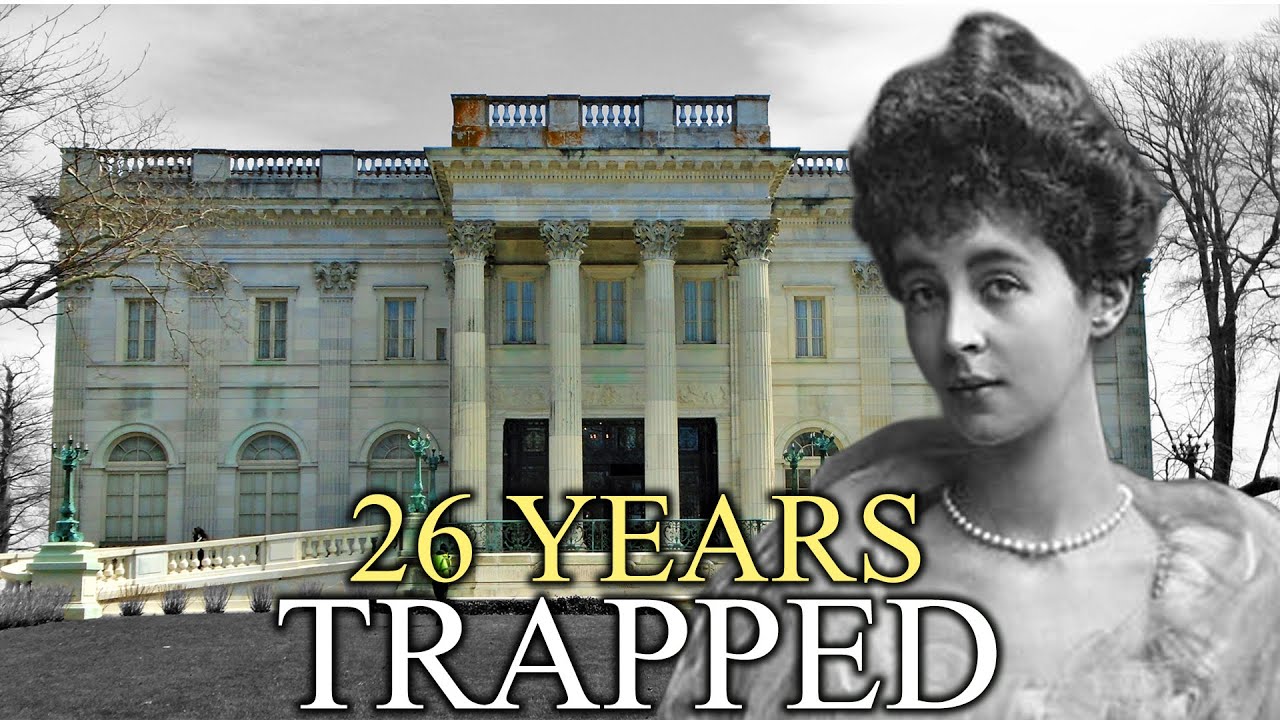
Five hundred thousand cubic feet of marble. Inspired by Marie Antoinette’s Petit Trianon at Versailles. Architect Richard Morris Hunt’s Beaux-Arts masterpiece: a summer cottage with fifty rooms requiring a staff of thirty-six servants. Marble House, completed in 1892 on Bellevue Avenue in Newport, Rhode Island, was designed to establish Alva Vanderbilt as American royalty.
Consuelo called it “like a prison. ”
The construction had begun in 1888, while Consuelo was still a child. William financed it, but Alva controlled every detail. She worked closely with Hunt, becoming one of the first women to collaborate so intimately with a major architect.
She called Marble House “a temple to the arts, a monument to culture and taste. ” To Consuelo, it felt like something else entirely. The house sits on 4. 4 acres, stretching from Bellevue Avenue east to thirty-foot cliffs overlooking the Atlantic.
The western facade features a curved marble carriage ramp ornamented with cast-iron lamps and a semicircular fountain. But it is the interior where Alva’s vision becomes overwhelming. Seven million of the eleven million dollars—almost two-thirds of the total cost—went to marble alone. The foyer features walls, ceilings, and a grand staircase of solid Italian marble.
Alva wrote that she chose the stone for its warm hue, calling the effect anything but funereal. The irony was unintentional. For Consuelo, the house achieved exactly that mausoleum effect, regardless of the marble’s tone. The grand salon stretches across the southern end of the house, designed for entertaining and covered entirely in twenty-two-karat gold.
The walls feature carved wood panels depicting scenes from classical mythology, inspired by the Galerie d’Apollon at the Louvre. The ceiling displays an eighteenth-century French painting of Minerva, surrounded by designs adapted from the Queen’s bedroom at Versailles. This was where Alva hosted the ball for the Duke of Marlborough in 1895, an event with three hundred guests that lasted until five in the morning, made possible by the house’s electric lights, still a rarity in Newport. But the room that matters most to this story is the Gothic Room.
Alva designed it specifically to house her collection of more than three hundred medieval and Renaissance art objects, purchased en bloc from the French collector Émile Gavet. The room was designed in Paris by the firm Allard and Sons, then shipped to Newport in crates and reassembled. Scarlet wall paneling. A carved stone mantelpiece copied from the Jacques Cœur House in Bourges, France.
Stained glass windows imported from Europe. An ornately ribbed stone ceiling reminiscent of a Gothic cathedral, creating an atmosphere both impressive and oppressive. The Gothic Room served as a private museum; students of art history made appointments to visit. Alva considered it the most significant space in Marble House.
She was right, but not for the reason she thought. This was the room where, in the summer of 1895, Charles Spencer Churchill would propose to Consuelo Vanderbilt. Consuelo’s bedroom was on the second floor, designed entirely by her mother without any input from the girl who would sleep there. Rich reds and deep walnut colors, more medieval than French, more austere than comfortable.
In her memoir, Consuelo wrote that she wondered whether her mother had wished her to feel like a medieval virgin immured in a convent. Even her most private space was Alva’s creation, Alva’s vision, Alva’s control made architectural. The house included elaborate dressing rooms, a spectacular staircase rising from the entrance hall, morning rooms and drawing rooms and dining rooms where chairs weighed seventy-five pounds each and required a footman’s help to move. Everything was imported, expensive, historically significant.
And surrounding it all was a high wall and heavy drapes that Consuelo specifically remembered: the wall keeping the world out, the drapes keeping the sun and the sound of the Atlantic surf at bay. The most beautiful house in America, and Consuelo experienced it as confinement. Before the Duke ever arrived, there had been another man. The single red rose arrived on her eighteenth birthday.
No card, but Consuelo knew who had sent it. Winthrop Rutherford had been careful all season, maintaining proper distance in public, but the rose was a private signal. He was declaring himself. For the first time in her life, Consuelo Vanderbilt made her own choice.
She chose him back. Winthrop Chandler Rutherford was exactly the kind of man Alva should have approved of. Born February 4th, 1862, he was the youngest son of Lewis Morris Rutherford and Margaret Chandler Stuyvesant, which meant he could trace his lineage to Peter Stuyvesant, the last Dutch Director-General of New Netherland, and John Winthrop, the first governor of Massachusetts. He was part of Ward McAllister’s “Four Hundred.
” He had graduated from Columbia College in 1884. Edith Wharton would later describe him as the prototype of her first novels. He was considered the handsomest bachelor in New York society, with impeccable breeding and substantial inherited wealth. The problem, from Alva’s perspective, was that he was not European aristocracy.
He had no title to offer. And Alva had already decided that Consuelo would marry into the British peerage. So when Consuelo and Winthrop began their courtship during her debutante season, they did it quietly, meeting when they could, corresponding when they could not. The proposal happened during a bicycle excursion on Riverside Drive in the summer of 1894.
Consuelo was riding with her mother and some friends, but Winthrop managed to draw back from the group, and in that brief private moment, he asked her to marry him. She accepted immediately. They agreed to keep the engagement secret temporarily. Consuelo was about to leave for a long European tour with Alva.
The plan was for Winthrop to follow them to Europe, and when they returned to America, they would announce the engagement properly. It never had a chance. Alva discovered the proposal almost immediately, though exactly how remains unclear. Perhaps someone in the riding party saw more than they should have.
Perhaps Consuelo’s face betrayed her. However it happened, Alva knew, and she moved swiftly. Suddenly, Consuelo found herself watched constantly. Alva intercepted her mail.
Winthrop was refused entry to the house. The European tour, originally planned as a broadening experience, became a forced separation designed to break the attachment. In Europe, Alva swept Consuelo through drawing rooms and ballrooms, introducing her to titled young men. Prince Francis Joseph of Battenberg proposed.
Consuelo declined. Other suitors appeared. Consuelo remained politely disinterested. And then Winthrop followed them to Europe, just as he had promised.
When Consuelo heard he was in Paris, she asked to see him. Alva forbade it absolutely. The confrontation happened back in New York. Consuelo, in what she later described as the bravest act of her life, told her mother directly that she intended to marry Winthrop Rutherford.
“I loved Winthrop,” she wrote in her memoir, “and I had promised to marry him. I would not break my promise. ”
Alva deployed every weapon she had. She told Consuelo there was madness in the Rutherford family, that Winthrop could not have children—lies designed to make the marriage seem impossible.
She threatened to have Winthrop murdered, a threat Consuelo apparently believed given her mother’s intensity. She painted the choice as one between duty and selfishness, between family and betrayal. Nothing worked. Consuelo held firm.
So Alva escalated. She took to her bed claiming a mysterious illness. Doctors were summoned, concerned relatives appeared, and then Consuelo’s aunt visited the girl’s room with devastating news: Alva had suffered a heart attack. Any further shocks might kill her.
The aunt looked at Consuelo with clear implication. If you persist in this engagement, you will kill your mother. Consuelo was eighteen years old. She had been raised to obey, conditioned from childhood to defer to her mother’s authority.
The steel rod had straightened more than her spine; it had taught her that resistance was painful and ultimately futile. And now her mother was dying, apparently, because Consuelo had dared to choose her own husband. She broke. That night she sent an emissary to Winthrop Rutherford with a message: the engagement was off.
Alva’s recovery was swift and miraculous. Within days she was out of bed, energetically planning the next phase of Consuelo’s debut season. The heart attack, if it had been real at all, had resolved itself the moment Consuelo surrendered. Years later, describing the incident in her memoir, Consuelo would make clear she believed her mother had faked the entire illness.
But in the moment, she had had no way to be certain, and the uncertainty had been enough. Winthrop Rutherford disappeared from Consuelo’s life. He remained a bachelor for years afterward, reportedly having affairs with married socialites, including Ava Astor, but never settling down. In 1902, at age forty, he finally married Alice Morton, daughter of former Vice President Levi Parsons Morton.
They had six children. Alice died in 1917. In 1920, Winthrop married Lucy Mercer, who had been President Franklin Roosevelt’s mistress. By all accounts that marriage was happy.
He died in 1944 at age eighty-two. But that was all decades away. In 1895, Winthrop simply vanished from Consuelo’s world, exiled by Alva’s will. The summer of 1895 stretched ahead.
Alva had already decided on the next candidate. She had already issued the invitation. The Duke of Marlborough was coming to Marble House. Charles Spencer Churchill inherited his title in 1892 at age twenty-one.
Along with the title came Blenheim Palace: 187 rooms on two thousand acres in Oxfordshire, England, and debts so severe that the family had spent years selling paintings, books, anything of value to stay afloat. His father had been largely absent. His childhood had been unhappy. But he was devoted to one thing: saving Blenheim.
Social conventions prevented a duke from working for a living. That left one option. He needed to marry money. His nickname was “Sunny,” though not because it reflected his temperament.
The name came from his courtesy title, Earl of Sunderland. Contemporaries described him as reserved, stiff, cold. He had his cousin Winston Churchill as a close friend, which suggests he had some redeeming qualities, but overall the portrait that emerges is of a man rigidly devoted to duty, uncomfortable with emotion, and utterly pragmatic about what his marriage needed to accomplish. The matchmaker was Lady Paget, born Mary Stevens, daughter of a socially ambitious American widow who had successfully infiltrated New York’s “Four Hundred.
” Lady Paget had married into British society herself and now acted as a transatlantic marriage broker, introducing American heiresses to cash-poor British aristocrats. When Alva Vanderbilt let it be known that she was seeking a titled husband for her daughter, Lady Paget knew exactly whom to approach. Alva and Consuelo had spent a weekend at Blenheim Palace during their European tour in 1894. Alva met the Duke’s aunt and uncle, Lord and Lady Lansdowne, and set her sights on Charles as the ideal match.
He had the highest-ranking title she had encountered. He had a palace. He had a pedigree stretching back centuries. And he desperately needed money.
The negotiation could begin. Charles had been seeing an Englishwoman, but he broke off that relationship. By the summer of 1895, he was ready to make the transatlantic journey. Alva invited him to visit Marble House in Newport.
The invitation was transparently purposeful. Everyone knew why the Duke was coming. Alva leaked the news to society columns. Speculation built.
Consuelo, still reeling from her forced separation from Winthrop Rutherford, understood exactly what was being arranged. The Duke arrived, and Alva waited for him to propose. He made her wait, perhaps enjoying the slight leverage his title provided, perhaps genuinely uncertain. Finally, in late summer, in the Gothic Room at Marble House—the room with scarlet walls and stone ceiling and stained glass blocking the sun—Charles Spencer Churchill proposed to Consuelo Vanderbilt.
She accepted. She had no choice. The Duke, when informed of the engagement, was already in love with someone else. Alva announced the engagement in September and immediately began leaking details to the press.
Everything was fodder for the newspapers: Consuelo’s trousseau, her jewelry, even the gold fastenings on her undergarments. Alva was orchestrating a publicity campaign, building anticipation for what she intended to be the social event of the decade. The wedding was set for November 6th, 1895. In the weeks before, Consuelo was kept under close watch.
Alva apparently feared she might try to run away, might attempt to contact Winthrop Rutherford one final time. Paris was a shopping expedition. The Duke took his new wife to the House of Worth, the most prestigious couturier in Europe, and had her fitted for an entirely new wardrobe. Consuelo stood for hours while seamstresses measured and pinned, creating the costumes a Duchess would need.
The Duke was dressing her “in the style that was expected,” as she would later describe it, transforming the American heiress into something suitable for English society. Every gown, every accessory was purchased with Vanderbilt money. Then came the jewelry. The Marlborough family gems had been sold off decades earlier to cover debts.
Now they needed to be replaced. Charles took Consuelo to the finest jewelers in Paris and began acquiring pieces worthy of a Duchess: pearls that had belonged to Catherine the Great, pearls that had belonged to Empress Eugenie of France, diamonds and sapphires and rubies, rebuilding the family collection one expensive piece at a time. Everyone understood that this was a financial transaction. The first glimpse of Blenheim Palace must have been overwhelming.
The building had been constructed between 1705 and 1722 for John Churchill, first Duke of Marlborough, as a gift from Queen Anne to celebrate his victory at the Battle of Blenheim. Sir John Vanbrugh had designed it in the English Baroque style: massive, ornate, more monument than home. It was the only non-royal building in England permitted to call itself a palace. It was also falling apart.
Paint was peeling, roofs leaked, rooms had been closed off to save heating costs. The Vanderbilt millions would reverse that decline, but restoration takes time. When Consuelo arrived in late 1895 or early 1896, she was seeing Blenheim at its lowest point. The physical discomfort was immediate.
No central heating. No hot water. The palace was drafty, cold, damp in a way that penetrated to the bones. Consuelo had grown up with modern American conveniences; now she was living in a building that predated the industrial revolution.
“From my window,” she wrote later, “I overlooked a pond in which a former butler had drowned himself. ” That was the detail she chose to emphasize—not the grandeur or the history, but the pond and the suicide. The dowager Duchess, the Duke’s mother, lived in a separate wing. She wasted no time beginning her own campaign, questioning Consuelo about whether she was pregnant yet.
The interrogations were regular, intrusive, making clear that Consuelo’s primary purpose was biological. She needed to produce an heir, preferably quickly. The servants were another challenge. Blenheim employed dozens of people, each with rigidly defined roles in a hierarchy Consuelo did not understand.
Early in her tenure, she asked the butler to light a fire in the drawing room. The man looked horrified. That task was beneath a butler’s dignity; he had to summon a footman. Consuelo had violated protocols she did not know existed.
The English upper classes made their views clear: Americans were nouveau riche, lacking breeding, lacking taste. Consuelo had money, which they needed, but that did not mean they had to like her. The Duke himself was absent much of the time, at least emotionally. He had his clubs in London, his sporting commitments, his obsessive focus on Blenheim’s restoration.
He had married Consuelo to save his ancestral home, and now he was doing exactly that, using her money to hire craftsmen, repair roofs, redecorate state rooms. The palace was coming back to life. The marriage was dead on arrival. At night, Consuelo was required to dine with her husband, just the two of them in that enormous palace, sitting at opposite ends of a long table eating in near silence.
“How I learned to dread and hate these dinners,” she wrote later. “How ominous and wearisome they loomed at the end of a long day. ”
By early 1896, Consuelo was pregnant. She had fulfilled the first requirement.
If she carried to term and delivered a healthy boy, she would have fulfilled the second. An heir and a spare, the English called it. The Duchess of Marlborough’s responsibilities were extensive and exhausting. Forty servants managed the interior of Blenheim Palace.
Fifty more maintained the grounds. All of them reported directly or indirectly to Consuelo. She had to oversee household accounts, plan menus, coordinate the complex schedules required to keep a palace functioning. She had to entertain: elaborate dinners for visiting royalty, weekend parties for aristocratic friends of the Duke, elaborate hunting parties where dozens of guests descended on Blenheim for days at a time.
She learned the protocol slowly, making mistakes, absorbing the elaborate rules that governed English aristocratic life. She mastered it eventually. She had to. There was no other option.
On September 23rd, 1897, she gave birth to a son. John Albert Edward William Spencer Churchill, Marquess of Blandford, would eventually become the tenth Duke of Marlborough. He was also godson to the future King Edward VII. Consuelo had provided the heir.
Thirteen months later, on October 4th, 1898, she gave birth to a second son, Lord Ivor Charles Spencer Churchill. The spare was secured. Consuelo coined the phrase “an heir and a spare” to describe what she had accomplished. Her primary biological duty was complete.
The social success came more easily than the personal happiness. English society, for all its initial snobbery, gradually accepted Consuelo. She was beautiful, well-educated, fluent in multiple languages, capable of intelligent conversation. She became friends with the young Winston Churchill, her husband’s cousin.
Winston was everything Charles was not: warm, engaging, intellectually curious. He would have inherited the dukedom if Consuelo had failed to produce a son, which gave their friendship an interesting undertone. But mainly, Winston was someone Consuelo could actually talk to. In 1902, Consuelo received recognition of her position.
She was chosen as one of four Duchesses to bear the canopy over Queen Alexandra at the coronation of Edward VII. It was an honor reserved for the highest-ranking women in the kingdom. Consuelo had arrived socially. She had proven she could fulfill the ceremonial requirements of her position.
And she was utterly miserable. The tenants on the Blenheim estate loved her. She visited their homes, inquired about their needs, provided assistance when families faced hardship. This was the part of being a Duchess that gave her purpose.
She became involved in charitable work affecting mothers and children: questions of sanitation, milk quality, water supplies, education. She corralled donors for the Young Women’s Christian Association. She used Sunderland House, the London townhouse her father had built for her and the Duke, as headquarters for a campaign against the trafficking of women forced into prostitution overseas. Sunderland House itself was palatial, a mansion on Curzon Street in Mayfair constructed between 1900 and 1904 at a cost of roughly two and a half million dollars.
The ballroom was so large it required two orchestras placed at either end to fill the space with music. Consuelo entertained there frequently, hosting intellectuals and artists alongside aristocrats: H. G. Wells, George Bernard Shaw, Sir James Barrie, Margot Asquith, Lady Astor, Lady Cunard, the Grand Duke Dmitri of Russia.
Consuelo had become what Alva had envisioned: an influential hostess with a defined social role. But being alone with her husband remained torture. The forced dinners, the cold interactions, the growing awareness that they had nothing in common except their sons and their shared responsibility for Blenheim. By 1901, gossip about the problems in their marriage had begun circulating in society.
They maintained separate residences: he at Blenheim, she increasingly in London. They fulfilled public duties together when necessary, then retreated to separate lives. The political work gave Consuelo purpose beyond her marriage. She supported free school meals for children, free health care, national insurance for workers, old-age pensions.
For someone raised in Gilded Age excess, she developed surprisingly liberal politics. She also became involved in the women’s suffrage movement, following her mother’s example. Alva had by then remarried Oliver Belmont, and after his death in 1908 had thrown herself into suffrage work. Mother and daughter, despite everything, found common cause.
Consuelo became a regular visitor to the Strangers Gallery in the Palace of Westminster, watching parliamentary debates, learning how English politics functioned. None of it—not the charity work, not the social success, not the friendship with Winston Churchill, not the two healthy sons—could compensate for being trapped in a loveless marriage. By 1905, both Consuelo and the Duke understood that their relationship existed in name only. They had stopped being intimate.
They lived separately. The emotional connection had never existed, and the physical connection had ended once the spare was born. Consuelo was twenty-eight years old. She had been married for ten years.
She had fulfilled every requirement placed on her. She had saved Blenheim Palace with her father’s money. She had produced two sons. She had become a successful Duchess.
And she could not imagine another forty years of this. Something would have to change. Something would have to break. In 1900, the Duke left for South Africa.
His cousin Winston Churchill was serving in the Second Boer War, and the Duke joined him there for six months. It was the longest separation Consuelo and Charles had experienced since their marriage, and for Consuelo, it felt like relief. With her husband away, she could breathe. During his absence, the French artist Paul César Helleu visited Blenheim.
He had been commissioned to paint Consuelo’s portrait. The sittings took place in the spring of 1900 with the Duke still in South Africa. The resulting portrait shows an intimacy between artist and subject that has nothing to do with professional detachment. Helleu’s daughter would later state her belief that her father and Consuelo had an affair during this period.
The evidence is circumstantial but compelling: when Helleu returned to Paris, Consuelo visited him there and sat for additional portraits. The affair that mattered most had already happened. Sometime around 1899, Consuelo had reconnected with Winthrop Rutherford. Four years after being forced to break their engagement, they had found each other again.
The details are murky; sources differ on how they managed to meet, how long they spent together. What is clear is that they spent two weeks in Paris, that the flame had never died, that Consuelo was still in love with the man she had been forbidden to marry. Consuelo confessed everything to the Duke. She told him she loved Winthrop and wanted to elope.
The Duke’s response was unexpected: he gave his permission. Perhaps he had already fallen for Gladys Deacon by then. Perhaps he simply recognized that the marriage was unsalvageable. Whatever his reasoning, he told Consuelo she was free to go.
She traveled to London to tell Winthrop the news. And Winthrop turned her down. The reasons remain unclear. Perhaps he had moved on in the four years since their forced separation.
Perhaps the reality of running away with a married Duchess seemed more complicated than the romance of their earlier courtship. The historical record does not provide clear answers. What is documented is that Consuelo made the trip to London expecting to begin a new life, and Winthrop rejected her. She returned to Blenheim devastated.
Years later, the Duke’s second wife, Gladys Deacon, would privately claim that Ivor, Consuelo’s second son, was likely Winthrop Rutherford’s child. The timing makes it possible. But paternity was never formally questioned during Consuelo’s lifetime, and Ivor was raised as a Spencer-Churchill. After Winthrop’s rejection, Consuelo sought comfort elsewhere.
She had an affair with Reginald Fellows, the Duke’s cousin. Later, she planned an elopement with Charles Vane-Tempest-Stewart, Viscount Castlereagh, who would eventually become the seventh Marquess of Londonderry. That plan apparently fell through as well. Consuelo was trying to escape, trying to find connection, trying to build something that felt like love.
None of it worked. The Duke, meanwhile, had fallen for Gladys Deacon. She was American, like Consuelo, but she had almost no money. What she had was beauty and intellect.
Marcel Proust said of her that her eyes were of a blue so pure they seemed to have been stolen from the sky, and that she was the most beautiful woman in Europe. The Duke was besotted. But divorcing Consuelo to marry Gladys would have been financially catastrophic. The Vanderbilt money was tied up in trusts and settlements that required the marriage to continue.
So the Duke and Duchess reached an unspoken agreement: they would remain married legally, but live separate lives. By 1906, the situation had become untenable. They formalized what had already been happening: an official separation. Consuelo left Blenheim and took up permanent residence in London at Sunderland House.
The Duke remained at Blenheim. They would see each other when their sons visited or when public duties required a joint appearance. Otherwise, they were finished. English divorce law in the early twentieth century was written by men to protect men.
A husband needed to prove only that his wife had committed adultery. A wife needed to prove both adultery and physical cruelty. The asymmetry was intentional, designed to make divorce nearly impossible for women while keeping it accessible for men. The Duke had no interest in divorce initially because of the financial arrangements.
As long as they stayed legally married while living apart, the money kept flowing. But in 1920, circumstances changed. The Duke wanted to marry Gladys Deacon. More importantly, he wanted to convert to Roman Catholicism, which required that his first marriage be not just ended but annulled, declared never to have existed in the eyes of the church.
Suddenly, he had motivation to pursue divorce. Legal reforms of 1920 made the process slightly less onerous for Consuelo: new marital law allowed wives to file for divorce on grounds of desertion, which was provable given their long separation. But she still had to provide evidence that the Duke had been unfaithful, and written proof that he had rejected her attempts at reconciliation. “Humiliation” was the word Consuelo used to describe the divorce proceedings.
After decades of maintaining dignity, she now had to air intimate details for the legal record. In 1921, the divorce was finalized. The Duke immediately married Gladys Deacon. Consuelo, after twenty-six years, was finally free to marry the man she wanted.
That man was Jacques Balsan. He had first seen Consuelo in 1894 at her coming-out ball in Paris, hosted by the Duke de Gramont. She was seventeen; he was twenty-six. He fell in love instantly, then watched her marry someone else.
For twenty-six years, Jacques had waited. He had become famous as an aviation pioneer: balloonist, pilot, one of the early men to work with the Wright brothers. He had served in World War I leading aerial reconnaissance for the First Battle of the Marne. He had built a career, lived a full life, but apparently never stopped loving Consuelo Vanderbilt.
On July 4th, 1921, they married. He was fifty-two, she was forty-four. By all accounts, it was a very happy marriage. Where the Duke had been cold, Jacques was warm.
Where the Duke had admitted he had married her for money, Jacques had loved her for decades. Where the Duke had made her dread the end of each day, Jacques made her happy. But they were not quite finished with the Duke. In 1926, he petitioned the Vatican for an annulment.
Roman Catholic canon law did not recognize divorce, but it did allow for annulment if a marriage had been forced, if one party had been coerced into marrying against their will. The Duke needed the annulment to formalize his conversion to Catholicism. And to get it, he needed testimony about the coercion. Alva Vanderbilt Belmont, Consuelo’s mother, provided that testimony.
By 1926, Alva was seventy-three years old, a widowed suffragette who had spent the last two decades fighting for women’s rights. She appeared before the English tribunal of Catholic priests and testified without apparent embarrassment: “I forced my daughter to marry the Duke. I have always had absolute power over my daughter. When I issued an order, nobody discussed it.
I therefore did not beg, but ordered her to marry the Duke. ”
It is one of the most extraordinary statements a mother has ever made about a daughter. Alva admitted to coercion, to abuse of power, to forcing a marriage her daughter did not want. And she did it casually, as if these were simple facts rather than confession of something that would be considered psychological abuse.
The tribunal granted the annulment on August 19th, 1926. In the eyes of the Catholic church, Consuelo’s first marriage had never existed. The annulment meant Consuelo and Jacques had to remarry in a Catholic ceremony, which they did. Two weddings to the same man, thirty-one years after weeping through her first wedding to a different one.
The Duke’s second marriage to Gladys Deacon did not go well. Within a few years, they separated, though unlike his first marriage, this one never ended in divorce. Gladys began injecting her face with paraffin wax in a misguided attempt to enhance her beauty; the procedure ruined her face. The Duke eventually evicted her from Blenheim, turning off the utilities to force her out.
At one point, Gladys dined with a revolver beside her plate. The Duke died in 1934, still legally married to Gladys, but living separately. He had gotten the heir and the spare from Consuelo, the money to save Blenheim, and two catastrophically unhappy marriages. Jacques Balsan came from a French textile manufacturing family that had supplied the French army with uniforms since Napoleon’s era; the famous blue horizon cloth originated with the Balsan company.
His brother Etienne was an early patron of Coco Chanel. But Jacques’s passion was aviation. At the 1900 Exposition Universelle, he held the record for highest altitude flight in a balloon. In 1909, he bought his first airplane.
In 1910, flying a Blériot monoplane, he won the Prix Daily Mail in Egypt. He held pilot license number 22, marking him as one of the earliest certified pilots in the world. While Consuelo was trapped at Blenheim, Jacques was becoming famous. And through all of it, he never forgot the seventeen-year-old girl he had seen at a Paris ball in 1894.
Their wedding in July 1921 was everything her first wedding had not been. No crowds of spectators. No magazine cartoons showing the bride in chains. No groom admitting in the carriage that he loved someone else.
Just two middle-aged people who had waited decades to finally be together. They made their first home in France. The Château Saint-Georges Motel near Dreux, about fifty miles north of Paris, became their primary residence. Consuelo had lived in palaces—Marble House, Blenheim, Sunderland House—and now she was in a château that was grand but manageable, beautiful but not overwhelming.
It was hers in a way the other houses had never been. She and Jacques entertained frequently. Winston and Clementine Churchill visited often. Other guests included writers, artists, diplomats.
The tone was intellectual rather than purely social. They also had an hôtel particulier in Paris at 9 Rue Charles Floquet, a faithful reproduction of an eighteenth-century mansion designed by architect René Sergent, paid for by Consuelo’s father back when she was still married to the Duke. In the early 1920s, Consuelo and Jacques built a villa at Eze-sur-Mer on the French Riviera, collaborating with Achille Duchêne, the landscape architect who had designed the water gardens at Blenheim Palace years earlier. The irony of hiring the same man who had worked on her prison to design her paradise apparently did not bother Consuelo.
The Eze villa became a retreat where they hosted the Duke of Connaught, son of Queen Victoria; Jagatjit Singh, Maharaja of Kapurthala; and Charlie Chaplin. Consuelo’s mother Alva bought a château near Saint-Georges Motel to be close to her daughter. By the 1920s, after decades of conflict, mother and daughter had reached something like peace. Alva had testified at the annulment hearing, admitting she had forced the marriage.
That testimony was probably the closest Alva would come to apologizing. And Consuelo, finally happy in her second marriage, seemed willing to forgive. Jacques supported Consuelo’s continued charitable work. In France, she focused increasingly on children.
She ran a summer play school for local children near the château. She built a sanitarium on the property large enough to house eighty-six children. During World War I, she had led a committee providing economic help through the American Women’s War Relief Fund. Between the wars, she worked with Winnaretta Singer Polignac to help build the Foch Hospital in Suresnes, a suburb of Paris, a 360-bed facility providing medical care for middle-class workers.
The hospital still operates today. Elsa Maxwell, the famous hostess, wrote of Consuelo: “Madame Balsan is a top-notch hostess and another of the rare ones who are liked for themselves alone. She needed neither title nor Vanderbilt money to win her social laurels. ”
In her autobiography, published in 1953 with the title “The Glitter and the Gold,” Consuelo made the distinction explicit.
Her time as Duchess of Marlborough was glitter: surface shine without substance. Her time with Jacques was gold: real, valuable, genuine. The book topped bestseller lists for twenty weeks. Some Vanderbilt family members criticized it as indiscreet, arguing that such revelations were not befitting the family name.
But Consuelo was seventy-six years old when the book was published. She had spent her youth and middle age protecting other people’s reputations and maintaining appearances. She had earned the right to tell her own story. Jacques Balsan died on November 4th, 1956, at their home at 1 Sutton Place in New York City.
He was eighty-eight years old. Less than two months earlier, Consuelo’s younger son, Lord Ivor, had died in London of a brain tumor at age fifty-seven. The son who might have been Winthrop Rutherford’s child, who had been raised as the Duke of Marlborough’s son, was gone. And now the man who had loved Consuelo since she was seventeen, who had waited twenty-six years to marry her, was gone too.
Consuelo divided her remaining years between New York and Southampton. Her eldest son, now the tenth Duke of Marlborough, invited his mother back to Blenheim Palace as a guest—not as Duchess, not out of obligation, but simply to visit. Consuelo returned to the place that had been her prison for ten years. She found it was just a house now: beautiful, historic, significant, but no longer capable of trapping her.
The power it had held over her was gone. On December 6th, 1964, Consuelo Vanderbilt Balsan died in Southampton, Long Island. She was eighty-seven years old. As stipulated in her will, she was buried at St.
Martin’s Church in Bladon, Oxfordshire, the parish church for Blenheim Palace. She chose to rest beside her younger son, Ivor, not in the Marlborough family vault. Her grave is a short walk from Blenheim’s main gates. She could have been buried in Southampton, where she had spent her final happy years.
She could have been buried in France, where she had been happiest with Jacques. Instead, she chose to rest near Blenheim, the palace that had been her prison for a decade. Perhaps she wanted to reclaim it in some final way. Perhaps she wanted to prove that, despite everything, she had survived.
Blenheim was now just architecture, impressive but powerless. The Duchess who had been a prisoner was finally, permanently free.