On the night of March 9, 1945, a B-29 Superfortress named Shady Lady limped back toward Saipan with 76 bullet and shrapnel holes punched through her fuselage. Two engines were dead, hydraulics failing, fuel leaking. The tail gunner was dead. Three other crew members were wounded.
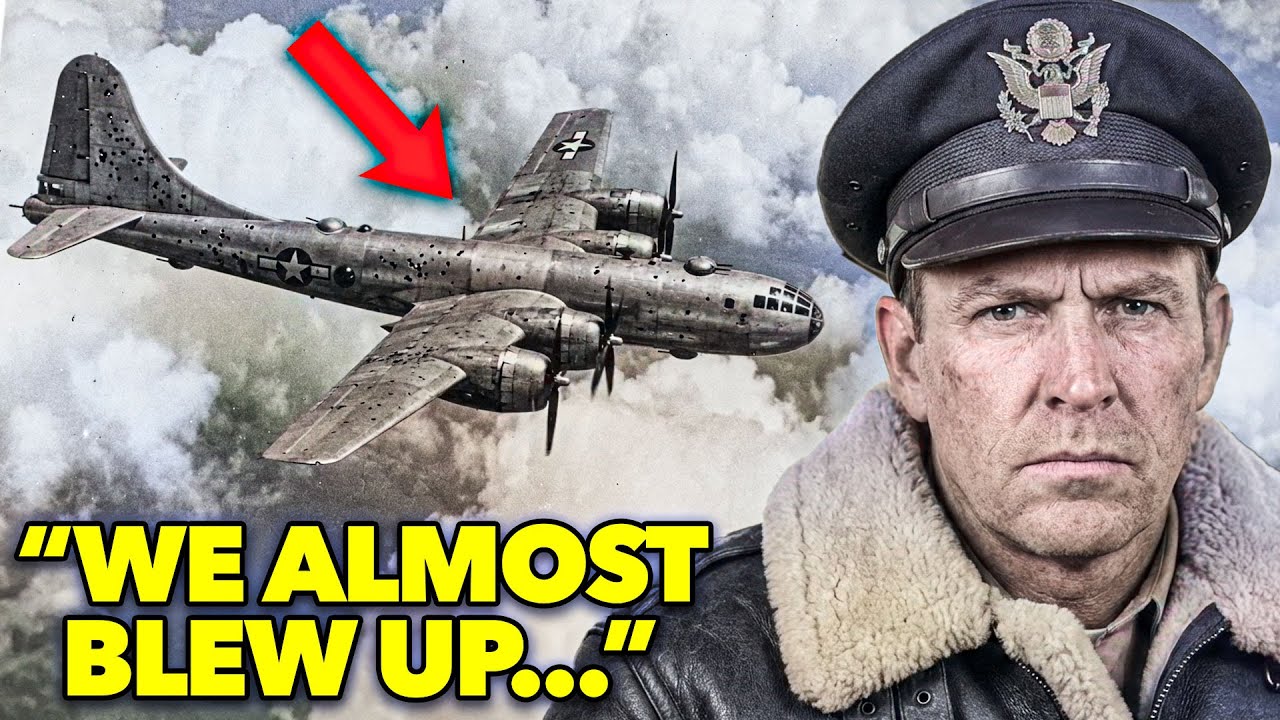
The pilot could barely control the aircraft. By every calculation, this plane should have gone down over Tokyo, crashed into the Pacific, and killed all 11 men aboard. But somehow, against physics and probability, it stayed in the air. That night began with the most dangerous bombing mission ever planned.
On Saipan, 334 B-29s prepared for takeoff. Their target was Tokyo, but this was not going to be a normal high-altitude precision bombing raid. General Curtis LeMay had made a radical decision. He ordered his bombers to fly low, between 5,000 and 7,000 feet instead of the usual 25,000 to 30,000, and to carry incendiary bombs instead of high explosives.
The goal was not to destroy specific factories or military targets. The goal was to burn Tokyo to the ground. Flying low meant the bombers would be within range of every anti-aircraft gun in Tokyo, and Japanese fighters could attack more easily without the bombers holding an altitude advantage. LeMay knew this would cost crews, but he believed it would work.
Tokyo was built of wood and paper. Incendiary bombs would start fires that would merge into a firestorm, an inferno that would consume square miles of the city. He was right, but the cost would be higher than anyone expected. The crew of Shady Lady took off at 5:36 p.
m. Captain Robert Rosenquist was the pilot, just 24 years old. This was his eighth mission over Japan. He had flown through flak before, dodged fighters, and brought his crew home safely every time, but he had never flown a mission like this.
His crew consisted of 11 men: co-pilot First Lieutenant James Mitchell, navigator Captain Donald Frell, bombardier Second Lieutenant Raymond Hall, flight engineer Master Sergeant Gerald Robinson, radio operator Technical Sergeant William Chen, radar operator Technical Sergeant Frank Sullivan, and five gunners—Staff Sergeants Thomas Ryan, Edward Morrison, Joseph Majeski, Carl Barold, and Robert Klene. The flight to Tokyo took six hours. Radio silence, navigation by dead reckoning and star sights, each crew alone with their thoughts about what was coming. As they approached the Japanese coast, Rosenquist could see the glow on the horizon.
Tokyo was already burning. The first wave of B-29s had dropped their incendiaries 30 minutes earlier, and the fires were spreading. That glow meant the bombing was working. It also meant every anti-aircraft gun in Tokyo was ready and waiting, every searchlight scanning the sky, every fighter pilot hunting for bombers.
The first indication of trouble came when Shady Lady crossed the coast. Searchlights immediately locked onto the bomber. Six beams, then ten, then more. The aircraft was illuminated like daylight.
Anti-aircraft fire started immediately, not distant puffs but close, point-blank range. Heavy flak bursting all around them. Shrapnel rattled against the fuselage like hail on a tin roof. Mitchell called out flak bursts, left side, right side, above them.
Rosenquist threw the bomber into evasive maneuvers, just enough movement to make the plane harder to hit. Below them, Tokyo was an ocean of flame. The incendiary bombs were working beyond anyone’s expectations. Fires merged into a massive firestorm covering square miles.
The heat was so intense that Rosenquist could feel it in the cockpit 6,000 feet above the city. Thermal updrafts bounced the heavy bomber around like a toy. That’s when the fighters hit. Japanese Army Ki-45 Tory fighters, twin-engine interceptors designed specifically to kill B-29s, dove to attack.
The first came from above and behind. Tail gunner Klene saw him coming and opened fire with his twin . 50 caliber machine guns. The fighter pulled off without firing, but he had been a distraction.
Two more fighters attacked simultaneously from different angles, both opening fire before the gunners could track them. Twenty-millimeter cannon shells and machine gun bullets ripped into Shady Lady’s fuselage. The left waist gunner, Sergeant Morrison, was hit in the shoulder and screamed over the intercom. The right waist gunner, Sergeant Majeski, fired back, but the Japanese pilot was already gone.
Another fighter attacked head-on, the most dangerous angle. The fighter and bomber were closing at combined speeds over 500 miles per hour, giving the pilot maybe two seconds to aim and fire. Bullets cracked through the nose section. Plexiglass shattered.
One round went through the navigation desk, missing Frell by inches. Another hit the radar equipment, showering Sullivan with sparks. The fighter flashed past, missing them by what felt like feet. Hall recovered and hit the bomb release.
Twenty thousand pounds of incendiaries dropped into the inferno below. Shady Lady, suddenly lighter, jumped upward. Rosenquist banked left and dove, trying to get out of the searchlights and flak. That’s when flight engineer Robinson called out the worst news possible: number three engine was on fire, number four was losing oil pressure, and they had fuel leaks in the left wing.
Robinson didn’t wait for orders. He activated the fire suppression system for engine number three. The fire went out, but the engine was dead. Engine number four was still running but losing power.
Oil pressure dropping meant bearing failure was imminent. Robinson began the shutdown procedure. Two engines out on the left side. Shady Lady immediately wanted to roll left and dive.
Rosenquist and Mitchell both stood on the right rudder pedal, fighting to keep the bomber level. The control yoke required both men’s strength to hold steady. But at least they were out of the searchlights. The bomber had descended into the darkness below the main flak belt.
Frell plotted a course for Saipan. Fifteen hundred miles, six hours of flying time if they could maintain 250 miles per hour. With two engines out, the B-29 was barely controllable, and they were still losing fuel. Rosenquist sent Robinson back to check on casualties and damage.
What Robinson found was horrifying. The tail section had taken a beating. Tail gunner Klene was dead, killed by a 20-millimeter shell that penetrated the tail turret. Morrison was wounded but conscious.
The fuselage was shot full of holes. Robinson counted quickly: 20, 30, 50. He stopped counting. Holes everywhere, some the size of fists.
Moonlight streamed through the perforations. Wind howled through the damaged sections. Critical systems were still functioning, but the aircraft was full of aviation gas fumes. One spark and the whole thing could explode.
Rosenquist made the decision. They were going home. No ditching unless absolutely necessary. No bailing out over the Pacific.
They’d fly this crippled bomber back to Saipan or die trying. The crew started the long process of stabilizing the aircraft. Frell calculated fuel consumption rates and determined they might just barely have enough to make it. Sullivan tried to repair the damaged radio.
Hall helped Morrison with his wounds. Rosenquist and Mitchell fought the controls, taking turns, one flying while the other rested for a few minutes. Neither could fly it alone for more than ten minutes without exhaustion. They descended to 3,000 feet, where denser air gave better lift from the damaged wing, but also left no margin for error.
If they lost another engine, they’d hit the water within seconds. Behind them, Tokyo burned. The firestorm was visible for over a hundred miles. Operation Meeting House would kill over 100,000 Japanese civilians and destroy 16 square miles of the city, becoming the single deadliest air raid in human history.
But Rosenquist wasn’t thinking about that. He was thinking about keeping his crew alive for six more hours. Hour one, the adrenaline started to fade. Robinson monitored the fuel gauges obsessively.
The leak in the left wing was slow but constant. His calculations showed they might run out of fuel 50 miles short of Saipan. They started throwing equipment overboard—ammunition, tool kits, anything not essential for flight. They couldn’t jettison Klene’s body; it was stuck in the tail turret.
They couldn’t reach Morrison either. He’d have to ride it out in the damaged waist section. Hour two, Sullivan got the radio partially working and managed to send a garbled distress signal with their approximate position and heading. No acknowledgement came back, but maybe someone heard it.
The two functioning engines were running hot, working overtime to keep the heavy bomber airborne with half their normal power. If either of those engines failed, they were done. Hour three, they crossed the halfway point. The fuel situation got worse.
Robinson’s calculations showed they’d run dry about 30 miles from Saipan. Close enough to see the island, not close enough to reach it. Mitchell suggested ditching near Saipan and hoping air rescue picked them up. Rosenquist rejected that.
Ditching a B-29 at night was nearly impossible; the bomber would probably break apart on impact. Better to fly until the engines quit. Hour four, the crew was exhausted. Conversation on the intercom stopped.
Everyone focused on their own survival tasks. Rosenquist developed a method to stay alert. He’d count to 100, check the instruments, count to 100 again, check instruments. The repetition kept him focused, prevented his mind from wandering into dangerous territory.
Hour five, they passed the point of no return for fuel. Even if they turned around, they couldn’t make it back to Iwo Jima, the emergency landing field halfway to Japan. Forward was the only option. Frell calculated they were 300 miles from Saipan, one hour at current speed, if the fuel lasted, if nothing else broke, if the engines kept running.
Hour six started with the right outboard engine, number four, beginning to fail. Not catastrophically, just a gradual loss of power. Oil pressure dropping, temperature climbing. Robinson tried everything.
Nothing helped. The engine was slowly dying. They might have ten minutes before it quit completely. Rosenquist asked Frell for distance to Saipan.
Two hundred miles, 40 minutes at current speed. The engine wouldn’t last 40 minutes. Mitchell suggested increasing speed, using the dying engine’s remaining power to get closer before it failed. The increased speed would burn more fuel, but if they were going to crash anyway, might as well get as close as possible.
Rosenquist pushed the throttles forward. The two functioning engines roared. Airspeed increased to 280 miles per hour. The airframe shook from the stress.
More rivets popped. More panels tore loose. The fuel gauges were nearly on empty. The dying engine’s temperature gauge went into the red.
Oil pressure down to almost nothing. Metal grinding on metal inside the engine cowling. The propeller started to slow, creating massive drag. A hundred miles to Saipan.
Twenty minutes. The engine seized. Number four stopped completely, the propeller locked in place, creating a massive air brake. The B-29 lurched left.
Rosenquist and Mitchell both fought the controls. The single remaining good engine, number one on the far left, was now carrying the entire aircraft. This should have been impossible. A B-29 could not fly on one engine, not with battle damage, not overloaded.
But somehow, using every ounce of strength, they held the bomber level. They couldn’t climb, could barely hold altitude, but they were still flying. Frell called out distance. Seventy-five miles.
Fifty. Twenty-five. Sullivan finally got clear radio contact with Saipan. He told them they were coming in on one engine with multiple casualties.
Emergency vehicles needed on the runway. The tower acknowledged. They were cleared for straight-in approach on any runway. Ten miles out, they could see the island.
The runway lights were on, blazing bright in the darkness. Five miles, the fuel gauge was reading completely empty. The engine should have quit already. It was running on vapors in the fuel lines.
Three miles, Rosenquist started a shallow descent. Too steep and they’d build speed they couldn’t control. Too shallow and they’d stall and crash short of the runway. One mile.
They were going to make it, unless the engine quit in the next 60 seconds. The engine kept running. By every mechanical principle, it should have stopped, but it didn’t. Rosenquist lowered the landing gear.
The hydraulics were damaged, but they worked. Three green lights. He couldn’t believe it. The runway lights rushed toward them.
Rosenquist pulled back on the yoke. The tail hit first, a hard slam, then the main gear. The bomber bounced, came down again, and stayed down. They were on the runway rolling fast, too fast.
Rosenquist stood on the brakes. The damaged hydraulics barely responded. Mitchell pulled the emergency brake. Metal screeched.
The bomber slewed left, tires smoking. They stopped 50 feet from the end of the runway. The engine quit, just stopped, out of fuel. If they’d been in the air, they would have crashed.
But they were on the ground. Nobody moved. Nobody spoke. They’d made it home.
The ground crews swarmed over Shady Lady as soon as the propellers stopped. The official count after careful inspection was 76 bullet and shrapnel holes. Some small 7-millimeter machine gun rounds, some large 20-millimeter cannon shells. They’d punched through wings, fuselage, engines, control surfaces, everywhere.
The left wing had taken the worst damage—32 holes—with stress fractures radiating from the bullet impacts. Engineers said if Rosenquist had tried any aggressive maneuvers, the wing probably would have failed. The fact that he’d flown gently for six hours had saved them. Klene had been killed instantly by a 20-millimeter shell that penetrated the tail turret and exploded inside.
Morrison’s shoulder wound was treated at the base hospital; a through-and-through bullet wound with no major damage. He’d recover fully and return to flight status in six weeks. Rosenquist was recommended for the Distinguished Flying Cross. The citation noted his exceptional skill in controlling a severely damaged aircraft for over six hours and executing a successful emergency landing on one engine.
The entire crew received Air Medals for the mission. Of the 334 B-29s that attacked Tokyo that night, 14 were lost. Shady Lady was one of many aircraft that came home damaged, but the official report called it the most extensively battle-damaged B-29 to successfully return to base during the Marianas campaign. The aircraft was repairable.
It took two months and essentially a complete rebuild, but the airframe was sound enough to return to service. Shady Lady would fly 19 more combat missions before the war ended. Rosenquist and his crew completed their tour of duty and went home. All of them survived the war.
They’d used up their luck on March 9, 1945.






