In 1972, on the eastern shore of Lake Turkana in Kenya, at a site called Kubora, a field worker named Bernard Neno noticed bone fragments eroding out of a hillside. When the pieces were assembled, the result was a skull cataloged as KNM-ER 1470. It dates to approximately 1. 9 million years ago.
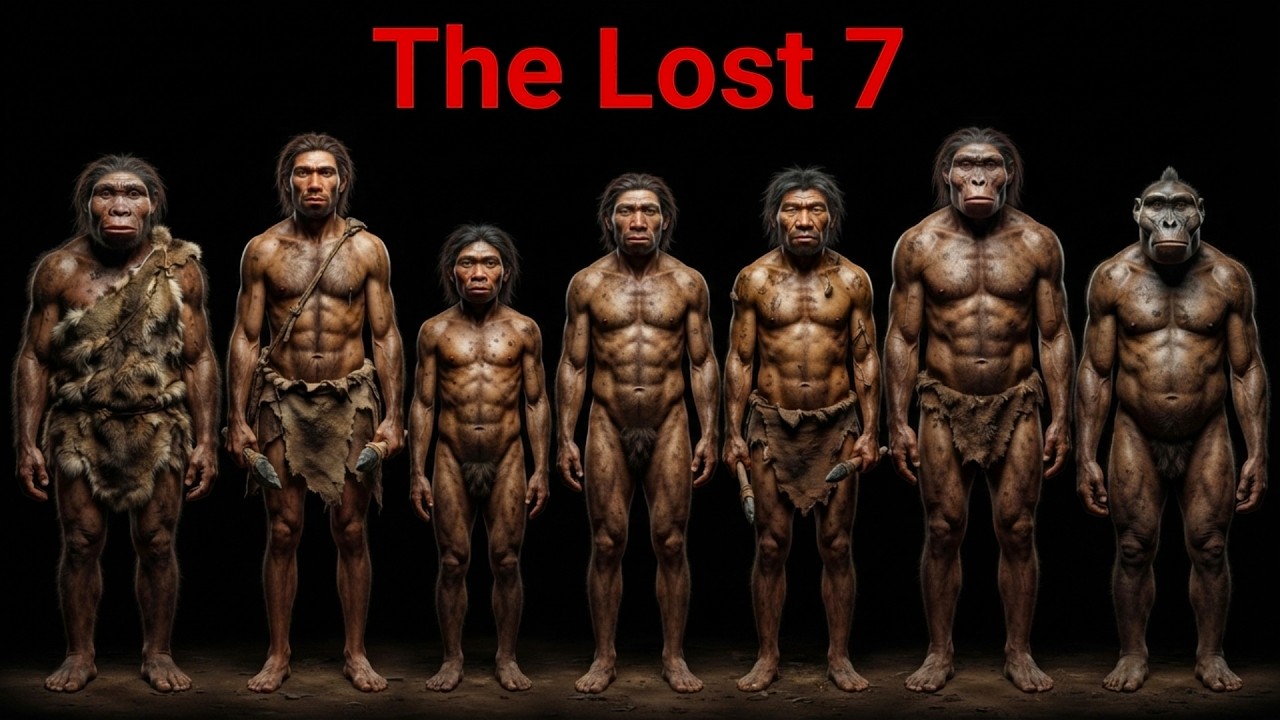
Its brain case measures roughly 750 cubic centimeters, far larger than Homo habilis, the species that was supposed to be the only human in that region at that time. Its face is flat, broad, almost vertical, nothing like any habilis specimen on record. Researchers gave it a species name: Homo rudolfensis. More than fifty years later, there is still no consensus on whether it is a real species.
Some call it an oversized habilis variant. Others point to the facial structure and say it cannot be the same animal. A third group wants to reclassify it outside the genus Homo entirely. Papers are still being published on all three positions.
Here is why that matters for the entire field: evolution has a rule. Two species cannot occupy a shared ecological niche for long. One outcompetes the other; one starves; one vanishes. But if rudolfensis is real, then two separate human lineages shared the same lakeshore, competing for identical food, facing the same predators at the same time.
The textbook model said that did not happen. Rudolfensis says it did, and the evidence has held for fifty years without anyone managing to explain it away or make it fit the old model. And if it could happen at the dawn of our genus, the entire tree growing from that point is far messier than the diagrams in any classroom have ever admitted. The next species should not exist for a different reason.
Not because two things occupied the same niche, but because what appeared was too advanced for its time. Homo ergaster first appears in the known record close to two million years ago in East Africa: tall, long-legged, narrow-hipped, with a body built for covering distance across open ground in a way no earlier hominin could manage. If you had seen one walking toward you across a savannah, you would have recognized the gait before anything else, because ergaster walked the way you walk. The stride, the arm swing, the upright carriage.
Your body plan, give or take a few proportions, appearing in Africa far earlier than the model said any such form should appear. Its brain was larger than anything that preceded it. Its limb ratios matched yours more closely than any other species alive at that date. If you lined up an ergaster skeleton beside yours in a museum, the similarities would register before the differences: the rib cage, the pelvis, the proportions of femur to tibia.
This was your body plan, walking through East Africa when the only tools on Earth were sharpened rocks. Ergaster was not another incremental step in a gradual progression. It was a leap, and it arrived far too early for any model to explain cleanly. And then the field quietly stopped using the name.
Over two decades, ergaster was folded into Homo erectus, a single label stretched across three continents and an almost incomprehensible depth of physical variation. An entire species absorbed into another name, not because the evidence changed, but because keeping the distinction forced a question nobody wanted to face: that the body you carry today may have its origins deep in the early Pleistocene, much earlier than any comfortable narrative allows. Think about what that means for you personally, right now, sitting where you are. Those legs you use to walk to your car, the proportions of your torso, the way your arms hang at your sides when you stand still.
All of those features may trace their origin not to the last one hundred thousand years of Homo sapiens, but to a population in East Africa that science decided to file under a different name and move on from. Ergaster did not go extinct in any biological sense. It was erased on paper, and the body it carried is still here. You are wearing it right now.
If ergaster should not exist because its body arrived too early, the next species on this list defies something harder to dismiss than timing. It defies the physical geography of the planet. Not in the abstract sense of being found farther than expected from its origin point, but in the concrete physical sense of being on the wrong side of an ocean that no known technology of its era could have crossed. In 2007, inside Kalao Cave on the Philippine island of Luzon, researchers pulled a single footbone from the sediment.
It was small, it was human, and it was at least 67,000 years old. That bone should not be there. Luzon has never been connected to the Asian mainland. Even at the lowest sea levels of the deepest ice ages, open ocean surrounded the island on every side.
Stand at the northern tip of Luzon and look toward Taiwan. That water is over a kilometer deep in places. Drop the sea level by 120 meters, the maximum drawdown of the most extreme ice age, and you are still staring at open ocean with no shore in sight. Whatever brought Luzonensis to that island, it was neither a landbridge nor any technology that the archaeological record has confirmed for any archaic human population anywhere on Earth.
In 2019, the full findings were published in Nature: seven teeth and six small bones from at least three individuals. Teeth among the smallest ever found in our genus. Finger and toe bones curved for climbing, resembling Australopithecus anatomy that disappeared from Africa well over two million years earlier. They gave it a name: Homo luzonensis.
Picture what this requires of you to accept. Sixty-seven millennia ago, a species with hands shaped for gripping tree branches was living in a cave on an island ringed by deep water. Your own species, Homo sapiens, was only just beginning to cross open water around that same period, and even those crossings remain debated. No watercraft from that era has been confirmed for any pre-sapiens population on the planet.
No raft, no dugout, no confirmed evidence of watercraft. And yet, luzonensis reached the island, lived on it long enough to leave remains from multiple individuals across multiple time periods, and died on it. The bones sitting in that cave are real. The ocean surrounding that island is equally real.
The distance between the two still has no confirmed explanation. Some researchers have proposed accidental rafting, a group clinging to storm debris and washed across by a typhoon. Others call that scenario statistically impossible for a breeding population. You would need not one individual to survive the crossing, but enough to establish a viable breeding population on the other side, carrying enough genetic diversity to sustain a lineage for tens of thousands of years.
The debate continues in the journals, and the species does not care about the debate. It is there in the sediment, impossible and real. Every species so far raises questions about classification, timing, or geography. What comes next is different, in a way that changes the tone entirely.
The bones themselves carry marks that tell you something about how these people treated each other. Inside a cave system called Gran Dolina in the Atapuerca mountains of northern Spain, a team reached a sediment layer dated to roughly 800,000 years ago. Inside it lay the remains of at least six individuals. Bones were scattered among deer and horse remains.
And on those human bones were cut marks, systematic and precise, concentrated in the same areas where butchery marks appear on the animal bones beside them. Long bones cracked open to reach the marrow. Researchers named the species Homo antecessor and published in 1997. The physical evidence pointed in one direction: these individuals had been processed for consumption by their own kind.
Before you assign a motive, consider the world they occupied. Consider Europe eight hundred millennia in the past. Glacial cycles burying the continent under kilometers of ice on schedules measured in tens of thousands of years. Prey populations collapsing with every freeze.
Herds thinning to the point where a band of twenty might go weeks without a successful hunt. Small bands of maybe fifteen or twenty people surviving in narrow windows between glacial advances. If you had lived among them, you would know every member of your group by name. Every face would have been familiar.
Every set of hands that fed the fire would have belonged to someone you recognized. Cut marks alone do not tell you why this happened, and they do not distinguish between ritual and desperation. What they tell you is that a human species inhabited Western Europe long before Neanderthals arrived, and that the physical record of their survival includes marks from stone tools scored into the remains of other humans. Not as an isolated event, but across multiple layers of sediment spanning what appears to be a long period.
According to the excavation team, this was not an exception but a sustained pattern. Protein analysis in 2020 confirmed that antecessor sits on its own branch of the human family tree, roughly equally distant from Neanderthals, Denisovans, and us. Not directly ancestral to any of the three living lineages. A separate line that walked Europe for hundreds of millennia, outlasting ice ages and prey collapses and whatever else the continent threw at it, and then vanished, leaving only cutmarked bone and a few teeth old enough to outlast DNA.
An entire long-lived branch of the human family erased so thoroughly and so completely that without those marks on those bones, nobody would know it had existed. If antecessor disturbs you because of what it did, the next entry disturbs for a different reason. In 1989, miners quarrying limestone near the city of Mengzi in China’s Yunnan province broke into a sealed cave and found fossils. Those remains sat in storage for nearly twenty years before an international team examined them in 2008.
What they found did not match any known population. The skulls had thick walls, prominent brow ridges, broad flat faces, and jutting jaws with no chin. Features that belong on a human from a hundred millennia or further back in time. But these bones date to between roughly 14,000 and 11,000 years before our era.
Let that number settle in your mind. When these individuals were alive, your ancestors in the Fertile Crescent were planting wheat. The last ice age was drawing to its close. Modern humans had been building permanent settlements for millennia.
And inside a cave in southern China, people with heavy-browed faces from the Middle Pleistocene were cooking red deer over open flame beside a mountain river. If you could walk into that cave fourteen millennia before the present, you would see people cooking meat over fire who looked like nothing you have ever seen in any living population on Earth, and yet whose DNA would be indistinguishable from that of any modern East Asian individual. The team that described these remains in 2012 called them the Red Deer Cave people. They stopped short of naming a new species because the anatomy was too unusual for comfortable classification, but the sample too small for certainty.
Then in 2022, ancient DNA from one individual confirmed the surprise went in the opposite direction. Genetically, this person was a modern human with deep East Asian ancestry, linked to populations that may have contributed to the peopling of the Americas. The bones looked archaic by every measure, but the DNA placed them squarely within modern Homo sapiens. Which means the range of what your species’ skull can look like is far wider than any model predicted.
Or somewhere in their ancestry, these people carried genes from an archaic population that left no other trace. Either answer rewrites what you think you know about what modern human means. Every species so far lived inside the genus Homo. The next one sat outside that genus entirely.
It was not even in our genus, and it may be the most alien human relative that ever existed. Paranthropus appeared in Africa roughly 2. 7 million years ago and persisted for over 1. 5 million years.
Three recognized species, all sharing one unmistakable feature: a skull built entirely around the act of chewing. Hold your hand against the top of your head and feel the smooth curve of the cranium beneath your skin. Now imagine a ridge of solid bone running from your forehead to the back of your skull, an inch high, anchoring jaw muscles powerful enough to crack through material that would splinter your teeth in seconds. That is what anatomists call a sagittal crest.
Paranthropus had among the most pronounced crests known in any primate lineage. Inside that armored skull sat a brain of roughly 500 cubic centimeters, smaller than the fist you are making right now. Pick up the heaviest stone you can grip in one hand and imagine closing your jaw on it with enough force to crack it. That is roughly the bite pressure that boisei could generate.
According to biomechanical models, its molars were four times the surface area of yours, flat grinding platforms designed for processing tough roots and bark hour after hour. For decades, the assumption was simple: big jaws, small brain, no tools. Then in October 2025, a team published the first hand bones ever linked to Paranthropus boisei, recovered near Lake Turkana alongside skull fragments from the same individual. The hand showed humanlike precision grip combined with gorilla-level power grasp.
A brain no larger than an orange connected to hands capable of shaping rock. The line separating toolmaker from plant chewer dissolved in that single publication. Your lineage chose tools and meat. Paranthropus chose massive jaws and tough plants.
Both answers worked side by side for well over a million years. Your species has been here for roughly three hundred thousand. Paranthropus lasted more than three times as long, then vanished for reasons that remain unconfirmed in the available evidence. If you could stand in the woodlands of East Africa one and a half million years back, you would see them low to the ground, heavy-jawed, grinding through a mouthful of sedge, while your direct ancestors crouched fifty meters away, smashing a femur against a rock to get at the fat inside.
Two radically different versions of the primate survival experiment. Close enough to hear each other chewing. Close enough to smell the same rain. Neither one aware that deep in the future only one line would remain.
What the existence of Paranthropus proves is that the path toward bigger brains and sharper stones was not the only available road. Another road existed, lasted longer than yours has, and ended somewhere no one can follow. The final species on this list spent eighty-five years hidden underground in northeastern China before giving the most mysterious branch of our extended family its first confirmed face. In 1933, a laborer building a bridge over the Songhua River near Harbin pulled a skull from the riverbed.
It was massive, with a brain case of roughly 1,400 cubic centimeters and a brow ridge heavier than any Neanderthal on record. He hid it from the Japanese occupation authorities by lowering it into an abandoned well on his family’s property. And for the rest of his life, he told no one what was down there. In 2018, the family opened the well and donated the skull to researchers.
Three years of painstaking analysis followed at the university. In 2021, three papers named it Homo longi, Dragon Man, and made a claim that sent a shock wave through the field: this species was more closely related to you than Neanderthals are. If true, it would have displaced the Neanderthal as your nearest known evolutionary cousin. That claim survived for exactly four years before collapsing.
In June 2025, researchers extracted protein and mitochondrial DNA from a crust of hardened dental plaque on one remaining tooth. The molecular evidence was unambiguous. The skull belongs to the Denisovans. The ghost lineage, identified from DNA in 2010 and known for fifteen years from barely enough bone to fill a cupped hand, finally had a face.
And that face was unlike anything anyone in the field had predicted from the genetic data alone. Not even close. Heavier, broader, and larger-scaled than Neanderthals. Built on a scale that no other archaic human species matched.
Shaped by environmental pressures unique to East Asia across hundreds of millennia. Consider the geographic range of what we now know about this lineage. A fingertip from a cave in Siberia near the Arctic Circle. A jawbone from a cave on the Tibetan plateau above 3,000 meters.
Another jaw dredged from the seafloor near Taiwan, confirmed as Denisovan through protein analysis in April 2025. And now a complete skull from a riverbed in northeastern China. From a latitude where winter temperatures fall below minus thirty. From arctic cold to subtropical forest.
From the highest inhabited plateau on Earth to former ocean floors. No other pre-sapiens lineage has been confirmed across that range of environments. Denisovans stretched across the full breadth of Asia, and the skull from Harbin tells you that at least some of them were built like nothing else in the known record. If your ancestry passes through East Asia, Southeast Asia, Melanesia, or the Pacific, a measurable percentage of your genome came from interbreeding with the species whose face sat buried beneath Harbin.
Their code is still running inside living cells, doing work that your own species cannot replicate on its own. Inherited from a lineage that no one could put a face to until a laborer’s family opened a well and told researchers where to look. Go back to the question from the opening of this story. What would it take for a species of human to be impossible?
The answer, after seven entries, is less than you think. A single lakeshore can hold two competing lineages that the rules say cannot coexist. A modern body can appear sooner than anyone expected. A landmass cut off by kilometers of open water can contain a species that had no confirmed way to reach it.
Bones can carry marks left by the hands of people who knew each other by name. A skull from the Middle Pleistocene can sit on the shoulders of someone alive when your ancestors were farming. A jaw built for grinding roots can be paired with hands capable of shaping stone. And the most complete skull of the most elusive human lineage can spend the better part of a century in a well, hidden by a man who trusted no one with what he had found.
Each of these species exists because someone dug where the models said there was nothing to find. And if you carry European or Asian ancestry, the story is not academic. Roughly two percent of your genome did not come from Homo sapiens. It came from Neanderthals, who disappeared forty millennia ago.
If your roots trace to Melanesia or the Pacific, as much as six percent came from the Denisovans, whose face sat hidden beneath Harbin. You are not a single thing with a single origin. You are a composite assembled from lineages that the textbooks drew as separate branches, carrying instructions written by hands that looked nothing like yours and shaped by environments you would not survive in for a week. The altitude gene in Tibetan populations, the immune variance across Oceania, the skeletal architecture patterns in certain East Asian groups—all of these trace to interbreeding events with species that most people have never heard of, millennia ago, in encounters that left no written record but left a genetic one that is still being read by every cell in your body.
Each of them, in its own way, forced the field to admit that the diagram it had drawn was incomplete. That diagram will never be finished. It was not designed to be finished, because the ground keeps producing evidence that no one predicted.
The next skull is already down there, buried in sediment or locked in a drawer or sitting in a collection that nobody has cataloged yet, waiting for the person who will pull it out and force the field to redraw the lines one more time, the way every discovery before it did.






