On October 4, 1991, the final worker at Schwinn’s Greenville, Mississippi plant punched out after assembling the last bicycle. He powered down his station, killed the lights, and secured the door. After 96 uninterrupted years of American production, Schwinn was no longer building bikes in the United States. The structure remains standing to this day, set back from Highway 82, hemmed in by tall weeds and broken asphalt, with a weathered sign near the entrance displaying a name that once carried real weight for millions of American households.
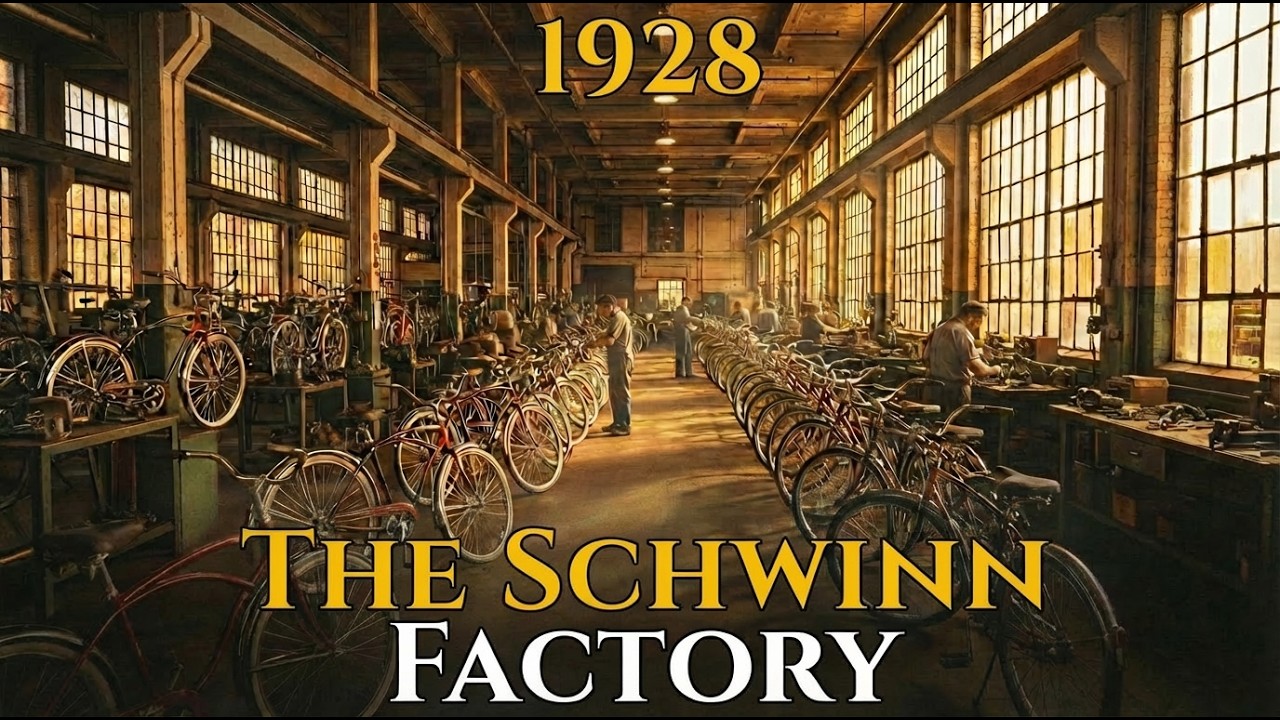
The road to that silence started over a century earlier in Chicago. Ignaz Schwinn landed there in 1891 — a 31-year-old trained machinist and bicycle engineer who had spent the prior decade laboring in German factories. He arrived with no capital and no contacts, but he brought expertise and a conviction that the American bicycle market lay wide open. He was correct.
The 1890s marked the peak of bicycle fever across the United States, as hundreds of small builders opened shops and cranked out bikes as quickly as they could piece them together. It was disorderly, fiercely competitive, and impossible to sustain. In 1895, Schwinn teamed up with a Chicago meatpacking financier named Adolf Arnold. Together they established Arnold, Schwinn & Company in a modest factory on the city’s northwest side.
From day one, Schwinn put quality ahead of quantity. Where rivals cut corners to boost output, he demanded precise welding, meticulous frame geometry, and rigorous component testing. He was cultivating a reputation built to survive the market crash that was bound to come. That crash arrived fast.
By 1900, bicycle sales in the United States had fallen by almost 25 percent. The automobile was establishing itself as a genuine mode of transport and was strangling the bicycle boom. Hundreds of builders went under, and whole blocks of bicycle plants in Chicago went dark. Schwinn didn’t merely endure — he exploited the moment.
As competitors dumped assets, he snapped up their machinery, patents, and tooling at bargain prices that existed only because so many others were frantic to get out. By 1908, he had purchased Arnold’s entire stake. Over the following decades, the Schwinn plant on Kildare Avenue in Chicago expanded into one of the most sophisticated bicycle manufacturing operations in America. It was a vast industrial complex that by the 1960s stretched across multiple city blocks and ran 1,800 employees over three shifts, around the clock.
At full tilt, Schwinn turned out more than a million bicycles annually. One in every four bikes sold in the United States bore the Schwinn badge. Quality control was almost fanatical. Each frame got inspected, every weld got tested, and any component falling short of spec was scrapped — even when that slowed the line.
That philosophy paid off because Schwinn had built a distribution network that rested entirely on reputation. In the early 1950s, Frank Schwinn, Ignaz’s son, now at the helm, made a call that shaped the company’s business model for the next thirty years. He quit selling to department stores. Most builders at the time sold wholesale to big retailers like Sears and Montgomery Ward, which slapped their own house labels on the bikes.
Frank spotted the flaw: when your product sits on a shelf beside cheaper options, you surrender control of pricing, presentation, and the customer’s experience. So Schwinn assembled a nationwide network of independent bicycle dealers — dedicated shops that stocked Schwinn as their main and frequently only brand. In return, dealers got protected territory and factory backing. The approach paid off handsomely for a long stretch.
In the early 1960s, Southern California kids began customizing their bikes — swapping in smaller wheels, banana seats, and high-rise handlebars — copying the chopper motorcycles their older brothers were building. Al Fritz, Schwinn’s R&D director, caught wind of the trend on a California trip and grasped right away that this was no regional craze. He brought the concept to management, which doubted it. Fritz kept pushing, and Frank Schwinn greenlit a small trial run.
In 1963, the Schwinn Stingray hit the market with a stubby frame, tall handlebars, and a banana seat. Between 1963 and 1968, Schwinn moved close to 2 million Stingrays — the best-selling model in company history and the bike that set the template for a whole generation’s idea of a children’s bicycle. For ten years, the Stingray powered Schwinn’s profits. But markets never sit still, and by the early 1970s the American bicycle industry was shifting in ways Schwinn was slow to notice.
The 1970s ushered in a new breed of rider. Adults wanted light road bikes — European-style machines with skinny tires, drop bars, and multiple gears, weighing half of what traditional American cruisers did. Schwinn did roll out some lightweight models, but they were half-measures. The company kept favoring its signature heavy-frame cruisers.
All the while, brands like Raleigh and Peugeot were shipping in European bikes, and Trek Bicycle Corporation, launched in Wisconsin in 1976, aimed squarely at lightweight, premium road bikes for well-heeled buyers, cultivating a segment Schwinn had mostly written off. The second missed chance was even starker. In the mid-1970s, Southern California kids began racing modified Stingrays on dirt tracks — a pastime that came to be called BMX. In 1975, Mongoose was founded expressly to build BMX racing bikes, with GT Bicycles and Diamondback following.
Schwinn viewed BMX and saw liability — fretting over injuries, lawsuits, and harm to its wholesome family image. The company steered clear of the category altogether. Then in 1974, something else happened that should have served as a warning. A man named Gary Fisher took an old 1937 Schwinn Excelsior — one of the hefty, rugged cruisers from the company’s earlier days — and outfitted it with multiple gears, knobby tires, and stronger brakes.
He raced it down fire trails in the mountains of Marin County, California, at breakneck speed, effectively inventing the mountain bike. Fisher brought his handiwork to Schwinn and demonstrated it for their engineers, who waved it off as ridiculous. A few years later, Mike Sinyard’s company, Specialized, started importing mountain bike components from Japan. In 1982, Specialized launched the StumpJumper, the first mass-produced mountain bike.
It was an instant hit, and within five years mountain biking grew from a niche pursuit into a mainstream sport. Schwinn at last joined the market in 1983 with a model called the Sierra, but by that point Specialized, Trek, and others had owned the category for years. Schwinn was behind, reacting, and chasing in a market it might have controlled. By 1980, the Chicago factory was in crisis.
The building itself was approaching 80 years old, with sections structurally failing, machinery obsolete, and fire hazards everywhere. The factory floor was incapable of producing the lightweight frames the market now wanted. Then the union walked out on strike, with workers pressing for higher pay, safer conditions, and investment in the plant. The Schwinn family had had enough of Chicago.
In 1981, they unveiled plans to construct a new factory in Greenville, Mississippi. The logic looked sound. Mississippi was a right-to-work state, unions would hold no sway, the state dangled tax incentives, and labor costs ran lower. The plant would be modern and able to turn out high-quality American-made bicycles.
Yet complications arose that apparently no one had examined closely. Greenville sits in the Mississippi Delta, 75 miles from the closest interstate highway. There was no sizable reserve of skilled metalworkers or welders, which meant Schwinn had to train its workforce from the ground up. The supply chain proved both convoluted and costly: parts made in Asia reached West Coast ports, were hauled by truck across the continent, and then carried down to rural Mississippi.
In June 1983, Schwinn shut down the Chicago plant. Termination notices went out to 1,800 workers. The final bicycle made in Chicago came off the line, got a tag, and was sent away. Eighty-eight years of uninterrupted manufacturing in the city came to an end.
Everything hinged on Greenville performing precisely as intended. The Greenville factory never earned a profit, not once in its whole operating history. The bikes it turned out were no notably better than the imports Schwinn was already purchasing from Taiwanese and Chinese manufacturers, and occasionally they were inferior. Mississippi wages were below Chicago wages, yet they remained 5 to 15 times higher than what workers earned in Taiwan or China.
Schwinn was paying American labor rates to build bikes that had to compete on price with Asian imports. By the late 1980s, the financial truth could no longer be ignored: the factory bled money every day it ran. By 1988, Giant Manufacturing in Taiwan was turning out 82 percent of Schwinn’s bicycles. Schwinn had grown almost completely reliant on one foreign supplier that was simultaneously bringing out its own branded bicycles and competing head-on with Schwinn in the American market.
Schwinn owed Giant and other Asian manufacturers enormous sums for bikes already built and shipped, and those manufacturers insisted on cash on delivery. Sales were in free fall. Market share had slid from 25 percent to 5 percent. Warehouses sat packed with inventory nobody had bought.
In August 1991, Greenville was shut down. Two hundred forty workers got 60-day notices. On October 4, 1991, the last worker assembled the final bicycle and locked the door. By 1992, Schwinn’s debt had climbed to $82 million, with losses of $50 million across the preceding three years.
On October 7, 1992, Schwinn sought Chapter 11 bankruptcy protection. Ninety-seven years as a family-owned business came to a close. The company that had weathered the bicycle bubble burst of 1900, the Great Depression, and two world wars was now insolvent. In January 1993, investor Sam Zell bought Schwinn out of bankruptcy for $40 million.
He tried to rebuild the company, but the damage ran too deep. In 2001, Schwinn filed for bankruptcy a second time. The company was ultimately sold to Pacific Cycle, later taken over by Dorel Industries of Canada, and in 2021 sold to Pon Holdings, a Dutch conglomerate. These days, Schwinn bicycles are made in China and sold mainly through big-box retailers such as Walmart and Target.
The brand survives, but it is simply a label attached to mass-market bikes with no link to the company Ignaz Schwinn founded in 1895. The Chicago factory on Kildare Avenue was torn down in the 1990s, and the site is now a residential development. The Greenville factory still stands, structurally sound, yet with broken windows, chained doors, and a faded for-sale sign. Schwinn had led for so long that it grew hard to picture not leading.
BMX seemed like a passing craze because Schwinn had watched crazes come and go. Mountain biking looked absurd because it didn’t match how bicycles had always been ridden. Every single decision looked justifiable at the moment, but taken together they amounted to a failure to see that the market itself was changing at its core.
The quiet factory in Greenville remains as proof that a reputation by itself won’t shield you, that being right for decades doesn’t ensure being right forever, and that the market pays for present value, not past contributions.
