In December 1893, two children were admitted to a regional asylum in the Scottish Highlands. The case register records a single entry for them. Not a page for each, but one entry, one name, one age, one line for the parish that sent them, and one column for the measurements taken on the day they arrived. The clerk who wrote that entry was not a careless man.
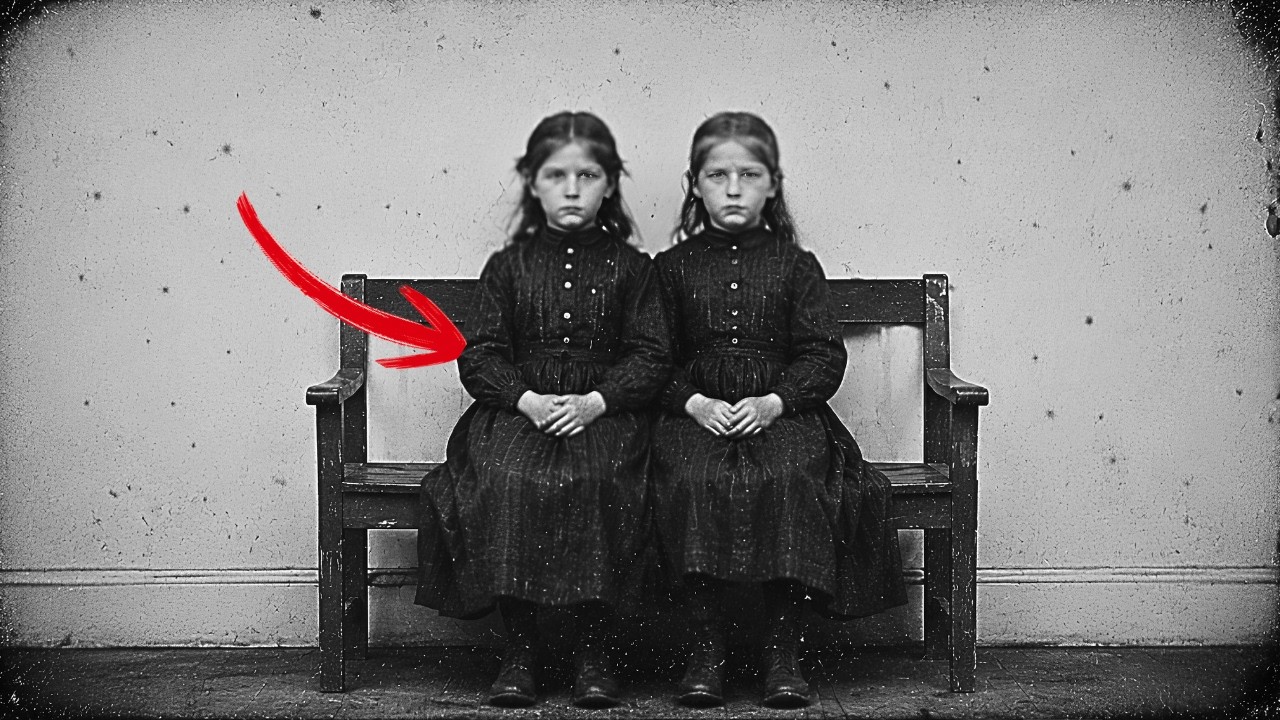
He kept that register for nineteen years, made four corrections, and initialed and dated every one of them because those were the standing instructions, and he was the type to follow instructions literally. The name he wrote was Margaret Wanless, aged nine, from Glensorrow. Before going further, it is worth noting where these papers sat and why almost no one had read them. When an institution like this closed, its records did not go to a logical place.
They were packed into boxes, the boxes went into a basement, and the basement flooded twice. What survived was not the interesting material. No one keeps the interesting material. What survived was the dull administrative backbone of the building.
Laundry ledgers, kitchen records, linen inventories, attendants’ daily logs, the papers that existed only so someone could be blamed if a bedsheet went missing. That is precisely why this case is provable. If someone wanted to conceal a child, the case register is the document they would have altered. No one thinks to alter the laundry ledger.
Glensorrow is a narrow place, running about seven miles between two barren hills, and in 1891 it contained forty-one households. The Wanless family was not from there. The name was Lowland, and they had come north two generations earlier. In a valley that size, that meant they had never fully arrived.
They lived at the far end, beyond the last improvable land, in a stone cottage with a single chimney. The father is a problem in the records from the start. He appears in the 1891 census as head of household, occupation laborer. He appears twice in the church session minutes, both times over the same boundary dispute about a fence.
Then his trail stops. There is no record of his death. No record of emigration. No application for poor relief, which would have happened had he become destitute within the parish.
He existed in the papers, and then he did not. The gap between those two states falls somewhere between 1891 and 1893. The mother died in February 1893. That record is complete and routine.
Cause of death, consumption. Age, thirty-four. The minister signed it. Everything on that page is exactly as it should be.
It is worth noting, because it proves the parish was perfectly capable of filling out a register correctly when it wanted to. The children remained. That is when the poor law machinery began to move, and it moved the way it always moved, slowly and then suddenly and completely. On 28 November 1893, the parish inspector of poor applied for the removal of two pauper lunatic children.
The removal order still exists. It is a printed form with handwriting in the blanks, and it is among the clearest documents in the entire file. It names two children of the Wanless family. It is signed by the inspector, witnessed, and stamped.
It gives a reason in the language standard for such orders: the children were found to be of unsound mind and without means of support, following the death of their mother and the disappearance of their father from the valley. It does not say when he left. It does not say where. Two children left the valley in a cart on 4 December.
Two children arrived at the asylum gate at midday on the following day. The gatekeeper’s log records two. The place they arrived at was not a hospital in any sense we would recognize. It was a district asylum built nineteen years earlier for the pauper insane of four parishes.
By 1893 it held about 240 people in a building designed for 180. It had a superintendent, a physician who attended twice a week, a matron, and about thirty attendants paid slightly less than a farm servant and working considerably longer hours. Children were not common there, but they were not unusual either. A child whose parents were dead and for whom no place could be found was a child who went where there was a bed.
Admission followed a fixed procedure, and that procedure is why so much detail survives. The gatekeeper recorded the arrival. The duty nurse recorded the ward allocation. The clerk recorded the case register data.
The photographer, if one was available, took a plate photograph. Each of these people wrote in a different register, and none of them saw what the others had written. That is the heart of it. Four independent records made within about two hours, by four people working from the same two children.
The gatekeeper wrote two. The ward allocation recorded two. The clerk wrote one name. From that afternoon onward, for the next three years, every document in that building that counted bodies counted two, and every document that wrote names wrote one.
In the spring of 1895, the superintendent attempted to fix the matter. What happened when he tried is the reason this case can be told at all. The ward list was taken each morning by the nurse on duty. It was a numerical count, not a list of names.
Its only purpose was to make sure the number of people in the ward at breakfast matched the number at dinner. For that ward, from December 1893, that count included two. The laundry register recorded the institution clothing issued and returned. Each patient had two sets bearing their case register number.
Two sets were issued under the Wanless number. Two sets came back every week for three years. The kitchen register recorded meals signed for by ward. It is the dullest document in the entire file and the most damning, because it was signed daily by a nurse who had no reason to think about it and never once questioned the figure.
Two meals a day for a thousand days. The bedding inventory recorded mattresses, pillows, and blankets in use, two. The one other record taken at the time of admission is the one that startles people. The asylum photographed every patient on entry.
It was a policy the superintendent had introduced six years earlier. The plates were numbered sequentially to match the case register. Plate 406 is the Wanless admission. It shows two girls sitting in the same dress against the same wall, shoulders touching, looking directly at the camera.
That is unusual. Children of their age and circumstances were usually told to fix their gaze on a mark on the wall instead. It is one plate. It carries one number.
On the reverse, in the clerk’s hand, is one name. The attendants were questioned about this. Not in 1893, and not because anyone was troubled, but in 1895, when the superintendent finally decided the matter had to be settled. He took statements, of which six survive.
They are not the statements of frightened people. That is the hardest thing to get past. Anyone who has read institutional testimony from that period knows what fear looks like on paper. It looks like terse answers and many instances of “I cannot say.
” These statements are not that. They are bored. One nurse said the two girls both answered to the name. When asked to clarify whether she meant that one of them answered to it, she said no, both of them.
When asked how she told them apart, a nurse named Chisholm wrote that she had never found any reason to. That sentence has been quoted more than any other from this file, usually badly, often with the implication that Chisholm was hiding something. She was not. She was answering a question she had never been asked before, and she answered it honestly.
The reason it had never been asked is that in the ordinary running of a ward of fifty-eight people, there is no reason to distinguish between two identical children, because nothing you do for one differs from what you do for the other. You feed them. You count them. You put them to bed.
The count is correct. It is worth describing that ward, because the ward is why none of this was noticed at all. Fifty-eight people in a room built for forty. Two rows of iron beds about three feet apart.
Two windows at the far end set too high to reach. The floor was scrubbed twice daily because the floor was the only thing anyone had time to keep clean. The attendants worked fourteen-hour shifts, each responsible for about twenty people. They were not nurses.
Most were farm or mill workers hired because they were physically capable of carrying an adult who did not want to be carried. In such an institution, a quiet child who ate, did not wet the bed, and caused no trouble was a child you were grateful for. You did not look at her closely. Examining her meant time you did not have, taken from twenty other people who were giving you trouble.
The physician’s notes were brief and more useful. Over three years, eleven notes in total were entered. Nine were routine. Two were not.
In June 1894, he recorded that the patient was in good physical health and that her condition, whatever he understood it to be, was unchanged. Then he wrote a sentence he did not expand upon and never returned to. He wrote that he had examined the patient on two occasions that week and found the same unresponsiveness on both. The same.
Not similar. The same. In the spring of 1895, the superintendent attempted to correct the matter. His justification is on record and it is purely administrative.
A commissioners’ inspection was approaching. Any institution with a discrepancy between its inmate count and its name register would face questions, and the superintendent was a cautious man who did not want questions asked. So in April 1895 he ordered the children moved into two separate wards at opposite ends of the building. He ordered that each be registered afresh as a new admission under her own name.
These were not difficult instructions. They were among the most routine things an asylum did. People were constantly being re-admitted, transferred, and re-registered. Staff did it without thought.
The new entries exist. There are two of them. Both are under the name Margaret Wanless. They are in different handwriting, written by two different clerks, on the same morning, in wards that could not see each other.
There is no record of anyone at the time thinking this unusual. The file does not tell us whether the clerks spoke to one another. It tells us what the superintendent did next. He did nothing.
His note on the following page reads, in full: “The matter is left as it stands. ” He remained in post for another eleven years and never wrote about it again. The commissioners came in July 1895, three months after the wards were separated. Their report survives because those reports were printed and laid before Parliament, and a printed document is far harder to lose than a basement of boxes.
The report runs to eleven pages on this institution. It complains about the drainage. It complains about overcrowding in the men’s ward and the quality of the bread. It notes with approval that the airing yards had been enlarged.
On the register, it says this: the books were found in good condition and the records regular. Two men walked through that building for a day and a half with the authority of Parliament, looked at a register in which the same nine-year-old girl had been admitted twice on the same morning to two different wards, and wrote that the records were regular. For the next twelve months the file falls silent in the way institutional records do, which is to say it keeps producing paper without producing information. Ward lists, laundry, kitchen, bedding, two, two, two, two, in an unbroken line through the summer of 1895, through the winter, into the spring of 1896.
On 11 April 1896, Margaret Wanless was discharged, recovered, into the care of Glensorrow parish. “Recovered” is a technical word here. It did not mean cured. It meant no longer in need of detention, a decision that was as much about the family as about the person.
The case register closes the entry with a single line and a signature. The gatekeeper’s log for that day counts one child passing through the gate. That is where the case stops being merely paperwork, because the other one did not stay inside. The ward list drops to zero.
Not to one, but to zero, on 12 April, the morning after. The laundry entries stop. The kitchen entries stop. The bedding inventory is adjusted and the adjustment is initialed.
The figure struck off the inventory is two. Anything that had been counted twice for three years was no longer counted at all after that morning. There is no transfer record. There is no death entry in the asylum register, and the asylum register for that year is complete, extant, and contains nineteen other deaths, every one fully documented.
There is no discharge entry for a second person. The count simply corrected itself overnight, from two to nothing, on the day one child left. Four months later, on 11 August 1896, the burial register of Glensorrow records the interment of a child of the Wanless family within the church walls, with full rites. That is the part hardest to accept.
Burial within the walls of a Scottish kirkyard with full service was not automatic and not cheap. It was a statement. It meant the parish had decided that the person being buried was one of their own, entitled to consecrated ground and to the words said over them. The register gives the date.
It gives the family name. It gives the age. It does not give a name. There is a space for it.
The column is as wide as the name columns on the rest of the page, and above and below it are entries written carefully in the same hand on the same day. The space is blank, and the minister who left it blank signed on the very next page. He was not a careless man. The burial ground still exists.
It is small and walled and difficult to reach. It holds eleven stones still legible and others that are not. There is no stone with the name Wanless. That is unsurprising and means nothing by itself.
The poor were not buried beneath headstones. The parish paid for the ground and the words, and the words are what the register records. The stone would have been the family’s concern, and there was no family left to see to it. There is one more place to look, and it was looked at without expectation.
The 1901 census was taken five years after the discharge. Glensorrow was enumerated across four pages, thirty-eight households by then, three fewer than a decade before. There is no Wanless name in it. Not one.
Not the girl handed into parish care in April 1896, not anyone else carrying that name, in that valley or the two valleys on either side of it. Whatever the parish did with the child it recovered, it did not keep her in Glensorrow, and it did not write down where she went. She exists in the gatekeeper’s log passing out through the gate, and after that there is no trace of her anywhere. What is certain is this: nine separate records, made by at least seven different people across three years and two institutions, none of whom had any reason to coordinate with the others, agree that two children were there.
A removal order naming two. A gatekeeper’s log counting two. A ward list. A laundry ledger.
A kitchen ledger. A bedding inventory. Two attendants’ statements. A grave in consecrated ground with the rites read over it.
None of them records what the second child was called. The case register gives one name, one age, one admission. Everything else counts two. The only document in that building meant to record a person’s true identity named Margaret Wanless.
After the morning of 12 April 1896, nothing that counts two exists anywhere in the file, and nothing in any record of the parish, the church, or the state explains what happened to the other child.






