On a March night in 1932, in a theater in Chicago, the most gifted dancer in America took her final bow. Adele Astaire was in her mid-thirties, adored on two continents, the brighter half of the most famous dance act in the English-speaking world, and she was walking away for good. She was leaving the stage to marry the son of a duke and go to live in his castle in the south of Ireland, a gray stone house above a river, and she believed she was walking into the happy ending every story had promised her. Within three years, that same castle would hold the graves of her infant daughter and her twin sons.
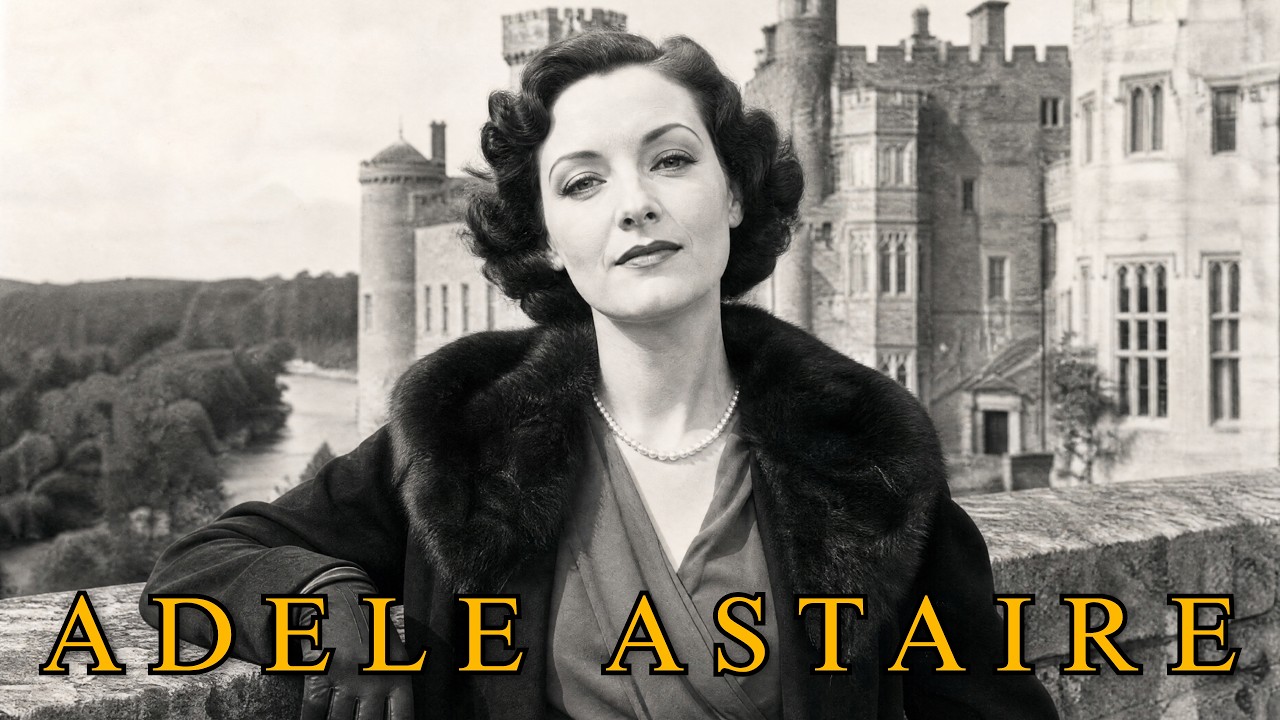
Before long, it would hold her husband, too. She had just made the most beautiful exit of her life, and she did not yet understand that it was an exit from everything. The family that would one day give the world Fred Astaire moved across a continent for the sake of his sister, because she was the one born with the gift. In a small house in Omaha, Nebraska, at the very end of the old century, a dancing teacher watched a small girl move across a bare wooden floor and understood that she was looking at something rare.
The girl was Adele Marie Austerlitz. She had a younger brother, quiet and unremarkable in those first years. When the family sold up and set their faces east, it was the daughter they were gambling on. The son came along, more or less, to keep her company and to make up the number of an act.
Their father, Fritz Austerlitz, was an immigrant who had crossed the ocean out of Austria and settled into the American middle of the country, working in the brewing trade as a salesman, a man of charm and small means. Their mother, Ann, was American-born, and hers was the harder and clearer ambition of the two. She saw what the teacher saw. She understood that a gift like her daughter’s was a perishable thing, that it had to be carried to the one city where it might be turned into a living before the child grew up ordinary.
So she packed two children and their few belongings and took them to New York. There she made herself their manager, their dresser, and their fiercest believer, living on almost nothing while she waited for the gamble to pay. There was no money behind them and no name to open a door. Everything glamorous that would ever come to Adele Astaire she would reach by her own talent or by the marriage she made, and none of it would come down to her by blood.
A dollar princess of the great American fortunes had a father’s millions under her whatever befell. Adele had a mother’s faith and her own quick feet and nothing else at all. They were children when they went to work, and the work was hard and strange. The act that carried them onto the small stages of the vaudeville circuit was a peculiar and charming thing: two well-drilled children dancing around a pair of enormous mock wedding cakes wired with electric lights and little musical bells, a spectacle of the kind that circuit audiences loved.
Adele was the star of it from the first hour. She had the timing and the mischief and the ease in front of a crowd that cannot be taught to anyone who is not born holding it. Her brother worked and worried and studied her and copied her. For years, the billing and the notices put her name first for the plain reason that she earned it.
It was a hard schooling, the vaudeville circuit, and it made her what she became. The life was trains and cheap rooms and show after show, a child performer moving from town to town across a vast country, learning to read a strange audience in a moment and to hold it whatever the seat prices or the weather or the act that had died on the same boards an hour before. Nothing in a theater ever frightened her after that. The ease that London would later mistake for the gift of a fairy was in truth the calm of a seasoned professional who had simply been working since she was a small girl.
She had earned her lightness the hard way, mile by mile, town by town, and it never once deserted her. Even the name was made. Austerlitz was heavy and foreign on an American marquee, so the children became the Astaires, a smoother and lighter thing, and their mother took the new name, too. A family remade itself the way the whole country was forever inviting families to remake themselves.
It nearly came to nothing more than once. The two of them grew at different speeds, and for a stretch the mismatch of a tall girl and a small boy made the act look wrong. The bookings thinned, and the family lived very close to the bone. Regulators who policed the use of children on the stage complicated every engagement.
A performers’ strike cost them work in a hard year. Far away in Nebraska, the brewing world that had fed them dried up when the state went dry, and the last thread of the father’s living was cut. A weaker mother would have taken the children home to safety and a normal life. Ann Austerlitz did not.
She held them in New York through the lean seasons on faith and stubbornness until a dance master named Aurelio Coccia took the pair in hand and rebuilt the act for grown performers. The thing that had merely been promising began to look like a future. Through all of it, one fact held steady, and the whole of this story turns on it. Adele was the one the audience came to see.
The critics wrote it down plainly. The people in the seats felt it in their chests. A drama critic gave it the phrase that would follow her the whole of her life. “Heaven,” he said, “does not send every generation an Adele Astaire.
” It sounded then like ordinary praise. In time, it would sound much more like a warning. By the time she was a grown woman, two nations had invented a word for the excitement that gathered around her, and princes stood in line to be introduced. The word was Astairia, and it belonged to London, and it named a particular happy madness that took the West End whenever the American brother and sister came to town.
But the road to that word had run through years of plain, grinding labor: the endless trains and cheap boarding houses and second billings of the American vaudeville circuit. Their Broadway life began in 1917 in a wartime review at $250 a week between the two of them, a sum that felt like a windfall to a pair of young people who had counted every coin of their childhood. The notices were kind. One New York paper called their dancing one of the prettiest things in the show.
From there, the climb went up a rung at a time, and the money climbed with it in a way that maps the rise exactly: $550 a week, then $750 on the road, then a full thousand when they took their first star billing in the early 1920s. Each figure was a little more comfort and a little more certainty, and every one of them stood on the same foundation: Adele out in front and the house adoring her. Somewhere in those years, she made the thing that everyone who saw her would remember. A piece of comic business she performed at the finish of a number, running in a wide circle about the stage as though she gripped the handlebars of an invisible bicycle, head down and elbows out, absurd and graceful in the same instant.
They called it the runaround. It was the way she left an audience, and audiences came to love the way she left almost more than they loved the way she came on. It seems a small thing to fix upon. Hold on to it anyway, because a woman whose signature was a beautiful departure is a woman whose whole life will turn on the exits she makes.
London made them fully. A show that had done only fair business in New York was carried across the Atlantic, given a new name, and opened to a standing ovation. It ran on and on across three different theaters while the city lost its composure. Into the middle of that craze walked the heir to the British throne.
The Prince of Wales, who would one day briefly be King Edward VIII, came to see her again and again, ten times by the count that survives, and he became a friend of the pair. There were nights when the future King of England rose in a nightclub and danced, and it was Adele Astaire who taught him the steps. She moved through all of it with the same ease she had carried as a child on the wedding cake stage, unbothered, quick with a joke, entirely and unmistakably herself. Her brother, in those same years, was hardening into the other thing he would always be: the shy and careful one, the perfectionist who came to the theater hours before he was wanted and fretted over every count and every angle until she teased him without mercy for it.
She had a name for his worrying. She called him Moaning Minnie. On the stage, the two of them were a matched and seamless pair, but their natures ran hard in opposite directions. He supplied the discipline and the precision.
She supplied the light. And in the eyes of London and of New York and of every city that had ever bought a ticket to watch them, the light was the thing that mattered, the thing they had come for. London took her up not merely as a performer but as a personality, which was a rarer and more dangerous kind of fame. The great hostesses opened their doors to her.
The bright young aristocrats of the age took her into their set, danced with her, put her at the center of their weekends and their jokes and their late glittering nights. An American girl of no family at all was moving as an equal through drawing rooms that had been closed to new money for centuries, on nothing but charm and talent and nerve, the way she had done everything since Omaha. It was intoxicating. And it was also, though no one saw it, the beginning of the road that would lead her out of the theater entirely, because a woman who is welcomed so completely into that world will one day be offered the chance to stay in it for good.
There was a shadow at the edge of those bright years. Early in the decade, the father died of cancer, far from the grand theaters where his children were becoming famous, a quiet man who had made his own smaller wager on them and did not live to see how large it would pay. Adele went on, because going on was what her family did. The shows grew bigger, the money grew larger, and the friendships reached higher into the great world.
And a few years further on, on a night in London, a young aristocrat she had not yet met would be introduced to her after the final curtain, and the direction of her whole life would begin very quietly to bend. The middle of the 1920s was the summit of the Astaire act, and the summit had a sound: the Gershwins. When George and his brother Ira wrote their first complete Broadway score, they wrote it for Adele and Fred to dance to. The show was a hit, and the salary reached $1,750 a week, more money in a week than the immigrant brewer’s daughter could have dreamed of in a year of her Omaha childhood.
The shows of those years carried names that would outlast everyone who danced in them. There was the one built entirely on that first Gershwin score, a triumph on Broadway and then again in London, where the king and queen themselves came to a performance, and where the Duke and Duchess of York, who would in time become King George VI and his queen, sent word inviting the American dancers to come and meet their newborn daughter: a small girl in a cradle who would grow up to reign as Queen Elizabeth II. A brewer’s daughter from Nebraska bending over the crib of a future queen, welcomed as an equal by the first family of the empire because of the way she moved across a stage. There has never been a clearer picture of what the gift had bought her.
Then came another Gershwin show, and in it Adele introduced a song that has never once stopped being sung in the century since. It ran on Broadway and crossed again to London. And it was there, on the closing night of that London run, that a young man named Charles Cavendish was brought around to meet her. He was the second son of the Duke of Devonshire, one of the oldest and grandest houses in all of Britain.
He was younger than she was. He had no title of his own to offer her, being a second son and not the heir, and no dark story attached to his name, only good manners and a quick charm and a particular way of looking at her that the noise of the great world had never taught her to expect. He was working at the time for the banking house of Morgan in New York, which meant that when her London run ended and she sailed home, he was already on the same side of the ocean. The thing between them had begun.
It would take years to ripen, and neither of them was in any hurry, and that slowness is part of what marks it as real. These were the golden years, and they had the particular quality of a golden hour when the light is at its richest and no one in it believes it will ever end. The parties ran late and the champagne never quite ran out. The songs the Gershwins were writing then are still the songs a certain kind of evening reaches for a century later, and Adele had them first, fresh off the piano, written for the way she in particular moved.
She was young and adored and rich and free, welcome in every great house on two continents, courted by a duke’s son, at the very center of the brightest social world the age had to offer. A fall is only as steep as the height it falls from, and Adele Astaire in the middle of the 1920s stood as high as a woman of her origins had any earthly right to stand. Everything after this is the long way down from that light, and she walked into it smiling, certain she was climbing higher still. There was one more summit to climb before she left the mountain.
The last show the brother and sister made together was a review that opened in the summer of 1931, a landmark of its kind, staged upon a great revolving turntable that swung whole scenes into view, the most modern machine the theater had yet produced. The notices were rapturous. The house was full every night. And at the exact moment the act stood at its most polished and most celebrated, Adele Astaire had already made up her mind to walk away from it, quietly, without drama, the way a sensible person leaves a party while it is still good.
For she had never, if the whole truth were told, entirely loved the life at all, and that is the secret buried under every bright thing in these years. To the world, she was the very joy of the stage made flesh. To herself, she was a woman doing a job she was extraordinarily good at and had somehow never quite chosen for herself. The travel wore on her.
The endless rehearsal wore on her. The whole business of it, she would say in later years, was an acquired taste, like olives. And so, when a duke’s son offered her a castle and a title and a life that had nothing to do with greasepaint and train timetables, the offer came down upon a woman who was already halfway through the door, coat in hand. She said yes.
And the most beautiful exit of her long career was about to become the exit of her entire life. The secret Adele carried through twenty-seven years of applause was that she had never truly loved the one thing she was best in all the world at doing. Millions of people would have traded everything they owned to stand where she stood in the light with a full orchestra beneath her and two continents at her feet. And she stood there night after night after night thinking in her honest moments that she could take the whole of it or leave it.
She loved her brother without reserve. She loved the money and the friends and the endless laughter that trailed after her. The performing itself, the actual nightly labor of being adored, she could have lived without and hardly noticed the loss. That honesty is the master key to the choice she was about to make, because it means the choice was not the sacrifice the world imagined it to be.
The world believed she was giving up the great love of her life for the sake of a man. She knew in herself that she was trading a job she was tired of for a life she had persuaded herself she wanted. From the outside, the two things look identical. They are not the same at all, and the difference between them is the whole engine of the tragedy, because a woman who leaves something she loves can console herself ever afterward that at least the love was real, while a woman who leaves for a dream that fails is left at the end holding nothing whatever in either hand.
The offer landed so hard because of the marriage she was being invited into and the strange country of the transatlantic match behind it. For two generations the traffic had run one way across the ocean. American fathers with new fortunes and no rank had sold their daughters more or less openly to European families with ancient rank and no cash. Dollars flowing east and titles flowing west.
Coronets bought with railroad money and steel money and mining money. The dollar princesses of that trade were bartered goods, and many of them were miserable, married to strangers for the sake of a name their fathers coveted. Adele was the mirror image of all of it. She was no heiress buying a coronet.
She was a self-made woman of the theater with her own money in her own name, choosing a younger son who had no fortune and no title to trade for no reason on earth but that she wanted him. It looked, from every angle, like the one clean and happy version of a bargain that had ruined so many other women. Her brother felt the coming loss of her far more sharply than she did. For the whole of his working life, he had stood at her side, the careful one beside the natural one, and he had built his very self in her shadow and been perfectly content there.
When people tried to imagine the act without her, they did not imagine him carrying on alone. They imagined the act simply stopping, the way a song stops. Even he, in his most private fears, did not rate his own chances very high. She was the one the notices had always loved.
The notion that he would become the most famous dancer of the entire century, that his very name would come to mean grace itself to people not yet born, would have struck every soul who knew the two of them, including Fred himself, as an absurd and impossible joke. What she saw in Charles Cavendish is not hard to understand once the noise of her fame is turned down. She had been wanted by millions, and being wanted by millions is a curiously cold thing. An ocean of admiration for a person no one in the crowd has actually met.
What Charles offered was the opposite and rarer thing: the steady attention of one man to the real woman inside the famous name, the person her mother knew and almost no one else was ever permitted to see. He did not need her to be the shining light. He seemed, if anything, relieved when she was not performing. To a woman who had spent her whole life being adored by everyone and truly known by almost no one, that quiet, particular attention must have felt like coming in out of a lifelong cold.
She did not marry a title. She married the first person outside her own blood who seemed to want the woman rather than the star. And there is nothing foolish in that, whatever it cost her in the end. Charles Cavendish was gentle and funny and finely made.
A son of one of the first houses of Britain, schooled at Eton and at Cambridge, a lieutenant in a tank regiment, a young banker in New York. He carried the name Devonshire, which in Britain was a passport through every door there was. He asked nothing at all of her fame and seemed faintly bewildered by the size of it. He simply, steadily wanted her, the particular her under the famous name.
The manner of the settling of it tells you everything about who she was. They were in a club in New York one night, a speakeasy known simply by its number on the street, called 21. And it was Adele, not Charles, who went down on one knee, breaking every rule of the age about who might ask and who might only be asked, and proposed marriage to him. He accepted her.
The most talked-about dancer in the English-speaking world had gone down on the floor of a nightclub and asked the shy son of a duke to be her husband, exactly the way she did everything else in her life: first, on her own terms, and with a joke half hidden inside the nerve of the gesture. The engagement was made. All that remained now was the final performance and the beautiful exit, and she meant to make the exit count. On the fifth of March in 1932, on a stage in Chicago, Adele Astaire danced in public for the last time, and the only question anyone in the business seemed able to ask was what her poor brother would ever do without her.
In that theater, on that night, she was the sun and he was the planet that circled her. The reviewers mourned her leaving as a loss to the whole art. The audiences could not picture the act going forward. A drama critic reached one final time for the line that had trailed her since she was a girl, that the heavens did not trouble to send a talent like hers to every passing generation, and the whole room felt the plain truth of it settle.
She left at the very top. She was not pushed out by younger and hungrier dancers, nor dimmed by a run of failures, nor broken by an injury that ended her before her time. She was celebrated, sought after, at the absolute height of her powers and her fame, and out of all of that, she chose this exact moment to stop. To leave at the peak is to fix yourself forever at your most beautiful, a photograph that never yellows.
It is also to stake the whole of your future on the belief that the next life will be at least as good as the one you are closing, because the door you are stepping through opens in one direction only, and it does not open back. The scale of what she surrendered is hard for the mind to hold all at once. She gave up a wage that had climbed as high as $1,750 a week at a time when families across her own country were standing in lines for bread. She gave up the friendship of kings and the songs of the finest composers of the age and a public that adored her without a shred of reservation.
She gave up the one thing she had built entirely by herself, out of nothing at all, in a small house in Omaha: the identity of Adele Astaire, the shining light, the girl heaven had gone to the trouble of sending. She folded the whole of it away like a costume at the end of a long run, and she did it lightly, almost gaily, because she was certain she was walking toward something better than any of it. Consider the wider frame around her leaving. For two whole generations, the daughters of America’s new fortunes had crossed the ocean the other way, from money toward rank, sold by ambitious fathers into the old families of Europe, so that steel money and railroad money might buy a coronet and a castle.
Those were arranged things, and many of the women inside them were unhappy for the rest of their lives, strangers in cold houses far from home. And here was Adele Astaire doing something that looked from a distance like the very same trade, an American woman marrying into a ducal house and going to live in a foreign castle. And yet it was the opposite in every part that mattered. No father had arranged it.
No fortune had been handed over for a title. She had her own money and her own fame, and she was giving them up rather than gaining anything by them, and she was doing it for a younger son who could offer her nothing but himself. It looked to everyone who watched her sail like the one clean and happy version of a bargain that had broken so many other women before her. That is precisely why the fall to come would land so hard, because she had seemed, of all of them, the one who had done it right.
The stage forgives long absences, and a great name can return to a warm welcome after years away. But Adele did not think of herself as stepping out for a while. She thought of herself as done, finished, retired for good at the height of her powers, and she meant it, and she kept to it with the same iron will she brought to everything. Most people are carried out of their prime by decline and are spared the choice.
Adele chose. She looked at the summit of her career and decided that the view from somewhere else would be better. And she walked, and she did not once in nearly fifty years of life after that dance in public again. The certainty of that is its own kind of courage and its own kind of gamble, and she staked everything she had built on its being the right call.
She boarded a great ocean liner bound for England, sailing away from the country that had made her toward the country that would keep her. On the crossing, she fell into the company of Winston Churchill, some years yet from his own greatness, and the two of them played backgammon to pass the long gray Atlantic days, an odd and companionable pair bent over the board while the ship heaved beneath them. When they reached England, the old statesman made himself useful by drawing the reporters off so that she could come ashore in something close to peace. It is a small comic scene, and it is very nearly the last laughter of her old life.
She had made her exit, and it was as graceful as the runaround: a beautiful departure that left the whole audience wanting more of her. But an exit, however lovely, is only the end of one thing, never the beginning of another. Somewhere ahead of her, past the docks and the boat trains and the long westward drive into another country, a gray castle stood on a height above a river in the south of Ireland, its great rooms cold, its plumbing older than anyone then living, its gates standing open and waiting for her. She was going to be its mistress.
She thought with all her heart that she was going home. The wedding present was a castle. When the new Lady Charles Cavendish arrived at its gate for the first time, she took the wheel of the car herself and drove straight across the threshold, laughing. They were married in the spring of 1932, quietly, in the private chapel at Chatsworth, the vast Devonshire house set in its English parkland.
With that marriage, Adele Astaire of Omaha became a daughter of one of the first families of Britain. She had a courtesy title now and a settled place in a world of dukes and duchesses and names that ran back before the discovery of her own country. And she had a great house of her own, because the father of the groom, the ninth Duke of Devonshire, made the young couple an outright gift of Lismore. Lismore Castle stood in County Waterford in the soft green south of Ireland, on a height above the River Blackwater, gray and turreted and immensely old, an Irish seat of the Devonshire family that had sat mostly shuttered and mostly unchanged since the century before.
It was the kind of place that photographs like a dream and lives like a trial, magnificent and difficult and cold in equal measure. To an American woman who had spent the whole of her life in modern hotels and warm bright theaters, it must have seemed at once a marvel and a mild madness. She did not flinch from it. She drove herself through the gate on that first day at the wheel of her own car, and the image of that arrival, a laughing woman steering herself across the threshold into her own castle, is the high golden point of the entire story, the last moment before the shadow.
She set about at once to make the great cold house live. Where a more timid bride might have been flattened by the sheer weight and history of the place, Adele met it with the brisk good sense of the country that had raised her. The castle had almost nothing in the way of modern comfort. Its rooms grand and freezing, its arrangements medieval.
And so she paid, out of her own theater money, to put in bathrooms and heat and the plain human decency of hot water, and she joked that these improvements were her dowry, the American star’s contribution to the ancient Devonshire stones. It was a good joke, and it was rather more than a joke. It was a woman pouring warmth and life and modern light into a house that had lain half asleep for fifty years, making it fit and ready for the family she was entirely certain would come to fill it. For a while, it was every single thing she had left the stage to find.
She had escaped the trains and the rehearsals and the nightly grind of being adored. She had a husband who plainly adored her, a title that opened every door in the kingdom, and a castle above a river in one of the loveliest corners of Ireland. The friends came over to stay, the bright clever people of two countries, and the rooms she had warmed filled up with talk and firelight and the clink of glasses late into the Irish dark. She was, by every account that survives, genuinely happy.
And her happiness had the particular unguarded brightness of a woman who believes she has chosen well and been proven right by events. The family she had married into was among the very grandest in the kingdom. The Devonshires had held their lands and their houses for centuries, at Chatsworth in the English hills and here at Lismore in the south of Ireland, and they moved through the country as few families on earth ever have, on terms of easy equality with kings. A family so old and so secure that it seemed nothing could ever touch it.
And yet the world of the great English houses was, even then, quietly beginning its long retreat: the taxes rising and the sons dying young and the old certainties thinning out year by year, so that Adele had joined an order at the very hour it was starting to fade. She could not have known that. To her, the castle and the name and the ancient parkland at Chatsworth were solid ground at last, the safe harbor after a life of trains and hotels. She had come, she believed, to the one thing in the world that would never move under her feet.
The trouble in this story does not arrive from the outside. It was there from the first day, sitting at the head of her own long table, charming and doomed together. Her husband was drinking, and the drinking was not the ordinary high-spirited excess of a young man of his class and his time. It was the opening chapter of a long dying, and she had married directly into the middle of it.
The beautiful castle she had warmed with such hope was going to be the room in which she was made to watch the dying happen. The husband who had seemed the answer to every question was, even as they spoke their vows in the chapel, a man being slowly and surely killed by drink. Charles Cavendish had been given every gift his world had to hand a young man except the single one that would have let him keep the rest of them. He was charming and kind and widely liked, and he was an alcoholic.
And in the Britain of the 1930s, in his particular class and country, that word carried no real treatment and very little understanding, only a slow and courteous closing of doors. The illness kept its own schedule, entirely indifferent to the castle and the title and the American wife who loved him, and it held to that schedule with a terrible and patient regularity, one year worse than the last. The isolation of Ireland made the whole of it heavier to bear. Adele had come out of a life of constant motion and constant company, of cities and crowds and the nightly roar of full houses, and she had traded the whole of it for a gray castle at the end of a long drive in a quiet green county where the rain came sideways off the river and the winter dark closed in early.
There was a real beauty in the quiet, and she felt it, but there was also nowhere at all to hide from what was happening beneath her own roof. In New York or in London, a marriage in trouble can lose itself in the sheer noise of a great city. At Lismore, there was only the wind and the water and a husband whose evenings grew steadily longer and steadily less steady, and a wife watching him from the other end of the table while the long Irish night pressed on the windows. The whole of it had to be hidden, which was its own slow labor.
In her world and her husband’s, a thing like this was not spoken of, not to friends and not to family, and least of all to the servants who saw everything and said nothing. There was a courtesy in that class that amounted to a kind of blindness, a shared agreement to look away from a man’s ruin so long as he kept up appearances at the dinner table. And Adele learned to work inside that agreement, to laugh at the right moments and steer the talk and cover the gaps. She had spent her whole life performing, and now the greatest performance of her career was the one she gave every single evening in her own dining room, playing the happy wife of a charming man while the charming man drank himself a little further out of her reach with each passing course.
No audience applauded that performance. No critic ever saw it. It was the finest and the loneliest work she ever did. She was not a woman built to give in easily, and she did not give in now.
She had spent her childhood being held in New York through the lean years by a mother who simply refused to quit the field, and she had inherited that spine entire. She managed the house and the guests and the public face of the marriage with the same competence she had once brought to a Broadway opening. She kept the charm alive at the dinner table, even as the man at the head of it was going under. And she pinned her hope, as women in her exact position had always been schooled to pin it, on the coming of a child.
A baby would change the whole weather of the house. A baby would give the gray castle a future and give her failing husband a reason to steady himself and give her own enormous gamble the ending it had promised her from the start. She fell pregnant, and the whole strained and hopeful household turned toward the coming birth as a cold country turns its face toward the first true morning of the spring. Everything in her life until now had trained her to believe a single article of faith: that wanting a thing hard enough and working for it long enough would in the end bring the thing to her hand.
She had wanted the stage, and she had taken it out of nothing. She had wanted this particular man, and she had gone down on one knee and asked him herself. She had wanted to warm the frozen castle, and she had warmed it room by room. Now she wanted a child more than she had ever in her life wanted an audience, or a wage, or a title.
And she carried that want through the long, slow months with the whole force of a will that had never yet, in thirty-odd years, been finally and flatly defeated. The nursery was made ready and waited upon. The hope was total and unshadowed. And the castle above the river, gray and patient and very old, prepared to teach the shining light of her generation the one hard lesson that neither her talent nor her nerve had any power to argue with.
In 1933, a daughter was born inside the castle walls, and she was gone before the day was out. The baby was born into a world of coal fires and doctors who could do very little in that time and that remote place for a newborn in trouble. She did not live to see the day out. And then the woman who had warmed the cold house for exactly this, who had put in the plumbing and made ready the nursery and pinned the whole of her second life on the promise of a child, was standing in her own great castle with her arms entirely empty.
There is a cruelty in the arithmetic of it that ought not to be hurried past. Adele Astaire had married into one of the largest fortunes in all of Britain. She was mistress of a castle and a daughter of the house of Devonshire, and she had money of her own besides, earned dollar by hard dollar under the lights of two continents. She could buy anything the age had to sell, and none of it, not the fortune, nor the title, nor the ancient name, nor the American money she had brought with her across the sea, could keep one small girl alive for a single day.
This was the great and secret weakness of all that gilded world, the thing its grandeur was built to hide. Wealth on that scale could raise a castle and light it and fill it with treasures, and it stood completely helpless before the death of one small child. In the 1930s, even the richest households in the land lost babies this way, because medicine had not yet learned the things that would later save such a child, and a duke’s daughter-in-law grieved over the same small coffin as a laborer’s wife. The gap between what Adele owned and what she could command had never yawned so wide.
She grieved the way the whole of her life had trained her to carry hard things: privately, with the surface held steady for the sake of the people around her. There was a small new grave now in the churchyard below the castle, the first of what would in time become a terrible little row of them. The gate she had driven through so gladly only the year before, laughing at the wheel of her own car, now led down by a short path to a place no bride ever imagines when she first crosses her own bright threshold. The beautiful exit from the Chicago stage had carried her, by way of a chapel and a castle, to a quiet Irish churchyard and a stone with a baby’s two dates cut close together on it.
The distance between those two pictures, the roaring theater and the silent grave, is the exact measure of what the fairy tale had already begun to cost her. There is a bitter turn in the small details of it. She had come to the castle and warmed it with her own hands and her own money, put in the bathrooms and the heat and the plain comforts, and joked that these were her dowry, the practical American gift to the ancient stone. She had done all of it for the family she was sure would fill the rooms.
The warmth was meant for children. The nursery she had made ready was the whole point of the warming. And now the house stood heated and comfortable and modern and empty, a home lovingly prepared for a family that the same house kept refusing to let her keep. The gift she had brought to the castle and the gift she had asked of it had come apart entirely, and she was left living in the comfortable rooms alone, above the little grave she had never once imagined when she crossed the threshold laughing.
And still, remarkably, she did not give up on the future. This is the quality in her that keeps the story from collapsing into mere sorrow: the sheer flat refusal at the center of her, the will that had held through the lean years and seized the stage and warmed the frozen castle room by room. She would simply try again. Within two years, she was expecting once more, and this time the doctors told her she was carrying not one child, but two.
For a few bright months, the anxious household turned its face again toward a coming birth and let itself hope, because hope was the one thing in all that castle the years had not yet found a way to take. Two years later she carried twins, two sons, and within hours of their birth the castle had taken the pair of them as well. They came prematurely, two boys delivered into the same cold rooms and the same helpless decade, and they did not outlive the day of their arrival any more than their sister had outlived hers. In the space of two short years, the churchyard below Lismore had gone from holding none of her children to holding all three of them.
A daughter and two sons, a whole family arrived and departed almost in the one breath, laid in the Irish ground within easy sight of the castle their mother had come there to fill with life and laughter. She was in her late thirties now, and she had buried three children in the earth of a country that was not her own, in the long shadow of a house that had been handed to her as a wedding gift. Search the record for her own words about those days, and you find almost nothing at all, because she was never a woman who spilled her private griefs into letters or interviews, and because some kinds of loss run too deep for the ready phrases people keep on hand for smaller sorrows. What survives is only the shape of the thing: three small graves in a row, a silence in the rooms where a nursery should have been loud, and a marriage that was by now coming apart at a speed that even her enormous and famous will was powerless to slow.
For her husband was dying, too, only more slowly than the children had. Charles Cavendish’s drinking, already serious on the wedding day, had deepened through every one of these blows into something entirely past reach or reason. He was in and out of hospitals. He went to nursing homes and to the spa towns of the continent where the fashionable cures of the day were tried upon him one after another and failed one after another.
His trouble was not his alone, and that is worth holding in view, because it belonged to a whole class and a whole moment. Across the great houses of Britain between the wars, a generation of well-born young men, raised to inherit a world that the war and the century were quietly dismantling beneath them, drank in this same slow and fatal way: idle and charming and doomed, and the drink killed as surely as any scandal ever did. Charles spent more and more of his time away from her, and when he was at home, he was less and less himself. The charming young man she had first met in London was vanishing inside the illness by slow degrees.
Adele had lost three children to the castle. Now she stood and watched it set about taking their father, one long evening at a time. The marriage that remained to her was emptying out from the inside, quietly, the way a house empties when the people in it stop coming down to the same rooms. There were no scenes, by every account, no great quarrels for the servants to carry into the village.
There was only a growing distance: a husband more and more often away or unwell or simply absent behind his own eyes, and a wife left more and more to herself in the vast cold rooms she had once filled with company. She had given up the loudest life in the world, the crowds and the friends and the constant motion, for this: for a silence at the heart of a marriage in a castle at the end of a long Irish road. Picture what the house held by the middle of that decade. Above the river rose the gray castle she had warmed and filled with clever friends, its bathrooms new, its great fires lit, its handsome rooms alive with talk on the good nights.
Below it lay the churchyard with her three children in it, side by side. And through its cold stone corridors moved a husband drinking himself steadily toward his own grave, and a wife who had given up the brightest career of her whole generation to be exactly here, in exactly this, holding a beautiful ruin together by the sheer unaided force of a will that had never once before failed to bring her the thing she set it on. The stage would have taken her back in a heartbeat. The world still ached to see her dance.
And she stayed in the castle with the three graves and the dying man, because she had married him, and because she was not a woman who ran. David Selznick, one of the most powerful producers in all of Hollywood, offered to make her a film star, and she looked hard at her own screen test and said that if her brother ever saw it, she was finished. It was the middle of the 1930s, and by now the strange inversion of the two of them was complete and past undoing. Her brother Fred, the worried one, the careful planet to her sun, had gone out to California and become the most beloved dancer in the whole history of the moving picture, his name already a plain byword for grace itself.
And into the grief and the isolation of Lismore there now came an offer that would have been a lifeline flung to most women in her position: a clean way back into the light, a whole second career waiting for her under the California sun. She said no to it. She sat through the screen tests and disliked what they showed her. And she made the joke that folded all her old spirit and all her new pain into a single breath.
“Oh, boy,” she said, “if my brother Fred sees this, I am gone. ” It was funny, the way she was always funny, and it was the exact truth. And underneath the joke lay the plain and painful fact that the woman once counted the greater talent of the two could no longer imagine standing in the light beside the thing her little brother had become. The world had rewritten the pair of them so completely and so fast that the shining light had grown afraid of her own shadow.
And there was a dying husband at home besides, and a wife of her kind does not sail for California while her husband is dying by inches in an Irish castle. She turned Hollywood down flat. And she went back to the gray house above the river. There was a further sting folded inside that refusal.
Every time her brother’s fame climbed higher, hers sank a little further from view, because the two of them had always been measured against each other, and the measuring did not stop just because she had left the stage. Fred was on every screen in the world now, the very picture of ease and elegance. And the more the public adored him, the more completely they forgot that there had ever been a sister at all, still less that the sister had been the one the critics loved first. She could have gone and reminded them.
The offers were real. The door to the light stood open, and she had only to walk through it to be seen again. And she would not. She had loved the stage least of anyone, and she had a husband dying at home.
And so she let the world go on shrinking her down to a footnote in her brother’s story. And she said nothing. And she went back to Ireland. There was one more loss still to come in the long tally of the empty nursery.
Near the very end of the decade, in her early forties, she conceived a final time, and that pregnancy ended too in a miscarriage. And with it ended the last hope she carried of ever holding a living child of her own. Four times she had tried to fill the castle with new life. Four times the answer had come back to her the same.
The daughter. The twin sons. And now this last unnamed hope. Every one of them gone into silence.
And the woman who had wanted a child more than she had ever once wanted an audience or a wage was left at the last to understand that this particular door had closed against her for good and would not open again. Weigh what remained to her against what the years had quietly carried off. She had a castle and a title and a share in a very great fortune, the whole glittering prize she had walked off the stage to claim for herself. And she had no living child, a husband disappearing into the drink, three small graves in the churchyard below her windows, and a career she had folded away forever in a country an ocean from her home.
The bargain she had struck on the floor of a New York nightclub, down on one knee, so young and so sure of herself, had been honored to the very letter, and it had delivered to her almost nothing that she had actually wanted from her life. A woman who owned every last thing the world agrees to call success had been stripped, one patient loss at a time, of very nearly everything that a person means when they say the word life. The war that emptied out the world gave her, of all improbable things, a reason to rise in the morning. And then, in its own time, it took her husband, too.
When the fighting came at last to Europe, Adele left the deep quiet of Ireland for London. And there, in a great city under the falling bombs, she found the first real purpose she had known since the night she walked off the Chicago stage. She went to work at a canteen for American servicemen near the heart of the city, a warm and crowded and brightly lit room called the Rainbow Corner. And she threw herself into the work of it with the whole energy of a woman who had at last been handed something plainly useful to do with her hands and her heart.
She wrote letters for the soldiers, as many as 130 of them in a single week. Notes home to mothers and wives and to girls in towns scattered clear across America, dictated by boys far from home to a woman most of them never once suspected had been, a decade before, the most famous dancer in the land. She danced with them on the canteen floor. She helped them find their way and spend their pay.
When the bombing grew worse over the city, she went in seven days out of every seven. And she signed the letters she wrote for those boys in a way that says everything there is to say about what the years had done to her, and everything about the grace with which she carried what they had done. She signed them, Adele Astaire, Fred’s sister. The star of the great act now naming herself by her brother’s fame in a soldier’s canteen in the blackout, having buried her three children, and doing it all without a single trace of bitterness in her, only the warmth that had always been the truest thing about her from the beginning.
The city she did this in was a city under siege. Night after night the bombs came down over London, and whole streets went to rubble. And the people who kept working through it did so in a strange fever of purpose that many of them would remember afterward as the most alive they ever felt. Adele had come to it out of the deep quiet of Ireland, out of a house full of graves and a marriage full of silence.
And the Rainbow Corner gave her back something she had lost on the day she left the Chicago stage: a room full of people who needed her, and a use for the warmth and the energy and the quick tongue that had once filled theaters. The homesick American boys who passed through that canteen had no idea, most of them, who was writing their letters home. They only knew that there was a bright, funny, kind woman who danced with them and helped them and treated them as though they mattered in the middle of a burning city far from everything they knew. For a few years in the worst of the war, she was happy in the way that only useful people are happy, and the happiness was real, and it had cost a world war to give it to her.
Then, in the spring of 1944, the long dying reached its appointed end. Charles Cavendish died at Lismore at the age of 38, killed at the last by the drink that had been killing him since before ever she married him. He had been her husband for twelve years, and they had been twelve years of a kind no bride standing in a chapel ever imagines for herself. And now he was gone out of the world.
They buried him at Lismore in the churchyard below the castle, close beside the three small graves of the children that he and Adele had lost between them. The family was gathered together again in the only way the castle had ever permitted them to be together, which was in the ground under the soft Irish rain, within sight of the gray walls that had taken every single one of them in turn. Think of the completeness of it and the horror folded inside the completeness. She had come to Lismore a bride to make a family in its rooms and fill its long future.
And now the whole of that family lay finished in a single churchyard: the daughter and the two sons and their father, four graves where there should have been a household, and Adele the only one of them left standing above the ground. She had wanted, more than anything, to give the gray castle a future. Instead, she had given it a family plot. Everyone she had crossed the threshold to make a life with was in the earth below her windows, and she was a widow in her forties with an ocean between herself and the country of her birth, alone in the rooms she had warmed for exactly the opposite of this.
There is no lower place in the whole story than the spring of that year: a woman standing in her own beautiful castle with every hope she had brought to it buried in the ground outside. She was a widow in her middle forties in a foreign country at war. Her children lay in the churchyard. Her husband was newly laid beside them.
The career she had given up was a full twelve years behind her now. And though the offers still came, though the great songwriter Irving Berlin wrote to her and asked her to return to the stage in a brand new show, she said no to that as well, because the woman who had loved the stage the least of anyone had no wish left in her to go back to it now. She was alone in the gray castle above the river with the graves below her and the war all around her, at the very floor and bottom of the whole long fall. Everything she had left the light to go and find had been given to her in turn and then taken away from her in turn.
And this, against every expectation, is not the place where her story ends. Charles had written a single quiet clause into his will that turned her one remaining comfort into a cage. For if she ever chose to remarry, the castle would that day cease to be hers. Whether he had meant the clause as love or as control, or as some tangled knot of the two that he himself could not have unpicked, no living person can now say.
But the effect of it was perfectly plain. Lismore, the wedding gift, the gray house she had warmed and filled and grieved in for a dozen years, was to pass out of her hands and into the hands of his young nephew, Andrew Cavendish, on the very day she took another husband. She could keep the castle and keep her lonely widowhood, or she could reach for a second life and lose the one place on the whole earth where her three children lay buried. That was the choice the dead man had left, folded up and waiting for her.
She chose life, in the end, because choosing life was always, at every turn, the thing she did. At the canteen in London, amid the letters and the dancing and the dark, she had met an American, a man named Kingman Douglas, a banker out of the world of Wall Street who had come to the war as an officer in Air Force Intelligence and would go on, in the years after it, to a senior post in his country’s Secret Service. He was steady where poor Charles had been fragile, solid where Charles had been sinking, and he offered her, at long last, an ordinary and durable happiness after so very many extraordinary sorrows. In 1947, she married him.
She gained three grown stepsons in the bargain, a living family at last. And she took the second chance with both of her hands and did not look back. It was, by every account, the right choice, and a happy one. Kingman Douglas was a grown and settled man of the world, and the marriage they made had none of the tragedy of the first, only the ordinary companionship that had been so cruelly kept from her for so long.
She stepped, in her fifties, into the plain good fortune that most people take for granted and that she had never once been allowed: a steady husband, a grown family around her, houses full of light instead of a single castle full of ghosts. She had earned it, if anyone ever earned such a thing, by simply surviving the years that had gone before, and she seized it without apology. The woman who had gone down on one knee in a nightclub two decades earlier still knew, better than almost anyone alive, that a person must reach for happiness with both hands when it finally comes within reach, because the world does not offer it twice, and it had very nearly not offered it to her even once. The price of it was the castle, and she paid the price, though she did not pay it without a quiet fight for what she might keep.
Lismore passed to the nephew, exactly as the dead man’s will had decreed it must. But she loved the place still, for everything it had cost her, and she arranged to hold on to a piece of it: the standing right to return for three months of every single year. A guest now in the very rooms where she had once reigned as mistress, a visitor to the churchyard where her children slept. It is a strange and moving accommodation to think on: a woman keeping a yearly appointment with the house that had ruined her, going back each summer to the scene of the whole beautiful disaster, unable to let go of it entirely and unable any longer to hold it at all.
The castle stayed in the Devonshire family, where the nephew in his turn would bring a bride of his own, one of the famous Mitford sisters, and it belongs to that family to this day, its rooms still holding here and there the warmth an American dancer once paid to put into its ancient stone. So the great gamble of her life closed out its accounts at last. She had left the certainty of the stage for the shining promise of the castle, and the castle had taken her children and taken her husband, and then, by a single line in a dead man’s will, taken even itself back from her the very instant she reached again for happiness. She would have the second marriage now, and the grown stepsons, and the long calm years still ahead of her.
But the gray house above the black water would never again be hers, and she would spend the rest of her life visiting it three months at a time, crossing that same threshold as a guest that she had once crossed as its laughing new mistress at the wheel of her own car. She had left the stage before the cameras ever came for her brother, and so the finer of the two Astaires is the one that almost no living soul has ever seen move. This is the last cruelty of her whole story, and it is a quiet one, delivered not by a castle or a will but by nothing more dramatic than timing. Fred went into the movies and was captured there forever, every step of him preserved, his grace poured into film that would go on playing for a hundred years and more.
Adele had walked away in 1932, before the great golden age of the movie musical had properly begun. And the live stage does not keep its dead the way the screen keeps them. A few scratchy recordings of her singing voice survive. Of her dancing, the very thing that had brought a prince ten times over to sit and watch her, there is essentially nothing left at all.
Search for her today and you will not find her dancing. You will find her brother instead, immortal, filling screen after bright screen, and set beside all his brilliance, a small footnote that he had a sister once in the theater before the cameras, who was said by every single person who ever watched the two of them together to have been the better of the pair. The greatest dancer of her generation is a rumor now, a thing attested only by witnesses who are themselves long dead, an absence at the very center of her own fame. She had made herself entirely out of nothing under the lights of two continents, and the lights went out and kept almost none of it.
What the castle had done to her children, the plain passage of time did in the end to her art. Her later life, at the least, was kind to her after so much unkindness. With Kingman Douglas, she lived between New York and Virginia and a bright house in the warmth of Jamaica. After his death, she settled in the desert country of Arizona.
And she stayed fierce and funny and thoroughly alive right to the very end of it. She jogged nearly every day of her life well into her old age. She kept up a running conversation with her brother across the miles between them: letters and packages and long telephone calls about the soap operas they both faithfully followed. The two children from Omaha, grown old together now at a whole continent’s distance.
That bond was the one thread that ran unbroken from the very beginning to the very end. Before the castle and before the title and before the graves, before London and the Gershwins and the kings, there had only been the two of them: a gifted girl and the little brother enrolled to keep her company, working out their steps in a small house while their mother watched and hoped. Everything else in Adele’s life had been given and then taken away: the stage, the husband, the children, the home, the very memory of how she moved. Fred was the one thing the years never took.
To the end of his life, he was still Fred and she was still Deli, and the letters and the parcels and the long foolish telephone calls about their soap operas were the last living trace of the act that had once made two nations lose their heads. The handful of old recordings that survive are nearly all that is left of the sound of her, and some of them catch the two children from Omaha singing together, her voice beside his. It is fitting that even in that scrap, she is not always alone. She was never, from the first, meant to be seen apart from him.
The tragedy is only that the world chose to see him without her. A stepson remembered that after any setback at all, she would soon enough be back on her feet and telling the world in blunt, soldierly language exactly what she thought of it. The high spirit that had gone down on one knee in a nightclub never once left her. She did, in the end, take one quiet step to save herself from total disappearance.
Late in her life, she gave her papers, her letters, and her memorabilia, the paper record of a career the film cameras had missed, to a great archive, so that scholars in some later century might at least read what could no longer be watched. It is a small and touching act: a woman who knew perfectly well that the moving image of her had been lost, gathering up the written traces so that something of the truth might survive the people who remembered her. It will never be the thing itself. No one will ever again see what the London audiences saw, or understand from a document why a prince came ten times to a theater.
But she made sure the record existed: the plain evidence that the girl from Omaha had been real, and had been for a while the brightest thing in two countries, whatever the century chose afterward to forget. And every summer, for as long as her body would carry her, she went back to Ireland, back to the gray castle above the river, back to the churchyard with its three small graves, back to the one place that had given her the very worst of everything and that she found, for all of it, that she could not stop loving. She returned year upon year, on into the late part of the 1970s, a guest for three months in the house that had once been her whole imagined future, the shining light of her generation keeping her long-standing appointment with the scene of her own ruin, until at the last the summers finally ran out on her. When she died in the desert country of Arizona in the winter of 1981, part of her was carried back to Ireland, and the story ended exactly where it had first begun, at the gate of the castle.
She was 84 years old. A stroke took her in a hospital far from the soft green county where her children lay. And when it was done, her ashes were divided as her long divided life had itself been divided: part of her to rest near her mother in California, and part of her to go home to Lismore. Home to the churchyard.
Home to the three small graves. Home to the gray walls above the Blackwater that had taken from her everything there was to take and had given her in the exchange a title and a dozen hard years. And here the story closes its own circle with an image almost too pointed to be true. When the family came at last to lay her Irish portion to rest at the castle, they found that they could not get in.
And so, the account that comes down to us goes, her ashes were thrown over the wall, because the woman who carried them could not reach the ground within. Remember only how she had first arrived. In 1932, she had taken the wheel of her own car and driven herself across that very threshold, laughing, the new mistress of the whole place, entirely sure that she had come home to her happy ending at the end of the story. At the last, she came back over the same wall as a handful of ash flung by a hand that could not work the gate.
Driven through it in triumph. Thrown over it at the end. The whole of her life lies in the distance between those two crossings of the one gray wall. She had made a life, from first to last, out of beautiful exits.
She had left the audience wanting more of her with a foolish and graceful run around the edge of the stage. She had left the theater itself at the very peak of it, before the applause could so much as begin to fade. She had left this whole world in a desert hospital and come back to Ireland as dust tossed over a wall. And each exit she made was more final than the one that had gone before it, until the girl heaven had troubled itself to send to one single lucky generation had gone so quietly out of the world that it kept her brother and forgot to keep her.
The castle took her daughter. The castle took her sons. The castle took her husband. The castle took itself back the moment she dared to love again.
And time, the last and patient thief of all, took even the memory of the way that she had moved. Weigh it honestly now, at the end of everything. She could have kept the stage forever: the fame of it, the songs written for her feet, the adoration of two whole continents and the friendship of kings. All of it indisputably and gloriously hers, and hers alone.
She traded the whole of it, one clear cold evening in Chicago, for a gray stone house and a courtesy title and a man that she truly loved. And the trade took her children and her husband and her home. And at the very last, took even her memory, and left the whole world remembering only the younger brother who had spent his life standing in her shadow. Fame she could have held on to for as long as she lived.
She chose the castle instead. And the castle erased her. That, in the end, is what glamour costs a woman when the fairy tale turns out to be the very thing that ruins her. Her brother, who owed her everything and said so freely to the end of his own days, put it more plainly than any of this.
“She was the whole show,” he said. “Deli was the shining light, and I was just there, pushing away. “






