The command came without warning. A guard’s hand closed around a prisoner’s arm, and she was dragged from the roll call line, past the barracks, toward the infirmary. Inside, on a table, another woman lay strapped down, and the SS doctors called her only one thing: an experimental rabbit. Syringes were prepared, substances injected—syphilis bacteria, tuberculosis strains, other diseases whose names the watching prisoner did not need to know.
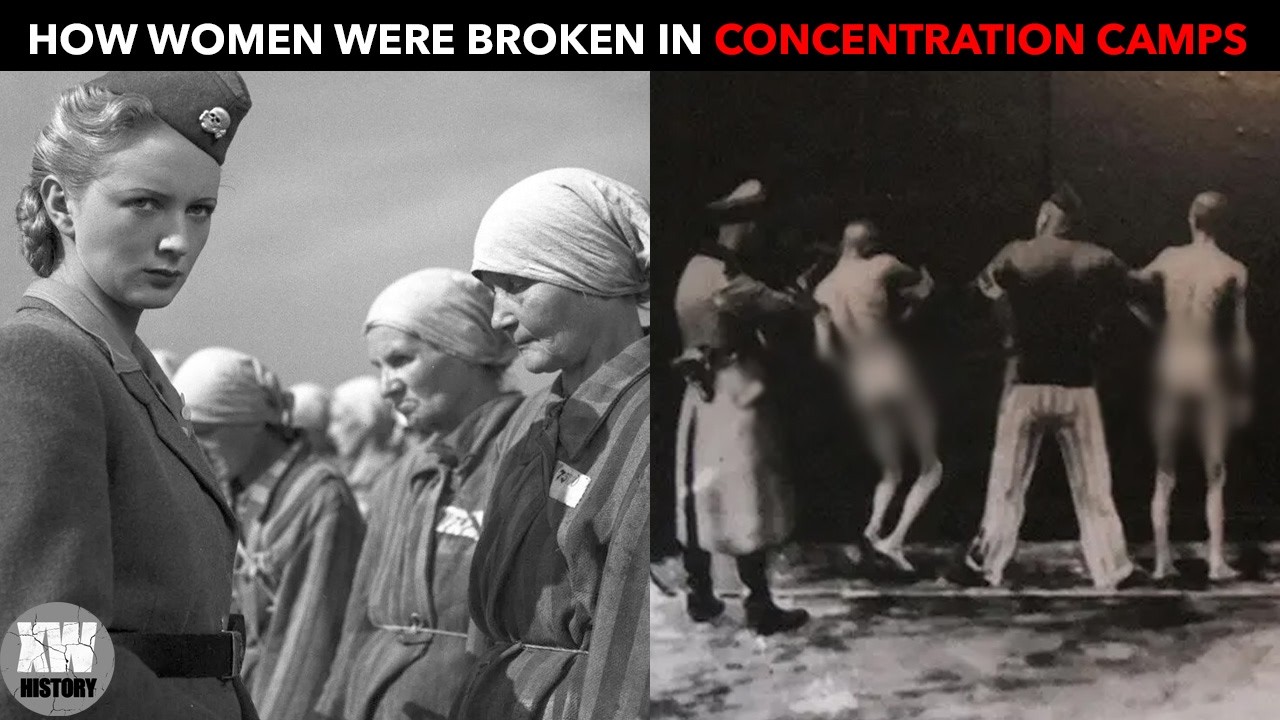
The doctor turned, looked at the new arrival, and told her she could be next. Not everyone broke here. But the camp was built on the certainty that someone would. Ravensbrück, the women’s concentration camp created by the Nazis in May 1939, stood eighty to eighty-five kilometers north of Berlin.
Much has been written about its regulations, about the male and female guards who ran it, and about the system of order that governed daily life inside the wire. But there is another aspect that demands closer attention, one that is as much psychological and philosophical as it is historical: the role of the prisoners themselves in the machinery of their own suffering. The guards and staff of the concentration camp relied on the assistance of prisoners. Some volunteered outright, offering themselves to the German masters of life and death.
These were organized into groups of so-called Hilfsvage—a term translated as “willing to help” or, in the heavier sense, as auxiliary camp police. Others became informants for the camp Gestapo, recruited under the threat of torture or death. The SS butchers simply broke those who were weaker in spirit, who could not endure the physical suffering and psychological pressure stacked against them. The recorded but incomplete number of prisoners who passed through Ravensbrück is put at 130,000 women and children, of whom an estimated fifty to sixty thousand perished.
They died of starvation, torture, medical experiments, the gas chamber, and execution. It was here, to Ravensbrück, that the surviving children from the Czech village of Lidice were sent in July 1942, after the Nazis destroyed the village in reprisal for the assassination of Reinhard Heydrich. And the camp’s own records show that during the period from September 1944 to April 1945 alone, 560 children were born within its walls. Fewer than a hundred of them survived.
The daily routine is known well enough. Wake-up came at four in the morning. Then came the so-called breakfast: an incomplete glass of cold, ersatz SS coffee, with some kind of rotten carrot or potato, no bread. After that, a roll call lasting two to three hours in any weather, during which the prisoners stood in ranks while the guards counted, recounted, and counted again.
Then they were assigned to work. The workday lasted from twelve to fourteen hours, with a short break for the so-called lunch: a cup of watery broth with a rotten turnip or potato peels. Late in the evening, after the work detail ended, there was another roll call, followed by ersatz coffee and two hundred grams of fried bread. Not everyone could keep up with this routine for long.
Spiritually and physically weakened, prisoners began to look for loopholes, some way to alleviate their plight. And that was exactly when they fell into the trap of the Hilfsvage or the overseers, who could offer leniency in exchange for betrayal—an unscheduled meeting with a child, an extra piece of bread, a piece of sugar. The grueling, exhausting labor that lasted for hours, the terrible nutrition, the complete dependence on the whims of overseers and volunteers, forced the weaker individuals into a hard choice: preserve one’s human dignity, or sink low and become scum. Ravensbrück had another distinct role.
It housed a school that trained female guards for other concentration camps. On the prisoners of Ravensbrück, practical training courses were held. Many future executioners were brought up here, women who later oppressed the prisoners of Auschwitz, Treblinka, Mauthausen, and other camps. The camp Gestapo attached great importance to recruiting informers.
In the presence of the Hilfsvage, who were well known throughout the camp, no conversation was possible. A single guarded word could be reported, twisted, and returned as an accusation. There was a reason for this vigilance. Among the imprisoned women of the concentration camp were many members of leftist parties, including Communist parties, active trade unionists, as well as Soviet prisoners of war, whom the Germans almost equated with Communists.
These were people with convictions, and more important, they were capable of conducting propaganda, explanatory, and organizational work. From the point of view of the camp administration, this posed a particular danger to the camp regime. It hindered the establishment of an atmosphere of complete and total submission on the part of the prisoners. The administration therefore wanted those who were willing to inform on their fellow inmates in exchange for food and tolerable treatment.
There were individuals like that, and the methods of recruitment were different. A prisoner might be taken to the medical barracks where experiments were conducted on female inmates and children. In front of her, another prisoner—whom the SS doctors referred to as an experimental rabbit—was injected with various harmful substances, including syphilis bacteria or a strain of tuberculosis. Then the watching prisoner was told that she would be next.
Or she could be taken on a so-called excursion to the dungeon, where a Communist, a Czech, or a Gypsy woman was being tortured at that moment. The prisoner was forced to watch, then warned again that she could take the victim’s place next time. Or prisoners were taken to the place of execution, and in front of the recruits, several prisoners were shot. Sometimes, instead of an actual execution, the woman was put up against a wall and made to stand through a simulated execution, waiting for the shots that never came—or the ones that did.
One of the child survivors of Ravensbrück, a woman named Blanka Roth, recorded the memory of the medical examinations they endured. “They took all our clothes. They made us undergo a medical examination, and the word ‘embarrassing’ doesn’t even fit here, because there was nothing human in the people conducting it. They were worse than animals.
Many of us were very young girls who had never been examined by a gynecologist, and they were looking, God knows what, as if for diamonds or something else. We were forced to go through this. I have never seen a chair like the one there in my life. Every minute there was a humiliation.
”
Not everyone could withstand such treatment—the physical abuse, the psychological pressure, the endless humiliation. Someone broke already after torture and beatings. But as has been noted, there were also voluntary female helpers for the camp guards. One of the most effective methods of control was the ancient principle of divide and conquer.
The leaders of the camp sector were well aware of their prisoners’ religions and political beliefs through their recruited agents. The Gestapo deliberately sowed seeds of discord among the prisoners. Jehovah’s Witnesses were set against Protestants, Catholics against Orthodox Christians, and Communists against liberals or monarchists. In the midst of disputes and controversies, people occasionally revealed too much—exactly what the police and the undercover agents were looking for.
Beyond physical labor, there was another fate for young and attractive female prisoners: they were coerced into prostitution. As terrible as it sounds, for many female prisoners it was an escape, a hope to survive in that hell. But life in the camp brothel was not easy either. It was necessary to serve eight clients within two hours, with fifteen minutes allotted to each.
The priestesses of love could also be given concessions if they agreed to pass on information they heard from their clients to the right people. Thus, in the concentration camps including Ravensbrück, the administration maintained complete control not only over the prisoners but also over the camp personnel—the Hilfsvage, the guards, and anyone who used the camp brothel services. If a woman with a child fell into the clutches of the SS monsters, she was the easiest to blackmail. Any woman is willing to do anything for a chance to see her child.
A mother’s instinct is an extremely compelling force. It is difficult to judge such a woman for agreeing to betray her fellow inmates under that kind of pressure. The end of Ravensbrück was similar to the end of all the other SS camps. The surviving prisoners were freed.
This happened on April 30, 1945.






