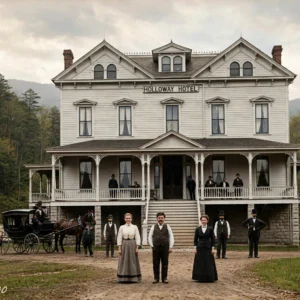
The winter of 1915 descended upon the mountains of Pocahontas County, West Virginia, with a severity not seen in nearly three decades. Snow began falling in early November and buried the hollows and ridges under drifts that reached the eaves of the smaller cabins. At the heart of this frozen landscape stood a weathered cabin built from massive chestnut logs, positioned on a granite shelf overlooking the convergence of two unnamed creeks. It had been constructed in 1887 by Zachariah Witmore, who had claimed the land under the Homestead Act, and it was now home to his two sons, Silas and Morai Whitmore.
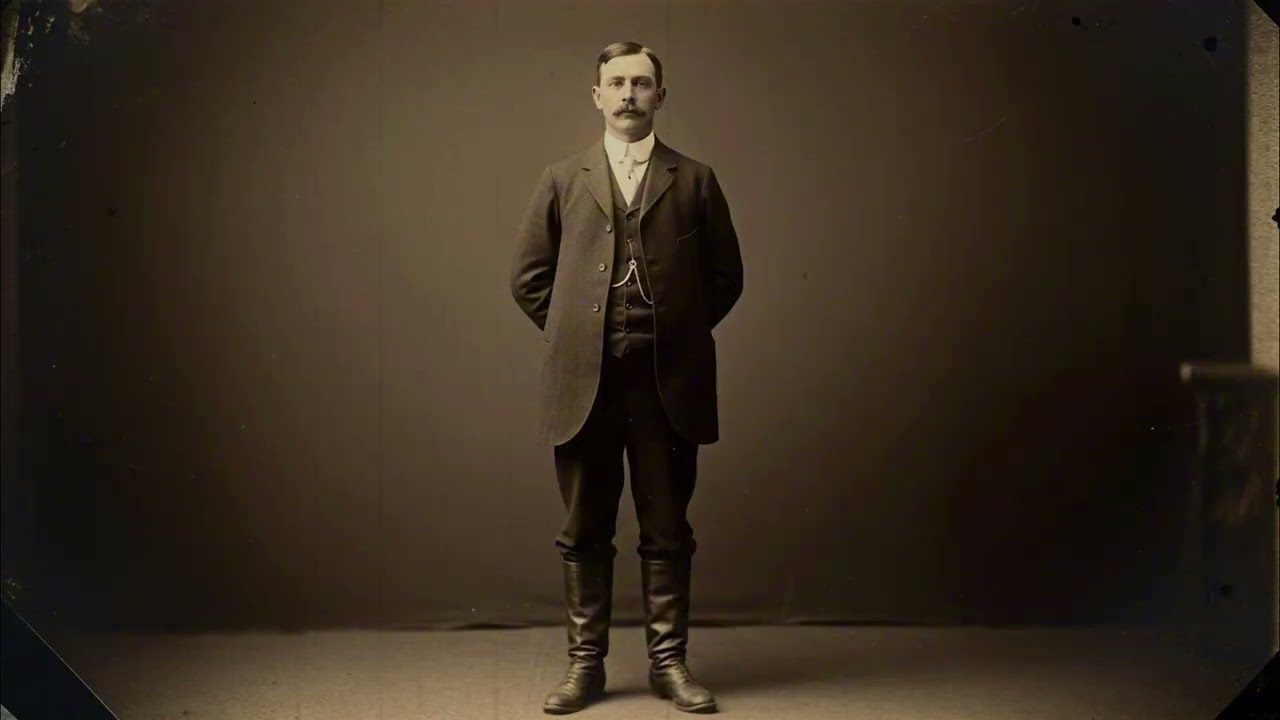
The brothers had lived together in the cabin for twelve years, an arrangement their few neighbors found both practical and peculiar. Silas, the younger at thirty-eight, was methodical and bookish. He had completed eight grades of schooling, unusual for the region, and served as bookkeeper and supply coordinator for the isolated coal mining operation at Droop Mountain. His ledgers recorded daily coal production, equipment maintenance, supply inventories, and wage distributions with a precision that impressed even the consortium’s accountants in Charleston.
Morai, forty-one and bearing the physical scars of twenty years in the mines, served as crew chief. He could assess the stability of a tunnel ceiling by the sound it made under pressure, predict the behavior of coal seams by subtle changes in their color and texture, and navigate underground passages in complete darkness. His authority came not from formal knowledge but from the absolute trust of the eleven men who worked beneath him. The mining operation was controlled by a consortium of local investors led by Cornelius Blackwood, whose family had accumulated wealth through timber speculation.
This local ownership created a more personal relationship between miners and employers, but it also meant financial pressures could escalate in ways impossible in larger, more bureaucratic operations. The camp was cut off from the outside world for weeks at a time during winter storms, with supplies arriving by wagon train every six weeks in good weather, crossing four mountain passes and fording three major streams. By the autumn of 1915, Silas had grown increasingly dissatisfied. His correspondence with Octavia Kendrick, a purchasing agent in Beckley with whom he had developed a personal relationship, revealed his frustration.
In a letter dated September 14th, 1915, he wrote that he found himself constrained by arrangements that made sense years ago but now limited his ability to pursue better opportunities. He had identified improvements in extraction techniques that could increase production by twenty percent while reducing safety risks, but implementing them required an initial investment beyond his authority. He was contemplating leaving altogether to establish his own mining consultancy. Octavia’s response encouraged his ambitions but warned him about abandoning a secure position for uncertain prospects.
There was no indication he had discussed these plans with Morai. Financial pressures were mounting at every level. Coal prices fluctuated throughout the year due to labor disputes disrupting the railroads. Cornelius Blackwood corresponded with other investors about the operation’s inability to compete with larger mines possessing superior equipment.
Discussions had begun about selling the operation, and preliminary valuations had been conducted. The sale negotiations were suspended pending a comprehensive audit scheduled to begin in November 1915, which would place enormous responsibility on Silas as the primary recordkeeper. Around the same time, Morai’s behavior changed. According to testimony given years later by Hyram Toiver, a shaft excavator who was interviewed in 1956 by a researcher from West Virginia University, Morai emerged from meetings with Silas appearing visibly angry.
He began working longer hours and pushing his crew to maintain production levels that required dangerous shortcuts. When crew members expressed concerns, he threatened to dismiss anyone who questioned his decisions. In a letter dated November 8th, 1915, Silas wrote to Octavia that the situation had become untenable and he feared delaying decisive action would result in consequences that could not be reversed. He and Morai had reached fundamental disagreements about the operation’s future.
He had decided to proceed with his plans for independent consulting work regardless of his brother’s objections. The upcoming audit, he noted, would provide a natural transition point since the new owners would likely bring their own management personnel. That was the last communication Octavia Kendrick received from Silas. When she failed to receive her expected weekly letter by November 20th, she attributed the delay to weather.
When nothing arrived by December 1st, she sent a telegram to the nearest telegraph office in Marlington. The telegram was delivered to the mining camp on December 3rd, 1915, and was received by Morai. His response was brief: Silas departed for Charleston on business, indefinite duration, will forward messages when address available. Octavia continued sending inquiries but received no further communications from Droop Mountain.
Her attempts to contact Cornelius Blackwood directly were unsuccessful, as the consortium leader had become seriously ill during the winter and died the following spring. The audit proceeded but was severely hampered by Silas’s absence. The auditors discovered discrepancies totaling approximately 2,400 tons of coal over the eighteen months ending October 1915. The report noted the absence of Mr.
S. Whitmore made it impossible to resolve whether the discrepancies were errors or systematic theft. No buyer was willing to assume such liability. The sale was terminated.
By spring 1916, only four miners remained employed, and production had fallen to less than thirty percent of the previous year’s output. Morai’s deterioration was documented in the diary of Ezra Beckwith, a supply wagon driver who made deliveries through 1916. In March, Beckwith arrived to find Morai standing alone at the entrance to the main shaft, engaged in what appeared to be an animated conversation with someone who was not present. Morai explained he had been discussing production schedules with Silas, despite the prolonged absence.
By summer, Beckwith noted Morai had begun setting two places for meals, maintaining his brother’s belongings as if expecting him to return momentarily, and conducting detailed discussions about mining operations while addressing empty spaces. The remaining miners abandoned the operation during 1916. By autumn, Morai was alone in the hollow, and Beckwith discontinued deliveries in October, citing concerns about Morai’s mental stability and his inability to pay. When spring arrived in 1917, Jeremiah Hoskins, a timber surveyor, became the first outsider to visit the hollow.
He found Morai confused about the date, insisting his brother was checking the mine shafts and would return before dark. Morai prepared food for three people and addressed remarks to empty chairs. Hoskins also noticed the small cemetery where Zachariah Witmore had been buried showed evidence of recent excavation, though no additional burials appeared to have taken place. He subsequently stayed two days and observed Morai spending considerable time around the cemetery, appearing to engage in discussions with unseen individuals.
Hoskins reported his observations to Sheriff Amos Keterman of Pocahontas County, who investigated in early May 1917. Morai confirmed Silas had departed the previous November for Charleston, but his account was vague and internally inconsistent. Sheriff Keterman examined the cabin and found disturbing details. Personal belongings for both brothers remained in their respective bedrooms, with Silas’s clothes, books, and mining equipment showing no signs of having been packed for travel.
Two complete place settings were maintained on the table. The financial logs Morai claimed to maintain showed obvious signs of fabrication, with the handwriting alternating between Morai’s distinctive script and clumsy attempts to imitate his brother’s more refined penmanship. Keterman examined the cemetery and found the original grave had been opened and refilled, the disturbed soil extending beyond its boundaries. Morai offered rehearsed and implausible explanations about frost heaving and small animals.
The sheriff filed his official report without charges but recommended continued monitoring. His private correspondence, discovered during courthouse renovations in 1954, revealed serious suspicions. In a letter dated May 15th, 1917, he wrote that he was convinced Morai knew significantly more about his brother’s disappearance than he had revealed, and he suspected the explanation was considerably darker than a voluntary business trip. However, without additional evidence or witnesses, he lacked grounds to pursue charges.
The prosecutor advised caution, noting Morai’s mental state appeared unstable. In July 1917, Ezra Beckwith encountered Morai working alone in a collapsed mine shaft, clearing debris and carrying a canvas bag containing heavy objects. Morai explained he was preparing a proper resting place for family members who deserved better accommodations than their current arrangements provided. He spoke confidently about plans to resume full-scale mining and made repeated references to consultations with Silas about equipment purchases.
He described regular visits to multiple locations around the property where he conducted business meetings with various individuals, though no one else occupied the hollow. An early winter storm in October 1917 trapped Morai with insufficient food and no means of obtaining assistance. The storm lasted nearly two weeks. Jeremiah Hoskins attempted to reach the hollow in November but travel was impossible, and local residents advised him the area would remain inaccessible until spring thaw.
When the first travelers finally reached Witmore Hollow in April 1918, they found a scene that would haunt everyone involved in its discovery. Morai’s body was found seated at the kitchen table in one of three chairs arranged for a family meal. The food that had been prepared had never been consumed. He had apparently died during the early weeks of winter, most likely from malnutrition and exposure when the cabin’s heating system failed and he lacked the strength to maintain warmth.
His final days had been spent preparing for what he believed would be a family reunion. Extra bedding had been arranged in both bedrooms, personal belongings carefully organized, a formal table setting prepared with the family’s finest dishes, and a handwritten invitation beside each place welcoming family members to a long overdue gathering. Sheriff Keterman’s investigation of the cemetery and surrounding areas led to the discovery that finally explained Silas’s disappearance. Excavation revealed the remains of Silas Whitmore, along with personal belongings, mining equipment, and a leather-bound journal Silas had kept during his final weeks.
The journal documented his growing concerns about irregularities in the financial records and his discovery that Morai had been systematically stealing from the consortium for more than two years, selling coal through unauthorized channels to meet gambling debts accumulated during trips to Charleston. The theft totaled nearly $8,000, representing several years’ wages for a typical miner. Silas’s final journal entry, dated November 12th, 1915, described his confrontation with Morai and his demand that his brother confess before the audit revealed the discrepancies. The entry concluded with Silas’s declaration that he intended to reveal the truth to Cornelius Blackwood the following day, regardless of the consequences.
Following that entry was a single line written in different handwriting: Some truths are too dangerous to speak. The physical evidence indicated Silas had been killed during a violent struggle, most likely with mining tools found buried alongside his body. The careful burial and subsequent maintenance of the grave indicated Morai had immediately recognized the enormity of what he had done and attempted to cope with his guilt through elaborate rituals of remembrance and denial. For nearly two and a half years, he had lived alongside his brother’s buried remains, maintaining daily routines that included regular visits to the grave and conversations with the deceased that eventually evolved into a complete fantasy in which Silas remained alive.
The case was officially closed in June 1918, with both deaths attributed to a family dispute that escalated into violence and subsequent psychological breakdown. The Droop Mountain mining operation was permanently abandoned. The shafts were sealed, and the property was eventually transferred to the state for forest preservation. The cabin remained standing until 1934, when a lightning strike caused a fire that destroyed it completely.
The site is now part of the Monongahela National Forest, accessible only by hiking trails. The cemetery has been partially restored by volunteers, though no markers indicate the events that unfolded there. The case has been cited in academic studies of rural psychology, the sociology of mining communities, and the effects of extreme isolation on human behavior.
Each stage of the tragedy, from financial pressure and diverging ambitions through theft and deception, violence and murder, and finally psychological collapse and death, was influenced by the isolation that protected the family from outside intervention while preventing them from accessing resources that might have offered alternatives to violence.