The winter of 1962 did not simply arrive in Harlem. It invaded with the ruthless efficiency of a conquering army, a bitter, biting, deeply personal cold that turned the slush along Lenox Avenue into jagged gray concrete and frosted the windows of the corner bodegas until they looked like cataracts on the tired eyes of the city. The wind howled down from the north, whipping through the narrow brick alleys and rattling the rusted iron fire escapes, driving every sensible soul indoors. The sky above the tenements was a bruised, heavy purple promising more snow, more ice, and more misery.
On a night like this, the world shrank. People huddled around clanking steam radiators in cramped apartments, pulling thin wool blankets tight around their shoulders, listening to the wind scream against the glass. But even in the freezing absolute dark of a Harlem winter, the underworld never truly slept. It merely put on a heavier overcoat, pulled its fedora down low over its eyes, and kept hustling.
A black 1961 Lincoln Continental glided down the avenue, its tires crunching softly against the frozen asphalt. Inside the massive luxury vehicle, the air was thick with the rich, earthy scent of imported leather and the faint, sweet ghost of Bay Rum aftershave. The heater hummed a low, steady note, holding the bitter cold completely at bay. Behind the wheel sat Junie Byrd, a man carved from dark mahogany and silent loyalty.
He was Bumpy Johnson’s right hand, his shadow, and the most terrifying piece of muscle north of Central Park. Junie didn’t speak much. He let his massive shoulders and his cold, dead-eyed stare do the talking for him. He drove the heavy Lincoln with a casual, one-handed grace, his eyes constantly scanning the frozen sidewalks, reading the shadows, looking for anything that didn’t belong.
In the spacious backseat sat the king himself, Ellsworth Bumpy Johnson. He looked out the frosted window, watching the neon signs of the neighborhood smear past in a blur of red and electric blue. He was a man composed of contradictions: a poet who could quote Shakespeare from memory, a street general who had survived a dozen wars, a man who had spent a decade in the hell of Alcatraz and walked out with his mind sharper than a straight razor. Tonight, he wore a sharply tailored midnight blue suit, a crisp white shirt perfectly starched at the collar, and a silk tie that cost more than a month’s rent for half the people shivering in the buildings they drove past.
On his left pinky finger sat a massive diamond ring catching the dim glow of the street lamps and throwing it back like a miniature captured star. “Pull up on the corner, Junie,” Bumpy said, his voice a low, gravelly baritone that commanded instant obedience without ever having to raise its volume. “Don’t park out front. I want to walk the last half block.
”
Junie nodded once, a barely perceptible dip of his chin, and eased the massive car to a smooth halt next to a snowbank. He put the car in park and turned slightly in his seat, his heavy brow furrowing. “You want me to come inside, boss? ”
“New joint.
Downtown money backing it. It smells like a setup. ”
Junie’s instincts were usually right, and Bumpy appreciated that. But not tonight.
“No, Junie. You stay with the car. Keep the heater running and the engine warm. I’m just going in for a steak and a quiet drink.
If I bring you in looking like a thundercloud in a fedora, these downtown cats will think I’m nervous. I want them to see me alone. I want them to know that I can walk into their living room, sit on their favorite couch, and put my feet on their coffee table, and there ain’t a thing they can do about it. ”
“Solid,” Junie rumbled, turning back to the steering wheel.
“But I’m keeping my eyes on the door. You need me, you know I’m coming through the brick. ”
“I know, brother,” Bumpy said softly. He reached over, picked up his heavy cashmere overcoat, and slid his arms into the silk-lined sleeves.
Before he stepped out, his hand instinctively brushed against the cold, heavy steel of the two Colt M1911 pistols resting snugly in his custom-tailored shoulder holsters beneath his suit jacket. They were his constant companions, fully loaded, perfectly oiled, waiting in the dark. He opened the heavy door of the Lincoln and stepped out into the biting wind. The cold hit him like a physical blow, stealing the breath from his lungs for a fraction of a second, but he didn’t shiver.
A king never shivers in public. He adjusted the brim of his fedora, turned up the collar of his overcoat, and began the short walk to the Velvet Room. As he walked, his mind drifted briefly to his home, to the warmth of his apartment, and the smell of dinner cooking. He thought of his wife, Mayme—beautiful, brilliant, unyielding Mayme.
She had kissed his cheek before he left, her eyes searching his face with that intense, knowing gaze she had. “Don’t go looking for the devil tonight, Ellsworth,” she had told him, straightening his tie. “Let the devil come to you, and then send him back to hell. ”
He smiled at the memory.
Mayme was his rock, the only person in the world he truly feared disappointing. He had promised her he would be home before midnight, and Bumpy Johnson was a man of his word. He arrived at the entrance of the Velvet Room. It was a new establishment, tucked away on the southern edge of Harlem, right on the border where the neighborhood started bleeding into the territory controlled by the Italian syndicates downtown.
The exterior was aggressively unassuming, just a heavy mahogany door with a small, discreet brass plaque. But Bumpy knew exactly what this place was. It was a beachhead, a monument to bad taste masquerading as high class, secretly bankrolled by a rival downtown family who was testing the waters, trying to see how far they could push their influence into Bumpy’s kingdom. Most bosses would have boycotted the place.
Some would have sent a crew of heavy-handed, baseball bat-wielding street cats to smash the mirrored bar into a million glittering pieces and burn the velvet curtains to ash. Bumpy Johnson was not most bosses. He believed in the profound psychological warfare of presence. He made it a point to dine there alone on a Tuesday night.
It was the ultimate assertion of dominance. He pushed open the heavy mahogany door and stepped into the stifling heat of the vestibule. A young coat check girl, practically trembling in a sequin dress that offered no warmth, hurried forward to take his cashmere overcoat. “Good evening, Mr.
Johnson,” she stammered, her eyes wide as saucers. “Evening, darling. I’ll keep the coat with me tonight. A little drafty in here,” Bumpy replied smoothly, casually flipping her a crisp $5 bill—a fortune for a coat check.
He stepped past her through the inner doors into the main dining room, his heavy overcoat still meticulously buttoned over his holstered weapons. The Velvet Room was a visual assault, draped in heavy, oppressive burgundy curtains that looked like they had been stolen from a cheap funeral parlor, accented with brass fixtures meant to look like solid gold, and bathed in lighting so dim and smoky it felt like you were eating inside a closed cigar box. The air was thick with the smell of roasted duck, stale tobacco, expensive perfume, and cheap gin. The maître d’, a slick, oily man with a pencil mustache, practically tripped over his own feet rushing over to greet him.
“Mr. Johnson, an absolute honor, sir. Right this way. Your usual booth in the back is ready.
”
Bumpy didn’t say a word. He simply nodded and followed the man through the maze of tables. As he walked, he didn’t just look at the room, he absorbed it. He was a master tactician, and his mind was constantly running a complex, invisible game of chess.
He mapped the exits: the heavy double doors at the front, a steel fire door on the right wall that led to an alley, the swinging wooden doors in the back that led to the kitchen. He noted the structural pillars, thick oak wrapped in velvet, capable of stopping a bullet. He noted the blind spots in the lighting. He slid into the curved leather booth in the back corner.
It was the best seat in the house. It put his back against a solid brick wall and gave him a clear, unobstructed view of the entire dining floor, the bar, and every single entrance. “Bourbon. Neat, two fingers,” Bumpy instructed the hovering waiter without looking at him.
“And the prime rib. Rare. Tell the chef if it’s overcooked, I’ll come back there and cook it myself. ”
The waiter gulped, nodded frantically, and scurried away.
Bumpy settled into the leather, crossing his legs and resting his hands casually on the table. He let his eyes sweep the room, taking the temperature of the crowd. It was a mixed bag: a few local neighborhood hustlers trying to look sophisticated, nursing cheap drinks and speaking in hushed tones; a couple of downtown suits with slicked back hair, laughing too loud, trying to project ownership of a neighborhood that despised them; and a handful of civilians, squares who just wanted a fancy meal and had no idea they were sitting in the middle of a war zone. But as the minutes ticked by, as his bourbon arrived and he took that first slow-burning sip, Bumpy felt the familiar cold prickle of adrenaline at the base of his neck.
The room was reading wrong. It wasn’t something obvious; it wasn’t a man pulling a gun or a sudden scream. It was a shift in the atmospheric pressure, the negative space between the sounds. Bumpy had survived as long as he had because he could hear the silence before the hammer dropped.
The first undeniable tell was the music. Up on a small elevated stage near the bar, a four-piece jazz quartet had been playing upbeat, swinging numbers all evening. The saxophone player was a cat from the neighborhood, a kid with real lungs and a bright tone. But over the last ten minutes, the tempo had slowed to a painful crawl.
They were dragging their way through a mournful, heavy ballad. Bumpy watched the piano player. The man’s hands were rigid, pounding the keys with too much force, and his eyes kept darting nervously toward the swinging wooden doors of the kitchen. The musicians knew something.
They could feel the bad weather rolling in, and they were terrified. The second tell was the thinning of the herd. The usual clinking of crystal glasses and the low rumbling hum of arrogant conversation had evaporated. Bumpy noticed that three tables near the front, tables occupied by men he recognized as low-level associates of the downtown syndicate, had quietly paid their tabs in cash, left their drinks half full, and slipped out the front door into the freezing night.
Rats always abandon a sinking ship before the water breaches the hull. But the most glaring neon-lit tell of all was the manager. His name was Sterling, a jittery, sweating sycophant with slicked-back hair, a cheap tuxedo, and a smile that looked like it was painted on a corpse. Sterling was the face of the operation, the puppet dancing on the strings pulled by the downtown bosses.
And right now, the puppet was malfunctioning. Sterling had been hovering near the bar for the past twenty minutes, doing a terrible job of looking casual. He was constantly checking the time on a gaudy gold wristwatch, pulling at the collar of his shirt like it was choking him, and wiping his sweaty palms against the sides of his trousers. Every thirty seconds, like clockwork, Sterling would cast a frantic, terrified glance toward the heavy wooden swinging doors that led to the kitchen.
He was a man waiting for a train to derail, and he was absolutely terrified of getting caught in the twisting metal and the flying shrapnel. Bumpy took another slow sip of his bourbon. The ice clinked against the heavy crystal glass, a sharp, clean sound in the tense air. He didn’t tense his muscles.
He didn’t reach for his coat. He simply sat there, radiating a calm, terrifying stillness. The trap was set. He was sitting in a kill box.
He didn’t panic. Panic was a luxury reserved for men who didn’t know how to control their environment. Panic was for victims. Bumpy Johnson was a predator.
He breathed in the scent of roasted meat and stale smoke, letting his eyes lazily track Sterling’s pathetic pacing. The downtown boys had finally grown a spine. They were making their move. They had decided that tonight was the night the king of Harlem would abdicate his throne.
His prime rib arrived, a massive cut of meat bleeding onto a white porcelain plate accompanied by a silver side of potatoes. The waiter placed it down with trembling hands and practically sprinted back toward the safety of the waiter’s station. Bumpy picked up his heavy silver steak knife and a fork. He began cutting the meat with deliberate, unhurried precision.
He was enjoying his dinner, but his mind was running through a hundred different tactical scenarios per second. Who was in the kitchen? How many? Handguns or long guns?
If they come through the swinging doors, they have a twenty-foot fatal funnel to cross before they reach the booth. If I flip this heavy oak table, the thick wood will absorb at least three rounds of standard caliber ammunition. I draw the right Colt first, fire twice into the chest of the lead man to stall the bottleneck at the door, draw the left Colt, and sweep the secondary targets. It was simple mathematics.
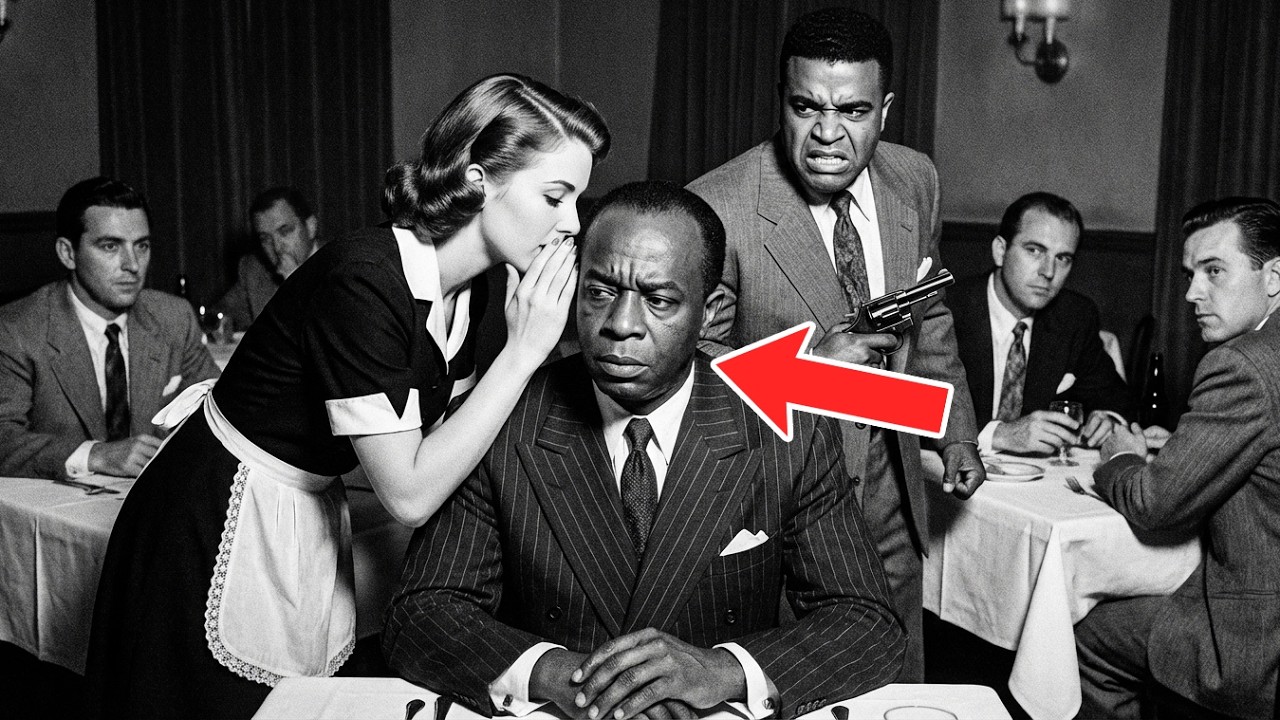
Violent, bloody, precise mathematics. Before he could finalize the equation, a figure stepped out from the shadows of the waiter station and approached his table. It was a waitress. Her plastic name tag, pinned crookedly to her uniform, read Sarah.
Bumpy recognized her immediately, not by name, but by blood. She was a neighborhood girl, the niece of a woman who ran a laundromat over on 135th Street. She was no more than nineteen years old, with soft features, wide, terrified brown eyes, and a lower lip that was trembling so violently she was practically biting it to keep it still. She had taken this job at the Velvet Room because the tips were supposedly solid, a way to help her mother pay the exorbitant winter heating bills.
But she was entirely out of her depth in a room full of wolves. She was wearing the club’s mandatory, humiliating uniform: a tight-fitting, ridiculous velvet corset that pushed her ribs in, and a skirt that was far too short for the bitter drafts that constantly swept across the floorboards. She was carrying a heavy silver coffee pot, holding the handle with both hands. Her hands were shaking with such absolute bone-deep terror that the metal lid of the pot rattled against the rim like a snare drum in a marching band.
Bumpy softened his gaze instantly. The cold, calculating killer vanished from his eyes, replaced by the benevolent, protective father figure of Harlem. He had a profound soft spot for the people of his neighborhood, especially the young ones trying to make an honest dollar in a profoundly dishonest world. He protected his community fiercely, and in return, the community acted as his eyes, his ears, and his shield.
Sarah stepped up to the edge of his table. Her breathing was shallow, erratic, coming in sharp little gasps. She completely avoided looking him in the eye, staring intently at the white porcelain coffee cup resting near his right hand. She leaned in close, pretending to focus entirely on the mundane task of refilling his cup.
The dark steaming coffee poured out in a thin, shaky stream, splashing slightly against the sides of the porcelain. As she leaned over the heavy oak table, the scent of her cheap drugstore floral perfume drifted over to him, mixing heavily with the sharp bitter aroma of the roasted coffee beans and the metallic tang of fear that was sweating out of her pores. She lowered her head, dropping her chin to her chest. Her face was now just inches from Bumpy’s ear, perfectly hidden from the rest of the dining room by the angle of her body and the bulky silver pot.
When she finally spoke, her voice was barely a breath, a frantic, terrified ghost of a whisper that sliced through the heavy tense ambient noise of the club like a straight razor cutting through silk. “Mr. Johnson,” Sarah breathed, her voice cracking and trembling so badly the words almost broke apart in her throat. “Please don’t look, but Mr.
Sterling, the manager, he just quietly slid the heavy iron bolts on the front double doors. Nobody can get out. He locked us in. ”
Bumpy didn’t move a single muscle.
His face remained an impassive mask of mild enjoyment. He kept his hands resting casually on either side of his steak plate. He let the mournful notes of the saxophone wash over him, giving absolutely no physical indication to the room that he had heard a single syllable. “And the kitchen,” Sarah whispered.
Her left hand was shaking so hard now that a drop of scalding black coffee spilled over the rim of the cup and stained the crisp white tablecloth. “There are four men, Mr. Johnson. They came in through the back alley delivery door a few minutes ago.
They forced the cooks out. They are standing right behind those swinging wooden doors. I saw them when I grabbed this pot from the warmer. They are wearing heavy winter coats, Mr.
Johnson, and they are racking shotguns. ”
The words hung in the air between them, heavy, invisible, and utterly lethal. Four men. Shotguns.
Behind the kitchen doors, only twenty feet away from where he sat. In a fraction of a microsecond, Bumpy Johnson’s brilliant tactical mind processed the horrific geometry of the impending slaughter. Shotguns. The syndicate had sent men with shotguns in a confined, crowded space like the Velvet Room.
Shotguns weren’t meant for precision assassination. They were meant for absolute, indiscriminate devastation, to turn the leather booth, the oak table, the glass mirrors, and everything in the immediate vicinity into a bloody hurricane of splintered wood, shattered crystal, and torn flesh. The downtown syndicate wasn’t just sending a message. They were trying to erase him from the face of the earth, and they didn’t care how much collateral damage they caused to do it.
Bumpy knew with absolute ice-cold certainty that he could survive this. He always found a way to survive. He knew the structural layout of the room. He knew the exact thickness of the oak table.
He knew he could flip the table upward with a thrust of his legs, using the heavy wood to absorb the initial widespread of the buckshot. He knew he could draw both Colts simultaneously from his shoulder holsters, drop below the line of sight, and return devastating pinpoint fire beneath the smoke before the hit men even realized they had missed their primary target. He could kill all four of them in less than six seconds. But there was a catastrophic, unacceptable flaw in the equation.
Sarah. She was standing right next to him, hovering directly over the table, entirely exposed. If Sterling gave the signal right now, if those heavy wooden swinging doors kicked open and the hit men stepped out, the first roaring volley of twelve-gauge buckshot would tear completely through this side of the dining room. Bumpy could dive for cover, but this terrified, innocent nineteen-year-old girl from the neighborhood—a girl who had risked her own life just to whisper a warning to him—would be caught directly in the center of the crossfire.
The blast would hit her before she even had time to scream. She would be cut in half, her life extinguished over a turf war she had absolutely nothing to do with. He could not and would not let that happen. A king does not sacrifice his people to save his own crown.
A king protects his own, even if it means walking through the fire himself. He had to get her out of the building. Immediately. But the parameters of the trap made it incredibly difficult.
He couldn’t just tell her to run. If a waitress suddenly dropped her coffee pot and sprinted frantically for the exits, the hitman waiting in the dark kitchen would instantly know the element of surprise was lost. They wouldn’t wait for Sterling’s signal. They would violently breach the doors immediately, racking their weapons, and the massacre would begin before Sarah was even halfway across the room.
He couldn’t quietly usher her away and tell her to take a break because Sterling, the manager, was watching them like a hawk from the edge of the mahogany bar. Sterling was sweating bullets, gripping the edge of the bar so hard his knuckles were white, waiting for the perfect moment to step out of the line of fire and nod to the kitchen. If Bumpy acted suspiciously, if he tried to shield the girl or whisper back to her, Sterling would panic and trigger the ambush prematurely. Bumpy needed a distraction.
He needed to create a scenario so volatile, so incredibly loud, and so undeniably authentic that it would completely scramble Sterling’s brain and force the manager to intervene. He needed to hit the pause button on the timeline of the hit. He needed to placate the adrenaline-fueled assassins waiting behind the wooden doors, making them think their target was completely unaware and just acting like an arrogant fool. And most importantly, he needed to engineer a flawless logical reason for Sarah to be aggressively removed from the dining room immediately without raising any suspicion that she had blown the whistle.
He had exactly three seconds to act before Sarah finished pouring the coffee, stood up straight, and tried to walk away, sealing her own tragic fate. Bumpy Johnson’s eyes turned to absolute ice. The warm, benevolent, quiet diner vanished into the ether, replaced instantly by the terrifying, explosive, undeniable force of the Harlem Godfather. With blinding, terrifying speed, Bumpy’s right hand shot across the table.
He didn’t just push the heavy silver coffee pot away; he struck the thick metal base of the pot with the violent, open-handed force of a heavyweight boxer throwing a devastating hook, wrenching it free without crushing her fingers. Smash. The heavy silver pot was ripped violently out of Sarah’s trembling grip. It launched through the air across the aisle, a silver missile, and violently crashed against a nearby velvet-wrapped structural pillar.
The metal lid detached in midair, spinning away like a coin, sending a massive geyser of scalding, pitch-black coffee spraying violently across the burgundy velvet upholstery and the polished hardwood floor. The sheer explosive noise of the impact was like a mortar shell going off inside the tense, quiet dining room. The jazz band on the stage abruptly stopped playing in sheer terror. The saxophone player let out a startled, discordant squeal that echoed off the mirrored walls.
The few remaining patrons gasped, several of them dropping their silverware, freezing in their seats like deer caught in the headlights of a speeding truck. Sarah let out a sharp breathless gasp, stumbling backward in her cheap shoes. Her hands flew up to cover her mouth in absolute, paralyzing shock. She didn’t understand.
She had tried to save him, and now he was attacking her. Before she could even process the violent movement, Bumpy was on his feet. He stood up with such explosive force that he knocked his heavy oak dining chair backward. It tipped over and crashed loudly to the hardwood floor, adding to the cacophony of the distraction.
He leaned his massive frame completely over the dining table, ignoring his meal, pointing a rigid, terrifying finger directly at the trembling girl’s face. “You thieving little rat,” Bumpy roared. His voice boomed through the dead silence of the club, a roar that vibrated with an incredibly convincing, murderous rage. He projected his voice deep from his chest, ensuring that every single soul in the room, especially the four armed men sweating behind the kitchen doors, could hear every single syllable clearly.
“You think I don’t see what you’re doing? ” Bumpy thundered, his face contorted in a mask of absolute fury. “You think because I’m sitting here enjoying my meal, minding my own business, you can just slip your dirty, sticky little fingers onto my hand? ”
Sarah stood completely frozen, rooted to the floorboards.
Tears instantly welled up in her wide, brown eyes, spilling over her lashes and running down her cheeks. “M- Mr. Johnson,” she stammered, her voice a tiny, broken squeak. “I didn’t— I wasn’t doing anything, I swear.
”
“Shut your jive mouth,” Bumpy screamed, stepping completely out from behind the heavy oak booth. He advanced on her like a stalking panther, his massive shoulders squared, his overcoat sweeping behind him. He raised his left hand high in the air, aggressively flashing the brilliant, massive diamond pinky ring under the dim overhead lights, making sure everyone in the room saw the prize. “I felt you tugging at the gold,” Bumpy lied, his voice echoing off the ceiling.
“I felt your fingers on my ring. You spilled that damn coffee on purpose. You splashed it to distract me so you could snatch my property right off my hand. ”
The sheer, overwhelming volume and the terrifying intensity of Bumpy’s fake outrage completely paralyzed the room.
The few remaining patrons shrank back as far as they could into their velvet booths, holding their breath, absolutely terrified that the king of Harlem was about to execute a waitress right in front of their salads. Over by the mahogany bar, Sterling, the manager, practically jumped completely out of his cheap tuxedo. His face drained of all blood, turning the sickly, pale color of old parchment. His heart hammered against his ribs like a trapped bird.
This was a total, unmitigated disaster. This was absolutely not the plan. Bumpy Johnson was supposed to be sitting quietly in the booth, cutting his steak, entirely unaware of the execution squad waiting in the kitchen. The hitmen were supposed to burst through the doors and catch him completely off guard, sitting down, unable to draw his weapons.
If Bumpy was standing up, if he was moving around, if he caused a massive scene and started breaking furniture, or pulling a gun on a waitress, the entire synchronized hit would fall apart. The hitmen in the kitchen would be confused. They wouldn’t have a clear shot. They might hit civilians.
They might hit him. Sterling’s absolute desperate instinct for self-preservation completely overrode his terror. He had to keep Bumpy calm. He had to de-escalate this immediately.
He had to somehow convince the most dangerous man in New York to sit back down in the kill box until the gunmen were ready to breach those doors. “Mr. Johnson. Mr.
Johnson. Please. ” Sterling shouted, his voice cracking with panic. He abandoned the safety of the bar and practically sprinted across the dining room floor.
His polished leather shoes slipped dangerously on the puddle of spilled coffee, but he caught his balance, throwing himself into the aisle, frantically placing his own body between the raging godfather and the weeping waitress. “Please, Ellsworth, please, let’s keep our voices down,” Sterling pleaded, waving his sweating hands frantically in the air in a gesture of absolute surrender. “There’s been a terrible misunderstanding. I know this girl.
She’s just clumsy. She’s new. She’s from a very poor family. She would never steal from a man of your stature.
”
“I don’t care if it’s her first day on God’s green earth,” Bumpy shouted, not dropping the furious act for a single solitary microsecond. He took a heavy intimidating step forward and reached out, grabbing Sterling violently by the lapels of his cheap tuxedo jacket. With a surge of terrifying strength, Bumpy lifted the sweaty manager slightly onto the tips of his toes, bringing Sterling’s pale, terrified face inches from his own. “This jive turkey tried to rob me while I was eating my dinner,” Bumpy spat, his eyes burning with a ferocious intensity.
“In your establishment, Sterling. I come here to spend my money, to give your new joint some class, and you let your staff put their hands on me? You telling me you employ street pickpockets now? Is that the kind of garbage joint you’re running here for those downtown boys?
”
“No. No, absolutely not, Mr. Johnson. I swear to God,” Sterling stammered frantically.
His eyes darted wildly over Bumpy’s shoulder, looking in sheer, absolute panic toward the swinging kitchen doors. Through the narrow crack in the swinging wooden doors, Sterling could see the dark, shifting shadows of the hitmen. They were waiting. They were confused by the shouting.
They didn’t know if they should breach or hold their position. Sterling was sweating profusely now, heavy beads of moisture gleaming on his forehead and rolling down his neck, soaking the collar of his shirt. If those doors open now, Bumpy would use Sterling as a human shield. The manager knew he was seconds away from catching a shotgun slug in the spine.
“She’s nothing, Mr. Johnson,” Sterling begged, his voice pitching higher in desperation. “She’s nobody, a stupid, clumsy girl. I assure you, your property is completely safe.
Please, just let me go. ”
“My property is safe because I caught her before she could slip the ring,” Bumpy sneered, his lip curling in disgust. He shoved Sterling backward with enough violent force to violently rattle the man’s teeth and send him stumbling back against the table. Bumpy stood tall, adjusting the lapels of his tailored suit with sharp, angry jerks.
His chest heaved with feigned indignant breath. He raised his hand and pointed a lethal, unyielding finger at Sarah, who was now openly sobbing, her hands completely covering her face, her shoulders shaking with pure trauma. “Get this piece of trash out of my sight,” Bumpy commanded, his voice dropping an octave, taking on a cold, absolute authority that brooked zero argument. “Right now, Sterling.
I don’t want her in this room. I don’t want her in this building. If I see her face in here for one more second, I am taking my business elsewhere and I’m holding you personally responsible for the insult. ”
Sterling was completely desperate.
He didn’t care about the girl. He didn’t care about the spilled coffee. He only cared about getting the timeline back on track. He desperately needed Bumpy to turn his back, to sit back down in that booth, to become a stationary target again.
He needed this distraction to end immediately before the hitmen lost their nerve. “Done. It’s done, Mr. Johnson.
I swear it on my life,” Sterling shouted, spinning around violently. He lunged forward and grabbed Sarah fiercely by her upper arm. His fingers dug deeply into her flesh. The young girl let out a sharp cry of pain, stumbling forward as the manager violently yanked her off her feet.
“You’re fired,” Sterling hissed venomously, practically spitting the words into her face. “You hear me, you stupid little— You’re done. You’ll never work in this town again. ”
Sterling didn’t drag her toward the back of the restaurant.
That was where the kitchen was, where the gunmen were waiting with fingers on the triggers. He didn’t drag her toward the front entrance either. He had personally padlocked those heavy double doors just five minutes ago to ensure Bumpy was completely trapped inside when the shooting started. If he walked to the front doors and fumbled with his keys to let her out, Bumpy would immediately realize he was locked in a cage.
Sterling had exactly one option left. The only exit that wasn’t a trap. He dragged the sobbing, terrified girl across the carpet, pulling her relentlessly toward the heavy steel fire door located on the right side of the dining room, the emergency exit that led directly out into the freezing, narrow brick alleyway. Bumpy stood dead center in the middle of the dining room floor.
He was breathing heavily, his hands resting on his hips, playing the part of the deeply insulted, arrogant king flawlessly. His jaw was set in a tight, furious line. But beneath that mask of rage, beneath the theatrical shouting and the puffed out chest, Bumpy’s eyes were completely cold and violently alert. He was tracking Sterling’s every single movement.
He was listening beyond the crying of the girl, listening to the heavy shifting footsteps of the four men behind the kitchen doors, waiting to see if they would break discipline and charge. He was timing the manager’s desperate progress across the floor. “Get out,” Sterling hissed viciously. He reached the side of the room and threw his entire body weight against the heavy steel push bar of the fire door.
The heavy metal door groaned and swung violently outward. Instantly, the brutal bitter cold of the Harlem winter rushed into the stifling warm club. The wind howled through the open doorway, carrying a violent swirl of icy snow and freezing rain that melted into dirty slush the absolute second it hit the expensive burgundy carpet. Sterling didn’t hesitate.
He forcefully shoved Sarah out into the howling wind. He shoved her hard. The young girl stumbled blindly through the doorway, her cheap heels catching on the icy concrete of the alley. She fell hard to her hands and knees in the dirty freezing slush.
She knelt there in the dark alley, shivering violently in her thin velvet uniform, the freezing rain mixing with the mascara running down her cheeks. She looked back at the warm glowing doorway of the club, totally, absolutely bewildered by the sheer violence and chaos of the last sixty seconds. She had tried to save the king’s life, and he had destroyed her job and thrown her into the street. She didn’t understand.
Sterling didn’t give her a second glance. He didn’t care if she froze to death in the alley. He grabbed the heavy iron handle on the inside of the steel fire door and pulled it shut with a massive surge of adrenaline. Slam.
The sound of the heavy steel door hitting the frame echoed like a gunshot through the dining room. Bumpy Johnson stood perfectly still. He listened with the acute, predatory, terrifying focus of a man who had lived his entire adult life balancing on the razor-thin edge of a knife. He blocked out the terrified whimpering of the remaining patrons.
He blocked out the sound of Sterling’s ragged, panicked breathing. He focused every ounce of his awareness entirely on the mechanics of that steel door. He heard the heavy metal latch catch and hold. Then, clear as a bell in the sudden silence of the room, he heard the distinct, heavy, metallic thud of the thick iron deadbolt violently sliding into place, locking from the inside.
It was done. The girl was outside. She was locked out. The cold would be brutal, but she was alive.
She was entirely removed from the slaughterhouse. The collateral damage had been successfully extracted from the kill box. The absolute instant that deadbolt clicked, securing the perimeter, the atmosphere inside the Velvet Room shifted. It didn’t just change, it violently inverted.
The explosive, raging, theatrical anger that had completely animated Bumpy Johnson’s face vanished. It did not fade away slowly. It disappeared instantly, like a circuit breaker had been violently tripped in his brain. The loud, shouting, deeply insulted patron was gone.
In his place stood the calculating, terrifying, ice-cold architect of the Harlem underworld, the man who had survived Alcatraz, the man who commanded armies. Sterling turned around slowly from the locked side door. He was panting, wiping the heavy sweat from his brow with a silk handkerchief. He forced a wide, nervous, incredibly fake, placating smile onto his pale face.
He began to walk slowly back toward Bumpy, holding both of his hands up in the air in a pathetic gesture of peace and subservience. “There you go, Mr. Johnson. It’s done,” Sterling said, his voice shaking slightly, desperate to get the timeline back on track.
“She’s gone. She’s out on the street. She won’t bother you ever again. Now, please, won’t you sit back down in your booth?
Relax. Let me get the kitchen to send out a fresh, hot pot of coffee, and I’ll have them bring out a new prime rib, cooked perfectly. On the house, of course. My profound apologies for the disruption.
”
Sterling took another hesitant step forward, fully expecting Bumpy to nod his head, to grumble an arrogant acceptance of the apology, to sit back down in the corner booth, and to return to the role of the unsuspecting, stationary victim. Instead, Bumpy Johnson didn’t move an inch. He stood tall in the center of the aisle, his broad shoulders relaxed entirely, dropping the tense posture of anger. He looked at Sterling and a slow, chilling, utterly predatory smile began to spread across his face.
It was a smile that did not reach his eyes. His eyes were dead, flat, and completely devoid of mercy. It was a smile that promised absolute, unparalleled devastation. Without breaking eye contact with the terrified, confused manager for a single second, Bumpy reached his hand smoothly, deliberately, and with terrifying calm inside the tailored lapels of his expensive overcoat.
Sterling watched the heavy, silk-lined lapels part like the dark curtains of a theater stage. He was waiting for a cigar. He was waiting for a thick leather wallet to pull out a crisp $50 bill to pay for the ruined coffee. He was waiting for anything that belonged in the normal, predictable world of a disgruntled restaurant patron.
But Bumpy Johnson did not belong to the normal world. He belonged to the underworld, a subterranean kingdom of blood, respect, and cold, hard steel. From the deep, custom-tailored shoulder holsters hidden beneath his suit jacket, Bumpy’s hands emerged. They moved with a terrifying, liquid grace.
There was no frantic jerking, no panicked fumbling. It was the smooth, practiced motion of a master craftsman reaching for the tools of his trade. In his massive, steady hands, he held twin Colt M1911 semi-automatic pistols. The heavy weapons seemed to absorb the dim, smoky light of the dining room rather than reflect it.
They were brutal, functional machines of war, forged from solid parkerized steel, fitted with worn, cross-hatched walnut grips that had been smoothed down by years of constant violent handling. They were heavy, weighing nearly three pounds each, but in Bumpy’s hands, they looked as light and natural as a pair of silver cufflinks. The metallic scent of high-grade gun oil and burnt cordite instantly pierced the heavy aroma of roasted meat and spilled coffee, a sharp chemical warning that violence was no longer a possibility. It was an absolute certainty.
Sterling’s breathing completely stopped. His lungs seized up, trapping a pocket of stale panicked air right beneath his sternum. He stared down the twin barrels of the handguns, and in that agonizingly long, stretched-out second, the manager’s entire world completely shattered. The illusion of control he thought he possessed violently evaporated.
The elaborate synchronized trap that the downtown syndicate had spent weeks planning, the expensive hitman waiting in the kitchen, the padlocked front doors—all of it collapsed into dust under the crushing weight of Bumpy Johnson’s terrifying omniscient smile. Bumpy had known. The realization hit Sterling with the devastating force of a runaway freight train. The Godfather had known the entire time.
He hadn’t been fooled for a single second. The explosive rage, the shattered coffee pot, the violent threats against the terrified waitress—it was all a brilliantly orchestrated, flawless piece of street theater. Bumpy had manufactured a perfect, undeniable crisis solely to manipulate Sterling into removing the only innocent civilian from the immediate blast radius. Bumpy had played him like a cheap, out-of-tune piano.
Sterling felt his knees turn to water. The polished floorboards beneath his expensive shoes suddenly felt like they were pitching and rolling like the deck of a ship caught in a hurricane. He opened his mouth to speak, to beg, to try and spin some impossible, pathetic lie to save his own life, but his vocal cords were completely paralyzed. All that escaped his trembling lips was a wet, pathetic wheeze.
Bumpy Johnson did not raise the weapons to point them at the manager’s chest. He didn’t need to. He held them casually down by his sides, his thumbs resting lightly, intimately, against the heavy steel safety levers. The silence in the Velvet Room was absolute, heavy, and deeply oppressive.
It was not the peaceful silence of a quiet evening. It was the suffocating, terrifying vacuum that exists in the atmosphere mere milliseconds before a massive explosion rips through the air. The jazz band on the stage had frozen completely in place, looking like wax figures in a museum of terrors. The saxophone player still had the brass mouthpiece hovering an inch from his lips.
The piano player’s hands were suspended over the ivory keys, his fingers cramped and trembling. The few civilians who had remained in the booths were practically trying to melt into the velvet upholstery, squeezing their eyes shut, praying to whatever higher power they believed in that they would survive the next two minutes. Bumpy let the silence stretch. He let the sheer absolute terror marinate in the manager’s veins.
He believed that fear was a tool, a weapon just as effective as the Colts in his hands, and he applied it with surgical precision. He looked Sterling directly in the eyes. The manager’s pupils were dilated so wide they almost swallowed his irises, reflecting the absolute panic of a trapped animal. “You downtown cats never learn, do you?
” Bumpy said. His voice was a low, resonant rumble that vibrated through the floorboards, completely devoid of the artificial roaring anger he had displayed just moments ago. Now it was smooth, cold, and heavy as a tombstone. “You think because you put on a tuxedo and hang some cheap velvet curtains, you can walk into my city and tell me how to eat my dinner.
You think you can build a cage, lock the door, and catch the lion sleeping. ”
Sterling took a tiny, involuntary step backward, his polished shoe sliding on the cold slick of the spilled coffee. He raised his trembling hands higher in the air, frantically shaking his head. Tears of pure, unadulterated fear welled up in the corners of his eyes.
“Mr. Johnson, Ellsworth, I swear before God I was just following orders. They made me do it,” Sterling whispered, his voice cracking, the words spilling out in a desperate, pathetic rush of cowardice. “Men who follow orders into a graveyard usually end up staying there, Sterling,” Bumpy replied smoothly.
He didn’t blink. The ice in his eyes was absolute. “But you’re a lucky man tonight. You’re a pawn, and I don’t waste my ammunition on pawns when there are kings hiding in the kitchen.
”
With a chilling, deliberate slowness, Bumpy Johnson shifted his thumbs. Click. Click. The heavy metallic snapping of the dual thumb safeties disengaging echoed through the dead silence of the dining room like two nails being driven violently into a coffin.
The sound was incredibly loud, incredibly definitive. The weapons were now live. The triggers were active. Bumpy let the chilling smile stretch a fraction of an inch wider across his face.
He tilted his head slightly, his fedora casting a long, sharp shadow over his cold eyes. “Now that the lady has left the room,” Bumpy deadpanned, his voice echoing off the mirrored walls with terrifying, predatory amusement, “let’s see what’s on the menu. ”
Sterling didn’t wait for another word. The sheer, overwhelming wave of violent intent radiating from the Godfather broke the manager’s paralysis.
With a strangled cry, Sterling turned and bolted. He scrambled frantically toward the safety of the mahogany bar, throwing himself violently over the polished wooden counter, crashing heavily into the shelves of expensive liquor, sending a dozen glass bottles shattering to the floor in a cascade of brown and clear spirits. He curled into a tight, trembling ball beneath the brass rail, burying his face in his hands, entirely removing himself from the equation. Bumpy ignored the crashing glass.
His focus was absolute, hyper-narrowed entirely on the heavy, swinging wooden doors at the back of the room. The geometry of the battlefield was set. The civilians were out of the line of fire, cowering behind the thick oak tables. The manager was neutralized.
The front doors were heavily padlocked, meaning the local police wouldn’t be able to accidentally stumble into the crossfire and get themselves killed. It was just him, the cold Harlem night pressing against the windows, and the four armed men waiting twenty feet away in the shadows of the kitchen. He didn’t rush. Rushing was for amateurs who let adrenaline dictate their actions.
Adrenaline made your hands shake. It made your vision tunnel. It made you pull the trigger instead of squeezing it. Bumpy controlled his breathing, forcing his heart rate to remain slow and steady.
He took his first step down the center aisle. His polished leather shoe made a soft, deliberate sound against the hardwood floor. To the terrified civilians hiding under the booths, the sound of the king of Harlem walking toward a gun fight was the loudest noise they had ever heard. It was the sound of inevitable, approaching doom.
Behind the swinging doors, the atmosphere in the cramped, grease-stained kitchen was rapidly deteriorating into total chaos. The four hitmen, imported muscle from the deep Brooklyn docks, were sweating profusely inside their heavy winter wool coats. They were holding pump-action twelve-gauge shotguns, the heavy wooden stocks pressed tightly against their shoulders, the barrels trembling slightly as the adrenaline surged through their veins. They had been promised a quick, clean, synchronized hit.
They were supposed to wait for the loud crash of a breaking glass from Sterling, kick open the doors, and unleash hell on an unsuspecting target sitting quietly in a corner booth. But the plan had violently derailed. First, there was the explosive shouting. They had heard the target screaming at a waitress, breaking furniture, causing a massive, chaotic scene.
Their leader, a scar-faced bruiser named Carmine, had frantically signaled for them to hold their positions, completely unsure if the target was standing up, moving around, or holding a hostage. Then, there was the loud slam of the heavy steel side door. And now, there was nothing. Absolute, terrifying, suffocating silence.
Carmine swallowed hard, tasting the bitter, metallic flavor of fear in the back of his throat. He looked at his men. Their faces were pale beneath the harsh, flickering fluorescent lights of the kitchen. The silence outside in the dining room was not natural.
It was the silence of a predator stalking its prey. “What the hell is going on out there? ” one of the younger gunmen hissed, his finger twitching nervously against the trigger guard of his shotgun. “Why hasn’t Sterling given the signal?
”
“Shut your mouth,” Carmine snapped, his voice a tight, ragged whisper. He pressed his face closer to the narrow, vertical crack between the two swinging wooden doors, desperately trying to peer out into the dimly lit dining room. Through the narrow slit, he could see the abandoned corner booth. He could see the overturned chair.
He could see the spilled coffee staining the carpet. But he couldn’t see Bumpy Johnson. Panic, cold and sharp as a jagged piece of ice, slid directly into Carmine’s chest. You don’t lose sight of the most dangerous man in New York City.
If you can’t see the king, the king is already behind you. Then, Carmine heard it. The slow, deliberate, measured footstep. It wasn’t the frantic scrambling sound of a man running for his life.
It wasn’t the heavy, clumsy stomp of a man blinded by panic. It was the terrifyingly calm, rhythmic stride of a hunter closing the distance. Step. Carmine’s eyes widened.
He shifted his angle against the crack in the door, desperately scanning the shadows. Step. He saw a flash of midnight blue moving through the dim light. He saw the sharp, unmistakable silhouette of a fedora.
“He’s coming,” Carmine hissed, the absolute terror finally bleeding into his voice. He ripped his face away from the door and frantically pumped the action of his shotgun. The loud, metallic clack-clack of the heavy shell racking into the chamber echoed violently through the tiled kitchen. “The jive turkey is coming right at us.
Light up the doors. Shoot through the wood. Do it now. ”
The four men frantically raised their heavy weapons, aiming the wide, gaping muzzles directly at the center mass of the swinging wooden doors.
They braced their feet against the grease-slicked tiles, preparing to unleash a devastating wall of lead that would tear the wooden doors completely off their hinges and shred anything standing on the other side. But Bumpy Johnson was not standing on the other side. He was a master tactician. He knew the layout of the Velvet Room better than the architect who designed it.
He knew that the heavy oak structural pillars that framed the entrance to the kitchen were thick enough to stop a barrage of shotgun slugs. He knew that if he walked directly up to the center of the doors, he would be a stationary target silhouetted against the dining room lights. As the frantic metallic sound of the shotguns being violently racked echoed through the club, Bumpy didn’t freeze. He didn’t dive backward.
He executed a flawless, blindingly fast tactical pivot. He lunged violently to his right, throwing his massive shoulders behind the absolute safety of the thick velvet-wrapped oak pillar just inches to the side of the doorframe. Less than a microsecond later, the world ended in a deafening, catastrophic roar of fire and violence. Boom.
Boom. Boom. Boom. The hitmen fired blindly, their panic overriding any sense of tactical discipline.
The deafening concussive blasts of the twelve-gauge shotguns absolutely shattered the silence of the club. Massive, blinding tongues of orange and yellow fire erupted from the muzzles of the weapons, illuminating the cramped kitchen in horrifying strobe light flashes. The heavy buckshot slammed into the wooden swinging doors with devastating obliterating force. The thick wood didn’t just splinter, it violently exploded.
Massive chunks of jagged shrapnel, twisted brass hinges, and pulverized sawdust blew outward into the dining room like shrapnel from a hand grenade. The sheer concussive wave of the blast knocked several empty tables completely over, sending crystal glasses smashing against the floorboards. The heavy burgundy curtains violently whipped through the air, torn by the shockwave. The civilians hiding under the booths screamed, covering their ears, believing the roof of the building was collapsing on top of them.
Behind the absolute safety of the solid oak pillar, Bumpy Johnson didn’t even flinch. He leaned his back against the vibrating wood, feeling the heavy percussive thuds of stray pellets burying themselves deep into the opposite side of the timber. The air was instantly choked with the thick, suffocating, sulfurous smoke of burnt gunpowder. It stung the eyes and burned the back of the throat, turning the dim dining room into a blinding gray fog bank.
He listened carefully through the ringing in his ears. He was analyzing the chaotic rhythm of the gunfire. Shotguns held limited ammunition. In their absolute blind panic, the hitmen had dumped their weapons, firing as fast as they could pump the heavy actions.
Bumpy counted the blasts. Eight. Nine. Ten.
Twelve. Then, the roaring, deafening thunder violently stopped, replaced instantly by the frantic, chaotic sounds of heavy breathing, coughing, and the metallic, desperate fumbling of men trying to frantically reload empty weapons in the dark. “Reload! Reload, you idiots!
” Carmine’s voice screamed from inside the kitchen, raw and bordering on total hysteria. “Watch the gap! Watch the gap! ”
They were empty.
They were blind in the smoke. And they were absolutely terrified. The window of opportunity had opened. It would only stay open for exactly three seconds.
Bumpy Johnson did not hesitate. He did not ask for quarter. And he certainly wasn’t going to give any. He spun out from behind the solid oak pillar, moving with a blinding, terrifying speed that completely defied his large frame.
He didn’t aim his weapons. At this range, in this thick, blinding smoke, aiming was useless. This was about absolute, overwhelming violence of action. He reached the shattered, jagged remains of the swinging doors.
Only half of the right door remained attached to the violently twisted brass hinge, hanging by a literal splinter of wood. Bumpy planted his left foot firmly on the hardwood floor, coiled the massive muscles in his right leg, and unleashed a devastating, bone-shattering front kick directly into the center of the remaining wood. Crack. The heavy wooden panel was violently ripped completely off its hinges.
It flew backward into the kitchen like a massive, jagged projectile, violently smashing into the chest of one of the desperately reloading hitmen, knocking him completely off his feet and sending him crashing backward into the heavy stainless steel prep tables with a deafening clatter of falling pots and pans. Bumpy stepped straight through the swirling gray smoke and into the breach, the twin heavy Colt 1911s raised waist-high, his eyes locking onto the targets. The kitchen was a nightmare of grease, smoke, gunpowder, and absolute chaos. Carmine, the leader, was standing just ten feet away, frantically trying to shove a red plastic shotgun shell into the loading port of his weapon.
His eyes snapped up, meeting Bumpy’s cold, dead stare through the haze. Carmine’s face went entirely slack. He dropped the shell. He knew it was over.
He was staring directly into the eyes of the devil, and the devil had come to collect. The rest of the sequence happened in the dark, implied by the heavy, terrifying mechanics of survival. Outside in the dining room, the terrified civilians didn’t see the violence. They only heard it.
They heard the sudden, deafeningly loud, incredibly sharp crack-crack of heavy-caliber handguns. The sound was entirely different from the booming roar of the shotguns. It was precise. It was surgical.
It was absolute. They heard the heavy, sickening thud of a large body violently hitting the grease-slicked tiles. They heard a frantic, panicked scream completely cut short by another sharp, definitive crack. They heard the sound of a heavy metal prep table violently crashing to the floor, spilling hundreds of metal utensils across the tiles in a chaotic, ringing cascade.
They heard a man desperately begging for his life, the words tumbling out in a rushing, sobbing stream, followed instantly by a fourth, utterly final crack. And then, just as suddenly as the absolute chaos had erupted, it was over. The heavy, suffocating silence violently slammed back down over the Velvet Room. The acrid, choking smoke from the gunpowder slowly drifted out from the shattered kitchen doorway, rolling across the ruined dining room ceiling like a dark, polluted cloud.
The only sounds in the entire building were the frantic, ragged breathing of the terrified civilians, the soft whimpering of Sterling the manager hiding behind the ruined bar, and the slow, steady drip of spilled coffee hitting the hardwood floor. One minute passed, then two. Nobody moved. Nobody dared to even breathe too loudly.
They were trapped inside a locked tomb, waiting to see who would walk out of the smoke. From the absolute darkness of the ruined kitchen, a figure slowly emerged. Ellsworth Bumpy Johnson stepped carefully over the violently splintered wreckage of the swinging doors and walked back out into the dining room. He was completely unharmed.
His extensive, tailored midnight blue overcoat was lightly dusted with a fine layer of white sawdust and gray gunpowder residue, but not a single drop of blood marred the crisp, pristine white collar of his shirt. He walked with a slow, deliberate, incredibly calm stride. He paused in the center of the aisle, right next to the puddle of spilled coffee. He didn’t look back toward the kitchen.
He didn’t need to. The business was concluded. He calmly, methodically raised the heavy Colt 1911s. He used his thumbs to violently snap the heavy steel safeties back up into the locked position.
Click. Click. The sound signaled the official end of the war. With a smooth, practiced motion, he slid the heavy, smoking weapons back into the custom leather holsters hidden beneath his jacket.
He reached up, adjusted the brim of his fedora, and brushed a small speck of sawdust off his shoulder. He looked over toward the mahogany bar. “Sterling,” Bumpy called out. His voice was no longer a terrifying roar, nor an icy whisper.
It was just a calm, conversational tone, like a man asking for the time. Slowly, pathetically, the pale, sweating, tear-streaked face of the manager slowly peeked over the brass rail of the bar. Sterling looked like a man who had aged twenty years in the span of five minutes. “Yes, Mr.
Johnson,” Sterling whispered, his voice trembling so violently he could barely form the words. “Unlock the front doors,” Bumpy instructed smoothly. “Let these good people go home. And when the police finally decide to show up, you tell them a couple of downtown boys had a disagreement in the kitchen that got out of hand.
You tell them I paid my tab, and I left before the trouble started. Do we understand each other, Sterling? ”
Sterling nodded frantically, violently, practically vibrating with the sheer, overwhelming relief of surviving the night. “Yes, sir.
Absolutely, Mr. Johnson. You were never here. ”
“Good man,” Bumpy said softly.
He turned and walked toward the heavy padlocked front double doors. As he passed the booths, the terrified civilians remained completely frozen, staring at him with a mixture of absolute awe and deeply ingrained terror. He didn’t acknowledge them. A king doesn’t need to acknowledge his subjects when he has just saved their lives.
The act itself demands their eternal respect. Sterling scrambled frantically out from behind the ruined bar, his hands violently shaking as he fumbled with a large ring of brass keys. He ran to the front doors, his shoes crunching over the broken glass, and desperately jammed the key into the heavy iron padlock. He ripped the lock off, slid the heavy bolts back, and violently pushed the heavy doors open.
The brutal, biting cold of the Harlem winter wind instantly rushed into the destroyed, smoking club, clearing the heavy sulfurous air. Bumpy stepped out into the freezing night. The absolute darkness of the street felt like a cool, refreshing towel against his face. He breathed in deeply, the sharp, freezing air filling his lungs, completely washing away the stench of fear and burnt gunpowder.
Half a block down the snow-covered avenue, the black 1961 Lincoln Continental was idling softly, the heavy exhaust plumes billowing thick white clouds into the freezing air. Standing right next to the open rear passenger door, looking like a massive, immovable statue carved from dark mahogany, was Junie Byrd. Junie hadn’t moved a muscle. He hadn’t drawn a weapon.
He had simply stood there in the bitter, howling cold, watching the heavy mahogany doors of the club, waiting for his boss to walk out. When he saw Bumpy emerge from the shadows, perfectly intact, Junie didn’t smile. He didn’t ask what happened. He simply gave a slow, respectful nod of his heavy head.
Bumpy walked down the frozen, slush-covered sidewalk. He pulled the collar of his heavy cashmere overcoat up tight against the howling wind. As he reached the massive Lincoln, he paused. He looked back down the street toward the dark, narrow brick alleyway on the side of the Velvet Room.
There, shivering violently in the freezing cold, huddled against the brick wall for warmth, was Sarah, the young waitress. She was clutching her arms tightly across her chest, her teeth chattering so hard he could hear them over the wind. She was absolutely terrified, waiting for the police, waiting for a miracle, waiting for anything. Bumpy reached into his suit jacket, pulled out a thick, tightly rolled wad of crisp $100 bills, and handed it to Junie with a brief look toward the alley.
Junie took the roll, walked slowly over to the freezing alleyway, and didn’t say a word. He simply pressed the massive roll of cash firmly into the young, trembling girl’s freezing hands, gave her a slow nod, and walked back to the car. It was enough money to pay her mother’s heating bill for the next five winters. It was enough to ensure she would never ever have to put on a cheap velvet corset and serve drinks to wolves again.
Bumpy climbed into the heavy, luxurious warmth of the Lincoln’s backseat. The scent of imported leather and bay rum was overwhelmingly comforting. Junie slid behind the steering wheel, put the massive car into gear, and pulled smoothly away from the curb. The tires crunched softly against the frozen asphalt as they glided away from the smoking ruins of the Velvet Room, leaving the chaos, the bodies, and the downtown syndicate’s shattered ambitions far behind them in the dark.
Bumpy Johnson leaned his head back against the soft leather headrest. He looked out the frosted window, watching the neon signs of his city blur past in the freezing night. He was the smartest, coolest man in the room. He was the king of Harlem.
And he had a promise to keep. He checked the heavy gold watch on his wrist. It was only 10:30. He was going to be home well before midnight.
And Mayme was waiting. “Take us home, Junie,” Bumpy said softly into the warm darkness of the car. “The weather’s getting a little too rough out here. ”
Junie didn’t reply.
He just drove. And the Lincoln vanished into the freezing, unbroken dark of the Harlem night.






