On a warm August morning in 1979, Amanda Knatchbull stood in the courtyard of Classiebawn Castle and watched the cars pull away through the gates, trailing dust down the road toward the harbor. She had decided to stay behind that morning. Perhaps she wanted to read, perhaps she was simply tired, perhaps she wanted a few hours of quiet away from the noise of her fourteen-year-old twin cousins. Whatever the small reason, the decision carried monstrous weight.
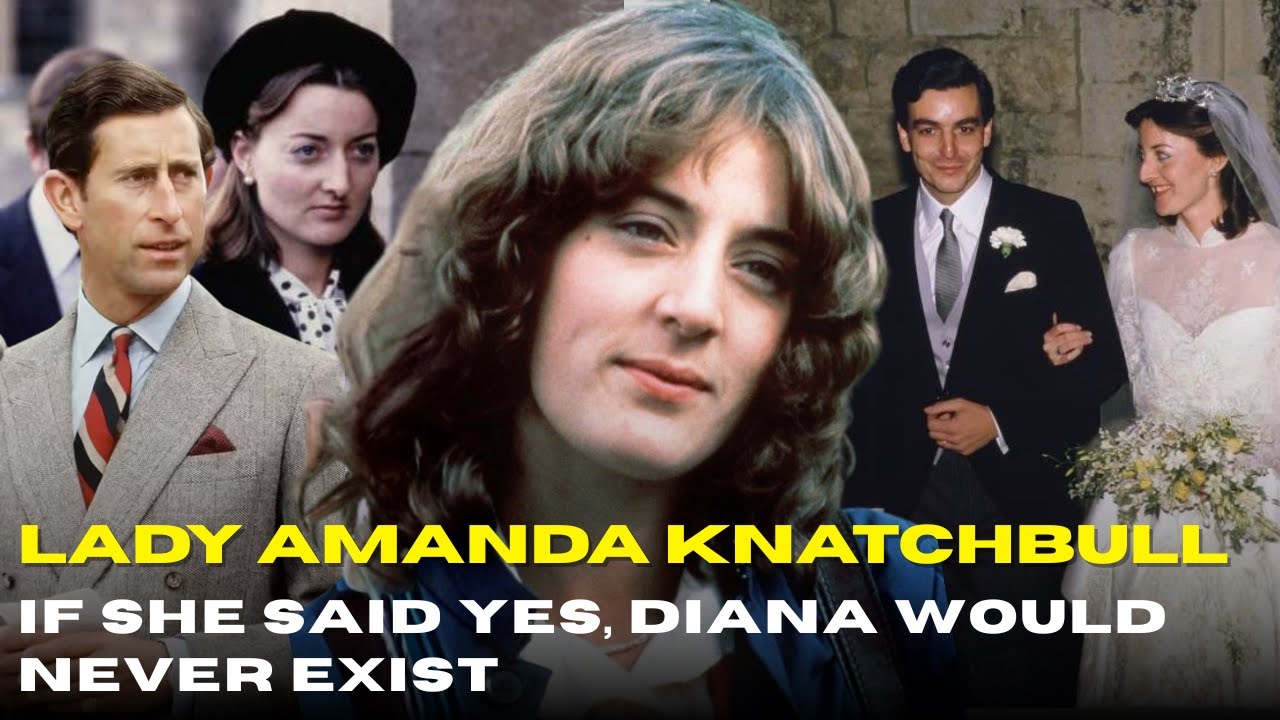
She did not know, as she turned back to the cold stone silence of the castle, that she was watching her life as she had known it drive away forever. The man at the helm of the boat heading for the lobster pots was her grandfather, Louis Mountbatten, the first Earl Mountbatten of Burma. To the royal family he was Uncle Dickie. To the world he was a giant.
He had been the last Viceroy of India, the Supreme Allied Commander in Southeast Asia during the Second World War, a man of such towering charisma and immense vanity that he commanded any room he entered. He was not merely a member of the royal circle; he was its stage director, obsessed with lineage, legacy, and above all the Mountbatten name. He had already scored his greatest victory in 1947, guiding his exiled, bankrupt Greek nephew Philip into the orbit of the future Queen Elizabeth and securing a wedding at last. He had planted his bloodline inside the House of Windsor.
But one victory was never enough. He wanted the line of succession secured for generations. As the Queen and Prince Philip raised their children, Uncle Dickie turned his intense focus to the next generation, the heir, the sensitive, awkward, deeply impressionable Prince Charles. Mountbatten became a surrogate grandfather.
In the cold, emotionally distant nurseries of Buckingham Palace, where the Queen was often busy with her red state boxes and Prince Philip was a harsh, demanding figure, Uncle Dickie was a refuge. Warm, loving, attentive. He wrote Charles countless letters advising him on everything from naval tactics to leadership, and above all, love. His advice on women was famously cold and Edwardian in its pragmatism.
He urged the prince to enjoy his youth, to have adventures, but to choose a wife with the calculations of a horse breeder. In a famous letter he urged Charles to marry a suitable young woman, attractive, of good character, before she fell in love with someone else. The future queen, he believed, should be young, malleable, of proper lineage. And in his view, no lineage was more proper than his own.
Amanda was born on June 26, 1957, the daughter of Patricia, Mountbatten’s eldest child, and John Knatchbull, the seventh Baron Brabourne. From birth she was woven into the fabric of the royal family, not a distant relation but solid flesh and blood. She grew up running through the halls of Broadlands, the Mountbatten Palladian mansion in Hampshire, the very house where the Queen and Prince Philip had spent their honeymoon. Unlike the aristocratic girls who would later race to win Charles, drawn by titles and crowns and fame, Amanda was different.
She was intelligent, educated at Benenden, then took a gap year to travel. She possessed a dry wit and a strong sense of self. She was not a doll to be dressed up. She was also beautiful, not in the striking cinematic way of Diana, but in a quiet, classic, English manner.
Mountbatten began his campaign early. In 1974, when Amanda was seventeen and Charles was twenty-five, he wrote to Charles, gently planting the idea. Amanda was growing up, he noted, becoming a wonderful young woman. He suggested she would be the perfect choice.
She is young, he wrote, but she is one of us. Charles, who idolized his great-uncle, did not recoil from the idea. He warmed to it. Charles was a man perpetually torn between duty and emotion, lonely, exhausted by the London dating scene of the 1970s, the relentless photographers, the girls who sold stories to tabloids, the pressure to find a virgin.
Amanda represented safety. She knew the rules. She would not run to the press. He genuinely admired her.
They shared the same jokes, a love of the outdoors, of painting, of quiet country life. The courtship developed slowly, orchestrated by Mountbatten. He arranged for them to be together at family gatherings, seated them beside each other at dinners, encouraged Charles to visit the family home. It was not a romance of fireworks and passion; it was one of inevitability, a merger of two great houses.
By the late 1970s, the plan was an open secret in the inner circle. The Queen and Prince Philip were aware and, by all accounts, approved. In 1979, the timeline accelerated. Charles was thirty-one.
The press clamored for a royal wedding. Mountbatten urged Charles to finish the matter. That year a fateful trip was arranged. Charles and Amanda accompanied Lord Mountbatten and some friends to Eleuthera, a thin, winding island in the Bahamas.
Here, under the Caribbean sun, the prince and the lady tested the possibility of their future together. They swam, water-skied, picnicked on deserted beaches. During the trip, Charles reportedly broached the subject of marriage. A romantic novel would have had Amanda fall into his arms, weeping with joy.
But Amanda Knatchbull did not say yes. She did not say no either, not yet. She hesitated. She was twenty-one, ten years younger than Charles.
She was fully aware of what she would give up. She valued her independence. She had watched the press hound Charles’s previous girlfriends. To become Princess of Wales meant the death of her private life.
She was also astute enough to see the ghost in the machine, Camilla Parker Bowles. She knew Charles’s heart was complicated. On that beach in Eleuthera, she asked for time. She told him she was too young, not ready for a lifetime commitment to the institution.
Charles, to his credit, was patient. He did not press her. He respected her honesty, which made him respect her more. He agreed to wait.
The understanding was that the door remained open. Mountbatten was frustrated but not discouraged. He wrote to Charles, reassuring him that she admired him greatly, that she just needed to get used to the idea. As the summer of 1979 wore on, the family prepared for their annual trip to Classiebawn Castle, a fairy-tale fortress on a cliff edge in County Sligo on the west coast of Ireland.
It was a place of wild, rugged beauty overlooking the Atlantic. But Ireland in 1979 was a war zone in the north, and the shadows of the Troubles stretched far across the border. The Provisional IRA was active and deadly, seeking high-profile targets. Lord Mountbatten, as a former Chief of the Defence Staff and a relative of the Queen, was a prize target.
Security services in London and Dublin were anxious; they warned Mountbatten repeatedly that Classiebawn was unsafe. The castle was isolated, the roads easy to mine, the harbor where his boat moored impossible to defend. They begged him not to go. Mountbatten ignored them.
He was an old sailor, a warrior who had survived torpedo attacks in the Second World War. Who would want to kill an old man like me? he famously asked. He refused to let a few terrorists dictate his holiday.
In August 1979, the family gathered at Classiebawn: Lord Mountbatten; his daughter Patricia, Amanda’s mother, and her husband John, Lord Brabourne; their fourteen-year-old twin sons Nicholas and Timothy; and the formidable eighty-three-year-old dowager Lady Brabourne, John’s mother. Amanda was there too. Charles, serving in the Royal Navy, was in constant contact. He planned to visit later in the holiday, to spend time with his grandfather and, crucially, with Amanda.
The family whispered that this Irish holiday might be the moment Amanda finally said yes. The place was perfect, romantic, secluded, familial. As the sun set on the evening of August 26, hidden eyes watched the harbor at Mullaghmore. Men moved in the darkness, driven by a hatred the aristocratic Mountbattens could not comprehend.
They did not see Shadow V as a grandfather’s fishing boat. They saw it as a symbol of British imperialism. They saw it as a floating coffin. The morning of the bank holiday in County Sligo seemed impossibly calm.
The Atlantic, often boiling with gray fury, was glittering and still. Inside Classiebawn the mood was light. Lord Mountbatten was in high spirits. At seventy-nine, he lived by a strict, almost military schedule even on holiday.
The plan was simple: go to the harbor, board Shadow V, sail to the lobster pots, catch some fish for tea, enjoy the sea air. The group gathered in the courtyard. There was Mountbatten in comfortable old fishing clothes; Patricia and John Knatchbull; the twins, Nicholas and Timothy, bursting with teenage energy; and the dowager Lady Brabourne. One person was missing from the procession.
Whatever the small reason, it was a decision of terrible consequence. At the harbor in Mullaghmore, fifteen-year-old local boy Paul Maxwell was already aboard, employed as a boat boy for the summer. The family climbed aboard. Mountbatten took the helm.
He loved this boat; it was not a luxury yacht but a working vessel, modest and sturdy. He started the engine, and diesel fumes mixed with the salt air. The twins pushed toward the bow; the adults settled in the stern. Lines were cast off, and Shadow V glided out of the harbor, leaving a clean white wake.
The device was detonated remotely from the shore. The men of the Provisional IRA had a clear line of sight and a radio transmitter. The boat was about two hundred yards from the harbor wall, just passing the last breakwater. Mountbatten was at the helm, looking toward the lobster pots.
Then the world ended. The sound was not a bang but a physical assault on the senses. A gelignite bomb hidden aboard Shadow V exploded with devastating force, ripping the wooden hull apart, exploding upward and outward. Witnesses on shore saw an enormous cloud of gray smoke, a fountain of water, a shower of timber falling from the sky.
Shadow V had vanished. The blast struck the engine block where Mountbatten stood. The great earl died instantly, his legs severed, his internal organs shattered. His grandson Nicholas, fourteen years old, was killed instantly.
Paul Maxwell, the boat boy who had been so happy to get a summer job, was dead as well. The survivors struggled in water filled with debris and oil. Patricia, Amanda’s mother, was hurled from the boat, conscious but horrifically injured, her face torn by shrapnel, her legs broken, her lungs filling with water and smoke. Her husband John floated nearby, legs shattered.
The other twin, Timothy, was screaming, blinded by the blast, burns covering his body. The dowager Lady Brabourne was still alive, floating among the wreckage. Local fishermen, overcoming their shock, sped their boats toward the smoke and pulled the living and the dead from the water. They laid the bodies on the decks of their fishing boats and hurried back to the harbor.
When word reached Classiebawn, initial reports were confused. Perhaps an accident, an engine failure. But Amanda heard the explosion, a sound like a hammer striking the earth at the heart of the water, and she knew. When confirmation came that it was an IRA bombing, her world collapsed.
She was twenty-two. In the space of a heartbeat, her grandfather was dead. Her brother was dead. Her grandmother was dying; she would die the next day in hospital.
Her parents were critically injured. She hurried to Sligo General Hospital, where doctors and nurses worked frantically to stabilize the survivors. She saw her mother, the elegant Patricia, unrecognizable behind a mask of blood and bandages. She saw her father broken and sedated.
She saw her surviving brother Timothy in shock and pain. She had to identify the bodies. The man who had engineered her future, who had guided her hand toward the crown, was now a shattered wreck. The brother she had played with hours before was gone.
Days later, the IRA issued a statement claiming responsibility, calling it an execution. Mountbatten, they said, was a legitimate target to draw attention to the British occupation of Northern Ireland. For Amanda, the message was unmistakable: the crown was a death sentence. In the days that followed, she displayed a composure that was frightening in its determination.
She became the pillar of the family while her parents lay helpless in intensive care. She dealt with the press, the police. She drew strength for her surviving brother. But something inside her had changed fundamentally.
The romantic haze of the Caribbean holiday, the mutual affection with Prince Charles, the gleam of palaces, all of it turned to ash. Prince Charles received the news while fishing in Iceland. He was devastated. He wrote in his diary that life would never be the same.
He had lost his mentor, his grandfather, the man who had been more of a father to him than Prince Philip. He wept openly, consumed by grief and helpless rage. He rushed back to Britain, wanting to see Amanda, to comfort her. Perhaps he thought the tragedy would draw them closer; shared grief, after all, is a strong bond.
He imagined they would cling to each other in the storm. He was wrong. When they finally met in the aftermath, he found a different woman. The carefree girl of Eleuthera was gone, replaced by a survivor with grief-stricken eyes.
She was kind, yes, gentle, but there was a wall between them. Lord Mountbatten’s funeral at Westminster Abbey was a solemn state occasion, attended by kings and queens from across Europe. Charles walked behind the coffin, devastated. Amanda walked with her family, a mask of mournful composure on her face.
But as the world watched the ceremony, she thought of the empty seats, where Nicholas should have been, where Paul Maxwell should have been. She saw the soldiers lining the streets not as a guard of honor but as a security necessity. She saw the bulletproof glass and the snipers on the rooftops. She realized that if she married Charles, this would be her life forever: every car ride, every holiday, every public appearance spent scanning the crowds for a gunman, checking under her car for a bomb, wondering if her children would become the next victims like Nicholas.
The bomb on Shadow V had shattered the illusion of royal inviolability. It had proven that the castle walls were not high enough. In the quiet, painful months that followed, Charles pressed again for her hand. He was desperate, lonely.
He needed her now more than ever. He believed that marrying her would be the highest tribute to Mountbatten’s memory, completing the planned design, a victory of love over terror. He formally proposed again. Amanda looked at the man she loved as a cousin and a friend, and she looked at the institution that had just cost her half her family.
She made the decision that would change the course of history. It was the winter of 1979, and Britain was bleak. The Winter of Discontent had just passed, leaving a nation exhausted by strikes, power cuts, and recession. But inside the gilded cage of the royal family, a different kind of winter had set in, one of grief and frantic ambition.
Prince Charles was lost. Mountbatten’s death had removed his compass, the only voice that guided him through the treacherous waters of royal duty and personal desire. Now he sailed alone, and his desire to fulfill his grandfather’s last wish, to marry Amanda, bordered on obsession. The logic, to him, was irrefutable: the IRA had tried to destroy Mountbatten’s legacy, and marrying Amanda would be the supreme act of defiance, proving the crown could not be broken.
He naively believed, as a man who had never heard the word no, that Amanda would change her mind. But for Amanda, the fog had already lifted. She spent her days in the quiet, sterile rooms of the hospital, watching her parents endure their slow, painful recovery. Her mother’s face was now a map of the violence that had torn their lives apart.
Her father was a shadow of his former self. Every time she looked at them, she saw the price of proximity to the throne. Charles visited often, kind, caring, loving, holding her hand, talking of the future. But there was a gap between them.
He spoke of duty as a sacred obligation; she saw it as a hazardous profession. At some point in late 1979 or early 1980, the moment of truth arrived. The exact date and place remain secret, buried in the memories of the two people who were there. But the outcome is part of the historical record.
Charles pressed his suit. He asked Amanda to marry him. He offered her the world, the title of Princess of Wales, the future crown, palaces, jewels, the adoration of millions. Amanda looked at him.
She loved him, as a cousin, as a friend, as a suffering soul in a cruel world. But she did not love the cage. She said no, and it was not a tentative no. It was a categorical, final refusal.
She explained her reasons with the brutal candor Charles had always admired. She told him the self-abnegation required by the monarchy was absolute, and she was not prepared to make that sacrifice. She told him the shadows of the bomb were too long, that the fear of being a target would poison their lives. She chose freedom over duty.
Charles was stunned. He was the most eligible bachelor in the world; women threw themselves at him daily. The idea that the one woman he actually wanted had refused him was incomprehensible. He argued, he pleaded.
Amanda was unyielding. She had seen the monster up close and refused to feed on it. The rejection broke something in Charles. The Mountbatten plan was dead.
His life plan was torn apart. He was thirty-one, heir to the throne, and alone. The pressure from his father and the press became unbearable. The palace entered a state of emergency.
They needed a replacement, quickly. But the criteria had changed; Amanda had proven that a woman of equal standing would refuse. They needed someone younger, more naive, someone who did not understand the price. They needed a blank canvas.
Enter Lady Diana Spencer. The contrast between Amanda and Diana could not have been starker. Amanda was twenty-two, educated, realistic, cynical about royal life. Diana was nineteen, a nursery school assistant, romantic, utterly dazzled by the idea of a prince.
Where Amanda saw a target, Diana saw a fairy tale. Where Amanda saw a cage, Diana saw a castle. The courtship was swift, almost predatory in its speed. Charles met Diana in the summer of 1980, months after Amanda’s final refusal.
He did not love her, not the way he loved the idea of Amanda, not the way he burned for Camilla Parker Bowles. He saw her as a solution. She was aristocratic, a Spencer. She was a virgin, a non-negotiable condition at the time, and she was of good character, as Mountbatten had advised.
Above all, she was willing. When Charles proposed to Diana in the nursery at Windsor Castle in February 1981, he was not seeking a soulmate. He was closing a business deal because the preferred candidate had withdrawn. Diana, young and deceived by the romance novels she adored, said yes immediately.
She had no idea she was the second choice, filling a void left by a woman who had fled the scene of the crime. Charles and Diana’s wedding on July 29, 1981, was the wedding of the century. But to those who knew the truth, it was a tragedy in fancy dress. Amanda was present.
She sat in St. Paul’s Cathedral and watched the spectacle unfold. She saw the archbishop, the dress with its twenty-five-foot train, the crowds crying with joy. As Diana stumbled over Charles’s names during her vows, Amanda knew the truth: Diana was not marrying a man; she was marrying an institution that devours people.
Amanda had stepped out of the line of fire. Diana had stepped into it, unaware. The years that followed confirmed Amanda’s fears. The fairy-tale marriage of Charles and Diana unraveled with a speed and violence that shocked the world.
The press intrusion was relentless; Diana was hunted, every dress, every glance, every tear analyzed and commodified. The War of the Welsh turned the monarchy into a soap opera. Diana would later describe her severe psychological suffering. Amanda, meanwhile, retreated completely from the royal spotlight.
She gave no interviews, became no royal rebel. She simply went to work. She later worked in social care and charitable roles, largely out of the limelight. The woman who could not save her brother from violence devoted her career to saving other children from harm.
In 1987, eight years after the bomb, Amanda married. Not a duke or a prince, but Charles Ellingworth, a writer and property developer. It was a private, respectful marriage, a traditional wedding, but not a state occasion. No television cameras, no miles of cheering crowds, just family and friends.
They had three sons: Luke, Joseph, and Louis. They lived in a comfortable house in the country, hosted dinner parties, took holidays without bodyguards, argued about ordinary things. Amanda achieved the one thing Diana never could: a normal life. But she remained close to Charles.
The bond created by the bomb was stronger than the rejection. Charles respected her choice, even if he regretted it. They remained friends, confidants who shared a history no one else could understand. When Charles was attacked by the press in the 1990s over his affair with Camilla and his treatment of Diana, Amanda was one of the few who did not judge him.
She knew the pressures he was under. She understood he was a man trapped in a role he had not chosen, just as she was a woman who had escaped a role she did not want. Then came August 31, 1997. The news broke in the early hours: a Mercedes, a tunnel in Paris, a crash.
Princess Diana was dead. Another violent death, another young life ended by proximity to the crown, another wave of public grief that verged on hysteria. For Amanda, Diana’s death must have been a terrible moment of déjà vu, an echo of Sligo. The crown had claimed another victim.
The royal curse was real. If Amanda had said yes in 1980, would she have been the one in that car in Paris? Perhaps not, but she would have been the target, and the system might well have destroyed her in some other way. Diana’s death was the final bloody proof that Amanda was one of the wisest women in royal history.
She had looked into a crystal ball in 1979 and seen the crash coming. She had got off the train before it derailed. In May 2015, under a gray Irish sky, Prince Charles walked along the harbor wall at Mullaghmore. There were no bombs this time, only snipers protecting him.
The locals, the people of Sligo who had been traumatized by the violence done to their guests, turned out in thousands. They did not jeer; they cheered, reaching out to shake his hand. In a widely praised speech, Charles spoke directly of the pain of loss. He spoke of how he could never have imagined how they would come to terms with the pain of that deep loss.
Then he did something extraordinary: he connected his loss to the suffering of the Irish people. Through that terrible experience, he said, he now profoundly understood the suffering borne by so many in these islands, regardless of creed, tradition, or political view. It was a masterful gesture of empathy. Back in England, Amanda must have felt a great weight lift.
The Mountbatten legacy had finally evolved, no longer about ruling an empire but about healing a division. Charles had finally become the man Mountbatten wanted him to be, not through marrying the perfect bride but through showing perfect humanity. The Amanda Knatchbull principle also manifested in the next generation. While Prince William was courting Catherine Middleton, the lessons of Amanda and Diana were clearly applied.
William did not rush. He waited ten years. He made Kate see the cage before asking her to enter it. He subjected her to the photographers, the pressure, the protocol.
Kate Middleton was the Amanda who said yes, but she said yes with her eyes wide open, fully briefed, wholly prepared. The stability of the Wales family today is a direct result of the lessons learned from the rejection of 1980. The year 2019 marked the fortieth anniversary of the bombing, observed with somber remembrance but without the raw terror of the past. Lady Amanda Ellingworth was sixty-two, her face bearing lines of dignity from a well-lived life, resembling her mother Patricia but without the scars of the explosion.
She walked her dogs through a damp English field, miles from the palaces. She checked her phone. The news was full of royal drama: the scandals of Prince Andrew, the departure of Harry and Meghan. She put the phone away.
The wind was cold but refreshing. She was free. On September 8, 2022, the news flashed across screens worldwide: Queen Elizabeth II had died. The Second Elizabethan Age was over.
As Charles ascended the throne, looking older, grayer, visibly weighed down by grief and fate, the ghosts of his past walked with him. Camilla, now Queen Consort, stood by his side. But somewhere in the quiet English countryside, Lady Amanda Ellingworth watched the coronation on television, like everyone else. This was the moment she had been prepared for since birth, the moment Mountbatten had planned and died for.
If she had said yes forty-two years earlier, she would have been the one standing on the balcony of Buckingham Palace. She would have been Queen Amanda. Her face would have been on the new banknotes; her children would have been heirs to the throne. The contrast between that hypothetical reality and the actual one is the final justification of her life’s choices.
She had seen the blood in the water and made her decision. She refused the crown to save her soul. The tragedy of Shadow V in 1979 tore a rift in history. It claimed the life of a great man and shattered the innocence of a royal dynasty.
But from the wreckage emerged two distinct paths. One led to St. Paul’s Cathedral, to Diana, to global fame, and ultimately to a pillar in the Alma tunnel in Paris. The other led to a quiet country church in 1987, to social work, to privacy, and to life.
Lady Amanda Knatchbull stood at the crossroads of the twentieth century. On one side was the crown, glittering and deadly. On the other was obscurity, quiet and safe. She looked at the blood in the water and made her choice.
She was the only royal woman of her generation to achieve a truly happy ending. In the history books, she will be merely a footnote, the girl who said no. But in the reality of human existence, she is the proof that sometimes the bravest thing you can do is walk away from the fairy tale.






