She was eighteen years old. He was forty-seven, twice married, and the head of the richest family in America. In the autumn of 1911, the whole country decided it had the right to judge her. Her name was Madeleine Talmadge Force, a quiet Manhattan schoolgirl who had never asked for the spotlight.
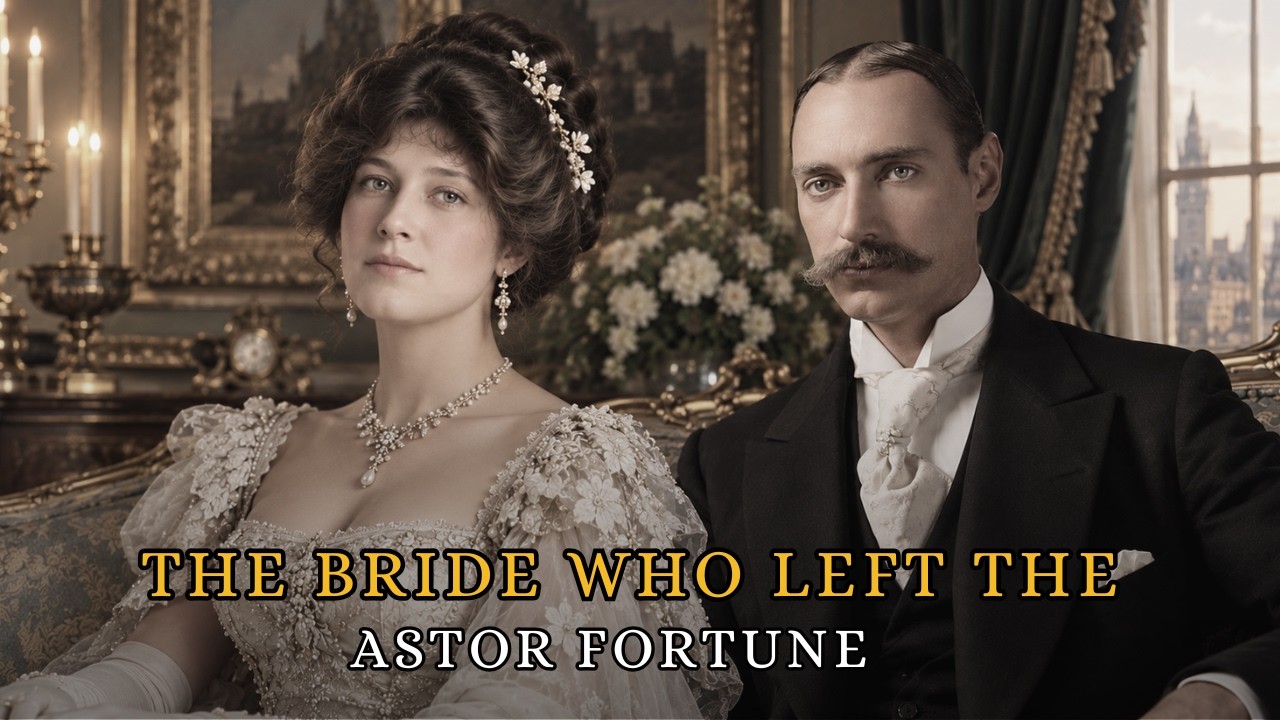
But the moment Colonel John Jacob Astor IV chose her, the newspapers turned on her, and Fifth Avenue’s guardians of morality began to whisper. Was she a calculating social climber, or just a girl who had no idea what she had walked into? Either way, one thing was certain: her life was no longer her own. She had just stepped into the most powerful family in America, and in less than a year, something would happen that would test her in ways no one could have imagined.
In the autumn of 1911, the predatory gaze of American high society shifted away from European court balls and Wall Street boardrooms to focus entirely upon a quiet eighteen-year-old Manhattan schoolgirl named Madeleine Talmadge Force. She had done nothing to court international infamy, yet her sudden courtship with Colonel John Jacob Astor IV—a forty-seven-year-old industrialist, real estate tycoon, and the undisputed patriarch of America’s richest dynasty—ignited a firestorm of moral outrage across the Western world. To the sensational press and the conservative guardians of Fifth Avenue, Madeleine was either a calculating social climber or a helpless lamb led into the parlor of a disgraced, twice-married billionaire. Madeleine was born into the comfortable, respectable upper-middle class of Brooklyn, the daughter of William Hurlbut Force, a prosperous shipping merchant, and Catherine Arvilla Talmadge.
Her early youth was defined by the quiet, sheltered routines typical of New York’s traditional elite, divided between private tutors, elegant finishing schools, and seasonal excursions to seaside resorts. Unlike the daughters of the Knickerbocker aristocracy, who were trained from birth to navigate the treacherous political alliances of social climbing, Madeleine possessed an unstudied, gentle charm that was entirely unaccustomed to public scrutiny. She was tall, slender, and possessed of dark, expressive eyes that conveyed a quiet intellect behind a demure exterior. When she graduated from Miss Ely’s School on Riverside Drive in 1910, her family anticipated a conventional debut into society, followed by a respectable marriage to a young man of their own comfortable background.
Everything changed in the winter of 1910, when her path crossed that of Colonel John Jacob Astor IV, the wealthiest living representative of the legendary fur and real estate empire founded by his great-grandfather. At forty-seven, Astor was a formidable, somber figure who controlled vast swaths of Manhattan real estate, owned the luxurious St. Regis Hotel, and possessed a personal fortune estimated at nearly one hundred million dollars, an astronomical sum in the early twentieth century. However, Astor carried a massive social stigma that made him a controversial figure in the eyes of New York’s moral arbiters.
In late 1909, his first wife, the formidable Ava Lowle Willing of Philadelphia, had divorced him following years of emotional estrangement, a public scandal that shocked Episcopal Church leadership and threatened to fracture the delicate social peace of Fifth Avenue. Under the rigid unwritten laws of Victorian society, divorced men of high standing were viewed with deep suspicion, and any clergyman who dared to sanction a second marriage faced immediate professional ruin. Despite the thirty-year age gap and the mounting public controversy, John Jacob Astor became utterly captivated by the fresh, unpretentious beauty of Madeleine Force. He courted her with intense, lavish devotion, inviting her family onto his private yacht, the Nourmahal, sending massive floral arrangements to her family’s brownstone, and surrounding her with the dizzying, intoxicating machinery of infinite wealth.
For eighteen-year-old Madeleine, the whirlwind romance was both thrilling and terrifying, sweeping her out of her quiet, predictable world into a realm where every movement was recorded by newspaper reporters. While her parents harbored deep reservations about the staggering age disparity and the inevitable social backlash, Astor’s persistent charm and absolute promises of protection ultimately won their consent. When news of their formal engagement broke in the summer of 1911, the American press unleashed a wave of sensationalism unprecedented in the annals of Gilded Age journalism. Tabloid headlines relentlessly mocked the vast age difference, while conservative Protestant ministers denounced the union from their pulpits, publicly declaring Astor’s divorce an unpardonable sin and refusing to officiate their wedding.
Prominent clergymen across New York, Rhode Island, and Massachusetts formally barred the couple from their sanctuaries, turning the simple act of a marriage ceremony into a national moral crisis. Astor, accustomed to bending the world to his formidable will, used his immense financial influence to search for a minister willing to brave the wrath of the church hierarchy. Finally, Reverend Joseph Lambert, a congregational minister from Providence, agreed to perform the ceremony, setting the stage for a quiet, highly guarded wedding at Beechwood, Astor’s sprawling summer mansion in Newport, Rhode Island. On September 9th, 1911, inside the grand ballroom at Beechwood, eighteen-year-old Madeleine Force spoke her vows and officially became Mrs.
John Jacob Astor, stepping into a gilded cage that bound her life to the most famous fortune in the world. As the newlyweds stepped out onto the marble terrace to face a sea of reporters and curious onlookers, Madeleine wore a gown of delicate lace and pearls, looking radiant, yet visibly drained by the relentless public hostility. She had achieved the absolute peak of American social standing, but the victory was hollow, tainted by the bitter resentment of Fifth Avenue and the persistent feeling that she was an intruder in the Astor dynasty. Desperate to escape the suffocating press coverage and the cold shoulder of New York high society, Astor made immediate preparations to take his young, exhausted bride far away from the shores of the United States.
They would seek refuge in the ancient deserts of Egypt and the fashionable resorts of Europe, embarking upon an extended Mediterranean honeymoon designed to allow the public scandal to fade from memory. Yet, as the magnificent ocean liner pulled away from the New York docks bearing the newlyweds toward the old world, neither Madeleine nor her husband could fathom that their desperate flight from public scandal was steering them directly toward an encounter with eternal tragedy. In the late autumn of 1911, as the ocean steamer carried John Jacob Astor and his young bride away from the relentless sensationalism of the New York press, nineteen-year-old Madeleine experienced her first genuine taste of peace since her whirlwind courtship had begun. The vast expanse of the Atlantic Ocean served as an effective moat, insulating the newlyweds from the hostile gossip columns of Fifth Avenue and the moralistic sermons of Manhattan clergymen.
Astor had spared no expense to make their journey a master class in gilded luxury, reserving entire suites of staterooms, securing private servants, and surrounding Madeleine with an atmosphere of absolute protection. For the first time, away from the prying eyes of reporters and social arbiters, the couple could cultivate a genuine, unhurried intimacy, discovering shared quiet interests far removed from the grueling demands of Gilded Age social warfare. Their journey led them first through the historic capitals of Western Europe before descending into the warm, exotic landscapes of the Mediterranean, where they embarked upon an extended Nile River cruise through Egypt aboard a private luxury dahabeah. In the ancient winter sunlight of Cairo and Luxor, surrounded by the timeless stone monuments of the pharaohs, Madeleine flourished, gaining physical strength and emotional composure as the haunting memories of her controversial wedding began to fade into the background.
Astor, relaxed and deeply enamored with his young wife, indulged her every wish, arranging private tours of archaeological excavations, purchasing exotic jewelry, and ensuring that she was treated with the deference accorded to international royalty. To the cosmopolitan expatriate society gathering at the Shepherd’s Hotel in Cairo, the age gap between the quiet, distinguished American billionaire and his elegant young bride seemed far less scandalous than it had to the rigid guardians of Newport. During these serene winter months along the Nile, their quiet sanctuary was further transformed by a profound announcement that filled the couple with intense, joyful anticipation. Madeleine was pregnant with their first child.
For Astor, the news brought a deep sense of personal redemption and dynastic pride, offering the prospect of a new heir who would solidify his second marriage and carry the legendary family name forward into a new generation. For young Madeleine, the pregnancy brought a sudden, sobering realization of her evolving responsibilities as a mother, deepening her emotional bond with her husband and reinforcing her desire to establish a stable, loving home far removed from public scandal. Yet, as her pregnancy progressed into its second trimester, the tranquil isolation of their Egyptian exile began to be overshadowed by a growing, instinctual yearning to return home to the United States. Madeleine was acutely aware that her child needed to be born on American soil to claim its rightful place within the family legacy and secure its citizenship.
And she missed the comforting presence of her mother and sister as her physical condition grew more delicate. Astor, eager to grant his wife’s every desire and confident that the passage of six months had dulled the sharper edges of American tabloid hostility, agreed that it was time to end their Mediterranean retreat. He began making inquiries through his European travel agents to secure first-class passage back across the Atlantic on the most luxurious, advanced, and prestigious ocean liner ever constructed by human hands. The White Star Line was preparing to launch its magnificent flagship, a ship touted by marine engineers and the international press as a technological marvel that rendered ocean travel completely safe from the unpredictable hazards of the sea.
In early April of 1912, the Astor party traveled north to Europe, making a brief stop in Paris to purchase an elaborate maternity wardrobe for Madeleine before journeying to the English port of Southampton. There, gleaming against the gray spring sky, stood the massive, pristine hull of the RMS Titanic, preparing to embark upon its celebrated maiden voyage to New York. Astor secured a suite of opulent first-class staterooms on C deck, complete with private sitting rooms, servant quarters, and exquisite period furnishings, ensuring that his pregnant wife would experience the pinnacle of comfort and safety during her journey across the cold North Atlantic. On April 10th, 1912, as Madeleine stepped onto the gangway of the Titanic, surrounded by her husband, her valet, her maid, and her beloved pet Airedale dog, Kitty, she felt a profound sense of hope and quiet contentment.
She was returning to her homeland, not as a frightened, scandalous schoolgirl, but as a dignified, expectant mother holding the arm of the most powerful man in North America. She had survived the storm of public hatred, found love in the shadow of controversy, and was sailing toward a bright, secure future defined by motherhood and wealth. Neither she nor her devoted husband could imagine that the giant steel vessel under their feet was carrying them directly toward an icy rendezvous with destiny where all the gold of the Astor dynasty would be powerless against the frozen dark of the open sea. On the night of April 14th, 1912, as the Titanic sliced through the glass-like waters of the Grand Banks of Newfoundland under a cloudless, star-filled sky, the atmosphere within the first-class reception rooms was defined by serene luxury.
John Jacob Astor and nineteen-year-old Madeleine dined in the opulent Ritz-style restaurant surrounded by the wealthiest representatives of Western industrial society, entirely oblivious to the mortal peril navigating toward them in the dark. At 11:40, a dull, barely perceptible vibration shuddered through the floorboards of their C-Deck suite. A faint scraping sound that few passengers interpreted as anything more than a minor mechanical hitch in the ship’s engines. Astor, maintaining his characteristic calm, assured his pregnant young wife that the massive 46,000-ton vessel was virtually indestructible, encouraging her to remain warm in bed while he went up to the promenade deck to investigate the minor disruption.
When Astor returned to their suite a short time later, his calm composure had been replaced by a quiet, grave urgency, having learned from Captain Edward Smith and White Star Line officials that an iceberg had breached the forward watertight compartments. He instructed Madeleine to dress warmly in her thick wool travel suit, wrap herself in heavy fur coats, and put on a bulky cork life belt over her delicate maternity clothes. Gathering her maid, Rosalie Bidois, and her nurse, Caroline Endres, the Astor party joined the small stream of first-class passengers ascending the grand staircase toward the icy boat deck. As distress rockets hissed into the black sky and exploded in blinding white showers overhead, the reality of the impending disaster began to dawn on the passengers.
But Astor remained steadfastly composed, shielding his terrified young wife from the growing panic and cold ocean wind. By 1:30 in the morning, as the bow settled visibly into the freezing sea and the stern began its gradual lift, the crew initiated the evacuation of lifeboats on the A deck promenade under the strict mandate of women and children first. Astor escorted Madeleine to lifeboat number four, helping her maneuver her heavy lifebelt and swollen figure down through an open promenade window into the swaying wooden craft below. Recognizing his wife’s delicate physical condition and advanced pregnancy, Astor stepped forward and politely asked second officer Charles Lightoller if he might board the boat to assist and protect her.
Lightoller, adhering strictly to his unyielding interpretation of maritime protocol, firmly refused entry to any male passenger until every woman had been safely loaded, declaring that no men would be permitted to board under any circumstances. Understanding that his immense wealth, social stature, and world fame were utterly useless against the uncompromising discipline of the sea, Colonel Astor accepted his fate with extraordinary quiet stoicism. He stepped back from the open window, looked down into the dimly lit lifeboat, and offered his wife a final, serene smile, assuring her that the ship’s distress calls had been answered and that they would soon be reunited in New York. He tossed his heavy leather gloves down to her as a token of comfort, turned away from the boat, and walked back up toward the crowded, sloping starboard deck.
As Lifeboat 4 was lowered sixty feet into the pitch-black water, Madeleine looked up through her tears to see her husband standing near the gymnasium roof, quietly smoking a cigarette alongside his dog, watching the small boat drift out into the freezing wilderness of the open ocean. From her vantage point in the overcrowded wooden lifeboat, floating amidst towering icebergs in thirty-degree water, nineteen-year-old Madeleine witnessed the horrific, agonizing final moments of the world’s grandest ocean liner. She watched in numbed horror as the ship’s lights flickered and died, leaving the scene in blinding darkness, followed by a thunderous roar as the iron hull broke in two under immense pressure. At 2:20 in the morning, the stern slipped vertically beneath the icy surface, taking John Jacob Astor IV and 1,500 other souls into the abyss of the North Atlantic.
Wrapped in a heavy fur coat, shivering uncontrollably from shock and icy spray, the pregnant widow clutched her lifebelt in the dark, listening to the agonizing cries of dying men echoing across the water until silence finally settled over the sea. As the long, terrifying hours of darkness dragged on toward dawn, Madeleine huddled quietly in the bottom of the boat, shielding her unborn child from the freezing elements and fighting the overwhelming numbness that threatened to claim her consciousness. She had entered the night as the pampered, enviable bride of America’s richest dynasty, but as the first crimson rays of sunrise illuminated the endless ice fields of the Atlantic, she was a traumatized nineteen-year-old widow holding the heavy burden of the Astor future inside her womb. As the cold gray twilight of dawn broke over the North Atlantic on April 15th, 1912, the heroic silhouette of the RMS Carpathia emerged through the icy mist, firing rockets to signal its arrival to the drifting lifeboats.
For nineteen-year-old Madeleine Astor, the sight of the small Cunard liner offered physical deliverance, but her emotional reality had been permanently shattered by the horrific events of the night. Her lifeboat was pulled alongside the rescue ship, and crew members used wooden bosun’s chairs to haul the exhausted, shivering pregnant widow up the towering iron hull onto the deck. Upon stepping onto the crowded, frantic floorboards of the Carpathia, Madeleine collapsed into a state of profound psychological shock, her mind unable to fully process that the vast Astor fortune, the glittering social empire, and her devoted husband had vanished into the frozen dark. On board the overburdened rescue ship, Captain Arthur Rostron immediately ordered that the most comfortable quarters be surrendered to the most vulnerable survivors, placing Madeleine inside a quiet stateroom under the constant care of medical staff and her surviving servants.
While other widowed matriarchs of Gilded Age society paced the corridors in desperate search of news, Madeleine remained secluded in near total silence, clutching her hands over her unborn child as if trying to shield the fatherless heir from the surrounding nightmare. The atmosphere aboard the Carpathia during its three-day journey back to New York was haunting and oppressive, thick with the quiet weeping of hundreds of newly created widows and the heavy lingering smell of brandy, damp wool, and medical tonics. Wireless operators on the ship worked frantically under strict orders to prioritize emergency survivor lists, beaming brief, tragic dispatches to a stunned global public that confirmed Colonel John Jacob Astor IV was among the dead while his young bride had survived. When the Carpathia finally glided past the Statue of Liberty on the rainy evening of April 18th, 1912, New York Harbor was transformed into a chaotic, terrifying theater of media sensationalism and public grief.
Over 30,000 people gathered along the storm-swept docks of Pier 54 while tugboats carrying aggressive newspaper reporters, photographers with blinding magnesium flares, and private investigators circled the rescue ship like vultures. The American press, which had relentlessly mocked Madeleine’s marriage seven months earlier, now descended upon her trauma with feverish intensity, desperate for a photograph or a tearful quote from the world’s most famous nineteen-year-old widow. To protect the fragile young woman from the predatory mob, Vincent Astor, John Jacob’s grown son from his first marriage, boarded the vessel with a team of family physicians, wrapping Madeleine in heavy blankets and rushing her down a private gangway into a waiting closed automobile. Driven at high speed through the rain-slicked streets of Manhattan, Madeleine was delivered directly to the cavernous, silent interior of the Astor mansion at Fifth Avenue, the very house where her late husband had built his life and where his formidable mother, Caroline Astor, had once ruled American society.
The grand residence, filled with priceless tapestries, marble statues, and portraits of Astor ancestors, felt less like a home and more like a mausoleum dedicated to a vanished world. Doctors immediately ordered absolute bed rest for the traumatized widow, recognizing that the severe hypothermia, physical exhaustion, and emotional paralysis she had suffered posed a grave threat to her delicate pregnancy. Outside the massive iron gates on Fifth Avenue, reporters stood vigil day and night, charting every arrival of medical specialists and feeding the public’s insatiable appetite for details about the unborn child who held the future of the Astor estate in its hands. During those agonizing weeks of spring isolation inside the darkened mansion, Madeleine was forced to confront the grim reality of her new existence within the American social hierarchy.
She was no longer the envied dazzling bride of a legendary industrialist, nor was she a free young woman capable of charting her own independent path through the world. She had been elevated to an almost mythical status in the public imagination, a tragic heroine of maritime history, the living remnant of a legendary Gilded Age romance, and the biological vessel for a multi-million dollar dynasty. Every breath she drew, every movement she made, and every decision regarding her health was scrutinized by doctors, lawyers, and Astor family executors who viewed her primarily as the custodian of John Jacob Astor’s final legacy. As April turned to May, and the initial physical trauma of her rescue began to recede, nineteen-year-old Madeleine sat alone in her Fifth Avenue bedroom, listening to the muffled noise of streetcars on the pavement below.
She had survived the iron monster of the Atlantic, but she now found herself trapped in a different kind of wilderness, a cold, gilded world of legal trusts, family scrutiny, and public tragedy from which there seemed to be no escape. In late May of 1912, as the nation slowly recovered from the immediate horror of the Titanic disaster, the Surrogate Court of New York unsealed the last will and testament of Colonel John Jacob Astor IV. Wall Street investors, social columnists, and rival industrial dynasties waited with intense curiosity to see how the late titan had divided his vast empire, estimated at nearly one hundred million dollars and comprised of prime Manhattan real estate, luxury hotels, railway stocks, and international bonds. While the majority of the ancestral estate passed directly to Vincent Astor, the twenty-year-old son from John Jacob’s first marriage, the legal document contained meticulous, elaborate provisions specifically crafted for his nineteen-year-old pregnant widow, Madeleine Force Astor.
To the casual observer scanning newspaper summaries, the terms appeared extraordinarily generous, granting Madeleine the lifetime income from a five million dollar trust fund, full use of the palatial Fifth Avenue mansion, and seasonal occupancy of Beechwood, the magnificent summer estate in Newport, Rhode Island. However, buried deep within the formal legal phrasing of the will lay a formidable, restrictive mandate that transformed these immense financial privileges into a gilded prison. Every dollar of income, every piece of real estate, and every domestic privilege granted to Madeleine was strictly contingent upon her remaining a widow for the rest of her life. The moment Madeleine signed a marriage certificate with another man, her entire financial legacy, her access to the Astor mansions, and her elevated social standing would be instantly revoked, returning every cent of the five million dollar trust fund back into the primary estate controlled by her stepson Vincent.
This calculated legal clause was not an anomaly in Gilded Age estate planning, but rather a cold institutional mechanism designed by patriarchs to prevent family fortunes from being diluted, siphoned, or controlled by secondary husbands. For young Madeleine, who was still a teenager mourning the violent death of her husband, the message embedded in the legal parchment was unassailable. Her youth, her romantic future, and her personal autonomy were permanently mortgaged to the memory of John Jacob Astor. The psychological impact of these golden shackles was immediate and suffocating, creating an insurmountable barrier between Madeleine and the rest of the world as she navigated the delicate final months of her pregnancy.
She was acutely aware that every movement she made, every visitor she received, and every personal acquaintance she cultivated was subjected to the quiet vigilant oversight of the Astor family attorneys and estate trustees, who were legally obligated to enforce the strict terms of the will. If she chose to live in a modest, independent life away from the family orbit, she risked financial vulnerability and social ostracization. Yet, if she accepted the vast luxury offered by the trust, she remained a public monument to a tragic marriage, forced to live inside grand houses that belonged to a dead patriarch rather than herself. The Fifth Avenue mansion, with its grand ballroom capable of holding hundreds of guests and its quiet corridors filled with priceless antiques, became a daily reminder of her total isolation.
An ornate cage where her every physical need was attended to by servants, while her emotional world remained completely barren. During the hot summer months of 1912, Madeleine retreated to Beechwood in Newport, hoping that the ocean breezes and quiet coastal walks would offer a sanctuary from the relentless scrutiny of the New York press. But Newport, the summer capital of American high society, proved to be an even more hostile environment, dominated by conservative matriarchs who viewed Madeleine with a mixture of cold pity and lingering resentment. While Vincent Astor assumed his role as the new head of the family, hosting grand dinners and managing the vast real estate portfolio, Madeleine remained confined to the shaded verandas of Beechwood, guarding her delicate health and preparing for the arrival of the fatherless heir.
The local press posted photographers along the iron perimeter fences of the estate, recording every rare glimpse of the young widow walking along the cliff walk, feeding public fascination with a woman who held a multi-million-dollar future inside her womb. As the late summer sun beat down upon the marble terraces of Beechwood, Madeleine began to understand the true nature of the bargain she had entered when she spoke her wedding vows at eighteen. She had surrendered her quiet, middle-class anonymity to step into the apex of American wealth, only to find herself bound by legal contracts that punished her youth and weaponized her future against her personal happiness. She was nineteen years old, immensely wealthy, world-famous, and deeply traumatized, holding the keys to grand mansions and vast bank accounts that were hers only so long as she remained forever frozen in the shadow of the Titanic.
The wealth that was meant to protect her had become her primary burden, a cold, unyielding monument that demanded her total submission to the past. Yet, as the date of her child’s birth approached, a quiet, fierce resolve began to take root within the young widow’s spirit. A realization that her true purpose lay not in serving as a decorative ornament for the Astor legacy, but in protecting the innocent life growing within her, and eventually fighting for her own right to exist beyond the gilded cage of Fifth Avenue. On the morning of August 14th, 1912, a tense silence fell across the tree-lined neighborhood surrounding Fifth Avenue, as medical teams, private nurses, and security guards hurried through the heavy wrought-iron doors of the Astor mansion.
Nineteen-year-old Madeleine Force Astor had gone into labor, bringing to a climax four months of intense national speculation and legal maneuvering regarding the posthumous heir of the Titanic’s most famous casualty. Outside on the pavement, dozens of reporters, photojournalists, and curious onlookers gathered behind police barricades, eager for any news from the delivery room that would confirm the continuation of America’s most prominent Gilded Age dynasty. Inside the quiet residence, under the careful supervision of elite Manhattan obstetricians, Madeleine gave birth to a healthy, eight-pound baby boy. The infant was immediately christened John Jacob Astor VI, a name carrying three generations of immense industrial wealth, aristocratic expectation, and profound historical tragedy.
For young Madeleine, holding her newborn son provided a fleeting moment of deep emotional healing, offering a tangible purpose amidst the overwhelming grief and trauma that had defined her life since the icy night in the North Atlantic. The child, who would quickly be dubbed Jakey by the international press, represented a living link to the husband she had lost and a powerful symbol of hope for her own uncertain future. Yet, even in the intimate, quiet moments of early motherhood, Madeleine was painfully aware that her newborn child was not merely her son, but a high-stakes pawn in a complex financial game controlled by lawyers, courts, and corporate trustees. Under the provisions of John Jacob Astor IV’s will, the birth of a healthy male heir immediately activated a vast three million dollar trust fund designated specifically for the child’s upbringing and future inheritance, securing his position as a major stakeholder in the vast family empire alongside his older half-brother, Vincent Astor.
The arrival of the new heir did little to soften the icy distance between Madeleine and the established senior members of the Astor clan, particularly Vincent Astor, who had assumed effective control of the primary estate. Vincent, who was two years older than his stepmother, viewed the newborn child and his young mother through a lens of profound corporate skepticism, recognizing that the baby’s legal standing entitled him to significant shares of the real estate holdings and liquid capital that would otherwise have remained concentrated under his own direction. The public relationship between the grieving teenage widow and the ambitious twenty-year-old patriarch was characterized by formal, cold politeness mediated entirely through law firms and financial managers. Madeleine found herself forced to navigate complex legal guardianship hearings in the New York courts to establish her rights to manage her son’s immediate educational and domestic allowances, fighting quietly to ensure that her authority as a mother was not usurped by the family’s corporate apparatus.
Desperate to shield her infant son from the suffocating press coverage and predatory atmosphere of Fifth Avenue, Madeleine spent the autumn of 1912 and the following spring in near total seclusion at Beechwood in Newport and at private country estates in Long Island. She created a protected, highly disciplined nursery environment where young Jakey could grow up far removed from the morbid fascination of the public who treated the boy as a living curiosity of maritime history. Every photograph of the child published in newspapers was analyzed by readers seeking physical resemblances to his late father, while fortune hunters and curiosity seekers constantly attempted to breach the security perimeters of her residences. Madeleine hired private guards and trusted personal staff to surround her child, taking extreme precautions to ensure his physical safety and emotional stability while she quietly managed the heavy burden of her own ongoing depression.
As the months turned into years and young Jakey took his first steps through the grand, quiet halls of the family estates, Madeleine felt a growing internal friction between her duty to the past and her desire for a genuine future. She had fulfilled her societal and legal obligation to the Astor legacy by bringing the posthumous heir safely into the world and protecting his inheritance through arduous legal battles. Yet, as she looked at her reflection in the gilded mirrors of the Fifth Avenue mansion, she realized she was still only twenty years old, bound to a life of perpetual mourning, artificial seclusion, and cold institutional wealth that offered no warmth for her own developing spirit. She was living inside a monument built for a dead titan, watching her youth slip away beneath the watchful eyes of lawyers who valued her only as long as she remained a silent, compliant widow.
The birth of her son had given her the strength to survive the immediate aftermath of the tragedy. But as she watched him play in the quiet gardens of Beechwood, Madeleine began to recognize that true devotion to her child did not require her to sacrifice her own humanity on the altar of the Astor name. She began to contemplate the terrifying, liberating possibility of breaking free from her golden shackles, even if it meant walking away from millions of dollars and facing the renewed wrath of American high society. By the spring of 1916, as the shadows of the Great War lengthened across Europe, twenty-two-year-old Madeleine Force Astor had spent four long years living as a living monument to maritime tragedy.
She had fulfilled every expectation imposed upon her by the guardians of Gilded Age propriety, remaining secluded within the marble walls of the Fifth Avenue mansion and Beechwood while raising her young son, John Jacob Astor VI, with meticulous care. Yet, beneath her quiet, dutiful demeanor lay a growing, irrepressible desire to reclaim her own life from the cold, legalistic machinery of the Astor estate. She had come to realize that the vast five million dollar trust fund and the grand palatial mansions were not gifts, but gilded shackles designed to keep her youth, her emotions, and her future permanently hostage to the memory of a dead patriarch. To remain an Astor meant choosing a lifetime of artificial solitude subject to the constant surveillance of lawyers and the cold condescension of Manhattan high society.
The catalyst for Madeleine’s liberation arrived in the form of William Carl Dick, a handsome, wealthy banker and prominent member of Brooklyn high society who Madeleine had known since her early adolescence. Unlike the intense, formidable Colonel Astor, William was close to Madeleine in age, approachable, and entirely untainted by the complex, exhausting rivalries of Fifth Avenue aristocracy. Their friendship, quietly rekindled during private gatherings in Long Island and Bar Harbor, rapidly deepened into a mature, genuine romance that offered Madeleine something the Astor dynasty could never provide: warmth, equality, and a normal domestic life far removed from the glaring lights of public tragedy. William offered her a partnership built on mutual affection rather than social positioning, showing her that her life did not have to end at twenty-two in a cold, marble mausoleum dedicated to the past.
However, choosing to marry William Carl Dick required Madeleine to execute an extraordinary act of personal renunciation that stunned the American financial and social establishment. Under the explicit, unyielding terms of John Jacob Astor IV’s will, the moment Madeleine signed a new marriage certificate, she would automatically forfeit every penny of her five million dollar trust fund income, surrender her life interest in the Fifth Avenue mansion, and give up her right to reside at Beechwood in Newport. Every piece of real estate, every corporate bond, and every domestic privilege tied to her widowhood would instantly revert to her stepson, Vincent Astor, and the primary family trusts. To the cynical materialist guardians of Gilded Age society, the idea that a young woman would voluntarily walk away from a multi-million dollar fortune for love was unthinkable, viewed as an act of reckless insanity or unforgivable disrespect toward America’s richest family.
On June 22nd, 1916, inside a quiet chapel in Bar Harbor, Maine, Madeleine Force Astor spoke her vows and became Mrs. William Carl Dick, intentionally triggering the complete financial severance clause of her late husband’s estate. With a single signature, twenty-two-year-old Madeleine stripped herself of the grandest fortune in North America, handing back the keys to the Fifth Avenue mansion and walking away from the gilded cage that had defined her youth. The national press reacted with a mixture of shock, fascination, and grudging admiration, publishing sensational headlines that marveled at the Titanic widow who had traded millions of dollars for personal happiness.
While Vincent Astor and the estate trustees moved swiftly to take possession of the forfeited assets, closing the doors of the Fifth Avenue mansion and reallocating the trust funds, Madeleine experienced a profound, liberating sense of relief, feeling the immense weight of the Astor legacy lift from her shoulders for the first time in five years. While Madeleine surrendered her own financial inheritance, she remained fiercely protective of her four-year-old son, John Jacob Astor VI, ensuring through her legal team that his independent three million dollar trust fund remained entirely intact and insulated from her remarriage. She negotiated clear, binding legal agreements that granted her full personal custody of young Jakey, allowing her to raise him inside her new home alongside William Carl Dick without interference from the corporate trustees of the Astor estate. She was determined that her son would grow up with a grounded, loving family structure, surrounding him with step-siblings and normal domestic rhythms, rather than the cold, distant grandeur of a Gilded Age palace.
She had successfully separated her maternal duty from her personal identity, proving that she could safeguard the heir of the Astor name without remaining a prisoner to the fortune herself. By choosing freedom over fortune, Madeleine Force Dick achieved a victory over the rigid social and legal systems that sought to govern her existence. She had entered high society as an innocent eighteen-year-old bride, survived one of the greatest disasters in human history, born a fatherless heir under intense global scrutiny, and ultimately had the courage to walk away from the apex of American wealth. As she settled into her new life in Brooklyn and Long Island, away from the gossip columns and the predatory glare of Fifth Avenue, Madeleine knew that her journey was far from over.
Yet, as she looked toward the future with her new husband and her young son, she walked forward not as a tragic relic of the Titanic, but as an autonomous woman who had reclaimed her own soul from the golden shackles of the past. In the years following her 1916 marriage to William Carl Dick, twenty-four-year-old Madeleine experienced the quiet, grounding stability she had spent her early youth desperately seeking. By surrendering her multi-million dollar Astor trust fund and stepping down from the gilded pedestal of Fifth Avenue, she had shed the heavy, suffocating public persona of the Titanic widow. Settling into an elegant, comfortable country estate in Islip, Long Island and maintaining a dignified brownstone residence in Brooklyn, Madeleine embraced a life defined by quiet domesticity, genuine friendships, and suburban tranquility far removed from the predatory glare of New York social columnists.
She gave birth to two more sons, William Carl Dick Jr. and Jackson Force Dick, creating a lively, warm household where laughter and normal family routines replaced the stern, formal atmosphere of her previous existence. To her neighbors and local community, she was simply Mrs. William Dick, a devoted mother and active supporter of local charitable causes who rarely spoke of her extraordinary past.
Yet, despite her deliberate attempt to bury the tragic memories of her first marriage beneath a new name and a quiet lifestyle, the shadow of the Titanic disaster proved to be an inescapable force that haunted Madeleine’s inner world. She remained deeply traumatized by the horrors of that freezing April night in 1912, suffering from lingering nightmares, sudden bouts of melancholia, and an intense, lifelong phobia of deep water and ocean travel. While the roaring twenties saw the American upper class embrace transatlantic steamship voyages and lavish European holidays, Madeleine flatly refused to step aboard an ocean liner ever again, preferring to spend her summers in the quiet safety of Long Island or Upstate New York. She carefully avoided public anniversaries, declined countless invitations to speak at Titanic survivor gatherings, and refused all requests from journalists seeking interviews, guarding her private pain behind an impenetrable wall of dignified silence.
A complex emotional challenge during these quiet years revolved around raising her eldest son, John Jacob Astor VI, who occupied an extraordinary, contradictory position within her household. Known affectionately as Jakey, the boy was being raised in a warm, middle-class family environment alongside his two younger Dick half-brothers. Yet he remained the primary postmortem heir to one of the largest corporate fortunes in the United States. As Jakey grew older, his striking physical resemblance to his late father served as a constant, poignant reminder to Madeleine of the man she had lost in the icy Atlantic.
Madeleine worked tirelessly to protect the boy from the immense pressure of his name, balancing his legal obligations to the Astor estate trustees with her own desire to keep him grounded, humble, and emotionally secure. She ensured he enjoyed a loving childhood with his brothers, fostering a tight-knit family unit that shielded all three boys from the artificial snobbery of Manhattan high society. However, as the 1920s progressed, the vast financial apparatus surrounding young Jakey began to exert an unavoidable pull, drawing the teenager gradually back into the orbit of the Astor family estate. Vincent Astor, who had assumed total management of the primary family empire, maintained a distant formal relationship with his stepmother, but took an active, vigilant interest in his younger half-brother’s financial affairs and social development.
As Jakey approached adolescence, the corporate lawyers and estate trustees insisted upon elite boarding school enrollments, private tutors, and formal introductions to the financial stewards of Fifth Avenue, reminding Madeleine that her eldest son could never truly escape his destiny as an Astor. Madeleine watched with a mixture of maternal pride and quiet anxiety as her son began to step into his inherited role, fearing that the immense wealth waiting for him at age twenty-one would subject him to the same psychological burdens that had claimed his father. Throughout this period of quiet transition, Madeleine’s marriage to William Carl Dick provided a steady, reassuring anchor that allowed her to heal from the profound psychological wounds of her teenage years. William proved to be a compassionate, understanding partner who respected her need for privacy and supported her fiercely against intrusive media inquiries.
In the quiet solitude of her Long Island gardens, far from the cold marble halls of the Fifth Avenue mansion and the traumatic memories of the open sea, Madeleine built a life grounded in maternal devotion and personal peace. She had proven that a woman could survive a catastrophic collision with history, walk away from the greatest fortune in North America, and construct a meaningful, dignified life under a different name. Yet, as the decade drew toward a close and her sons approached young adulthood, internal shifts within her personal life began to disrupt the tranquil sanctuary she had so carefully constructed. The quiet domestic stability that had sustained her through the postwar years began to fracture, setting the stage for another turbulent chapter in her lifelong pursuit of personal identity and emotional fulfillment.
By the late 1920s, the tranquil domestic sanctuary that Madeleine Force Dick had built in Long Island began to unravel under the weight of a quiet, growing personal rift. After thirteen years of marriage and two sons together, Madeleine and William Carl Dick had gradually drifted apart, their shared life giving way to an inescapable emotional distance. In 1933, amidst the quiet solemnity of a private legal proceeding in Reno, Nevada, thirty-nine-year-old Madeleine secured a dignified divorce, bringing an end to her second long marriage. Free once more from legal ties, she retained her modest personal independence, but found herself confronting an acute lingering sense of restlessness.
Having surrendered her immense Astor legacy in her youth, she had spent years trying to craft an ordinary life, only to find that the invisible scars of her early trauma and the constant public memory of the Titanic continued to isolate her from true peace. Her search for emotional belonging took an unexpected, sensational turn four months after her divorce, when she entered into a whirlwind romance with Enzo Fiermonte, a fiery, thirty-two-year-old Italian heavyweight boxer and minor film actor. Enzo was the absolute antithesis of the restrained, aristocratic figures of Fifth Avenue and the quiet bankers of Brooklyn. He was dramatic, volatile, and passionately engaged with the glamorous world of international sports and European celebrity.
On November 27th, 1933, inside a quiet civil ceremony in New York, forty-year-old Madeleine married Fiermonte, sending shockwaves through Manhattan society and reigniting the intense tabloid press coverage that had haunted her youth. To the sensational newspapers, the union between the legendary Titanic widow and a dashing Italian prizefighter was viewed as a bizarre, desperate romance, turning Madeleine once again into a subject of global public fascination and satirical gossip. The marriage quickly proved to be a turbulent, financially draining ordeal that shattered whatever quiet emotional stability Madeleine had managed to preserve. Moving between lavish apartments in New York, fashionable resorts in Palm Beach, and luxury villas in Italy, Enzo lived with a reckless, ostentatious extravagance that rapidly depleted Madeleine’s remaining personal savings and modest independent assets.
The age difference, coupled with severe cultural clashes and Enzo’s volatile temperament, created a hostile domestic environment filled with dramatic public arguments and financial strain. Madeleine’s grown sons, particularly John Jacob Astor VI, who had come into his own substantial inheritance at age twenty-one, viewed their mother’s new husband with deep suspicion and resentment, leading to painful family rifts that left Madeleine increasingly isolated from her children and her old social network. By 1938, after five exhausting years of marital strife and relentless public embarrassment, Madeleine reached her breaking point, initiating formal divorce proceedings against Enzo Fiermonte in Palm Beach, Florida. The legal dissolution was bitter and expensive, requiring Madeleine to pay a substantial financial settlement to sever ties permanently with the Italian fighter and legally reclaim her maiden name of Madeleine Force.
Stripped of much of her remaining private capital and emotionally exhausted by the public circus surrounding the divorce, forty-five-year-old Madeleine retreated permanently from public life, seeking solace in a quiet, secluded residence in Palm Beach. She had finally freed herself from a tumultuous marriage, but the ordeal had taken a devastating toll on her physical health, leaving her heart weakened and her spirit deeply weary from decades of tragedy, public scrutiny, and restless searching. In the quiet, sun-drenched solitude of her Palm Beach estate, away from the icy shadows of the North Atlantic and the cold marble halls of Fifth Avenue, Madeleine reflected upon the extraordinary trajectory of her existence. She had survived the grandest maritime disaster in human history, born an heir to America’s richest dynasty, walked away from a five million dollar fortune for love, and navigated decades of personal heartbreak in the unrelenting gaze of the public eye.
She had spent her entire adult life seeking an elusive personal peace, repeatedly breaking free from gilded cages and social expectations in a courageous, albeit painful, pursuit of genuine belonging. As her physical health continued to decline in the late 1930s, Madeleine spent her final years surrounded by a small, loyal staff and occasional visits from her younger sons, finding a quiet, somber resignation in her solitary existence. She no longer sought the applause of society or the warmth of romantic ideals, choosing instead to live out her remaining days in serene, dignified quietude, reconciled at last to her unique place in the history of the Gilded Age. On March 27th, 1940, inside her quiet oceanfront villa in Palm Beach, Florida, Madeleine Force passed away quietly at the age of forty-seven, her fragile heart finally succumbing after years of physical exhaustion and quiet suffering.
Her death came almost twenty-eight years to the day after she was pulled shivering from the icy waters of the North Atlantic aboard lifeboat four, bringing a solemn, definitive end to one of the most tragic and misunderstood lives of the Gilded Age. In accordance with her final wishes, her funeral was conducted with absolute privacy, far removed from the sensational media circuses that had hounded her youth. There were no public panegyrics, no grand state memorial services, and no ostentatious gatherings of Manhattan high society. Her body was laid to rest at Trinity Church Cemetery in New York alongside her ancestors, bearing the simple name Madeleine Force, the identity she had fought so courageously to reclaim from the golden shackles of the Astor empire.
In the decades following her passing, the historical memory of Madeleine Astor underwent a profound analytical reevaluation, transforming her from a mere footnote in a famous maritime disaster into a compelling symbol of female resilience against institutional power. To the sensational press of 1911, she had been reduced to a passive caricature, either a calculating schoolgirl who had captured America’s richest bachelor or a helpless victim swept away by circumstances beyond her control. Yet her actual life revealed an astonishing quiet agency that defied the rigid social conventions of her era. When confronted with the oppressive terms of John Jacob Astor IV’s will, a legal document designed to hold her youth, her romantic future, and her personal identity hostage to a multi-million dollar trust fund, Madeleine had performed an act of radical self-determination.
By choosing to marry William Carl Dick in 1916, she voluntarily surrendered the vast fortune, the Fifth Avenue mansion, and the prestige of Beechwood, proving that her personal autonomy was worth vastly more than all the gold in North America. The physical monuments of the Astor world she left behind gradually crumbled or transformed as the Gilded Age receded into the pages of twentieth-century history. The cavernous mansion on Fifth Avenue, where she had spent her agonizing months of pregnant widowhood, was eventually demolished to make way for commercial structures, while Beechwood in Newport was sold off to private buyers, its grand ballrooms echoing no longer with the footsteps of Knickerbocker aristocracy. Her eldest son, John Jacob Astor VI, lived out a turbulent, highly publicized life in the shadow of his immense inherited fortune, engaged in perpetual legal battles and marital discord that mirrored the very traps his mother had fought so hard to escape.
In contrast, Madeleine’s decisions had preserved a quiet, grounded lineage for her younger sons, offering a powerful historical lesson on the profound spiritual difference between inheriting a fortune and cultivating a life. Her legacy stands as an enduring, complex testament to human survival in the face of catastrophic trauma and institutional tyranny. She was an eighteen-year-old schoolgirl thrust into the absolute apex of American feudal wealth, tested by the terrifying horror of the Titanic sinking, forced to bear a fatherless heir under the glaring spotlight of global media, and subjected to the relentless scrutiny of corporate trustees. Yet, through it all, she refused to allow her soul to be consumed by the tragedy or corrupted by infinite wealth.
She repeatedly broke free from gilded cages, choosing love over money, quiet dignity over public vanity, and individual freedom over dynastic expectation. As the waves continue to crash against the cliffs beneath Beechwood, and the story of the Titanic echoes across generations, the forgotten story of Madeleine Force endures as a quiet narrative of triumph. She was not merely the young bride who survived the world’s most famous ocean disaster.
She was the woman who looked upon the greatest fortune in North America, recognized its power to destroy her spirit, and had the extraordinary courage to walk away into the light of her own independent life.






