The telephone rang in the back room of a discreet Amsterdam office, and the man who answered it had spent years learning how to read danger in a voice. Walraven van Hall, known to almost everyone as Wally, was forty-one years old in the autumn of 1944, and for nearly two years he had been the quiet engine of the Dutch resistance, the banker who turned finance into a weapon. On that call, he learned that the German authorities were closing in on the network he had built. The message was short: the cover was blown, the enemy knew about the forged treasury notes, and the hunt was on.
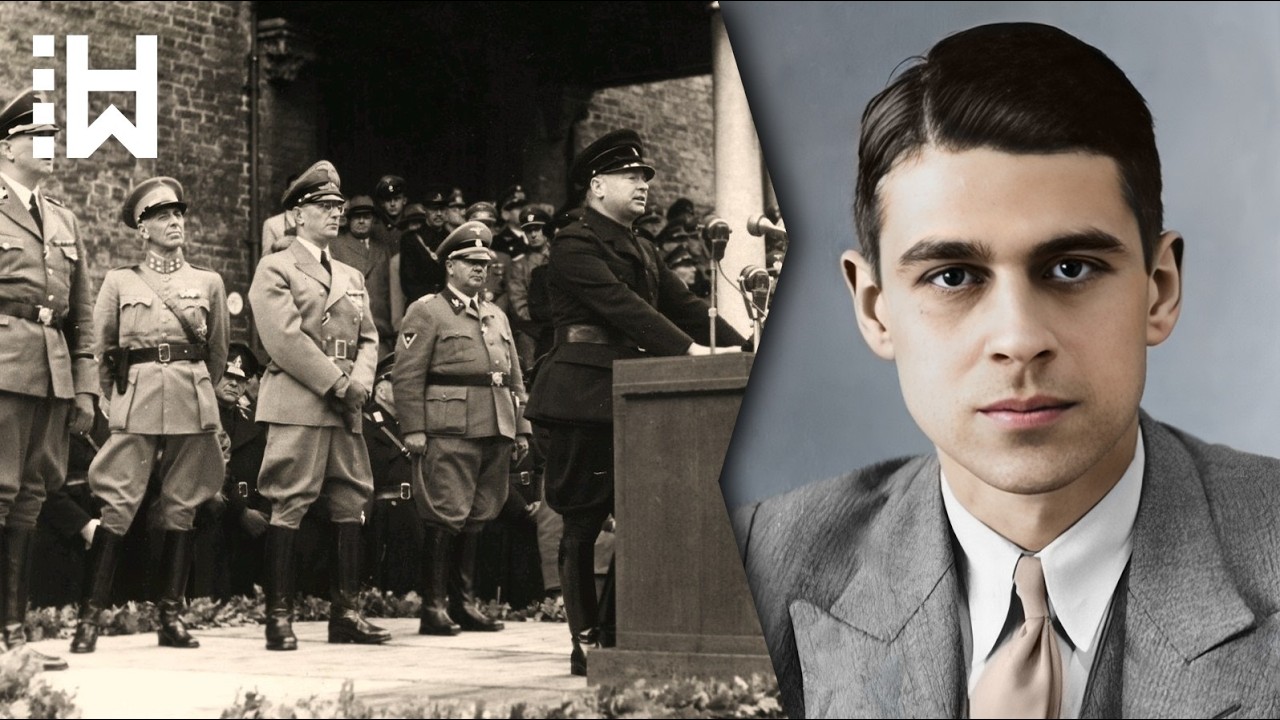
Van Hall could have left the country, slipped across the border into liberated territory, and waited out the war in safety. Instead, he chose to stay in Amsterdam, to keep the money flowing, to keep the thousands of people in hiding fed and sheltered. It was a decision that would cost him his life. Van Hall was not born to the shadows.
He came into the world on the 10th of February 1906, in Amsterdam, the sixth child of Adriaan Floris van Hall and Petronella Johanna Boissevain, a family of bankers and directors whose name carried weight in Dutch financial circles. His early education was private and comfortable, and it would have been easy for him to follow his father into the family trade. Instead, the young Van Hall chose the sea, training as an officer in the merchant marine and working for several years as a third mate. But his eyesight failed him, and he was declared unfit for service.
In the autumn of 1929, with the world sliding into economic collapse, he sailed for the United States, hoping to find work with a shipping company in New York. The global crisis had other plans, and no berth was available. Through his brother Gijs, who was then working in banking in New York and would one day become mayor of Amsterdam, he found a position on Wall Street. After a little more than a year, he returned to the Netherlands, and in February 1931 he was appointed co-director of a local branch of the Amsterdam bank H.
Oyens and Sons, where his father served as director. In March 1932, he married Tilly den Tex, and the marriage produced three children. The war arrived on the 1st of September 1939, when Nazi Germany invaded Poland. For the Netherlands, the catastrophe came in May 1940, when the German blitzkrieg rolled across the country, paratroopers seizing key positions ahead of the ground troops while the Luftwaffe pounded Dutch cities.
The bombing of Rotterdam on the 14th of May destroyed the entire historic center of the city, and the threat of the same for Utrecht broke the Dutch will to resist. The surrender came one day later, on the 15th of May. Occupation followed swiftly, and with it the first anti-Jewish laws, designed to exclude Jewish citizens from society and strip them of their means of living. Arrests began, and in July 1942 the systematic deportations to death camps started.
But across the Netherlands, ordinary citizens began to organize in secret, hiding those in danger and opposing the occupation at the cost of their own lives. Van Hall was among them. His first involvement with resistance work was almost accidental in its origin. The Dutch resistance set up a fund to support the families of merchant sailors who had been stranded abroad when the war broke out, and Van Hall was asked to help establish the Amsterdam branch together with his brother Gijs.
His banking experience proved invaluable, and with support from the Dutch government in exile in London, he was able to raise significant sums. The occupation, meanwhile, tightened its grip. On the 22nd and 23rd of February 1941, German forces raided the Jewish quarter in Amsterdam, arresting and deporting more than 400 Jewish men to the Buchenwald and Mauthausen concentration camps. The Dutch response was unique in Nazi-occupied Europe: on the 25th of February, a general strike broke out across the country, a two-day protest that the German authorities brutally suppressed.
The Nazis answered with a hardening of policy. German authorities, together with collaborating Dutch institutions, segregated Jews from the general population and sent 15,000 of them to forced labor camps under German administration. The Germans then ordered the concentration of Jews in Amsterdam and dispatched foreign and stateless Jews to the Westerbork transit camp in the northeast of the country. Van Hall could not stand by.
After the February strike, he collected money for families who had lost their breadwinners to arrest or dismissal. Within the resistance, he worked closely with his colleague Iman Jacob van den Bosch and his brother Heis van Hall. In June 1943, the three of them founded the National Support Fund, the NSF, which they led together. The NSF provided financial support to people in hiding, to their families, and to resistance groups.
Its funds paid for the concealment of hundreds of Jews, fueled resistance activities, financed acts of sabotage, and helped rescue captured Allied pilots. Around 2,000 members worked for the fund, operating through 23 districts across the country, with teams responsible for distributing money, delivering wage packets, and keeping accounts. Workers transported suitcases full of cash, delivered money to homes across the country, and handled the books with the discipline of a professional bank. The NSF worked closely with the government in London, and it became known as the bank of the resistance.
Van Hall became the banker of the resistance, and he earned other nicknames along the way. One of them was the oil man, a name that came from his unusual ability to smooth tensions between the often-fractious resistance groups and bring them together. He played a key role in establishing regular consultations between the leaders of the most important Dutch resistance organizations, a rare achievement in a movement that was chronically divided. Although his position offered certain privileges, such as access to extra food, he refused to take advantage of them.
The most audacious operation of his career was, at its core, a financial crime on a staggering scale. Together with his brother, he carried out what has been called the largest bank fraud in Dutch history. Between September 1944 and May 1945, treasury notes worth 51 million guilders were secretly replaced with forgeries, carried out in 15 stages with the help of officials inside the Dutch Central Bank and with the knowledge of the government in exile in London. The forged notes were then exchanged for real securities at the Kas Vereeniging Bank in Amsterdam, and converted into cash by presenting them as payments for workers of factories that could no longer operate because of the war.
The operation was carried out in cooperation with Frans den Hollander, who managed the unemployment fund, and entirely without the knowledge of Meinl Rost van Tonningen, the president of the Dutch Central Bank, who was a Nazi collaborator. The fraud went undetected. Another avenue for raising money was borrowing from wealthy Dutch citizens who were willing to bet on the resistance. As proof of their investment, they received old stock certificates, which could be exchanged after the war for their money, backed by the Dutch government in exile.
Van Hall insisted on a strict rule to keep the operation safe: only large sums of at least 25,000 guilders should be loaned, on the theory that a smaller number of large transactions reduced the risk of exposure. He and his brother developed a complex system to manage the network of illegal loans, all administered in code. In total, more than 83 million guilders were distributed through the National Support Fund, an equivalent to roughly 450 million euros today, and very little of it was misused. The money kept the resistance alive, but it could not protect the network forever.
The end came on the 26th of January 1945, through the betrayal of a man named Johan van Lom, a Nazi collaborator. Resistance member Teus van Vliet was arrested, and under interrogation he revealed that an NSF meeting was scheduled for the following day. The Germans moved immediately. On the 27th, all the participants in the meeting, Van Hall among them, were arrested and imprisoned in Amsterdam.
Walraven van Hall was 39 years old when he was executed on the 12th of February 1945 in the city of Haarlem, along with seven other resistance members, in retaliation for the death of a high-ranking police officer. The irony of his death was that the Germans had no idea who they were killing. They believed he was just another resistance fighter, not the man who had financed much of the underground movement from the shadows. The war in the Netherlands ended on the 5th of May 1945, when the German troops in the country surrendered, three days before the general capitulation of Germany.
In the aftermath, the intricate financial web that Van Hall had built was slowly untangled. Loans to the NSF were repaid by the Dutch government, and the issue of the forged treasury bonds was resolved. The NSF still held 22 million guilders in cash, a fortune that was put to lasting use: it helped build the national monument in Amsterdam and establish the Netherlands Institute for War Documentation. In 1954, the NSF was formally dissolved.
The recognition came after his death. The Dutch government posthumously awarded Walraven van Hall the Dutch Cross of Resistance. The United States awarded him the Medal of Freedom with Gold Palm. In 1978, Israel recognized him as Righteous Among the Nations, honoring the fact that he had helped support between 800 and 900 Jews in hiding during the war.
He is buried at the Dutch Honorary Cemetery in Bloemendaal, where many Second World War victims were reinterred after the war, including resistance fighter Hannie Schaft and the sculptor and resistance leader Gerrit van der Veen. The banker who could not stand by lies among the people he financed, and the network he built out of ledgers and forged notes stands as one of the quietest, most effective acts of rebellion in the history of the occupation.






