In August 1871, Jamestown, New York, was a thriving industrial town on the shore of Chautauqua Lake, filled with workshops, mills, and foundries. At its western edge stood a brewery run by Charles Marlow, a German immigrant who had owned the business for about two years. He lived there with his wife Augusta, their two young children, and his mother-in-law, Julia Rottman. The brewery employed one full-time worker, a young Polish man named Valenty Benkowski, who spoke little English but understood some German.
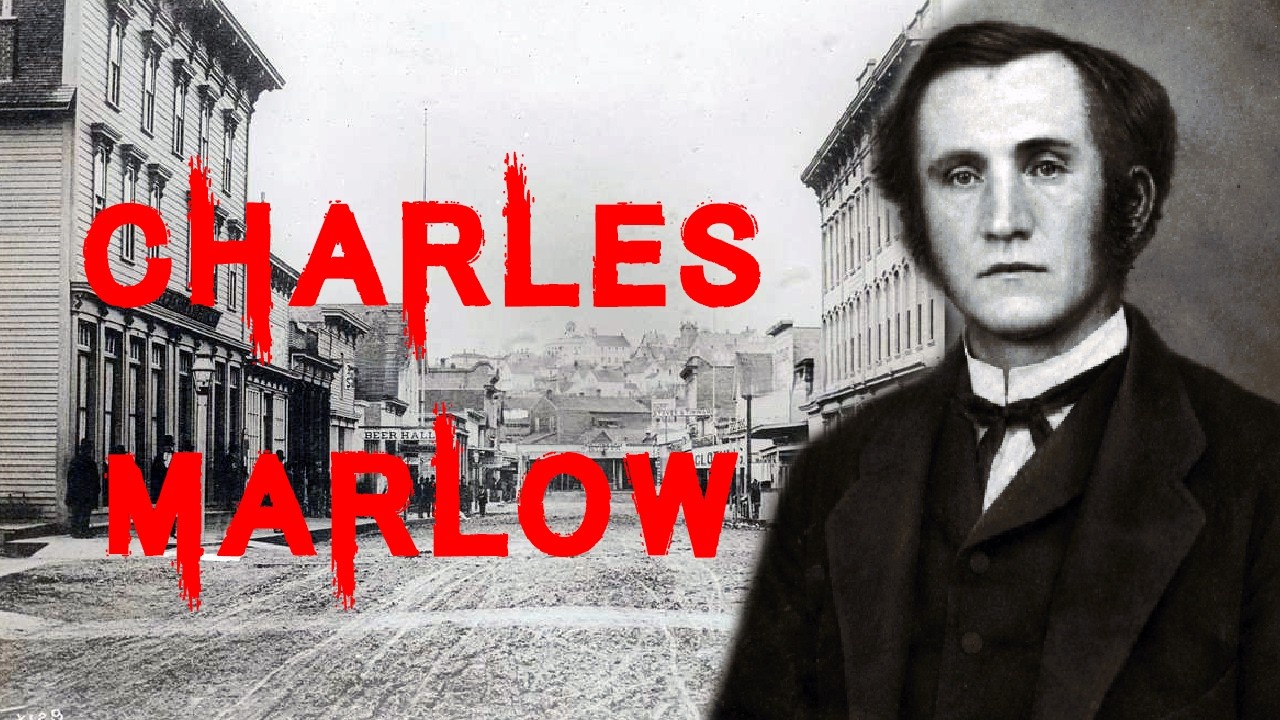
Marlow was known as a hard-working man, yet everyone in town also knew he was drowning in debt. Despite the brewery’s outward success, he survived on borrowed money, and creditors regularly came calling. That same month, a stranger named William Bachman arrived in Jamestown from Toledo, Ohio, telling people he was looking to buy land. He spoke to several locals about property and soon attracted attention with rumors about the large sum of money he carried.
Some said he had $1,400; others claimed he mentioned $6,000. On Tuesday, August 15, Bachman visited the brewery around lunchtime and struck up a conversation in German with Marlow. The two men, both immigrants accustomed to hard labor, got along well, and Marlow invited him to stay the night. Bachman accepted but said he had business to attend to first.
He returned around 11:00 that evening, and Marlow escorted him to a room opposite the one occupied by Benkowski. The next morning, Benkowski rose at about 5:00 a. m. Bachman awoke shortly after, and both men came downstairs for a glass of beer before Bachman left.
Once he was gone, Marlow told his worker that he doubted Bachman actually carried any money, despite what the man claimed. He said he would go into town to see if anyone could confirm Bachman’s story. Marlow loaded beer kegs onto a wagon and departed. Around 11:00 a.
m. , Marlow returned to the brewery with Bachman. They went inside together, removed their coats and hats, and carried them into the drinking room, where they poured beer and talked. Benkowski went outside to work.
When he came back a short while later, he noticed that all the doors were open, including the trapdoor to the cellar. He heard the two men’s voices coming from below, and on the table lay Bachman’s hat and two half-filled glasses of beer. Benkowski went outside again to chop wood. When he returned, nothing had changed, so he left again.
On his third return, the brewery was silent. Then he heard what sounded like a gunshot. Frightened, he hurried back outside and stayed there until he calmed himself. When he finally went back in, Marlow emerged from the cellar with blood smeared across his forehead and spots on his boots and shirt.
Before Benkowski could speak, a customer arrived to buy beer. Marlow went to the cellar and brought up a large keg. Benkowski offered to wash it, but Marlow said he would do it himself. At dinner, Marlow barely ate.
When his wife asked why, he said he had eaten a sausage earlier. Afterward, he ordered Benkowski to gather wood and said he was going to clean the beer barrels. When Benkowski entered the brew house, he found the heat almost unbearable. A huge fire roared beneath the boiler, and the kettle stood nearly full.
He asked Marlow why the fire was so intense, but received no answer. The following day, Benkowski went to the cellar and noticed it smelled of blood. Recalling Marlow’s remarks about Bachman the previous morning, he grew suspicious. Once Marlow left for town, Benkowski searched the premises himself.
He found a paper collar, fragments of a blood-stained towel, and a piece of cheese wrapped in paper, something he remembered Bachman carrying. In another part of the cellar, he found bloodstains on the floor that suggested a body had been dragged across the room. Convinced a murder had taken place and now frightened, he told Marlow at dinner that he was leaving. Marlow asked why he was departing so abruptly and whether he had seen anything.
Benkowski said he had not, took his belongings, and left. He walked to the town of Worksburg, stayed the night, and the next day boarded a train to Dunkirk. There, among the many Polish immigrants in the town, he shared what he had seen. News spread quickly through the community, and police soon brought him in for questioning.
On August 19, 1871, Charles Marlow was arrested on suspicion of murder. Investigators searched the brewery. In the ashes of the furnace, they found charred human remains, including bone fragments and part of an arm with an elbow intact. In the cellar and icehouse, they discovered trails of blood across the floors.
Inside a beer barrel, they found more ashes and, on closer inspection, pieces of skull, finger and toe bones, fifteen human teeth, shoe nails, vest buttons, a vest buckle, and two ivory shirt studs. A coroner’s jury was assembled and visited the brewery to examine the scene. Benkowski testified through an interpreter, describing Bachman’s visit, the bloodstains, and the intense fire. Doctors confirmed the bones were human.
On the advice of Marlow’s attorney, neither he nor his wife gave evidence. The jury concluded that Bachman had been murdered on August 16 around 1:00 p. m. , and that Charles Marlow had shot him, with Augusta acting as an accomplice.
The indictment was unusually broad, listing many possible causes of death: shooting, stabbing, blows from a hammer, wounds from an axe, burning, and other violent means. Such broad indictments were common in nineteenth-century murder cases when medical evidence could not establish a single cause of death. Despite the findings, many townspeople did not believe the Marlow’s were guilty. The case against Augusta was eventually dropped, and Charles Marlow’s trial began on September 20, 1871.
He pleaded not guilty. Benkowski again testified through an interpreter. He stated that Marlow had mentioned Bachman’s large sum of money, that he had heard what he believed was a gunshot, that he had seen blood on Marlow’s face, and that the furnace had been intensely hot and smelled strange. Neighbors described thick black smoke and foul odors coming from the brewery on August 16.
Professor Armstrong testified that chemical analysis indicated human blood on the stains and materials recovered. His testimony carried considerable weight, although at the time forensic science could not yet reliably distinguish human blood from animal blood. The case against Marlow appeared overwhelming. Then his defense attorney, Charles Lockwood, produced a dramatic reversal.
He stood before the stunned courtroom and admitted that the remains found in the furnace were those of William Bachman. But he denied that Marlow had committed murder. He argued that with the cellar trapdoor shut, a gunshot could not be distinguished from the sound of striking a beer keg. He claimed Marlow had not had sufficient time that afternoon to kill a man and burn a body.
Then Lockwood delivered his shock: Bachman’s death, he said, came at the hands of Mrs. Julia Rottman. William Bachman, he explained, was not as wealthy as he claimed. When alone with Augusta Marlow, he attacked her, threw her to the floor, and began choking her.
Hearing the struggle, her mother rushed in and, unable to separate them, seized a hammer and struck Bachman in the temple. He fell and died instantly. Julia Rottman was then called to the stand. Through an interpreter, she repeated the story and added that she and her daughter had carried the body to the furnace and burned it to conceal the death.
She insisted that her son-in-law knew nothing until after his arrest. The trial lasted a week. The jury, however, could not agree: six favored conviction, six favored acquittal. A mistrial was declared, and Marlow was returned to jail.
A second trial opened in January 1872. The evidence largely mirrored the first, though prosecutors presented it more thoroughly. Julia Rottman’s confession came under scrutiny, and it soon became clear that her story was a deliberate falsehood devised to clear her son-in-law’s name. This time the jury deliberated only three and a half hours before returning a verdict of guilty.
The judge sentenced Charles Marlow to death. He showed no visible emotion, but his wife, seated close to him, burst into tears, and many women in the gallery wept as well. Marlow was taken to Mayville prison to await execution. He attempted to escape by sawing through the bars of his cell window with two small saws, but the attempt was discovered.
Prison officers concluded the tools had been concealed in the heels of slippers delivered by Augusta. He was moved to another cell under stricter supervision. Public interest intensified as the execution date neared. On the eve of the scheduled hanging, a reprieve arrived: one of the jurors at the second trial, a man named Sebastian Loren, had formed the opinion that Marlow was guilty before the trial began.
Marlow’s defense sought another trial, but on June 11 the Supreme Court upheld the conviction and sentence. A new execution date was fixed for August 2. Marlow continued to deny responsibility. But on August 1, the eve of his execution, he finally gave a full account.
He said he and Bachman had been drinking together before he persuaded the man to accompany him to the cellar. He added strychnine to a glass of beer and handed it to him. When the poison caused severe convulsions but did not kill him, Marlow seized an iron bar and struck him repeatedly on the head. Afterward, he dismembered the body and placed the pieces in the furnace.
He admitted that Augusta knew what had happened and helped him remove and scatter the ashes. He had killed Bachman to rob him of his money. In a final, chilling remark, he said he would have also murdered Benkowski had he realized any suspicion had fallen on him. At 12:10 on Friday, August 2, 1872, Charles Marlow was hanged.
The crowd of spectators was so large that the sheriff ordered those at the front to kneel so others could see. Marlow left behind his wife and two young children, a boy of six and a girl of three. Augusta was unable to keep the brewery running.
Accompanied by her children and her mother, she left Jamestown and moved to Parker’s Landing in Pennsylvania.






