The tiny gesture lasted no more than a second. Margaret reached out and picked a piece of lint from the uniform of Group Captain Peter Townsend, brushing it away as naturally as if they were alone. But they were not alone. They were at Westminster Abbey on June 2nd, 1953, the day her sister was crowned Queen Elizabeth II, and every eye in the building was on the royal family.
A photographer caught the moment. Within days, the newspapers had turned a private romance into a public crisis, and the life Margaret had known since birth would never look the same. She had been born on August 21st, 1930, the younger daughter of King George VI and Queen Elizabeth. Her older sister, Princess Elizabeth, was the heir to the throne.
Margaret was the spare, and that distinction shaped everything. She was not expected to become queen, which gave her a freedom her sister never had, but it also left her in a strange middle ground. She was royal enough to be bound by the rules of the monarchy, and yet not so central to it that her personal choices could be quietly overlooked. She was educated at home alongside Elizabeth, developed a deep love of music and the arts, and took on public responsibilities while still young.
When the Second World War came, the royal family became a symbol of national endurance, and the two princesses grew up in the full glare of public life. Margaret was known for her beauty, her confidence, her wit, and her strong personality. Behind the public image, though, she was a young woman who wanted what most people want. Affection.
Companionship. Someone to love. The man who would become the great love of her early adult life was already close to the royal family when she met him. Peter Townsend was a decorated Royal Air Force officer who had served her father with distinction.
He was older than Margaret, experienced, disciplined, and trusted. He had been appointed equerry to the royal household, a position that placed him in constant proximity to the king and his daughters. For years he had been part of the furniture of royal life, a quiet, reliable presence. And then, gradually, his presence became something more.
The relationship deepened during a period of enormous change and loss. King George VI died on February 6th, 1952. Margaret was twenty-one years old. The death of her father was devastating, and in the months that followed, Townsend became especially significant to her.
He had served her father. He understood the world she came from. He was someone she could trust at a moment when her family was being rearranged around a new queen and everything familiar seemed to be shifting. By the spring of 1953, Margaret and Townsend wanted to marry.
They told the new queen about their desire. Margaret was still only twenty-two. Under the Royal Marriages Act of 1772, royal permission was required for her to wed, and that permission had to come from her sister. Elizabeth was placed in a position that no one would envy.
As monarch she was also the supreme governor of the Church of England. Her sister wanted to marry a divorced man. In early 1950s Britain, divorce carried a stigma that is difficult to grasp today, a social and religious condemnation that reached far beyond the couple themselves. For a member of the royal family, the problem was magnified a hundredfold.
Elizabeth asked Margaret to wait. Waiting did not mean forgetting. Townsend remained close to the royal world, and the relationship continued to draw attention. Then came the coronation, and the lint on the uniform, and suddenly the discretion of the previous years was gone.
The press seized on the story. It became impossible to contain. The palace response was separation. Townsend was sent to Brussels to serve as air attaché at the British Embassy.
Margaret and Townsend were physically parted while the royal household and the government considered what could be done. The decision was never simply about whether two people loved each other. It was about what their marriage would mean for the monarchy. Divorce was still deeply controversial.
And the memory of the abdication crisis was still raw. Less than two decades earlier, King Edward VIII had chosen to give up the throne rather than give up Wallis Simpson, a divorced American woman. The constitutional shock of that decision had sent the country reeling and brought Margaret’s own father to the throne. The royal family had already learned, at the highest possible cost, what happened when a monarch chose love over the established order.
Yet the public was not united against Margaret. In fact, a remarkable thing happened. Sympathy for the princess could be considerable. Reports from the period describe people openly encouraging her to marry Townsend.
A Daily Mirror poll came out strongly in support of the match. What had begun as a private royal affair had become a national argument about love, tradition, divorce, and the changing values of British society. The story was no longer just about the palace. It was about what Britain itself believed.
Then the legal situation shifted. On August 21st, 1955, Margaret turned twenty-five. Under the Royal Marriages Act of 1772, this changed things, though not in the simple way many people assumed. Once she passed the age of twenty-five, Margaret had a possible route to marriage without the queen’s direct consent.
But that route came with extraordinary consequences. She could wait a full year after giving notice of her intention to marry, and the marriage could then proceed without the sovereign’s approval unless both Houses of Parliament formally objected. In theory, this was a path forward. In practice, it was a minefield.
Government discussions produced a possible compromise. Later released documents showed that a plan had indeed been developed to make the marriage possible, although it came at a very high personal price. Margaret could marry Townsend, but she would have to surrender her place in the line of succession and accept major changes to her royal position. The plan was never simply about saying no.
It was about the impossible arithmetic of being a princess in the Britain of the 1950s. Margaret could not have everything. She could not keep the full privileges of her royal status and marry a divorced man without consequences. The two things were incompatible.
This is where the story becomes more complicated than the popular version. It is tempting to say that Queen Elizabeth simply refused to let her sister marry Peter Townsend. The historical record does not support such a simple explanation. The queen was placed in an impossible position, caught between family loyalty, religious convention, constitutional rules, and public expectations.
But the evidence released decades later shows that discussions took place about how Margaret might marry while remaining connected to the royal family in some form. The obstacle was not a single heartless refusal. It was the entire structure of a world that had not yet learned how to accommodate a princess marrying a divorced man. For Margaret, the choice became painfully real.
She could marry the man she loved and give up the royal status, privileges, and succession rights that had defined her entire life. Or she could remain Princess Margaret, continue representing the monarchy, and let go of Townsend. The decision was not simply between love and a cold institution. It was between two versions of herself.
One was Margaret the woman, who wanted a private life with the man she loved. The other was Margaret the princess, whose identity and responsibilities were inseparable from the crown. In October 1955, Margaret made her decision. She chose not to marry Peter Townsend.
On October 31st, she made the announcement public. Her statement referred to the possibility of a civil marriage, and the renunciation of succession rights that would have been required. But she said she was mindful of the church’s teaching about marriage, and conscious of her duty to the Commonwealth. She also made clear that Townsend had supported her throughout the ordeal.
The statement was careful, measured, and final. It ended one of the most famous royal romances of the twentieth century. The announcement did not mean that Margaret suddenly stopped feeling the consequences. The emotional weight of the decision would remain part of her story for years.
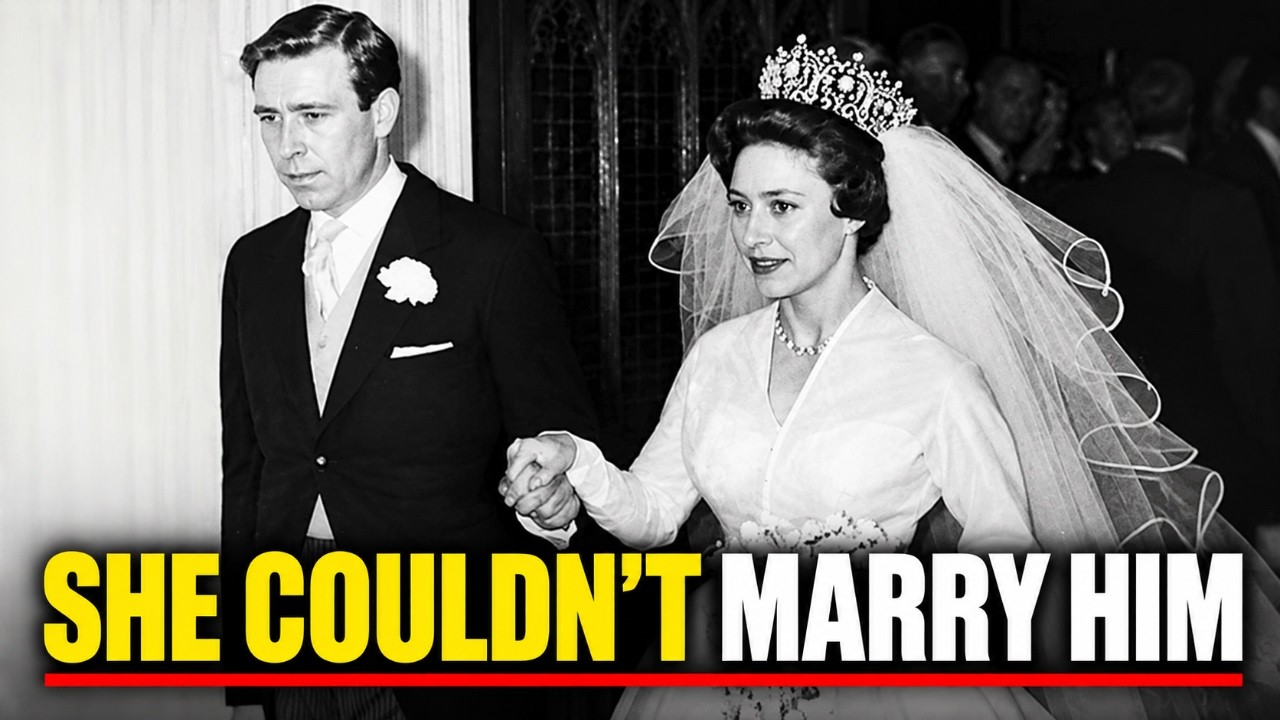
Townsend eventually moved on and married again. Margaret also moved forward, as best she could. In 1960, Queen Elizabeth announced Margaret’s engagement to Antony Armstrong-Jones, a photographer. The couple married at Westminster Abbey on May 6th of that year.
Their wedding was a major royal event, and for a time it appeared that Margaret had found a new chapter in her life. She and Armstrong-Jones had two children, David and Sarah. But the marriage eventually broke down, and it was dissolved in 1978. Her life after Townsend became a mixture of public responsibility, glamour, friendships, artistic interests, and personal difficulties.
She remained a prominent member of the royal family and supported numerous organizations, including causes connected with welfare, music, ballet, and the arts. Yet the story of Peter Townsend continued to follow her in the public imagination. The tragedy of Margaret’s first great love is that there was never a simple villain. Townsend was not merely a forbidden outsider.
He had served the royal family and had been trusted by Margaret’s father. Margaret was not simply a rebellious princess. She understood the responsibilities attached to her position. Queen Elizabeth was not simply a heartless sister standing between two lovers.
She was a young monarch confronted with a constitutional and religious problem at a time when the rules surrounding royal marriage were far stricter than they would later become. What makes the story so powerful today is how much the world changed after Margaret made her decision. Attitudes toward divorce, remarriage, royal marriage, and relationships with divorced partners gradually became less rigid. What seemed almost impossible in the early 1950s would eventually become ordinary.
Royal family members would marry divorced people without the sky falling. The rules that had once been treated as immutable turned out to be more flexible than anyone had imagined. Margaret had lived through the moment when tradition still had enormous power, and she paid a personal price for that tradition. For decades, people asked the same question.
What if Margaret had chosen Peter Townsend? What if she had accepted the loss of her royal privileges and married him? What would her life have looked like outside the palace? Those questions can never be answered.
History gives us the decision she made, but not the life she might have lived. And perhaps that is why her story continues to fascinate. Princess Margaret had wealth, status, beauty, access, and a place inside one of the world’s most famous families. Yet none of those things guaranteed her the freedom to marry the person she wanted.
Her forbidden romance showed the human cost of being born into a life where personal decisions could become matters of national importance. Peter Townsend was the man Margaret could not simply choose without consequences. And Margaret ultimately chose the crown over the marriage. Whether that decision brought her peace is impossible to know with certainty.
But the romance remains one of the clearest reminders that behind the ceremonies, crowns, palaces, and royal titles were people forced to make deeply personal decisions under extraordinary pressure. Princess Margaret’s story was never simply about a princess who was not allowed to marry the man she loved. It was about a young woman discovering that being royal meant surrendering part of the freedom most people take for granted. She could choose love or she could choose duty.
But in the world she inhabited, having both was far more difficult than anyone watching from the outside could understand. The world changed. The monarchy changed. The rules surrounding royal relationships changed.
But Margaret’s impossible choice remains frozen in history. A moment when a princess stood between the life she wanted and the life she had been born to live.






