In November 2015, the small farming community of Scottsville, Kentucky, population just over four thousand, was preparing for the biggest football game of the year. The local school team was set to face a rival county, and nearly everyone in town planned to attend. Among them were the Doolins, a family of five whose oldest son played on the team and whose seven-year-old daughter, Gabby, was a cheerleader. On the evening of November 14th, Gabby convinced her parents to bring her along.
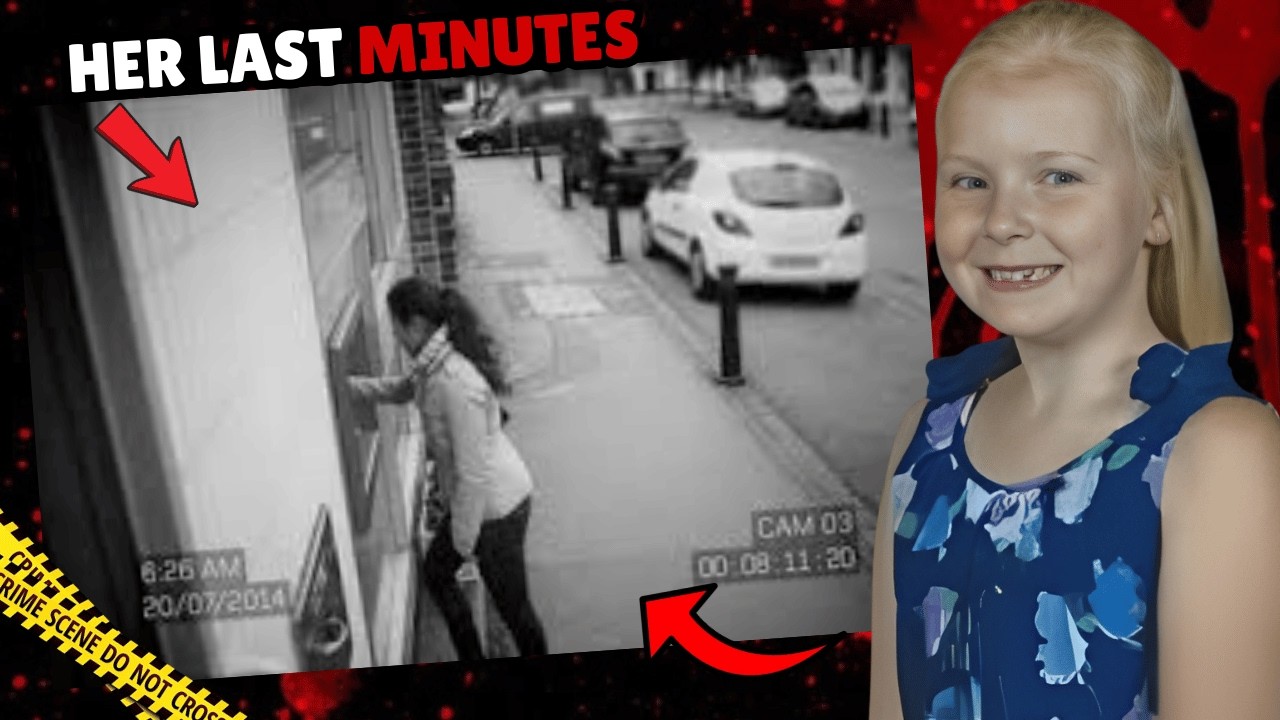
Once at the stadium, she asked her mother for permission to play with her friends. Her mother agreed, warning her to stay on school grounds. Gabby spent the evening running between her friends and her parents, at one point asking her father for money to buy snacks at the concession stand. Sometime later, Gabby’s friends ran up to her mother in the bleachers.
They were visibly worried and asked if she had seen Gabby. The girls explained that they had been playing hide and seek. Gabby was supposed to find them, and they had hidden in the restroom. When she never came, they left their hiding spot and searched for her, but their friend had vanished.
They assumed she had gone back to her mother. Gabby’s mother immediately panicked and found her husband. He rushed to search the area around the stadium while she checked the concession stand. Friends joined the search, and an announcement was made over the loudspeakers, but there was no sign of the girl.
After about twenty minutes, the parents called the police. Officers arrived quickly. The local department had little experience with such serious cases, as child disappearances were rare in Scottsville. The police immediately considered the worst-case scenario: that Gabby had been abducted or attacked.
They knew the likely perpetrator could be sitting in the stands, and the game was about to end. If people began leaving, the suspect could slip away. The officers decided to halt the game and lock down the stadium, keeping everyone inside. They did not inform the crowd why, fearing the situation could escalate if people believed a kidnapper was among them.
State police arrived and began searching the area. They reached the baseball field and headed into a small forest. There they found a creek and Gabby’s body. A visual inspection suggested asphyxiation, as there were distinct marks on her neck.
Part of her clothing was missing, leading police to suspect sexual assault. When Gabby’s mother saw an ambulance near the woods and rushed toward it, officers stopped her, not wanting her to see the scene. With the case now a murder investigation, police moved everyone from the stadium to the school gym. Investigators believed the killer was likely among them.
They questioned Gabby’s parents, who insisted they had no idea who could have done this. They spoke to Gabby’s friends, asking if they had seen anything strange. The girls could not recall anything until investigators pressed them to remember every detail of the evening. Finally, one of them mentioned that while hiding in the restroom, she had seen a man near the door.
She remembered almost nothing about him except that he wore a denim jacket. A cashier who sold tickets to the game also recalled a man with a denim jacket hanging on his arm. He described the man as strange and intoxicated. Investigators cross-referenced the names of the men in the gym with the sex offender registry, but found no matches.
Officers also visited the homes of registered offenders living nearby, but they all had solid alibis. As interviews continued, several witnesses mentioned a local man named Timothy Madden who had been seen near the women’s restroom behaving strangely. He wore a denim jacket, matching the description from Gabby’s friend. More witnesses said his behavior seemed off that evening, though they could not say exactly why.
One distant relative noted that Timothy, usually deeply involved in his son’s sports achievements, was not paying attention to the game and seemed lost. The local sheriff, who had known Timothy nearly his whole life, doubted he was capable of such a crime. Timothy had almost no criminal record, only minor traffic fines, and lived with his wife and five children. When detectives knocked on Timothy’s door and asked if he knew why they were there, he replied that he had heard about the girl’s murder but had nothing to do with it.
The detectives then used a trick. They asked him if he could explain several videos provided by eyewitnesses showing him talking to Gabby shortly before her murder. There were no such videos, and the question was designed to see if he would reveal new information. At first, Timothy said he did not know.
Then he quickly corrected himself and admitted he had talked to Gabby that evening. He said he had stepped out to smoke, and Gabby passed by, asking if he had seen her friends because they were playing hide and seek. He pointed her in the right direction, and she ran off. The detectives found it suspicious how quickly Timothy changed his story.
His account placed him with the victim minutes before her disappearance, when there were no witnesses outside the stadium. They asked if he would have an explanation if his DNA were found on the victim’s body. He calmly replied no. He agreed to provide a DNA sample and the clothing he wore at the stadium.
When he handed over the clothes, police found stains resembling blood on his pants, denim jacket, and underwear. Timothy claimed it was not blood but dirt, and that the detectives were insane. The forensic pathologist confirmed that Gabby’s cause of death was manual strangulation and that she had been brutally sexually assaulted. A biological sample of the perpetrator was sent to the laboratory for analysis.
The lab made the case a priority, but results still took several days. Meanwhile, police received an anonymous letter reporting a suspicious individual at the game, including the make and license plate of his car. The vehicle belonged to a student living half an hour away. He claimed he had been at work that evening, and his alibi was confirmed.
He was cleared, and the author of the letter was never found. Another lead emerged. A local sixteen-year-old boy had told different people he had been at the game, then claimed he had not. He also mentioned seeing girls playing hide and seek.
Detectives learned this boy was Timothy Madden’s son. They also discovered that two weeks before the murder, the boy had held a knife to his father’s throat, threatening to kill him. Police wanted to question him, but the boy’s mother refused to provide a DNA sample, and they could not proceed without parental cooperation. Rumors spread quickly through Scottsville.
People heard the police were looking into the Madden family, and theories multiplied. Some suspected one of the older Madden sons. Gabby’s parents were shocked. Gabby’s father had known Timothy since third grade.
Their sons played on the same football team, and their daughters were cheerleaders together. The families sat near each other at the game. Gabby’s parents found it hard to believe anyone from their circle could be involved. Then Timothy’s twenty-year-old son began contacting local officers on social media, using foul language and threatening them.
He was arrested. Police discovered an active warrant for his arrest in another town, where he was suspected of assaulting a minor girl. He claimed he was frustrated by the accusations against his family, said he was at his cousin’s house the evening of the murder, and agreed to provide a DNA sample. On November 20th, six days after the murder, Gabby’s funeral took place.
Hundreds of people came from Scottsville and other towns, and donations helped cover the expenses. The laboratory completed the DNA analysis. The semen found on the victim’s body belonged to Timothy Madden. The blood on his clothes belonged to Gabby.
Detectives went to the funeral, waited until Gabby’s parents were alone, and told them the killer had been found. Other officers went to Timothy’s house and arrested him. As he was transported from the police station, he shouted to reporters that he was innocent. He later claimed the blood on his clothes was his own, from scratching himself on a fence, even though he had initially told police it was not blood at all.
The prosecution stated they would seek the death penalty. Timothy’s lawyer insisted his client was innocent. He argued that Timothy was at the stadium filming the game during the time of the murder, although Timothy himself had told police he saw Gabby around the same time. The lawyer also noted that Gabby’s body was found in a creek, but Timothy’s clothes were dry when he returned to the stadium.
Timothy’s mother, who lived with him, said he came home in clean clothes and behaved as usual. The prosecution responded that these arguments collapsed in the face of the DNA evidence. The wait for trial dragged on for years. In 2019, four years after the murder, the parties began discussing a plea deal.
The prosecution offered to drop the death penalty in exchange for a life sentence and an admission of guilt. Gabby’s parents agreed, tired of the endless wait and the prospect of reliving their daughter’s death through months of hearings. Timothy, who had insisted on his innocence, eventually confessed, though the terms of the deal did not require him to reveal details of what he did. This did not satisfy Gabby’s family, who wanted a full confession.
During the court hearing, Gabby’s father began yelling at Timothy, and Timothy’s relatives shouted back. The judge had to take a break and separate them. Timothy Madden received a life sentence and was sent to a maximum-security prison. A year after Gabby’s murder, a boy from a neighboring state saw a news report and recognized Timothy.
Years earlier, the boy and a friend were walking near a mall parking lot when an adult man approached them and tried to convince them to get into his car for a ride. The boys ran away, and a relative contacted the police. The boy who saw the news report said the man was Timothy Madden. There was no substantial evidence, and the case did not progress.
But if Timothy had attempted to abduct those boys years before, it suggested he may have been looking for victims long before the night Gabby Doolin approached him near the stadium.






