For nearly thirty years, a mother in Vietnam believed her baby daughter had died in the chaos of war. Across the world, a girl grew up in Australia with a loving family but a persistent feeling that she did not truly belong anywhere. Neither knew the other was alive. Then a single phone call changed everything.
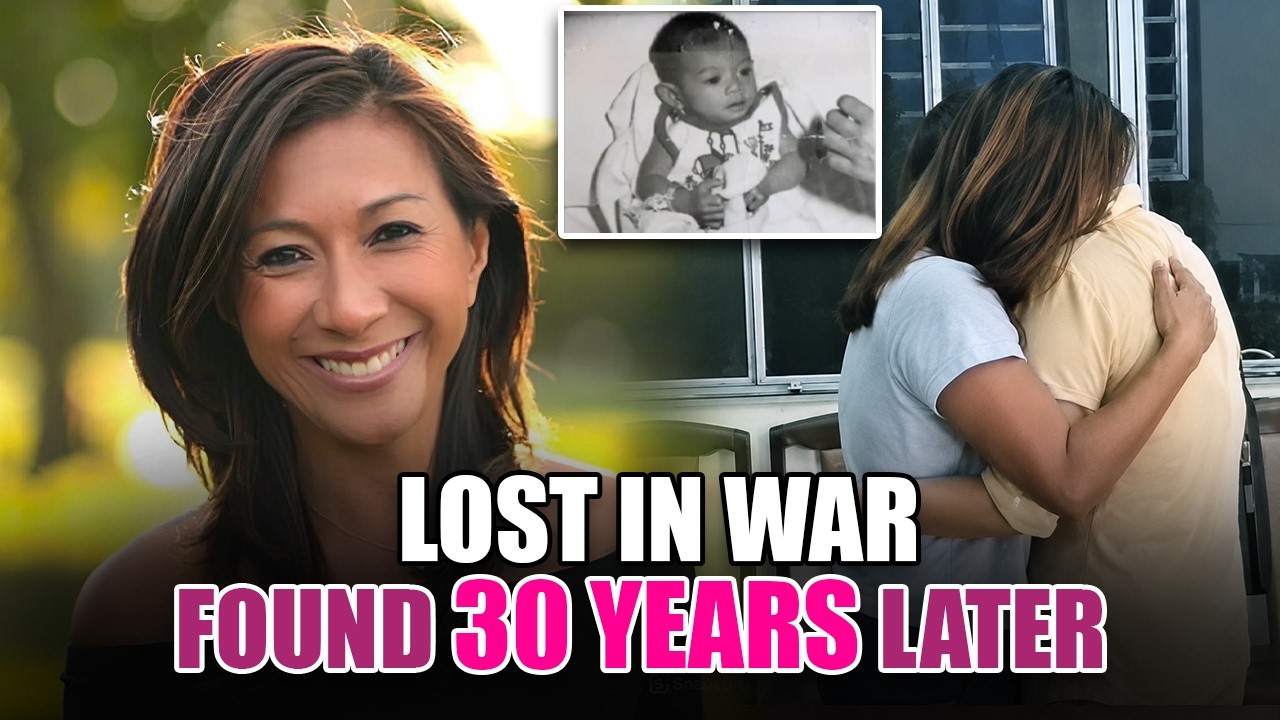
In the final days of April 1975, Saigon was collapsing. As the fall of the city approached, families were torn apart, and streets, government buildings, and the airport filled with desperate people searching for a way out before everything changed forever. Among the thousands caught in the frenzy was a five-month-old baby named Huoi Cam Tu. She was too young to understand fear or to grasp that history was being made around her, too young to know she was about to leave her homeland forever.
Behind that tiny child was a young mother carrying a grief that would follow her for decades. Her name was Nga. Years before, she had fallen in love with a South Vietnamese army officer named Buong Loc, a man known for his intelligence and charm and a natural gift for music. To a young woman in her early twenties, he seemed extraordinary.
Their relationship brought a daughter, a beautiful baby girl they named Cam Tu, and for a brief moment, Nga felt that happiness had finally arrived. Then everything began to fall apart. Only days after Cam Tu was born, conflict erupted within the family, and the child’s future became suddenly uncertain. At the same time, the baby fell seriously ill.
Faced with poverty, fear, and brutal conditions, Nga made the hardest decision of her life. She placed her daughter in an orphanage, not because she stopped loving her, but because she loved her enough to believe that someone else might save her. As she handed her child over, she held one hope: that her daughter would somehow survive, somewhere. She never imagined the goodbye would last nearly thirty years.
A few weeks later, Operation Babylift began. Thousands of Vietnamese children were evacuated from the country as the war reached its end. Cam Tu was among them. One day she was an infant in Vietnam; the next she was crossing an ocean toward a completely different life.
By an extraordinary turn of fate, she missed boarding the first flight of the operation, a plane that crashed shortly after takeoff, killing many of the children and adults on board. Instead, she left Vietnam on a later flight. That simple difference saved her life. Soon after, she arrived in Australia, where a loving family adopted her and gave her a new name: Katherine Turner.
Her Vietnamese past faded behind her, but some stories refuse to stay buried. Even when memories are lost, the heart remembers what the mind cannot. Katherine grew up in a quiet Australian town, surrounded by kindness. Her adoptive parents gave her safety, opportunity, and encouragement, everything a child needs.
Yet something inside her always felt incomplete. As a small child, she noticed what everyone else noticed: she looked different. With dark hair, dark eyes, and distinctly Asian features, she often felt out of place in classrooms full of white students. The comments from classmates were rarely mean-spirited, but the questions lingered.
Where are you from? Why do you look different? Are you really Australian? Over time, those questions became deeper ones she asked herself: Who am I?
Where do I belong? Why do I feel foreign in my own life? She loved her family and never doubted that, but love could not answer the mystery of her origins. As she grew older, the longing intensified.
At night, she would stare into the mirror, imagining a woman somewhere in the world with the same eyes, the same smile, the same face, a woman who might be wondering about her too. For years, those thoughts stayed with her. Katherine eventually built a successful career as a journalist. She traveled the world, covered major events, interviewed influential figures, and reported on some of the most important stories of her generation.
To many, she seemed successful and confident. But something remained missing. Success could not erase the unanswered questions. At twenty-seven, she made a decision.
She would return to Vietnam to find the woman who gave birth to her. Armed with a birth certificate and scattered pieces of information, she began the search. The task seemed impossible. Saigon had become a city of millions.
Records were incomplete. Memories had faded. Entire neighborhoods had changed. For weeks, she found nothing.
Every lead ended in disappointment, every conversation reached a dead end. Eventually, she returned to Australia without answers. But she refused to give up. Something deep inside told her the story was not over.
Two years later, she returned to Vietnam with stronger determination and a translator by her side. Day after day, she followed every possibility, every thread that seemed to connect to the past. Most led nowhere. Then, on an ordinary afternoon, everything changed.
A search at a police station turned up a possible match. A woman with the same name, birth date, and information appeared in the files. After nearly three decades of separation, the impossible suddenly seemed possible. The officers made a phone call, and a mother somewhere in the city answered.
When the translator turned to Katherine, her expression changed. They had found someone. For a moment, Katherine froze. She had crossed the ocean twice, spent weeks following one dead end after another, and prepared herself for disappointment countless times.
Now, after nearly thirty years of unanswered questions, everything depended on a single phone call. The woman on the other end spoke quietly, explaining that she still kept the birth certificate she had received when her daughter was born. She had never thrown it away. It remained carefully folded among her most precious possessions.
When the numbers on the document were compared with Katherine’s records, they matched exactly. There was no longer any doubt. The woman was her mother. She would arrive in thirty minutes.
Thirty minutes felt like an eternity. Silence filled the room. Katherine’s hands trembled in her lap. Then footsteps sounded outside.
The door opened slowly. A small woman entered and looked across the room. For a moment, neither of them moved. They stared at each other.
Nga recognized her daughter before a single word was spoken. Tears filled her eyes instantly. Katherine felt her own tears fall before she realized she was crying. They walked toward each other almost instinctively.
Then they embraced. For nearly thirty years, one had believed her child had died somewhere in the chaos of war. The other had grown up wondering why part of her life always felt incomplete. They no longer had to carry that loss alone.
As translators struggled to keep up with their emotions, the truth slowly unfolded. After the war ended, Nga had returned to the orphanage, desperate to find her child. The buildings had been damaged. Records had vanished.
No one could tell her where Cam Tu had gone. Having lost everything she held onto, she convinced herself that her daughter had died during the evacuation. From that day on, April 30 became a day of mourning each year. For nearly thirty years, she lit incense, offered prayers, and wondered what kind of life her little girl might have lived if fate had been kinder.
Only then did Katherine realize that while she had grown up safely in Australia, gone to school, built her career, and discovered the world, another life had always been unfolding alongside hers. The mother had never stopped waiting. War had taken enough from both of them, and neither wanted it to steal another moment. In the days that followed, Katherine met brothers, cousins, aunts, and relatives she had never known existed.
No one treated her like a stranger. They welcomed her as though she had simply been away for a long time. They shared stories and old family photographs. The family laughed, cried, and slowly began piecing together memories of the years history had stolen.
One day, Katherine proudly attempted to speak Vietnamese at the dinner table. Instead of saying she was full, she accidentally announced that she was fat. Everyone in the room burst into laughter. Even Katherine laughed until tears came.
After decades of separation, they were finally doing what families do best: sharing food, teasing one another, and laughing over simple misunderstandings. When Katherine returned to Australia, she realized she had not come to Vietnam merely to find her past. She had come to reclaim a part of herself that had been waiting there all along. At last, she belonged to both worlds.
A daughter shaped by two countries, raised by one mother’s sacrifice and another mother’s love. A child who survived war, and a family who found their way back to each other against all odds.






