On the sixth of May 1944, two rooms, two cities, more than three thousand miles apart. In Chelsea, London, Kathleen Kennedy stepped into the register office. London was a city at war, its streets still carrying the scars of the Blitz. But in Chelsea, a small wedding party had gathered.
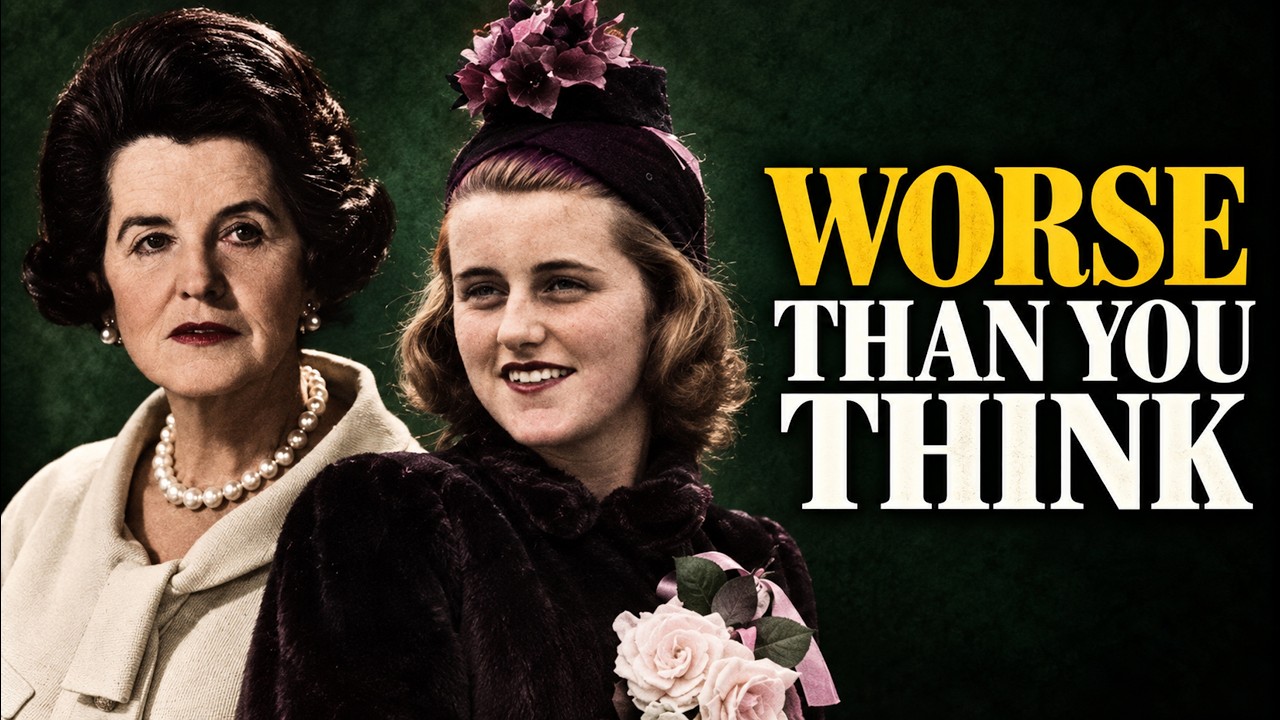
Kathleen wore a rose-colored crêpe dress, a short mink jacket, and a hat trimmed with pink and blue ostrich feathers. The man waiting for her was William Cavendish, Marquess of Hartington. Everyone close to him called him Billy. He was the eldest son of the Duke of Devonshire, and an officer in the Coldstream Guards.
A month from that day, Allied armies would land in Normandy. Less than five weeks after the wedding, Billy would return to his regiment. Kathleen’s older brother, Joe Kennedy Jr. , attended in his naval uniform.
He was the only Kennedy present. Time magazine would later note that the ceremony lasted seven minutes. There was no priest. There was no Catholic blessing.
The registrar had the papers ready. More than three thousand miles to the west, Rose Kennedy lay in a Boston hospital. The day before the wedding, a statement was issued from her room. Mrs.
Kennedy was too ill to discuss the marriage. Rose had once spent seven years waiting to marry a man her own father opposed. She knew what perseverance looked like. So why did she fight so hard when her daughter insisted on choosing her own husband?
Boston, 1906. Rose Elizabeth Fitzgerald was sixteen years old. Her father was John Francis Fitzgerald, known to Boston as Honey Fitz. He had served in Congress and was the mayor of Boston.
Politics was part of Rose’s childhood. Her father took her to public events, where she watched adults campaign, negotiate, flatter, argue, and shift their positions. Rose was an excellent student who loved history, languages, and music. She was accepted at Wellesley College.
Her father refused to let her attend. Wellesley was a Protestant institution, and the Fitzgeralds belonged to the world of Boston’s Irish Catholic politics. Religion, neighborhoods, education, and political identity all overlapped, making Rose’s choice of college about far more than a single school. Honey Fitz insisted on Catholic education instead.
Rose complied and continued her studies within the Sacred Heart system, but the lost opportunity stayed with her. Another conflict with her father arose shortly afterward, and this one concerned Joseph Patrick Kennedy. Rose met Joe at Old Orchard Beach when she was seventeen. Honey Fitz thought his daughter was too young for a serious suitor.
Rose’s interest did not fade, and neither did Joe’s. Their courtship continued quietly, with occasional meetings without her father’s knowledge. Joe finished Harvard, entered banking, and proved extraordinarily ambitious. That success changed the Fitzgerald family’s view of him.
The young man could no longer be ignored. Rose kept waiting. Seven years passed between their first meeting and their wedding. On October 7, 1914, Rose Fitzgerald married Joseph Kennedy.
She was twenty-four. Cardinal William O’Connell performed the ceremony. Rose had accepted her father’s decision about Wellesley, but with Joe, she held to her choice. In the end, the opposition faded.
These two experiences lived side by side in Rose’s life. Authority mattered, and so did persistence. Family mattered, and so did choosing the person you wanted beside you. Years later, those ideas collided inside her own home.
Rose and Joe Kennedy eventually had nine children. Their first home was at 83 Beals Street in Brookline. As Joe’s wealth grew, so did the family’s world: Bronxville, Hyannis Port, Palm Beach, London. Rose treated motherhood as serious work.
She kept records, organized schedules, and expected her children to study and to compete. Public service mattered. Physical confidence mattered. Family loyalty mattered.
And the Catholic faith mattered just as much. Rose’s religion was not a facade for newspaper photographs. It organized daily life. It shaped her ideas of what marriage meant, what duty meant, and what parents owed their children.
For Rose, the Church’s teachings carried authority. Without that point, the later conflict becomes too easy to explain, a simple story of an overbearing mother and a rebellious daughter. But the record is more complicated. Rose helped raise children who were asked to know what they believed, and to live by strict standards.
One of her daughters absorbed both lessons very well. On February 20, 1920, Kathleen Agnes Kennedy was born at 83 Beals Street in Brookline. She was the fourth daughter of the Kennedy family, and they called her Kick. The nickname suited the vitality people remembered around her.
She loved riding, tennis, swimming, sailing, and football, and she competed with brothers who had no intention of letting a younger sister win. Kick needed no allowances from them. As she grew, her education followed the Catholic path Rose knew well. At Sacred Heart schools, Kathleen excelled in doctrine and Christian history.
She took religion seriously, but she asked questions constantly. The habit became so well known that she earned the nickname Mademoiselle Pourquoi, Miss Why. The detail matters. Kathleen is not remembered as a girl who rejected Catholicism.
She is remembered as a Catholic girl who always asked for explanations. A rule could be accepted, but it could also be examined. Those habits were not contradictory in her mind. At Noroton, she ranked near the top of her class.
Later, at Holy Child School in Neuilly, she gained access to Parisian culture and history. The atmosphere was broader than the world she had known at home. Her confidence grew, and so did her social ease. People noticed that Kathleen was unusually direct, friendly without excessive formality, able to move from serious conversation to laughter quickly.
Her place among the Kennedy siblings mattered too. Joe Jr. was the eldest. Jack was close to her in age and temperament, and the two became especially close.
They questioned everything together: politics, religion, war, and the expectations placed on Kennedy children. None of that made her an outsider in her family. She remained loyal to them, and she remained Catholic. She also developed a strong sense that conviction should come from the person who held it.
That tension would matter more than anyone could have predicted. In 1938, the Kennedy family moved to Britain. President Franklin Roosevelt appointed Joseph Kennedy Sr. ambassador to the Court of St.
James. For Rose, the appointment was an extraordinary social rise. The daughter of Honey Fitz was now the wife of an American ambassador. For Kathleen, London became something else.
She was eighteen, and for the first time her social world extended far beyond the Kennedy household. British newspapers became fascinated with the family. They were wealthy, American, Catholic, political, and numerous. Kathleen stood out among them.
In May, Rose, Rose Marie, and Kathleen were presented at court. The ritual was exacting. The dresses were formal. The curtsey had to be correct.
They appeared before King George VI and Queen Elizabeth. Kathleen adapted easily to London society. She was surrounded by people trained in formality from childhood, and her spontaneity became an asset. She talked, laughed, and asked questions, and she listened intently when conversation turned to politics.
In July, at a Buckingham Palace garden party, she met William Cavendish. Billy was Marquess of Hartington, heir to the Dukedom of Devonshire. The family home was Chatsworth. The Cavendishes had been part of British political life for generations, and their identity was thoroughly Protestant.
At that point, it was just background. Kathleen and Billy were not discussing future children. They were young, and each was impressed by the other. Their personalities were different enough to be noticeable.
Kathleen was quick-moving and energetic. Billy was quieter and more reserved, seen by his friends as thoughtful. The contrast worked. They shared an interest in politics, and both understood what it meant to belong to families carrying public expectations.
The relationship developed in a world already moving toward war. In March 1939, the Kennedy family traveled to Rome for the coronation of Pope Pius XII. Kathleen wrote about what she saw. Her first article attracted the attention of American Catholic readers.
That matters for another reason. The young woman who would later marry outside Catholic tradition was not drifting away from the Church. She was thinking seriously from within it. The Rome trip also shows how far Kathleen was from the simple picture of a daughter fleeing religion.
She watched the papal ceremonies with genuine enthusiasm. She wrote about the crowds, comparing their spontaneous response to the political spectacles dominating Europe. The article reached Catholic readers in the United States. So when the marriage crisis came five years later, Kathleen was not choosing between faith and its absence.
She was trying to decide which commitment took priority in her conscience. That is a harder struggle, and it explains why the months before the wedding cannot be reduced to romantic rebellion. Later that year, the question of war became unavoidable. On September 3, Britain declared war on Germany.
Joe Jr. , Jack, and Kathleen walked toward Westminster and heard Prime Minister Neville Chamberlain announce the beginning of the war. Kathleen was affected by the mood around her. British aristocratic families were sending their sons into military service, and she admired their spirit of patriotism.
Her father saw something else: danger. Joseph Kennedy decided the family must leave Britain. Kathleen did not want to go. Her parents insisted, and she returned to the United States.
Billy stayed behind. The Atlantic separated them. Over the following years, Kathleen’s life did not stop, though that period is often skipped over because Billy waits at its end. Those years matter.
Kathleen tried college again and spent time at Finch in New York. Her political views continued to develop. In a student vote on American entry into the war, Kathleen supported intervention. She was one of only two students who did.
That vote did not make Kathleen a military strategist. It showed something smaller: her judgments were beginning to separate from the family she had grown up in. Her father remained deeply skeptical about Britain’s future. Kathleen moved in another direction.
The change did not happen through one dramatic rebellion. It happened through work, discussions, newspapers, and people outside the Kennedy family. That is why Washington mattered. It gave Kathleen a political education away from the official title attached to her father.
She learned to test an argument before deciding whether she believed it. She also learned how quickly a public reputation could be built from selected facts. For a Kennedy child, that lesson was not theoretical. By the summer of 1941, she felt unsettled.
Friends were marrying. Her brothers had clearer career paths. Kathleen was looking for her own. She found work at the Washington Times-Herald, hired at first as a secretary.
She aimed higher. Journalism gave her a place to use the habit she had developed in school: ask why, listen, take the other point of view, test the argument before accepting it. Correspondent John White later remembered that Kathleen played devil’s advocate on progressive matters, sometimes defending ideas she had not previously considered defensible. The exercise fascinated her.
Washington also placed her near politics without placing her inside her father’s household. She watched how a story was built. Who gets called? Which fact becomes a headline, and which does not?
She saw that public narrative was not simply everything that happened. That lesson would follow her back to Europe. The job did not turn Kathleen into a lifelong journalist, but it gave her another kind of training. By 1943, she was looking toward England again.
She found a way back through the American Red Cross. This time no one presented her at court. No one sent her as the ambassador’s daughter. She volunteered for wartime work.
In June 1943, Kathleen returned to London. The city was different. Bombing had changed streets and neighborhoods. Rationing shaped daily life, and American soldiers were everywhere.
Kathleen worked at the Hans Crescent Club, run by the Red Cross for American military personnel. The work required long hours. Meals had to be organized, entertainment arranged, mail and correspondence handled. Men far from home needed a place that did not feel entirely military.
Kathleen worked within that system. It was not glamorous, which is perhaps why it mattered. For the first time, she had crossed the Atlantic for a role her father’s office had not created. The club also changed her social position.
Before the war, London had known her as the ambassador’s daughter. Now soldiers often met her simply as a Red Cross worker. The family name still opened doors, but the work still had to be done. That distinction was useful.
Kathleen could move between aristocratic drawing rooms and crowded soldiers’ clubs in the same week. That versatility became part of her adult identity, and it helped explain why Billy’s family increasingly saw her as more than an American society girl. The position also brought her back near Billy. Four years had passed since 1939.
The relationship did not start from zero. It became serious quickly. Billy’s mother began treating Kathleen as someone likely to stay in the family. Kathleen spent Christmas with the Cavendishes.
Billy proposed. The question they had postponed was now a fact. They wanted to marry. It was up to their families to decide what that meant.
Before religion dominated the story, politics revealed another side of the relationship. In early 1944, Billy stood for Parliament. The constituency had long been associated with the Cavendish family. A generation earlier, lineage had been enough.
Wartime Britain was less deferential. Voters had spent years enduring bombing, rationing, and military service. Inherited status no longer carried the same automatic authority. Kathleen loved the campaign.
She joined the nightly strategy sessions and campaigned for votes, sometimes under another name. Her American accent was noticeable. The Kennedy name carried burdens in Britain. Joseph Kennedy’s public reputation had fallen sharply since his ambassadorship, and Kathleen could not entirely separate herself from that.
She did not try to turn the campaign into a Kennedy event. She worked door to door, conversation by conversation. The campaign also gave Billy and Kathleen something beyond romance: they learned to work as a political pair. Billy was the candidate.
Kathleen enjoyed organizing around him. She loved discussing the political message, watching voters react, and the uncertainty of it all. The campaign revealed another problem. Billy was not just a man Kathleen loved.
He was the heir to a family whose public authority was being tested in real time. Kathleen watched voters challenge inherited power directly. She did not retreat from that environment. She became more interested in it.
Years later, her political instincts would make more sense because of those weeks. She had already seen a famous name fail at the ballot box. Billy lost badly. The result was a blow to a family accustomed to influence.
Kathleen did not lose interest. That is the important part. Politics became something she wanted for herself as well. The defeat also removed a comfortable path toward a shared future.
Billy would not enter Parliament that spring. The war remained. The marriage remained. And the religion remained.
The 1917 Code of Canon Law treated marriage between a Catholic and a baptized non-Catholic as a serious problem. Canon 1060 stated that the Church severely prohibited such mixed marriages. Dispensation was possible but not automatic. Canon 1061 set conditions.
There had to be a just and serious cause. The faith of the Catholic party had to be protected. Future children became central. Both parties had to promise the Catholic baptism and education of those children, and the Church required moral certainty that those promises would be kept.
For many couples, that was difficult. For Kathleen and Billy, it touched inheritance, religion, and family duty at once. Billy’s father had not merely threatened to cut off his allowance. The remaining accounts suggest a more interesting direction.
The Duke was prepared to accept Billy marrying a Catholic. Billy himself worried about the future. He was heir to a dukedom, and he believed the next generation carried responsibilities attached to that position. He could not honestly promise that his heirs would be raised Catholic.
Kathleen understood what her Church required. She spoke with priests. She sought advice. She did not treat the problem lightly, and she refused to force Billy into a promise he did not believe.
The future children were not a side issue. They were the point where the two systems met and stopped. Kathleen’s Church demanded one commitment. Billy’s sense of duty pointed toward another.
Both could bear social embarrassment, but neither found a promise that seemed honest. Kathleen also turned to Joe Jr. Her eldest brother was serving in Britain and became the Kennedy closest to the problem on the ground. Rose remained across the Atlantic.
For Rose, the question was religiously clear. Her daughter was preparing a civil marriage outside the conditions the Church required. That was not something Rose believed she could bless or ignore. The conflict sharpened.
Prominent Catholic figures were consulted. Various possibilities were discussed. None resolved the core problem. Kathleen would not give up Billy, and Billy would not make the required promise about future children.
Rose’s distress turned into physical illness. She was admitted to a hospital in Boston. Time magazine later reported she was too ill to comment on the marriage. The day before the ceremony, the message from her room was the same.
She could not discuss it. By then, Kathleen had decided the war had changed the meaning of delay. Billy would soon return to military service. The invasion of occupied Europe was approaching.
No one around them could know who would survive it. May 6, 1944. Chelsea Register Office. Kathleen arrived in her pink dress.
Billy and his best man wore guard’s uniform. The room was simple. Carnations sat on the table. Joe Kennedy Jr.
was there in naval uniform, having come to give his sister away. No other Kennedy attended. The registrar conducted the civil ceremony. No subsequent masses were said.
No Catholic marriage blessing followed. Seven minutes. Billy signed. Kathleen signed.
Months of argument ended because the marriage was now a fact. Kathleen became Marchioness of Hartington. A small reception followed, with champagne and sandwiches. There was also a timetable no one controlled.
Billy would not stay in England much longer. Seven minutes had changed the family argument. They had not resolved it. They had made it impossible to keep postponing.
This is where the familiar story becomes too simple. Rose Kennedy is often left frozen in that Boston hospital: the mother who refused, the daughter who defied, the end of the relationship. The historical record is less tidy. Research by Paula Byrne indicates that once the wedding was done, Rose began to change her position.
The change began before the deaths that followed. That timing matters. Rose’s doctrine did not need to change. But her treatment of Billy and Kathleen could change anyway.
She now had a son-in-law. She had a daughter who had made her decision. According to Byrne, Rose began to find a way to cope with that reality. It is an important historical detail worth holding onto.
The wedding did not permanently end the mother-daughter relationship. It created a new version of it. For Kathleen, marriage was not a quiet escape from conflict. She and Billy had about five weeks together before he returned to military service.
There was no long honeymoon of the kind society columns imagined. The war had its own calendar. D-Day began on June 6. Billy returned to his regiment.
Kathleen stayed in Britain. Then Germany began sending a new weapon toward London. The V-1 flying bomb ran on a pulse jet engine. Londoners called these weapons doodlebugs.
The sound became part of the ordinary daily fear. The engine could be heard in the air. The frightening moment came when the sound stopped. Kathleen recorded that sequence in her diary.
People listened first for the bomb’s arrival, then for the engine to stop. After that came a short silence, and then the explosion. The woman who had insisted she could not delay the marriage was waiting again. This time there were no religious negotiations left to resolve.
There was only the war, the letters, the news, and the possibility that Billy would come back. Yet the weeks after the wedding showed what their future might have become. In August, Kathleen appeared publicly as Lady Hartington at the Bakewell Show, in the same area where Billy’s parliamentary campaign had failed. Kathleen spoke, and the response was warm.
Billy’s father noticed, and so did the family’s political agent. They began thinking about how useful Kathleen could be in the family’s public life after the war. The Bakewell appearance gave Kathleen something the wedding could not: a public identity not defined only by religious conflict. She was received as Lady Hartington.
Those who had rejected Billy politically could still respond to her personally. The Duke’s reaction mattered because he once represented the world Rose had feared Kathleen would enter. Now that world was making room for her. The possibility of reconciliation was no longer confined to Boston.
It existed on both sides of the Atlantic. That possibility changed the nature of the tragedy that followed. The marriage was no longer just a legal fact. It had begun to make a future.
Kathleen could have become part of the Devonshire family’s political presence. Billy could have come back from Europe. Rose could have continued accepting the marriage she once tried to stop. Kathleen could have remained Catholic while living inside a Protestant aristocratic family.
None of those hopes were guaranteed. But for the first time, they were imaginable. Then August changed the family again. August 12, 1944.
Joe Kennedy Jr. had already completed his required number of missions. He volunteered for another. Operation Aphrodite was dangerous and experimental.
The aircraft carried a huge load of explosives. The crew was supposed to arm the plane after takeoff, then parachute out, with remote control taking over. But Joe’s Liberator never reached that stage. The plane exploded over Suffolk.
Joe was killed instantly. He was twenty-nine. There was no body to send home. Three months earlier, he had stood beside Kathleen in Chelsea, the only Kennedy at the wedding.
Now Kathleen returned to Hyannis Port. Rose had lost her eldest son. Joe Sr. had lost the son expected to enter politics.
Kathleen had lost the brother who stood by her when most of the family stayed away. Billy was still alive. He was still in Europe. On September 3, his unit helped enter Brussels.
Billy wrote to Kathleen, describing the crowds, the flowers, and the feeling of liberation. He said there was a constant lump in his throat. He wished she were there with him. Six days later, on September 9, Billy was killed in action at Heppen.
A sniper shot him dead while he was leading his company. He was twenty-six. Kathleen was still in America when the news reached her. Only twenty-eight days separated Joe’s death and Billy’s.
Her brother was gone. Her husband was gone. The two men who had stood beside her at the wedding were both dead. Kathleen was twenty-four.
There is a tendency to make this the final chapter, and many accounts do exactly that: forbidden marriage, brief happiness, death in war, widowhood. But Kathleen lived for four more years, and those years changed the meaning of the story. Rose had already begun moving toward acceptance before the deaths. Now theology receded before the weight of grief.
Byrne’s research describes Rose supporting Kathleen during her mourning. That does not erase the conflict of May. But it changes the shape of the relationship afterward. Kathleen eventually returned to England, and Billy’s family received her.
The Duchess reminded Kathleen that her marriage to Billy had given him complete happiness. Kathleen spent holidays with her in-laws. Then she entered a retreat at a convent. She went to confession.
She received communion. That sequence matters. Kathleen’s civil marriage had violated Catholic requirements. Her response after Billy’s death was not to reject Catholicism.
It was to return to Catholic practice. That contradiction remained in her life. So did England. For a time, Kathleen continued her Red Cross work, supervising entertainment programs.
She decided England was where she wanted to build her adult life. The war in Europe ended in May 1945. Kathleen did not permanently return to the Kennedy circle. She stayed.
She remained close to the Cavendish family and continued to use the title Lady Hartington. Widowhood did not become her only identity. The years after Billy’s death changed her relationship with the Cavendishes as well. She was not treated as a ceremonial widow expected to fade quietly out of sight.
She stayed included in the family. That acceptance gave Kathleen something she had not received from everyone in her own family in 1944: a place where the marriage itself did not need defending. It did not mean the Cavendish world was simple. It meant Kathleen had another family network alongside the Kennedys.
That independence mattered when Peter entered the story. Even before the war ended, another side of Kathleen appeared. In March 1945, she gave a speech before the Women’s Institute in Derby. The subject was women’s contribution to life during the war.
Kathleen spoke about the work done inside homes, mentioning financial records and practical responsibility. The audience responded enthusiastically. Kathleen wrote about the reaction afterward, imagining Billy hearing her encourage women toward more freedom. The moment was small, but it revealed something important.
Kathleen was becoming comfortable speaking in public. She could read a room, make a persuasive argument, and make people laugh without losing the substance. Those are political skills. Jack noticed too.
After Victory in Europe Day, John Kennedy came to Britain to observe the coming British elections. Kathleen was no longer just a little sister following in his footsteps. She could work as his guide. She knew people.
She knew which conversations mattered. She introduced Jack to people for interviews. She drove him to hear political speeches, including those of Winston Churchill. Jack watched his sister move through British political circles.
After seeing one of Kathleen’s speeches, he wrote that she looked like a potential candidate. That observation deserves more attention than it usually receives. The Kennedy family had always built its political future around the sons. Joe Jr.
had been the original political hope. Now he was dead. Jack was moving toward his own career. Yet he could imagine Kathleen as a candidate too.
Kathleen rented a house near Parliament. The location was practical, and it reflected her interests. The house became a gathering place. Politically engaged friends came.
Journalists came. Members of the British establishment came. Kathleen spent time around Parliament itself. Her friend Hugh Fraser won a seat in the House of Commons, and she watched political life from closer range.
When the postwar years are reduced to social parties, something important disappears. Kathleen was learning how influence worked without holding office. She had seen the campaigns with Billy. She had worked in journalism.
She had watched her father as ambassador and Jack studying elections. Now she had relationships inside British politics that were her own. Kathleen’s letters from these years also preserve ordinary life: family news, travel, political gossip, Red Cross work, and Jack’s campaign back home. The surviving correspondence matters because it prevents these years from becoming an empty stretch between two romances.
Kathleen was not waiting for the next man to enter the story. She was working out where she belonged. England was increasingly the answer. Her correspondence with her family continued while that decision took shape.
The distance from Rose was real, and so was the ongoing connection. The question was no longer just who Kathleen Kennedy would marry. It was what Kathleen Kennedy could become. In 1946, Kathleen chaired a charity event for the Commando Benevolent Fund.
The work suited her postwar life: charitable, social, connected to people who had served in the war. At that event, she met Peter Wentworth-Fitzwilliam. Peter was the 8th Earl Fitzwilliam. He was wealthy, had served in the war, and carried a reputation very different from Billy’s.
Billy had been reserved. Peter was more extravagant. Billy had seemed cautious. Peter was linked to a more complicated social life.
And Peter was married. His wife was Olive. Their marriage was collapsing, and Peter was seeking a divorce. For Kathleen, the attraction to Peter grew inside the life she had already built.
He was not simply a replacement for Billy. The NPS described something broader. With Peter, Kathleen could imagine returning to the political and public future that Billy’s death had cut off. Peter owned one of the greatest estates in Britain.
He had money, status, and connections. Kathleen already understood those worlds. She was no longer the eighteen-year-old who had met Billy at a garden party. She had worked, campaigned, married, been widowed, spoken publicly, and helped her brother understand British politics.
By then, Kathleen had spent nearly a decade moving between American and British systems of power. She had watched Boston politics through Rose and Honey Fitz, diplomacy through her father, wartime aristocracy through the Cavendishes, and electoral politics from both sides of a campaign. Those experiences make Peter’s appeal easier to understand. He belonged to a world Kathleen already knew how to navigate.
The relationship was personal. The future attached to it was also public. By 1947, the relationship was serious. By 1948, talk of marriage had begun.
That created a second family crisis, similar enough to the first that the differences stand out more sharply. Billy had been Protestant. So was Peter. Billy had been unmarried.
Peter was not. Therefore, the Church’s problem was different. Civil divorce does not automatically make a married person free to marry again under Catholic law. For Rose, this came closer to Catholic teaching about marriage itself.
The Billy dispute had centered largely on religious difference and future children. Peter raised another question. Could an existing marriage be considered ended just because civil law said so? Kathleen understood what had happened the first time.
In 1944, she and Rose had collided directly. Rose opposed the marriage, and Kathleen went ahead anyway. Afterward, Rose adapted. This time, Kathleen handled the family differently.
She brought Jack to her side. That made sense. Jack was the brother closest to her, and he had seen her adult life in Britain up close. Kathleen also hoped Joe Sr.
could help. Her father mattered for two reasons. She was close to him, and he knew Rose better than almost anyone. If Jack and Joe supported the relationship, perhaps Rose could be persuaded.
There was another reason this mattered. Kathleen was no longer asking her family to acknowledge a youthful wartime romance. She was presenting a mature woman’s plan. She had a home in England, a title, a political network, and a public role beginning to take shape.
Peter was part of that future. Care is needed here. The surviving accounts differ on the exact sequence of meetings involving Joe Sr. But they agree on the essential point.
Kathleen was still trying to secure family acceptance. Nothing had been settled. No final document tells us what Rose would have done. That uncertainty matters.
Rose had changed once before. That does not prove she would have changed again. It only proves that permanent rejection was not inevitable. In May 1948, Kathleen and Peter were in France, intending to travel south toward the Riviera.
Kathleen’s efforts to gain approval remained incomplete. On May 13, the couple boarded a chartered De Havilland Dove. Two crew members accompanied them. The weather ahead was bad.
Storms covered part of the route. Commercial flights avoided the worst conditions. The Dove continued. Near Saint-Bauzile in the Ardèche, the plane came down in mountainous terrain.
Everyone on board was killed. Kathleen Kennedy. Peter Fitzwilliam. The pilot.
The radio operator. Kathleen was twenty-eight. The second marriage never happened. Neither did the final family conflict.
That difference matters. Rose had opposed Billy, lost the argument, and then responded to a marriage that was a fact. Peter never became a fact. History stopped before Rose reached that point.
Joseph Kennedy Sr. traveled to France. Kathleen’s funeral took place in Derbyshire. The Cavendish family arranged the service.
The people who had accepted Kathleen after Billy’s death now buried her near their family. Local mourners attended. Joe Sr. stood among them.
He was the only Kennedy there. Rose remained in the United States. She did not attend the funeral. We know that much.
That absence should not be made larger than the facts support. It does not prove Rose stopped loving her daughter. It does not prove she never visited the grave. It tells us only that in May 1948, she did not come.
Kathleen was buried in the churchyard of St. Peter’s Church at Edensor, near Chatsworth. The inscription on the grave is brief: Joy she gave, joy she has found. The family’s later memory made Kathleen’s story simpler than her life had been.
Billy fits that story easily: wartime love, difficult marriage, a young husband killed in battle. Peter is harder to place in that frame. He was married. He was getting a divorce.
His relationship with Kathleen reopened the deepest disagreement between mother and daughter. Paula Byrne described the later handling of that episode as an attempt at cover-up. That is a biographer’s interpretation. What is not interpretation is the imbalance in memory.
Billy’s story became central. Peter remained much closer to the margins. Kathleen could no longer explain either relationship herself. Rose lived forty-seven more years.
During those decades, the Kennedy family became something Kathleen did not live to see. Jack entered Congress, then the Senate, then the White House. Robert entered government and national politics. Ted entered the Senate.
The Kennedy name became part of American myth. Kathleen stayed in England. Her letters survived. The Cavendish family’s memory of her survived.
The political life she had begun to build became something people remembered rather than something she could continue. Fifteen years after her burial, Jack returned. June 29, 1963. President John F.
Kennedy was in Europe. Days earlier, he had addressed a huge crowd in West Berlin. In Britain, he made a much smaller stop, at Edensor. The President went to his sister’s grave.
Kathleen had died before he completed his first two years in Congress. She never saw him become a senator. She never saw him become president. Now he stood at the headstone and read the inscription: Joy she gave, joy she has found.
On July 12, President Kennedy wrote to the Duchess of Devonshire, describing the inscription as fitting and moving. Rose Kennedy was still alive. She would live another thirty-two years. There is no surviving answer to the question Kathleen left behind in 1948.
Would Rose have accepted Peter? We cannot know. The first conflict tells us only that Rose could adapt after a decision became irreversible. The second conflict never reached that stage.
Kathleen’s death ended the question before either of them could discover the answer. Reconciliation requires time. Rose and Kathleen found some after Billy. They did not get it a second time.
Some lives become clear only when the family myth stops speaking.






