In the autumn of 1951, the town of Montpelier, Vermont, began to feel the weight of an unsettling quiet. The maple trees had shed their leaves early, leaving the landscape bare under grey November skies. For those who lived near the old colonial estate at 1847 Elm Ridge Road, the silence carried a burden that had nothing to do with the changing weather. The property belonged to Cordelia Hargreave, a 47-year-old widow who had inherited the imposing three-story Georgian-style mansion from her husband, Lysander, after his death from a stroke in 1949.
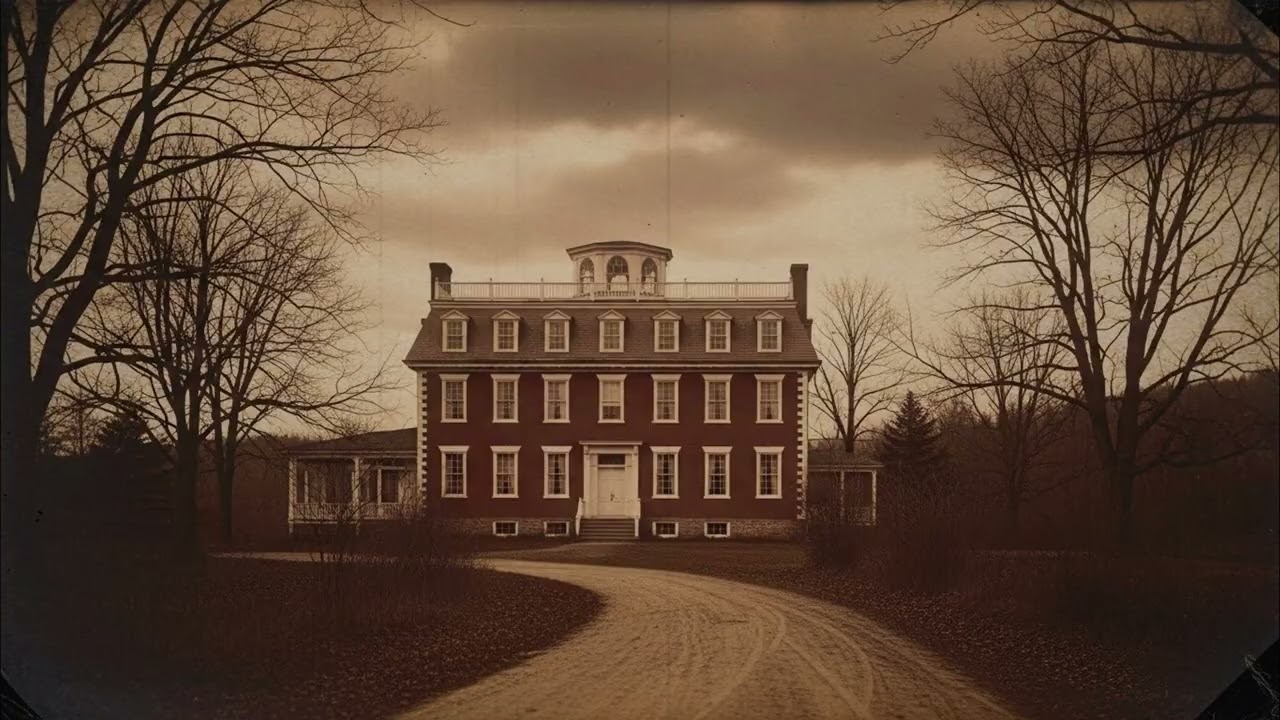
The house sat on forty acres at the end of a winding dirt road, roughly three miles from the nearest neighbor and seven miles from the center of town. The estate had been built in 1789 by Captain Jeremiah Whitmore, a Continental Army officer who received the land as payment for his military service. What distinguished Hargreave House from other colonial estates was its unusual cellar layout. According to original building plans filed with the county in 1790, the cellar extended far beyond the house’s foundation, incorporating natural limestone caves discovered during construction.
Whitmore’s correspondence revealed that the local Abnaki people had warned him against building over the caves, claiming they were used by spirits for purposes he found too superstitious to record in detail. But the practical advantages of the underground space for storage and temperature control convinced him to include the caves in his foundation plans. Cordelia Hargreave was known throughout Montpelier as a woman of refined taste and considerable reserve. Born Cordelia Ashworth in Boston, she had met Lysander during his time as a bank manager in Massachusetts.
Their marriage in 1925 was considered highly advantageous, and the couple moved to the Elm Ridge estate in 1928, where they led a quiet, somewhat isolated existence for over twenty years. Those who knew Cordelia described her as intelligent but distant, polite but never warm. She visited the village twice a week, always on Tuesdays and Fridays, invariably wearing the same black wool coat regardless of season, speaking in measured, careful sentences that revealed nothing of her inner thoughts. The relationship between the couple appeared cordial from the outside, though attentive neighbors sometimes noted a formality between them that seemed unusual.
Reverend Isaiah Blackthorne of the First Congregational Church, where the Hargreaves regularly worshiped, recorded in his private diaries that in twelve years of pastoral contact with the family, he never observed a sign of genuine affection between husband and wife. After Lysander’s sudden death in March 1949, Cordelia withdrew further into isolation. She dismissed the household staff, keeping only Bartholomew Creed, an elderly gardener who had worked for the family since 1940. Creed later provided the most detailed account of life on the estate in the period following Lysander’s death.
He noted that Cordelia had developed strange habits regarding certain parts of the house. She forbade him from entering the cellar under any circumstances. When pipes froze during the harsh winter of 1949 to 1950 and he suggested hiring a plumber, she simply ordered him to shut off the water supply to that part of the house. She also began locking specific rooms on the second floor, including what had been Lysander’s study and the guest room at the end of the hall.
Perhaps strangest of all, Creed observed that Cordelia left food outside the locked cellar door every evening. When questioned, she explained they had a mouse problem, though Creed noted that in eleven years of maintaining the estate, he had never seen signs of pests. The food, he observed, was always gone by morning, but he never saw any creature take it. The portions seemed far too large for mice—full plates of prepared meals, complete with cutlery and cloth napkins, as if set for a formal dinner.
The first indication that something had gone seriously wrong came on November 14, 1951. Bartholomew Creed arrived at his usual time of 7:30 in the morning and found the front door wide open, despite the temperature having dropped to nearly minus seven degrees overnight. The house was cold and silent. Cordelia was nowhere to be found.
At first glance, the house seemed undisturbed. No signs of struggle or break-in. Cordelia’s jewelry, including valuable pieces she had inherited from Lysander’s mother, lay untouched in the bedroom drawer. Her winter coat hung in the wardrobe by the front door.
Her handbag, containing nearly three hundred dollars in cash, sat on the kitchen table where she usually left it. But certain details troubled Creed immediately. The food he had seen Cordelia set before the cellar door the previous evening was gone, but the door itself, which had been firmly locked for over two years, now stood ajar. From the opening came a draft carrying an unpleasant, sweet odor, like flowers left too long in water mixed with something earthy and old.
More concerning was the state of Cordelia’s bedroom. While her clothes hung neatly in the closet, her bed showed no trace of having been slept in. On the nightstand, Creed found a cup of tea that was still lukewarm and an open book on a page containing only an illustration of a dark corridor. Most troubling of all, Creed found a note in Cordelia’s handwriting, prominently placed on the kitchen table.
It read simply: I have left to fulfill Lysander’s agreement. Do not seek me in the places you know. Thank you for your faithful service. The house will be cared for by its rightful inhabitants.
The note was dated November 13, 1951, but the ink had an unusual dark red color that Creed could not identify. Creed searched the house for about an hour before contacting the authorities. Sheriff Ezekiel Morehouse, a thirty-year police veteran, arrived that morning around 10:00 with Deputy Sheriff Harold Finch. The obvious explanations for Cordelia’s absence did not fit the evidence.
If she had left voluntarily, why leave her coat behind in November weather? Why leave her money behind? If she were the victim of a crime, where were the signs of struggle? Why were her valuables not taken?
Most baffling was the note suggesting someone else would care for the house, when no other residents were known. The investigative team conducted a methodical search, finding nothing unusual until they reached the cellar. The door that Creed said stood ajar now seemed firmly closed, though neither the sheriff nor his deputy could remember anyone approaching it. Stranger still, the door now bore a new lock, clearly recently installed, that none of the investigators had seen earlier that day.
When they tried to open the door, they discovered it was bolted from the inside with a complex locking mechanism unlike anything Sheriff Morehouse had seen in three decades of police work. Deputy Finch was sent to investigate the exterior entrance to the cellar, a double wooden door accessible from the garden. He found the doors chained and locked with what appeared to be a very old padlock, significantly corroded. The chain itself had clearly been there for years, possibly decades, with rust fusing it to the metal hinges.
Yet Finch noticed something curious. Despite the apparent age of the lock and chain, fresh scratches around the keyhole suggested it had been recently used. Unable to gain access, Sheriff Morehouse decided to postpone that part of the search until he could return with proper tools. He instructed Deputy Finch to remain at the property while he drove back to town to fetch a locksmith.
That temporary departure proved significant. Deputy Finch, left alone to guard the house, reported hearing several distinct sounds during the two hours Morehouse was gone. Around 12:30, he heard what sounded like someone walking slowly across the floor directly above him, though he could clearly see the first floor was empty. At 1:15 in the afternoon, he heard piano music coming from the direction of the parlor, despite having personally checked that the parlor contained no piano.
The music was clearly recognizable as a melancholic piece resembling a funeral hymn, played with considerable skill but somehow muffled, as if the sound had to travel through walls or floors to reach him. Most disturbing of all, at 2:00 in the afternoon, Deputy Finch heard Cordelia’s voice calling his name from inside the house. The voice seemed to come from multiple locations simultaneously, as if she were moving through several rooms at once while calling to him. When he called back and searched for her, he found the house as empty as before.
In his supplementary report, filed three days after the incident, Finch noted that the voice sounded exactly like Cordelia’s, but its tone suggested no distress or urgency—rather a calm invitation, as if she were asking him to join her for tea. At 2:45, just before Sheriff Morehouse’s return, Finch observed movement at the cellar windows from his position outside the house. The windows, which had been dark all morning, now flickered with light, as if from candles or oil lamps. He saw shadows moving across the illuminated windows in patterns suggesting multiple figures engaged in organized activity.
Finch approached the cellar windows for a closer look and discovered they offered a clear view of the cellar space. What he saw was a fully furnished living area complete with carpets, furniture, and what appeared to be a formal dining table set for multiple people. Several individuals, dressed in clothing from an earlier historical period, moved through the space as if performing normal household activities. Most striking of all, Finch identified one of the figures with certainty as Cordelia Hargreave.
She seemed to be directing the setting of the dining table and wore a dark blue dress that Finch recognized as one she wore to church services. She moved naturally and purposefully, showing no signs of distress or coercion. At one point, she looked directly at the window where Finch stood watching and smiled warmly, raising her hand in greeting before returning to her activities. Sheriff Morehouse returned at 3:30 with Silas Weatherbee, a locksmith from Barre who specialized in antique mechanisms.
Weatherbee examined the lock on the cellar door and declared he had never seen anything like it. The lock appeared hand-forged, possibly from the colonial era, and was secured by a mechanism that could be operated from both sides of the door. More puzzling still, the key that should have operated the lock from the outside appeared to have been deliberately broken off inside the mechanism, leaving only a splinter of metal lodged to prevent operation. When Deputy Finch reported his observations at the cellar windows, Sheriff Morehouse immediately went to verify the story.
By then, however, the windows were completely dark, with no movement detectable from outside. The sheriff noted in his report that the windows appeared to have been covered from the inside with dark cloth or boards, preventing any view of the cellar interior. Weatherbee eventually succeeded in forcing the lock, though he warned the door might be damaged in the process. The work took nearly an hour, as the mechanism proved far more complex than its exterior suggested.
When the cellar door finally opened, it revealed a narrow stone staircase descending into darkness. The sweet, unpleasant odor that Creed had mentioned earlier now emerged more strongly, causing the sheriff and deputy to recoil momentarily. Sheriff Morehouse descended first with an electric lantern borrowed from the fire department. What he found in the cellar of Hargreave House would become the subject of investigation, speculation, and controversy for decades.
The cellar was far larger than the house’s floor plan suggested, extending into natural limestone caves integrated during construction. The worked stone of the house’s foundation gradually transitioned into rough cave walls that disappeared into darkness beyond the lantern’s reach. The floor consisted of flagstones in the main section, but in the parts where the cellar transitioned into the caves, the floor was packed earth showing clear signs of regular foot traffic. More significant than the size of the cellar was its contents.
The space had clearly been arranged as a kind of living area, complete with furniture, carpets, and what appeared to be sleeping quarters. Everything, however, was covered in decades of dust and decay, suggesting the space had not been inhabited for many years. Worn curtains hung from ropes strung between support beams, creating the impression of separate rooms within the larger space. On a table lay the remains of what had once been books, though moisture and time had reduced them to unreadable pulp.
Yet certain areas, despite the general appearance of abandonment, showed clear signs of recent activity. In the farthest corner of the cellar, where the stone floor gave way to the natural cave floor, Sheriff Morehouse found evidence of habitation. There was a sleeping area arranged with blankets and pillows that looked much newer than the rest of the furnishings. Beside this improvised bed, several objects suggested someone had been living in the cellar: reading glasses, a hand mirror, some clothing, and a leather-bound diary.
Most disturbing was what Sheriff Morehouse found next to the diary. A formally set table was arranged on a small table, complete with fine porcelain, cutlery, and cloth napkins. On the plate lay the remains of what appeared to be a recently consumed meal, and a wine glass contained traces of a red liquid. Nearby, an oil lamp still burned with a quiet flame, casting dancing shadows on the cave walls.
The diary became a crucial piece of evidence. It contained entries dating back to shortly after Lysander’s death in 1949. The early entries were mundane observations about daily life and housekeeping. But starting in late 1949, the tone and content of the entries changed dramatically.
An entry dated December 23, 1949 read: The sounds from below have become more frequent and distinct. I can no longer convince myself they are merely creaking beams or small animals. Last night I heard what was unmistakably a conversation, though I could not make out the words. This morning I found the cellar door unlocked, though I specifically remember locking it before going to bed.
Lysander never said there were others living beneath our house, but the evidence suggests he knew of their presence. An entry dated January 15, 1950 stated: I have discovered the truth about the locked rooms. Lysander did not seal them to preserve memories, as he told me. He sealed them to contain something.
I found his private papers yesterday, hidden behind a false panel in his desk. The cellar was never empty during our marriage. We were never alone in this house. There are documents from the time of the original construction describing agreements with the cave dwellers.
Captain Whitmore apparently made some kind of arrangement with them when he built the house. The diary entries continued through 1950 and 1951, documenting Cordelia’s growing awareness of what she called the others who lived beneath the house. According to her account, the cellars extended far deeper than anyone had realized, connecting to a network of natural tunnels used for purposes she was only beginning to understand. An entry dated March 17, 1951 read: They are waiting for me to join them.
Lysander promised them I would, though he never told me about this agreement. I understand now why he never allowed me to accompany him on his evening walks. He was not walking in the garden. He was visiting them below.
They are not what one would expect from people who live in caves. They are educated, refined, and possess knowledge spanning centuries. They maintain their own society, their own customs, entirely separate from the world above. An entry dated June 8, 1951 provided more details about these underground inhabitants: I have learned their history through conversations through the door.
They are descendants of colonial settlers who withdrew underground during various conflicts and persecutions. Some trace their lineage to religious communities that sought isolation from mainstream society. Others are the remnants of families who disappeared during wars or economic upheavals. They have created a stable community that has existed for generations, sustained by careful planning and occasional interaction with selected surface residents.
According to Cordelia’s account, Captain Whitmore was the first to make such an arrangement, allowing the cave dwellers to continue their existence in exchange for certain considerations. Each subsequent owner of the property was gradually initiated into the arrangement and eventually invited to participate more fully in the underground community. An entry dated July 20, 1951 explained Lysander’s role: I understand now why Lysander was so meticulous in keeping the property exactly as it was when we inherited it. He was fulfilling obligations established by previous owners.
The evening meals I thought he ate alone in the cellar were in fact communal dinners with our neighbors below. The supplies he claimed were for storage were provisions for their community. In return, they offered him knowledge and advice that proved valuable for his business dealings. The arrangement was mutually beneficial and had been maintained for over a century.
The final entries in the diary, dated November 13, 1951, contained detailed preparations for what Cordelia described as properly joining the community. She wrote: Tonight I will fulfill the promise he made on my behalf. It is not a matter of coercion or despair, but rather an opportunity to join a society that values learning, stability, and mutual support over the uncertainties of the world above. They have patiently waited for me to complete my period of mourning and settle my affairs above ground.
Now I am ready to take my place among them. The sheriff’s investigation of the cellar revealed several other disturbing details. In addition to evidence of Cordelia’s recent presence, he found indications that the space had been regularly inhabited for many years. Storage areas contained preserved food, some of which appeared recently consumed.
A simple kitchen area was equipped with tools and supply containers showing traces of continuous use. Most puzzling of all, one section of the caves appeared to contain sleeping quarters for multiple individuals, complete with personal belongings pointing to different historical periods of habitation. The sheriff’s report noted that several passages from the main cellar led deeper into the cave system. These tunnels were narrow but carefully maintained, with niches carved into the walls for oil lamps.
The passages seemed to extend considerable distances underground, connecting rooms with various functions: storage areas, workshops, and spaces serving as communal meeting places. The exploration of one tunnel by Deputy Finch, approximately fifty meters from the main cellar, revealed something that forced the investigative team to revise their assumptions. The tunnel led to a large natural space that had been converted into what could only be described as an underground village square. In the central space, where multiple passages converged, stone benches were arranged.
Oil lamps in wall niches provided constant illumination. Most striking was that the space showed clear signs of recent use: warm ash in a central hearth, personal objects on the benches, and food preparation areas suggesting regular gatherings of a community. Deputy Finch also discovered that the cave system contained parts that had been modified with considerable technical skill. An advanced drainage system carried groundwater away from the living areas.
Ventilation shafts, some natural and others deliberately enlarged, provided for the circulation of fresh air throughout the underground complex. Storage areas were carved into solid rock and fitted with wooden shelving holding provisions ranging from preserved food to manufactured goods that appeared recently obtained from surface suppliers. Most disturbing was Finch’s discovery of what proved to be a library space. Stone shelves held hundreds of books, many clearly antique, but others apparently contemporary.
A reading area was equipped with comfortable furniture and adequate lighting for extended study. Several books lay open on reading tables, suggesting they had recently been consulted. The subjects visible ranged from historical texts and religious writings to contemporary works on agriculture, medicine, and technology. The investigation was complicated by the fact that although the cave system showed extensive signs of habitation, the investigators encountered no residents during their search.
The spaces seemed recently vacated, as if the inhabitants had withdrawn deeper into the cave system or temporarily relocated during the surface investigation. The search team did, however, find clear evidence that they were being watched during their work. Personal objects were moved or rearranged between their visits to different rooms. Fresh food suddenly appeared in spaces they had earlier found empty.
More unsettling still, they occasionally found notes addressed to them by name, written in elegant handwriting on aged paper, thanking them for their courtesy in conducting the investigation with minimal disruption to the community. The official investigation was concluded after five days without determining Cordelia’s fate or locating the actual inhabitants of the cave system. Sheriff Morehouse filed a missing persons report for Cordelia and recommended keeping the case open, but no new leads emerged. The house was sealed by court order pending settlement of the estate, as Cordelia had left no will and no known living relatives could be found.
Bartholomew Creed, however, provided additional testimony that was included in the court records. According to Creed, on the evening before Cordelia’s disappearance, he had stayed at the estate later than usual to secure outdoor equipment ahead of an expected storm. While working near the toolshed around 9:00 in the evening, he saw light coming from the cellar windows, which was unusual since those windows had been boarded up for as long as he could remember. More significantly, Creed reported seeing shadows moving across those illuminated windows in patterns suggesting multiple figures participating in what appeared to be a formal dinner.
When he approached the house to investigate, he heard sounds he described as conversation and laughter, as if several people were sharing a pleasant meal together. The conversation was too muffled to make out specific words, but the tone was clearly social and relaxed. However, when he looked at the front of the house, Creed could see Cordelia sitting alone at the library window, apparently reading. This created an impossible situation.
How could she be simultaneously alone in the library and participating in the gathering in the cellar? Creed watched for several minutes, alternating his observation between the cellar windows and the library, and confirmed that Cordelia remained visible in the library the entire time the activity in the cellar was taking place. Creed’s statement concluded with his observation that he heard music coming from the cellar that evening, specifically what sounded like a small ensemble playing pieces that were melancholy but not unpleasant. The music continued until about 11:00 in the evening, after which the cellar windows once again fell into darkness and the house assumed its usual nighttime silence.
The investigation was officially closed in March 1952, with Cordelia Hargreave classified as missing under circumstances that could not be determined. The estate was eventually liquidated through the court, and the property was sold in August 1953 to the Montpelier Commercial Development Company, which planned to subdivide the land for residential construction. The development project, however, encountered unexpected complications. The surveying team hired to map the estate discovered that the underground cave system extended far further than previous investigations had revealed.
The limestone caves formed an extensive network beneath not only the Hargreave estate but also significant portions of the surrounding area. Even more problematic for development purposes, several of these tunnels showed evidence of structural modifications that could potentially compromise any construction in the region. The geological survey conducted by Dr. Araminta Thorne of the University of Vermont geology department revealed additional disturbing details.
According to her report, filed with the state in September 1953, the caves showed clear evidence of extensive human modification dating back at least two centuries. Carved passages connected natural chambers, and several spaces seemed deliberately excavated to create larger areas for various community functions. Dr. Thorne’s team also discovered what appeared to be a complex infrastructure system designed to support long-term human habitation underground.
Most puzzling, her survey identified multiple hidden entrances to the cave system, spread over several square kilometers, mostly concealed by vegetation or deliberately camouflaged. The developer abandoned the construction project after receiving Dr. Thorne’s report, citing prohibitive costs for addressing the geological concerns. The Hargreave estate was subsequently resold to a private buyer named Percival Ashford, who purchased it in 1954 as a summer residence.
Ashford, a retired literature professor from Dartmouth College, had no knowledge of the property’s history when he acquired it. He was attracted by the colonial architecture and the privacy the remote location offered, planning to use the estate for writing and scholarly research during his retirement. Ashford lived peacefully on the estate for nearly three years before encountering anything unusual. His experience began in the spring of 1957 when he decided to explore the storage areas in the cellar in preparation for installing a modern heating system.
What he discovered was that the cellar had been thoroughly cleaned and reorganized since the 1951 investigation. Every trace of previous habitation had been carefully removed. The improvised rooms, sleeping areas, and storage arrangements described in Sheriff Morehouse’s report had completely disappeared. The space appeared to be nothing more than a standard colonial-era cellar with natural cave extensions, exactly what one would expect beneath an eighteenth-century house in a limestone area.
Ashford, however, soon began noticing other peculiarities. His food supplies seemed to diminish faster than his consumption could explain. He occasionally heard sounds from the cellar during evening hours, though investigation revealed nothing unusual. Most notably, he discovered that objects in the house were occasionally moved or subtly altered, which he initially attributed to his own forgetfulness.
The situation escalated during the winter of 1957 to 1958. Ashford began finding evidence that someone was regularly entering his house, though he could never determine how this was happening. Doors he had locked were found unlocked in the morning. Windows that had been closed were found open.
Food was prepared in the kitchen and left as if someone expected him to find and eat it. Instead of contacting the authorities, Ashford decided to systematically document these events. As a scholar, he was intrigued by what seemed an intricate mystery, and he hoped careful observation would provide a logical explanation. He began keeping detailed logs of unusual incidents, recording times, locations, and specific details of each event.
Ashford’s logs, later donated to the Vermont Historical Society, reveal a pattern of escalating interaction throughout 1958. The incidents evolved from minor disturbances to more direct communication. By autumn, Ashford was finding notes addressed to him, written in elegant handwriting on aged paper. These notes typically contained polite inquiries about his health, comments on his scholarly work, and invitations to unspecified social activities.
The notes demonstrated detailed knowledge of Ashford’s daily routine, his research interests, and his personal preferences. They complimented him on specific books he was reading, offered thoughtful commentary on his writing projects, and suggested sources that proved remarkably useful for his academic work. The tone was consistently respectful and intellectually engaging, though the anonymous authors clearly possessed extensive knowledge of both Ashford’s activities and his field of study. The most significant incident in Ashford’s documentation occurred on December 15, 1958.
He woke around 3:00 in the morning to the sound of a conversation coming from the cellar. Unlike previous occasions when he had heard indistinct sounds, this time he could clearly distinguish multiple voices engaged in an academic discussion. Ashford crept to the cellar door and listened carefully. He could identify at least four distinct voices, two female and two male.
Their conversation was clearly audible and remarkably sophisticated, with topics ranging from classical literature to contemporary philosophy. The participants displayed impressive erudition, quoting extensively from sources in multiple languages and conducting complex theoretical discussions appropriate for university seminars. Even more intriguing, the conversation occasionally referenced Ashford’s own work, with participants offering insightful critiques and suggestions for his current research projects. They discussed his writing with the familiarity of colleagues who had carefully read his work, though Ashford was certain he had never shared his manuscripts with anyone in the area.
More disturbing was that one of the female voices spoke about Ashford directly, describing him as an excellent addition to our community and expressing the hope that he would soon join their evening discussions, as his perspective would greatly enrich their intellectual exchange. The voice carried a tone of warm invitation rather than threat, but the implications were unsettling. Ashford spent the rest of that night before the cellar door, listening to the conversation that continued until dawn. The discussion covered numerous academic topics, with participants demonstrating knowledge spanning several centuries and disciplines.
Sometime in the early morning hours, one of the voices addressed him directly, acknowledged his presence before the door, and invited him to join the discussion if he felt ready. When Ashford did not respond, the voice, which he believed belonged to a highly educated woman, assured him they were patient and would wait until he was willing to participate. She explained that their community valued scholarly discourse above all other activities and hoped to find someone of his intellectual caliber to join their permanent staff, so to speak. After this experience, Ashford decided to leave the property.
He contacted a real estate agent the next day and arranged to put the house back on the market. He continued documenting his observations during the month needed to complete the sale, however, providing researchers with the most detailed account of the phenomena surrounding the Hargreave estate. During his final weeks on the property, Ashford observed several incidents he meticulously recorded. He noted that the cellar door, which he had secured with multiple locks, occasionally stood open in the morning.
He discovered what appeared to be seminar materials in his study: books opened to specific pages, papers arranged as if in preparation for an academic discussion, and marginal notes in his own work offering scholarly commentary from perspectives he had not considered. Most notably, Ashford reported finding written invitations slipped under his bedroom door at night. These notes, written in the same elegant handwriting he had seen before, formally invited him to attend the evening colloquium in the cellar at 9:00 in the evening. The notes assured him his participation would be warmly welcomed and that he would find the intellectual exchange both stimulating and rewarding.
The invitations contained detailed descriptions of topics to be discussed, reading lists for preparation, and assurances that the community possessed extensive library resources that would be made available to him. The academic topics proposed for discussion directly related to Ashford’s research interests, suggesting the invitation was specifically tailored to pique his scholarly curiosity. Ashford never accepted these invitations, though in his final log entry he admitted to being increasingly tempted to do so. The academic community described in the notes offered everything he had hoped for in retirement: intellectual stimulation, access to extensive research materials, and collaboration with scholars who seemed to share his passion for learning.
Only the unusual circumstances of their residence prevented him from seriously considering the opportunity. The property was sold in January 1959 to the Vermont State Historical Commission, which wanted to preserve it as an example of Federal architecture. The commission’s plans, however, were disrupted when their restoration team encountered the same unexplained phenomena that had plagued previous residents. The restoration team, led by architect Harrison Whitmore, a descendant of the original builder, documented numerous incidents during their brief stay.
Workers reported tools being moved overnight, supplies disappearing and reappearing in illogical places, and a persistent feeling of being watched by invisible observers. More concerning were reports from team members working late shifts. Several workers heard conversations and movement from the cellar in the evenings, and an electrician claimed to have seen a woman matching the historical descriptions of Cordelia Hargreave in the kitchen at dusk. According to his account, the woman politely asked him to be careful with the wiring in the cellar, as it might disturb the people living below.
The most detailed account came from master carpenter Josiah Fletcher, who was working alone in the house one evening in May 1959. According to his statement to police, he encountered several individuals in colonial dress who inspected his restoration work with obvious expertise. They engaged him in conversation about historical building techniques, demonstrating impressive knowledge of eighteenth-century methods and offering suggestions that proved very useful for preserving historical accuracy. Fletcher reported that the individuals were courteous, highly educated, and genuinely interested in preserving the historical integrity of the house.
They expressed appreciation for the careful work and offered to share their knowledge of the building’s original construction details. When Fletcher asked how they had gained access to the house after hours, they explained that they had lived there much longer than any temporary residents and considered themselves the permanent caretakers. The state commission halted the restoration project in June 1959, citing cost overruns and scheduling problems. The property was quietly sold to a private buyer who planned to demolish the house and use the land for agricultural purposes.
The demolition project in the autumn of 1959 formed the final chapter in the documented history of the Hargreave case. The demolition crew, experienced in dismantling colonial structures, expected to complete the job in a few days. Instead, they encountered complications that extended the process by weeks and ultimately left the project unfinished. The greatest difficulty arose when the crew attempted to address the cellar and cave system.
Original plans called for filling the underground spaces with concrete to prevent future settling or structural problems. When workers began exploring the cave system to determine how much material would be needed, however, they discovered the system was far more extensive than any previous survey had indicated. The caves extended in multiple directions from the house’s foundation, forming a complex the demolition supervisor described as a small underground city. Several passages led to rooms large enough for a considerable number of people, and many of these spaces showed clear signs of advanced long-term planning and development.
Carved stone fixtures, advanced drainage systems, and even primitive but effective lighting systems suggested the caves had been developed as a permanent residential community. More disturbing were the personal possessions found throughout the cave system. The demolition team discovered furniture, books, clothing, and other household items scattered across multiple rooms. Some of these possessions appeared very old, possibly dating to the colonial era, while others seemed much more recent.
Several items were identified as belonging to Cordelia Hargreave, though it remained unclear how they had come to be in the deep cave chambers. The demolition project was eventually halted when workers refused to continue after what the supervisor described as direct contact with the current residents. According to reports filed with the contractor’s insurance company, multiple crew members reported encountering people in the cave system who approached them to express concerns about the demolition project. These individuals, according to consistent reports from multiple workers, were well dressed, articulate, and clearly highly educated.
They explained that the cave system was their permanent home and asked whether the demolition work could avoid certain areas where their community was located. They offered to purchase the property at market value if the demolition could be halted, and they provided detailed maps showing portions of the cave system that could be safely filled without affecting their living areas. The final incident that ended the demolition project occurred on October 23, 1959. Three workers who entered the cave system to install drainage equipment reported finding a fully set dining table in one of the larger rooms, complete with burning candles, prepared food, and place settings for six people.
When they returned with the supervisor to investigate, they found not only the dinner but also several individuals who stood to greet them courteously and explain that they had prepared the meal in the hope of discussing a mutually acceptable solution to the demolition problem. The demolition company left the project the following day, leaving the main building partially demolished and the cellar and cave system intact. The property owner faced significant unexpected costs and, unable to find another contractor willing to complete the work, eventually donated the land to the state forestry department. The site became part of Putney State Forest in 1960, with the remaining portions of the house and cellar entrances sealed and marked as dangerous.
Official forest service documents mention unstable underground caves and advise hikers to avoid the area. No mention is made in public documents of the property’s history or the circumstances that led to its abandonment. In the decades that followed, the Hargreave site became the subject of unofficial interest from researchers, journalists, and the curious, drawn by stories of the unresolved disappearance and unexplained phenomena. Most of these investigations were brief and yielded little new information, partly because access to the sealed cellar required special equipment and permission that was rarely granted.
The most thorough modern investigation was conducted in 1967 by Dr. Isidora Blackwood, a sociology professor at Middlebury College researching intentional communities in Vermont. Dr. Blackwood received state permission to conduct a limited archaeological survey of the cave system, hoping to map the human modifications and perhaps shed light on the social structure of the underground community.
Dr. Blackwood’s team spent three weeks mapping the cave system and cataloging the artifacts found. Their discoveries suggested the caves had been almost continuously inhabited from the colonial period through the 1950s, with evidence of multiple distinct periods of development and expansion. The team identified what appeared to be family dwellings, communal spaces, workshops, and storage facilities, indicating a complex and well-organized society.
Most notably, Dr. Blackwood’s investigation revealed that the cave system contained areas showing signs of current use. Fresh food supplies, contemporary clothing, and other modern objects indicated that someone had been living in the caves as recently as the mid-1960s. The team also found clear evidence that the underground community had developed sophisticated systems for maintaining contact with the surface world, including carefully hidden entrances and supply networks that allowed them to obtain modern goods undetected.
Dr. Blackwood’s investigation was prematurely terminated when team members reported having had direct contact with the current inhabitants of the cave system. The decisive incident occurred on the final planned day of the survey. Two graduate students working in one of the deeper chambers reported discovering a space arranged as a comfortable library and meeting place, occupied by several individuals engaged in what appeared to be an academic seminar.
According to their account, the people they encountered wore a mix of historical and contemporary clothing and spoke with a formal, educated manner indicating extensive schooling. The residents they met, the students reported, were hospitable and curious about the research project. They explained that their community had existed in the cave system for many generations, maintaining their own educational and social institutions and occasionally having contact with selected individuals from the surface world. They expressed interest in Dr.
Blackwood’s academic work and invited her to visit their community for more extensive discussions about their social structure and history. Dr. Blackwood descended herself to investigate the students’ claims and confirmed their account of the encounter. Her final report describes a meeting with representatives of the community who displayed impressive knowledge of academic methodology and willingness to engage in scholarly research into their society, provided it would not compromise their privacy or safety.
The archaeological survey was terminated by mutual agreement between Dr. Blackwood and the community representatives. Dr. Blackwood filed her preliminary findings with the state but never completed her intended comprehensive study.
Her research notes, deposited with the Vermont Historical Society, reveal her conclusion that the cave community represented a unique form of intentional society that had successfully maintained its independence for over two centuries. Dr. Blackwood’s final report, submitted in September 1967, concludes with observations reflecting her professional assessment of what she had discovered. The community we found beneath Putney State Forest constitutes an extraordinary example of social organization and cultural preservation.
They have created a stable, developed society that has endured major historical changes while maintaining their core values and traditions. Their willingness to engage with external researchers, combined with their clear success in maintaining their chosen way of life, suggests this community deserves recognition as a significant anthropological phenomenon rather than being dismissed as an anomaly. The state’s response to Dr. Blackwood’s findings was to impose permanent access restrictions on the cave system.
The area was reclassified as a protected geological site, and access was prohibited except for official scientific research under strict state supervision. Since 1967, no such research has been permitted, though the restrictions appear motivated more by respect for the community’s privacy than by safety considerations. The official records of the Hargreave case end with Dr. Blackwood’s investigation, but unofficial reports and local legends have continued to grow over the decades.
Hikers in Putney State Forest occasionally report hearing music or conversation coming from the ground near the former Hargreave estate. Campers describe finding prepared food at their campsites at night, always accompanied by polite notes expressing the hope that the offerings would be useful for their stay in the forest. Most persistent are reports from residents of Montpelier and surrounding communities who occasionally encounter individuals whose clothing, speech, and behavior suggest they come from earlier historical periods. These encounters typically involve polite questions about current events, brief conversations about local history, and offers to trade handmade goods for modern supplies or books.
Margaret Thornfield, the former postmistress who had known Cordelia Hargreave, gave one of the most detailed accounts of such an encounter. In 1968, at age eighty-nine, she reported meeting a woman she identified with certainty as Cordelia at the Montpelier farmers market. According to Thornfield’s account, Cordelia was virtually unchanged since their last meeting seventeen years earlier and conducted a pleasant conversation about local events and mutual acquaintances as if no significant time had passed. The conversation, Thornfield reported, centered on intellectual and cultural matters.
Cordelia showed particular interest in newly published books, developments in higher education, and social changes in the region. She also asked about specific families in Montpelier, inquiring about people who had died or moved during the 1950s, and appeared surprised to learn of their absence. Most memorable was that Cordelia invited Thornfield to visit her home in the forest for tea and scholarly discussion. When Thornfield remarked that she had heard the house had been demolished, Cordelia smiled and explained that the important parts of any community are its people and their shared intellectual life, not the physical structures that temporarily house them.
She assured Thornfield she would easily find the location if she wished to accept the invitation, and that she would enjoy meeting the other members of their academic community. Thornfield never accepted the invitation, though she admitted to being curious about what such a visit might reveal. She noted that Cordelia seemed completely normal during their conversation, showing no signs of mental instability or the effects of whatever experiences she had undergone during her years outside society. The Hargreave case remains officially unsolved, though it is no longer actively investigated.
The case files, now held in the Vermont State Archives, contain testimony from dozens of witnesses, surveys, reports from multiple investigators, and hundreds of pages of documentation from the period 1951 to 1967. What happened to Cordelia Hargreave on the night of November 13, 1951 may never be definitively established through conventional investigation. The evidence suggests several possibilities: that she voluntarily joined an established community living beneath her property; that she discovered a social alternative offering more intellectual and personal fulfillment than her isolated surface existence; or that she encountered individuals who had created a successful intentional society existing secretly for generations. Perhaps most intriguing, the persistent reports of encounters with Cordelia and others matching descriptions of historical figures connected to the estate suggest that what happened in the Hargreave house in 1951 was not an ending but a transition.
The cave system beneath Putney State Forest appears to house a community that exists parallel to mainstream society, occasionally interacting with the outside world but primarily maintaining its own social and intellectual institutions. For those who walk through Putney State Forest today, especially during the quiet hours when natural sounds carry further and everyday assumptions seem less certain, the story of Cordelia Hargreave serves as a reminder that the colonial landscape of Vermont may harbor communities never fully integrated into the modern world. The ground beneath our feet may conceal societies where time moves according to different principles, where learning and intellectual exchange remain the primary values, and where those seeking alternatives to conventional life may find acceptance and purpose. And perhaps, for those who listen carefully to the sounds of the forest or remain open to encounters that challenge conventional expectations, an invitation still exists: the same invitation offered to Percival Ashford in 1958, to Dr.
Blackwood’s research team in 1967, and to Margaret Thornfield at the farmers market. An invitation to intellectual community, to meaningful discussion, to discover what possibilities exist beyond the limited options that everyday society typically offers. The choice to explore such possibilities remains, as always, entirely our own.






