The treatment of the dead at the Battle of the Little Bighorn reveals much about the period’s attitudes toward life, death, and the respect, or lack thereof, given to those who perished on the battlefield. The grim aftermath of one of the most infamous clashes of the American Indian Wars is told through the bodies left exposed to the elements, subject to both nature and human interference. Big Horn County, Montana, 1876. Even after centuries of expansion, colonization, and conflict, tension still lingered between the settlers of the new America and the indigenous peoples, especially the plains tribes, who posed a major obstacle to westward progress.
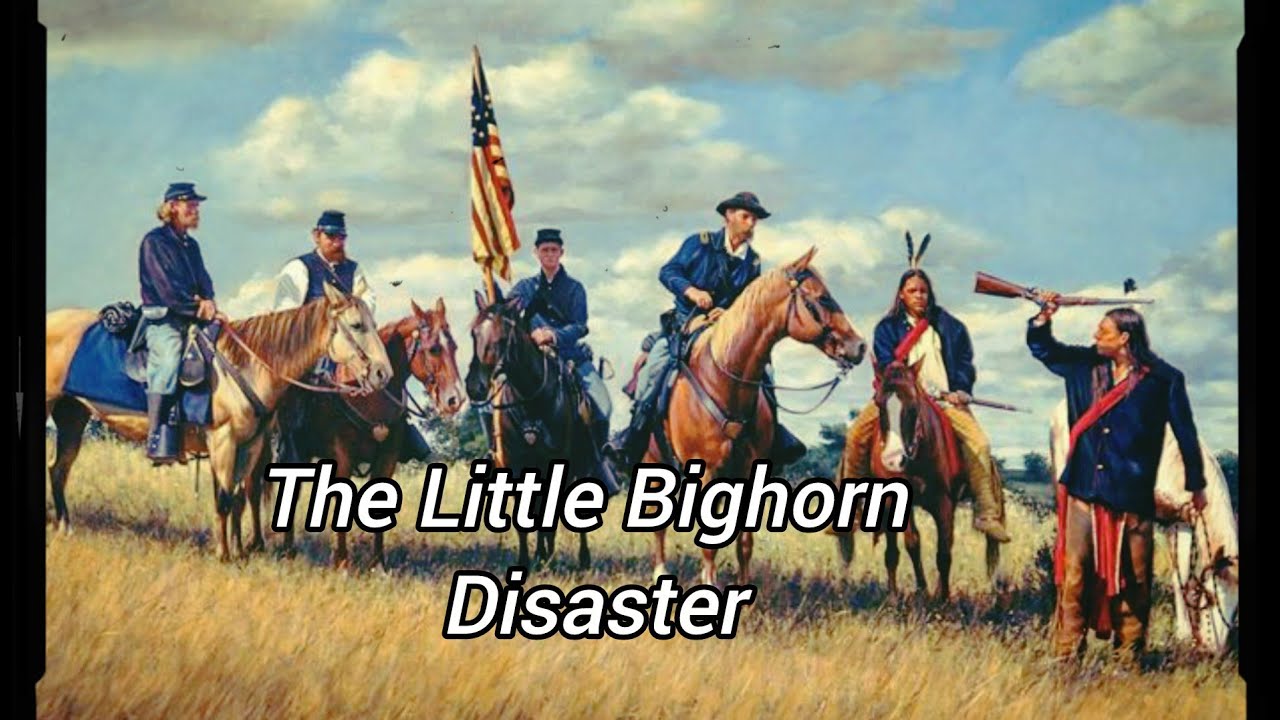
The plains Indians, including the Apache, Comanche, Cheyenne, and others, were renowned for their fighting skills and especially feared for their unmatched mastery of horseback warfare. Although they typically fought in small, mobile war bands armed with bows, tomahawks, and limited firearms, these warriors inflicted heavy losses on both professional US soldiers and untrained settlers pushing into their territories. Their fierce and unyielding nature made them a serious threat to American control in the regions they inhabited. In 1851, the Treaty of Fort Laramie was signed.
Its main goal was to reduce intertribal warfare and protect the interests of American settlers. Intertribal conflicts not only endangered white travelers, but also disrupted trade and often required costly military interventions. The treaty outlined the territorial boundaries of eight native tribes, recognizing their lands as sovereign and not yet claimed by the United States. It also allowed the construction of roads, forts, and safe passage for travelers along the Oregon Trail.
However, peace did not last long. Old rivalries persisted, and when gold was discovered on Indian lands, tensions reignited. Prospectors and settlers flooded into the area, violating the treaty by encroaching on tribal territories. American authorities did little to prevent these breaches, fueling resentment among the tribes.
Eventually, in 1866, the United States was forced to respond militarily, leading to Red Cloud’s War, which lasted two years. During the conflict, around 200 American soldiers and civilians, and an unknown number of native warriors, lost their lives. The war finally ended with the signing of the second Treaty of Fort Laramie. Much like the first, it was almost immediately broken when white prospectors, driven by the lure of gold, began trespassing onto reservation lands where their presence was forbidden by law.
Although the US Army made some efforts to halt this invasion, the overwhelming number of settlers made enforcement nearly impossible. As the flood of fortune seekers continued, the US government, unable to stop the illegal migration, began pressuring the Lakota to surrender their claim to the Black Hills, a region rich in gold, timber, and other valuable resources. Over the years, resentment among the Lakota grew deeper as American authorities continued to demand more land. When plans arose to build the Northern Pacific Railroad through one of the last remaining fertile buffalo hunting grounds, tensions escalated into open violence.
Two prominent Lakota leaders, Sitting Bull and Crazy Horse, called for armed resistance. Their defiance inspired many Sioux and Cheyenne warriors, some of whom had previously resisted fighting, to join their cause, realizing that the promises made by the Americans would never be fulfilled. On June 22, 1876, General George Custer and his regiment were sent out from the main expeditionary force to scout enemy positions. By the morning of June 25, they had located a large native encampment about fourteen miles east of the Little Bighorn River.
Initially planning a surprise attack for the following day, Custer changed his decision when scouts reported that their movements had been discovered by a native war party. Fearing that the element of surprise was lost, he chose to attack immediately. At Little Bighorn, Custer divided his 700 troops into three separate groups: one to assault the village directly, another to block escape routes from the south, and the last under his personal command to strike from the north. Around midday, Custer and his men rode into the Little Bighorn Valley and launched their assault.
Crazy Horse confronted Custer’s troops head on while Sitting Bull organized efforts to safeguard the women and children. American intelligence had drastically underestimated the enemy’s strength, believing there were about 800 warriors in the camp. In reality, there were over 2,000, many of them armed with superior repeating rifles compared to the Americans’ slower single-shot Springfield carbines. Custer and his 210 men were quickly surrounded and cut off from the other detachments.
Outnumbered and outgunned, they were overwhelmed in a fierce battle that lasted just over an hour. The fighting ended with the annihilation of Custer’s force on what is now called Last Stand Hill. No one from Custer’s command survived, leaving the precise details of the battle shrouded in uncertainty. Native oral traditions passed down through generations tell varying and sometimes conflicting versions of what occurred.
A Crow scout named Ashishishe, or Curley, who escaped the battle, later gave a vague account, claiming that Custer had initially charged straight into the village but was quickly pushed back to the hill where he and his men made their doomed final stand. Two days later, the remaining army detachments learned of the disaster and discovered the aftermath. Custer and all his men were dead, their final position marking one of the most haunting defeats in American military history. Upon receiving the devastating news, the remaining troops rushed to find their fallen comrades.
When they arrived, the native warriors had already departed, taking most of their own dead with them. Only the hundreds of American bodies remained, scattered across the battlefield. Despite their efforts, the soldiers who arrived could not clearly reconstruct what had occurred from the evidence before them. Captain Frederick Benteen, commander of the third detachment, concluded that the engagement must have ended in panic and disarray until every man had been killed.
He later remarked that the soldiers likely let their horses go without orders, and although commands were given, few obeyed them. In his words, it had been a rout, a total collapse. The site that greeted them was horrific. The American dead had been savagely mutilated, their uniforms torn away and their possessions taken.
According to native belief, one carries their body into the next life. Therefore, many of the fallen soldiers had their trigger fingers cut off to keep them from fighting again in the spirit world. General Custer, in particular, had suffered a symbolic desecration. An arrow was thrust into his genitals to prevent him from fathering children in the afterlife, and needles were pushed into his ears, signifying that he had refused to listen to warnings.
The bodies were buried hastily in shallow graves as the campaign pressed on. Because the men had so few digging tools, many graves were little more than a thin layer of dirt covering the corpses. Custer’s burial was marked more distinctly than the others, his grave identified by stakes driven eighteen inches into the ground. A slip of paper with his name was sealed inside an empty cartridge case and placed beneath the marker.
Custer’s death appeared to have been caused by a gunshot to the heart, while a second wound to the head showed no bleeding, suggesting it had been inflicted after he had already died. Over the following year, numerous appeals were made to return to the battlefield to properly recover and reinter the dead. “The wives and friends of the officers who fell with Custer are urging me to have their remains brought in,” wrote Lieutenant General Philip Sheridan to General William T. Sherman, requesting authorization and funds for the task.
He noted that the cost would be small and might be covered through existing military funds. Although the initial request was denied, both Sheridan and Sherman continued to press the issue until permission was finally granted. On July 2, a detachment of soldiers reached the battlefield, established camp, and began the grim and exhausting task of recovering the dead. What they found was a horrifying scene: decaying bodies scattered across the plain, many of them partially eaten by scavengers and wild animals.
At first, the men used simple wooden sticks to mark the spots where each body was found, ensuring that no one would be overlooked. Once the officers were identified, their remains were collected and placed in coffins for reburial at a nearby military fort. The bodies of the enlisted men, however, were far too numerous to move.
Their remains were left where they had fallen, covered with earth, and their graves were marked with stakes to denote their final resting places.






