Samuel Walker wrote to Samuel Colt with the directness of a man who had no patience for correspondence that failed to reach its point. He had ridden with John Coffee Hays and bled for Texas, and he knew exactly where the Colt Paterson had fallen short. The revolver was too light, too fragile, too easily broken by the rough country and rougher use that Texas considered normal. What emerged from that exchange was a weapon so large, so heavy, and so absolute in its intentions that no black-powder revolver produced on the continent before or since has ever matched its raw power.
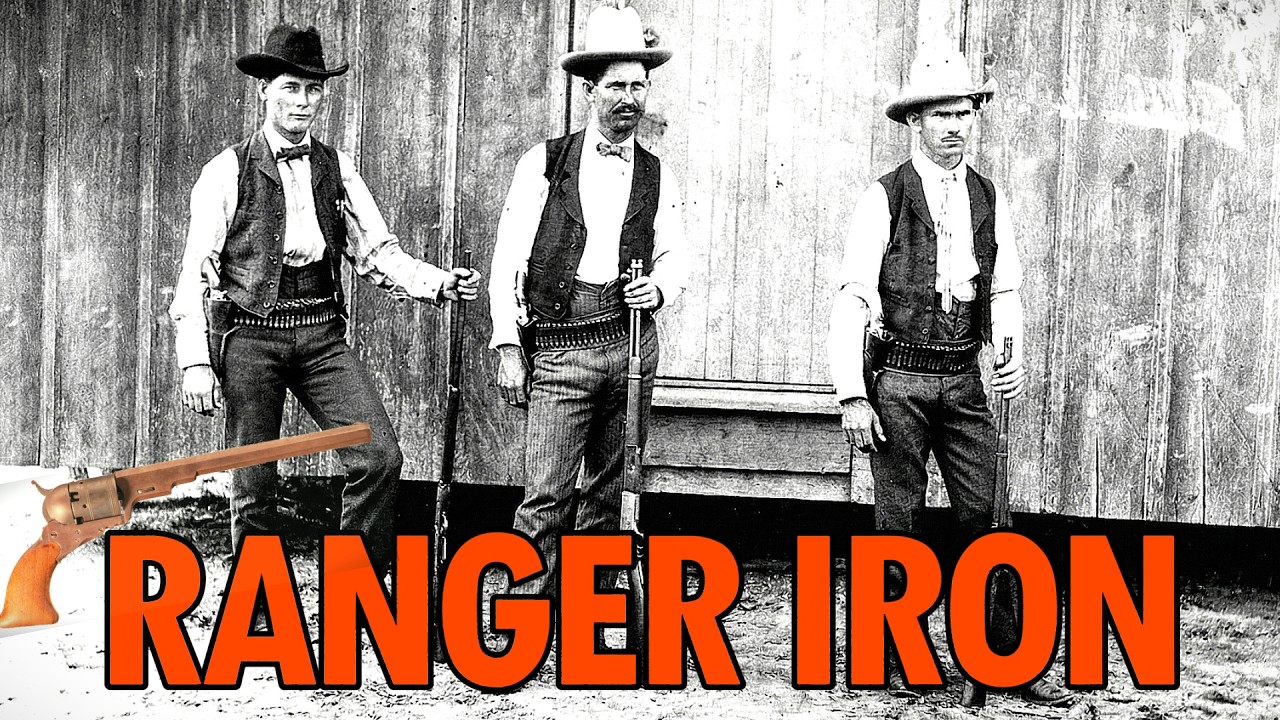
The Colt Walker of 1847 weighed four and a half pounds loaded, drove a heavy ball from a nine-inch barrel, and left no room for misunderstanding about what it was for. Walker carried it into the Mexican-American War and did not come home from Huamantla in October of that year. The gun outlasted the man. But the Walker carried something of the captain’s character forward through the decades that followed: the absolute refusal to be insufficient, the insistence on being equal to whatever the moment demanded.
The story of how that revolver came to exist begins two decades earlier, on a frontier that had not yet agreed to honor the Republic of Texas. In 1836, Texas was a declaration of intent pressed against a landscape that had not yet accepted it. The Comanche ruled the southern plains with a military sophistication that had defeated every conventional response sent against them. At the core of that sophistication was speed.
A Comanche warrior at full gallop could loose arrow after arrow with a fluency that made the single-shot muzzleloader—reload, tamp, prime, fire—look like a man trying to answer lightning with a candle. The Rangers needed something that could speak the same language. What they found was a slender, five-chambered revolver produced by a young Connecticut gunmaker who had never seen the Texas frontier and could not have imagined the use to which his creation was about to be put. The Colt Paterson was fine-boned, mechanically intricate, and unforgiving of rough handling.
It did not look like a weapon that would rewrite the history of a continent. But Hays understood what five shots delivered without reloading could mean against an enemy whose entire tactical system was built around the assumption that one shot was all he would ever face. At Bandera Pass in 1841, Hays led a company of Rangers into a Comanche engagement that the Comanche expected to end the same way every previous engagement had ended: with Rangers frantically reloading while warriors closed the distance at full speed. The second shot from Hays’s line stopped them.
The third shot began the retreat. The Comanche rode away from a force a fraction of their size, and nothing on the southern plains was ever quite the same again. A revolver had not merely won a fight. It had broken an assumption that an entire warrior culture had built its dominance upon.
In 1848, the Dragoon took what the Walker had established and made it survivable for the man required to carry it. Slightly reduced in its most extreme dimensions, refined in its mechanical execution, it became the sidearm that Rangers carried through the expansion of Texas authority across the hill country and into the vast territories beyond. It was a working gun, and the frontier was working country. They understood each other.
By 1860, the percussion revolver had been refined across two and a half decades of Colt’s ongoing conversation with what fighting men actually required. The Army model that emerged was the most balanced, most graceful, and most mechanically accomplished percussion revolver the American continent produced. Where the Walker had been a declaration and the Dragoon a workhorse, the 1860 Army was a finished argument. Six shots, elegant in the hand, reliable in the field, and present in such numbers across the Civil War years that it became the defining handgun of its generation.
Then came 1873, and with it the weapon the frontier would ultimately choose as its own signature. The Colt Single Action Army, chambered in . 45 Colt, was built to a standard of consistency that made every previous revolver look like a prototype. The name it earned—the Peacemaker—carried the particular frontier irony of a word applied to a thing that accomplished its purpose by making peace a less attractive option than compliance.
Captain Leander McNelly carried the weight of that irony on the Nueces Strip in the mid-1870s. Physical appearance consistently deceived where McNelly was concerned. He was slight, pale, already carrying the tuberculosis that would kill him before he reached forty, and his personal authority over violent men in violent country remains one of the most remarkable phenomena the Ranger record produced. He led his special force through the brush country of South Texas against border raiders and cattle thieves with a directness that the legal architecture of territorial jurisdiction could not always contain, and that McNelly did not always wait for it to authorize.
His Rangers carried the 1873 Colt into engagements that the newspapers of the day reported with the careful vagueness of editors who understood that some details served no one’s interest in the telling. What those Rangers accomplished in that strip of South Texas brush country with that single-action revolver in their hands belongs to the most consequential and least comfortable chapter in two centuries of Ranger history. The Remington 1875 arrived not as a challenger seeking to displace what Colt had established, but as an alternative that certain Rangers chose on the most practical grounds available. It worked.
It held together under conditions designed to destroy less honestly constructed weapons, and its solid-frame architecture gave the mechanically inclined fighting man confidence in the weapon’s structural integrity that the open-top Colt design did not always provide. On the frontier, confidence in your weapon was not a luxury. It was a component of every decision you made in the field. The Smith & Wesson Schofield of 1875 addressed a different problem with a different solution.
The top-break design that simultaneously ejected all six spent cases and presented the cylinder for reloading was not a refinement of the Colt’s gate-loading system. It was a rejection of it in favor of something faster, more instinctive, better suited to the mounted man whose reloading time was measured not in comfort, but in consequence. No handgun, however accomplished, reaches across the distances that the Texas frontier placed between a Ranger and the man he was pursuing. The long guns completed what the revolvers began, and the two that completed it most decisively were the Sharps 1874 and the Winchester 1886.
The Sharps was a single-shot rifle built around the proposition that one shot placed with absolute precision at distances other weapons could not reach was worth more than any number of shots that fell short of their purpose. In the open country of West Texas, where a man on the run understood that distance was his primary protection, the Sharps removed that protection with a calm efficiency that the rifle’s reputation preceded by enough distance to influence the decisions of men who had never personally tested it. The Winchester 1886 was John Moses Browning’s answer to the question that every previous lever-action rifle had declined to fully address: a repeating long gun strong enough in its internal architecture to handle the heavy cartridges that serious work in serious country required. Rangers carrying the Winchester 1886 into the closing campaigns of the frontier era carried both reach and volume, the two qualities that the Texas frontier had been demanding of its defenders since John Coffee Hays first raised a Paterson against a Comanche charge on a hill country pass in 1841.
The weapons have changed beyond any recognition those men could manage. The world those weapons were carried into has changed with equal thoroughness. But the line connecting the Ranger at Bandera Pass to the Ranger in the Brasada to the Ranger in the last campaigns of the open frontier is a line that two centuries have not broken. It is a continuous thread of institutional character, expressed in every era through the weapons the work required and the men who understood without being told what those weapons were for.
The frontier shaped the Ranger. The Ranger shaped the weapons. And the weapons in the hands of men the country had made equal to carrying them shaped the history of a state and a nation that still bears the mark of what was decided in fire and dust and the sharper arithmetic of close-range resolution across two hundred years of Texas ground.






