The Vestal Virgins were the most privileged women in Rome. They owned property, drafted wills, and rode through streets that fell silent at their approach. A condemned prisoner who caught the eye of a Vestal on his way to execution was set free on the spot, no magistrate able to override her glance. Yet that same untouchable power made them the perfect scapegoats.
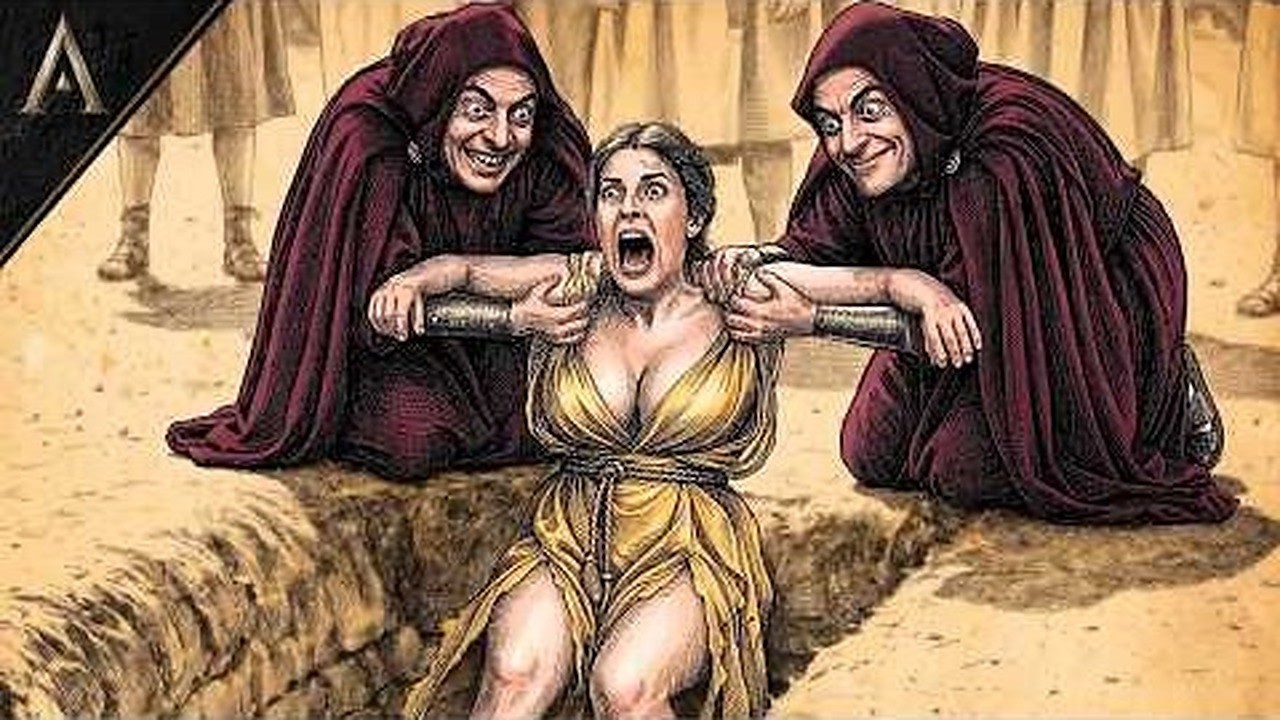
When Rome faced military disaster, plague, or famine, the state did not blame its generals. It blamed the sacred women who tended the eternal flame, and it buried them alive without ever spilling a drop of their blood. The office came with brutal conditions. Girls were selected between the ages of six and ten, required to have both parents alive, both freeborn, and no physical defect whatsoever.
The Pontifex Maximus spoke a formula unchanged for centuries, and the child was ripped from her family to serve for thirty years, divided into three chapters of ten: learning, performing, and teaching. Across all of them, she was bound by an absolute vow of sexual purity known as incestum. Roman theology held that the chastity of the priestess fed the sacred flame, the flame fed the empire, and compromise meant the gods would withdraw their hand from the legions. A Vestal’s slip was treated as an existential threat to the survival of Rome.
Their work was not gentle prayer. They harvested emmer wheat and ground the mola salsa that legitimized every public sacrifice in the Roman world. During the Fordicidia festival, they reached into the wombs of slaughtered pregnant cows, pulled out the unborn calves, burned them to ash, and later mixed that ash with the blood of a sacrificed racehorse to create a paste used in purification rites. They were forbidden to drink from the city’s aqueducts, so each morning they walked outside the gates to the spring of the nymph Egeria, carrying a bronze vessel with a pointed bottom that could never be set down.
And above all, they guarded the flame, working rotating shifts through the night. If it went out, the priestess was stripped and scourged until her back split open, then forced to relight the fire by drilling wood with her own blistered hands. They were also the empire’s most trusted bankers of secrets. Treaties, diplomatic correspondence, and the sealed wills of the most powerful men in Rome were stored inside the legally untouchable temple.
Julius Caesar and Mark Antony both handed their last wills to the Vestals personally. Then Octavian, the future Emperor Augustus, marched armed men into the temple, forced the priestesses to surrender Antony’s will, and read it aloud to the Senate, wrecking his rival’s standing forever. The lesson was clear: sacredness lasted only as long as someone with more power agreed to respect it. The catastrophe that sealed the fate of the Vestals came in 216 BC.
Hannibal Barca had marched an army over the Alps and drawn the Roman legions into open ground near Cannae. The consuls Varro and Paulus charged their eighty thousand men into a Carthaginian line shaped like a crescent. As the Romans pushed into the center, Hannibal’s wings folded around them. Numidian cavalry slammed the gate shut behind the entire army.
Packed so densely that men could not raise their arms, soldiers died from compression, suffocated standing upright, or clawed holes in the dirt and pressed their faces into the earth to control how they died. Fifty thousand Romans were dead before sunset. The city detonated. Mothers screamed in the Forum, fathers collapsed in public, and the Senate understood that the grieving mob was a revolution waiting to happen.
Quintus Fabius Maximus seized emergency control, locked the gates, and outlawed public weeping beyond thirty days. But controlling tears was not controlling rage. The Senate needed a story that explained fifty thousand corpses without pointing at the men in togas who commanded them. They reached for the pax deorum, the peace of the gods.
If the legions lost, the failure must be religious, not strategic. Somewhere, someone had polluted the sacred. Conveniently, omens began pouring into the capital: a statue sweating blood, stones raining from a clear sky, a wolf snatching a sword from a sleeping soldier. The Pontifex Maximus turned his eyes toward the Atrium Vestae and pointed at two names, Opimia and Floronia.
The accusation was incestum. The trial was theater. The verdict was decided before the first witness was called. The slaves of the Vestal household were seized and tortured on the rack, their joints pulled apart, heated iron plates pressed against their ribs until they confessed to invented affairs and named the lovers the state demanded.
The guilt of the priestesses was officially recorded. The men named in those confessions faced immediate punishment. Lucius Cantilius, a pontifical secretary, was stripped, bound to a post in the Comitium, and beaten to death by the Pontifex Maximus himself, the highest priest of Rome becoming a street executioner before the entire city. Floronia, watching from her cell, understood what was coming and took her own life, denying the Senate its ritual spectacle.
Opimia was left to face the final protocol alone. The law forbade drawing a Vestal’s blood, so the state had invented a punishment where no Roman hand ever touched her. She was lowered into an underground chamber in the Campus Sceleratus, the field of wickedness, just inside the city walls, with a wooden bed, a burning lamp, bread, water, and milk. The Senate argued this was not execution.
If she were truly innocent, the goddess Vesta would rescue her servant. The rations were political insurance, alibis that washed the blood from the state’s hands before the first shovel of dirt fell. The ladder was pulled up, the trapdoor slid across, and tons of soil were tamped down until the field looked exactly as it had at sunrise. She was left alive in the dark.
The lamp drank the oxygen, the carbon dioxide built with every breath, panic burned her air supply faster, and eventually she slipped out of consciousness. No Roman blade touched her. No rope marked her neck. The records stayed clean.
The machinery worked. The mob exhaled. The disaster at Cannae was no longer the fault of arrogant consuls but the fault of a dead woman under the dirt, and the Senate had proven that any military disaster could be converted into a religious crisis, and any religious crisis into the corpse of a priestess. On the same ground, the state buried alive a Greek man, a Greek woman, a Gaul, and a Gallic woman, six human beings in a single month to cover the failure of two consuls who marched their men into a trap.
The playbook never got retired. It only got refined. In AD 91, the Emperor Domitian, paranoid and hated by the aristocracy, reopened a case against Cornelia, the chief Vestal, who had already been acquitted of the same charge years earlier. He convened a secret tribunal at his private villa and condemned her without allowing her to speak a single word in her own defense.
The hypocrisy was staggering: Domitian was conducting an affair with his own niece, who would die from a botched abortion he forced on her. Cornelia, informed of her sentence, raised her hands and asked loudly how the emperor could condemn her when her sacrifices had kept him on his throne. The guards did not flinch. They stripped her of her sacred vestments, bound her wrists, sealed her in a litter built for one purpose, sound absorption, and carried her north to the Colline Gate.
The procession moved through streets gone silent. Lictors walked with their fasces pointed downward in mourning, even as the state carried out the killing. At the Campus Sceleratus, the Pontifex Maximus spoke a prayer to the gods of the underworld. Cornelia descended the ladder under her own power, because any resistance would ruin the theology.
The ladder was removed, the trapdoor sealed, and the dirt fell. The chamber did the rest. Her body was never found, because her body was never recovered. There was no marker, no mound, no stone.
The system survived for nearly a thousand years because it could always bury its failures in the dirt beneath a woman in white linen. But every system eventually meets a force it was not designed to handle. In AD 394, the Christian Emperor Theodosius I marched on Rome to dismantle the pagan infrastructure of the city. He cut off state funding to the Vestals, seized their wealth, revoked their legal immunity, and evicted them from the only home they had ever known.
He sent men into the inner sanctum of the Temple of Vesta, where no man besides the Pontifex Maximus had entered for a thousand years, and threw water on the eternal flame. The fire that had supposedly kept the empire alive died. The order was officially dissolved. Sixteen years later, in AD 410, the Visigothic king Alaric sacked Rome for the first time in eight hundred years.
The old pagans pointed to the cold hearth and said the flame had protected them. The Christians pointed to the cross and said Rome was already corrupt. Neither was entirely right. The empire had rotted from the inside for centuries, and the rot began the moment Roman senators discovered they could take their own catastrophes and bury them in the ground under a woman in white linen, replacing accountability with theology.
A civilization that buries its problems instead of fixing them only delays the reckoning. When it came, no flame, sacred or otherwise, could save it.






