In late autumn of 1920, the western counties of North Carolina lay under a silence so deep it seemed to swallow thought itself. What troubled the oldest residents was not the quiet, but the wind that came down from the slopes, carrying an odor that was strangely sweet, like earth turned over in places no one dared dig. The region where these events unfolded straddled the line between Madison and Yancey counties, a strip of dense forest so thick that sunlight failed to reach the ground in parts. The paths that passed for roads were dirt tracks, and the houses lay miles apart.
People there lived by their own calendar, governed by seasons and by stories told at the hearth through long winter nights. The country was still recovering from the Great War and the influenza that had swept through years earlier. In the mountains, time seemed to have stopped much earlier. Families lived much as their grandparents had lived fifty or sixty years before, growing what they ate, raising what they needed, and viewing strangers with deep suspicion.
Strangers were rare, and when one appeared, they rarely stayed long. Some never left at all. Into this atmosphere of mountains that seemed to breathe and mist that rose without warning came the name Sarah Whittaker. She was twenty-eight years old when she moved into a small, isolated property on the edge of a place called Hollow Creek, so small a settlement it barely appeared on the maps of the time.
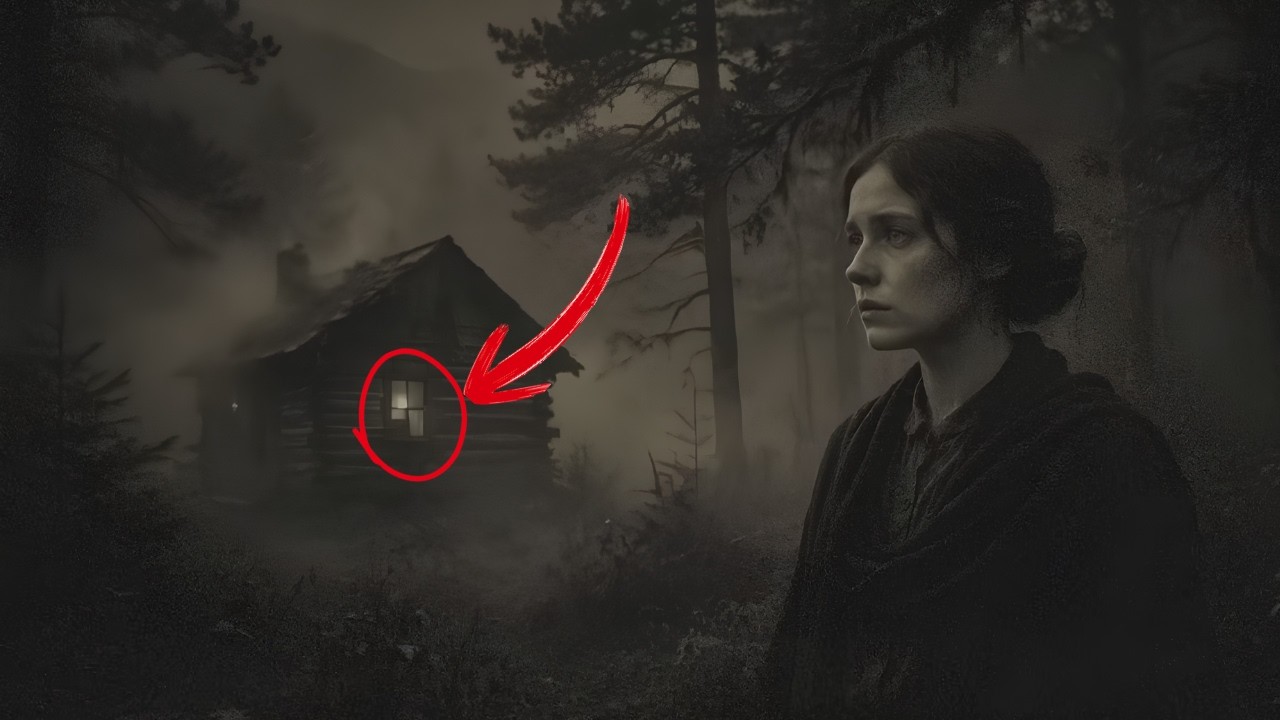
The house belonged to a distant aunt who had died a few months earlier. It sat at the end of a trail that ran more than three kilometers through dense woods. The few neighbors who saw her described a quiet-voiced woman with pale eyes and brown hair often pinned in a low bun. She wore simple clothes, long skirts and light cotton blouses, and rarely appeared without a dark shawl over her shoulders, even on the warmest days.
People said there was something about her that made them lower their voices when she drew near. It was not fear, exactly. It was an instinctive respect, the kind felt when facing things not fully understood. No one knew where she came from.
Some said she had lived in Asheville before coming up into the mountains. Others swore she was from the north, perhaps Pennsylvania, and that she spoke with a strange accent when tired. What was certain was that Sarah arrived at Hollow Creek on a late autumn evening, riding in a cart pulled by two thin horses, driven by a silent man no one ever saw again. She climbed down, paid him in silver coins, and walked alone to her aunt’s house, carrying two worn leather bags and a dark wooden box she kept close to her body at all times.
For the first weeks, she rarely left the house. Farmers in the area noticed only the smoke rising from the chimney at dawn and dusk, and the faint glow of a lamp behind the windows in the early morning hours. When she finally came down to the small village store for flour, salt, and kerosene, her presence cast an uneasy silence over the customers. A farmer named Elias Burton said she carried with her a calm that seemed to drown even the ticking of the wall clock.
During that visit, Sarah spoke her first words to anyone in the region. She asked softly whether many travelers passed through the trails at that time of year. The storekeeper, Henry Polk, told her no, that autumn usually left the roads empty, apart from some hunters climbing the slopes for deer before winter. Sarah thanked him, paid, and left without another word.
But Henry later whispered that she had asked with a strange tension in her eyes, as though she were waiting for someone, or dreading that someone would come. Days passed, quiet on the surface, mysterious beneath. The leaves fell in bronze and rust shades, covering the trails as if trying to hide them. Nights grew longer.
Cold descended from the ridges, and Hollow Creek prepared for another hard winter. No one imagined then that this would be the last ordinary autumn that community would know for a very long time. The first strange tale passed between the scattered houses came on a night when the mist descended earlier than usual and the silence of the slopes felt heavier than ever. The first to speak openly about what she saw was a widow named Martha Green, who lived alone in a cabin about two kilometers from Sarah’s property.
Martha was known for her level head, her sharp memory, and a calm not easily shaken. When she told what she had witnessed on an October morning, no one laughed. She described waking around three in the morning to light the stove, and pausing at her back window that looked onto the narrow trail leading toward the forest. Far off, she saw a figure walking between the trees, a woman in dark clothing with a shawl over her shoulders, hair loose, moving slowly like someone who knew every stone on that path.
She carried something wrapped in light-colored cloth. Martha stood frozen, not exactly afraid, but overcome by a feeling she struggled to describe, as if the air inside the cabin had become thinner. When she finally moved, she ran to bolt the back door, then returned to the window. The figure was gone, but the trail seemed different, as if something had passed and left an invisible trace.
In the morning, Martha went to Henry Polk’s store and told everything to him and to a trusted neighbor, Thomas Crawford, a man in his sixties who had lived in the mountains his entire life. Thomas listened silently, stirring his coffee. When Martha finished, he said simply that these mountains had memories, and that their memory sometimes rose to the surface without asking permission. Around the same time, other small events began to accumulate without anyone connecting them.
A hunting dog belonging to the Holloway family disappeared overnight and was found two days later walking in circles in the pasture with staring eyes, refusing food for nearly a week. A cart coming down from the ridge lost a wheel at a place known as the Crooked Stone Turn, and the driver, Walter Briggs, swore he had seen two figures standing at the roadside watching before it happened. When he returned with help, there were only footprints that entered the forest and stopped in the middle of a leaf-covered clearing, as if whoever left them had vanished into the air. Sarah Whittaker kept to her quiet routine, coming down to the village every ten or twelve days, always at the same time, always carrying the same wicker basket.
She never accepted a ride, never stopped to talk. But she began to be watched closely, not yet with hostility, but with the suspicious curiosity customary in small mountain communities. On one of these trips, she met for the first time a man named Caleb Morrow. He was thirty-four, a veteran who had returned to North Carolina about a year earlier after a long stay in a military hospital in Virginia.
He lived in a cabin on the edge of Madison County and worked intermittently as a hunting guide, known for speaking little and watching much. When he saw Sarah standing before the store counter, he did something that surprised everyone present. He removed his hat, inclined his head slightly, and said quietly that he hoped she was settling well into the mountains. Sarah looked at him in silence for several seconds.
Then she answered, in a voice equally low, that the mountains had not yet decided whether to accept her. The phrase lodged in people’s minds. For days, weeks, and months, it was repeated in homes, in pastures, and in whispered conversations around campfires. There was something wrong about it, not the words themselves but the tone, as if Sarah were not speaking of mountains as a place, but as something alive.
Something that chooses. Something that decides. That same month, the first disappearance occurred. It was a wanderer.
A thin, bearded man in his forties, poorly dressed, who had passed through the village looking for temporary work in exchange for food and shelter. Henry Polk gave him a hot meal and pointed him toward a road where he might ask for lodging at a more isolated farm. The wanderer thanked him and left before dark. He was never seen again.
There was little commotion, since travelers passed through those mountains regularly and often moved on without notice. But someone later recalled that the road Henry had pointed to passed very close to Sarah Whittaker’s property. No one said anything at the time. But Thomas Crawford recorded it in a small black notebook he kept beside his bed.
It was his habit to write down strange things, things worth remembering even if no one wished to speak of them. In that notebook, the name Sarah Whittaker appeared for the first time, written beside a date, a road, and a word underlined three times. The word was attention. Days passed amid thickening mist.
Nights became so dark that in certain parts of the forest even a full moon could not pierce the treetops. On one such night, when the wind blew differently, carrying a low, continuous sound that seemed to come from somewhere very far and very near at once, another resident experienced something that would forever change how she regarded the house at the end of the trail. Her name was Eleanor Hayes. She was forty-two years old, married to a farmer named Jonas, and lived in a dark wooden house about four kilometers from Sarah’s property.
Eleanor was considered one of the most sensible people in the region. She sewed clothes for half the families in the valley, knew every herb that grew on the slopes, and possessed a memory neighbors compared to a living book. When Eleanor spoke, people listened, not only out of respect but because she never spoke without thinking at least three times about what she would say. On a November night in 1920, Eleanor experienced what she called, in her own words, the most disturbing experience of her entire life.
She left the house shortly after dark to gather firewood from the small shed in the back. The sky was clear, the moon unusually bright, casting long sharp shadows across the yard. She paused for a few moments to enjoy the quiet when she realized the quiet was different. It was not the usual quiet of the mountains, the kind accompanied by distant crickets, rustling leaves, and the occasional cry of a coyote.
It was absolute silence, as if the entire forest were holding its breath. Then she heard it, a low, continuous sound coming from somewhere among the trees west of her house. It was not an animal, not wind, not water. Eleanor later described it as a deep, slow breath, but amplified, as if the earth itself were breathing.
It lasted several seconds, perhaps a minute, then stopped. Eleanor stood motionless in the yard, still holding two pieces of firewood against her chest. She looked in the direction of the trail leading to Sarah’s house. There, about three hundred meters away, standing exactly at the point where the trail entered the denser forest, was a figure.
The form of a woman, in dark clothing with a shawl over her shoulders, perfectly still, facing Eleanor’s house. The moonlight fell on her in a way that allowed Eleanor to see the outline of her body, the position of her arms, the slight tilt of her head, but she could not see her face. For some reason she could never explain, the figure’s face was covered by a shadow that did not correspond to the direction of the light, as if that patch of darkness was attached to her rather than cast upon her. Eleanor said she could not move, not out of fear, she insisted, but something deeper, a feeling that any movement, any sound, any attempt to flee would be received as an invitation.
The figure remained still for a time Eleanor could not measure, perhaps seconds, perhaps full minutes. Then, without warning, it turned and walked back along the trail toward Sarah’s house. It walked slowly, never looking back, and soon disappeared around the bend, swallowed by the forest darkness. When Eleanor finally entered the house, she dropped the firewood and barred the door with everything she could find.
Jonas, who had been dozing by the fire, woke in alarm and needed a full hour to persuade his wife to speak. When she finally told him what she had seen, he shook his head and said it was better they not mention it to anyone, that speaking of such things in those mountains was the same as summoning them. But Eleanor could not hold out long. Two days later, she sought out Martha Green, and the two women talked through an entire afternoon in Martha’s small kitchen with the curtains drawn and the stove lit.
During that conversation, they realized something that troubled them more. Their experiences had occurred on different nights and in different parts of the valley, but in both cases the figure had appeared facing a particular house, as if watching, studying, choosing. News began to spread slowly, in whispered conversations, in exchanged glances at barn doors, in murmurs during chance meetings on dirt roads. People began avoiding the trail leading to Sarah’s house, even if it meant taking an alternate route more than five kilometers through the mountains.
Neighbors began securing their animals after dark. Hunters stopped climbing the slopes west of the valley, and a vague unease settled over Hollow Creek like a mist that would not lift even at midday. Sarah, however, seemed oblivious, or at least pretended to be. She continued coming to the village at the same times, with the same basket, the same dark shawl.
The only difference Henry Polk and some store customers noticed was that she began buying larger quantities of certain goods. More kerosene, more salt, more rope, more coarse cloth. When someone once dared ask what all the rope was for, Sarah looked at him in silence for a few seconds and answered only that the mountains required preparation. During this same period, Caleb Morrow began appearing in the village more frequently.
The veteran, previously seen only every two or three months, now came to the store nearly every week, always on the same days Sarah came. Henry Polk noticed, and so did Thomas Crawford, but neither said a word. They only watched. Caleb did not approach Sarah, did not speak to her.
He would sit on a bench near the window, hat on his knee, watching the door, watching the trail, watching the wind move the dry leaves. Thomas recorded this in his black notebook beside Sarah’s name. Now Caleb’s name appeared too, along with a question written in tiny, barely legible letters. What does he know that we do not?
Then came the second disappearance. This time it was not a passerby but a local. A young hunter named Samuel Whitfield, twenty-three years old, known for his accurate aim and his courage. Samuel climbed the western slopes of the valley on a clear November morning, telling his mother he would be back before dusk.
He carried his rifle, a canvas bag with bread and cheese, and a hunting knife on his belt. He never returned. His mother waited until midnight, then roused the neighbors. A group of eight men climbed the mountain the next morning with dogs and lamps.
They searched for three full days. They found the canvas bag intact, hanging from a low branch about two kilometers from Sarah’s property. They found the hunting knife driven into the trunk of a tree at a height no standing man could reach. But they did not find Samuel, nor his rifle, nor any footprints.
Nothing at all. The disappearance of Samuel Whitfield changed everything. It was not merely another name added to the strange stories told in the valley. It was a turning point.
An invisible line the entire community crossed. Before that November morning, the residents of Hollow Creek could have treated the events of previous weeks as coincidence or exaggeration, as tales told by frightened women and superstitious elders. After that morning, no one could. The knife driven into the tree trunk at an impossible height became the symbol of that moment.
Thomas Crawford went to the site personally, three days later, accompanied only by Jonas Hayes. The two men remained for about two hours at the place where the knife was found. When they returned, Thomas was paler than usual, and Jonas seemed unwilling to speak to anyone, even his wife. When Eleanor finally drew a few words from him, Jonas said only that something was wrong in that part of the forest.
Something on the ground. Something in the air. Something that seemed to move when no one was looking directly at it. From that day, the doors of Hollow Creek were locked twice.
Windows were covered with thick cloth at night. The smallest members of the community were forbidden to leave their homes after dusk. Sunday gatherings at the small wooden church, once lively and long, began ending before sunset as families scattered quickly toward home without the customary long farewells. It was under this growing tension that Caleb Morrow finally decided to speak.
And when he spoke, he chose Thomas Crawford as his listener. The two men met on a cold December afternoon in Thomas’s cabin, with the door closed and the curtains drawn. Caleb arrived shortly after three on a black horse and stayed until early evening. What they discussed was not known to anyone at the time, but Thomas recorded parts of the conversation in his black notebook, and those fragments survived through generations.
Caleb had met Sarah Whittaker before. Long before she appeared at Hollow Creek. Not in circumstances he wished to explain clearly, but enough to recognize her instantly when he first saw her at Henry Polk’s store. According to Caleb, he had first seen her in a Pennsylvania town about five years earlier.
At that time she had used another name, or at least been called by another name. What he knew was that in the town where he met her, a series of disappearances had been quietly linked to her presence. Nothing proven, nothing official, only whispers, only glances, only the fact that when she left, the disappearances stopped. Caleb told Thomas that he had returned from the war with something inside him he did not yet understand, a strange sensitivity, a sharp instinct, an ability to sense a certain presence even before seeing it.
He attributed it to the months spent in European trenches, to long silences under gray foreign skies, where he had learned to sense danger before it came. And when he saw Sarah standing before Henry Polk’s counter that October afternoon, he felt it exactly. The same feeling from the Pennsylvania town. The same feeling from certain nights during the war before something terrible happened.
Thomas listened to everything in silence. He asked no questions. When Caleb finished, the old mountain man said only that some people carry shadows larger than their bodies, and that these shadows, over time, began to act on their own. Caleb did not return to Thomas’s cabin that winter.
The two men agreed only to continue watching, to avoid accusations without evidence, and to try to protect the valley families without causing panic. But Thomas, in his black notebook, wrote a phrase that became known decades later when his descendants finally read it, that there are things in this world that should not be watched too closely, because when they are watched, they begin watching you back. Winter came early to the mountains in 1920. The first snows fell in the first week of December, covering the slopes with a thick layer of white that hid trails, landmarks, and footprints.
Roads became impassable for days at a time. Some remote families were cut off entirely from the rest of the valley. During this snowfall, the third disappearance occurred. This time, it was a woman.
Her name was Ruth Caldwell. She was thirty-six, a seamstress who lived alone in a small house near the southern bend of the valley. Ruth had lost her husband five years earlier in a coal mine accident in the western part of the state. Since then, she had lived by her needle, sewing for neighbors and families in the village.
She was a reserved woman but not reclusive, attending church, taking part in community gatherings, keeping good relations with everyone. Ruth was last seen at midday before the great snowstorms, when she stopped at Henry Polk’s store to buy needles and thread. She spoke briefly with two neighbors, remarked on the coming cold, and returned home. No one saw her leave the house again.
But three days later, when a neighbor went to deliver a promised cornbread, she found the front door slightly open, the stove cold, and the house completely empty. There were no signs of struggle, no broken objects. Ruth’s clothes were still folded in the wardrobe. Her winter boots sat by the door.
The only thing missing was Ruth herself, and a sewing needle stuck into the wooden table beside a piece of white cloth. The neighbor fled without taking the cornbread. When she reached the village, she needed nearly an hour to speak clearly. When she finally did, her words made Henry Polk close the store for the first time in fifteen years.
According to her account, before fleeing Ruth’s house, she had looked out the back window, and there in the yard, covered in fresh snow, was a single line of footprints. A woman’s bare footprints, leading from Ruth’s back door in a straight, unhesitating line toward the forest. Toward the trail that led, after many kilometers, to Sarah Whittaker’s house. And those footprints, as the neighbor told it in a trembling voice, did not look like those of someone fleeing.
They looked like those of someone who had been called. The discovery of the bare footprints in fresh snow was the moment fear stopped being a whisper and became confirmed truth. Three people had disappeared in just two months. A wanderer, an experienced hunter, and a quiet seamstress, and all the trails, somehow, seemed to end at the same path.
Henry Polk kept the store closed for nearly a week. When he reopened it, he did so with a rifle propped in the corner of the counter, partially covered by a dark cotton cloth. He made no effort to hide it. He wanted everyone entering the store to see the rifle and understand that something had changed.
The residents of Hollow Creek began gathering in small groups, always in different homes, always after dusk and before full darkness. They spoke in low voices, keeping the smallest members of the community in other rooms. The gatherings had no formal leader, but Thomas Crawford was listened to more attentively than anyone. At one such meeting, about fifteen people gathered around the large dark wooden table in the main room of the Hayes house.
The discussion lasted for hours. Some voices demanded going to the Madison County seat and requesting the authorities. Others argued the snow-covered roads would make that nearly impossible before spring. Sharper voices suggested going to Sarah Whittaker’s house and demanding answers.
But Thomas raised his hand quietly and asked for silence. He said that going to that house at that moment, without solid evidence, without eyewitnesses, without anything but footprints and suspicion, would be a grave mistake. Not for legal or moral reasons, but because, in his words, there are doors that cannot be closed again once opened. Caleb Morrow agreed.
He said he had seen men in war lose their minds after reckless actions taken in the height of fear, and that fear was a poor counselor, and fear mixed with anger far worse. He proposed instead that the community adopt a different strategy, organizing nightly patrols in pairs, maintaining constant communication between farms, and ensuring no one walked the roads alone after dark under any circumstances. The proposal was accepted by all. The first patrol teams were organized that very night.
Caleb volunteered for the most dangerous team, the one covering areas closest to Sarah’s property. His partner was a quiet, strong farmer named Isaac Brennan, forty-five years old, who knew every stone on that side of the valley. The two men were to begin their patrols after three nights, once the next snowstorm ended. But the next snowstorm never came.
Instead came a strange period of clear skies and bitter cold, with temperatures so low that morning dew turned to needles of ice on the branches. Nights under the waning moon became so dark that even the most familiar trails seemed strange and distorted, as if the landscape had been subtly rearranged while no one watched. On one of those cold nights, during the third patrol round, something happened that would change the valley’s view of the woman at the end of the valley forever. The two men had left shortly after nine, carrying kerosene lamps with short wicks and wrapped in heavy wool coats.
They followed a route Thomas Crawford had mapped, leading through a side path that crossed two small frozen streams and brought them within about eight hundred meters of Sarah’s house without approaching closer. For nearly two hours, the patrol moved without incident, walking in silence with their lamps partly covered, stopping every few minutes to listen to the forest. When they crossed the second stream at a place known as the Broken Pine Turn, Isaac suddenly stopped and grabbed Caleb’s arm firmly. Without a word, he gestured to the right.
About one hundred fifty meters away, in the middle of a small snow-covered clearing, stood a figure. The shape of a woman in dark clothing with a shawl over her shoulders, her back turned to the two men. She seemed to be looking at something on the ground, something they could not see from that position. Caleb signaled Isaac to extinguish his lamp, and the two crouched behind a large fallen tree trunk, watching in silence.
The figure remained still for several minutes. Then it slowly raised its arms. Not a theatrical motion, but a calm, deliberate, almost routine one, like someone performing a familiar task. It raised its arms to shoulder height, held them there for a few seconds, then lowered them.
At that moment, Caleb and Isaac realized something they would speak about for the rest of their lives, always in low voices and with reluctance. The snow around the figure had melted in a circle about five meters in diameter. Not a single white flake remained within that range. Only dark, exposed earth, with a faint vapor rising in the pale moonlight.
The rest of the clearing remained snow-covered. Only that circle around her was clean. The figure turned slowly. Caleb and Isaac lowered themselves further behind the fallen trunk and held their breath.
The figure looked in their direction. Well, not directly. It looked at the tree trunk, at the exact spot where the two men were hiding. And it smiled.
At least that was how Isaac later described it. A faint, almost polite smile, not fitting that face, nor that time, nor that place. Then, without hurry, the figure turned its back again and walked toward the forest, disappearing among the pines. The two men remained hidden behind the trunk for more than an hour.
When they finally managed to move without lighting their lamps, they returned the way they came in complete silence. They spoke again only inside Caleb’s cabin, with the door closed, the stove burning, and two glasses of whiskey ready. That morning, Caleb made his decision. He told Isaac that the next morning he would seek out Thomas Crawford to propose something he had avoided until then.
He said it was time to know what was inside the house at the end of the trail, once and for all. Not with violence, not with confrontation, but with a strategy he had been considering for weeks, one requiring the cooperation of at least three others from the valley. The meeting took place in Thomas Crawford’s cabin the following afternoon under a heavy sky. Caleb arrived with Isaac.
Shortly after, they were joined by Henry Polk, Walter Briggs, and Jonas Hayes. Five men around a small wooden table, in heavy coats, serious faces, all aware that this conversation would mark a turning point in the valley’s life. Caleb explained his idea calmly. He did not intend to break into Sarah’s property.
He did not intend to confront her. But it was necessary, even once, to observe the house closely. Not from the road where anyone would expect observers, but from the opposite side, crossing the forest north and descending a slope most residents considered impassable. Caleb knew that slope.
He had hunted in that area years before, as a young man, before the war. He knew of a small natural ledge hidden among rocks and pines where a partial view of the house’s back yard could be obtained. The proposal was simple. Two men would travel across the northern slope and position themselves on the ledge before dawn.
They would remain only long enough to observe a full morning of activity at the property, then return by the same route before noon to avoid being seen on their way back. The other three men would remain at strategic points in the valley, ready to sound the alarm if anything went wrong in the village while the two were away. Thomas listened to everything in silence. Then he asked a few precise questions.
How long would the descent take? How good was the view from the ledge in different weather conditions? Was there an alternate escape route in case of emergency? Caleb answered each with military precision.
When Thomas was finally convinced, he made one observation. He said the operation should take place only on a specific morning, one when there was certainty Sarah would come down to the village. Because if she were home when the observers approached, Thomas said, she would notice. Not with ordinary senses, but with something else.
Something he could not explain but could feel. The chosen date was five days later, a Thursday, the day Sarah most often came to Henry Polk’s store. Henry agreed to watch for her arrival and send a prearranged signal via Walter Briggs, who would follow the side path toward the ledge once Sarah crossed the store’s threshold. Caleb and Isaac would be on the ledge before dawn, waiting for the signal to begin their close observation of the house.
The night before the operation was one of the longest those men had lived. Caleb barely slept, and neither did Isaac. They met in the pre-dawn darkness at the agreed place, each carrying lamps with short wicks, heavy coats, thick gloves, and thermoses of hot coffee. They began their climb of the northern slope at four in the morning.
The cold was biting. The path was nearly invisible under the layer of ice that had formed overnight, but Caleb knew every stone, every root, every turn. The two men reached the ledge shortly before six, just as the first light began to tinge the sky pale gray. From the ledge, hidden between two large rock masses, they obtained a partial view of the back yard of Sarah’s house.
They could see the rear of the main building, a smaller structure that looked like a toolshed, and an expanse of snow-covered ground. The house was silent. No lights in the windows, no smoke from the chimney. Only the heavy stillness of the mountains in early morning.
Shortly before seven-thirty, a faint light appeared in one of the rear windows. A moment later, a thin column of smoke began rising from the chimney. Caleb and Isaac exchanged a glance and continued watching in complete silence, without movement, barely breathing. For nearly two hours, nothing unusual happened.
The back door opened once, and Sarah came out to the small shed, retrieved some objects the observers could not clearly identify, and returned inside. It was around nine-forty in the morning when Walter Briggs appeared breathless at the agreed meeting point, signaling that Sarah had reached the store. From that moment, Caleb and Isaac had about an hour and a half of safe time to observe the house without risk of her return. The two men descended cautiously from the ledge, using the contour of the terrain and the shadows of the trees.
They approached to within about fifty meters of the back of the house, hiding behind a small cluster of rocks covered in frozen moss. From that distance, they could see certain details more clearly than before. And at that moment, they noticed something that paralyzed them for long minutes. There was no snow in the back yard of the house.
None at all. The thick layer that covered every other property in the valley, every other slope, every other trail, simply was not there. The ground was exposed, dark, slightly damp, as if it were in a completely different climate from the surroundings. And there was something else.
Scattered across the terrain in patterns that seemed random at first glance, but upon closer examination suggested some kind of organization, objects could be seen. Small objects. It was not clear exactly what they were, but Caleb recorded mentally every position, every distance, every detail he could perceive. There were also marks on the ground, circular marks, each about a meter in diameter, at three different points across the terrain.
They appeared to result from the absence of any plant cover, from compressed soil, from the repeated passage of something or someone over the same spot many times over. It was Isaac who noticed first. He touched Caleb’s arm and pointed toward the small shed. The shed door was slightly ajar, and inside, in the dim light, certain shapes could be discerned.
They were not ordinary storage items, not farming tools, but something different, something that made both men’s stomachs clench in a way neither could explain, even from a distance, even in the faint morning light. Caleb signaled Isaac not to approach closer. He said in a barely audible voice that they had seen enough, and it was time to return. Isaac nodded, but his eyes remained fixed on the shed for a few more seconds, as if trying to confirm whether they had really seen what they thought they saw, or whether the dim light, fatigue, and cold were playing tricks on their minds.
The two men retreated cautiously, climbed the slope again, and reached the ledge shortly before eleven. They descended the northern side and returned to the valley before noon, exactly as planned. Walter Briggs was waiting at the agreed point, and the three made their way together to Thomas Crawford’s cabin. As Caleb and Isaac began recounting what they had seen, Thomas listened in silence without interrupting or asking questions.
When the two finished, the old mountain man rose slowly, went to the window, looked at the gray sky, and was silent for a long time. When he finally spoke, he uttered a phrase that remained etched in the memory of everyone present. He said there were things in that valley older than any of them, older than the village, older than the roads, perhaps older than the mountains themselves. And Sarah Whittaker, whoever she was, had found one of those things.
Or worse, she was the one found by one of them. The meeting ended without any decisive action. The men agreed only to wait a few more days before making any move. But deep down, they all knew something had changed.
Something inside them. Something that would never be the same. And no one imagined then that the next seven days would bring the most disturbing event of the entire story, an event that would make even Thomas Crawford, with all his experience and calm, lose his voice for the first time in his long life among the mountains. The days following the ledge observation passed with unusual slowness.
The valley seemed to have entered a state of anticipation. The sky remained heavy, but the snow did not come. The wind blew in short, irregular gusts, from the north, then from the south, as if unsure which direction to take. Animals on the farms became restless.
Dogs barked at nothing in the early morning hours. Horses neighed without clear cause. Chickens stopped laying eggs for two or three days at a time, then resumed irregularly, as if they had lost the natural rhythm of the seasons. Caleb and Isaac rarely left their cabins.
When they met, they spoke little. On the fifth day after the observation, Thomas Crawford received an unexpected visitor. She arrived shortly before dark on a white horse with a coat stained from the journey. She was an elderly woman of about seventy-five, wearing a dark coat and a thick wool hat.
She was Abigail Reeves, a distant relative of the deceased aunt who had left the property to Sarah Whittaker. Abigail lived in the eastern part of the state, in a small town near the coast, and had traveled a long distance to reach the mountains at that time of year. Thomas received her with the reserved hospitality customary to mountain dwellers, offered her hot coffee and a place by the fire, and waited for her to begin speaking when she was ready. Abigail took nearly an hour to start.
When she finally spoke, her voice was steady, but her hands trembled slightly as she held her coffee cup. She said she had received a letter about two weeks earlier, without a return address, simply slipped under her door on a cold morning. The letter contained only three sentences. Sentences that, according to Abigail, sent a chill through her unlike anything she had felt since childhood.
The sentences said that her distant relative, the woman who had moved into the mountain property, was not who she claimed to be. That the name Sarah Whittaker did not belong to her. And that if Abigail knew the true story of the person now occupying that house, she would do her utmost to warn the valley residents before anyone else disappeared. Thomas asked whether she had brought the letter with her.
Abigail shook her head and said she had burned it the same morning she received it, not out of carelessness but instinctively. She felt, as she put it, that the paper should not continue to exist in her home. But the three sentences remained engraved in her memory, word for word. And because of those three sentences, she decided to make the journey to the mountains even in the heart of winter, against the wishes of her adult children, knowing the road might become impassable at any moment.
Thomas listened in silence. Then he asked just one question. He asked whether Abigail knew, even vaguely, the true story of her late aunt, the woman who had left the property. Abigail answered yes.
At that moment, Thomas asked her to wait. He left the cabin, mounted his horse, and rode quickly to the nearest homes to summon Caleb, Henry, Jonas, and Eleanor. Within two hours, they were all gathered in the cabin, sitting around the fire listening to Abigail Reeves tell a story no one in that valley had ever heard. According to Abigail, her late aunt’s name was Margaret Whittaker.
She had moved to the mountain property more than forty years earlier as a young woman, an early widow of a sailor lost at sea. Margaret was a reclusive woman who refused visitors, rarely came down to the village, and maintained only formal contact with her family through letters exchanged two or three times a year. But Abigail, when young, had visited her aunt only once. It was one spring, decades earlier, and what she saw during that visit remained etched in her memory in a way she could never erase.
According to Abigail, Margaret lived at the property with someone, not a husband, not a relative. A younger woman of strange appearance whom Margaret introduced as a distant relative passing through the area. But Abigail, even as a child, felt something unnatural. The young woman did not speak.
She did not eat at the table. She appeared and disappeared around the house at irregular hours, always wearing the same dark shawl, always with her hair in a low bun. And there was something in her eyes, according to Abigail, that did not belong to an ordinary person. Something distant and calm, older than a person who appeared so young.
Abigail spent only two nights in that house. On the second night, she woke in the middle of the night to the sound of someone walking in the hallway. Bare feet, slow steps. When she rose and opened her bedroom door slightly, she saw the young woman standing at the end of the hallway, facing one of the windows, perfectly still, her dark shawl over her shoulders.
And she saw that outside that window in the back yard, there was a row of figures standing still. Human figures, at least five or six, arranged in a semicircle facing the house, facing the window, facing that woman. Abigail closed the bedroom door, bolted it with the iron latch, and spent the rest of the night sitting on the bed, her back against the wall, unable to sleep. The next morning she left without formally saying goodbye to her aunt, taking her horse and bags and leaving the property before breakfast.
She never returned. She never wrote to Margaret again, never answered the few letters her aunt sent in the following years. And when she learned decades later that Margaret had died, she felt only a quiet, deep relief, which she never admitted to anyone. According to Abigail, it was upon Margaret’s death that the unexpected news arrived.
The property did not pass to the closest relatives but to someone no one in the family had ever heard of, a woman named Sarah Whittaker, a name that appeared nowhere in the family tree, in no family records, in no old letters. The relatives found it strange, but since no one in the family had any interest in the old mountain house, no one objected. The property was quietly transferred, and the family forgot about it entirely. But Abigail, now listening to the stories circulating through the valleys, understood the truth.
She understood that Sarah Whittaker, the woman who arrived at Hollow Creek that autumn, was the same woman she had seen that night more than forty years earlier, standing at the end of the hallway in Margaret’s house, the same woman with the same dark shawl, the same hair in a low bun, the same ancient silence in her eyes. An absolute silence fell over the cabin for long minutes after Abigail finished. No one dared break it. It was Eleanor Hayes who finally spoke.
She said in a low voice that there was only one explanation for what Abigail had just told them, but that explanation was not an explanation at all. It was only another question, larger, darker, and older than all the others. Thomas Crawford looked out the window. The sun had set.
Darkness was flooding the valley with the customary speed of winter nights in the mountains. And at that moment, according to all present, Thomas, for the first time in the decades he had lived in those lands, was completely unable to speak. He simply looked at the fire in the stove, shook his head slowly, and remained that way for a very long time. But the night would bring an event that would definitively change the fate of that community.
The night following Abigail Reeves’s revelation was one of the longest the valley had ever known. No one slept properly. In nearly every home, lamps remained lit until dawn. Abigail stayed at the Hayes home and slept in the guest room with the door locked from the inside, exactly as she had done decades earlier at Margaret’s property.
But sleep did not come. She spent the night sitting in a chair by the window, watching the dark valley, waiting for the first thread of dawn light. When the sun finally rose the next morning, the sky was pale gray. Clouds hung low over the mountains.
The air was still, without wind, without the sound of birds, without the distant echo of dogs barking on the farms. It was a silence Thomas described in his talk with Caleb that morning as the silence of anticipation. A silence that precedes something, something about to happen. The meeting was scheduled for early afternoon.
This time it was not held in Thomas’s cabin or Eleanor’s home, but in the small wooden church, with the doors firmly closed. The windows were covered with dark cloth, and the few available candles were lit on the altar. Not only the men who had been meeting in previous weeks attended, but practically all the heads of families in the valley. About thirty people crowded onto the wooden benches, listening in silence as Thomas, with Abigail’s permission, outlined the main points of the story revealed the previous night.
The reaction was quieter than Thomas expected. Perhaps because everyone already knew it deep down. Perhaps because Abigail’s story only confirmed what each of these residents had felt on some level since the first days of Sarah’s arrival. There were no shouts, no accusations.
Only heavy, thick silence, occasionally broken by a cough, a sigh, or the creak of a wooden bench. It was Caleb Morrow who proposed what should be done. He spoke with a firm voice and without exaggeration, laying out a plan prepared jointly with Thomas, Henry, and Jonas that very morning. He said the community would not take any direct action against Sarah Whittaker.
No one would break into her property. No one would make formal accusations. No one would take up arms. Instead, he proposed something different.
Something older than any written law, older than any court, older than any official building. He proposed that the entire valley cease to exist for Sarah Whittaker. That no one serve her in the store. That no one answer her wave on the road.
That no one cross her path, or speak her name, or acknowledge her existence. That she be treated from then on as invisible, as if she had never arrived in that valley, as if the house at the end of the trail were empty. It was an old form of ostracism, known to mountain people even if they had never needed to use it before. A way to make someone understand without a single hostile word that their presence was no longer accepted, that the valley had decided, and that the decision was final.
Henry Polk agreed immediately. He said that from the next day, he would keep the store closed on the morning Sarah usually came. If she appeared at any other time, she would find the door locked. If she knocked, no one would answer.
If she called his name, no one would respond. The other traders in the valley, few as they were, pledged to do the same. Families owning land near Sarah’s property pledged to cover their windows, keep their animals tied, and avoid any eye contact if she passed on the road. Abigail Reeves, sitting in the first pew, asked to speak.
In a trembling but firm voice, she said that perhaps this was not enough. She said that in the night she visited her aunt Margaret decades earlier, she had felt something in that woman’s presence that defied any human explanation. Something that ignored walls and distances and silence. Something, she said, that perhaps could not be fought with indifference alone.
Thomas Crawford stood. He walked slowly toward the altar, placed his hands on the dark wood, and looked at all present. He said that Abigail was partly right. He said that indifference alone might not suffice, but it was the only path the community could take without becoming something dark itself.
He said that going to the house with torches and weapons and shouting would stain the valley with a mark it could never wash away. He said that some things lose their power only when not fed, and that Sarah Whittaker’s presence, whatever its true nature, had perhaps been feeding precisely on the attention, fear, and surveillance the valley had devoted to her for months. The community accepted the plan. There was no formal vote, but a collective, slow, hesitant, yet unanimous nod.
When the meeting ended shortly before dark, the residents left the church in silence. They returned to their homes along the familiar trails, and that very night, they began practicing the agreed-upon indifference. The following days were strange. Sarah Whittaker came down to the village three days after the meeting, at her usual time, with her wicker basket and dark shawl.
She found Henry Polk’s store closed. She knocked three times. No one answered. She waited in front of the store for nearly fifteen minutes, standing and watching the empty streets in silence.
The few residents who crossed the square at that moment did not look at her. They did not turn their eyes away with hostility. They simply walked as if she did not exist, as if the place where she stood were empty. Sarah did not speak a word.
She did not knock again. She did not look for another store. She simply turned, adjusted her shawl on her shoulders, and walked back along the road. She climbed slowly toward the house at the end of the valley and disappeared around the bend as the forest swallowed her.
Over the next two weeks, Sarah came down to the village three more times. She always found the same scene, closed doors, gazes that passed through her as if she were made of mist, an unbreakable silence, roads where no one crossed her path. On the fourth attempt, she stopped in the middle of the square, and for the first time, she spoke aloud. She said a single sentence addressed to nothing, to the wind, to the houses with covered windows.
She said that the mountains choose more than they accept, and that this valley would soon understand what they had chosen. After that, she never came down again. No one saw her on the trails again. No one saw her at the bends near the village.
Smoke from the chimney of the house at the end of the valley continued to rise for the first few days. Then it became intermittent. Then it stopped entirely. The windows remained dark even on the coldest nights.
The trail to the property began to grow over with grass, snow, and dead leaves no one gathered. The disappearances stopped. Animals returned to their normal behavior. Chickens began laying eggs at the usual rate.
Dogs stopped barking into the void in the early morning. The valley seemed to breathe again, slowly and cautiously, like a person who had held their breath for a very long time. But something had been left behind, something no one could name. A silent weight descending from the slopes on moonlit nights.
A feeling that something was still there, somewhere in that forest, or in a corner of that abandoned house, waiting, watching, remembering. And on a certain night, about four months after Sarah Whittaker last came down to the village, Caleb Morrow, Thomas Crawford, and two other men finally decided to do what they had sworn they would never do. They decided to climb to the house at the end of the trail. Not to confront, not to break in, but only to see with their own eyes whether the woman who had arrived that autumn was still there, or whether she had left by the same silent road she had come, leaving behind only the walls of an empty house.
The night chosen was an early spring night. Winter had retreated from the slopes, but the cold still lingered in the early morning hours. The snows had melted almost everywhere in the valley, leaving only small white remnants in the deep shadows of the forest. The trails were muddy and slippery, covered with dark leaves slowly rotting under the season’s moisture.
The first green buds had begun to appear on the lower branches, but the landscape still held that hesitant gray look of the weeks when one season departs and another arrives. Caleb Morrow left his cabin shortly before seven in the evening. He met Thomas Crawford at the agreed place near the second stream. Shortly after, they were joined by Isaac Brennan and Jonas Hayes.
The four men carried only lanterns and heavy coats, and a shared silence that made words unnecessary. None of them carried weapons. It was a decision made together days earlier during a final conversation in Thomas’s cabin. They said that if they climbed armed, they would be admitting they expected to find something.
And according to Thomas, expectation was a way of summoning. The climb along the trail to Sarah’s house took a little over an hour. The four men walked single file, their lanterns partly covered, without exchanging a word. The silence of the forest that night was different from the silences of previous nights.
It was not the heavy, expectant silence that had hung over the valley during the winter. It was quieter, older. As if the forest had decided to fold into itself and forget. When they finally glimpsed the house, about two hundred meters ahead, the four men stopped.
The building was completely dark. No lights in the windows, no smoke from the chimney. The roof had lost some shingles during the winter, and they lay scattered on the ground around the house, untouched. The shutters were closed.
The front door appeared locked. But even from a distance, one could see part of the door frame beginning to rot. It was an abandoned house. Of this, the four were immediately certain.
They approached slowly. Caleb was the first to touch the door handle. It was locked. Thomas gestured for them to go around to the back.
They circled the building through a passage overgrown with winter vegetation and reached the back yard. There, they stopped again. The yard was perfectly ordinary, covered with the first shoots of spring grass. None of the strange marks Caleb and Isaac had seen months earlier from the ledge.
No snow circles, no circular marks on the ground, no objects scattered in disturbing patterns. Only earth, grass, and the quiet of a spring night. The small shed was still there, but its door, previously ajar, was now firmly closed with a rusty lock hanging from the latch. Caleb approached carefully.
He touched the lock. It was sturdy, but the wooden base into which the bolt was fixed had rotted so much from winter moisture that a simple pull was enough to loosen it. The door opened with a low, prolonged creak that echoed faintly among the trees. The four men directed their lantern light inside the shed.
It was empty. Completely empty. Bare walls, a dirt floor, a few cobwebs in the corners. No objects, no trace, no marks on the floor.
As if nothing had ever been stored there. Caleb and Isaac exchanged a long, silent glance that lasted longer than any words. They returned to the main house. After hesitation, Thomas decided to enter, not through the front door, which was likely reinforced from inside, but through one of the rear windows whose shutters seemed more fragile.
Jonas and Isaac carefully opened the wood without breaking it, and within minutes they had created an opening wide enough to enter one at a time. The interior of the house was intact, but empty of any human presence. The furniture was still in place, the kitchen table, the chairs, the small bookcase in the living room. But there were no clothes hanging, no pots on the stove, no personal belongings on the shelves.
The dark wooden box Sarah had carried with her on the day she arrived was gone. The dark shawl was not hanging anywhere. It seemed as though the house had been emptied carefully, without haste, without violence, leaving behind no personal trace of the one who had lived there. The four men searched the rooms one by one in silence.
In the main bedroom, they found only the bed, neatly made with a light, faded coverlet over the mattress. In the small living room, only the empty bookcase and an old armchair with worn upholstery. In the kitchen, only the walls stained by smoke from the old stove. There was no evidence, no indication of where Sarah Whittaker might have gone.
No answer to the questions the valley had carried for so many long months. It was Thomas who found the only unusual thing. On the floor of the main bedroom, near the back wall, there was a mark. Not a mark visible at first glance.
You had to bring the lamp close to understand it. A circular mark engraved in the wood, about half a meter in diameter. The lines were precise and regular, as if made with something extremely hot that had remained in that spot long enough to leave a permanent trace. But the wood surrounding it was undamaged.
The floor was not burned, only that circle. Dark, quiet, and final. The four men stared at the mark for long minutes. No one said anything.
There was no need. They left the house the same way they came, closed the window as best they could, and walked down the trail toward the valley without exchanging a word the entire way. They did not speak again about that night for a long time. Caleb never mentioned the expedition until years later, in a conversation with his nephew who had inherited his old horse.
Isaac never spoke about it. Jonas only commented to Eleanor in a low voice one winter night many years later. Thomas, in his black notebook, wrote only one final sentence on the subject. The sentence said that some presences do not leave.
They only move somewhere else. The years passed. Hollow Creek continued to exist as it always had, on the edge of those silent mountains. Generations succeeded one another.
Trails changed. Some houses were abandoned. Others were built. The property at the end of the valley remained empty for decades.
No one wanted to buy it. No one wanted to live in it. With time, the house collapsed in on itself. The roof, the walls, the floor, everything yielded slowly to the weight of successive winters.
Today, they say, only a few foundations remain, hidden by vegetation, marks barely visible to those passing through the area without knowing what to look for. But the name Sarah Whittaker remained. It remained in whispered conversations on porches on summer nights. It remained in notebooks hidden in attics, in letters kept in boxes, in stories told secretly to the youngest when they grew old enough to listen.
It remained as an old shadow stretching over those valleys. A shadow no one could explain and no one could completely forget. Who was Sarah Whittaker, after all? Why did she appear in that valley that autumn?
How did she know about a property belonging to a woman whose name her family had never heard? Why the burned circle on the floor? Why the bare footprints leading into the forest? Why the silence that settled over the woods in her presence?
Where did she go when she left that house? Is she still in another valley, on another trail, in another silent house, waiting for residents who are too curious? No one knows. No one ever knew.
And perhaps no one ever will. The Appalachian mountains are still there. The mist still descends from the slopes on cold mornings. The trails still wind among the old pines.
And somewhere in those mountains, where the moonlight falls strangely on an empty clearing, there is still a patch of ground where it is said the snow takes longer to settle.






