The iron lever came down with a wet, final sound, and Henri Maro crumpled against the sugar mill’s great wheel, blood streaming from the wound on his temple. Adeline stood over him without a flicker of emotion, watching as the grinding stones began to turn with a low mechanical groan. She had spent her entire seventeen years preparing for this moment, and she would not waste it. She reached for the control lever of the mill, and the boy who had thought he could take her, who had whispered whisky-soaked promises and believed his power gave him the right to own her, looked up with eyes that were just beginning to understand.
He tried to speak, tried to move, but the blow had left him helpless. The machines did what they were built to do, crushing and grinding until nothing recognizable remained. When it was over, she cleaned the iron lever and put it back in its place. She smoothed her dress, tucked a strand of hair behind her ear, and blew out the lantern.
By morning, they would find a terrible accident. Young Master Henri, drunk and careless, had somehow fallen into the mill machinery during a late-night inspection. The other slaves would mourn appropriately, and the white family would bury their son, and no one would ever know what had truly happened in the sugar mill that night. Adeline walked back through the humid Louisiana darkness toward the slave quarters, feeling something she had never felt before in her life.
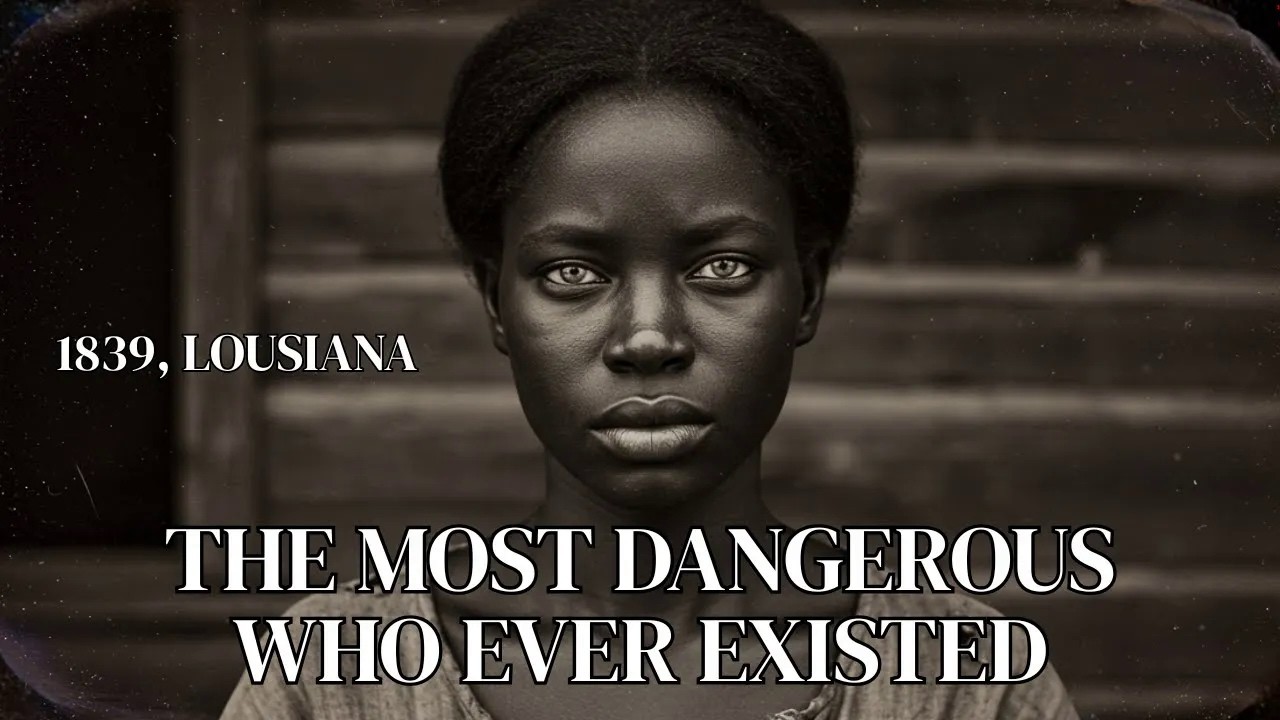
Power. For the first time in her seventeen years, she had taken her fate into her own hands. She had been born in the summer of 1839 on the Maro plantation, into a world that had marked her from her first breath. The heat of Louisiana pressed down like a suffocating blanket, Spanish moss hung like burial shrouds from the ancient oaks, and the air was thick with the sweet, cloying scent of sugarcane and something darker, the smell of human suffering seeping up from the soil itself.
In the slave cabins, the cry of a newborn pierced the damp night. Mama Celia, the plantation’s midwife, held up a small girl whose skin gleamed like polished mahogany in the flickering candlelight. The child was beautiful, dangerously beautiful, with eyes that seemed to hold secrets even at birth. “Lord, have mercy,” Celia whispered, crossing herself.
“This child is going to cause trouble. I can feel it in my bones. ”
The baby was named Adeline, and from her first breath, she was different. While other children played in the dust between the slave cabins, Adeline watched.
She saw how Master Maro’s eyes lingered on the young women, how Mistress Maro’s face tightened when she caught him looking. She learned that beauty was a currency in this hellish world, a currency that could buy pain just as easily as protection. By the time she was ten, Adeline could read, a crime punishable by death for a slave. She had spent stolen moments observing young Master Henri’s tutoring sessions through the windows of the plantation house, memorizing letters and sounds until words became her secret form of rebellion.
Books became her escape, hidden under loose floorboards in the quarters, read by moonlight when the overseers slept. “You’re too clever for your own good, child,” Mama Celia warned her, braiding Adeline’s long, thick hair. “Clever and beautiful. That’s a dangerous combination for a girl like you.
”
By fifteen, Adeline’s beauty had grown into something that made grown men stumble over their words. She worked in the big house now, serving meals and cleaning, always under the watchful eye of Mistress Maro, who seemed to sense the threat this young woman posed. The other enslaved women whispered about her, some with jealousy, others with fear. They knew what happened to beautiful slave women on plantations.
They knew what fate awaited them when masters decided to exercise their rights. But Adeline was different. She didn’t cringe or surrender. Instead, she observed and learned, studying the weaknesses of every white man who entered the Maro household.
Master Maro himself was a cruel man in his fifties, with wandering hands and a temper that could explode without warning. His son Henri, twenty-two and freshly graduated from university in New Orleans, carried himself with the arrogance of someone who had never been told no. The overseers, brutal men hired to keep the slaves in line, ruled through fear and violence. Adeline had discovered something powerful, though.
These men, despite all their authority and cruelty, had weaknesses. They were lonely, frustrated, and longing for something they couldn’t name. She learned to use that hunger against them. One evening, as she served dinner in the great dining room with its crystal chandeliers and mahogany furniture, she caught Henri staring at her.
Not with the brief lust she had grown used to, but with something deeper, an obsession that gave her goosebumps. “Adeline,” he called softly as she cleared his plate. “Stay here when the others are gone. ”
Her heart pounded in her throat, but her face remained serene.
She had been preparing for this moment her whole life. As the other house slaves filed out, she stood perfectly still, her hands folded before her, her eyes downcast in the posture of submission she had mastered to perfection. “You’re seventeen now,” Henri said, circling her like a predator. “Old enough to understand your place here?
”
“Yes, Master Henri,” she answered, her voice barely audible. He touched her face, and she didn’t flinch. But behind her submissive facade, her mind raced. She had seen what happened to girls who resisted.
She had also seen what happened to those who submitted. Neither path led to freedom. That night, lying on her thin mat in the slave quarters, Adeline made a decision that would change everything. She would no longer be a victim.
She would not be broken by a system designed to destroy her mind and body. If beauty was her curse, then she would make it their curse too. She began to study them more carefully, their habits, their fears, their desires. Master Maro drank himself into a stupor every night after losing money at cards.
Henri was terrified of his father’s disapproval and desperate to prove his manhood. The overseers were violent but cowardly, quick to harm those weaker than themselves but afraid of anyone who might fight back. Knowledge became her weapon. She learned which plants in the garden were poisonous, which roots could cause hallucinations, which herbs could stop a heart.
She discovered the secret passages in the old plantation house, the hidden rooms where previous generations had conducted their dark practices. Most importantly, she learned to read people, to see the darkness in their hearts and use it against them. When Henri cornered her in the pantry a week later, his body pressing against hers, whispering whisky-soaked promises into her ear, she neither screamed nor resisted. Instead, she smiled.
“Master Henri,” she whispered, her voice like honey over broken glass. “I’ve been waiting for you. ”
The confusion in his eyes was delicious. He had expected fear, resistance, tears.
Instead, he found something that frightened him more than any rebellion could: a woman who seemed to desire what he wanted to take from her. That night, while the plantation slept, Adeline began her transformation from victim into something far more dangerous. Three weeks later, Henri’s obsession had consumed him. He followed Adeline with his eyes during the day, found excuses to touch her in the hallways, whispered increasingly bold propositions to anyone who would listen.
His desire had matured into something ugly and desperate, fed by her mysterious smiles and the way she seemed to encourage him while always withdrawing at the last moment. “You’re playing with fire, girl,” Mama Celia warned as she watched Adeline prepare for another evening of service in the big house. “That boy has the devil in his eyes when he looks at you. ”
Adeline adjusted her simple cotton dress, modest enough not to arouse suspicion from Mistress Maro but tight enough to drive Henri to madness.
“Sometimes fire is the only way to clear the path for new growth, Mama Celia. ”
The older woman shuddered at the coldness in Adeline’s voice. This was not the sweet child she had helped raise. Something had changed in the girl, something that made even the other slaves walk carefully around her.
That evening, the dinner proceeded as usual. Master Maro sat at the head of the long table, already well into his cups, complaining about falling sugar prices and ungrateful slaves. Mistress Maro picked at her food, her sharp gaze missing nothing as it darted between her husband and son. Henri barely touched his meal, his attention entirely fixed on Adeline moving gracefully around the table.
“Father,” he said suddenly, his voice strained with barely contained emotion. “I must discuss something with you regarding the expansion of our operations. ”
Master Maro grumbled, waving a dismissive hand. “Tomorrow, boy.
Can’t you see I have company? ”
“It’s important,” Henri insisted. “About the new equipment in the mill. I believe there are some irregularities that need to be addressed.
”
Adeline’s hand trembled almost imperceptibly as she poured water into Mistress Maro’s glass. She knew what Henri was doing, inventing an excuse to be alone with her after dinner, away from the house where his mother’s watchful eyes couldn’t follow. After the family retired to the parlor for their evening rituals, Adeline began clearing the dining room. She worked slowly and methodically, knowing Henri would find a reason to come back.
She didn’t have to wait long. “Adeline. ” His voice came from the doorway, thick with wine and desire. “I want you to come with me to the mill.
There’s something I need to inspect. ”
She turned, her expression perfectly innocent. “Of course, Master Henri. Shall I bring a lantern?
”
“I’ll provide the light,” he said, his eyes gleaming with anticipation. “Just come with me. ”
The walk to the sugar mill felt like a funeral march. Henri walked slightly ahead, his steps unsteady from drink, while Adeline followed at the proper distance for a slave.
But her mind was sharp, focused, considering every detail of what was about to happen. The mill was a massive structure, built to process the plantation’s sugarcane. During harvest time it ran day and night, the grinding wheels crushing the cane stalks while slaves fed the machines in dangerous, heavy labor. Now it stood empty and foreboding in the barn, filled with shadows and the lingering smell of molasses.
Henri lit a lantern and set it on a wooden crate, casting dancing shadows on the walls. The grinding wheels towered above them like sleeping giants, their metal surfaces gleaming dully in the flickering light. “Do you know why I brought you here, Adeline? ” he asked, his voice dropping to what he probably thought was a seductive whisper.
“No, Master Henri,” she answered, though they both knew she was lying. He stepped closer, and she could smell the wine on his breath, the sweat of anticipation on his skin. “I’ve been watching you. The way you move, the way you look at me.
You want this as much as I do. ”
His hands reached for her, and she didn’t pull away. Instead, she stepped even closer, so close that he could feel her breath on his neck. “I’ve been waiting for you to notice me,” she whispered, her voice like silk over steel.
Henri’s breathing became ragged as his hands roamed over her body. He was so focused on his conquest that he didn’t notice her reaching behind him, her fingers closing around a heavy iron lever that operated the grinding mechanism. “You’re so beautiful,” he panted, pressing her against the machine. “I’m going to make you mine.
”
“Yes,” she breathed into his ear. “Make me yours. ”
It happened in the blink of an eye. As Henri fumbled at her dress, lost in his lust and the wine, Adeline pulled the iron lever upward with all her strength.
The sound it made as it struck his skull was wet and final, like a melon falling on stone. Henri’s eyes went wide with shock and pain before they rolled back. He collapsed against the grinding wheel, blood flowing from the wound on his temple. But he wasn’t dead yet, only stunned and bleeding.
Adeline looked at him without any emotion. This was the moment of truth. She could still stop, could claim it was an accident, could try to help him. Instead, she reached for the mill’s control lever.
“You wanted to make me yours,” she said softly as the grinding discs began to turn with a low, mechanical groan. “But I belong to no one. ”
The machines did what they were designed to do: crush and grind until nothing recognizable remained. When it was over, she cleaned the iron lever and returned it to its place.
She straightened her dress, smoothed her hair, and blew out the lantern. The next morning, they would find a terrible accident. Young Master Henri, drunk and careless, had somehow fallen into the mill machinery during a nighttime inspection. As she walked back through the humid Louisiana night to the slave quarters, Adeline felt something she had never experienced before.
Power. For the first time in her seventeen years, she had taken her fate into her own hands. The other slaves were asleep when she slipped into her cabin, but Mama Celia was waiting for her, her old eyes seeing everything. “What have you done, child?
” the old woman whispered. Adeline met her gaze steadily. “What I had to do. ”
“This will not end here.
You know that, don’t you? They will look for answers. ”
“Let them look,” Adeline replied, lying down on her thin mat. “They will find only a tragic accident and a grieving slave woman who did her best to serve her masters well.
”
But as she closed her eyes, Adeline was already planning. Henri was only the beginning. There were others, other men who saw her as prey, who believed their power gave them the right to take what they wanted. She would teach them all the same lesson, one by one, until she was free or they were all dead.
Word of Henri Maro’s death spread like wildfire through the plantation community of Louisiana. Within days, every plantation owner from Baton Rouge to New Orleans had heard the story. But in the salons of the great houses and the smoky back rooms of gentlemen’s clubs, rumors began to circulate. Whispers about the beautiful slave girl who had been the last to see Henri alive.
Whispers about the strange calm she had shown when his body was discovered. Master Maro aged ten years in the week following his son’s funeral. Mistress Maro had retreated to her bed, claiming illness, though everyone knew it was grief that kept her there. In the slave quarters, the atmosphere was different.
There was an undercurrent of dark satisfaction that justice, however twisted, had finally prevailed. Three weeks after Henri’s death, the first visitor arrived. Colonel James Bogard, owner of the neighboring Magnolia plantation, came ostensibly to pay his respects to the grieving Maro family. But his true interest became clear when he requested that Adeline serve him personally during his stay.
“What a tragedy with young Henri,” Bogard said to Master Maro as they sat on the veranda, their bourbon glasses condensing in the humid air. “I understand he was inspecting the mill when it happened. ”
“That fool was drunk,” Maro muttered, his words slurred by his own drinking. “I always told him to stay away from those machines when he was at the bottle.
”
Bogard nodded sympathetically, but his eyes followed Adeline as she moved around the veranda, refilling their glasses and emptying ashtrays. “That girl there, she’s the one who found him, isn’t she? ”
“Yes. The poor thing was completely beside herself.
She’s worked for our family since she was a child. ”
“What a beautiful creature,” Bogard observed, his gaze lingering on Adeline. “Very exotic. Would you consider selling her?
I could make a substantial offer. ”
Master Maro’s gaze sharpened slightly. Despite his grief and drinking, he was still a businessman. “She’s not for sale, James.
Too valuable as a housekeeper. ”
But Bogard was not easily discouraged. Over the next two days, he sought excuses to be alone with Adeline, cornering her in hallways and empty rooms, his hands wandering over her body and his suggestions growing bolder. “You’re wasted here, girl,” he whispered while she cleaned the guest room where he was staying.
“A woman like you deserves better than this dying plantation. Come with me to Magnolia, and I’ll make sure you’re well taken care of. ”
Adeline kept her eyes downcast, playing the role of the submissive slave. “I cannot leave the Maro family, Master Bogard.
They need me, especially now. ”
“Everyone has a price,” he said, stepping closer. “Even slaves. What’s yours?
”
That night, Bogard struck. He slipped out of his room and made his way to the slave quarters, confident that his wealth and position gave him the right to take what he wanted. He found Adeline’s cabin easily, set slightly apart from the others, befitting her status as a house girl. He didn’t bother to knock.
The door creaked open, and he stepped inside, his eyes adjusting to the darkness. “Adeline, I know you’re awake. It’s me, Master Bogard. ”
Her voice came from the shadows.
“I’ve been waiting for you. ”
Something in her tone should have warned him, but his arrogance blinded him to the danger. He moved toward the sound of her voice, his hands already reaching for her in the darkness. The blow came out of nowhere.
A heavy iron pot that Adeline had positioned perfectly. Bogard fell like a block, blood streaming from his scalp. But unlike Henri, he was not unconscious. He was paralyzed by the head injury, but still able to see and hear everything that happened next.
“Do you want to know my price? ” Adeline asked pleasantly as she lit a candle, illuminating her face in the flickering light. “My price is your life. ”
Bogard tried to speak, to move, but his body wouldn’t obey.
All he could do was watch in horror as Adeline calmly prepared for his final moments. She had learned from Henri’s death. This time, she was more careful, more creative. The oleander bush that grew near the slave quarters was beautiful but deadly.
The leaves and flowers contained enough poison to stop a heart. She had made a concentrated tea from the plant and now forced it, drop by drop, down Bogard’s throat. “They’ll find you in the morning,” she explained as the poison began to take effect. “Another tragic accident.
A respected plantation owner, overcome with grief for his friend’s son, who drank too much and was in the wrong place at the wrong time. So sad, such a pity. ”
Bogard’s eyes bulged as his heart raced and then slowed, the oleander doing its deadly work. Adeline watched with clinical interest, noting how the poison affected him, storing the information for future use.
When it was over, she carefully arranged the scene. She placed an empty bourbon bottle beside his body and spilled some liquor on his clothes to mask the smell of the oleander tea. She even managed to bruise her own face, making it look as though she had been attacked and defended herself. The next morning, her screams brought the whole plantation running.
They found her cowering in the corner of her cabin, apparently traumatized, with Bogard’s body on the floor. The story she told was simple and believable. He had come into her cabin drunk and violent. She had tried to defend herself, and in the struggle, he had fallen and hit his head.
Master Maro was furious, but not at Adeline. “Damned idiot,” he raged. “Coming into my quarters, attacking my property. Should have known better.
”
The local sheriff, a man more interested in maintaining social order than pursuing justice, ruled it an accident. Two wealthy white men dead in less than a month, that was unfortunate. But such things happened. Drink and poor judgment were common causes of death among plantation owners.
But the rumors grew louder. In the gentlemen’s clubs of New Orleans, men began to whisper about the Maro plantation and the beautiful slave girl who seemed to bring death. Some called it coincidence. Others began to wonder if something more sinister was at work.
The news spread through the network of plantations that connected the sugar lands of Louisiana. Overseers shared stories over drinks. Plantation owners exchanged worried glances when the conversation turned to the Maro plantation. And slowly, a legend began to form.
The legend of Adeline, the slave girl too dangerous to touch. But legends, Adeline learned, tended to attract exactly the kind of attention she was trying to avoid. Men who might have been content to admire her from a distance now saw her as a challenge, a prize worth the risk. More and more, men visited the Maro plantation.
Each of them was convinced that he could tame the dangerous beauty. They were all wrong. By the end of that summer, three more men had died under mysterious circumstances after visiting the Maro plantation. A cotton merchant from Natchez was found drowned in the plantation’s ornamental pond.
A slave trader from Mobile was found dead in his carriage, supposedly from a heart attack. A young lawyer from New Orleans died in his sleep after complaining of severe stomach pain. Each death was ruled an accident or natural causes. Each time, Adeline was nowhere to be found when the bodies were discovered.
But the pattern was becoming harder to ignore, even for those who wanted to believe in coincidence. By the winter of 1839, Adeline’s reputation had spread far beyond the sugar plantations of Louisiana. Men spoke her name in hushed, fearful voices. She had become something unprecedented in the antebellum South: a slave who inspired fear in her masters.
Master Maro himself had become a broken man. He rarely left his study now, spending his days drinking and his nights shouting at ghosts only he could see. The plantation fell into disrepair. The fields were neglected as overseers left and slaves began to disappear into the swamps.
But in the slave quarters, a different story was being told. While the white community viewed Adeline as a dangerous woman, an anomaly, something to be feared and avoided, the enslaved began to see her as something else entirely: a liberator, a dark angel of justice who had found a way to turn the tables on their oppressors. “She’s doing what we all dream of doing,” whispered Sarah, a field worker who had endured years of abuse from the overseers. “She’s making them pay for what they’ve done to us.
”
“It’s not natural,” argued old Moses, the plantation’s blacksmith. “Nothing good can come from killing, no matter who deserves it. ”
“Tell that to my sister,” Sarah shot back. “Tell that to all the girls who’ve been used and thrown away like broken tools.
Maybe it’s not natural, but it’s justice. ”
The debate raged in secret through the enslaved community. Some saw Adeline as a heroine, others as a dangerous force that would bring destruction on them all. But no one could deny the change her actions had brought about.
For the first time in a long time, white men were afraid to take what they wanted from slave women. The eighth man to die was Thomas Witmore, a wealthy plantation owner from Georgia who had come to Louisiana looking for new investment opportunities. He had heard the stories about the Maro plantation, but like many men of his class, he believed his wealth and position made him untouchable. Witmore was different from the others, though.
He observed Adeline carefully during his visit, noting the way other slaves deferred to her, the subtle signs of fear in the eyes of the remaining overseers. “You’re the famous Adeline,” he said when he found her alone in the plantation’s library, dusting the books no one read anymore. “I’ve heard a great deal about you. ”
“I’m sure you have, Master Witmore,” she replied without looking up.
“People do love their stories. ”
“Indeed. The question is how much of what they say is true. ”
This time she looked at him, and he felt a chill run down his spine at the intelligence he saw in her dark eyes.
“What do you think, Master Witmore? Do I look like a murderer? ”
The directness of her question caught him off guard. Slaves didn’t speak to white men like this.
They didn’t challenge them with such bold confidence. But there was something about Adeline that made the normal rules seem irrelevant. “I think,” he said carefully, “that you are a very dangerous woman. ”
“Dangerous to whom?
” She asked it while setting down her duster and meeting his gaze directly. “To men who regard slave women as property to be used? To men who think their skin color gives them the right to take what they want? Yes, Master Witmore, I think I am dangerous to such men.
”
The conversation was treacherous, the kind of conversation that could cost a slave her life in the most brutal way imaginable. But Witmore found himself fascinated rather than outraged. Here was a woman who had somehow transcended the limitations of her position, who had found a way to fight back against a system designed to break her spirit. “What do you want?
” he asked. “Freedom,” she answered without hesitation. “Not just for myself, but for all of us. I want to see this whole rotten system burned to the ground.
”
“And you think murder is the way to achieve that? ”
Adeline smiled, her expression both beautiful and terrifying. “I think fear is a powerful teacher, Master Witmore. These men have ruled for generations through violence and intimidation.
Perhaps it’s time they learned what it feels like to be afraid. ”
That night, Witmore made a decision that would save his life. Instead of trying to possess Adeline, as the others had done, he offered her something no white man had ever offered a slave: respect and partnership. “I’m an abolitionist,” he confessed as they walked through the overgrown gardens of the plantation in the dark.
“I’ve worked with the Underground Railroad and helped slaves escape to freedom. I could help you get away from here. ”
Adeline considered his offer carefully. She had killed eight men, but Witmore was different.
He saw her as a human being rather than property, and that made him valuable in a way the others had never been. “I’m not ready to run yet,” she said at last. “There’s still work to be done here. ”
“How many more have to die before you’re satisfied?
”
“As many as it takes,” she answered with chilling certainty. “Every man who comes here thinking he can take what he wants from me. Every overseer who believes his whip gives him power over life and death. Every master who regards people as cattle.
They all need to learn that there are consequences for their actions. ”
Witmore left the next morning alive and unharmed, but forever changed by his encounter with Adeline. He would later write in his journal that he had met a force of nature disguised as a woman, a living embodiment of justice in a world that had forgotten the meaning of the word. News of Witmore’s survival spread quickly through the plantation community, adding a new layer to the growing legend.
Here was a man who had met the dangerous slave girl and lived to tell the tale. The story gave hope to some and increased fear in others. But it also attracted unwanted attention. If Adeline could spare one man, it meant she was choosing her victims deliberately.
The authorities began to take notice. Sheriffs who had dismissed the deaths as accidents began asking pointed questions. Plantation owners who had dismissed the stories as superstition began demanding action. In the slave quarters, the debates grew more heated.
Some urged Adeline to flee while she still could, to accept Witmore’s offer and disappear into the Underground Railroad. Others begged her to continue her campaign of terror, to keep killing until every white man in Louisiana was too afraid to harm a slave woman. But Adeline had her own plans. Plans that went far beyond simple revenge or escape.
She was building something unprecedented. A legend that would survive her. A story that would be whispered in slave quarters for generations. She created a myth that would give hope to the hopeless and inspire fear in the oppressors.
In the fall of 1840, an unexpected visitor came to the Maro plantation. Jonathan Hartwell was not like the others who had come to possess or conquer her. He was a lawyer from Boston, an abolitionist who had traveled south not to exploit the slave system but to document its horrors for the growing anti-slavery movement in the North. Hartwell was thirty-two, tall and slender, with intelligent gray eyes and prematurely silver hair.
He had heard the stories about the Maro plantation and the mysterious deaths surrounding the beautiful slave girl. But unlike the others, he had not come as a predator but as a potential savior. “I don’t believe in coincidence,” he said to Master Maro as they sat in the faded grandeur of the plantation’s parlor. “Nine men dead in less than two years, all after encounters with the same slave woman.
Either she is the most unfortunate person in Louisiana, or there is something else going on here. ”
Master Maro, now a shadow of his former self, laughed bitterly. “You think she killed them? A slender girl against grown men?
You’ve been reading too many Gothic novels, Mr. Hartwell. ”
“Perhaps,” Hartwell replied, his eyes following Adeline as she served them tea with her usual grace. “But I would like to speak with her, if you don’t mind, for my research.
”
What Maro didn’t know was that Hartwell had been corresponding with Thomas Witmore, the Georgia plantation owner who had survived his encounter with Adeline. Witmore’s letters painted a picture of a woman who was far more than she seemed. Intelligent, dangerous, and driven by a sense of justice that transcended the boundaries of her social position. That evening, Hartwell found Adeline in the plantation’s chapel, a small building that, like the rest of the estate, had fallen into disrepair.
She was kneeling before the altar, but he suspected she was not praying to the Christian God the slaves had been forced to accept. “Miss Adeline,” he said softly, not wanting to startle her. “May I speak with you for a moment? ”
She turned to face him, and he was struck by the intelligence in her dark eyes.
This was not the broken, submissive slave he had expected to find, but a woman who radiated a quiet, dangerous strength. “You’re the lawyer from Boston,” she said, rising gracefully. “The one who thinks he can save us all with his writings and speeches. ”
“I’m trying to help,” he said simply.
“The abolitionist movement grows stronger every day. Change is coming, but it needs to be documented and seen. People in the North need to understand what’s really happening here. ”
Adeline laughed, but there was no hint of humor in it.
“Change. Do you think your laws and your politics will change anything? Do you think the men who regard us as property will suddenly develop a conscience because a judge in Washington tells them to? ”
“I think,” Hartwell said carefully, “that you’ve found your own way to fight back, and I think it will get you killed.
”
The directness of his statement surprised her. Most white men, even those who sympathized with her, danced around the truth with euphemisms and carefully chosen words. But Hartwell laid his cards on the table, acknowledging what they both knew to be true. “Perhaps,” she admitted.
“But at least I’ll die fighting rather than on my knees. ”
“There are other ways to fight. Legal ways. I could help you escape, get you to Canada where you’d be free.
You could tell your story, help others understand what slavery really means. ”
Adeline studied him for a long time, trying to gauge his intentions. She had become an expert at seeing through the lies and self-deceptions of white men. But Hartwell seemed different.
There was a sincerity in his manner that she had never encountered before. “Why? ” she asked at last. “Why would you risk your life for a slave?
”
“Because slavery is a sin against God and humanity,” he answered without hesitation. “Because every human being has the right to freedom and dignity. Because what’s happening here is wrong, and I can’t stand by and do nothing. ”
In the days that followed, an unlikely bond developed between the Boston lawyer and the enslaved woman who had become a legend.
Hartwell was fascinated by Adeline’s intelligence and strength. She, in turn, was drawn to his genuine compassion and his vision of a world where people like her could truly be free. They met in secret, usually in the abandoned chapel or the overgrown gardens where the Spanish moss provided shelter from prying eyes. Hartwell told her about the growing abolitionist movement, about the Underground Railroad that helped slaves escape to freedom, and about the political battles being fought in Congress over the future of slavery.
In return, Adeline shared her story, not the watered-down version the white community preferred to believe, but the truth about what life really looked like for enslaved women. She told him about the constant fear, the sexual violence that was treated as normal, the way the system was designed to break the spirit and crush any hope of resistance. “I didn’t start killing them because I’m evil,” she explained as they walked through the moonlit cemetery where generations of Maros were buried. “I started killing them because it was the only way to make them stop.
The only way to show them that we’re not just property that can be used and thrown away. ”
“I understand,” Hartwell said. And she could hear the pain in his voice. “But this can’t go on.
You’re one woman against an entire system. Eventually, they’ll catch you. ”
“And when they do, they’ll make an example of me,” Adeline finished. “They’ll torture me and kill me in the most brutal way they can imagine to show other slaves what happens when you resist.
”
“Then come with me,” he urged, taking her hands in his. “Let me get you out of here. We could marry in Canada. You’d be free, protected.
We could help others together. ”
The proposal caught Adeline off guard. In all her plans and schemes, she had never considered the possibility of love, of finding someone who saw her as more than a beautiful object to possess or a dangerous threat to eliminate. “You would marry me?
” she asked, her voice barely audible. “A slave. A murderer. ”
“I would marry the woman I love,” he answered simply.
“The woman who has shown more courage and strength than anyone I’ve ever met. ”
For a moment, Adeline allowed herself to imagine it. A life of freedom in Canada, working alongside Hartwell to fight slavery through legal means, perhaps even having children who would never know the horror of bondage. It was a beautiful dream.
But she knew it was only that, a dream. “They won’t let me go,” she said at last. “Too many people know of my existence now. Too many questions would be asked if I suddenly disappeared.
”
“Then we’ll need to be clever,” Hartwell insisted. “I have contacts in the Underground Railroad. We can make it look like you’re dead. Stage an accident.
Once you’re presumed dead, no one will come looking for you. ”
The plan they devised was complicated but feasible. Hartwell would arrange for a boat to be waiting at a remote spot on the Mississippi. Adeline would stage her own death, perhaps a drowning in the plantation’s ornamental pond, and then make her way to the rendezvous point under cover of darkness.
But as they finalized their plans, Adeline made a decision that would doom them both. She couldn’t leave without settling one last account: eliminating the man who had caused her more pain than anyone else, Marcus Tibido, the plantation’s overseer. Tibido was a brutal man who had terrorized the enslaved community for years. He had personally beaten dozens of slaves to death, raped countless women, and made it clear that he wanted Adeline for himself as soon as the opportunity arose.
She had saved him for last, planning his death with particular care. “One more,” she told Hartwell the night before their planned escape. “Just one more, and then I’m ready to go. ”
“No,” he said firmly.
“It’s too dangerous. We leave tomorrow night as planned. ”
But Adeline had already made up her mind. The next evening, while Hartwell waited at the river with growing dread, she was in Tibido’s cabin, watching the overseer die slowly from a poison she had extracted from the seeds of the castor bean plant.
“This is for every woman you’ve hurt,” she whispered as Tibido writhed in his death throes. “For every child torn from its mother’s arms. For every drop of blood spilled with that whip. ”
By the time she reached the river, it was too late.
Tibido’s body had been found, and the plantation was in chaos. Dogs barked in the distance, and she could see torches moving through the swamp as search parties spread out to find her. Hartwell was still waiting, his face pale with fear and desperation. “We have to go now,” he urged as she stumbled out of the darkness.
“They’re coming, Adeline. ”
But even as they pushed the small boat into the dark water of the Mississippi, Adeline knew they wouldn’t make it. The current was against them. The boat was too small, and their pursuers were too close.
The love that had blossomed between them had become the instrument of their downfall. The gunshots rang out across the water just as they reached the middle of the river. Hartwell cried out and slumped forward, blood spreading across his white shirt. Adeline caught him as he fell, cradling his head in her lap as their boat drifted helplessly downstream.
“I’m sorry,” she whispered, tears streaming down her face for the first time since childhood. “I’m so sorry. ”
“No,” he gasped, his gray eyes already growing dim. “You showed me what real courage looks like.
You showed me what it means to fight for freedom. ”
He died in her arms as the boat ran aground on a muddy bank, and Adeline knew her time had finally come. The man who had tried to save her had become her tenth and final victim. Not by her hand, but by the cruel logic of a system that would never allow their love.
As the search parties drew closer, Adeline made one last decision. She would not be taken alive. She would not give them the satisfaction of a public execution. She slipped into the dark water of the Mississippi and let the current carry her away.
But legends, as she had learned, have a way of living forever. The morning after Adeline’s disappearance into the Mississippi brought chaos to the Maro plantation and panic throughout the sugar region of Louisiana. The discovery of Marcus Tibido’s poisoned body, combined with the bloodstained boat found on the riverbank and Jonathan Hartwell’s body floating face-down in the muddy water, had finally forced the white community to confront the truth they had been trying to avoid for over a year. Adeline was not a victim of circumstance or supernatural forces.
She was a calculating killer who had systematically eliminated the men who threatened her. This discovery sent a shockwave through the plantation aristocracy, challenging everything they believed about the natural order of their world. In the grand salon of the Bowmont plantation, thirty-two kilometers upstream from Maro Place, an emergency meeting was called. The most powerful men of the parish gathered around a mahogany table that had witnessed countless business deals and political conspiracies, but never a discussion like this.
“Gentlemen,” began Colonel Bowmont, his weathered face grave with concern. “We have a situation that threatens the very foundations of our society. A slave woman has killed at least ten white men and eluded justice for over a year. If this news spreads beyond our parish, if the abolitionists in the North get their hands on this story, it would be a disaster.
”
Judge Caldwell, a corpulent man whose family had owned slaves for three generations, nodded grimly. “They would use it as proof that our slaves are naturally violent, that slavery itself breeds murderers. It would give ammunition to every abolitionist from Boston to Philadelphia. ”
“Worse than that,” added Dr.
Russo, the parish’s most prominent physician. “If our own slaves were to hear that one of them had killed ten white men and nearly escaped, it could inspire imitation. We could face a large-scale uprising. ”
The men around the table nodded somberly.
They all understood the delicate balance that maintained their way of life. Slavery worked because the enslaved population believed that resistance was futile, that any attempt to rebel would result in swift and brutal punishment. Adeline had shattered that illusion, proving that even the most powerless could find ways to strike back at their oppressors. “The question,” said Bowmont, “is what we do about it.
The woman is presumed dead, drowned in the Mississippi. But the story remains, and stories have a way of spreading. ”
“We control the story,” declared Judge Caldwell, with the authority of a man accustomed to bending the truth to his will. “We decide what really happened at the Maro plantation, and we make sure that version is the only one that survives.
”
What followed was perhaps the most cynical proceeding in the history of American jurisprudence. A trial conducted entirely in secret, without the defendant present, without evidence examined, and without possibility of appeal. A trial designed not to determine guilt or innocence, but to rewrite history itself. Over the course of three days, the assembled men forged a new narrative to replace the dangerous truth.
In their version, Adeline was a troubled slave who had suffered a nervous breakdown following the accidental death of young Henri Maro. The subsequent deaths were portrayed as a series of unrelated accidents and natural causes, with Adeline’s presence purely coincidental. “The girl was clearly deranged,” Dr. Russo testified before the secret tribunal, his medical qualifications lending weight to the fabrication.
“The trauma of finding young Maro’s body in the mill machinery likely triggered a severe psychotic episode. She began to believe she was responsible for deaths that were entirely natural or accidental. ”
The story they concocted painted Adeline not as a dangerous killer but as a tragic figure, a mentally ill slave woman who had become convinced she possessed supernatural powers. Her final act, they claimed, was a delusion in which she attempted to fly across the Mississippi, resulting in her drowning.
“It’s actually quite sad,” Judge Caldwell noted with practiced sympathy. “The poor girl was clearly suffering from what the psychiatrists call melancholia with delusions of grandeur. She had come to believe she was some kind of avenging angel, when in reality she was just a disturbed young woman who happened to be present at a series of unfortunate coincidences. ”
The men worked tirelessly to support their fabricated narrative.
Death certificates were forged, witness statements were rewritten, and physical evidence was destroyed or reinterpreted. The poison found in Tibido’s body was dismissed as a reaction to bad whiskey. Hartwell’s death was written off as an accidental drowning during a foolish attempt to help an escaped lunatic slave. But the most insidious aspect of their conspiracy was the way they appropriated Adeline’s story for their own purposes.
Instead of suppressing all mention of her, they actively promoted their watered-down version, turning her into a cautionary tale about the dangers of treating slaves too leniently. “This is what happens when we allow slaves too much education, too much independence,” Bowmont declared during one of their meetings. “The Maro family treated that girl almost like family. They gave her privileges and freedoms that went to her head.
It’s a lesson for us all about maintaining proper discipline. ”
The revised narrative served multiple purposes for the white community. It explained the mysterious deaths without admitting that a slave had successfully killed white men. It reinforced existing prejudices about the mental instability of the enslaved population.
And it provided justification for even harsher treatment of slaves, particularly those who showed signs of intelligence or independence. Within weeks, the new narrative had spread throughout Louisiana and beyond. Newspapers picked up the story of the mad slave woman of the Maro plantation, presenting it as a tragic tale of mental illness rather than systematic revenge. Abolitionists in the North, lacking access to the true facts, found themselves in the uncomfortable position of defending a woman they believed to be mentally disturbed.
But in the slave quarters of the South, a different story was being told. Despite the white community’s attempts to control the narrative, the truth spread through the underground networks that connected slave communities across state lines. Slaves who had worked at the Maro plantation carried the true story with them as they were sold to other plantations. House servants overheard conversations and passed on fragments of the truth.
The Underground Railroad became a conduit for the authentic version of Adeline’s story. In these hidden spaces, far from white ears, Adeline became something far more powerful than the tragic figure portrayed in the newspapers. She became a symbol of resistance, proof that even the most powerless could find ways to fight back against their oppressors. Her story was told in whispered conversations in cotton fields, in coded songs sung during work, in the secret gatherings where slaves planned their own escapes to freedom.
“She showed us that we’re not just property,” an old field worker named Samuel told a group of younger slaves as they sat around a small fire in the Georgia pinewoods. “She showed us that we have minds and hearts and the will to fight back. They can kill our bodies, but they can’t kill our spirit. ”
The white community’s attempt to control Adeline’s story had backfired in unexpected ways.
By creating an official version of events, they had inadvertently highlighted the existence of an alternative narrative. Slaves who might never have heard of Adeline under normal circumstances now actively sought out the true story, hungry for any tale of successful resistance. Meanwhile, the Maro plantation itself became a symbol of the white community’s vulnerability. Master Maro, already broken by his son’s death and the subsequent chaos, finally succumbed to his demons and died of liver failure caused by years of heavy drinking.
Mistress Maro followed him to the grave within months, some said of grief, others of shame over what had become of their plantation. The estate was auctioned off, but no buyer could be found willing to pay full price for land that had become synonymous with death and rebellion. The great house fell into ruin, its windows broken and its gardens overgrown. Local slaves whispered that it was haunted, inhabited by the ghosts of the men Adeline had killed, while white families avoided the area entirely.
The invisible trial had achieved its immediate goals. The official records showed no evidence of a slave uprising, no successful resistance that might inspire others. But the deeper truth could not be suppressed. Adeline’s story had taken on a life of its own, spreading like wildfire through the hidden network of the enslaved community.
Ten years had passed since that fateful night on the Mississippi, and the legend of Adeline had grown far beyond anything the secret tribunal could have imagined. By 1850, her story had spread through the Underground Railroad network from Louisiana to Canada, was whispered in slave quarters from Virginia to Texas, and had even reached the ears of prominent abolitionists in the North who suspected there was more to it than the official records revealed. The Maro plantation now stood empty, the once-stately mansion slowly being reclaimed by the Louisiana swampland. Spanish moss hung like burial shrouds from the old oaks, and the sugar mill where Henri Maro had met his fate had become a rusted monument to a dark era.
Local slaves still crossed themselves when they passed the estate, while white families took longer routes to avoid the cursed ground entirely. But on certain nights, when the moon was dark and the mist rose from the swamps, people claimed to see a figure moving across the abandoned plantation grounds. A woman in a simple cotton dress walking purposefully through the overgrown gardens, pausing at the spots where her victims had fallen. Some said it was Adeline’s ghost, unable to find rest until justice was done.
Others whispered that she hadn’t died at all, that she had somehow survived the Mississippi and returned to finish what she had started. The truth, as is often the case, was more complex than either the legend or the official records suggested. Adeline had indeed survived that night on the river, though barely. The current had carried her kilometers downstream before she washed up, more dead than alive, on a muddy bank near a small settlement of free Blacks living in the border region between Louisiana and Mississippi.
They had nursed her back to health, asking no questions about her past, understanding instinctively that she was fleeing something terrible. For ten years, she had lived among them under the name Marie Dubois, working as a healer and midwife, using the knowledge of plants and poisons she had acquired during her time on the Maro plantation to help rather than harm. She had aged gracefully, her beauty now tempered by wisdom and sorrow, her once-dangerous eyes softened by years of helping others. But she had never forgotten.
Every night, she thought of Jonathan Hartwell, the man who had loved her so much he had died for her. Every day, she remembered the women still trapped in bondage, still suffering under the horrors she had escaped. And slowly, carefully, she had planned her return. The opportunity came in the form of a letter delivered by an Underground Railroad conductor who recognized her despite the years that had passed.
The letter was from Thomas Witmore, the Georgia plantation owner who had survived his encounter with her years earlier and had since become a secret supporter of the abolitionist movement. “The men who suppressed your story are gathering,” the letter read. “Judge Caldwell is organizing a reunion at his plantation to celebrate the tenth anniversary of what they call the resolution of the Maro situation. They believe they’ve won, that your story has been successfully buried.
They plan to toast their victory and congratulate themselves on maintaining order. It would be a shame if something were to disrupt their celebration. ”
Adeline read the letter three times before burning it, but the information within had already nested in her memory. The men who had conducted her secret trial, who had rewritten her story to serve their own purposes, were gathering in one place.
It was an opportunity she could not pass up. The journey back to Louisiana took two weeks, mostly at night through swamps and along back roads she remembered from her youth. She had changed in the decades since her disappearance. Her hair was now gray, her face lined by life experience, her body bearing the scars of a hard life.
But in her eyes burned the same dangerous intelligence that had inspired such fear in men. Judge Caldwell’s plantation was even grander than Maro’s, a testament to the wealth that could be built on the backs of enslaved people. The main house was a massive Greek Revival mansion with towering white columns and sweeping verandas, surrounded by perfectly manicured gardens and hundreds of acres of cotton fields. On the night of the reunion, carriages arrived from across the parish and beyond.
The men who had participated in Adeline’s secret trial were all there, older and grayer but still convinced of their own righteousness. They gathered in Caldwell’s lavish dining room, raising glasses of imported wine to toast their success in maintaining social order. “Gentlemen,” declared Judge Caldwell, his face red with wine and self-satisfaction. “Ten years ago, we faced a crisis that could have destroyed everything we hold dear.
A single slave woman threatened to undermine the foundations of our society. But thanks to our wisdom and decisive action, we contained the threat and restored order. ”
“To the resolution of the Maro situation,” added Colonel Bowmont, raising his glass. “And to maintaining proper discipline among our workforce.
”
The men drank deeply, congratulating themselves on their cleverness in rewriting history. They spoke of Adeline as if she were a problem they had solved, a threat they had neutralized through superior intelligence and careful planning. They had no idea that their solved problem was at that very moment moving through the dark corridors of the mansion, having entered through a service entrance she had scouted days earlier. Adeline moved like a ghost through the house, her bare feet silent on the polished floors, her dark dress allowing her to blend into the shadows.
She had spent weeks preparing for this night, gathering the necessary materials from the Louisiana swamps. The seeds of the coral bean, deadly beautiful and virtually undetectable once processed. The roots of the water hemlock, which could cause convulsions and death within hours. The leaves of the oleander, her old favorite, reliable and fast-acting.
But tonight was not about individual murders. Tonight was about justice on a scale that matched the crime. These men had not merely suppressed her story. They had stolen it, twisted it, and used it to justify even greater cruelties against her people.
For that, they deserved something special. The wine they were drinking had been carefully selected from Judge Caldwell’s own cellar. Bottles that Adeline had acquired during her reconnaissance and modified. Each bottle had been injected with a different poison, creating a deadly cocktail that would ensure no one survived the night.
As the men celebrated and toasted their victory over a woman they believed to be long dead, the poisons began to take effect. It started slowly, a slight dizziness here, a hint of nausea there. The symptoms were easy to dismiss as the effects of too much wine and rich food. But as the evening progressed, the situation became impossible to ignore.
Colonel Bowmont was the first to collapse, his hand clutching his chest as his heart first raced and then slowed. Ironically, it was Dr. Russo who first realized what was happening, but his medical knowledge was useless against the multiple poisons coursing through his body. “Poison,” he gasped, his face already turning blue from lack of oxygen.
“We’ve been poisoned. ”
Pandemonium broke out in the dining room as the remaining men realized they were all dying. Some tried to flee, but the poisons had already weakened them too much to escape. Others tried to induce vomiting, but it was far too late for that to do any good.
Judge Caldwell, the architect of the conspiracy to suppress Adeline’s story, was the last to succumb. As he lay dying on his expensive Persian rug, he saw a figure emerge from the shadows. A woman whose face he recognized despite the years that had passed. “Impossible,” he whispered, his voice barely audible.
“You’re dead. We saw your body in the river. ”
Adeline knelt beside him, her face serene in the flickering candlelight. “You saw what you wanted to see, Judge.
Just as you invented the story you wanted people to believe. ”
“Why? ” he gasped, blood beginning to foam at the corners of his mouth. “It’s been ten years.
You were free. Why come back? ”
“Because you stole my story,” she answered simply. “You turned my fight for freedom into a tale of madness.
You used my pain to justify even more pain. You made me a cautionary tale when I should have been an inspiration. ”
Caldwell’s eyes widened as the realization dawned on him. “The slaves…
they know the truth. They’ve always known the truth. ”
“Indeed,” Adeline confirmed. “Your lies only made them hungrier for it.
Every time you told your version of my story, you reminded them that there was another version, the real one. And that version has been spreading for ten years through the quarters, the swamps, and the Underground Railroad. ”
As Judge Caldwell breathed his last, Adeline stood and surveyed the carnage around her. Fifteen men now lay dead by her hand.
The original ten from her time on the Maro plantation, and now the five who had tried to erase her from history. But this time, she had no intention of disappearing into the legends. This time, she would control her own narrative. She walked calmly to Judge Caldwell’s study and sat down at his mahogany desk.
She picked up his finest pen and began to write. Not a confession, but a testament. She wrote the true story of what had happened at the Maro plantation, the real reasons behind the deaths, and the conspiracy that followed. She wrote about the system of slavery that had shaped her, the violence that had wounded her, and the justice she had pursued.
When she finished, she signed it simply: “Adeline, free woman. ”
She left the document on the desk, where it would be easily found, and walked out into the Louisiana night. By morning, the story would be everywhere, spread by the same networks that had kept her true story alive for ten years, but now with her own words to give it power. Some said she disappeared into the swamps, becoming one with the spirits of the bayou.
Others claimed she had gone north, to Canada, where she spent the rest of her life in freedom. A few whispered that she had stayed in Louisiana, working with the Underground Railroad to help other slaves escape to freedom. But the truth of what happened to Adeline after that fifteenth night mattered less than what her story became. It spread like wildfire through the slave communities of the South, no longer filtered through white interpretations or sanitized for white audiences.
It became a story of resistance, of a woman who had refused to accept her fate and had fought against impossible odds. The official records would show that Judge Caldwell and his guests had died of food poisoning, a tragic accident that claimed the lives of five prominent citizens. But in the slave quarters, in the secret meetings of the Underground Railroad, in the hidden gatherings where freedom was dreamed of and plans were made, they knew the truth. Adeline had returned to finish what she had started.
The most dangerous slave girl who had ever lived had become something even more powerful: a symbol of resistance that would inspire others long after she was physically gone. And in the abandoned ruins of the Maro plantation, where Spanish moss still hangs like burial shrouds and the sugar mill stands as a monument to a dark era, people claim to see her still on certain nights. A woman in a simple cotton dress, walking purposefully through the overgrown gardens, her work finally complete. The legend of Adeline had become something no secret trial could suppress, no official narrative could contain.
It had become the truth. And the truth, as Adeline herself had discovered, was dangerous.






