On the morning of March 9, 2023, a sheriff’s helicopter circled over a sprawling, undeveloped stretch of land in Brevard County, Florida, its infrared camera fixed on the ground below. The operator watched a man pull a bucket toward a canal, tip it, and pour its contents into the water. The man had no idea he was being observed. For three weeks, he had told police he did not know where his girlfriend was, that he had not spoken to her in days, and that he was worried about her.
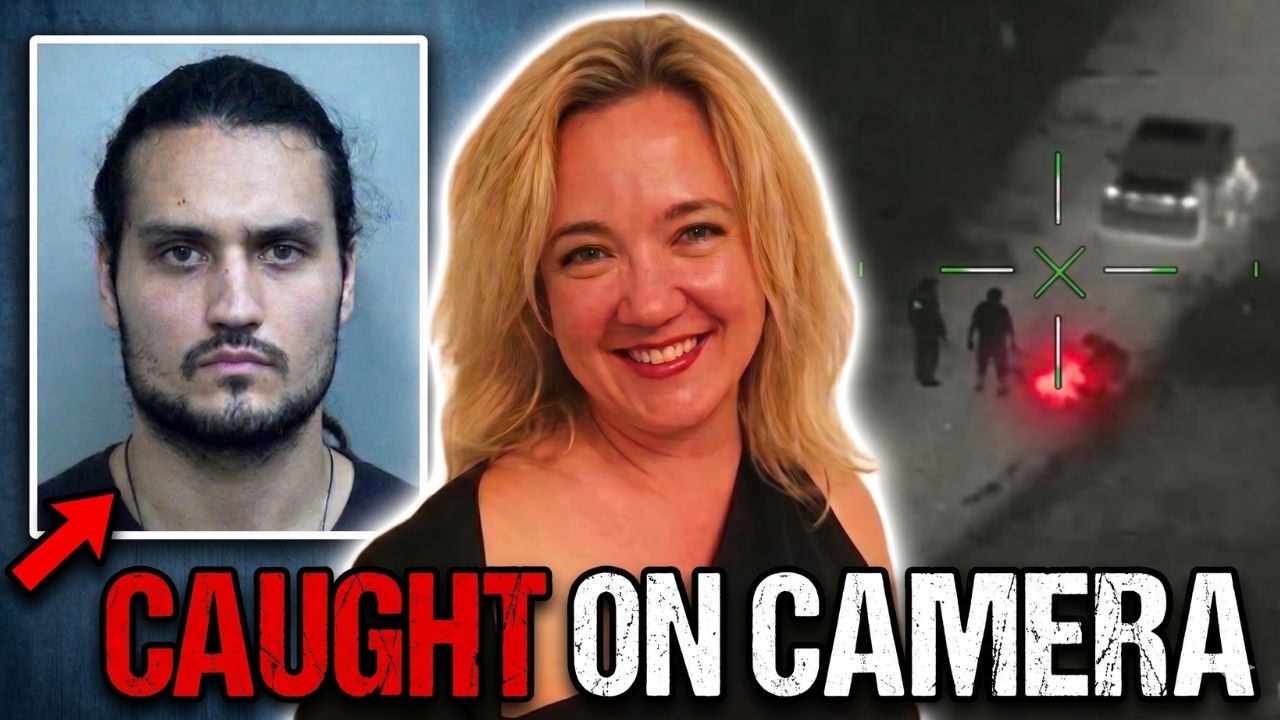
The camera told a different story. Within about ninety seconds, deputies emerged from the brush and handcuffed him. The woman at the center of it all was Nancy Hawry. She was forty-four years old, a mother of two, and by the time that helicopter footage was captured, she had been dead for three weeks, her body cut up, burned, and scattered across a remote plot of land locals called the Compound.
Before she became a case, Nancy Hawry was just a mother in Indian Harbour Beach, Florida, trying to get her life back on track. She had a son and a daughter and ran a small retail business through Amazon, buying products in bulk and reselling them online. It was the kind of quiet, independent work many single parents build for themselves when they need both flexibility and income. By all accounts, she was good at it.
She worked from home. She was there for her children. By 2023, she was divorced from her ex-husband, Todd Hawry, but they still shared responsibility for raising their son and daughter. That detail mattered, because Todd would become one of the most important voices in the case, not as a suspect, but as a man left to pick up the pieces.
Their marriage had ended, but the relationship was not cold. Todd was present in his children’s lives, the kind of ex-husband who still showed up, who expected a phone call if plans changed, who kept a routine with the kids that depended on Nancy being where she promised to be. That made the first sign that something was wrong all the more striking. It was not a scream, not a fight, not a call to emergency services.
It was Nancy failing to pick up her children from school. On February 18, 2023, Nancy did not show up. For a single mother who had built her life around being there for her kids, that was not just strange. It was alarming.
Todd did not wait. He did not assume she was late or that her phone had died. He went straight to the police. Officer Christopher Malagon of the Indian Harbour Beach Police Department took the initial missing person report.
He was new, still in field training, but he immediately sensed something off. He documented everything: Nancy’s car, her phone number, a description of her, her last known movements. He called hospitals and jails, trying to rule out the ordinary reasons an adult woman might disappear for a day. He found nothing.
Eventually, investigators filed a location request with Nancy’s phone company. The results came back the next day, and the case stopped being a routine disappearance. The trail led to a name Nancy’s family and friends already knew: Daniel Sterns. Nancy and Daniel had met the way many relationships begin today, online.
Some reports said it was a dating app; investigators later described it as a social media connection. Either way, the relationship had lasted about two years and had been volatile from the start. On and off, that was the phrase that kept coming up. They would break up, get back together, fight, reconcile, fight again.
Sterns wanted an exclusive relationship. Nancy refused to give him one. That fundamental imbalance, one person wanting commitment, the other wanting to keep options open, would become the focus of everything that followed. According to the prosecution, it was the reason Nancy Hawry was killed.
Sterns was a former U. S. Army infantry soldier who had served in Afghanistan. In police interrogations, he described himself as trained in combat and aikido, a martial art built on redirecting an opponent’s force rather than striking back.
He also said he suffered from PTSD as a result of his service. None of that makes a person violent; many veterans live with PTSD without harming anyone. But it mattered here for a specific reason. When Sterns gave his account of what happened to Nancy, his defense leaned heavily on his combat training and his claim that he feared for his life.
By February 2023, Nancy and Daniel were in one of their reunion phases, but things were not going well. They were fighting intensely. On February 15, a date that would be repeated throughout the case, Nancy spent the morning with her friend Iana Ramos. They were planning, looking at rental houses online, talking about Nancy’s next steps.
It was an ordinary Wednesday. But in the middle of it, Nancy was repeatedly on video calls with Daniel Sterns. According to Ramos, those calls were not friendly. She heard them arguing, and the argument was sharp enough that she remembered it clearly enough to testify about it later.
Here is what makes this story almost unbearable to look back on. By the end of those arguments, the fight seemed to have cooled. Nancy and Daniel reportedly agreed to meet in person, to talk things through, to reconcile. Around 11:30 a.
m. , Nancy left her friend’s house. She told Ramos she was going to meet Daniel at a CVS pharmacy. It was the last time anyone who loved Nancy Hawry saw her alive.
At this point, almost everything known about what happened to Nancy on February 15 comes from Daniel Sterns. There are no living eyewitnesses, no security cameras in the woods. What exists is what Sterns eventually told investigators, weighed against the physical evidence left by his actions. According to Sterns, after the two argued and then reconciled, they met face to face.
He said Nancy asked him for a shooting lesson. He took her to the place that would become the center of the entire case, a vast, undeveloped plot of land in Brevard County known locally as the Compound. Twelve and two-tenths square miles of unmonitored wilderness, the kind of place where gunfire does not attract attention, where no one sees you arrive, and if something goes wrong, no one sees what happens next. Sterns told police that during what he called a shooting lesson, he was holding his handgun, a Glock 17 modified with a P80 frame, aimed at a target in what he described as an exposed position.
He claimed that at that moment, Nancy lunged for the gun. A struggle followed, a physical fight over the weapon. He said he fired a single shot in fear for his life. The bullet struck Nancy in the head.
That was his account: a struggle, an accident born of self-defense from a trained fighter who panicked under threat. What Sterns did next is what turned the story from a tragic accident, if it ever was one, into something far darker. He told investigators he did not trust the police. So instead of calling 911, instead of reporting what he described as a desperate act of self-defense, he carried Nancy’s body into the woods.
He left her on the ground. Then he left. At some point, he returned. He buried her.
Then, and this is the detail that chills almost everyone who covered the case, he left again. Then he came back again. Because burying her was not the end. Sterns eventually admitted that he returned to the Compound several times over the following weeks.
He dug up Nancy’s body, dismembered her remains, burned them, and scattered what was left across locations within that same twelve-square-mile expanse of wilderness. As if burying her in one place was not enough to guarantee she would never be found, he kept moving her, cutting her up more, spreading her remains. This was not a decision made in a moment of panic. It was a repeated, deliberate process that stretched over days.
Throughout all of it, Daniel Sterns was lying to the police. When investigators first contacted him, they were not reaching out to a random name from Nancy’s contact list. They were reaching out because it was already clear he was one of the last people with a real connection to her before she vanished. What they got from him in that first conversation was a story that seemed cooperative on its surface but was entirely false.
Sterns told Brevard County Sheriff’s Office investigators, specifically Agent Neil Lee, who co-led the investigation, that he had stopped talking to Nancy a day or two before the interview, not weeks, just days. He described it as a recent argument, not a three-week-old secret. When asked why he ended the relationship, Sterns made a statement that, in hindsight, summarized the nature of his relationship with Nancy. He said he did not want to be with a woman who dated other men.
That is not a man describing the end of a relationship. That is a man expressing resentment. Sterns kept talking. He told investigators that Nancy was being harassed and raised concerns about domestic violence involving her ex-husband, apparently trying to steer them toward other potential threats in her life.
He explained that he and Nancy usually communicated through WhatsApp calls. He confirmed what was already known, that she worked from home reselling products on Amazon. He told them he had no idea where she might be. He even told them a story about how his relationship with Nancy began: they met on Tinder.
On its face, none of this sounds like a confession. It sounds like a boyfriend, or perhaps an ex-boyfriend, answering questions about a woman he cared about, expressing concern, even trying to help by pointing investigators toward other people in her life. The problem with Daniel Sterns’s story was that it required everyone around him to stop paying attention, and everyone was paying attention. While he was telling police he had not spoken to Nancy in a day or two, surveillance was building a completely different picture.
Investigators identified him as a person of interest early. Once they did, they did not just take his word. They watched him. What they saw did not match a man who had quietly stopped talking to his girlfriend two days earlier.
Daniel Sterns could not stay away from the Compound. It had become the crime scene for the second half of the entire case. Surveillance teams discovered something that contradicted everything Sterns had said in his first interview. Footage and tracking showed Sterns visiting the Compound multiple times, not once, not as part of a normal routine, but repeatedly, between February 15, the day Nancy was last seen, and March 7.
Three weeks. Three weeks in which a man claimed he barely knew where his girlfriend was, while quietly returning again and again to a remote patch of wilderness that was, as everyone now knew, exactly where her body had been found. Once that discrepancy emerged, this was no longer a normal missing person investigation. A specialized unit, referred to in records as the Endgame Task Force, stepped in, working alongside the sheriff’s office’s fugitive and aviation units.
It became a coordinated surveillance operation focused specifically on one man and one plot of land. They watched and waited. On March 9, 2023, all that surveillance paid off. A helicopter from the sheriff’s office’s STAR unit, equipped with infrared monitoring, spotted Daniel Sterns entering the Compound.
What the camera recorded next is the kind of detail a jury could not ignore once they heard it. The footage showed Sterns emptying materials from a bucket into a canal. Consider the timeline. Three weeks after Nancy disappeared, and three weeks, according to his later admission, after he had buried her, dug her up, dismembered her, and burned her remains, he returned to the Compound with a bucket to dispose of more material by pouring it directly into the water.
Investigators watched this scene live from the air. Rather than letting him leave and risk destroying more evidence, police moved in. Sterns was arrested on the spot. When they searched his truck later, they did not find anything suggesting a casual visit.
They found shovels, gloves, and plastic sheeting. The tools of a man who had been doing heavy, deliberate work in that wilderness, repeatedly. Faced with the surveillance footage, faced with the contradiction between what he had said and what investigators had seen with their own eyes, Daniel Sterns stopped denying. He confessed.
He told the same story that has been laid out already: the shooting lesson, the struggle over the gun, the single shot he said he fired in fear for his life. But this time, the story came with additional details. The burial, the exhumation, the dismemberment, the burning, the scattering of Nancy’s remains across multiple locations in the Compound. He was arrested in March 2023.
When crime scene investigators examined the area, they documented exactly the kind of physical evidence expected to corroborate such a story. At the Sossamon Street Compound location, they photographed Sterns’s black Chevrolet Silverado parked at the scene. They found a bucket and a fire pit containing an empty butter container, a small, almost grotesque detail given what investigators believed the fire pit had been used for. Near a nearby stream, they found a sandal along with sand impressions in the ground matching the curvature of the same bucket that appeared in the helicopter footage.
A dive team was even called in to search a nearby lake for any remains that might have fallen into the water. The search came back negative, but by that point, investigators had enough. They also searched Nancy’s van, where they found her driver’s license and bank card, the contents of an ordinary purse, left where she had left them on a day she thought was just another Wednesday. By the time Daniel Sterns’s case went to trial, more than two years had passed since Nancy Hawry disappeared.
He was charged with second-degree murder with a firearm, abuse of a dead body, and tampering with or fabricating physical evidence. The prosecution team was led by Assistant State Attorneys Bernadette Saravionance, Samantha Barrett, and Trevor Pearsoner from the Eighteenth Judicial Circuit. Their task was to turn a case built mostly on Sterns’s conflicting statements into a clear, sequential narrative a jury could follow and trust. In her opening statement, Saravionance laid out the timeline: the volatile relationship between Nancy and Sterns, Sterns’s desire for an exclusive relationship Nancy refused to give him, the argument and reconciliation on February 15, Nancy’s last sighting as she left to meet him at the CVS.
But the prosecution did not stop at the outline. They built the case detail by detail, witness by witness. Todd Hawry, Nancy’s ex-husband, testified. He talked about Nancy’s life, her work, and most painfully, about being the one who had to explain to two children why their mother was not coming home.
Officer Christopher Malagon testified about that first missing person report, taken while he was still in field training. He walked the jury through every step he took that day, from documenting Nancy’s car and phone, to contacting hospitals and jails, to canvassing her neighborhood, to speaking with her mother and friends, to filing the cell phone signal request that led investigators to Daniel Sterns. Crime scene investigator Conrad Schmadr testified about the examination of Nancy’s van and the general state of the Compound. There was the photo of the silver Dorado boat on Sossamon Street, the fire pit containing the butter container, the sandal by the stream, the sand impressions matching the bucket, and the negative, though necessary, dive team search of the lake.
Then came perhaps the most disturbing testimony of the entire trial: the digital forensics. Agent Jason Hammond from the sheriff’s office’s digital forensics unit testified about what investigators found when they examined Daniel Sterns’s phone, specifically his search history. The prosecution used this evidence to argue something specific: that Sterns not only killed Nancy, but that the way he thought beforehand revealed what one prosecutor described as a depraved mind. Hammond’s testimony detailed search terms found on Sterns’s device containing violent content.
The searches were described in court records as relating to women dying from stab wounds and uncensored footage of killings, executions, suicides, and serious accidents. The prosecution’s argument was simple. This was not the search history of someone with no history of fascination with violence, and they wanted the jury to weigh that record against Sterns’s claim that what happened to Nancy was desperate self-defense from a man with no other option. The medical examiner in the case, Dr.
Matrina Schmidt, added another critical piece of evidence. Despite the condition of Nancy’s body after cremation, examiners were able to determine clear evidence of a fatal gunshot wound to her head. Whatever happened to her body afterward, and everyone now knew a great deal had happened, the cause of death was a single gunshot wound, exactly as Sterns himself had described. It is only fair, and useful for understanding how trials work, to review what the defense presented.
Daniel Sterns’s attorney, Bradford Fisher, did not simply give up. Fisher’s strategy centered on one core argument: the state had not proven beyond a reasonable doubt that Sterns killed Nancy Hawry. Instead, the defense raised the possibility that Nancy committed suicide, and that Sterns, in a panic, made the disastrous decision to dispose of the body rather than report what he found, fearing he would be blamed regardless of what actually happened. In his closing argument, Fisher pressed this point directly: without a living witness, without video of the moment of Nancy’s death, the prosecution was asking the jury to selectively accept Sterns’s account, believing the parts that supported a murder charge while ignoring the parts where Sterns described Nancy lunging for his weapon during a struggle.
It is worth pausing here because this was the heart of the entire case. Sterns’s own statements were both the prosecution’s evidence and, in a sense, the defense’s argument. Both sides relied on the same narrative, a struggle over a gun and a single shot, but drew conflicting conclusions about what that narrative proved. The prosecution did not allow that framing to go unanswered.
In rebuttal, Assistant State Attorney Samantha Barrett attacked the credibility of Sterns’s account point by point. She reminded the jury of his contradictory statements to police, his claim of a day or two that collapsed under surveillance, and his account of events that only became self-defense after he was captured on an infrared camera disposing of evidence in a canal three weeks after the fact. In short, Barrett argued, a man telling the truth about an accident does not disappear for three weeks, then return to the scene again and again to destroy his girlfriend’s remains, and then lie to investigators about having spoken to her recently. She described the suicide theory as speculation, raised only after every other account of events had become untenable.
The jury did not take long to decide which account they believed. After a five-day trial, the case went to the jury. They deliberated for about two and a half hours. That was it.
Two and a half hours to sort through two years of investigation, a disputed account of the cause of death, digital forensic evidence, eyewitness testimony, and conflicting closing arguments about whether Nancy Hawry’s death was murder or a desperate attempt to cover up a suicide. The jury returned a unanimous verdict of guilty on all counts. Daniel Loren Sterns, thirty-five years old, was convicted of second-degree murder with a firearm, abuse of a dead body, and tampering with or fabricating physical evidence. For the prosecution, this was validation of the case they had built, a case that ultimately rested on the simple and devastating gap between what Sterns told police in that first interview and what surveillance and his later confession proved.
For Nancy Hawry’s family, it was the end of a two-year wait to hear that the man responsible for her death would be formally held accountable. But the story did not end there. In Florida, a conviction is only half the equation. The sentencing hearing was a separate chapter.
On December 3, 2025, Daniel Sterns returned to court for sentencing. Assistant State Attorney Samantha Barrett made a direct request to the judge. Instead of the legal minimum of twenty-two years for second-degree murder, she asked for life in prison without the possibility of parole. Judge Kathryn Spanger agreed.
Sterns was sentenced to life in prison for killing Nancy Hawry. In addition, he was sentenced to twenty-two years for abuse of a dead body and twenty-two more for tampering with and destroying evidence. These two sentences run concurrent with the life sentence. One thing worth noting here is a particularity of Florida law: the state has no parole system.
Life in prison in Florida literally means what it says. There is no later hearing, no scheduled review, no way out. Daniel Sterns will spend the rest of his life in prison. Then Todd Hawry spoke.
He had lost his marriage to Nancy years before. Now he stood in the courtroom as a single father raising their son and daughter, two children who would never again celebrate a birthday, a graduation, or someday, their daughter’s wedding with their mother present. Todd told the court that what happened had deprived his children of their mother and deprived Nancy of her life and of the future she was supposed to have. He described what Sterns did to Nancy not just as a killing, but, in his words, as a deranged act, a defect, something that went far beyond self-defense gone wrong.
He called it a brutal slaughter. And he told the court directly that he never wanted his children to live in fear that the man responsible for their mother’s death might one day escape punishment.






