On an August night in 1876, Wild Bill Hickok sat down to a poker game in a Deadwood saloon. He had made a habit for years of sitting with his back to the wall, but that night he took a seat facing away from the door. Jack McCall walked in, came up behind him, and put a bullet through the back of his head. Hickok, the scout, lawman, and most famous gunfighter alive, died instantly.
His friend Charlie Utter arranged the grave in Deadwood. The marker still reads, “Killed by the assassin Jack McCall. ”
In an El Paso saloon in 1895, a man named John Selman fired a shot that killed John Wesley Hardin, who claimed 42 killings. Selman was the lawman who fired that shot.
Eight months later, he was shot dead himself in an alley. In 1908, Pat Garrett, the sheriff who killed Billy the Kid, was shot in the back of the head on a road outside Las Cruces. In March 1882, someone fired through a glass door in Tombstone and hit Morgan Earp in the back; he died of his wounds. The pattern repeated across the frontier: men who lived by the gun died by it, and often from behind.
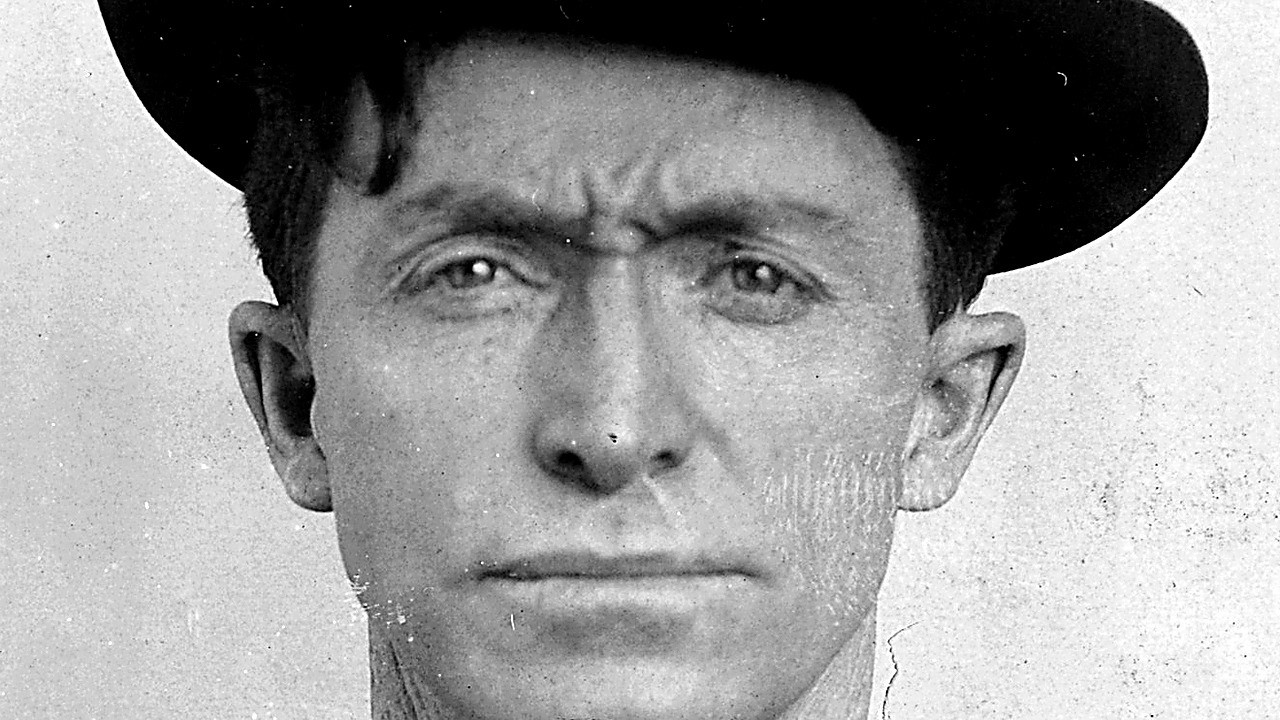
These were the men and women whose faces fill the photographic archives of the American West. There were more than 75 of them, from the most feared gunmen to the wives and kin who survived them. Each one had a story, and the photographs they left behind—real photographs, not the inventions of later Hollywood—are all that remain to tell it. Consider Harvey Logan, known as Kid Curry, considered the most feared gun in the Wild Bunch.
Lawmen tied him to at least nine killings. He died in 1908. He was one of the few outlaws whose photograph has been proven genuine. Jesse James, for sixteen years, banks, trains, and stagecoaches across Missouri could not stop him.
In the end, a man from his own gang did: his older brother, Frank. Frank rode beside Jesse for years, and lived to be 72. He surrendered to the governor in 1883, handed over his pistol, and was set free by two juries. Later he sold shoes, worked a theater door, and gave tours of the family farm for a quarter.
Cole Younger, paroled in 1901, toured with him and gave lectures on why crime does not pay. He died in 1916. Some of these outlaws were young. Crawford Goldsby, known as Cherokee Bill, was wanted for murder across Indian Territory at the age of 18.
Belle Starr, convicted horse thief and friend to half the outlaws in Indian Territory, had her photograph taken in Fort Smith, Arkansas. Al Jennings, a county prosecutor in Oklahoma Territory who took up train robbery, was photographed at Leavenworth in 1902. Later, he ran for governor. Bob Younger, at 22, rode into Northfield, Minnesota with Jesse James.
He never walked free again. Jesse James met his end on April 3rd, 1882, in Saint Joseph, Missouri. He stepped up to straighten a picture on the wall. Bob Ford shot him from behind.
Jesse was 34. The photographs of his body in the coffin, with four men standing by, were sold to prove he was really dead. German papers ran them too. The Ford brothers stood in the corner of the frame, and below, the coffin was hauled to his mother’s farm in Kearney.
The Younger family had been torn apart by the war. Henry Younger, the father, was robbed and killed by Union militiamen on a Missouri road in 1862. His sons went to war. Bersheba Younger, the mother, was forced by militia in 1863 to set fire to her own home, then turned out into the snow.
Cole Younger rode with Quantrill in the war, then turned to banks. On September 7th, 1876, he rode into Northfield, Minnesota with Jesse James. The town grabbed its rifles. Two of the gang died in the street, and the rest ran.
Two weeks after the raid, a posse cornered the Youngers in a marsh near Madelia. Cole had taken 11 bullets. He served 25 years at Stillwater. His brother Jim was shot through the jaw at Madelia.
Paroled in 1901, he was barred from marrying the woman he loved. In 1902, he shot himself. Henry Starr played himself in a 1919 film. In 1921, robbing a bank in Harrison, Arkansas, a banker shot him from the vault.
The hunt for Bob Dalton, wanted for a train robbery in California, was splashed across the San Francisco Examiner in 1891. He got away. On October 5th, 1892, the Dalton gang tried to rob two banks in Coffeyville, Kansas at the same time—the bank and the one across the street. Bill Power, Bob Dalton, Grat Dalton, and Dick Broadwell all died.
A local studio sold a card of the four bodies by mail for 25 cents. Bob, Grat, and Bill Power share a grave in Coffeyville. For years, the only marker was the pipe they had tied their horses to. Grat Dalton had worn a federal badge before he robbed trains.
In September 1891, he broke out of the jail at Visalia, California before he could be sent to San Quentin. One year later, he was dead at Coffeyville. A teenage Henry McCarty once worked at the Hotel de Luna near Camp Grant, Arizona. In 1877, nearby, he killed his first man.
He became Billy the Kid. In April 1878, at Blazer’s Mill, New Mexico, Billy and the Regulators killed Buckshot Roberts. Their captain died too. In December 1880, Garrett’s posse shot dead Tom O’Folliard, Billy’s closest friend.
Days later, at Stinking Springs, they trapped the Kid and his men in a stone hut and starved them out. Sentenced to hang, Billy broke out of the Lincoln jail in April 1881 and killed two deputies. Bob Olinger died by his own shotgun. In July 1881, Garrett found the Kid in a dark bedroom at Fort Sumner.
His headstone is caged today because people kept stealing it. Some believe the second card player from the left in a famous photograph is Billy the Kid, with men from the Lincoln County War. Nothing proves it. Bill Tillman walked into a bathhouse in Eureka Springs, Arkansas alone in January 1896 and took Bill Doolin without firing a shot.
Doolin broke jail that summer. In August 1896, the posse of Heck Thomas killed him with a shotgun in Oklahoma. In Fort Worth, 1900, the Wild Bunch posed for a photograph. Eight years later, Carver and Logan were dead, Kilpatrick was in prison, and Butch and Sundance died in Bolivia.
At Sanderson, Texas in 1912, Ben Kilpatrick and a partner held up one more train. The express messenger killed both—Ben with an ice mallet. Bass Reeves, deputy US marshal, was born enslaved. He is said to have made more than 3,000 arrests in Indian Territory.
His oath of office was taken at Fort Smith. Reeves never learned to read; it is said he memorized each warrant by its shape. Isaac Parker took over the federal court at Fort Smith in 1875, with all of Indian Territory under it. Dozens of his deputy marshals were killed bringing prisoners in.
In 1895, the Rufus Buck gang went on 13 days of robbery, rape, and murder in the Creek Nation. All five were hanged together. Cherokee Bill was among those captured in 1895, knocked down with firewood. Waiting in jail, he killed a guard trying to escape.
At his hanging in Fort Smith in March 1896, asked for last words, Cherokee Bill said he came there to die, not to make a speech. Parker sentenced 160 people to death in 21 years. 79 were hanged. Ella Watson, called Cattle Kate, was hanged in 1889 by Wyoming cattlemen along with Jim Averell for rustling.
No one was ever tried for their deaths. In Clayton, New Mexico Territory, in April 1901, Blackjack Ketchum was sentenced to hang for an attack on a train. A museum wall quotes his last request: “Can’t you hurry this up a bit? ” The drop was too long.
The rope took his head off. Butch Cassidy served two years in Wyoming Territorial Prison in 1894 for horse theft, inmate 187, pardoned in 1896. Pearl Hart held up a stagecoach near Globe, Arizona in 1899, one of the last. She got five years in Yuma.
Laura Bullion was caught in 1901 with bank notes from a Wild Bunch train robbery. She did over three years and lived to 1961. Henry Wilson gave his trade as cowboy at Leavenworth in 1899. The crime: stealing 20 head of cattle.
William Antrim, Billy’s stepfather, outlived the Kid by 41 years and died in California in 1922. Joe Antrim, Billy’s older brother, worked as a card dealer in Denver and died there in 1930. Wyatt Earp’s first job with a badge came in 1870 in Lamar, Missouri, when a summons was served and signed by the town constable, W. S.
Earp. In 1896 in San Francisco, he refereed a title fight and called a foul; the cartoonists made him the bad man referee. By 1900 he was in Nome, Alaska, where the saloon on the left in a photograph belonged to him. That same year, he checked a revolver at the marshal’s office in Juneau on his way to Nome.
He never came back for it. He lived to 80 and died in Los Angeles in 1929. Bat Masterson, Dodge City lawman, gambler, and gunman, lived through all of it. He became a sports writer in New York.
In 1921, he died at his desk at the Morning Telegraph. Doc Holliday lost to tuberculosis in Glenwood Springs, Colorado in 1887. Nobody knows where in the cemetery there he lies. Jesse James and his band, in a book printed in 1891—most of these men died young.
The stories about them never did. They wanted to be remembered. The photographs in the archives prove they were real.






