On the morning of January 27, 1943, the United States Army Air Force launched its first unescorted bombing raid into Germany. It was the beginning of a campaign that would send hundreds of American four-engine bombers deep into enemy territory without fighter protection, and it set in motion a destruction that the Luftwaffe would record in silent, grainy, black-and-white gun camera footage. For decades, that footage remained murky and difficult to read, a shadowy record of aerial combat. Recent advances in film processing have changed that, allowing modern viewers to see the images clearly for the first time.
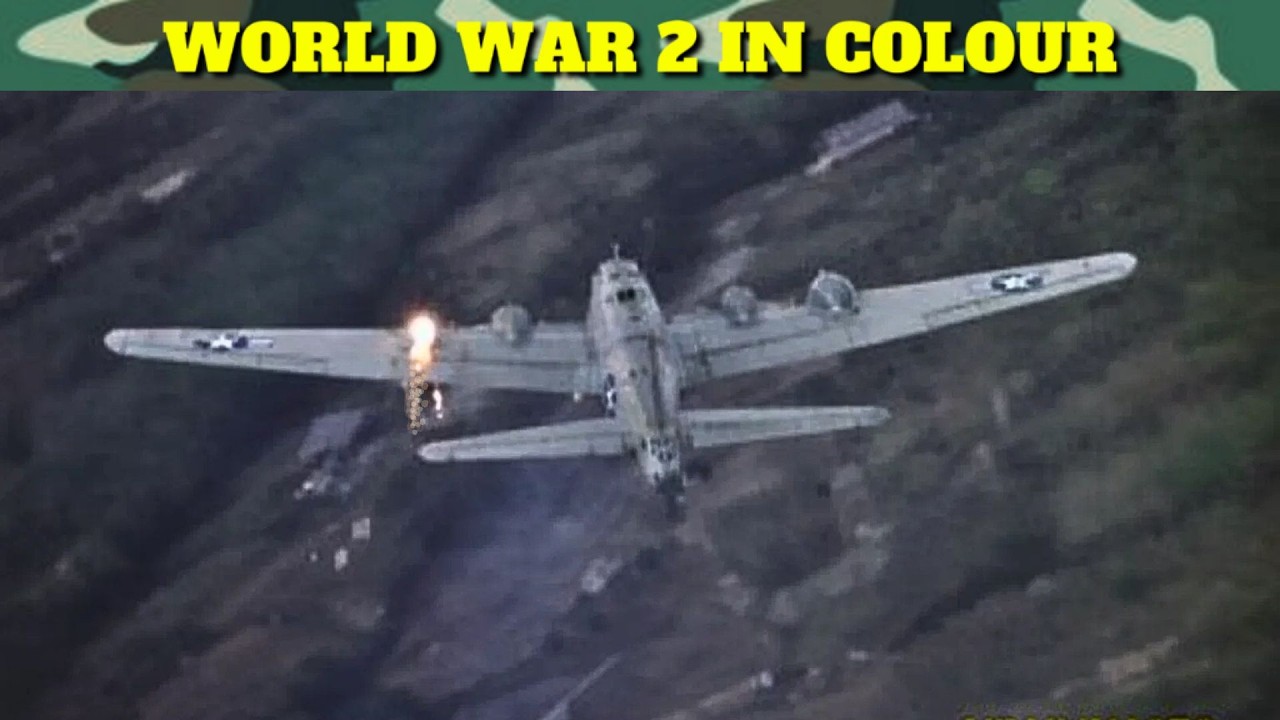
The raid that day marked a turning point in the air war over Europe. The United States had entered the war just over a year earlier, and its strategic bombing doctrine was built on a bold assumption: that heavily armed bombers, flying in tight formation at high altitude, could defend themselves against enemy fighters without the need for long-range escorts. The B-17 Flying Fortress and the B-24 Liberator carried multiple . 50 caliber machine guns, and American planners believed that the combined firepower of a formation would be enough to drive off any attacking force.
The theory had been tested in shorter raids over France and the Low Countries, where the bombers had performed reasonably well. But those missions stayed close to home, and the Luftwaffe had not yet committed its full strength against them. The raid of January 27 changed that calculation. The target was the German port and naval base at Wilhelmshaven, a major facility on the North Sea coast.
The mission required the bombers to cross the German border and penetrate the heart of the Reich’s air defense network. It was the first time the Americans had flown an unescorted mission into Germany itself, and the Luftwaffe responded with full force. German radar tracked the formation from the coast, and fighters rose to meet it. The bomber crews saw the German aircraft coming in waves, attacking from the front and the rear, pressing their runs through the hail of defensive fire.
The mission was completed, and bombs fell on the target, but the cost was a warning of what lay ahead. That warning became a pattern over the following months. The Americans continued to send unescorted bombers deeper into Germany, striking submarine pens, ball-bearing factories, aircraft plants, and oil refineries. The Luftwaffe, meanwhile, adapted to the threat.
German fighters were armed with heavy cannons and, in some cases, rockets, weapons that could bring down a heavy bomber from outside the range of its machine guns. They learned to attack from head-on, where the bombers’ defensive fire was weakest, and they developed new tactics to break up the American formations. The gun camera footage from these encounters shows the attacks in stark detail: German fighters closing at high speed, tracers streaming toward the bombers, engines catching fire, wings shearing off, and heavy aircraft spiraling toward the ground with crews struggling to escape. The footage also records the grinding attrition that defined the campaign.
Each mission sent hundreds of bombers into the skies, and each mission brought back fewer planes than had departed. The losses mounted through the spring and summer of 1943. In the fall, the campaign reached a crisis point. The Schweinfurt raids, aimed at German ball-bearing production, pushed the theory of unescorted bombing to its breaking point.
On August 17, American bombers flew deep into Germany and suffered devastating losses. A second raid on October 14, known afterward as Black Thursday, was worse. Of the 291 B-17s that set out for Schweinfurt, 60 were shot down and many more returned damaged beyond repair. More than 600 airmen were killed or captured in a single day.
The attacks on the factories had been costly to the Germans as well, but the American bomber force had been crippled in the attempt. The numbers told a grim story that the footage could not fully capture at the time. In 1943, the Eighth Air Force lost a higher percentage of its airmen than any other branch of the American military. The crews knew the odds.
They flew their missions anyway, mission after mission, into the teeth of the German defenses. The gun camera footage from those months shows the Luftwaffe at the height of its power, pressing attacks against formations that stretched for miles across the sky, each bomber fighting for its life with its machine guns as the German fighters queued up for their runs. The turning point came not from a change in the bombers themselves, but from the arrival of something the American commanders had resisted for years: the long-range fighter escort. The P-51 Mustang, equipped with drop tanks that could be jettisoned once the fuel was spent, could accompany the bombers all the way to the target and back.
The first Mustang groups began flying escort missions in early 1944, and the nature of the air war changed almost overnight. German fighters that rose to attack the bomber formations found themselves intercepted by American fighters that could meet them on equal terms. The Luftwaffe’s pilots, many of them veterans of years of combat, were being killed in growing numbers. The gun camera footage now showed a different kind of combat: American fighters hunting down German fighters, the hunters become the hunted.
By the spring of 1944, the Americans had won control of the skies over Germany. The Luftwaffe no longer rose in force to meet the bombers because doing so meant certain destruction. The unescorted raids of 1943 had bled the bomber force terribly, and the lessons had been paid for in aircrew lives. But the campaign had also forced the Luftwaffe to expend its strength, and when the escorts finally arrived, the German fighter force was unable to recover.
The destruction recorded on those grainy films, the burning bombers and the falling wreckage, represented the cost of that victory. Every frame of the footage was a death, and every death contributed to the collapse of the German air defense. The gun camera footage itself became a historical artifact of remarkable value. The Luftwaffe mounted cameras on many of its fighters, and the film rolls were recovered after the war, preserved in archives, and gradually released to researchers and filmmakers.
For decades, the images were difficult to view. The films were old, the prints degraded, and the combat scenes often dissolved into blurry shapes. Modern digital processing has changed that. New techniques can stabilize the footage, sharpen the images, recover detail from shadows, and reveal what the pilots actually saw through their gun sights.
The result is footage that looks almost like it was filmed recently, bringing a distant war into startling clarity. That clarity comes with its own weight. The films show the moment of attack in graphic detail: the tracer rounds, the impact flashes, the heavy bombers breaking apart, the parachutes blooming over hostile territory. They show the skill and the savagery of aerial combat in 1943, the close ranges, the split-second decisions, and the absolute finality of a successful interception.
The footage is silent, but the events it records are anything but quiet. What the films do not show is the fate of the men inside those aircraft, the crews who flew the missions and never came home. The campaign that began on January 27, 1943, stretched on for more than two years, through the summer of 1945, when the last bombs fell and the war in Europe ended. By then, the US Army Air Force had lost more than 26,000 men killed in the European theater, most of them in the bomber offensive.
The Luftwaffe had lost tens of thousands more of its own airmen in the desperate defense of the Reich. The gun camera footage, processed and sharpened by modern technology, now stands as a clear-eyed record of what the air war over Germany cost both sides. The silent black-and-white images, once barely legible, now show exactly what happened in the skies over Europe in the darkest years of the war.