The men who sat in judgment of her believed they had won. Before them lay the evidence, the secret military documents discovered among her possessions, and the case they presented seemed irrefutable. To the Confederate officers of General Braxton Bragg’s court, her fate appeared sealed: a swift conviction, followed by the gallows. Yet as the accusations hung in the air, a secret more audacious than any they could imagine remained hidden in plain sight.
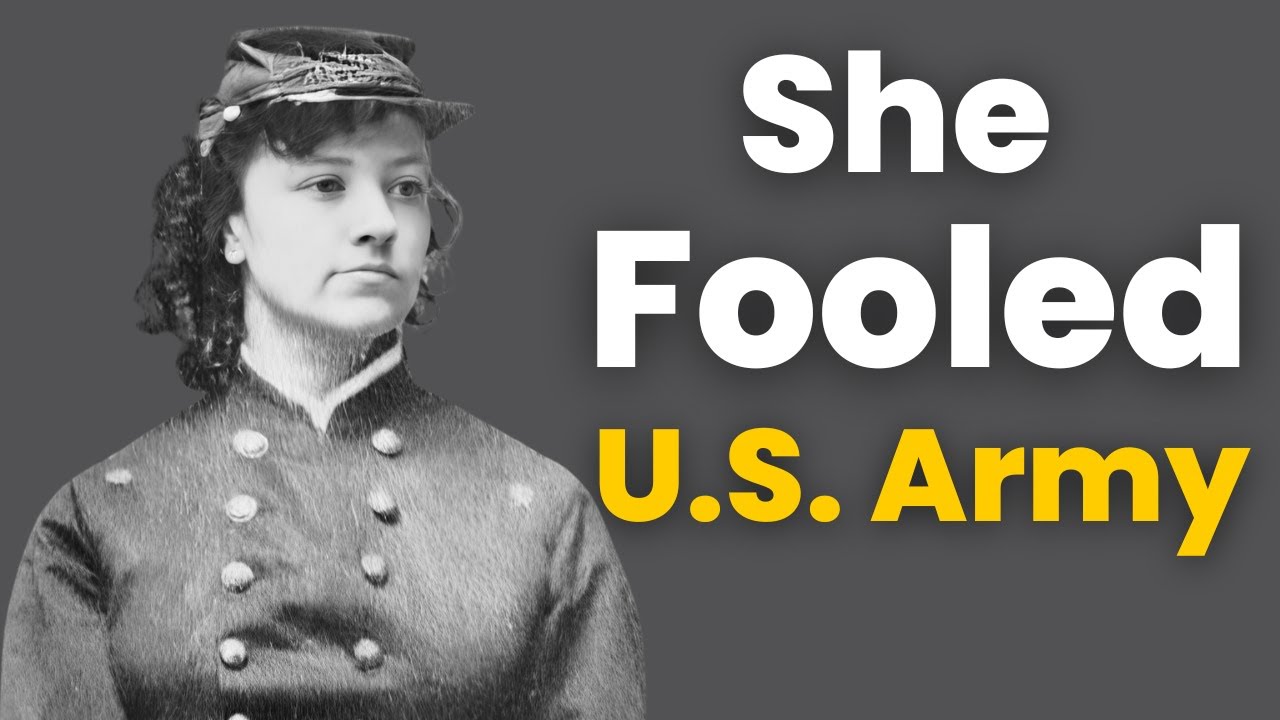
The damning papers, the clever lies, the very persona of a southern sympathizer she had so carefully constructed, it was all part of an elaborate role. This courtroom was not her end, but the climax of her most perilous performance. The men who believed they were her judges were, in fact, her unwitting audience. Every nervous glance, every plea of innocence was a delivered line in a play designed not for entertainment, but for survival.
She was not merely a woman fighting for her life. She was a Union spy, and this trial was her greatest act, a performance executed for a single crucial patron: the United States Army. Before she was Pauline the spy, she was Harriet Wood, a girl born in New Orleans in 1833 and raised in the north. That geographic duality perhaps foreshadowed her future, a life spent walking a razor’s edge between two worlds.
She reinvented herself as Pauline Cushman, a name that would grace playbills from New York to the burgeoning frontier towns. Life as a traveling actress in the mid-19th century was not one of mere glamour. It was a demanding grind of constant movement, adapting to new stages, new audiences, and new colleagues. This nomadic existence was a brutal training ground, forging in her a unique set of skills that would prove far more valuable than any stage direction.
Night after night, she learned to shed her own identity and step into the skin of another, to command a room with her presence, and to read the emotional cadence of a crowd. She became a student of human nature, understanding how a tilt of the head, a change in accent, or a well-timed tear could sway opinion and build rapport. An actress was by trade a professional deceiver, not out of malice, but out of art. This mastery of disguise, both physical and emotional, along with a charismatic ease in the public eye, made her not just a performer, but a potential operative of unparalleled ability.
As the 1860s dawned, the stages she performed on became microcosms of a nation tearing itself apart. The Civil War seeped into every aspect of American life, and the theater was no exception. Audiences were no longer just critics of art; they were partisans for a cause. A line delivered on stage could be met with thunderous applause or hostile jeers, depending on the political leanings of the crowd.
The stark line between north and south was drawn not just on maps but in the very fabric of society, creating a landscape of suspicion and divided loyalties. It was in this volatile atmosphere that Pauline Cushman’s unique value became apparent. The very qualities that made her an actress, her visibility, her celebrity, her assumed flightiness, were the perfect camouflage. In a world where Pinkerton agents and military scouts were obvious targets, who would ever suspect a famous, beautiful actress, seemingly concerned only with reviews and applause, of being a cunning intelligence asset?
Her profession provided the ultimate cover, allowing her to move through contested territories with a freedom granted to few others, her true intentions hidden behind the mask of the performer. The pivotal moment that would irrevocably steer the course of her life from the scripted drama of the stage to the unscripted peril of espionage began not with a bang, but with a hushed conversation in the shadows backstage. The city was Louisville, Kentucky, in the early spring of 1863. A crucial border state, a place of simmering tension, where Union blue and Confederate gray were not just uniform colors, but markers of deep, often hidden allegiance.
It was here, amid the dust and discarded props of a theater, that two men, Union Army officers, approached the actress. Their demeanor was serious, their proposition clandestine. They had come to her, they explained, because they had heard troubling rumors. Within her own theatrical company, there were whispers of southern sympathizers, individuals who might be using the troupe’s mobility as a cover for less artistic pursuits.
They needed someone on the inside, someone who could help them identify these potential threats. But first, they needed to be certain of her own loyalties. They proposed a test, a single public act that would prove her commitment to the Union cause beyond any doubt. The mission was simple in its conception, but profoundly dangerous in its execution.
During a performance, in the midst of a celebratory scene that called for a toast, she was to deviate from the script. Instead of a generic line, she was to raise her glass and boldly proclaim a toast to the health of the Confederate President Jefferson Davis. The theater, they knew, would be packed with a mixed audience: Union soldiers on leave, Confederate sympathizers watching from the shadows, and a general public whose opinions were sharply divided. This was not to be a performance for an anonymous crowd.
It was to be a deliberate political act played out on a very public stage. The risks were immense. She would be branding herself in the eyes of many as a traitor to the Union. She would be alienating a portion of her audience, potentially inciting a riot, and almost certainly jeopardizing her career, which depended on her appeal to a national, not a sectional, public.
Yet the potential reward, the trust of the Union Army and a chance to serve the cause in a meaningful way, was a powerful lure. After weighing the consequences, Pauline Cushman agreed. The actress was about to give the performance of her life, but this time the stakes were not critical acclaim, but her very life and future. The night of the performance arrived, the air in the theater thick with anticipation, though the audience was unaware of the real drama about to unfold.
The play proceeded, the scenes building towards the pivotal moment. When the time came for the toast, a hush likely fell, or perhaps a low murmur of curiosity, as the actors gathered. Then Pauline Cushman raised her glass. Her voice, trained to project to the very back of the gallery, did not waver.
With a conviction that belied her true mission, she delivered the forbidden words: to the health of President Jefferson Davis. The reaction was instantaneous and electric. For a split second, there was a stunned silence, followed by an explosion of noise. Cheers and rebel yells erupted from the Confederate sympathizers in the crowd, who saw in her a brave and beautiful champion of their cause.
But these were met with equally loud hisses, boos, and shouts of anger from the Union loyalists, who viewed her act as a profound betrayal. The theater, a place of supposed escape, had become a battleground, mirroring the conflict raging across the nation. The aftermath was swift and severe. The theater manager, facing outrage and the potential for a permanently divided audience, had no choice.
Pauline Cushman was immediately fired from the company. The public scandal was exactly what the Union officers had hoped for. Newspapers, the social gossip of the day, and the whispers in the streets now firmly branded her as a southern sympathizer. Her reputation as a neutral actress was in tatters; her career in Union-held territories seemingly over.
But this public disgrace was, in fact, her most valuable asset. It was her credential, her letter of introduction into the world she needed to infiltrate: the Confederate network operating in and around Louisville. She was no longer just an actress. She was a persecuted sister of the cause, a woman who had sacrificed her livelihood for her southern principles.
She had proven her loyalty not in a secret meeting, but under the glaring lights of public scrutiny. The very notoriety that closed doors in the north now opened them in the south. This was the Rubicon crossed. There was no longer any safety in ambiguity.
By consciously and publicly burning her cover as a neutral artist, Pauline Cushman had stepped off the stage and into the shadows for good. She could not simply take a bow and walk away from this role. The character of the disgraced pro-Confederate actress was now one she would have to live every minute of every day, her true Union loyalties buried deeper than any stage prop, a secret she would have to protect with her life. With her cover firmly established by the very public scandal in Louisville, Pauline Cushman was now a trusted commodity in the world of Confederate sympathizers.
No longer confined to the stage, she began to travel, moving with a new purpose through the contested lands of Kentucky and Tennessee. Her path took her into the heart of the Confederate presence, from bustling occupied towns where the social life of the South stubbornly persisted, to the very edges of military camps, where the reality of the war was palpable. She was welcomed not as an outsider, but as a celebrated daughter of the cause, a beautiful and spirited woman who had proven her loyalty at great personal cost. This access was her weapon, and she wielded it with the precision of a seasoned performer.
She employed a multifaceted approach to intelligence gathering that relied on her unique talents. Her primary tool was a timeless one: charm. Pauline was a master of social artifice, using her actress’s charisma and beauty to disarm and befriend high-ranking Confederate officers. In parlors, at dinner parties, and in ballrooms that seemed worlds away from the front lines, she played the part of the admiring, flirtatious companion.
She knew how to laugh at the right moments, how to listen with wide, attentive eyes, and how to gently steer conversations toward topics of military interest. A shared bottle of wine, a warm fire, and a sympathetic ear could work wonders on a lonely officer far from home. In these unguarded moments, boasts about a regiment’s strength, complaints about supply shortages, or careless remarks about upcoming troop movements would slip out. These men, eager to impress the captivating actress, would unknowingly pour vital secrets into her lap, their tongues loosened by liquor and her carefully crafted attentions.
She was not just collecting information; she was collecting confidences, building a web of trust that she would ultimately betray. Beyond the social graces, Pauline possessed a spy’s most critical skill: the power of acute observation. Her theatrical training had honed her memory and her eye for detail. When welcomed as an honored guest, she was often given tours of fortifications and camps.
Where others might see merely rows of tents and earthworks, she saw a living map. She mentally cataloged the number and type of artillery pieces, the layout of defensive trenches, the condition of the horses, and the flow of supply wagons. She noted the morale of the soldiers, the insignia on their uniforms indicating their units, and the geography of the land itself, all crucial pieces of the puzzle for Union generals planning their next move. She transformed from a passive observer into an active walking reconnaissance report, absorbing every detail of the Confederate war machine laid bare before her.
Yet memory alone was not always enough. There were times when physical proof was essential, and for this, Pauline engaged in the most dangerous game of all: the physical take. Using the privacy of a borrowed study or the concealed space of her own quarters, she would secretly sketch maps based on what she had seen or from documents left carelessly in view. On other occasions, she would boldly steal letters, orders, or other papers, items that could provide irrefutable intelligence to her Union handlers.
The act of concealment was a constant, nerve-wracking challenge. Stolen documents were sewn into the linings of her dresses, hidden in the intricate architecture of her hairstyles, or tucked away within her luggage. Every step she took with these contraband items on her person was a step closer to potential disaster, a constant performance where a single moment of dropped composure could mean the difference between life and death. One can imagine a heart-stopping close call that would have tested her mettle to its absolute limit.
Perhaps while traveling between Confederate outposts, her carriage was stopped for a routine inspection by a patrol more diligent than most. As a Confederate officer of some rank, she would initially meet the inspection with an air of affronted dignity, name-dropping the high-ranking officers she had just dined with. But as a common soldier began to rummage through her bags, her heart would have hammered against her ribs. Hidden within a folded blanket or tucked inside a hollowed-out book were sketches of a fort’s layout.
The soldier’s hand might hover over the very spot, his fingers brushing against the fabric that concealed the damning evidence. In that suspended moment, every one of her acting skills would be called upon: a well-timed, flirtatious joke to distract the young soldier, or a sudden, haughty demand to speak to the officer in charge, not to protect her, but to report this impertinent disruption of her journey. The success of such a bluff would rely entirely on her ability to project an aura of unassailable southern privilege and innocence, turning suspicion into awkward apology. It was in these razor-edge moments that Pauline Cushman was no longer merely playing a part.
She was living it, her survival depending on the conviction of her performance. This life of perpetual deception was a high-wire act without a net. Each piece of information gathered, each document stolen, and each officer deceived tightened the coil of risk around her. The very social connections that provided her with intelligence also created a web of potential exposure.
A misplaced word, a contradictory story, or a single instance of bad luck could unravel everything. She moved through this world of gray uniforms and southern drawls as a specter of blue, her true allegiance the most carefully guarded secret of all, knowing that the final act of this performance could only end in one of two ways: triumphant escape, or exposure and a traitor’s fate. The relentless pace of deception, the constant strain of maintaining her facade, could not last forever. In the world of espionage, luck is a fickle ally, and it eventually runs out.
For Pauline Cushman, the end of her clandestine career came not in a grand dramatic confrontation, but through a more intimate and insidious betrayal. While staying in Shelbyville, Tennessee, in the spring of 1863, her carefully constructed world crumbled. The specifics are shrouded in the fog of war and conflicting accounts, but the most persistent story points to a profound violation of her private space. It is said that a Confederate woman, perhaps a fellow lodger or a maid acting on suspicion, took it upon herself to search Pauline’s belongings while she was away.
The motivation could have been anything from personal jealousy to patriotic vigilance, but the result was catastrophic. The search revealed the undeniable proof: hidden notes, sketches of fortifications, and perhaps even coded messages intended for Union contacts. The damning evidence which she had so skillfully concealed from military eyes was discovered by a civilian, proving that her greatest threat often came not from the battlefield, but from the parlors and boarding houses where she resided. The discovery triggered immediate and severe action.
Confederate authorities, presented with such irrefutable proof of espionage, moved swiftly. Pauline Cushman was arrested on the spot. The celebrated actress and welcomed southern sympathizer was now a prisoner of the Confederate army, her true identity laid bare. The charade was over.
She was transported to the headquarters of General Braxton Bragg, a commander known for his stern discipline, to face a formal court-martial. The setting was no longer a welcoming ballroom or a comfortable parlor, but a military tribunal, a place where the art of performance was replaced by the cold, hard mechanics of martial law. The charges were read: espionage, a crime that in the context of a bitter civil war was considered the ultimate treachery. The prosecution laid out its case, presenting the physical evidence seized from her room: the maps, the documents, the notes in her own hand.
It was a straightforward, damning narrative. She had abused southern hospitality to betray the Confederacy from within. Yet, even with her back against the wall and the evidence stacked overwhelmingly against her, Pauline Cushman did not break character. Recognizing that the trial itself was now her final stage, she mounted a brilliant, desperate defense rooted not in legal technicalities, but in pure theatrical performance.
She understood that she could not deny the existence of the papers. Instead, she had to deny their context. She played the part of the wronged, indignant southern lady with every ounce of her being. She wept.
She protested. She claimed the documents were planted, that she was the victim of a jealous plot or a monstrous misunderstanding. She invoked the names of the high-ranking officers who had vouched for her, using her social connections as a shield. She appealed to the chivalry of her captors, portraying herself as a helpless woman being persecuted for her unwavering loyalty to the South.
This performance was her last best weapon, a gamble designed to create doubt, to sway emotion, and to paint her not as a calculating spy, but as a tragic heroine caught in a web of circumstance. For a moment, perhaps her passionate performance gave the court pause, introducing a sliver of uncertainty into what seemed an open-and-shut case. But the physical evidence was simply too compelling. Her tears and protests, however convincing, could not erase the sketches of fortifications or the stolen military correspondence.
The court-martial saw through the performance to the cold, hard facts of her treason. The verdict was inevitable: guilty. With the pronouncement of that single word, the full weight of her actions came crashing down. The sentence prescribed for the crime of espionage was unequivocal and brutal: death by hanging.
The performance was over, and the reality of her situation was stark and terrifying. The actress who had fooled an entire army was now condemned to die on a scaffold, a fate she had undoubtedly contemplated during her most dangerous missions, but now had to confront as an imminent certainty. The sentence handed down by General Bragg’s court was not just a judicial ruling; it was a public declaration. Pauline Cushman was to be made an example of, a warning to any other would-be spies, and her execution was scheduled to be a public spectacle, a grim final act designed to demoralize the Union and reinforce Confederate resolve.
In the confines of her cell, awaiting the execution of her sentence, the gravity of her situation must have been absolute. The flirtatious charm, the clever lies, the audacious thefts, none of it could save her now. The character of the southern belle had finally been retired, leaving behind only the raw fear and grim resolution of a woman facing a traitor’s death. The Confederacy, having been thoroughly fooled by her masterful performance, now sought to reassert its authority through the ultimate punishment.
The curtain was falling, not to applause, but to the silent, grim anticipation of the gallows. Her story, which had been one of daring and deception, had reached its apparent tragic conclusion. She had played her part to the very end. But the final scene, it seemed, was already written.
Yet, in a twist befitting the most dramatic of stage plays, fate intervened in the form of a sudden and severe illness. As she languished in her cell, Pauline Cushman was stricken with a high fever, likely a debilitating case of typhoid or pneumonia, which left her dangerously weak and utterly unfit for the gallows. Some accounts, adding another layer of intrigue to her story, suggest this illness was not merely a stroke of luck, but a deliberate act of sabotage by a sympathetic Confederate doctor who, appalled at the prospect of hanging a woman, may have administered a medicine to induce a life-threatening sickness. Whether by chance or by covert design, the illness achieved its purpose.
It forced a postponement of the execution. The Confederate authorities, however callous, were reluctant to drag a deathly ill woman to the scaffold, a move that would have been a public relations disaster. This medical reprieve bought her the one thing she needed most: time. As she battled her sickness in confinement, the wider war, which had been the context for her entire espionage career, was moving decisively around her.
The Union Army under General William Rosecrans was advancing relentlessly through Tennessee. The very Confederate forces that had captured and tried her were now under immense pressure, facing strategic defeat and the urgent need to retreat before they were encircled and destroyed. In the chaotic scramble to evacuate Shelbyville and fall back, the condemned spy became a logistical burden. Too ill to be easily transported, and with her execution now a secondary concern to the imperative of military survival, the Confederate command made a fateful decision: they left her behind.
One day she was a prisoner in the hands of her enemies; the next, she found herself in a hastily abandoned town. Her captors vanished, replaced by the advancing blue columns of the Union Army. Union cavalry scouts entering the town discovered the famed actress-spy, frail and ill, but miraculously alive, in a scene that must have seemed like a liberation. She was rescued not in a dramatic firefight, but in the chaotic wake of a Confederate collapse, her life saved by the very military progress her espionage had helped to enable.
Her return to Union lines was not a quiet affair. News of her harrowing ordeal, her daring exploits, her capture, her death sentence, and her dramatic rescue spread like wildfire through the northern press. Pauline Cushman was instantly transformed from a clandestine operative into a national celebrity and a powerful symbol of Union patriotism and female courage. She was no longer just a spy; she was a heroine who had stared into the abyss and been miraculously pulled back.
Her story was a propaganda coup, a narrative of audacity and resilience that bolstered northern morale. In recognition of her extraordinary and vital service to the Union cause, President Abraham Lincoln himself granted her an honorary commission, bestowing upon her the rank of brevet major. This was an unprecedented honor for a woman, formally cementing her place in the annals of the war, not as Pauline the actress, but as Major Pauline Cushman, the Union’s actress-spy. The war, however, eventually ended, and like many celebrities, she had to find a new stage.
Embracing her fame, she capitalized on her incredible story, understanding that the public was eager to hear the tale from the woman who lived it. In the years following the conflict, she crafted a lecture tour, taking to the stage once more, but this time not as a fictional character. She appeared before captivated audiences, often in the modified uniform of a Union major, and recounted her adventures behind Confederate lines. She spoke of her narrow escapes, her clever deceptions, and her time in the shadow of the gallows.
This postwar career was a fascinating meta chapter in her life. The actress who had used performance as a weapon of war now used the story of that war as her performance. She became a living monument to her own legend, ensuring that her contributions would not be forgotten. Pauline Cushman’s legacy is a complex and enduring one.
She represents a unique and fascinating figure in American history: a woman who leveraged the limited power available to her in the 19th century, the power of performance, charm, and perception, and wielded it with immense courage to affect the course of a nation. Her story blurs the lines between theater and reality, demonstrating how the arts of deception can serve a higher truth. In an era where women’s roles were tightly constrained, she carved out a path of immense risk and consequence, proving that heroism could wear a dress and that intelligence could be gathered with a smile as effectively as with a rifle. Though her postwar life had its share of personal struggles and tragedies, ending with her death in 1893, the core narrative of her wartime service remains a powerful testament to audacity.
The actress who became a spy, who was condemned to die, and who was saved by the tide of war left behind a legacy that transcends her individual deeds. She remains an iconic, almost mythical figure, a reminder that in the great grim theater of war, the most unlikely players can sometimes deliver the most critical performances.






