A car raced through the French countryside near Limoges on the afternoon of June 10th, 1944, four days after the Allies had stormed the beaches of Normandy. Inside sat Violette Szabo, a British SOE agent, and Jacques Dufour, a leader of the local French resistance. They were heading to meet another resistance figure when the German roadblock appeared ahead of them. The driver tried to swing the car around, but it was already too late.
Machine gun fire shattered the windshield. The car crashed. Dufour threw himself out and ran for the wheat field. Violette followed.
Then her ankle gave out—the same ankle she had badly sprained during parachute training at Ringway, the injury that had almost washed her out of spy school. It failed her now, at the worst possible moment. The SS was closing in. Two hundred soldiers from the 2nd SS Panzer Division Das Reich were fanning out across the fields.
Violette could not run, could not escape. She watched Dufour disappear into the wheat. Good. He knew where the resistance fighters were hiding.
He carried intelligence that could save lives. She made a choice that would define her forever. She positioned herself behind a tree, pulled out her Sten gun, and for thirty minutes she held off two hundred SS soldiers alone—buying time with bullets, giving Dufour the minutes he needed to get away. When her ammunition ran out, they swarmed her.
She fought, bit, kicked, scratched. When the German officer offered her a cigarette, she spat in his face. Three months later, in February 1945, Violette Szabo was executed with a single shot to the back of the head at Ravensbrück concentration camp. She was twenty-three years old.
Her daughter Tania was two and would never remember her mother. Violette never broke under torture, never revealed a single name, never stopped trying to escape. They killed her three months before the war ended. Her full name was Violette Reine Elizabeth Bushell, born in Paris on June 26th, 1921, to an English father and a French mother.
She had four brothers. She grew up bilingual, splitting her childhood between France and London. When she was eleven, the family settled in Stockwell, South London. The neighbors remembered her as a tomboy—competitive, fearless, athletic, always trying to keep up with her brothers.
Her father taught her to shoot a rifle. She became better than the boys. They hated it. She loved it.
The teenage years passed in the ordinary way: department store work, dating, dancing. She was beautiful, with dark hair, bright eyes, and a quick smile. Her Cockney accent made everything she said sound like mischief. In September 1939, war broke out.
Violette joined the Women’s Land Army. The work was dull—strawberry picking, farm labor. This wasn’t fighting. This wasn’t contribution.
She was restless, wanted more. She transferred to an aircraft factory. Still not enough. Then she met him.
Bastille Day, July 14th, 1940. Violette was at a parade in London celebrating France when she noticed a dashing French Foreign Legion officer. Étienne Szabo was a Hungarian-French career soldier. They talked.
The chemistry was immediate. Five weeks later, they were married. Everyone said it was too fast. They didn’t care.
War makes you live faster. Étienne shipped out—North Africa, the Middle East—with brief leaves and stolen moments in between. Then Violette became pregnant. Tania was born on June 8th, 1942.
Étienne had never seen his daughter. Four months later, on October 24th, 1942, Violette received the telegram. Étienne had been killed in action at El Alamein, leading a diversionary attack, and died from chest wounds. He never saw his daughter.
Never would. Grief turned to rage. Rage became purpose. The enemy that killed Étienne was still out there, still occupying France, still murdering.
She couldn’t pick strawberries while the Nazis destroyed Europe. She needed to fight, needed to hurt them back, needed revenge. The Special Operations Executive gave her that chance. Whether the SOE approached her or she approached them, the records are unclear.
What is clear is that Violette Szabo was exactly what they needed. Fluent French, a native speaker, athletic, courageous, motivated. She could blend into occupied France perfectly. They offered her a desk job first, to test her enthusiasm.
She refused. Field agent or nothing. “I don’t want to file paperwork. I want to fight.
”
They were cautious. She was a mother. What about her daughter? Violette’s answer was cold logic.
Tania would be safer in a world without Nazis, so she needed to help defeat them. In July 1943, her security clearance was granted. She was commissioned as a section leader in the First Aid Nursing Yeomanry. It was a cover.
FANY was often used to hide female SOE agents. Her family didn’t know. Her friends didn’t know. She was officially a clerk.
Secretly, she was training to be a spy—parachuting behind enemy lines, sabotage, espionage, courier work. The life expectancy wasn’t good. Of the fifty-five female SOE agents, twelve would be executed and thirteen killed in action. Violette knew the odds and accepted them anyway.
Training was brutal. At Winterfold House in the Scottish Highlands, they taught her everything: fieldcraft, navigation by the stars, weapons. She was already a good shot; they made her exceptional. Demolition—how to blow bridges, rail lines, warehouses.
Cryptography. Escape and evasion. Unarmed combat. She excelled at some things and struggled with others.
The reports were mixed: “lacks finesse, too impulsive, easily influenced, but sets an excellent example. Courageous, determined, popular with fellow trainees. ” Her infectious laughter kept morale high. They called her Cockney accent impish.
She kept everyone’s spirits up even during the hardest training. Parachute training almost ended everything. Ringway airport, Manchester, first jump. She landed wrong, badly spraining her ankle.
Out for weeks. Sent to Bournemouth to recuperate. This was the ankle that would betray her later in France. She didn’t know that yet.
She just knew she needed to pass the parachute course. So she did. On her second attempt, in February 1944, she passed with a second-class rating. Good enough.
On January 24th, 1944, she made her will. Vera Atkins, intelligence officer for F Section, witnessed it. Her mother, Reine, was named executor. The document was practical, clinical.
If I die, my daughter gets everything. She was twenty-two years old, writing her will. Most people that age don’t think about death. Violette thought about it constantly because she was about to parachute into Nazi-occupied France.
And she might not come back. In April 1944, she flew her first mission, code name Karen—one of a few aliases. Her cover story: a commercial secretary from Le Havre, which gave her a reason to travel. She parachuted in over Cherbourg with Philippe Liewer, code name Major Charles Staunton.
Their mission was to assess the damage from recent Gestapo arrests. An entire resistance circuit had been compromised. Over a hundred resistance fighters were captured. The network was shattered.
London needed to know what had happened—who survived, what could be salvaged. Violette travelled alone to Rouen. A young woman moving through German-controlled territory, checkpoints everywhere, papers inspected constantly. One mistake and she would be arrested, tortured, executed.
She didn’t make mistakes. She gathered intelligence and confirmed the network was destroyed. But she found something valuable: lists of German war factories—locations, production capacities. She memorized everything.
She couldn’t write it down; that was too dangerous. If she were captured with written intelligence, she would definitely be executed. Three weeks in France. She completed the mission and returned with crucial information about the factories producing war materials—targets for Allied bombers.
The mission was a success. Her first time behind enemy lines, and she had survived. She had proved herself. The trainers who questioned her finesse and stability were wrong.
She could do this. She could be a spy. When her plane returned to England, it was hit by anti-aircraft fire. A close call, but they landed safely.
Violette reported to Vera Atkins. Mission accomplished. She could have stopped. One mission was enough.
She had proven herself, proven to Étienne’s memory that she was fighting back. But she didn’t stop, because the war wasn’t over. The Nazis were still there. France was still occupied.
Her husband was still dead. When they asked if she would go back, she said yes immediately. The second mission was more dangerous. Right after D-Day, the Germans would be on high alert—paranoid, hunting for spies.
Violette volunteered anyway. On June 6th, 1944, D-Day, Allied forces landed in Normandy. The liberation of France had begun. The Germans were scrambling, reinforcements moving.
The SOE needed eyes on the ground—intelligence on German movements. The 2nd SS Panzer Division Das Reich was heading north. They were murdering civilians along the way, hanging resistance fighters, burning villages. Someone needed to track them, report their movements, coordinate with resistance fighters to slow them down.
On June 7th, Violette parachuted into Limoges with three colleagues: Jacques Dufour, Jean-Claude Guier, and Bob Maloubier. Their mission: connect with local resistance, organize sabotage, disrupt German movements. The stakes were massive. Every hour they delayed Das Reich meant more Allied soldiers survived on the Normandy beaches.
Every blown bridge, every ambushed convoy, every disrupted rail line saved lives in Normandy. This mission mattered. Three days in, on June 10th, Violette and Dufour were driving to meet a resistance leader on a country road when the German roadblock appeared. They tried to turn around.
Machine gun fire shattered the windshield. The car crashed. Dufour scrambled out and ran for the wheat field. Violette followed.
Then her ankle collapsed—that training injury from Ringway, months ago. Healed, but never fully strong. It failed her now. She couldn’t run.
Dufour was disappearing into the wheat. He had the intelligence, the contacts, the plans. He had to escape. Violette made a decision in seconds.
She positioned herself, Sten gun ready, and opened fire on the approaching SS. The Germans scattered, took cover, returned fire. They outnumbered her two hundred to one. They had machine guns, vehicles, grenades.
She had a Sten gun and thirty rounds—maybe sixty if she carried spare magazines. For thirty minutes, she held them off. Thirty minutes of firing, moving, finding new cover, reloading, firing again. The Germans couldn’t believe one person was doing this.
They thought it was multiple resistance fighters. How else could someone pin down two hundred soldiers? They called for reinforcements. More troops arrived.
Artillery. They were bringing overwhelming force against one British spy in a tree line. Her ammunition ran out. The Sten gun clicked empty.
No more magazines. She was done. The Germans realized it and swarmed her position. She didn’t surrender quietly.
She fought, bit, clawed, kicked. Pure fury. They dragged her to an officer. He was impressed.
He offered her a cigarette, tried to be civilized. She spat in his face. No words, just contempt. The officer wiped his face and smiled coldly.
“You’re going to regret that. ”
But she had bought Dufour thirty minutes. He escaped, reached the resistance. The mission continued without her.
German movements were reported. Sabotage happened. Das Reich was delayed, reached Normandy too late, missed the critical early days. The Allied forces consolidated their position, partly because Violette Szabo had held off two hundred SS soldiers for thirty minutes with a sprained ankle and a Sten gun.
She traded her freedom for mission success. She knew what she was doing. Did it anyway. At the SS headquarters in Limoges, they knew she was SOE.
Her papers were too good. Her French too perfect. Her courage too extreme. She wasn’t a random civilian.
She was a trained agent. They needed names, networks, plans. They had four days to break her. Four days of interrogation.
SS Sturmbannführer Kowach handled it personally. He was experienced, brutal, efficient. Hundreds had talked under his methods. Violette didn’t.
She gave them a name: Vicky Taylor. It was an alias she had prepared for the Spain escape routes. It meant nothing. They asked about resistance contacts.
She claimed ignorance. Just a courier. Didn’t know anyone important. They didn’t believe her.
They escalated. The details of what happened in those four days aren’t fully documented. The records are Nazi; they lie. But torture is certain.
Beatings, sleep deprivation, worse. Violette endured. She gave them nothing. In July, they transported her to Fresnes prison near Paris—notorious, where captured agents went before deportation or execution.
Heavy guard. More interrogation. She met other captured agents there. Brian Stonehouse, a friend from SOE training.
They communicated briefly—coded messages, hand signals. The Germans separated them quickly. But seeing a friendly face, even in prison, mattered. It reminded you why you were there.
Why silence mattered. Why you couldn’t break. In August 1944, the Allies were approaching Paris. The Germans evacuated the prisoners, deporting them to concentration camps in Germany.
Violette was chained to another female prisoner. Twelve women total, chained in pairs, loaded onto a train. The journey took a week. Cattle cars, stops for nighttime transit only.
By day they sat in sidings to avoid Allied bombers. No food, no water, no sanitation. One week of hell. Some women broke mentally.
Violette kept spirits up—Cockney humor, quiet defiance, that infectious laughter even in chains. They arrived at Ravensbrück, the notorious women’s concentration camp. The smell hit first. Crematoriums.
Death. The jack-booted female guards. Whips. Dogs.
This was the place you went to die. Odette Sansom was there—another SOE agent captured earlier. She would survive, and later say that Violette Szabo was the bravest of them all. High praise from someone who endured her own torture and solitary confinement.
Life in Ravensbrück was calculated death. Starvation rations. Twelve-hour workdays—building roads, cutting trees, factory labor. The barracks were overcrowded, lice-infested.
Disease spread fast. The weak died quickly; the strong died slowly. Everyone died eventually. That was the design.
Work them to death. When they couldn’t work, gas them, burn the bodies, make room for more. Violette refused to accept it. She tried to escape twice.
Both times she was caught. Punishment: solitary confinement, whipping, darkness, starvation. She endured, came out weaker but unbroken. The guards hated her.
She wouldn’t submit, wouldn’t break, kept trying. Other prisoners drew strength from her. If she could resist, maybe they could, too. In the winter of 1944, Violette and two other SOE agents were selected for special labor.
Denise Bloch and Lilian Rolfe were sent with her to Torgau, three hundred miles away, forced to cut down trees and clear land for an aerodrome in winter, with inadequate clothing and starvation rations. Women were dying around them—freezing to death, collapsing from exhaustion. Violette kept working, kept the other two moving. She couldn’t give up.
She wouldn’t give the bastards the satisfaction. Denise Bloch was Jewish, French, had worked with the resistance before joining the SOE, betrayed by someone she trusted, captured during a Gestapo raid. Now she was cutting trees in the German winter, waiting to die. Lilian Rolfe had an English father and a French mother, was raised in Brazil, a wireless operator captured almost by accident.
The Germans weren’t even looking for her. They questioned her anyway, discovered who she was. Now she was here, in the snow, in the cold. In hell.
The three women bonded. Shared scraps of food. Kept each other warm. Told stories.
Remembered home. Remembered England. Remembered why they volunteered. They knew they probably wouldn’t survive.
The statistics weren’t in their favor. But they would survive today, and tomorrow, one day at a time, until they couldn’t. In January 1945, they were sent back to Ravensbrück—weaker, exhausted, malnourished, but alive. Placed in solitary confinement.
More brutality. More whippings. The guards were more vicious now. The war was lost.
Germany was collapsing. But they were still killing, still torturing, still destroying lives because they could. Around February 5th, 1945—the exact date is uncertain—Violette Szabo, Denise Bloch, and Lilian Rolfe were taken from their cells. They knew what was coming.
No illusions. No last-minute rescue. They had been sentenced to death. Nacht und Nebel.
Night and fog. Prisoners who disappeared without trace. No records, no notification. Just gone.
Violette walked to her execution. Denise and Lilian were too weak—months of starvation and hard labor had destroyed them. They couldn’t walk. The guards dragged them or carried them, or shot them in their cells.
The accounts vary. The Nazis didn’t keep careful records of murders. Just that three British spies had been eliminated. Violette received a single bullet to the back of the neck, execution style.
She was twenty-three years old. Her daughter Tania was two years and eight months old. She would never remember her mother. Violette’s body was cremated.
Ashes scattered. No grave, no marker. Just gone. The Nazis wanted her erased.
Nacht und Nebel. Disappeared into night and fog. Three months later, on May 8th, 1945, Germany surrendered. The war in Europe was over.
Violette missed victory by three months. Three months. If she’d survived just a bit longer. If the evacuation from Paris had been slower.
If Ravensbrück had been liberated sooner. If, if, if. But she didn’t survive. Two years later, Britain realized what it had lost.
On December 17th, 1946, nearly two years after her death, Violette Szabo was posthumously awarded the George Cross—Britain’s highest civilian decoration for heroism. Only the second woman ever to receive it. The first was Odette Sansom, fellow SOE agent, fellow Ravensbrück survivor. The ceremony was at Buckingham Palace.
Violette’s daughter Tania, now four years old, received the medal on her mother’s behalf. The little girl didn’t understand. She barely remembered her mother—just fragments, photographs, stories told by grandmother Reine. The citation read like something from fiction, except it was all true.
Captured after a fierce battle. Held off German soldiers despite injuries. Interrogated repeatedly. Revealed nothing.
Sent to a concentration camp. Endured torture and hard labor. Attempted escape twice. Finally executed.
Throughout, maintained courage and determination. Refused to betray colleagues. Gave her life for mission success. France also honored her.
In 1947, she was awarded the Croix de Guerre, and in 1973, the Médaille de la Résistance. She is listed on the Valençay SOE memorial, one of the agents who died liberating France. Étienne, her husband, also received multiple decorations. Together, they are the most decorated married couple of World War II.
He died at El Alamein, never seeing his daughter. She died at Ravensbrück after fighting the enemy who killed him. Their daughter Tania grew up with two parents who are national heroes and zero parents who were alive. In 1958, the film Carve Her Name with Pride was released, based on Violette’s life, with Virginia McKenna playing her.
The movie made her story famous. Millions learned about the young mother who became a spy, the woman who held off the SS so her comrade could escape, the agent who never broke under torture, the hero who was executed three months before victory. Box office success. Critical acclaim.
Violette Szabo became a household name thirteen years after her death. But there is no grave to visit. No place to mourn. Ravensbrück cremated all the bodies and scattered the ashes.
The Commonwealth War Graves Commission lists her on the Brookwood Memorial, panel 26, column 3. But it’s just a name on stone. She’s not there. She’s nowhere.
Just memories. Just stories. Just a George Cross in a museum case. The question haunts everyone who learns her story.
Why? She had a daughter—a two-year-old—who needed her. She could have stayed in England, worked a desk job, contributed safely. Instead, she parachuted into Nazi France twice, risked capture, risked torture, risked death, and died.
Why? The answer is in those thirty minutes. Thirty minutes holding off Das Reich. Jacques Dufour escaped, reached the resistance.
The mission continued. German movements were reported. Sabotage coordinated. Das Reich was delayed reaching Normandy.
How many Allied soldiers survived D-Day because Das Reich arrived late? No one will ever know exactly, but some did. Some soldiers who would have died lived instead, because Violette Szabo bought thirty minutes with her freedom. That’s why.
Not glory. Not medals she would never see. Not fame she would never experience. The mission.
The purpose. The lives saved by the intelligence gathered. The resistance fighters protected by her silence under torture. The operations that continued because she didn’t break.
She traded her life for mission success. Knew the cost. Paid it anyway. Tania Szabo grew up with this legacy.
Everyone knew who her mother was. The bravest of the brave. The woman who spat in an SS officer’s face. The agent who held off two hundred soldiers.
It was pride mixed with loss. Your mother is a national hero. Your mother is dead. Tania visited the Brookwood Memorial and touched her mother’s name on stone.
She later wrote a book, Young, Brave and Beautiful, telling her mother’s story from a daughter’s perspective, trying to know a woman she barely remembered. The SOE lost twelve female agents to execution and thirteen killed in action, out of fifty-five total. Nearly half didn’t survive. Violette Szabo is the most famous, but she is one of many.
Noor Inayat Khan, Diana Rowden, Vera Leigh, Cecily Lefort—all executed, all posthumously honored, all died doing exactly what Violette did: choosing mission over safety, intelligence over survival, victory over personal preservation. The debate continues. Should women have been sent on these missions? Was it ethical to recruit mothers?
Did they understand the risks? Violette would probably laugh at these questions—that Cockney, impish laugh. Of course she understood. She volunteered.
She chose it repeatedly. She completed her first mission, came home, and volunteered for the second. The ankle injury during parachute training could have disqualified her. She rehabbed and passed on her second attempt.
Nobody forced Violette Szabo to do anything. She forced herself, because Étienne was dead, because France was occupied, because someone had to fight. Why not her? In 2009, the Duke of Wellington unveiled a memorial on the Albert Embankment in London, a bronze bust of Violette Szabo created by Karen Newman.
A permanent place to honor her memory. Except Violette isn’t there. Her ashes are scattered somewhere in Germany. Or maybe they’re nowhere.
Maybe the Ravensbrück crematorium scattered multiple victims together. Maybe part of her is mixed with Denise Bloch’s ashes, or Lilian Rolfe’s, or dozens of other women executed that week. The bust shows her young. Twenty-three.
Forever twenty-three. Never aged. Never saw her daughter grow up. Never experienced peace.
Never knew that seventy years later, people would still tell her story, still teach her name, still hold her up as an example of impossible courage. She died believing she had failed—captured on her second mission, tortured, executed, mission incomplete. She never knew that Dufour escaped, that the mission succeeded, that Das Reich was delayed, that her sacrifice mattered. The George Cross sits in the Imperial War Museum.
Tania donated it, along with Violette’s other medals, her personal effects, photographs, letters—everything preserved so future generations could learn, could understand, could remember. Children visit on school trips. They see the medal, read the citation, ask their teachers questions. Could I do that?
Would I be that brave? The teachers never know how to answer, because most people aren’t that brave. Most people wouldn’t volunteer for a second mission into Nazi France. Most people wouldn’t hold off two hundred SS soldiers to save one comrade.
Violette Szabo did, at twenty-three, with a daughter at home. Odette Sansom survived Ravensbrück, lived to old age, gave interviews, spoke at ceremonies, and always mentioned Violette. She always said she was the bravest of them all. Coming from Odette, who endured her own torture, her own solitary confinement, her own near execution, the praise means everything.
Violette Szabo was the standard, the example. The impossible courage that inspired everyone else. Some of the stories persist, some exaggerated. The fierce battle with her Sten gun is questioned by some historians.
German records show no casualties. Maybe she fired warning shots. Maybe the thirty minutes is exaggerated. Maybe.
But here’s what is certain. She was captured. She was tortured. She revealed nothing.
She was sent to Ravensbrück. She tried to escape twice. She endured winter forced labor. She was executed three months before victory.
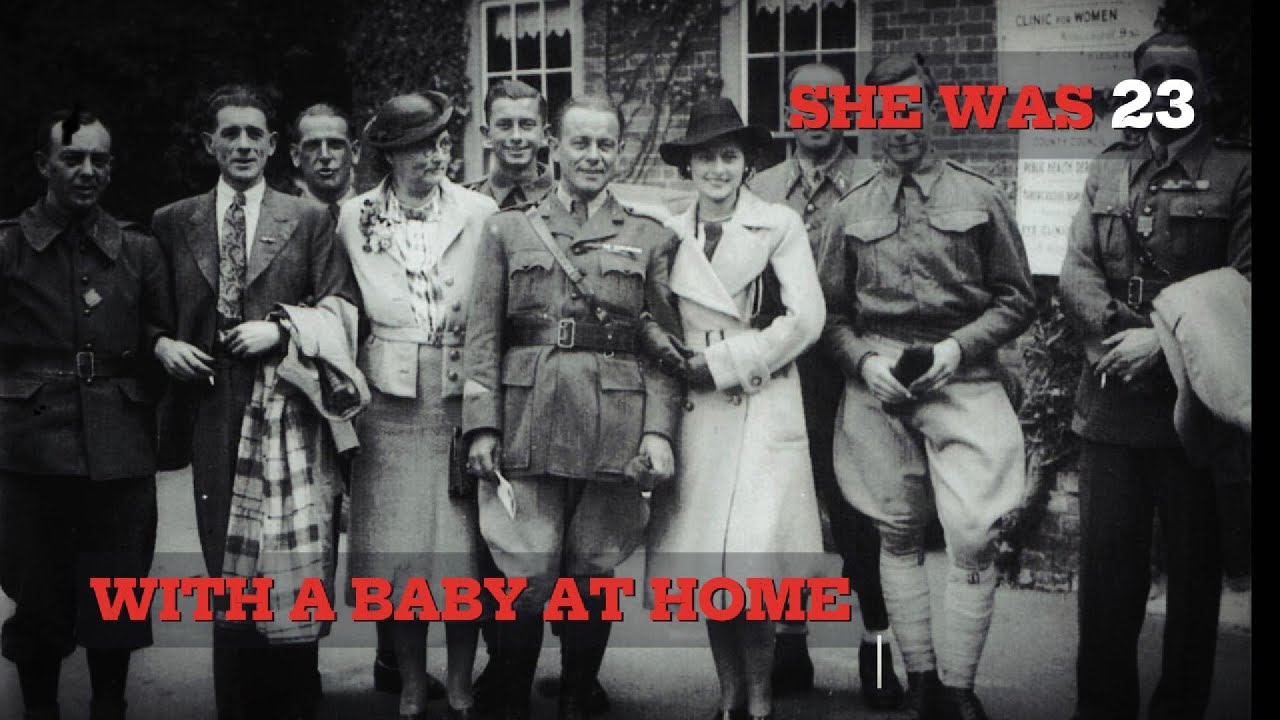
Those facts are undeniable. The rest is detail. The essence is courage. She was twenty-three, with a baby at home.
Then she parachuted into Nazi France and held off the SS so her comrade could escape. Not once, not by accident, but as part of a deliberate mission she volunteered for twice. Knowing the risks. Accepting the cost.
Fighting back against the enemy that killed her husband. She paid with her life. Her daughter paid with a mother. Britain paid with a hero it didn’t deserve.
And somewhere in the scattered ashes of Ravensbrück, Violette Szabo remains. Forever twenty-three. Forever brave.
Forever the woman who spat in an SS officer’s face and never broke.






