The interviewer had asked her a simple question, and Diana, Princess of Wales, chose that moment to give the answer that would break the monarchy’s carefully constructed silence. Speaking to Martin Bashir for the BBC’s Panorama program on the evening of November 20th, 1995, she described her marriage in a single, devastating phrase. There were three people in it. With those words, she confirmed what the British public had whispered about for years, and she did so not as a jilted wife lashing out, but as a woman finally telling her own version of events.
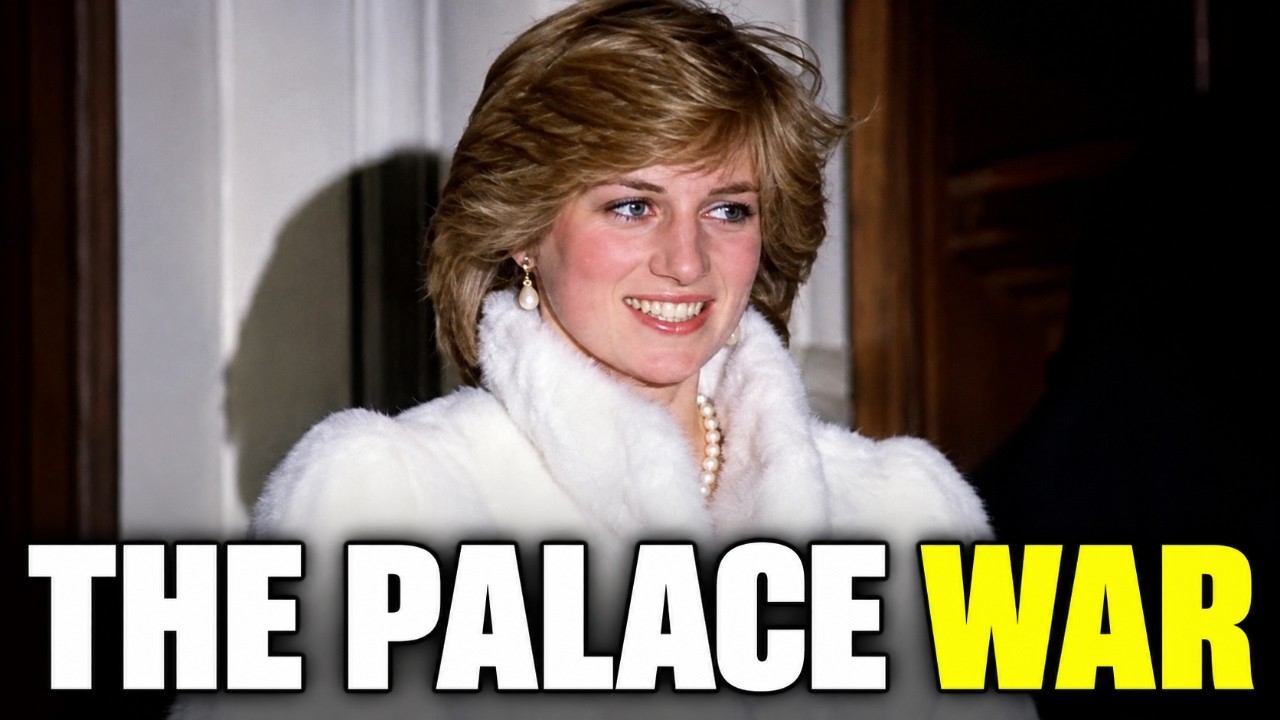
Before the broadcast, the palace had hoped for restraint. After it, the institution understood that the woman who had once been groomed as its future queen was no longer willing to be silenced. To understand how Diana reached that studio, it is necessary to return to the beginning, before the headlines hardened into legend, before the separation, and before the fairytale turned into the most painful story in modern British history. Diana Frances Spencer was born on July 1st, 1961, into an aristocratic family deeply embedded in the British establishment.
The Spencers had long connections to the royal family, and Diana grew up in a world where privilege coexisted with strict expectations. But her childhood was not the unblemished idyll that her later public image suggested. Her parents separated when she was young, and that experience of family breakdown left a lasting mark on her understanding of love, loyalty, and belonging. She was not born a princess, but she was raised close enough to the traditional elite to understand the importance of status and reputation.
What she could not know was that those same traditions would eventually shape almost every aspect of her adult life. When Diana met Prince Charles, the heir to the British throne, the public saw the beginning of a remarkable romance. Charles was the future king, a man molded by constitutional duty and generational expectation. Diana was young, charming, and apparently suited to the role of a future queen.
Their relationship developed quickly, and in February 1981, their engagement was announced. Newspapers celebrated the young woman destined to bring warmth to the monarchy, and millions imagined that Britain’s royal family had found a modern fairytale. On July 29th, 1981, Diana and Charles married at St. Paul’s Cathedral for an international audience.
The dress, the procession, the grandeur—all of it turned her into a global sensation. But a wedding can show the world a promise without revealing the reality behind it. The ceremony united two people in public, but it could not resolve the emotional differences that would increasingly divide them. Diana entered the royal household with enormous public affection, but she also entered an institution where personal happiness was expected to take second place to duty.
The couple welcomed two sons: Prince William in 1982 and Prince Harry in 1984. Motherhood became central to Diana’s life. She wanted her children to experience affection and closeness, and she gave them a more personal upbringing than the formal traditions she had encountered. In public she appeared confident and compassionate.
Privately, the difficulties in the marriage were becoming impossible to ignore. Charles’s long-standing emotional connection with Camilla Parker Bowles became a source of pain and controversy, and Diana found herself living under extraordinary scrutiny while struggling to find her place within a powerful family. Every appearance was photographed. Every expression could be interpreted.
Every rumor had the potential to become tomorrow’s headline. A person facing marital difficulties might ordinarily seek privacy, but Diana’s position made privacy almost impossible. Her personal life had become a national spectacle, and the pressure to project a successful royal marriage made honesty increasingly difficult. As the 1980s progressed, Diana developed an identity beyond her marriage.
She became internationally admired for her charitable work, especially her engagement with people affected by HIV and AIDS. At a time when fear and misunderstanding surrounded the disease, she publicly shook hands with patients and treated them with dignity. These moments helped shift public attitudes and strengthened her reputation as a compassionate figure. She also drew attention to the human consequences of landmines.
She was no longer simply the wife of the future king; she was becoming a powerful public figure in her own right. That growing popularity created an unusual situation inside the monarchy. Diana could connect emotionally with ordinary people, and that made her enormously influential, but her public identity could not always be controlled through traditional royal channels. She understood the power of photographs, television, and personal appearances.
She knew that people responded to visible emotion and human vulnerability. Her popularity was an asset, yet it also meant the institution could no longer assume the public would see her only through the official narrative. By the early 1990s, the breakdown of the marriage could no longer be concealed. In December 1992, Prime Minister John Major announced that Charles and Diana had agreed to separate.
The announcement formally acknowledged what many had already suspected. The couple would continue to share responsibilities for their sons, but the marriage was over. Britain had watched the wedding as a national celebration; now it watched the collapse with fascination, sympathy, and disappointment. The separation did not bring peace.
Instead, it opened a new phase of conflict in which private grievances repeatedly spilled into public view. Reports of Charles’s relationship with Camilla, accounts of Diana’s unhappiness, and competing versions of events dominated newspapers and television. The royal household faced questions about managing a modern marriage crisis. Diana faced a different challenge: how could she explain her experience without allowing others to define it?
In 1992, Andrew Morton published Diana: Her True Story, revealing deeply personal details about her life and marriage. Diana’s cooperation with the project was initially concealed, but her involvement later became widely known. The book described her emotional struggles and isolation within royal life. Its publication intensified the crisis by bringing private suffering into the public domain on an unprecedented scale.
The image of the smiling princess could no longer coexist with the story of a deeply unhappy woman. The book also raised a difficult strategic question. By allowing her experiences to reach the public, Diana gained a way to challenge the impression that everything was functioning normally inside the royal household, but greater openness came with a price. Every revelation increased the attention on her, and every headline made it harder for the family to resolve its troubles away from public view.
Diana was fighting to be heard, yet the media that amplified her voice also transformed her pain into entertainment. Then came another turning point. In June 1994, Charles gave a televised interview in which he acknowledged the breakdown of the marriage and addressed the question of infidelity. Later that year, a documentary featuring Diana offered an unusually candid account of her emotional difficulties and her view of royal life.
The public was beginning to hear two different perspectives, and the monarchy could no longer rely on silence to protect its image. But the BBC Panorama interview became the defining confrontation. Speaking to Martin Bashir, Diana discussed her marriage, her mental health, and the pressures of her position. The program attracted an enormous audience and sent shockwaves through the British establishment.
Her remark that there were three people in her marriage became one of the most memorable lines of the royal crisis, expressing in a few words what years of rumors had suggested. She also spoke about her struggles with bulimia, depression, and the pressure of royal life. Her willingness to discuss subjects often hidden behind respectability made the interview powerful, but it deepened the conflict with the institution she represented. To many viewers, she appeared vulnerable and courageous.
To others, she had committed a serious breach of royal discretion. For the monarchy, it was a crisis: the future king’s marriage was being discussed before a national audience by the woman once expected to become queen. Yet the full story of that interview contained another complication, uncovered long after the broadcast. In 2021, an independent inquiry led by retired judge Lord Dyson found that Bashir had used deceitful methods to secure the interview, including fake bank statements shown to Diana’s brother, Charles Spencer.
The inquiry also criticized the BBC’s handling of the matter. It did not, however, establish that Diana had been directly shown those documents or that she had agreed to the interview solely because of them. The distinction matters. The interview was real, and Diana’s experiences were her own.
The findings exposed serious journalistic misconduct without proving every allegation that later circulated. The controversy surrounding the program thus became larger than a disagreement between a princess and her royal family. It became a story about trust, journalism, institutional responsibility, and the vulnerability of a person whose private fears were discussed by powerful outsiders. In December 1995, Queen Elizabeth II wrote to Charles and Diana suggesting that an early divorce was desirable.
In August 1996, the divorce was finalized. Diana retained the title Diana, Princess of Wales, but lost the style Her Royal Highness. The change was significant. She remained the mother of the future king and one of the world’s most recognizable women, but her formal position within the royal hierarchy had changed.
The marriage that had been presented as a symbol of national continuity had ended in public separation. Diana’s story did not end with the loss of royal style. She continued her charitable work and maintained her public influence. Her connection with William and Harry remained central to her life even as the family navigated the consequences of the separation.
She was no longer a working royal in the same formal sense, but she retained an extraordinary ability to attract attention to causes that mattered to her. Her influence came increasingly from personal reputation rather than institutional authority. In August 1997, Diana traveled to Paris with Dodi Fayed. On August 31st, the car carrying them crashed in the Pont de l’Alma tunnel.
Diana died later that day at the age of 36. Her death triggered an extraordinary outpouring of grief in Britain and around the world. Flowers gathered outside Kensington Palace, mourners filled the streets, and millions watched the funeral. The loss was devastating for her sons and for those who had come to regard her as a uniquely compassionate public figure.
The tragedy also forced difficult questions about the relationship between the royal family, the media, and the public. The intense attention that had followed Diana throughout her life became part of the wider discussion after her death. Investigations examined the circumstances of the crash, and the historical record does not justify presenting claims of a royal plot as established fact. The truth is painful enough without inventing explanations that the evidence does not support.
So what was Diana’s hidden royal war? It was not a proven secret campaign in which every member of the palace stood against her. It was a struggle between personal vulnerability and institutional expectation, between a woman’s desire to speak honestly and a monarchy built around discretion, between the public’s appetite for intimate details and the human cost of living under constant observation. She challenged the idea that royal duty required silence about private suffering.
She demonstrated that a royal figure could become influential through empathy, openness, and direct connection with ordinary people. Her relationship with the monarchy remained complicated, and reducing every disagreement to heroes and villains would be wrong. Charles had his own perspective, the royal household had constitutional responsibilities, and Diana’s own decisions shaped events. But the imbalance between her private distress and the extraordinary attention surrounding her was undeniable.
She was expected to represent a fairytale while living through a troubled marriage, and when she finally spoke, the world discovered how far the public image had diverged from private reality. Diana remains one of the most remembered figures in modern royal history because her story reaches beyond crowns and titles. It speaks to the struggle to preserve identity inside a powerful institution, the cost of being watched by millions, and the courage it can take to acknowledge unhappiness when the world expects perfection. The royal wedding promised a fairytale, but the years that followed revealed something more complicated: a woman searching for dignity, a family confronting a public crisis, and a monarchy forced to face questions about its relationship with the modern world.
Diana’s greatest legacy was not that she defeated the palace or exposed a single hidden conspiracy. It was that she changed what people expected from a princess.






